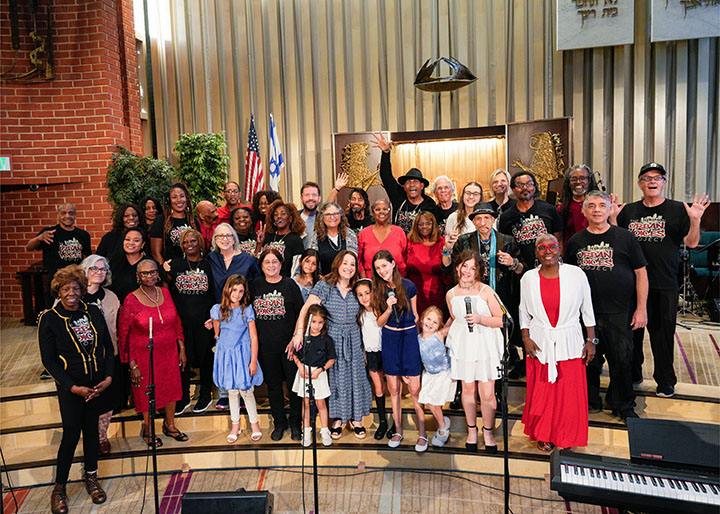
Our synagogue is launching a visioning process this fall. We are using what looks to me like the “>How to Make Meetings Work” by Michael Doyle and David Straus. It’s a great model, in which one person is the facilitator, paying full attention to the group, while another person is the recorder, writing down the ideas which the group generates, using chart paper so everyone can see their ideas are being heard and captured.
It’s a deceptively simple, yet effective, model. Unfortunately, the person training the facilitators didn’t seem to recognize the importance or the complexities of the recorder role, so she spent virtually all her time walking us through the meeting agenda and training the facilitators, with only a few comments devoted to the recording role.
As a person who has experienced working with poorly trained recorders, I know this is a mistake. Poor handwriting and a poor choice of marker colors can make what is being read difficult to read. Even worse, a recorder who doesn’t properly understand his or her role can create chaos by jumping into the conversation inappropreiately, or, as happened to me once, he or she may even passively aggressively refuse to write down an idea with which they disagree.
A poorly trained recorder isn’t a disaster, since a good facilitator can overcome many of these issues, but it requires them to work a lot harder, and will likely reduce their overall effectiveness.
I believe the community conversations will be helpful, and will help build an even greater sense of interconnectedness and community. So if that is all that happens, that wouldn’t necessarily be a bad thing.
Next, the data from the meetings will be consolidated into themes, then reported back to the congregation, and additional input will be solicited before a report is generated. It is a time-consuming project that is as much art as it is science. I have helped with this process in other circumstances, and it takes a big leap of faith, since I won’t be involved in it this time, to trust that those carrying it out will do it well. It is so easy to miss subtleties because we all have our own biases that we need to try to keep out of the process as much as possible.
Even more importantly, I am concerned about what will happen after the data is compiled and the report is published. At that point, we will engage in a process to make an action plan based on the information we received, and then, we hope, put the plan into action.
We went through a very similar process around community organizing a number of years ago.
After the data was presented and the initial plan was formed, communication to the congregation dropped off. As a result, even though many meetings and other action was taking place as a result of the data received, many congregants didn’t hear anything about it, and thought nothing was happening. A large amount of energy was generated in the community conversations, which quickly dissipated as the action process moved forward. We don’t want to let that happen again this time.
It will be interesting to see how the process unfolds. Stay tuned for future developments.
—————-
“Like” the “>Twitter.