CNN just announced that Egyptian President Hosni Mubarak has resigned. A supreme council of the Egyptian army will run the country. It’s unclear what role Mubarak’s annointed succesor, Omar Suleiman, will play in the new leadership.
CNN and al-Jazeera report that the throngs of protesters angered by Mubarak’s stubborn refusal to resign on Thursday have turned jubilant. But they still want Suleiman out as well.
So, now what?
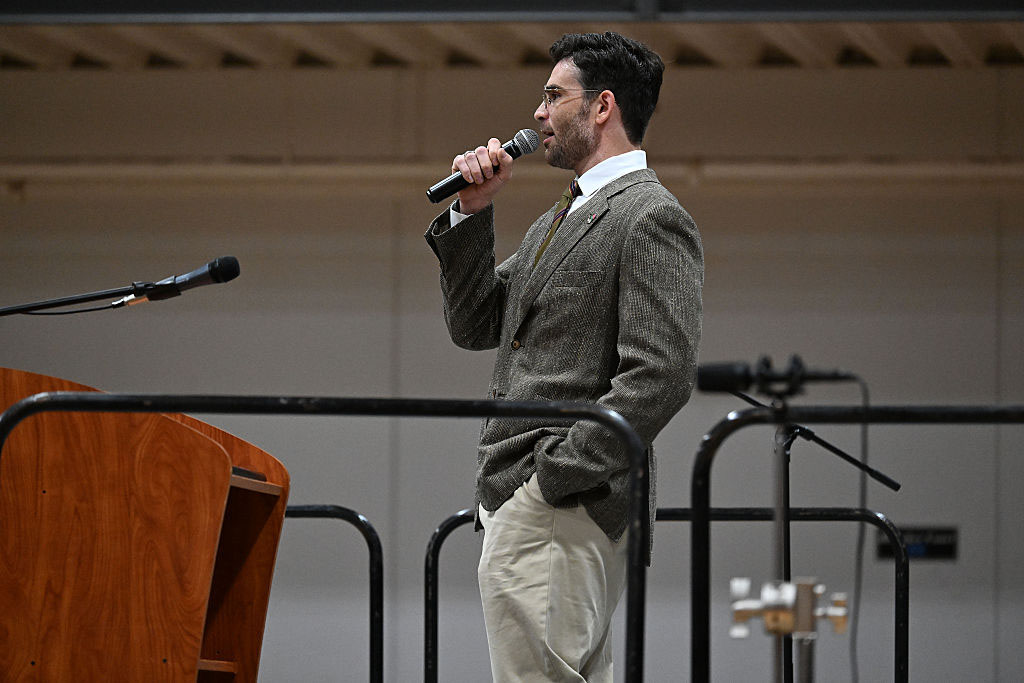
Last night at the Daniel Pearl Memorial Lecture at UCLA, author and Middle East commentator Leon Wieseltier chastised the Obama administration for not getting out front of the protest and embracing the transition to democracy. But others in the audience, among them some long time Egypt experts, cautioned that the road to democracy will be challenging.
“You’ll get a few days of chaos and another strong man,” said one man who has spent time in Egypt, and has met with regime officials on numerous occasions.
The big obstacles to democracy in Egypt, he pointed out, are that there is no middle class, and the majority of people are still religious Muslims. That isn’t true in Tunisia or Turkey, he said. Mubarak has long crushed liberal opposition and civil society that might step in and form an effective counterweight to the well-organized Muslim Bortherhood.
“Politics is all about organization,” my source said. “Who can get people to the polls.” In that sense, my source said the fact that a recent poll done by the Washington Institute for Near East Policy reported that the Muslim Brotherhood would only gain a fraction of the popular vote in an election held today doesn’t mean much.
That said, the Egyptian military, which receives its funding from the United States, is open to U.S. influence, and a smart policy that maintains security while establishing a transition to a broader civil society could work. One key will be for the U.S. to be firm in its resolve to see democracy through, rather than settle for the next strongman. The Egyptian people have spoken. Mubarak finally heard them. Now we must.
I know this sounds like naivete to some people, but I call it enlightened pragmatism. I’m not naive that Israel now faces great dangers with the fall of Mubarak, and democracy is not fairy dust. But I’m not convinced that what’s happening in Egypt is AUTOMATICALLY bad. The fact that autocracy came crumbling down makes clear that even if autocratic secular regimes are”good” they are not sustainable. You could argue that keeping every Palestinian in hobbles and ball gags would be good for the Jews too, in the sense that they’d shut up and let Israel do what Israel wants, but it’s not sustainable. I’m not arguing what’s right, I’m arguing, in all my naivete, what’s pragmatic. The transition to democracy in Egypt is a long shot, but we tried bucking up a kleptocratic dictatorship and clearly that’s not gonna work in the long run. Never does. At UCLA last night, Wieseltier put it beautifully: Israel cannot rely for its security on autocratic Arab regimes and the suppression of Palestinian nationalism—neither one will last forever. So even though the current situation is dangerous, we have no choice but to climb on the wagon and help as best we can to steer it into the barn. (Yes, I know that sounded like Dan Rather. Sorry.)