fbpx
Tuesday, December 15, 2020
Array

Pew Poll finds some U.S. Muslims support suicide bombing

Print This Article
"
"


Don’t be a suicide bomber, these Arabic-language public service announcements urge
Ahmed Billoo is the product of an upper-middle-class Alhambra home. He grew up going to the local mosque on Fridays and holidays, playing sports with friends and enjoying the blessings of a comfortable American childhood.

Twelve months from completing a business degree at Cal State Long Beach, Billoo, 22, is fully Muslim and American, the two locked hand in hand.

And yet, he believes the righteousness of suicide bombers needs to be evaluated on a “case-by-case basis.”

“Muslim or not Muslim, we all fear death. Blowing yourself up is not something everyone can do or something that everyone has the courage to do,” said Billoo, the outgoing president of Long Beach’s Muslim Student Association. “But don’t get me wrong: I’m not saying we should all go around America doing that; Palestine is a different situation. There is a huge difference between saying we should do it and saying I’m going to be a suicide bomber. I just think it is something that Islam justifies.”

He is far from alone, according to a report last week by the Pew Research Center. In its first nationwide survey of Muslim Americans, about 26 percent of American Muslims ages 18 to 29 share Billoo’s sentiment to varying degrees.

“I would have to say it’s actually like 60 or 65 percent of the youth,” Billoo added. “It’s very rare that I meet someone who says suicide bombings in Palestine are not justified.”

When Pew asked respondents whether “suicide bombing and other forms of violence against civilian targets are justified in order to defend Islam from its enemies,” 78 percent of all U.S. Muslims flatly condemned such attacks; 9 percent declined to answer or said they didn’t know. But 8 percent of all Muslims — and 15 percent of younger Muslims — said attacks on civilians were justified “often” or “sometimes.”

While a chasm separates such sympathies from actual martyrdom — a leap Billoo said he wouldn’t be willing to make — news of the report has affirmed a deeply held fear: That the radical strain of Islam that has swept through Europe may be infecting this country.

“What you have is a low-wage jihad taking place, but people are not paying attention to it,” said Daniel Pipes, director of the Middle East Forum. “These sentiments are seething, and at any time might erupt.”

Overall, however, the survey of 1,050 Muslims was encouraging.

The Pew survey, conducted through telephone interviews from January through April, estimated 2.35 million U.S. Muslims — far fewer than the 6 million to 7 million numbers many Muslim organizations use. Two-thirds of respondents are foreign born and are strong believers in the American way of life.

The majority think of themselves as American Muslims, not Muslim Americans; believe women are treated better here than in Muslim nations, and are worried about Islamic extremism. And 61 percent said Israel and Palestinian rights could coexist — compared to 67 percent of the general American public.

“What the survey overwhelmingly shows is that the Muslim community is the one that we at PJA have experienced. It is not the one that some people have heatedly claimed constitutes a fifth column in this country,” said Daniel Sokatch, executive director of the Progressive Jewish Alliance, which recently created with the Muslim Public Affairs Council (MPAC) the interfaith dialogue, NewGround.

Muslim American leaders have highlighted these positive findings — “mainstream and middle class and not monolithic,” as MPAC Executive Director Salam Al-Marayati put it.

They said reported sympathies for suicide bombings sounded an alarm, but, as Hussam Ayloush of the Council on American-Islamic Relations (CAIR) noted, they weren’t any more extreme than the 24 percent of Americans who, according to a recent poll by the University of Maryland’s Program on International Public Attitudes, believe attacks against civilians are “often or sometimes justified.”

“The word suicide bombing is very loaded and creates images of terrorism,” said Ayloush, executive director of CAIR’s Los Angeles area chapter. “A lot of the young people, what I hear from them, it is not something that relates to our American scene, but it is a view about a people under occupation responding to an occupation, and it is not the civilians but the occupier.”

Despite Middle Eastern fatwahs to the contrary, the Quran explicitly prohibits any transgressions against civilians, said Khaled Abou El Fadl, an Islamic law professor at the UCLA School of Law. These limitations range from torching a noncombatant’s tree to killing a rival warrior’s wife.

But some Muslims miss this point, Abou El Fadl said, “because they confuse politics and ethics.”

“Human beings have the remarkable ability to reach results that they want to reach,” he said. “In the case of Islam, the argument goes something like this: Yes it is true that our prophet has all these prohibitions; yes it is true that our prophet acted in a fashion that respected the sanctity of civilians at war; yes it is true that the Quran prohibits transgressing, but — and this is a big but — we have a rule that says that in the case of dire necessity, what is prohibited becomes permissible.”

Since before Sept. 11, 2001, prominent Muslim American leaders have repeatedly condemned terrorist attacks. Last summer, in response to accusations that one of MPAC’s founders was a closet extremist who had referred to the “butchers” of Israel, the organization bought an ad in the Los Angeles Times that affirmed “we condemn terrorism in all forms, regardless of the identity of the victim or of the perpetrator.”

But the Israeli-Palestinian conflict bends black and white into shades of gray, because many Muslims don’t consider Israelis, particularly aggressive settlers, to be civilians.

“Islam believes life is precious, but we also believe in justice. We are not just going to let someone come into our house and kick us out. We are allowed to fight back,” said Billoo, who is of Pakistani descent. “Obviously, the more conventional combat is preferred. But suicide bombings is a last resort.”


Did you enjoy this article?

You'll love our roundtable.

Enjoyed this article?

You'll love our roundtable.

Select list(s) to subscribe to


By submitting this form, you are consenting to receive marketing emails from: Jewish Journal, 3250 Wilshire Boulevard, Los Angeles, CA, 90010, http://www.jewishjournal.com. You can revoke your consent to receive emails at any time by using the SafeUnsubscribe® link, found at the bottom of every email. Emails are serviced by Constant Contact

Giving Season

One Form of Giving: Spreading Kindness

“It started as a spreadsheet, a very basic spreadsheet,” Elana Sichel, a recent graduate of University of Maryland says. She and Hadassah Raskas, a U Penn rising senior, are the co-founders of Corona Connects, an initiative that pairs volunteers with organizations needing the extra hands during this chaotic time of living through the Coronavirus pandemic. The idea originated in a strong desire to be of service, stemming from their observant upbringing. Raskas explains, “I think it really was our Jewish values that really created this thing inside of us…it’s so deeply ingrained.”

Eight Degrees of Giving Help Both Sides for Jews

Human nature is to desire to be self-sufficient. Most of us are uncomfortable being takers and prefer earning our own keep. If, due to dire circumstances, we find ourselves on the receiving end, our reaction is generally one of mortification. The Torah is acutely sensitive to the precarious dynamic between patrons and their beneficiaries. The Torah's word for the act of giving to the needy, tzedakah, although commonly translated as "charity," more accurately means "justice."

New Plan for Giving That Will Secure Jewish Future

This article originally appeared in ejewishphilanthropy.com. Last year, at the urging of Mark Silberman, a longtime friend, Jewish Future Pledge Board Chair and former Board...

Pandemic Has Altered The Rules of Fundraising

This article originally appeared in The New York Jewish Week The impact of the Covid-19 pandemic is massive, costing hundreds of thousands of lives and...

Latest Articles

Mi Casa Es Su Casa: The Mexican Magic of Lenny’s Casita

Chef Leonardo Nourafchan oversees a dozen busy cooks chopping and grilling for Lenny’s Casita and Lenny’s Bazaar, the latest stars of the Los Angeles kosher culinary scene.

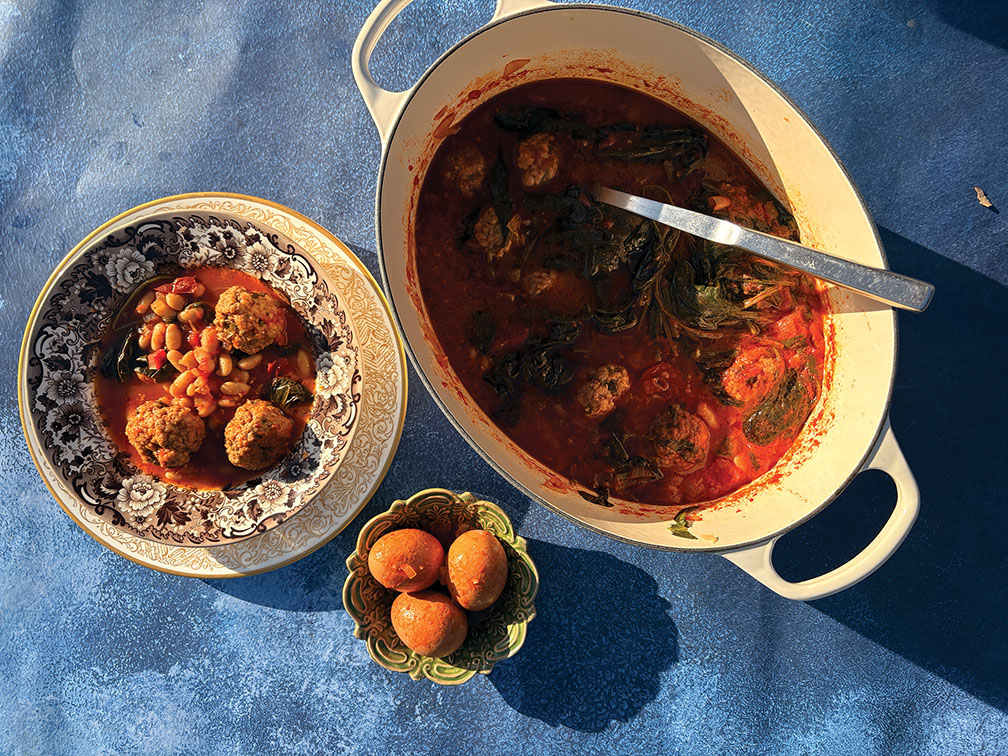
Crispy Creamy Iraqi Aruk

Aruk are golden-green fried Iraqi herb and potato patties.

In the Era of High Stakes, Can We Ever Regain Our Sense of Humor?

Is it possible to fight the decline of Western civilization without taking ourselves so seriously?

The Curious Case of Raphael Warnock

Warnock is not Ilhan Omar. But he’s not exactly Moshe Dayan, either.

Using The Life-Saving Power of Creativity

As Create Now’s work has proven, the arts are integral to safety, security, and emotional well-being.

The Sacred Family Latkes

I come from a family that has strong feelings about latkes.

Jewish Groups Condemn Attack of Jewish Man at Kentucky Chabad

Several Jewish groups condemned the attack against a Jewish man at a Kentucky Chabad during a menorah lighting on December 12.

Moroccan Jews Celebrate Kingdom’s Historic Recognition of Israel

The small but devout Jewish community in Morocco rejoiced at the news that official relations will be established between Israel and Morocco.

Satirical Semite: Matchmaker, Matchmaker, Find Me a Gold Digger

Please tell her to bring a shovel. I’ll fly her to a gold mine, and she can start digging.

The Mitzvah of Health

A healthy body gives us the strength to fulfill the mitzvot and sacred actions of our religion.

Culture

Mi Casa Es Su Casa: The Mexican Magic of Lenny’s Casita

Chef Leonardo Nourafchan oversees a dozen busy cooks chopping and grilling for Lenny’s Casita and Lenny’s Bazaar, the latest stars of the Los Angeles kosher culinary scene.

Crispy Creamy Iraqi Aruk

Aruk are golden-green fried Iraqi herb and potato patties.

The Mitzvah of Health

A healthy body gives us the strength to fulfill the mitzvot and sacred actions of our religion.

Addressing Concerns about Memory Loss During the Pandemic

It’s important to understand there are different types of memory loss and not all memory loss means Alzheimer’s disease.

Virtual Israel Film Festival Celebrates the Best in Israeli Cinema

The 34th annual Israel Film Festival will present a stellar lineup of offerings this year in a virtual format.

Latest Articles
Latest

Mi Casa Es Su Casa: The Mexican Magic of Lenny’s Casita

Chef Leonardo Nourafchan oversees a dozen busy cooks chopping and grilling for Lenny’s Casita and Lenny’s Bazaar, the latest stars of the Los Angeles kosher culinary scene.

Crispy Creamy Iraqi Aruk

Aruk are golden-green fried Iraqi herb and potato patties.

In the Era of High Stakes, Can We Ever Regain Our Sense of Humor?

Is it possible to fight the decline of Western civilization without taking ourselves so seriously?

The Curious Case of Raphael Warnock

Warnock is not Ilhan Omar. But he’s not exactly Moshe Dayan, either.

Using The Life-Saving Power of Creativity

As Create Now’s work has proven, the arts are integral to safety, security, and emotional well-being.

Hollywood

‘Oslo’ Drama Underway from Steven Spielberg, Marc Platt

Steven Spielberg, Mark Platt and David Litvak are bringing the J.T. Rogers’ Tony Award-winning play “Oslo,” about the 1993 Israeli-Palestinian Peace Accords, to HBO....

‘Valley of Tears’ Tells Harrowing Stories of the 1973 Yom Kippur War

As Yom Kippur began in 1973, attacks by Syria and Egypt took Israel by surprise, launching a 19-day war in which more than 10,000...

Sophia Loren Plays a Holocaust Survivor in ‘The Life Ahead’

In her first feature film since “Nine” in 2009, screen legend Sophia Loren plays a Holocaust survivor who takes in motherless children in “The...

Podcasts

The Big Bagel Theory with Mayim Bialik

All of our Hanukkah dreams come true for this conversation with the prolific and brilliant Critics’ Choice Award winning actress, neuroscientist, author, mom and mogul-in-the-making Mayim...

Pandemic Times Episode 111: How Important is Self Love to Joy and Success?

New David Suissa Podcast Every Tuesday and Friday. A conversation with Melody Godfred, the self-love philosopher, author and poet. How do we manage our lives during...

More news and opinions than at a Shabbat dinner, right in your inbox.

x