Everyone knows that in real estate, location is everything. But we tend to forget that this is no less true in geopolitics. Consider Venezuela: had it been in Asia, the U.S. wouldn’t bother itself with this country. Consider Ukraine: had it not been caught between Russia and Europe, it could live peacefully. That is, unless its location was different yet still problematic. Consider Gaza: a small enclave near Israel and Egypt. What can you do with such a small area, when the two countries bordering it want nothing to do with it?
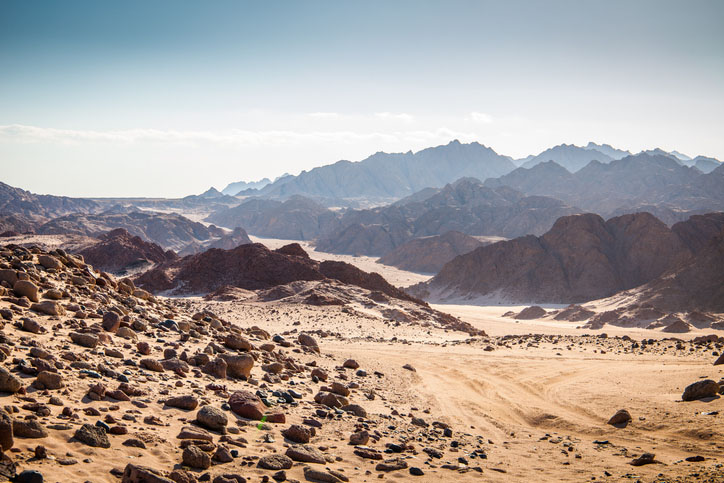
Consider Somaliland. Most likely, you’ve never heard of this place, and if you did, it is only because you’re a foreign news freak, an expert on African affairs, or just very curious. Somaliland is a fairly barren territory bordered by Djibouti to the northwest, Ethiopia to the south and west and Somalia to the east. In fact, Somaliland is within the internationally recognized country of Somalia. It established its independence in the early 1990s, but isn’t recognized by most world powers for various reasons – including the fear that if this place is recognized as an independent country, many other such regions in Africa are going to demand their own recognition and separation from their home countries.
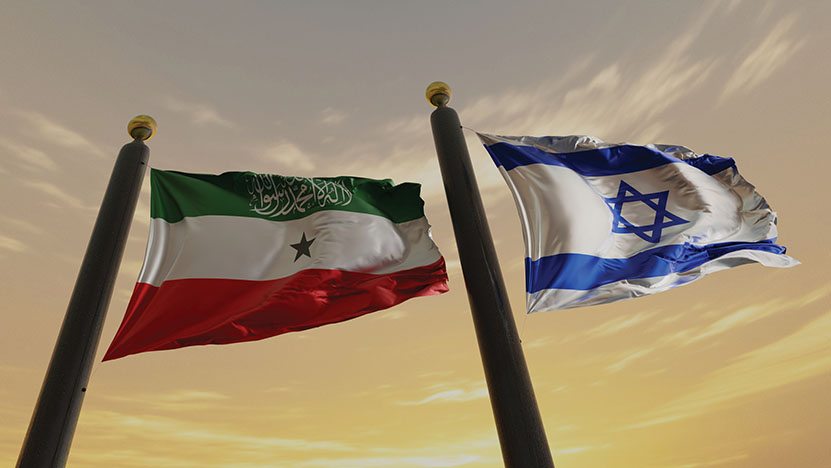
Two weeks ago, in a surprise move, Israel announced its recognition of Somaliland. If you weren’t looking at the map, you’d be right to suspect that someone in Jerusalem had too much to drink during the holiday season. Before Israel’s move, only Taiwan had diplomatic relations with Somaliland. Taiwan’s allyship with Somaliland is for obvious reasons: the two counties share a desire to get international support for their autonomy from a neighbor motherland. But why would Israel make such a move? Just look at a map, and you’ll immediately have a feeling of revelation: location, location, location. Somaliland lies just south of the Bab al-Mandab Strait. That’s the vital path that connects the Red Sea to the Indian Ocean. It also lies opposite Yemen.
In the great game of regional chess this was a bold, creative, disruptive move. It is a gate to the Horn of Africa, where many other Middle Eastern nations seek power, commercial opportunities, influence, ports, allies. Turkey is allied with the central government in Somalia. It is supplying it with weapons, political cover and other materials. Israel will now support Somalia’s rival, a challenge for Turkey. Separately, and of no less importance, Israel also bolsters its alliance with Greece and Cyprus, in a move aimed to tame Turkish ambitions.
While Turkey supports Somalia, The United Arab Emirates is the main gate to Somaliland. It might also be the main matchmaker in the Israel-Somaliland deal. The UAE has its own policy in Yemen. The Saudis oppose it. It has its own policy in the civil war in Sudan. The Egyptians oppose it. Egypt is entangled in conflict with Ethiopia over water, and Somalia is key to taming Ethiopia. Israel’s move is a boost to the UAE position and to the UAE-Israel ties. The Egyptians aren’t pleased? Tough luck. The Saudis protest? Remember: the UEA has relations with Israel, the Saudis refuse to move forward with normalization, so they have no real leverage over Israel. The Turks are displeased? Well – that’s one of the goals of the whole enterprise.
We mentioned Yemen and the Houtis. If Israel could use a base in Somaliland, hitting them becomes much easier (here, UAE ties could be an obstacle). The Houtis responded to Israel’s recognition of Somaliland by making threats. That’s proof that they have good reasons to get nervous. Then there’s Iran. Somaliland isn’t close to Iran but opens an easier path to reaching the southern part of the country. A proper analogy for this move (location, location) is Israel’s strategic cooperation with Azerbaijan. Asian Azerbaijan provides Israel with strategic depth and intelligence access in northern Iran. African Somaliland could have similar such role, becoming Israel’s gateway to fighting against Iran’s southern proxies in the Horn of Africa and around the Red Sea.
This is hard-nosed realpolitik. This is putting Israel’s security interests above international niceties and protestations. This is something that Israel’s government did and that very few Israelis opposed or criticized. The fact that Israel stands alone in recognizing Somaliland says less about Somaliland and more about the international community’s excessive caution. Many countries prefer ambiguity as they deal with Somaliland, so as not to provoke other countries. Israel decided that the benefit of clear recognition outweighed the diplomatic cost. One can agree or disagree with such decision. But it has its logic, and is not without precedent.
Why would Israel recognize a country that doesn’t exist? Well – many countries recognized the nonexistent Palestine, so why not. Why would Israel break the norm of refraining from recognizing breakout movements in Africa? Well – that’s a question one could turn around: why is the world so keen on keeping the borders set in Africa by the colonialist powers? Why would Israel act in a destabilizing way? Well – if you want stability, you know what needs to be done. Somaliland recognition isn’t the source of regional instability. It’s the result.
Something I wrote in Hebrew
On the U.S., and Trump bullying Venezuela (but not Russia):
Quite a few citizens of the world click their tongues in anger when the American president behaves this way. They feel there’s more than a whiff of injustice in an America that is tough on the weak and cautious with the strong. The tongue-clicking is understandable — but the alternative is worse. The alternative is to be weak even toward the weak (the Obama method in Syria), or to be agressive even toward the strong (and risk a catastrophe). Trump, so far, is proving that he has sound judgment. He acts like a bully toward those for whom bullying can change their behavior, and he avoids acting like a bully toward those who might hit back hard. It’s not exactly a heartening sight. But for the leader of the free world, it’s the better of the two available options.
A week’s numbers
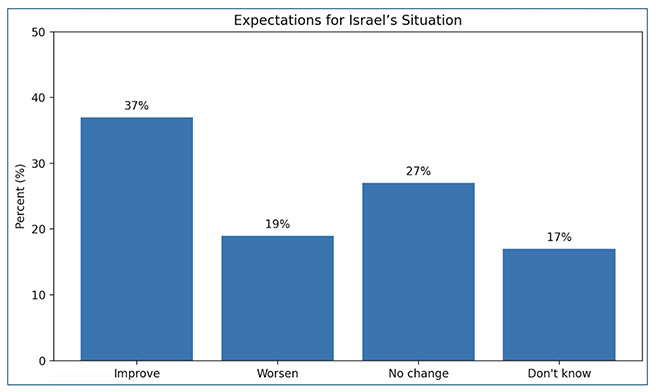
Are Israelis optimistic? Here’s what they say about 2026 (Ch.12 poll):
A reader’s response
Ilan Toby asks: “Do you think Israel truly intends to start another war against Iran?” My response: Did you think it was going to start a war when it did half a year ago?
Shmuel Rosner is senior political editor. For more analysis of Israeli and international politics, visit Rosner’s Domain at jewishjournal.com/rosnersdomain.