1.
Taking a little break from Coronavirus and Israeli politics is essential for my sanity. So today, I will spend a little time writing about the Jews and American politics.
2.
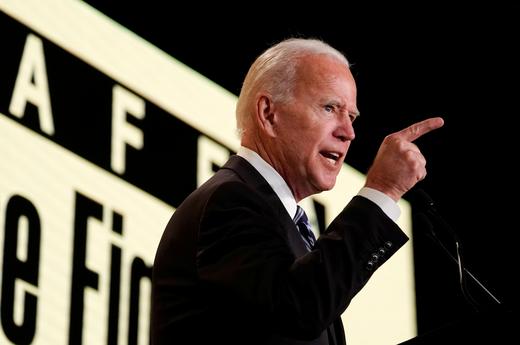
In the last few weeks, more than one columnist wasted his or her precious time in an attempt to convince American Jewish voters that Joe Biden is their candidate for President. Blake Flayton presented the Jewish choice using these words:
“American Jews have a choice. We either can settle for leftist anti-Semitism, which attacks and smears Zionism and the State of Israel and those who feel a connection to it, or vote for Donald Trump’s anti-Semitism, which emboldens violent white supremacists and endangers every American religious and ethnic minority, including Jews.”
Ambassador Stuart Eizenstat used this argument:
“Joe Biden has worked tirelessly with American Jewish organizations for tikkun olam, making our country and the world a better place and to combat growing anti-Semitism on the left and the right… From the beginning of his public career, Biden has understood the unique threats facing Israel. His first foreign trip as senator was to Israel in 1973 shortly before the Yom Kippur War, where he met with Golda Meir and Yitzhak Rabin. He was a fervent advocate for resupplying Israel with arms after the first devastating Arab attacks against Israel seriously weakened its defenses.”
I have no doubt that many more such articles will be written in the coming weeks and months. They seem unnecessary. The Jews have already made up their minds.
3.
How do I know? I begin with common sense, then back it up with data. Here is how:
Using maps of voting by district and precinct, along with data from Jewish community studies (in this case, Palm Beach, Florida), I look at heavily Jewish voting areas and see how they behave during this cycle. The congressional district in Palm Beach is one of the most heavily Jewish in the US (24% Jewish, see the Comenetz study). Using the maps of Jewish areas, one can identify the precincts in which the Jewish vote is more than half, and in some cases more than three quarters of the vote. So – how did these precincts vote yesterday in the Democratic primary election?
In Florida as a whole, 7% of the vote was Jewish. But let’s focus on a precint. For example, I choose 5010, but I examined about 20 such precincts in which the vote is heavily Jewish. The vote in 5010 (Boynton Beach) was 75% Biden, 16% Bloomberg, 5% Sanders. Not all “Jewish precincts” were as heavily tilted toward Biden as this one, but in almost all of them Biden got a share larger than his state average of 62%. It was also clear that in these areas the no-longer-candidate Bloomberg did much better than he should. In precinct 2024, Biden got 82% of the vote, 20 points above his statewide share. Sanders got 1%. Yes, just one.
4.
There are many caveats to be made before we base a conclusion on a few precincts in Florida, Illinois and, well, California. You can detect a similar pattern in heavily Jewish precincts in Los Angeles. But when the primary in LA took place, the race was still somewhat more fluid, so the outcome is not as clear as it is in Florida.
Anyhow: heavily populated Jewish areas tend to include a certain type of Jew. Older, more conservative, often more Orthodox (who must have proximity to shuls and Kosher food). And yet, let’s compare 2020 with 2016. Four years ago, Bernie Sanders attracted 27% of the Palm Beach county vote. In this election, he is down to 16%.
Here is what I think happened: Relatively conservative Jewish voters voted for Biden in the primary election in all recent states. Since he is going to be the Democratic candidate, they would vote for him in the general election. Had Sanders been the Democratic candidate, some of them might have considered Donald Trump. But Biden puts their minds at ease.
5.
We can also put it this way:
Had it been Sanders, more Jews would vote for Trump than did in 2016 (but most Jews would still vote Democratic by a large margin).
Had it been Bloomberg, more Jewish voters would vote Democratic than in 2016 (because he would be an option for Jews who voted Trump but who no longer feel comfortable with him).
Since it is going to be Biden, everything remains pretty much the same. What do I mean by the same? Probably something along the line of 70% for Biden, 25% for Trump.
More politics? Listen to Rosner’s Podcast. This week we analyse election data from Israel. My guest is JPPI’s Noah Slepkov.
Bored at home? My book #IsraeliJudaism, Portrait of a Cultural Revolution (with Prof. Camil Fuchs) is available on Amazon.
And check out David Suissa’s new daily Pandemic Times podcast.