fbpx

March 18, 2020

UPDATE: Shabbat Livestream; Other Events Called Off

Editor’s Note: This story will continue to update as more events are canceled or postponed. We will update you as events also turn to Zoom or other forms of live-streaming.

THU MARCH 19

COVID Crisis Discussion
Wilshire Boulevard Temple Rabbi Steve Leder leads an online discussion, “Teachings from the Covid Crisis,” featuring insights about the current crisis facing the world. This is the first in a video series that will be posted. All ages. 3 p.m. For more information, click here.

“Ask. Dr. Adva”
Dr. Adva Gadoth, an infectious disease specialist at UCLA and NuRoots member, takes questions about the coronavirus during a virtual Q-and-A. 6:30 p.m. Visit the NuRoots Instagram page at instagram.com/nurootsla and register through the Zoom link in the bio.

FRI MARCH 20

“Sex, Addiction & Love” — POSTPONED
Jewish Women’s Theatre’s latest production is “Sex, Addiction & Love in the 21st Century,” featuring love-centered storylines that may sound outrageous — even dangerous — but more often are tender stories of love’s greatest hits: the first crush, the joy of holding hands and the sexual awakening of a high school freshman. JWT is hoping to substitute  this show for its May salon. For more information, visit Jewish Women’s Theatre online here.

National Refugee Shabbat — ONLINE
National Refugee Shabbat, a HIAS project that dedicates the joy of Shabbat to refugees and asylum seekers, is offering online resources, including a resource guide and a video from HIAS CEO Mark Hetfield to help guide Shabbat at home this weekend. For more information, including several do-it-yourself-style educational programs, as well as a liturgical reading, sermon talking points and a text study, click here.

Kabbalat Shabbat Livestream
Join Valley Beth Shalom (VBS) for a livestream of a Kabbalat Shabbat service, featuring Rabbi Noah Farkas and Cantor Phil Baron, on Facebook Live. 5-6 p.m. For more information, visit vbs.org.

Rabbi Laura Geller — POSTPONED
Rabbi Laura Geller, the first woman rabbi to lead a major metropolitan congregation, is the guest speaker at Kol Ami’s monthly Shabbat dinner, which takes place on the third Friday of every month. Geller, rabbi emerita of Temple Emanuel of Beverly Hills, discusses her book “Getting Good at Getting Older.” The evening includes a catered Chinese meal. 6:30 p.m. service. 7:30-9 p.m. dinner. $18. Congregation Kol Ami, 1200 N. La Brea Ave., West Hollywood. RSVP by emailing reception@kol-ami.org. kol-ami.org.

“Stand Up to Hatred” — CANCELED
Temple of the Arts’ “Gospel Shabbat: Stand Up to Hatred” is a musical evening addressing anti-Semitism and racism in society and how to unite communities of faith. Participants in the program include the 40-voice Spirit of David Gospel Choir and Voices of Destiny of the Greater Zion Church Family of Compton. Pastor Michael Fisher and Temple of the Arts Rabbi David Baron are among the speakers.

SUN MARCH 22

“Michael Mitzvah Day” — CANCELED 

The Temple Menorah community gathers to honor the memory of college student Michael Porzucki, who died in 2003 while hiking in Europe. The community performs mitzvot in his memory. In past years, activities at the annual event have included a beach cleanup, writing letters to soldiers and knitting.

“Odessa, Odessa” — CANCELED
Author Barbara Artson appears at Shomrei Torah Synagogue and discusses “Odessa, Odessa.” Her story opens with two brothers from a line of rabbis and cantors who seek to escape anti-Semitism by emigrating in separate directions. One goes to America, the other to Israel. She tracks one family’s progress from Brighton Beach to Los Angeles.

“Hitler’s Tasters” — POSTPONED
A performance of “Hitler’s Tasters” raises funds for Open Temple. The show — playwright Michelle Kholos Brooks’ dark comedy about four young German women who had the “honor” of being hired as Adolf Hitler’s food tasters — is based on true events with shades of 2020. Following the performance is a discussion on “Hitler as Our Hilarious Imaginary Friend,” featuring Kholos Brooks, her husband, author Max Brooks, and Journal Publisher and Editor-in-Chief David Suissa, examining depictions of Hitler in pop culture. Rabbi Lori Shapiro moderates. 3 p.m. $180, $360. Electric Lodge, 1416 Electric Ave., Venice.

TUE MARCH 24

“Hate in the Hood” — CANCELED
Wilshire Boulevard Temple holds a panel discussion on the rise of hate groups in Los Angeles. Speakers are Georgette Pickering, a supervisory special agent with the FBI; Joanna Mendelson, director of special projects for the Anti-Defamation League’s Center on Extremism; and Corey Wenter, head of security for Wilshire Boulevard Temple. Former New York Times columnist and temple congregant Michael Janofsky moderates.

Robert Reich — CANCELED
UC Berkeley professor Robert Reich, who has served in three presidential administrations, appears in conversation with Emmy Award winner Larry Wilmore. They discuss Reich’s new book, “The System: Who Rigged It, How We Fix It.” Reich explains why he maintains that wealth and power have interacted to install an elite oligarchy that has eviscerated the middle class.

THU MARCH 26

Violins of Hope — CANCELED
“Violins of Hope,” a concert featuring violins that were played during the Holocaust and were later rescued and restored, takes place at Sephardic Temple. Among the violins that will be played is the one that saved the life of the late Cantor Isaac Behar, who served at Sephardic Temple. Special guests include Holocaust survivor Susanne Reyto, chair of Violins of Hope, and Amnon and Avshi Weinstein, the father-son team who devoted the last two decades to restoring the violins. The event also includes a tribute to Behar.

“Women in Resistance” — CANCELED
The closing program of Yad Vashem’s “Educate Against Hate” series features Na’ama Shik discussing “Women in Resistance: The Heroic Role of Women in the Holocaust.” Israeli-born filmmaker Guy Nattiv, the grandson of survivors, moderates a Q&A session with Shik, director of Yad Vashem’s Educational Technology Department.

“Who Will Write Our History” — CANCELED
“Who Will Write Our History,” the first film documenting the clandestine effort by numerous leaders within the Warsaw Ghetto to gather 60,000 pages of evidence of Nazi lies, screens at American Jewish University. Director-producer Roberta Grossman and Suzy Snyder, curator of the National Institute for Holocaust Documentation at United States Holocaust Memorial Museum, speak after the screening. Rabbi Jocee Hudson of Temple Israel of Hollywood moderates.

“The Last Resort” — POSTPONED
The Miami Beach-based documentary “The Last Resort,” which screens at American Jewish University, is an ambitious 10-year project that chronicles the largest and most famous destination for Jewish retirees in the 1970s and ’80s. A discussion follows the screening. 1 p.m. $15. American Jewish University, Burton Sperber Jewish Community Library, 15600 Mulholland Drive.

“Otto Frank” — POSTPONED
Actor-writer Roger Guenveur Smith returns to the Bootleg Theatre with his new solo show, “Otto Frank,” a historical account of Anne Frank’s father. The seed for “Otto Frank” was planted when Smith was invited to Amsterdam to perform “Rodney King” and he visited the Anne Frank House. Smith tried to imagine how Frank felt after the war, having lost his wife and two daughters. Bootleg Theatre, 2220 Beverly Blvd., Los Angeles.


Have an event coming up? Send your information two weeks prior to the event to ryant@jewishjournal.com for consideration. For groups staging an event that requires an RSVP, please submit details about the event the week before the RSVP deadline.

Correction March 19: A listing about Valley Beth Shalom (VBS) was updated to reflect that VBS is live-streaming its Kabbalat Shabbat service on Friday at 5 p.m.

UPDATE: Shabbat Livestream; Other Events Called Off Read More »

Israel Chief Sephardic Rabbi Encourages Jews to Leave Phone on During Shabbos as Part of Coronavirus Protocol

Israeli Chief Sephardic Rabbi Yitzhak Yosef issued a statement on March 18 urging Jews to leave their phones turned on during Shabbos in case they are contacted about coronavirus test results and alerts.

The Jerusalem Post reported that the statement, which was released in Hebrew and sent to the Health Ministry, read: “There is no doubt that all those tested for coronavirus have to have a phone on during Shabbat so [the Health Ministry] will be able to update him on his results and tell him where to evacuate. Even those who did not get tested should leave his phone on, so he would be able to be briefed in case it is discovered that he was near a confirmed carrier.”

Jewish Telegraphic Agency Washington, D.C., bureau chief Ron Kampeas tweeted that such a move is “unusual,” noting that “Jewish security officials [in the United States] have run into a brick wall trying to convince Orthodox shuls to keep phones on to get alerts in case there’s an attack nearby.”

Pro-Israel activist Arsen Ostrovsky similarly noted that while Yosef’s statement is applicable only for coronavirus-related alerts, it’s still “unprecedented.”

Israel currently has 433 cases of coronavirus, although that number is expected to increase as testing becomes more available. Israeli Public Minster Gilad Erdan warned on March 17 that a national lockdown is “inevitable,” but Prime Minister Benjamin Netanyahu said on March 18 that he likes the current social distancing measures for the time being.

Israel Chief Sephardic Rabbi Encourages Jews to Leave Phone on During Shabbos as Part of Coronavirus Protocol Read More »

BDJ Gala, Top Cop Awards, AJU Reception

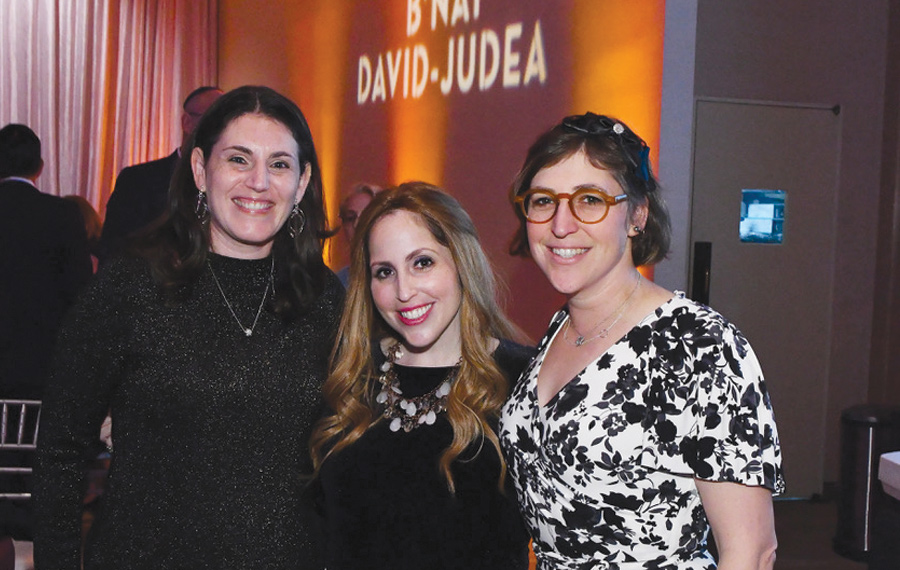
Modern Orthodox congregation B’nai David-Judea (BDJ) held its annual banquet dinner on Feb. 23 at Temple Emanuel of Beverly Hills.

The event sold out 10 days ahead, a first for the community, and drew 300 people. It raised 25% more in funds than last year, “also a record for us,” according to BDJ Executive Director Adynna Swarz.

Recognized were Shana and Mordechai Fishman, who were named the “Migdal David Honorees”; BDJ Rabbanit Alissa Thomas-Newborn, in celebration of her five years of service to the community; and Joanne and Robby Helperin, who were named the “Chasdei David Honorees.”

Actress Mayim Bialik (“The Big Bang Theory”), a long time supporter of BDJ, introduced Thomas-Newborn and emphasized the importance of BDJ providing a female rabbi with the opportunity to lead the congregation.

“Rabbanit Alissa did not exist when I needed someone like her,” Bialik said. “She is a symbol of the flexibility, tenacity and strength of Orthodoxy and the grace and dignity she brings to her position.”


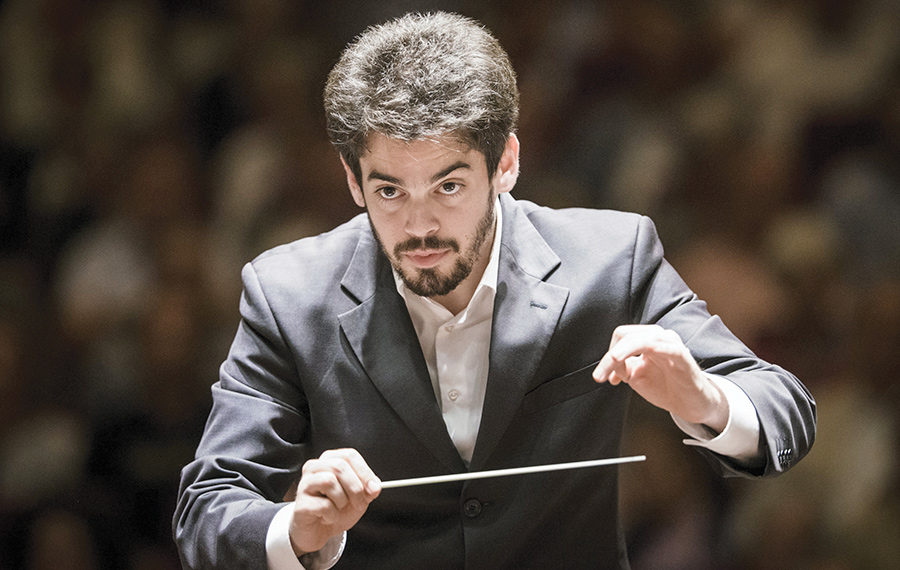
Lahav Shani has been named the designate music director of Israel Philharmonic Orchestra for the 2020-2021 season. Photo by Hans van der Woerd.

Israeli conductor and pianist Lahav Shani has been named the designate music director of Israel Philharmonic Orchestra for the 2020-21 season, succeeding Zubin Mehta.

Shani started his conducting career when he won first prize at the 2013 Gustav Mahler International Conducting Competition. According to the Israel Philharmonic Orchestra, Shani has considerable experience performing chamber music.

He has been serving as the chief conductor of the Rotterdam Philharmonic Orchestra.

The Israel Philharmonic Orchestra was established in 1936 as the Palestine Orchestra.


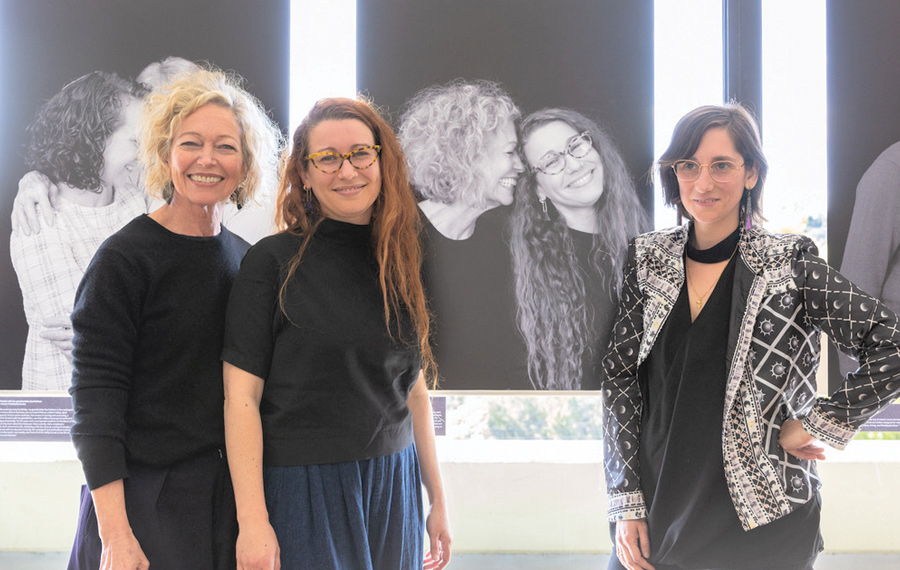
From left: Marty Longbine, Anna Ayeroff and American Jewish University (AJU) curator Rotem Rozental at the opening reception of “Face to Face: Being Deborah” at AJU.
Photo courtesy of BB’nai David Judea.

American Jewish University (AJU) and its Arts at AJU program held an opening reception for its exhibition, “Face to Face: Being Deborah,” a community-focused photography exhibition, on March 8.

The exhibition offers an up-close encounter with women and the women who inspire them, including rabbis, students, educators, artists and philanthropists, mothers, daughters, friends, allies and collaborators.

The photos were taken by local artist Yael Nov and have been on display in the AJU main lobby.

Rotem Rozental, AJU’s chief curator and senior director of arts and culture, said the exhibition “raises a series of questions we are interested in exploring, relating to the nature of womanhood in the Jewish community, in all its complexity, as well as the historical conditions that continue to define our lives today. I am excited to outline these varied perspectives with these two projects, offering an expansive experience for wider audiences.”


Anti-Defamation League Sherwood Prize individual honoree LAPD Detective Orlando Martinez (center) is flanked by LAPD Command Staff, ADL Benefactors Howard and Stephanie Sherwood (far left) and ADL Regional Director Amanda Susskind at the ADL Sherwood Luncheon. Photo courtesy of tthe ADL

The Anti-Defamation League (ADL) held its Helene and Joseph Sherwood Prize for Combating Hate Luncheon on March 10 at the Skirball Cultural Center.

The event recognized Southern California law enforcement personnel “who go above and beyond the call of duty to find hate,” according to the ADL website.

Speakers included ADL Regional Board Chair Scott Harris. Harris said, “Every one of the award recipients is a shining example of leadership and service for the whole law enforcement community.”

Participants included ADL L.A. Deputy Regional Director Ariella Loewenstein and ADL Center of Extremism Senior Investigative Researcher Joanna Mendelson. The two paid tribute to Joe Sherwood, who died last month shortly before his 103rd birthday. With his wife, Helene, he founded the Sherwood Prize in 1996 “to provide a forum for recognizing law enforcement at its best.”

There were four group awardees, including the first responders to the April 2019 Chabad of Poway shooting. The ADL recognized the “bravery and quick response of law enforcement personnel and civilians at the time of the [Chabad] attack.”.

LAPD Assistant Chief Beatrice Girmala introduced the Chabad of Poway first responders, and Poway Mayor Steve Vaus also was in attendance.

The Orange County Sheriff’s Department, which received an award for its investigation of the 2018 slaying of Blaze Bernstein, a 19-year-old University of Pennsylvania student who was home for the holidays when he was killed. Authorities say the suspect, Samuel Woodward, is a member of a violent Neo-Nazi group known as the Atomwaffen Division

Bernstein’s grandparents attended the event, with his grandfather thanking the Sheriff’s Department not only for “investigating the murder as hate crime, but solving the crime.”

LAPD Detective and Hate Crimes Coordinator Orlando Martinez was the day’s individual honoree. Martinez has worked vigorously to bring justice to those who have been victimized by discrimination and hatred, the ADL said.

Additional honorees included the FBI’s L.A. Field Office and the U.S. District Attorney’s Office–Central District of California, which received an award for prosecuting Latino gang members who firebombed several Ramona Gardens apartments in May 2018 because the tenants primarily were African American.

LAPD’s Criminal Investigation Section was awarded a prize for ensuring the perpetrator of an attempted car ramming of Jewish victims in November 2018, allegedly motivated in part by Islamic extremism, would be removed from the community. LAPD Captain Robert Long accepted the award.

Long said the goal of law enforcement was to “help keep people safe and, when we can’t keep people safe, to bring those who took away our loved ones to justice.”

David Sherwood, Joe Sherwood’s grandson, delivered closing remarks.


Want to be Movers & Shakers? Send us your highlights, events, honors and simchas.
Email ryant@jewishjournal.com.

BDJ Gala, Top Cop Awards, AJU Reception Read More »

Rosanna Arquette Apologizes for Israel Coronavirus Tweet

Actress Rosanna Arquette apologized for her March 17 tweet alleging that Israel knew about the coronavirus outbreak for a year and put “lives at risk for profit.”

The initial tweet, which has since been deleted, read: “So Israel has been working on a coronavirus vaccine for a year already? (so they knew it) Vaccines take a long time to know if they are safe and KUSHNER OSCAR is the major investor in the new vaccine that is supposedly coming here. Lives at risk for profit.”

“KUSHNER OSCAR” is a reference to Jared Kushner, a senior adviser to President Donald Trump and his son-in-law. Josh Kushner, Jared’s brother co-founded Oscar, a health care company that helps locate coronavirus testing centers.

After receiving criticism for the tweet, Arquette — who is Jewish — apologized.

“I’m sorry I’ve offended my Jewish family and friends and Israel with my negative careless words,” she tweeted. “What can I say except I’m sorry. We are all in a lot of fear right now and there’s so much toxic, misleading and confusing information. I am sorry.”

https://twitter.com/RoArquette/status/1240136527889530881?s=20

Associate Dean and Director of Global Social Action Agenda at the Simon Wiesenthal Center Rabbi Abraham Cooper praised Arquette’s apology in a statement.

“Appreciate [the] heartfelt apology,” he said. “We have enough problems with real enemies demonizing Israel and Jewish people.”

Pro-Israel activist Arsen Ostrovsky, on the other hand, didn’t buy the apology.

“Negative careless words? It was more than that,” he tweeted in a reply to Arquette’s apology tweet. “It was sheer Jew hatred of the worst kind. And to abuse #CoronaVirus tragedy like this only made it worse. Sorry, but there’s nothing ‘misleading’ or ‘confusing’ about your #Antisemitism!”

Arquette is known for her roles in the movies “Pulp Fiction” and “The Whole Nine Yards,” among others.

Rosanna Arquette Apologizes for Israel Coronavirus Tweet Read More »

Justin Levi on Elder Care, Coronavirus and the L.A. Jewish Community

According to the Centers for Disease Control and Prevention (CDC), one of the greatest populations at risk from the novel coronavirus — COVID-19 — are the elderly and those with compromised immune systems.

Justin Levi, president of the Community Shul in Pico-Robertson and the owner of elder care homes in Los Angeles including the Clarendon House and the Kentland House in Woodland Hills, has been taking a number of precautionary measures to ensure his residents stay safe. The Journal spoke with him to discuss these guidelines, and how the greater Jewish community of Los Angeles also can protect seniors.

Editor’s Note: This interview was conducted prior to Gov. Gavin Newsom’s March 15 order requiring all seniors 65 and over to self isolate.

Jewish Journal: How are you protecting residents at this time?

Justin Levi: We’re doing a lot. The sort of basic level is the sanitation procedures with the residents. Caregivers are required to wear masks and gloves at all times, and we’ve repeatedly gone over proper sanitation procedures like using hand sanitizer and hand soap. We talk about how to open a door to ensure your germs are not going on the door handle. Caregivers and residents each get their temperature taken three times a day.

We’re also going to be putting on hold any nonessential medical visits like routine doctors’ appointments. If somebody has something really essential like dialysis, obviously you can’t put that on hold.

Beyond that, our real concern is people coming into the facility. We’ve put a temporary hold on all nonessential visitors like our hair stylist and activities coordinator. We’ve even had to talk to family members about only coming if it’s essential. They are required to call beforehand and get their temperature taken. It’s an inconvenience to families who come a lot and visit loved ones. It’s about limiting exposure to people from the outside as well as constantly being vigilant about everything, so it’s definitely an adjustment. Perhaps the most difficult aspect of it is in regard to our employees. We put in a policy that anyone who travels outside of the country has to be quarantined for two weeks upon returning.

JJ: Do you normally take these measures for the flu or is this different?

JL: The things we normally do for the flu are sanitation procedures, but for this we don’t have enough information yet. It appears the flu is more virulent than coronavirus but there is this very long incubator period for coronavirus, which makes things very complicated.

JJ: Who is considered a senior?

JL: It depends on whom you ask. It can be 65 and up, but in my industry it’s 60 and above. It seems to be that coronavirus immunity goes down after 60. In our facility, we have 80-year-olds who are healthier than some 65-year-olds. It’s not an exact science, but generally after 60, your immune system is going to start declining.

As far as younger people who are healthier and have a healthier immune system, it’s about limiting exposure to the elderly, including your own grandparents. You should be sanitizing everything, keeping a distance and even wearing a mask if necessary. You could be fine but you might be a carrier at this point, which could be the real danger.

JJ: How can we, as a community, protect seniors during coronavirus?

JL: The seniors themselves need to be monitored more closely. Seniors who are independent should be taking their temperature multiple times a day and, the moment they show symptoms, they need to get checked out.

As far as younger people who are healthier and have a healthier immune system, it’s about limiting exposure to the elderly, including your own grandparents. You should be sanitizing everything, keeping a distance and even wearing a mask if necessary. You could be fine but you might be a carrier at this point, which could be the real danger.

JJ: What other general health measures should seniors take?

JL:  The moment a senior is sneezing or coughing they need to get checked out. The sooner they get checked out the better, because even older people are able to survive this disease. I’ll confess that I am skeptical about some of the global statistics in terms of death rates. The three hardest hit countries are China, Iran and Italy. China botched the entire thing, Iran has a Third World health care system and even in Italy, their socialized health care system lacks the resources to deal with this. The biggest reason their death rate is higher is they literally don’t have the resources to handle everything.

While it’s important not to panic, what I’d say to any senior is go get checked out if you have any symptoms, limit your exposure to other people and practice good hygiene. Constantly wash your hand thoroughly, sanitize them and wipe down any surfaces. I said to all my caregivers, “Pretend you’re all germaphobic.”

JJ: As president of the Community Shul, are you taking any measures for senior members there?

JL: What we’re doing is not shaking hands in shul these days. Even on Purim, no one shook hands. Everyone was saluting each other or acknowledging one another at a distance. We were not kissing the siddur or Torah unnecessarily. I did air kisses when the Torah was being brought around. Obviously, in that regard, people can make their own decisions. We’re constantly in touch with the relevant people and avoiding really large crowds. We’re just doing what we can.

Justin Levi on Elder Care, Coronavirus and the L.A. Jewish Community Read More »

Stay at Home Crafts: Felt Succulents

During the rainy season, I like to think of craft projects that can keep us occupied while we’re stuck indoors. Now that we’re practicing “social distancing” and self-quarantine, these creative activities are more important than ever.

So in the spirit of weaning you off of another Netflix binge, here’s an easy craft that can get pretty addictive — succulents made out of felt. For those who tend to kill any plant, these felt succulents are indestructible. The good thing is all the supplies can be ordered on Amazon so you don’t even have to brave a trip to the store.

You can make a few to put in a pot, or assemble a whole bunch of them for a wreath, a photo backdrop or a big sign with the succulents spelling out “Wash Your Hands.”

What You’ll Need:
Felt in various colors
Scissors
Glue or hot glue


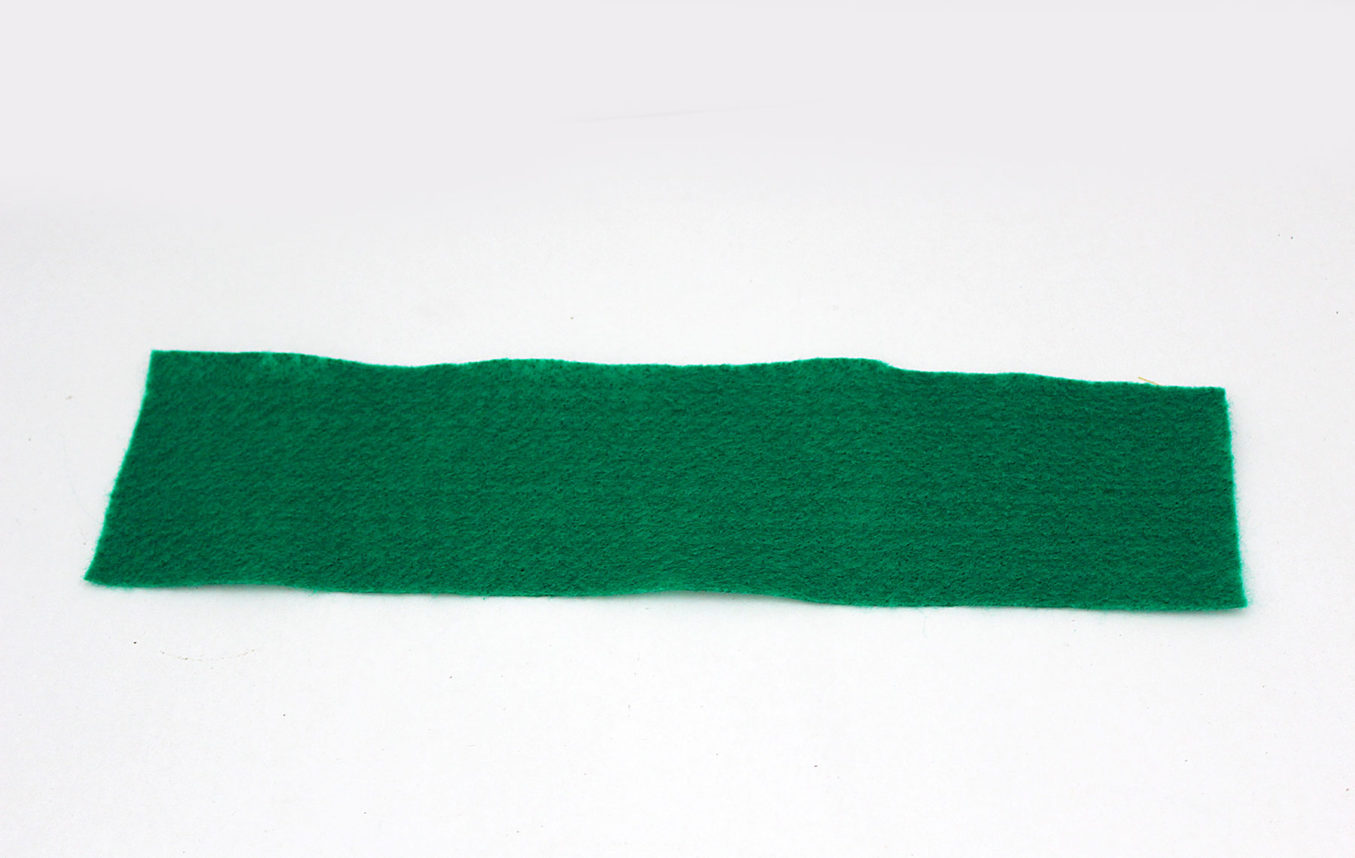
1. Cut a piece of felt to about four inches high by 12 inches wide. You can vary the height to create different sizes of succulents.


2. Cut petal shapes along the length of the felt, leaving about a half inch border at the bottom. Vary the shape of the petals from round to tear-shaped to pointy.


3. Apply a line of glue or hot glue on the border at the bottom. Starting at one end, roll the felt. As you roll it, the glue holds together the felt succulent.


4. Spread the petals, and you’ve created a succulent. Make them in various shades of green or even other colors. Display several in a pot, and don’t worry about watering them.

Stay at Home Crafts: Felt Succulents Read More »

Obituaries: March 20, 2020

Mitchell Ackerman died Feb. 22 at 70. Survived by daughters Emily, Alexandra; son Jesse. Mount Sinai

Lynn K. Altman died Oct. 13 at 86. Survived by daughter Jan; daughter-in-law Pohlian; 1 grandchild. Malinow and Silverman

Richard Bank died Feb. 23 at 90. Hillside

Saul Berman died Feb. 11 at 85. Survived by wife Sandra; daughter Robin Delikta; sons Mark, Jeff; 4 grandchildren. Mount Sinai

Raven Bertram died Feb. 26 at 93. Survived by wife Celia; daughter Michelle; son Jonathan (Jennifer). Hillside

Jean Bloom died Feb. 21 at 98. Survived by husband Seymour; son George (Miriam) Hirsch; stepdaughter Sharon (Bill) Bentley Bloom; stepson Scott H. Bloom; daughter-in-law Barbara Hirsch; 2 grandchildren. Mount Sinai

Bernard Briskin died Feb. 29 at 95. Survived by wife Judith. Hillside

Gladys Charitan died Feb. 20 at 91. Survived by husband Arnold; daughter Janeen (Yussie); 5 grandchildren. Hillside

Peter Chirchick died Feb. 15 at 76. Survived by daughter (Staci); sons Adam, Max, Mitch. Hillside

Curtis Danning died Feb. 27 at 99. Survived by sons Matthew, David, Stephen, Gordon; 2 grandchildren. Hillside

Bernard Drapkin died Feb. 19 at 76. Survived by son Brian; 2 grandchildren; sister Carol. Hillside

Marvin Elliot died Feb. 5 at 83. Survived by wife Pearl; daughter Lisa (Paulo); son Todd; 4 grandchildren. Hillside

Benjamin Feldman died Feb. 23 at 99. Survived by sons Charles, Samuel (Robin), Daniel, Harold. Hillside

Arlyne Gruesner died Feb. 26 at 88. Survived by daughter Beth; son Harold; 6 grandchildren. Hillside

Liselotte Hanock died Feb. 11 at 86. Survived by husband Franklin; daughter Andrea; son Trace; 3 grandchildren.

Jerry Joseph died March 1 at 87. Survived by wife Rosalind; daughter Dennice; sons Paul,  Douglas; 6 grandchildren; 3 great-grandchildren. Hillside

Elena Kabbani died Feb. 11 at 85. Survived by daughters Mary, Esther; sons Jack (Eileen), Charlie; 12 grandchildren; 20 great-grandchildren. Hillside

Alvin Kasselman died Feb. 18 at 89. Survived by daughters Judith, Janet, Carrie; son Lane; 5 grandchildren. Hillside

Donald Kuritzky died Feb. 6 at 93. Survived by daughter Jill (Jeffrey); 1 grandchild. Hillside

Jeffrey Lipton died Feb. 19 at 56. Survived by wife Stephanie; daughter Olivia; son Kyle; sister Cheryl. Hillside

Dennis Morehead died Feb. 9 at 73. Survived by wife Patricia; sons Ryan (April), Benjamin (Amanda); 8 grandchildren. Hillside

Harold Morrison died Feb. 21 at 91. Survived by wife Teresa; 7 grandchildren; 1 great-grandchild. Hillside

William Meyers died Feb. 17 at 88. Survived by daughter Diana; son Larry. Mount Sinai

Joan Nadler died Feb. 11 at 90. Survived by daughters Stacey, Daryl; son James; sisters Audrey, Helene; 7 grandchildren. Hillside

Heidi Pentz-Cohen died Feb. 16 at 56. Survived by daughter Eden Cohen; son Aviz Cohen; mother Carol Pentz; brother Michael Pentz. Malinow and Silverman

Arleen Ruby-Leviton died Feb. 20 at 86. Survived by sons David (Alwand), Marshall (Michelle); 1 grandchild. Hillside

Ronald Schenk died Feb. 13 at 64. Survived by sister Bonnie. Hillside

Saralie Ida Shallman died Feb. 19 at 85. Survived by husband William; daughters Debra (Bradley Lick), Nancy (Peter Yorke); sons Dan (Ellen), Morton; 10 grandchildren. Mount Sinai

Joseph Sherwood died Feb. 12 at 102. Survived by sons Howard (Stephanie), Larry (Elaine); 6 grandchildren; 7 great-grandchildren. Hillside

Nelson Shrager died Feb. 10 at 78. Survived by wife Carolyn; daughter Leslie; son Stephen; 4 grandchildren. Hillside

Albert Solnit died Feb. 18 at 90. Survived by wife Renee; daughters Mindy (Nicki) Ross, Jane (Jonathan) Ross-Schriber, Elizabeth (Ryan) Ross-Edmond; sons Jay (Lanna), Gary (Julie), Peter Ross; 6 grandchildren. Mount Sinai

Bernard Sosner died Feb. 19 at 87. Survived by wife Phyllis; sons Jeff (Adrienne), Steve; 2 grandchildren; brother Richard. Mount Sinai

Eugene Strull died Feb. 12 at 93. Survived by daughters Jacqueline (Steve), Sandy (Harvey); 2 grandchildren; 1 great-grandchild. Hillside

Rhea Rose Sturza died Feb. 20 at 92. Survived by daughter Patricia Boyd; son Mark. Mount Sinai

David Weiss died Feb. 24 at 80. Survived by wife Andrea Kahn; daughter Julie; son Robert “Rob” (Julia Gonzales); 3 grandchildren; brother Larry. Malinow and Silverman

Robert Witt died Feb. 21 at 88. Survived by wife Geraldine; daughter Julie (Stephen) Gaal; son Neil (Guadalupe); stepdaughter Renita Cantor; stepsons Richard Armour, Randall (Susan) Armour; 12 grandchildren; 10 great grandchildren. Mount Sinai

Rose Ziskrout died Feb. 13 at 98. Survived by daughters Abbe, Toby; 4 grandchildren; 5 great-grandchildren. Hillside

Obituaries: March 20, 2020 Read More »

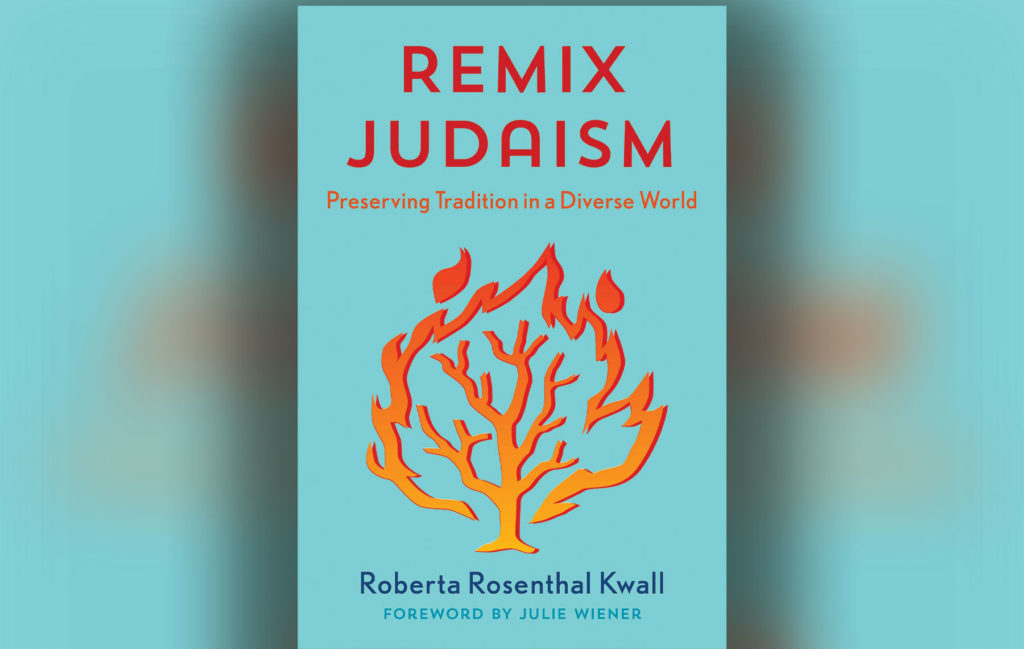
New Book Remixes Judaism for Secular Jews

The challenge that Roberta Rosenthal Kwall confronts in “Remix Judaism: Preserving Tradition in a Diverse World” is summed up at the outset of her book in a provocative but accurate foreword by Julie Wiener.

“Perhaps with the exception of sharing a history and not believing in the divinity of Jesus,” Wiener writes, “there is no single aspect of Jewish identity that all Jews can agree upon.”

Kwall herself picks up the gauntlet, with both strength of mind and the courage of her convictions, in “Remix Judaism,” a term that she uses to define a fresh approach to defining what it means to be Jewish without discarding its traditions and practices. Her goal is to address nonobservant Jews with “a different model, both conceptually and practically,” than Jewish outreach by observant Judaism has used until now.

“In twenty-first century America, meaningful Jewish identity must be actively cultivated if it is to continue,” Kwall writes. “With this book I hope to open a dialogue with all Jews, and other willing listeners, about how to strengthen their connection to the teachings and practices of the Jewish tradition in a way that comports with the sensibilities of Jews who are not, and likely never will be, observant by conventional measures.”

Kwall is entirely open-minded about that various elements that define Jewish identity in contemporary America. She points out the hard fact that ritual observance, adherence to Jewish religious law, solidarity with Israel and even belief in God are not necessarily shared in common by those who regard themselves as Jewish. And she stubbornly refuses to write off those who are less “fastidious” in their Jewishness. Indeed, the whole point of her admirable book is to call them back to the Jewish community in way that will catch and hold their attention.

Roberta Rosenthal Kwall’s goal is to address nonobservant Jews with “a different model, both conceptually and practically,” than Jewish outreach by observant Judaism has used until now.

Kwall is the Raymond P. Niro Professor at DePaul University College of Law. Her previous books include “The Myth of the Cultural Jew” and “The Soul of Creativity” and her articles have appeared in the Chicago Tribune, The Forward, Commentary and the Jewish Journal. Her background in the law inclines her to regard Jewish law and Jewish identity as “completely intertwined,” and yet she approaches halachah with willingness to ask penetrating questions.

She recalls, for example, a question she asked of a friend who embraced the tradition of wearing a wig. The friend answered: “I knew this is what God wanted of me.” To her readers, Kwall confides: “I remember thinking that I must have missed this memo! To me, the requirement of a head covering seems much more culturally imposed than a requirement issued from the Divine.”

Significantly, Kwall’s tool of choice in “Remix Judaism” is the accumulation of writings in the Talmud that are collectively known as aggadah, which is defined as the “narrative” and “nonlegal” passages of the Talmud and post-Talmudic rabbinic writings, but is perhaps better understood as the vast treasury of stories retold by the ancient rabbis and sages, many of which are inspired by the narratives in the Bible but also “incorporate wisdom, speculation, and even folklore.”

Storytelling as we find it in aggadah is essential to the concrete practice of what Kwall calls “Remix Judaism.” “Aggadah serves as a means of connecting with Jewish tradition in an authentic manner,” she explains, and provides the raw material that serves her goals of “remix and appropriation by future generations.”

But storytelling is only a tool of Remix Judaism. In Kwall’s program, the first step on the observance of Shabbat, and — as an historian of the movement called Cultural Judaism — she quotes Ahad Ha’am, founder the of the movement, for the proposition that “more than the Jews have kept the Sabbath, the Sabbath has kept the Jews.” Kwall is less interested in the observance of Shabbat “to the letter of the law” and prefers to focus on its “celebratory” moments, a focus that offers the “tremendous potential to safeguard Jewish tradition in a world of increasing secularization.”

The same theme is carried forward through the Jewish calendar. Kwall acknowledges that observant Jews may find her “framing” of Shabbat and the holidays “largely unacceptable,” but she argues that the whole point of Remix Judaism is to address less observant Jews who “need to find a personal meaning in order to celebrate tradition.” She considers even the most awkward and even painful aspects of intermarriage, Jewish education, and the institution of b’nai mitzvah, always finding a way to reframe the conversation according to the values and techniques of Remix Judaism.

Thus, for example, she acknowledges that many Jewish families are celebrating the bar mitzvah or bat mitzvah of their children outside the synagogue — a “DIY Bar Mitzvah” — and she acknowledges “the Internet generation’s generalized preference for customization and personalized experiences.” But she emphasizes that preparation for a bar mitzvah or bat mitzvah need not be the occasion for the young man or woman to “become more observant, but rather to become more knowledgeable.” In Remix Judaism, then, the bar mitzvah is not a one-day event but “a milestone rather than a capstone to their child’s Jewish education.”

She even devotes a chapter to the appeal of food in drawing Jews back to Judaism. “In today’s food-obsessed culture, the linkages of special food with Shabbat can be a particularly compelling draw,” she argues. But she is not talking about a sentimental attachment to bagels and lox; rather, she proposes that an appreciation for the emotional resonance of Jewish foods can serve as a path all the way to “a remixed approach to kashrut.” For Kwall, it meant a family “contract” known as DODO (“our abbreviation for the Doctrine of Dining Out”), which meant keeping kosher at home and avoiding pork, shellfish and “blatant mixing of milk and meat during the same course” when dining in a restaurant.

The readers whom Kwall wants to reach in “Remix Judaism” include not only secular Jews and their non-Jewish spouses but every Jew, including observant Jews of every denomination, who share her goal of preserving the Jewish people by promoting what she
regards as a meaningful Jewish identity. That’s why “Remix Judaism,” a beautifully written and deeply personal book that is rooted in both wisdom and scholarship, deserves the wide readership that its author hopes
to find.


Jonathan Kirsch, attorney and author, is the book editor of the Jewish Journal.

New Book Remixes Judaism for Secular Jews Read More »

Kosha Dillz and Matisyahu Drop Their New Single

Rami Matan Even-Esh was released from a New Jersey prison 15 years ago. While many rappers go in and out of incarceration in their pursuit of a hardened image, Even-Esh used the art form to stay out of jail, which is how he found himself performing at B.B. King’s Blues Club in New York City on Christmas Day and how he found Matthew Paul Miller.

Even-Esh and Miller are better known by their stage names, Kosha Dillz and Matisyahu. They are two of the most prominent Jewish rappers today, maintaining an explicit Jewish essence in their work. They released their third duet, “For the Ones,” this week.

“Matisyahu is a real improv genius in the studio,” Kosha Dillz told the Journal. “There are lots of layers to lyrics that create an atmosphere and vibe. The way he writes is similar to mine, and it takes an amazing engineer to know how we piece things together into a song.”

“For the Ones” is produced by Grammy-nominated Sam Barsh (who has collaborated with Kendrick Lamar, Anderson Paak and even Stevie Wonder) and 16-year-old rising producer Snowball Beats. It’s the final single off Kosha Dillz’s fourth solo LP, “Nobody Cares Except You,” which will be released on April 3. The album’s title, he explained, expresses that past failures are small in the greater scheme of the universe. It’s also his personal mantra when it comes to perseverance.

Like many songs in Kosha Dillz and Matisyahu’s discography, the track is ripe with vivid Jewish symbolism: “Blessings overabundant/my cup be running over for the glory to his kingdom,” Matisyahu proclaims on the track, referencing how during kiddush it’s a mitzvah to fill up a goblet until it spills over.

Kosha Dillz continues the blessings, rapping, “When I’m awake I get out of my head/ Don’t think about what everyone said/ Comment section denial river run red/ Hamotzi lechem min haaretz slice the bread/ And then, maybe I can find one friend,” placing the Jewish blessing over a meal directly into the verse.

At its core, “For the Ones” is a yearning for a simpler time, not unlike when Kosha Dillz and Matisyahu first crossed paths.

“I just wanna sit like I used to: no lies/ no fakes, no gurus,” reads the chorus.

“We used to play games, now we go on tours, used to be fun, now it feels like chores,” Kosha Dillz admits in the song’s bridge.

“I don’t know if I can do this anymore/ to the land Israel I will explore,” he concludes, referencing his recent decision to make aliyah.

The overarching theme of the track is how nostalgia is ripe with gratitude
but also loneliness, and can often encourage you to doubt yourself and compare yourself to others. For Kosha Dillz, collaborating with Matisyahu empowered him to be vulnerable in his song, he said.

When Kosha Dillz began rapping in the early 2000s in New York City, his original stage name was Kosher Dill. However, he changed his act’s name to KD Flow after being shamed for his Jewishness. Then, following a battle with substance abuse and incarceration, he reworked and reclaimed his Jewish identity and started to perform as Kosha Dillz.

Matisyahu also struggled with substances in his youth, which led him to finish high school at a wilderness program in Oregon. He was known to others as “Matt, the Jewish rapper kid from New York.” Back then, he performed as MC Truth.

Like Kosha Dillz, Matisyahu felt isolated because of his Jewish heritage. “I was suddenly the token Jew. This was now my search for my own identity, and part of Judaism feeling more important and relevant to me,” he has previously stated.

It was in response to that ostracization that Matisyahu became more active in prayer and eventually adopted for his act the name he was called in Hebrew school.

Today, Matisyahu’s Jewish-themed reggae is a staple at Jewish summer camps but also has resonated with the community on a deeper level. In January, he performed at the “No Hate. No Fear” march against anti-Semitism in New York City, which drew 25,000 Jews and allies.

And Dillz often performs in Jewish spaces or creates them himself. For the past nine years, he’s run the “OY VEY” showcase at South by Southwest (SXSW) every March in Austin, Texas, which was conceived as a Jewish-themed event to fight anti-Semitism. And when this year’s SXSW was canceled following the outbreak of the novel coronavirus COVID-19, he hosted the event, anyway.

For Kosha Dillz, the ongoing collaboration with Matisyahu fulfills both his musical and Jewish soul. “When you work with people who are that talented,” he said, “you will also write something very deep and amazing that couldn’t be done without them in the room.”

“For the Ones” is available on Apple Music.


Ariel Sobel is the Journal’s social media editor.

Kosha Dillz and Matisyahu Drop Their New Single Read More »

‘Chichinette’ Documents the Life of an Accidental Spy

Looking at Marthe Hoffnung Cohn, you would never guess that this tiny 70-pound Frenchwoman spent the last year of World War II crossing enemy lines to gather crucial intelligence for the Allies. But the box of medals she travels with and the certificates of valor on the walls of her South Bay home signify that Cohn is not your average 99-year-old Jewish grandma.

The subject of the documentary “Chichinette: The Accidental Spy,” Cohn first detailed her exploits in her 2002 memoir, “Behind Enemy Lines: The True Story of a French Jewish Spy in Nazi Germany.” She now tirelessly travels the country and the world — medals of honor in tow — to speak about her experiences in vividly remembered detail. She does so “Because people have such a short memory,” she said. “You have to remind them of what occurred and why it occurred.”

The granddaughter of an Orthodox rabbi and one of seven children, Cohn had a good life in Metz, a French town near the German border, until the Nazis occupied France in 1940. Conducting their own secret resistance, her family sheltered and helped many Jews flee to the free zone in the south. Her sister was arrested, imprisoned and deported to Auschwitz, and her fiancé was caught and executed. But Cohn was undeterred. Volunteering for the French army, she was assigned to do social work until her commander discovered she was fluent in German. The blond, blue-eyed nurse was transferred to the Intelligence service.

She spoke about having to precisely time crossing the Swiss-German border when the patrolling guards were farthest away. “I realized the immensity of what I was going to do and I became so terrified that I was completely paralyzed. I couldn’t move for two or three hours,” she said.

Once in Germany, she was nearly exposed when a contact noticed that her silk stockings were torn, having ripped en-route. When the woman asked point-blank if she was a spy, Cohn laughed and said,“ ‘Do I look like a spy?’ Thinking fast got me out of trouble.”

It was the first of many close calls. “I was very afraid to be tortured,” Cohn confided. “I had asked for cyanide pills, but they never gave them to me.”

“I had only one thought: my mission and how to survive. I was risking my life to find the most important information I could.” — Marthe Cohn

On every assignment, “I had only one thought: my mission and how to survive,” she said. “I was risking my life to find the most important information I could.”

Outspoken and feisty, Cohn was given the nickname Chichinette “because I constantly questioned things.” She hated it, and was “horrified” when director Nicola Hens used it for the film’s title without her knowledge or approval. Hens’ camera followed her for three years as she traveled for appearances and speaking engagements at schools and universities, synagogues, veterans’ groups and other Jewish organizations.

While in Paris for lectures in November 2019, Cohn suffered four fractures in a fall and became seriously ill, but she resumed her busy schedule as soon as she could walk. “My husband doesn’t say anything because he knows how important this is to me,” she said.

Seven years her junior, Major Cohn, a retired doctor, accompanies her on all her engagements. They met in Geneva, Switzerland, after the war and came to the United States in 1956, settling first in Newark, N.J., where she learned English, and then moved to St. Louis. Now married for 62 years, they have two sons, Stephan and Remi. They’re members of Temple Beth El in San Pedro, a Reform congregation. “I’m very Jewish,” Cohn said. “But I could not belong to an Orthodox synagogue now.”

Asked what keeps her going as she approaches her 100th birthday on April 13, Cohn credited willpower and the determination to keep telling her story. “It’s important to have a goal in life,” she said. “If you just sit in a chair and don’t move, you’re going to die young.”

When told her life story would make a compelling feature film, Cohn couldn’t conjecture who might play her. “I only know the old actresses. I never go to movies,” she said. “The only TV I watch is ‘60 Minutes.’ I have no time for that.”

Reflecting on her remarkable life, Cohn commented, “You never know what life will bring you. I’m very proud of what I’ve done,” she said. “But I’m proudest that I saved my family.”

She stressed the importance of teaching the lessons of the Holocaust to the next generation. “One person can change things,” she said. “When I talk to young kids, I tell them be engaged, and do not accept any order that your conscience can’t approve.”

“Chichinette” will be available for rental and purchase at KinoNow.com on April 15.

‘Chichinette’ Documents the Life of an Accidental Spy Read More »