According to the Centers for Disease Control and Prevention (CDC), one of the greatest populations at risk from the novel coronavirus — COVID-19 — are the elderly and those with compromised immune systems.
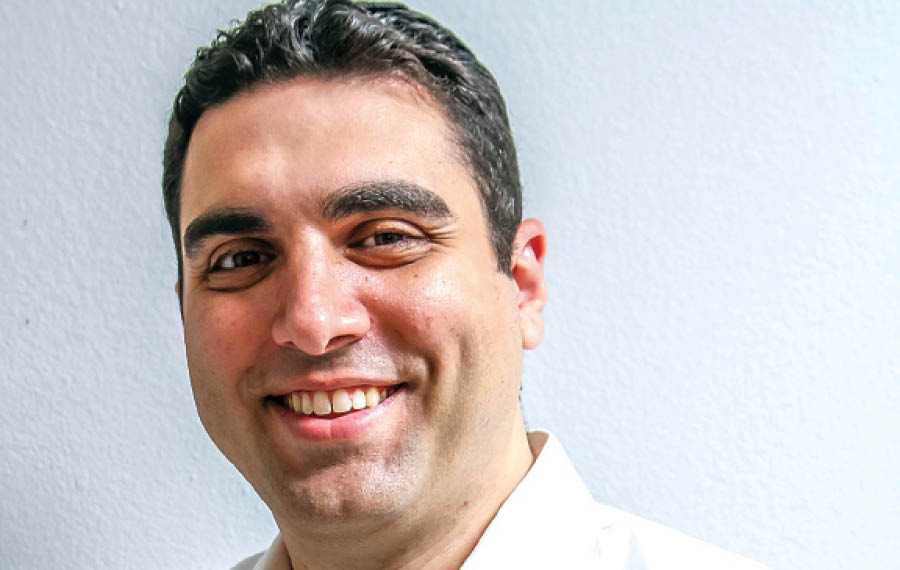
Justin Levi, president of the Community Shul in Pico-Robertson and the owner of elder care homes in Los Angeles including the Clarendon House and the Kentland House in Woodland Hills, has been taking a number of precautionary measures to ensure his residents stay safe. The Journal spoke with him to discuss these guidelines, and how the greater Jewish community of Los Angeles also can protect seniors.
Editor’s Note: This interview was conducted prior to Gov. Gavin Newsom’s March 15 order requiring all seniors 65 and over to self isolate.
Jewish Journal: How are you protecting residents at this time?
Justin Levi: We’re doing a lot. The sort of basic level is the sanitation procedures with the residents. Caregivers are required to wear masks and gloves at all times, and we’ve repeatedly gone over proper sanitation procedures like using hand sanitizer and hand soap. We talk about how to open a door to ensure your germs are not going on the door handle. Caregivers and residents each get their temperature taken three times a day.
We’re also going to be putting on hold any nonessential medical visits like routine doctors’ appointments. If somebody has something really essential like dialysis, obviously you can’t put that on hold.
Beyond that, our real concern is people coming into the facility. We’ve put a temporary hold on all nonessential visitors like our hair stylist and activities coordinator. We’ve even had to talk to family members about only coming if it’s essential. They are required to call beforehand and get their temperature taken. It’s an inconvenience to families who come a lot and visit loved ones. It’s about limiting exposure to people from the outside as well as constantly being vigilant about everything, so it’s definitely an adjustment. Perhaps the most difficult aspect of it is in regard to our employees. We put in a policy that anyone who travels outside of the country has to be quarantined for two weeks upon returning.
JJ: Do you normally take these measures for the flu or is this different?
JL: The things we normally do for the flu are sanitation procedures, but for this we don’t have enough information yet. It appears the flu is more virulent than coronavirus but there is this very long incubator period for coronavirus, which makes things very complicated.
JJ: Who is considered a senior?
JL: It depends on whom you ask. It can be 65 and up, but in my industry it’s 60 and above. It seems to be that coronavirus immunity goes down after 60. In our facility, we have 80-year-olds who are healthier than some 65-year-olds. It’s not an exact science, but generally after 60, your immune system is going to start declining.
As far as younger people who are healthier and have a healthier immune system, it’s about limiting exposure to the elderly, including your own grandparents. You should be sanitizing everything, keeping a distance and even wearing a mask if necessary. You could be fine but you might be a carrier at this point, which could be the real danger.
JJ: How can we, as a community, protect seniors during coronavirus?
JL: The seniors themselves need to be monitored more closely. Seniors who are independent should be taking their temperature multiple times a day and, the moment they show symptoms, they need to get checked out.
As far as younger people who are healthier and have a healthier immune system, it’s about limiting exposure to the elderly, including your own grandparents. You should be sanitizing everything, keeping a distance and even wearing a mask if necessary. You could be fine but you might be a carrier at this point, which could be the real danger.
JJ: What other general health measures should seniors take?
JL: The moment a senior is sneezing or coughing they need to get checked out. The sooner they get checked out the better, because even older people are able to survive this disease. I’ll confess that I am skeptical about some of the global statistics in terms of death rates. The three hardest hit countries are China, Iran and Italy. China botched the entire thing, Iran has a Third World health care system and even in Italy, their socialized health care system lacks the resources to deal with this. The biggest reason their death rate is higher is they literally don’t have the resources to handle everything.
While it’s important not to panic, what I’d say to any senior is go get checked out if you have any symptoms, limit your exposure to other people and practice good hygiene. Constantly wash your hand thoroughly, sanitize them and wipe down any surfaces. I said to all my caregivers, “Pretend you’re all germaphobic.”
JJ: As president of the Community Shul, are you taking any measures for senior members there?
JL: What we’re doing is not shaking hands in shul these days. Even on Purim, no one shook hands. Everyone was saluting each other or acknowledging one another at a distance. We were not kissing the siddur or Torah unnecessarily. I did air kisses when the Torah was being brought around. Obviously, in that regard, people can make their own decisions. We’re constantly in touch with the relevant people and avoiding really large crowds. We’re just doing what we can.