fbpx

March 18, 2020

Quarantine Nation: Dispatches from the Jewish Journal

As the coronavirus continues to spread, we are learning on the fly how to best adapt our Jewish practices in the time of COVID-19. Throughout these pages you’ll see how both the West and East coasts are grappling with the unique challenges we face and how they continue to change — day-to-day, moment-to-moment.

Here, in Los Angeles, after Mayor Eric Garcetti’s March 15 announcement, all bars, entertainment venues, nightclubs and gyms have been shut down until March 31. Restaurants can offer only takeout and delivery service; all dining-in has been halted. By the time the Journal goes to press, new restrictions may already be in place.

California Gov. Gavin Newsom has ordered all those 65 and older and those with compromised immune systems to self-quarantine. Schools are closed, businesses are suffering, supermarket shopping has become a blood sport and cabin fever has already set in.

Our reporter Leslee Komaiko writes about being stuck at home with her children indefinitely. Dan Messinger, who owns Bibi’s Bakery & Cafe, writes about how his and other businesses are being affected.

Synagogues are rethinking how to stay connected in a virtual world, and under the banner “Jew it at Home,” Clergy at Temple Emanuel of Beverly Hills, Temple Isaiah, Temple Israel of Hollywood, University Synagogue, Temple Akiba of Culver City and Congregation Ner Tamid of Henderson, Nev., have curated a compilation of Jewish resources, media and materials for adults and children to help ease the required social distancing.

“Social distancing,” they note, “does not mean social isolation.” Check out their resources here.

Here at the Journal, our motto of “Connect. Inform. Inspire” has never been more relevant. We want to hear from you and share your stories. Email us your stories, tips, hacks and photos of how you’re adapting during this period to editor@jewishjournal.com or tweet us at @JewishJournal.

Stay safe. Stay kind.

Quarantine Nation: Dispatches from the Jewish Journal Read More »

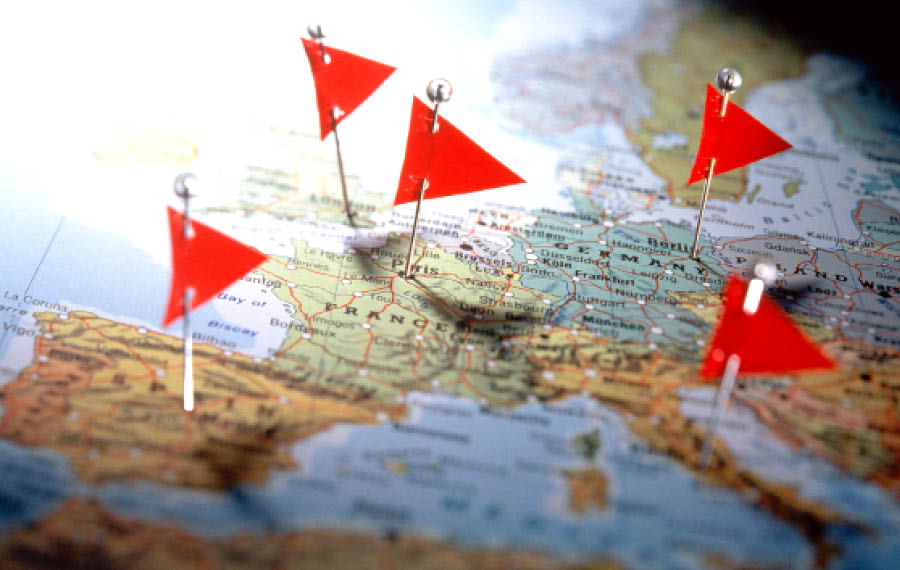
Europe on Lockdown From COVID-19

Empty toilet paper shelves, empty seats at restaurants, empty desks in schools.

These emerging iconic coronavirus images have become commonplace in Europe as the continent begins nationwide lockdowns amid a rising number of COVID-19 cases. On March 14, the World Health Organization called Europe the “epicenter” of the pandemic.

Germany

In a televised press conference on the evening of March 16, Chancellor Angela Merkel declared a national shutdown, calling on nonessential businesses to close their doors and people to limit nonessential social contact. Schools have been closed since March 16. The federal government also imposed border controls with France, Switzerland, Austria, Denmark and Luxembourg, and this week halted flights from China and Iran. The car manufacturer Volkswagen has announced a partial halt in production.

Germany, however, also has been a source of good news. A German vaccine-maker, CureVac, believes it is on the cusp of developing a vaccine. U.S. President Donald Trump offered financial support to the company, with news reports suggesting that Trump offered to buy it out for exclusive American use. Experiments are set to begin in June or July.

Berlin resident Lukas Yair Lehmann, a production coordinator, wrote on his Facebook page: “Every day a new measure against the virus limiting our daily life is introduced. There is a limit to each measure but yet, if the development of the vaccine takes at least a year, these measures might continue. Personally, I am working today from home. Our company gave us tools for remote work. I am glad to have this possibility. Other friends of mine need to work from their office or from home without full access to their needed work materials. The streets at Kurfürstendamm (a major retail thoroughfare) are empty in the mornings.”

United Kingdom

As of press time, schools, shops, restaurants and cafes remained open. Hospital care has been reinforced and people are advised to limit socializing. Anyone older than 70 or showing symptoms of the virus has been advised to self-isolate for a few weeks.

“Britain is definitely taking a different approach,” said Agnieszka Kolek, a London resident, via Whatsapp. “A lot of people are very critical of it. My presumption is that probably, economically, they can’t afford to shut everything down and maybe they’re thinking that will create more chaos and unrest, so they’re pushing people through it, one step at a time. It is a dynamic situation.”

Kolek added she’d noticed fewer people walking on the streets but more people cycling and that shops and restaurants were still being patronized. Amid a warning from virus experts at Imperial College London that the United Kingdom’s “flatten the curve” approach could lead to some 260,000 deaths, the government continually is mulling and advising even tighter measures.

France

France has declared a national lockdown, with Paris’ popular café and retail culture effectively on hold, although on March 15, reports showed Parisians ignoring the restrictions and posting selfies hanging out in parks and markets.

Municipal elections on March 15 saw a low voter turnout of around 56% amid restrictions. The round-off election has been postponed as nonessential movement was banned on March 16.

On March 14, the World Health Organization called Europe the “epicenter” of the pandemic.

“I think we have to take very harsh measures and be very careful,” Philippe Karsenty, a Parisian businessman and pro-Israel activist living in the Paris suburbs. His elementary and high school aged children are now being home-schooled but he’s looking at it as an opportunity. “You can stay at home with their kids and get to know them better,” he said.

His wife is temporarily shutting down her hospitality business and Karsenty foresees that families and businesses without financial backup will likely face hard times. “It looks like war but there is no one trying to kill us except an invisible enemy,” he said. “It’s kind of a nightmare but it’s a nightmare which is bearable.”

Netherlands

On March 15, the Netherlands announced a shutdown but with more liberal measures allowing social contact. Dutch Prime Minister Mark Rutte announced on March 16 that officials will seek to contain the spread of the disease amid an inevitable expansion that could strain the health care system. This was the first public address by a Dutch prime minister in 40 years.

Galit Bauer, an Israeli based in Amsterdam and co-founder of the Holiday Sitters, an online baby-sitter booking service, is particularly concerned about the school closures. She has found it difficult to run a home office while looking after a toddler and a 10-year-old.

“I don’t have anything to do with my kids: libraries, indoor playgrounds, gyms are closed,” she said.

So far she has not noticed a spike in babysitter bookings despite more families needing caregivers for their children. “People are afraid to leave their kids,” she said. “People will realize in a day or two that for them to survive mentally, not only financially — even if you work from home — you cannot be with your kids unless your baby sleeps all day.”

Locals, she said, continue to ride their bikes along the Amsterdam canals. Most striking to her were the lines around the block for Amsterdam’s famed “coffee shops” — shops that sell weed legally.

Other European countries

As their death tolls top the list, Italy and Spain have taken the strictest measures, with most citizens required to self-quarantine. On March 16, Spain closed its land borders except to Spanish nationals and commercial goods. Violators will be fined. According to The Guardian, Belgium, Bulgaria, Greece, Iceland, Ireland, Luxembourg, Monaco, Romania and Switzerland have closed or drastically limited leisure, sport and recreational activities and services while advising social distancing measures. Sweden has not yet closed restaurants, cafes and bars or schools below the high school level.

As of press time, according to the European Center for Disease Control, the following is an up-to-date list of COVID-19 cases across Europe.

Europe: Italy (27,980), Spain (9,191), France (6,633), Germany (6,012), Switzerland (2,200), United Kingdom (1,543), Netherlands (1,413), Norway (1,169), Sweden (1,121), Belgium (1,085), Austria (1,016), Denmark (932), Greece (352), Czech Republic (344), Portugal (331), Finland (272), Slovenia (253), Ireland (223), Estonia (205), Iceland (199), Romania (184), Poland (177), San Marino (102), Russia (93), Slovakia (84), Luxembourg (81), Bulgaria (62), Serbia (57), Croatia (56), Armenia (52), Albania (51), Hungary (50), Turkey (47), Cyprus (40), Belarus (36), Latvia (36), Georgia (33), Malta (30), Moldova (29), Bosnia and Herzegovina (21), Azerbaijan (19), North Macedonia (19), Lithuania (17), Andorra (14), Monaco (9), Liechtenstein (7), Ukraine (5), Kosovo (2) and Holy See (1).


Orit Arfa is an Israeli-America journalist and author based in Berlin. Sources interviewed for this story are friends, acquaintances or associates of the reporter.

Europe on Lockdown From COVID-19 Read More »

Fear May Kill Us, Too

I hate fear and I hate being afraid — but I’ve never seen fear such as that gripping the world and the United States in the wake of coronavirus.

Over the past 18 months, Jews have been gunned down in synagogues and hacked nearly to death with machetes at prayer halls. But in terms of fear, even anti-Semitism is no match for the coronavirus. Hurricanes and tornadoes have ripped apart cities and lives. Yet they, too, are no match for the coronavirus. The steady stream of never-ending news about illnesses — from cancer to obesity and diabetes — is enough to weaken any heart … but it cannot sow the panic of the coronavirus.

I grew up in Miami. If a hurricane was coming to make a direct hit on the city, there was the option, in general, of getting on a plane and flying out. Not so with the coronavirus. Wherever you turn, there it is. My wife’s family is from Sydney, Australia. It’s been just a few weeks since we feared whole cities might burn down in that country. A few months before that, it was California on fire.

But the coronavirus has set the whole world aflame.

For the past two years, we’ve seen the ravaging effects of #MeToo, with men exposed for horrible, abominable behavior. It has pushed the sexes apart as more and more women have expressed their disgust at men’s actions. The endless political partisanship has made everything in our country — and in so many others, from Israel to Britain to Brazil — seem nasty and disunited. However, that doesn’t lay a glove on the kind of social distancing the coronavirus has caused.

There has never been anything in our lifetime like the coronavirus. A global pandemic we have no medicine for is scaring the living daylights out of all of us.

So perhaps now is time to remind us all that fear can kill just as fast as any virus. Fear compromises our immunity and can lead to depression, which renders us inanimate and incapable of fully responding to real threats.

That doesn’t mean we shouldn’t be fully cautious. However, there is a huge difference between caution and fear.

“There must be room for faith and optimism at this time.”

Fear is a hysterical reaction to an imagined threat while caution is a calculated response to a real danger. Fear freezes us in panic mode, immobilizing our senses; caution summons our vision to anticipate future events and evade real and present perils.

I do not dismiss there will be times when we pass caution and enter distress. Italy probably is at that point, and the United States — God forbid — may be there soon. But even distress is not fear, and this is more than just a play on words. Fear mostly is the product of the unknown, while distress is the product of painful circumstance that must be wisely addressed.

Being scared to death is not going to help us. It betrays a lack of faith and a rejection of providence. Not knowing the mind of God, I have no idea why God is allowing this scourge to plague humankind — but I know God loves life. He has given us an immune system by which to fight disease. He has endowed humanity with overwhelming wisdom that it has deployed in devising medical science that will lay siege to this virus and defeat it. The key is not to needlessly risk lives along the way. We must be hyper-vigilant and absolutely err on the side of caution.

Coronavirus is a real danger. The response should be comprehensive and leverage the full resources of every nation it has affected. We should heed our health professionals, embrace social distancing and cancel sporting events because they are, after all, mere games. We should cancel much more serious things — such as synagogue services, university classes and school sessions — because life, rather than worship, is what religion most promotes.

But for God’s sake, we also have to live with hope. We have to know that if we take the necessary precautions, the virus will pass, a vaccine will be produced, markets will rebound and life will flourish again.

There must be room for faith and optimism at this time. No, I don’t mean the faith of fools who would argue that belief in God is enough and the Creator will make everything OK. I mean the kind of faith that believes, as Moses commands in the book of Deuteronomy, that “God will bless you in all that you do.”

We must do. We must act. We must fight.

“A global pandemic we have no medicine for is scaring the living daylights out of all of us.”

Our medical professionals must find a vaccine. Our political leaders must ensure we have all the tests we need. All responsible citizens must socially distance so as not to spread the virus, especially to the most vulnerable among us. We should do all of this because we love life and want to protect souls, not because we fear illness and are panicked by death.

I believe fear will weaken rather than embolden our resolve. It will undermine our health. Depression will sap our energy and make us partially give up. But faith, optimism and hope will compel us to do the right thing during a time when exercising wise judgement is the difference between life and death.

The past few years have marginalized religion in favor of politics. We have become so obsessed with politics that the pundits and talking heads almost completely have replaced the rabbis, priests and pastors we otherwise would want to hear. Networks such as Fox News, CNN and MSNBC have seen their ratings rise as the public seems to hydrate an unquenchable thirst for political conflict and partisanship.

Ask yourself: Does anyone care now? Is anyone really following the Democratic primaries or watching Trump squaring off with Pelosi? Does anyone still remember the impeachment vote or how much press attention the Israeli election received relative to the coronavirus? Almost zilch.

Now is the time for religion to take its rightful place in a society that marginalized it in favor of politics. People need to hear a message of hope. They need to hear a message of purpose. They need to hear a message of redemption. And above all else, they need to hear a message of life.

These will come from the rabbis more than the politicians, the priests more than elected officials.

At this fragile time, religion, which has been nearly mute for the past three years, dare not let down humanity.


Rabbi Shmuley Boteach is the international bestselling author of 33 books, including the upcoming “Holocaust Holiday: One Family’s Descent Into Genocide Memory Hell.” Follow him on Twitter and Instagram @RabbiShmuley.

Fear May Kill Us, Too Read More »

A Psychiatrist’s Guide to Coping With COVID-19

It’s hard to be a human right now. We are living in unprecedented times. We are trying to navigate a reality we don’t recognize. We have never been here before and, naturally, it feels terrifying.

We are receiving invaluable guidance and wisdom from the infectious disease experts, epidemiologists and physicians on the front lines here and abroad on how to minimize our risk of catching and spreading the coronavirus. And for that, we are so grateful. But let’s also talk about our mental health.

We are all swimming in a sea of extreme uncertainty and emotional discomfort. The tides continue to change and it’s hard not to fear the tsunami that is coming. But that doesn’t mean we are all going to drown. As a psychiatrist who has been working with anxious patients for over 17 years, I’d like to share with you some strategies to cope.

Understand what anxiety is and learn how to differentiate between productive and unproductive anxiety.

Anxiety is about difficulty tolerating uncertainty and unknowns. In my initial meetings with patients, I try to help them understand the bio-evolutionary origins of anxiety and why we as humans adapted it as a means of survival. During cave times, if there was a saber-tooth tiger on the horizon and we couldn’t identify what it was, our sympathetic nervous systems (aka fight, flight or freeze response) would go into overdrive. The uncertainty that tiger posed was a legitimate and immediate threat to our safety. Being anxious and reactive was the only way to stay alive.

In modern times, at least among the patients I see, most of the circumstances that trigger anxiety are not usually life-threatening. Will I get that job? What if I get stuck on the freeway? Will I get trapped in that elevator? What if I screw up this presentation? Will I have a panic attack in public and faint? I remind patients on a daily basis that just because something is unknown, it doesn’t mean it’s unsafe. It’s simply uncomfortable. Uncertainty isn’t usually dangerous, but it is unsettling. A lot of our work together is about learning how to get comfortable with the discomfort of not knowing — recognizing that we often don’t get to have control over the knowing.

We all need to rapidly evolve into our most mature adult selves. Everyone’s lives depend on it.

But what happens when the unknown actually is unsafe? What happens when there is a genuine threat to our survival as there is right now? When is it time/appropriate/OK to be anxious? Before I answer that question, let’s talk about the difference between productive and unproductive anxiety.

Anxiety is fueled by adrenaline, which keeps us awake, alert and reactive enough to make vital decisions to ward off predators and avoid danger. In the context of this COVID-19 pandemic, the answer to the above question is yes, we do need to be anxious, enough so that we can practice hypervigilance around hand-washing and be responsible about social distancing. Enough so that we can recognize our need to stock up on provisions and medications, and figure out how to make changes like working from home and managing child care. Anxiety is such an uncomfortable feeling. We try to avoid feeling it at all costs. We sometimes go so far as to resort to denial — a more primitive defense mechanism — to try to convince ourselves that maybe it’s not that bad. Typically, engaging in denial is only risky to the individual doing the denying. But in the face of this pandemic, it is dangerous. In fact, it can be deadly. We all need to rapidly evolve into our most mature adult selves. Everyone’s lives depend on it.

Unproductive anxiety is when that same adrenaline results in not just thinking and processing, but rather in obsessing and ruminating or “spinning.” When anxiety is unproductive, our minds engage in “cognitive distortions,” unhelpful ways of thinking, such as catastrophizing and fortune-telling. Rather than having an accurate assessment of what is going on, e.g., “This is an incredibly scary time and I have to do everything I can to stay safe,” the unproductively anxious mind panics and says, “Oh, my God, we are all going to die.”

Once you have allowed yourself to feel the discomfort of what’s going on and invested it in preparing and protecting yourself from things you can control, it’s time to then work on the discomfort of letting some of it go. Unless the continued anxiety is going to alter an outcome or fuel a different decision, it’s no longer productive to hold onto it with the same level of intensity. In other words, once your anxiety has motivated you to take precautionary measures, you can thank it for looking out for you and then kindly show it to the door.

Possible versus probable

Feelings aren’t facts. That may seem obvious, but remember, in times of extreme anxiety, our perceptions of reality get distorted and our minds tell us stories that aren’t true. (Naturally, it’s hard to think clearly if we feel like we are about to die.)

You may be worried that this virus will kill you or your loved ones. The uncomfortable and terrifying truth is that it’s possible. And neither I nor anyone can reassure you otherwise. But it’s important to remember that anxiety’s job is to prepare us for every possible outcome. Anxiety permanently resides in the land of possibilities. Our best defense against it is to live in the world of probabilities. To do so simply requires us to rely on the facts.

The data and evidence thus far support that the majority of COVID-19 infections are mild. A study of 44,672 confirmed cases in mainland China showed that 80.9% of patients stayed home with flu-like symptoms, 13.8% had severe symptoms requiring hospitalization and 4.7% ended up in the Intensive Care Unit needing critical care. The rate of mortality is a bit trickier to figure out, but it’s estimated to be anywhere from 0.5% to 4%. So you are allowed to remind yourself that the majority of people don’t die. But that’s not our only concern.

The real threat here is people remaining in some level of denial of the seriousness of this. The feared outcome based on the data is that our health care system will be overwhelmed and ultimately not have the resources to support those in need. If that provokes anxiety in you, let it. Let that discomfort in your heart and shallowness in your breath serve as a warning — think twice before you leave the house for a nonessential errand. Peoples’ lives depend on it.

Remember, we adapted a sympathetic nervous system to protect us. Let’s use it productively. It’s what inspires us to take precautions. It’s incumbent on all of us to make room for it.

There is a space between denial and panic. Now is the time to find it.

Try to frame it as a short-term versus long-term discomfort — it is incredibly uncomfortable to feel this anxiety right now, and yet, it will be far more devastatingly uncomfortable later on if we don’t.

Growth and comfort are on opposite ends of the spectrum. Whether we like it or not, this is happening, right here and now. We as humans have an opportunity to evolve in this moment — to learn how to hold fear and pain right alongside rational and logical thought. To learn how to practice kindness even when we’re terrified. To remember to take deep breaths even when it feels like there isn’t enough room to breathe.

It’s not comfortable. And, we can do it.


Dr. Jennifer Yashari is a board-certified psychiatrist in private practice in Los Angeles.

A Psychiatrist’s Guide to Coping With COVID-19 Read More »

L’Chaim: Jewish Wisdom for a Time of Pandemic

The coronavirus is now officially a worldwide pandemic, with hundreds of thousands of confirmed cases, thousands of deaths and also tens of thousands of people who have recovered after testing positive for COVID-19. More than half of the 195 countries in the world have been infected.

Some people are responding with a level of panic rarely encountered, while others brush off this pandemic as if it is already under control. Both responses fail because they see our duty as isolated and individual, as if it’s all about keeping me safe and distracted, regardless of the human cost or global impact. This isolated individual is a biological lie and a cultural dead end. We are ourselves only in relationship to one another and to all creation.

We are taught (Exodus 19:2 and Rashi) that the reason the Torah was given at the foot of Mount Sinai is that at that particular moment, in that particular spot, the Children of Israel came together as one. Transcending their fragmentation and disputes, they circled that mountain united in hope and possibility. It was precisely because we were, for that instant, one united camp, that the One God would be heard.

This moment also calls us to form a united camp, not only the Jewish people, but all humanity coming together in the only kind of cosmopolitan universalism that counts: an affirmation of life, of caring and of hope.

Bein Adam Le-Havero: Our Responsibility to Sustain One Another

Finding the Derekh ha-Beinoni, the Middle Path, to steer us between the crashing waves of hysteria and panic on the one hand and the battering rocks of denial and avoidance on the other will require determination and resolve. “We will hear and we will do” (Exodus 24:3) must become the mantra of this season. While it may be tempting to do nothing and to pretend that nothing has changed, we must mobilize the courage to first listen to the health experts and to then transform their guidance into government policy and personal practice.

Each of us must find the inner strength to be Nachshon, the brave Israelite willing to plunge into the sea so it could part and allow the Children of Israel to pass to freedom. By daring to change our ways, we can take on a life of service for the sake of human health.

In that spirit, we must curtail our exposure to large crowds and to the possibility of infection. The coronavirus is the new reality, and it won’t go away. But limiting the range of its contagion and slowing its spread will literally create the difference between life and death for many of our vulnerable beloveds (older people, immunologically compromised people, and others). Jewish tradition teaches that love (chesed) is not merely an inner emotion, it is a way of behaving to others that makes the love manifest. We owe these dear ones our compassionate acts of self-restraint and responsibility: repeated hand-washing with soap, avoiding touching our faces, greeting others with a wave or smile instead of handshaking or hugging, heightened levels of sanitation at work and in public places, alternatives to public assemblies and staying home when sick or exposed. Our choices can literally redeem the world.

It is not enough to change behavior and to enact policies to care for one another if we don’t also find better ways to care for ourselves. Humans begin to shrivel without contact with others. In excessive isolation we risk pandemics of the soul.

Bein Adam Le-Atzmo: Responsibility to Self-Care

It is not enough to change behavior and to enact policies to care for one another if we don’t also find better ways to care for ourselves. Humans begin to shrivel without contact with others and without access to the joys of life. In excessive isolation we risk pandemics of the soul.

We must find ways to reach out to one another, to give and receive love and care so that we are nourished for the task ahead. The biblical image of receiving manna each and every day, and of having to move our bodies to harvest this physical manifestation of love can inspire us through this wilderness, as well. Let’s use this time to strengthen whatever daily practice inspires and sustains us: daily prayer, psalms, meditation, exercise, a stroll, good fiction, poetry. Making time for inner renewal and physical vitality will be crucial in the stressful days and weeks to come.

That self-care itself has to keep the limits of our increased isolation malleable and flexible. Connecting to those we love through calls, texts, shared meals (Shabbat, anyone?) and streamed movies with family and friends will keep us alive. These occasions of relating strengthen us for the tasks we face and remind us that this, too, is life. Judaism’s most beloved prayer, the Shehecheyanu, locates God as the one who enlivens us, sustains us and brings us to this moment. Life is precious and invites celebration.

Judaism creates a calendar filled with opportunities for mindful joy, communal gathering and celebration. Being more attentive doesn’t require that we stop relating to one another and connecting. We just need to be more creative in making sure that we get what we need.

This pandemic will pass, creating a new normal in its wake. How we respond, supporting the scientists and their research to develop a vaccine, how we modify our behavior to limit the spread of the virus and to dampen its consequences, and how we find ways to feed our souls and to care for one another, these are the challenges and possibilities of this moment.

We do not venture into this fray alone. We walk with one another, carrying a Torah of wisdom and bearing the Divine image that allowed our ancestors to proceed forward to Promise. That Promise beckons us, as well. Let’s journey together!


Rabbi Bradley Shavit Artson holds the Abner and Roslyn Goldstine Dean’s Chair, Ziegler School of Rabbinic Studies, and is Vice President of American Jewish University

L’Chaim: Jewish Wisdom for a Time of Pandemic Read More »

Israeli Public Security Minister Warns That National Lockdown Is ‘Inevitable’

Israeli Public Security Minister Gilad Erdan warned on March 17 that a national lockdown to stop the spread of coronavirus is “inevitable.”

The Times of Israel reported that Erdan said in a conference call with security agency leaders and Israel’s national police chief to prepare for the move, arguing that doing so would “save many lives.”

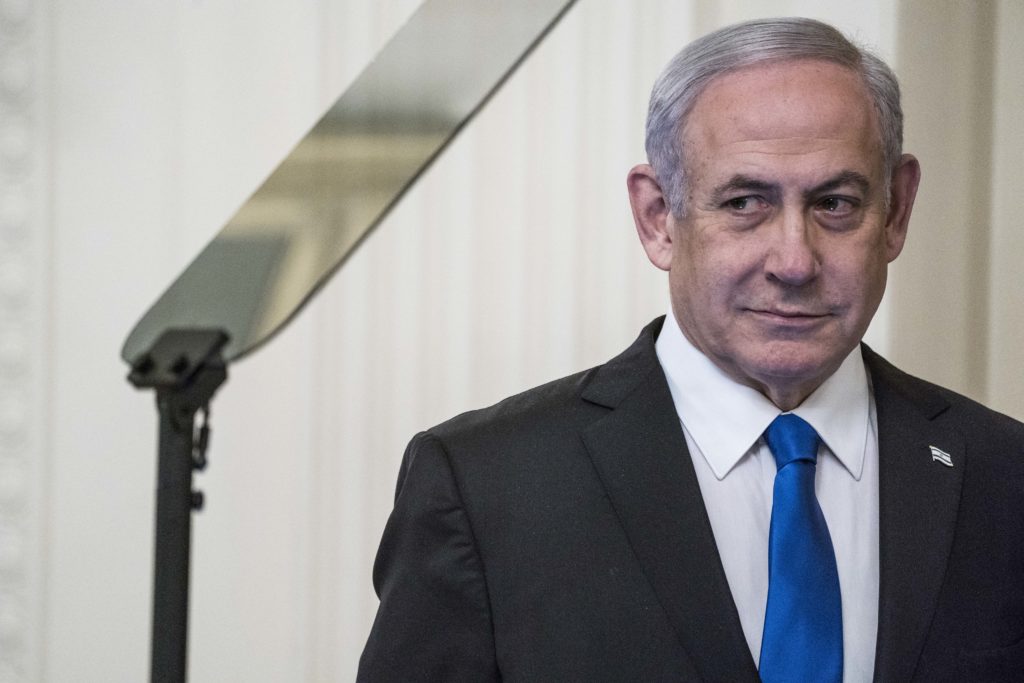
However, Israeli Prime Minister Benjamin Netanyahu said in a March 18 interview with Channel 12 that he doesn’t think a national lockdown is necessary at this time, but that the government is ready to institute it as soon as possible if need be. He also warned that the Health Ministry could impose fines on those who don’t adhere to social distancing guidelines.

“Some in the ultra-Orthodox community and some in the minority community are not listening to the directives,” Netanyahu said.

Health Ministry Director Moshe Bar Siman-Tov said on March 17 after the ministry unveiled health guidelines that there could be instances of 100 new cases a day in Israel and that thousands of Israelis could die if the social distancing guidelines are not adhered to. The Israeli government has begun to engage in surveillance of its citizens to ensure that the social distancing guidelines are being followed.

On March 18, the Popular Immigration and Border Authority announced that it would no longer be allowing all foreigners to enter Israel, except for those who have Israel as their “center of life.” Israel’s borders with Jordan and Egypt also were shut down on March 18.

There are currently 433 cases of coronavirus in Israel, 100 of them coming in the past 24 hours as a result of increased testing. Netanyahu estimated that there could be as many as 3,000 to 5,000 tests per day over the next couple of weeks.

Israeli Public Security Minister Warns That National Lockdown Is ‘Inevitable’ Read More »

Buddy, Can You Spare a Chicken?

I was late getting the memo that we Jews had jumped aboard the insane food-hoarding train. When I finally elbowed my way into the closest kosher store last Friday, I was gobsmacked by the crowds, thicker than inside a Manhattan subway train at rush hour. Rumors were true: The meat shelves had been picked clean. No chicken! Not even a wing! Pre-Pesach shopping at its most manic looked like a day at the beach compared with this madhouse.

All I needed was a chicken, a few challah rolls and some salad fixings, usually an easy, one-stop shop errand. That Friday, foraging for food cost me three hours and rattled my nerves.

I bolted from the store and drove several miles to a larger market. While waiting to park (20 minutes!), I observed with alarm a couple hefting whole cases of meat into the trunk of their car. This was a bad omen. Inside the store, I tightly gripped my two reusable plastic shopping bags (because no carts were available) but was shocked at the panic buying. Were we at war? Was the food supply chain shutting down? What happened to social distancing? I realized that nothing is more contagious than hysteria — not even COVID-19.

People were filling carts with titanic mountains of meats, chickens, turkeys and briskets, enough to feed a survivalist family in Idaho till the End of Days. Sidling toward the fast-emptying shelves, I finally bagged three packages of cut chicken, frozen solid. Could I even defrost one of them in time for Shabbat?

Standing in a line 12 people deep, I coveted my neighbor’s chickens. This tiny, elderly woman presided over a cart that runneth over with tantalizingly fresh poultry, enough to last her through Pesach 2025. My frozen fowl was of indeterminate vintage, but beggars can’t be choosers. In vain, I struggled not to judge her irrational, seemingly selfish buying. She should live and be well.

Pre-Pesach shopping at its most manic looked like a day at the beach compared with this madhouse.

Sporting events may have been canceled for now but this was truly March Madness: ruthless competitive shopping, a survival of the fastest. Where was my Xanax when I needed it?

I had a lot of time to think while in line, and recalled a sad story that I had read in a Yiddish literature class titled “Essen Teg,” literally, “Eating Days,” about a yeshiva student who lived in such an impoverished community that he ate only one real dinner a week, as a guest in someone’s home. So many Jews have lived in poverty that is unimaginable to most of us today. They were grateful to have one chicken a week for Shabbat. Even today, many Jews live in quiet economic distress, grateful for weekly deliveries by Tomchei Shabbos of Shabbat food.

The late Lubavitcher Rebbe once said, “If you want to know what’s going on in the world, read the parsha.” Fittingly, the parsha of last week, Ki Tisa, echoed real-life events in several places. Most remarkably, when Moses appears to be late in returning with the Ten Commandments from Mount Sinai (because the Jews below miscalculated the timing), instead of a little patience and prayer, they bolted full throttle into panic mode. With no Costco in the nearby desert where they might have bought out all the toilet paper, they tossed their gold jewelry to Aaron, convincing him to make the Golden Calf. Worshipping idols is never a good plan, and this doesn’t end well either. Finally, at the end of the parsha, when Moses descends from Mount Sinai for the second time with the second set of tablets, guess what he’s wearing? A mask. His face was so radiant from his meeting with God that it was too intense for the people. You know how often current events mesh with the parsha? A lot.

We don’t need to panic like our ancestors in the desert. May I ask my brethren to think and buy rationally? Can you please leave a few chickens for the rest of us? If you don’t, I saw what you bought and I know where you live. I might knock on your door next Thursday and ask, “Buddy, can you spare a chicken?”


Judy Gruen is the author of “The Skeptic and the Rabbi: Falling in Love With Faith.”

Buddy, Can You Spare a Chicken? Read More »

Experience Suddenly Matters So Much

There are four men seeking national office in this year’s election. At the height of the current coronavirus pandemic, two of those men have demonstrated that they are capable of leading us through these challenges and two of them have proven that they are not.

In his speech to the nation last week and in the March 15 Democratic primary debate, former Vice President Joe Biden reminded voters that he knows how government works. During normal times (a few weeks ago, for example), a candidate’s competence would not be a particularly inspiring message. During a time of national and global emergency, however, that type of reassurance is a much more desirable commodity. Biden has made it clear that his experience is what’s necessary to steer us through such an unsettling time. That clarity has reinforced his advantage as he moves closer to his party’s nomination.

Biden has been far from flawless. His online town hall meeting, in which he wandered out of camera range at the very moment he was proclaiming his leadership skills, was a disaster. His debate performance was unnecessarily combative at a time when voters were seeking a more unifying message, and was marred by his usual verbal missteps and meanderings. But in both of his most high-profile opportunities, he has reminded Americans of the benefits of a chief executive who understands how to take control of a difficult situation. He sounds forceful — and presidential.

Biden’s successor, current Vice President Mike Pence, has also provided a steady and calming presence, albeit with a significantly lower public profile. Pence has not escaped the shadow of President Donald Trump by any means, and he continues to be necessarily but uncomfortably obsequious in the face of Trump’s frequent stumbles. But he has led the daily White House media briefings with a focus and attention to detail that his blustering boss has lacked.

During normal times, a candidate’s competence

would not be a particularly inspiring message.

The president’s loyal supporters will not back down from their conviction that their man deserves another term in office. But only the most delusional could not have been shaken by watching Trump’s halting and uneven address to the nation on March 11. Tens of millions of voters will continue to praise his policy initiatives and his combative and confrontational attitude toward the political establishment. But almost all of them will cast their ballots for Trump in spite of — rather than because of — his conduct as the threat of the virus has grown.

Vermont Sen. Bernie Sanders has also been unsurprisingly underwhelming. A crowded debate stage has served Sanders well throughout the primary season, as it allowed him to rage against the political and corporate elite during his windows of opportunity but to step back when the discussion veered away from his policy priorities. But in his two-man debate with Biden, Sanders’ limitations were more obvious, as he repeatedly sidestepped questions about the coronavirus in order to shift back to his favorite topics. Even those voters who share his anger about income inequality and unaffordable health care would have benefited from him making more of an effort to prove his knowledge and understanding of the importance of disaster response.

The debate’s television audience was composed of the president’s most committed opponents, but they also are frightened Americans who are looking for a president who can demonstrate steadfastness and resolve. Because the always-combative Sanders used the opening question about the coronavirus to talk about the need to “shut the president up” and refer to Trump’s “blathering,” he missed an important opportunity to showcase that more uplifting side of his persona. Perhaps because it does not exist.

Of course, every reader of this publication is entitled to decide for themselves which candidate or political party is best suited to take our country forward. But during an international emergency, the difference between leaders with experience — and sloganeers with bumper stickers — has become especially clear.


Dan Schnur is a professor at the USC Annenberg School.

Experience Suddenly Matters So Much Read More »

L.A.’s Jewish Coronavirus Response

The initial disruptions of COVID-19 are quickly becoming a way of life, but are we prepared for what may be on the horizon? We all have wondered at some point how we might have reacted during a past historic event of epic proportions, be it an international conflagration, natural disaster or financial crisis. A natural question is, “Did they know?” or “Why didn’t they do more?”

With the international spread of COVID-19, now appropriately labeled a national health emergency, we have such an event slowly on the rise. And yet, we have been slow to react. The “we” that I refer to is not the federal or local governments, for time and again they are slow to respond to crisis, no matter the president. From Hurricane Katrina, to swine flu, to now coronavirus, we have enough evidence to know that in times like these, we need to look inward as much as possible for solutions and preparedness.

I am looking at COVID-19 through the eyes of a geriatric physician, father of three with two in high school, and an active member of the local Jewish community. I sincerely hope that COVID-19 does not reach even a fraction of the numbers for this year’s seasonal flu: 30 million affected and 20,000 dead. Even coming close will overburden our health care systems. Local Jewish leadership and institutions have been heroic in the additional hours and extensive consultations they have had with infectious disease and public health experts, and the impossible decisions they have had to make. Now that this difficult stage is done, hopefully they will be at the forefront of spearheading a coordinated, meaningful and proactive response.

The alarm bells have been sounded, but is the Jewish community ready to take appropriate steps to proactively plan and to protect those who are most vulnerable?  With Jewish institutions officially closed, I hope we can turn outward and come together with a coordinated response. At the top of the pyramid should be an entity such as The Jewish Federation of Greater Los Angeles that can bring together the heads of the major communal organizations and streamline distribution of resources. But each institution should individually identify who will need help, even beyond their own rosters, and who is able to give help, from professionals to the many college students sent home. My project with Dorit Nelson and Rabbi Yonah Bookstein, I Can Help (online at icanhelp.site), is live and all can use it to link the needy with volunteers. Help can come in many forms — check-in calls, shopping, information technology, transportation and health care visits both physical and psychiatric, either in person or via telemedicine.

We need to be prepared for the potential tsunami of urgent need for community support.

Where there was heated talk of the ills of walls, we now have walls all around us. Schools and shuls closed, places of employment telling us to work from home, gyms and stores shutting down. But when I see long lines at markets, businesses shutting down, empty shelves and limited supplies of essential items, I can’t help but wonder how the frail and isolated with limited access to the outside world among us will cope. We need to be prepared for the potential tsunami of urgent need for community support. When hospitals and health care workers are overwhelmed, how will less urgent medical issues get attention? How will a single parent on quarantine get medical care or supplies for a child? How will we help to financially support those who have lost work hours or jobs altogether and need to pay rent? How will the elderly get food and medical supplies?

Let’s utilize the energy and expertise of our Jewish professionals who may now be unemployed or underemployed, and our quiet buildings with available space and resources (for small groups practicing social distancing). Let’s sit down, properly plan together across denominations and identify the needy in all of our institutions who will be in need in the coming months. If we do so, in the years ahead, we will be able to say that we did not sit idly by and wait for this crisis to affect our community.


Dr. Matthew Lefferman, founder and chief medical officer of Access Healthcare Associates, is a pioneer in the field of mobile medical care in the Greater Los Angeles area.

L.A.’s Jewish Coronavirus Response Read More »

Israeli Chutzpah Can Beat Coronavirus

My aliyah story is a bit unusual because I moved to Israel after having been treated for the five years before for a Jewish genetic disease. When I arrived, I made my way to the Gaucher Institute at Shaare Zedek in Jerusalem, where the ranking expert runs a lean medical department. His team of five have published hundreds of papers on Gaucher disease and spearhead several studies on aspects of it. After examining me, Dr. Ari Zimran determined that I, like 50% of all Gaucher patients, don’t need the $30,000-per-month treatments I had received for the previous five years in the United States.

I have been treatment-free and healthy now for six years and counting.

The pharmaceutical companies based in the U.S. that produce the enzyme that transforms Gaucher from a death sentence to a manageable condition have a love-hate relationship with Zimran. Onone hand, because 100% of the population of Israel can travel by taxi to the Gaucher Institute, Zimran’s ability to conduct controlled research is unparalleled. On the other hand, the very fact he advises treatment for only half of his Gaucher patients makes him far less valuable to them than my previous renowned doctors, who prescribed treatment upon diagnosis without a second thought.

The first headline I read that had both the words “Israel” and “Coronavirus” was on March 3, 2020, when there were just 19 cases in the country. It read “Israeli Scientists Work to Test Adapted New Avian Virus Vaccine Against Human Coronavirus,” and it detailed the advanced work of scientists at the Migal Research Institute on a related strain of coronavirus that plagues the poultry industry. They aim to have an oral vaccine within two months, followed by 90 days of clinical trials.

Israel’s decision to quarantine any person who had returned from a virus hot spot on Feb. 2 and any person arriving from anywhere outside of Israel on March 9 did not surprise me. Unlike in the United States, with a population of 330 million, Israel, with 8.6 million, believes it can control the spread of the pandemic within its borders, and it is practiced at mobilizing in response to threat.

Israel is a family, and a very smart one at that.

Whereas commentators are beginning to wonder how Europe will respond to mass quarantines and curfews, and how democracies can enforce such restrictions, these questions are only beginning to arise in Israel. A proposal to allow security service Shin Bet to monitor people’s cellphones as part of the plan to curtail coronavirus is calling into question civil liberties and privacy rights. Israelis dutifully are tracking the news and following the government’s instructions to stay home and limit physical contact. Even the news of the closure of all schools was met with begrudging acceptance.

It is chutzpah like that of Zimran that has guided Israel management of COVID-19, in this case, that of Moshe Bar Siman-Tov, known by his friends as “Barsi,” the first non-medical doctor to lead the Ministry of Health. An economist and part of an elite group known as the “treasury youth,” he quickly has risen through the ranks of Israeli government. His training and experience make him well-suited to assess trends and to understand the devastating impact on the Israeli economy that his decisions are having. Why has he done it? Because Israel values the lives of its citizens above all else. Period.

Israel is drawing on a trifecta of an unparalleled biotech industry, honed skills of mobilizing in response to threat and the Jewish value of taking care of one another. As Israeli Prime Minister Benjamin Netanyahu quoted when addressing the country on March 12, “Am I my brother’s keeper?” (Genesis 4:9) “Yes!” he said. “Your brother’s and your sister’s, your mother’s and father’s, your grandmother’s and grandfather’s.”

Israel is a family, and a very smart one at that. Here, in this tiny slice of the world, this crisis response is motivated by a true value for the life of every citizen and bolstered by the knowledge that the technology for safe and affordable testing and vaccination already is in the works.


Rabbi Sara Brandes is executive director of Or HaLev: Center for Jewish Spirituality and Meditation and Rabbi-in-Residence at Camp Alonim.

Israeli Chutzpah Can Beat Coronavirus Read More »