U.S.
Uri Friedman writes about how Trump has been systematically alienating traditional American allies:
Whether or not Trump’s criticisms are justified, however, the manner in which they’ve been aired risks placing significant strains on America’s friendships around the world. Alliances aren’t built in a day, and they can’t be destroyed in one either. But they’re vulnerable to death by a thousand cuts.
David Ignatius discusses the Iran deal decision facing President Trump:
The right question to ask is the same one as when the deal was being negotiated: Does this agreement, with all its flaws, make the United States and its allies safer than they would be with no agreement? This security metric, it seems to me, still favors keeping the deal.
Israel
Long-time military correspondent Ron Ben Yishai explains Israel’s current position, strategy and spins on the Iran deal:
From conversations with state officials, it’s quite possible Israel is stepping up its demand that Trump withdraw from the nuclear agreement as a leverage for pressuring him to accept Israel’s other, more important, demands in the Iranian context, which have to do with Iranian deployment of forces and presence in Syria. Israel is trying to pressure the American administration to boost its intelligence supervision of Iran and devise a military and diplomatic plan together with Israel for the day the nuclear agreement expires.
And here is a Shmuel Rosner piece on what U.S. anti-Semitism looks like from Israel:
There is a sense of disappointment among many Jews in America at what they perceive as Israeli indifference to anti-Semitism in the United States, whether it appears at neo-Nazi demonstrations or in memes on Twitter. But in fact, this is just another case of Jews talking past one another. Israelis see frightened American Jews rejecting what they consider the only solution for anti-Semitism. American Jews see cocky Israelis clinging to a solution that doesn’t address what they consider most important: an America free of anti-Semitism.
Middle East
Eric Trager believes that Washington should reject any connection with the Muslim Brotherhood:
These bigotries reflect the Brotherhood’s long-term political agenda: It seeks to achieve power in countries across the Middle East, after which it will unify those countries under its control and declare a “global Islamic state,” or neo-caliphate. In reality, this is a very far-fetched vision. The Brotherhood was unable to control Egypt for more than a year, and has little shot of dominating the region.
But this isn’t how Muslim Brothers see it – they are indoctrinated to believe that their organization will achieve regional control, which they equate with the victory of Islam.
Amir Taheri explains why he thinks Iran is bound to fail in Syria:
Tehran’s attempts to cast Syrian Alawites as “almost Shiites”, thus deserving” protection” as Lebanese Shiites do, have failed. Not a single Ayatollah has agreed to cancel the countless historic fatwas that castigate Alawites as “heretics” or even crypto-Zoroastrians. This means that, unlike Lebanon where at least part of the Shiite community is sympathetic to Iran under any regime, in Syria today Iran lacks a local popular base.
Jewish World
Laura Adkins describes how difficult it is to be an unmarried Orthodox Jewish woman:
I did not grow up a religious Jew, but for my entire adult life, I’ve been a member of the Orthodox world. As a result, I’ve spent a lot of time in other people’s homes, with other people’s families; Orthodox life is built around the family, and Shabbat and holidays are desolate affairs if you’re by yourself
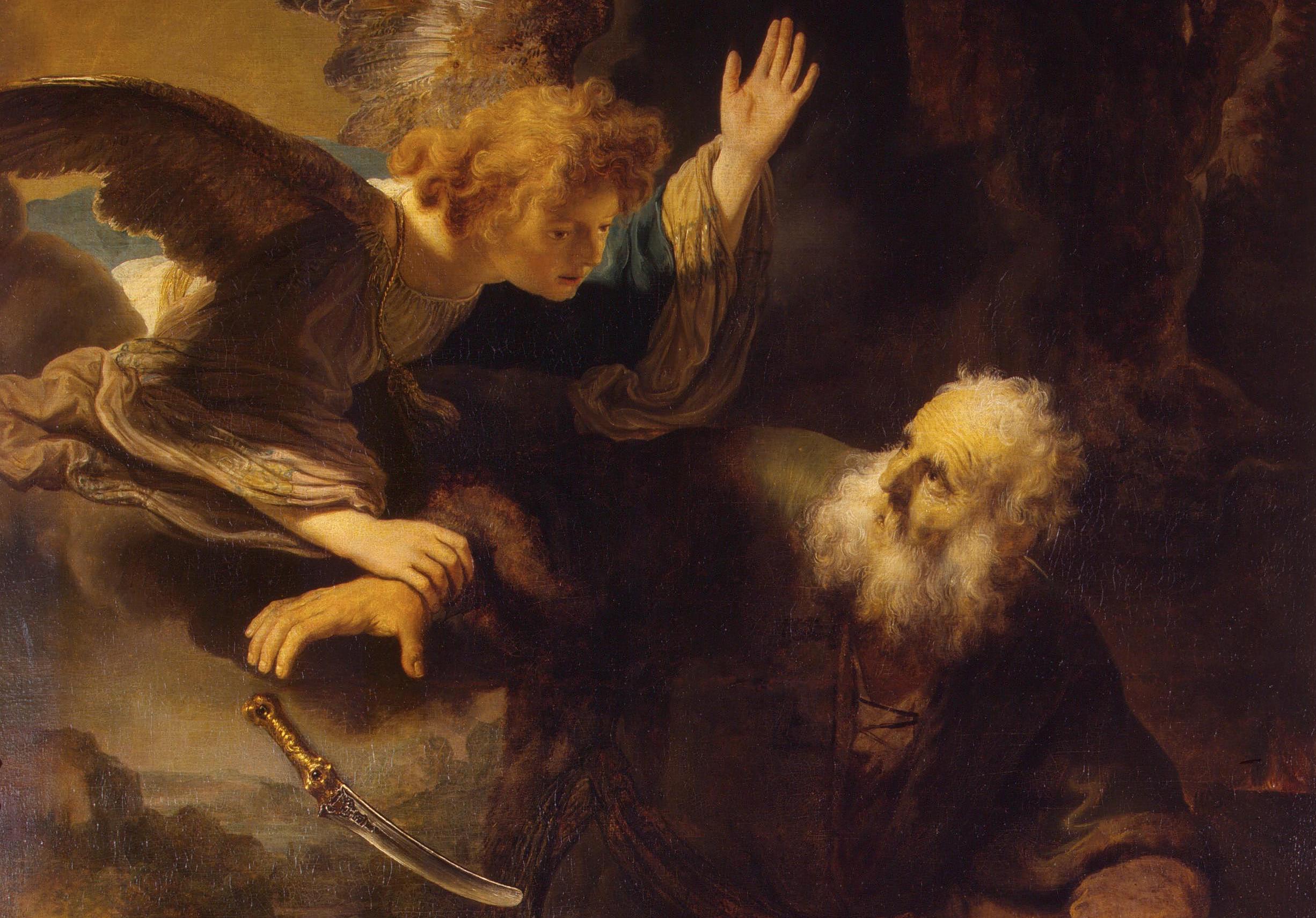
Rabbi Meir Soloveichik writes about why Rembrandt’s depiction of human frailty is especially appealing from a Jewish perspective:
For Judaism, humans cannot, must not, be divinized; indeed, to deny their fragility, their finitude—their mortality—is to lose sight of their true moral grandeur. That grandeur, the source of the beauty of human life, lies precisely in its imperfections, its struggles and strivings, its potential for failure and even for decay: the same inescapable attributes that also give rise to human courage, fortitude, and fidelity. Resisting the temptation of idolatry, the ideal Jewish art captures the human sublime in flawed and imperfect human reality.
In this perspective, Rabbi Kook’s attraction to Rembrandt is completely intelligible. In referring to the “light” in his pictures, the rabbi had in mind, as Rabbi Jonathan Sacks has suggested, the light the artist saw in the faces of the ordinary people whom he painted and whose essence he captured “without any attempt to beautify them.”