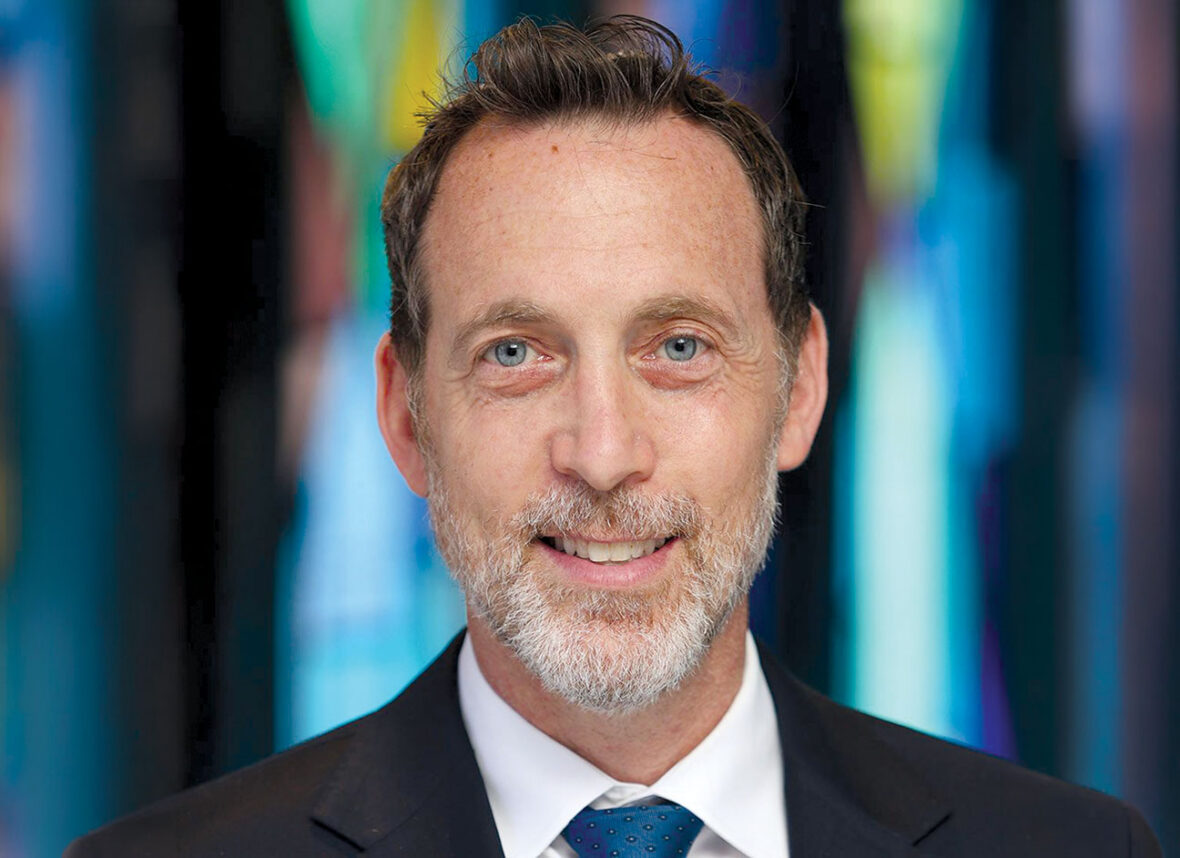
Around this time of the year, Rabbi Shlomo Schwartz, wearing his “Grateful Yid” T-shirt and baseball cap, offers an alternative to the legions of Los Angeles Jews, who wonder whether to spring anywhere from $100 to $400 for a High Holy Days synagogue admission.
Schwartzie, as he is universally addressed, passes out leaflets, which announce in bold lettering, “No Tickets, No Appeals” for Rosh Hashanah and Yom Kippur services, open to “Conservative, Reform, non-affiliates and any Jew that moves.”
This year, he expects to a draw a total of 3,000 Jews, mainly single, most of whom may not have stepped inside a synagogue since their bar or bat mitzvah.
For their free tickets, worshipers also get a Rosh Hashanah eve “Schmooze and Cruise Singles Party,” a study session for women only, by the rabbi’s wife, Olivia, and songs by the Schwartz Family Tabernacle Choir, consisting of the couple’s seven sons.
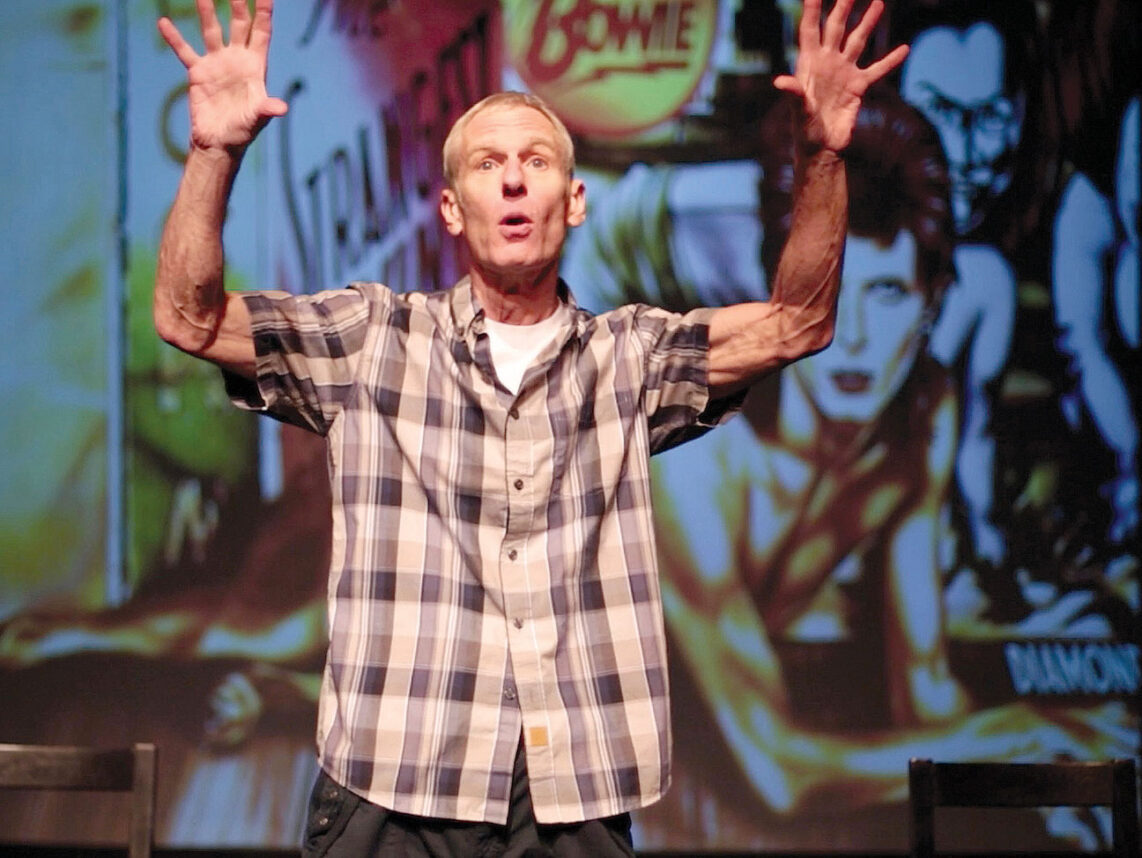
Especially popular is a “Stump the Rabbi” session, which in Schwartz’s patented orthographic style, “is intensely animated because hundreds of people are bursting with questions they’ve been wanting to ask since age 12 or 13.”
During one such session, a young man asked whether there was a special prayer before sexual intercourse, and the wag in Schwartz answered instantly, “Yes, you pray she doesn’t have a headache.”
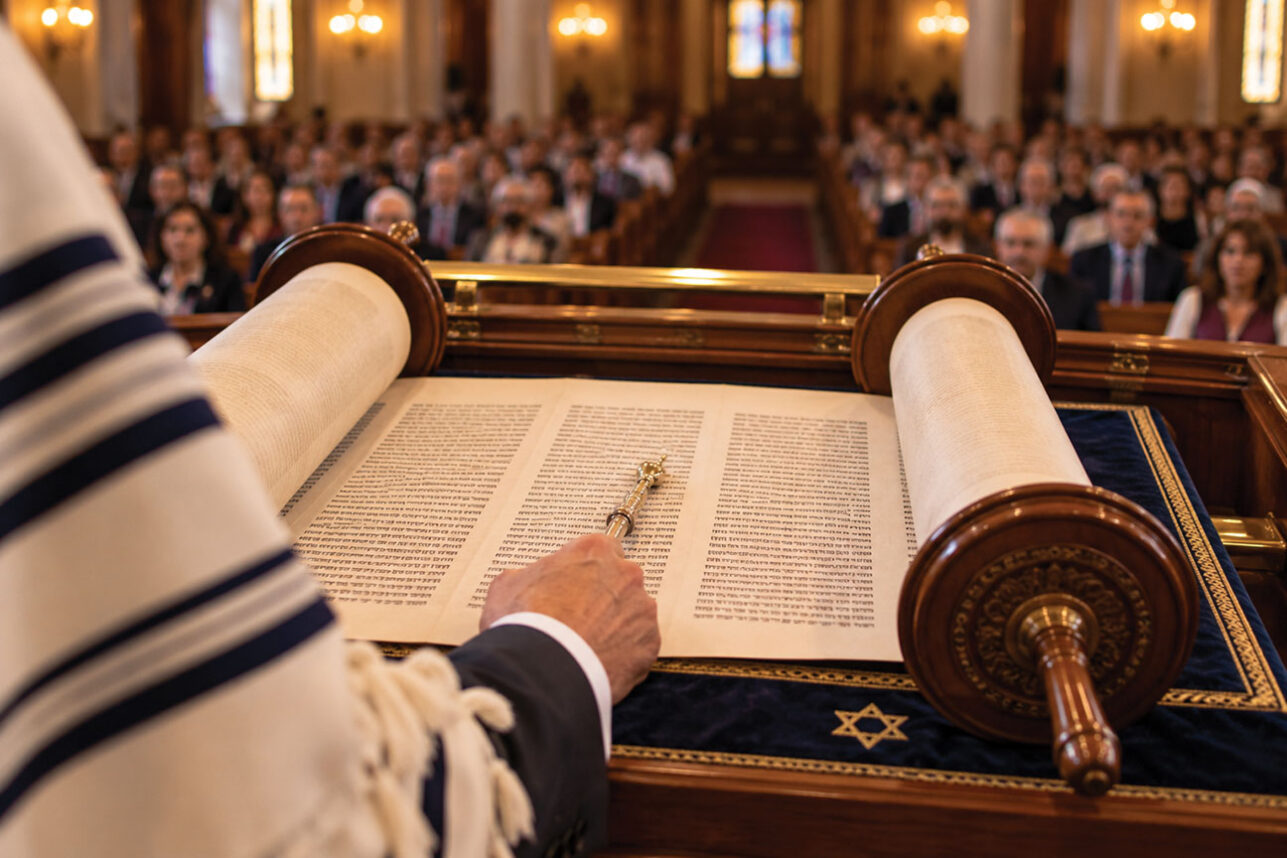
Though the tone may often be lighthearted, the services conform to Orthodox ritual. A mechitzah (partition) divides men from women, and only men are called up for Torah readings.
Schwartz, product of a Chabad yeshiva and still a devoted follower of the Lubavitcher Rebbe’s teachings, ventures where no rabbi has gone before. A onetime bongo-thumping Greenwich Village beatnik, he frequents rock concerts — flowing beard, yarmulke, Mickey Mouse suspenders, leather thongs and all — and will on occasion lace a wedding ceremony with lyrics from the Grateful Dead’s repertoire.
He hardly ever wears a jacket, but will extract from his ample pants pockets a cell phone, beeper and electronic address file.
One of his oddest venues is the Venice Beach boardwalk — the haunt of rollerbladers, muscle builders, incense peddlers and tourists gaping at the weird Los Angeles scene.
Every other Sunday, Schwartz sets up a folding table at his usual spot and affixes a prominent “Jewish Astrology!” placard. Then, surrounded by books and calendars, he practices his craft through a method of his own devising.
The basic data and tools for his “kosher horoscope” are the client’s birthdate, according to the Hebrew calendar (“Some 95 percent of Jews, even religious ones and Israelis, don’t know their Jewish birthdate,” he says); the appropriate Torah portion for the birthdate; the numerical equivalent of the letters in his or her Hebrew name; the Tanya, the classical text of Chassidic mysticism; and thoughts for the day by the Lubavitcher Rebbe.
Schwartz doesn’t claim to be a psychic and he doesn’t predict the future. “I try to tell people who they are, their essence, and through that identify their potential and how they can realize it.
“I started this astrology as a shtik, a hook, but I’ve been blown away by how often I hit the mark,” he says.
Private astrology readings at large singles’ parties, such as his highly popular “Not a Christmas Party” each Dec. 25, help raise the wherewithal for his free services. “They’ll stand in line from 8 p.m. to 2 a.m., fighting to get to the astrology table,” he says.
Schwartz’s unorthodox approach and style is based on the simple premise that if Jews, especially the younger generation, won’t go to synagogues or join Jewish organizations, then he has to go where they normally gather, or provide a setting in which they feel comfortable.
Los Angeles is the natural proving ground for Schwartz’s theory. Among the city’s more than 500,000 Jews, close to 70 percent are unaffiliated, and the percentage is probably higher among Jews in their 20s to 40s.
“For outreach, you can’t lose in this city,” says Schwartz.
Where do young Jews meet? One place is the popular Comedy Store, a Sunset Strip club, and every Purim Schwartz is there, doing his stand-up routine and reading from the megillah to a sellout crowd of 450 people.
Do married women enjoy going to expensive spas for a rejuvenation weekend? Olivia Schwartz organizes a “spiritual spa retreat” for them, near Palm Springs.
Do young Jewish men and women need a nice place to meet, imbibing some Judaism while enjoying themselves? Schwartz will set up a moonlight cruise or rock concert.
By now, he has compiled a computer printout of 4,000 single Jews and 1,500 couples. From these lists, and from strays he may pick up along the way, Schwartz invites 30 each week to join his large family for Sabbath eve dinners.
The 52-year-old Schwartz was born in Atlantic City, N.J., the son of a “Conservadox” cantor, who had fled Vienna in 1939. The father disliked all Chassidic movements with a passion, and when his only son decided to become a Lubavitcher disciple, the father turned his back on Shlomo, predicting “you’ll be a bum.”
After rabbinical studies, including two years at Kfar Chabad in Israel in the late 1960s, Schwartz found his natural calling at UCLA’s Chabad House, the first of its kind at any American university.
He quickly became a highly visible campus figure, setting up his stand on the main student thoroughfare, next to the Moonies and Jews for Jesus.
Soon he was dragging startled students into his mobile Succah on wheels to wave palm fronds, engaging a seven-piece rock band for a Purim party and buttonholing anyone he suspected of being a Jew.
“I could identify nine out of 10 students as Jews just by their looks,” he says. “The other one was either Armenian or Italian.”
He left his campus post after 13 years, when his unconventional methods got to be a bit much for his superiors. “I am still a Lubavitcher in my heart,” he reflects, “but by no longer being an official Chabad representative, I figured I could do even more outrageous things.”
Left with no job, but with a wife and 10 children (the number has now swelled to 12), Shlomo and Olivia Schwartz founded the CHAI Center nine years ago. The name stands for “life” in Hebrew, but doubles as an acronym for “Center for Happiness & Awesome Insights.”
His business card further identifies the CHAI Center as “A Very Non-Profit Organization,” and he conducts his far-flung operations on a budget of $200,000 a year. About a third of that sum is raised at an annual banquet, and for the rest he relies on donations for officiating at life-cycle events, sale of Chai (in Hebrew letters) baseball caps, and the skills of the center’s executive director, his 26-year-old son, Mayshe.
“If I had some extra money for advertising,” he sighs, “I’d rent the Santa Monica Civic Auditorium for Yom Kippur and get 3,000 people, easy.”
Not everybody loves Schwartzie’s style. He says he has received hate mail from more establishment rabbis, objecting to his free High Holy Days services, and four appeals for a modest grant from the Jewish Community Foundation have gone unanswered.
Yet, detractors are a distinct minority.
“He’s a spiritual inspiration,” says actor Elliott Gould, who along with Richard Dreyfuss and other Hollywood personalities have attended Schwartz’s Torah classes. “His means may be unorthodox, but his teachings are purely kosher.”
“The first time I heard Schwartzie speak, my heart opened up,” says Jackie Stern, a former local officer of the National Organization for Women. “He is truly committed, but not judgmental. He has shown me that a feminist can be an observant Jew.”
Orthodox Rabbi Nachum Braverman of Aish HaTorah notes that “Schwartzie reaches people no one else can, because he is so open and tolerant and accepting and embracing. I, for one, have never met anyone who didn’t like Schwartzie.”
Schwartzie has the last word. “I’ve been called a Reform Chassid and God’s court jester, but whatever the label, I do believe that to bring Jews back into the fold one must serve God with joy.”