Gloria Lenhoff is a musical marvel. She has perfect pitch and can sing, in a clear lyrical soprano voice and from memory, 2,000 songs in 25 different languages. She has performed with symphony orchestras and as synagogue cantor. She has starred in a PBS documentary, was featured last year on “60 Minutes,” “Nightline” and “Inside Edition”and last night was interviewed on ABC’s “Nightline in Prime Time.”
What Gloria cannot do is read musical notes, make change for a dollar or live independently. She has an IQ of 65 and reads at a sixth-grade level.
The 44-year-old artist, who lives with her parents in Costa Mesa, was born with some 20 genes missing from a single chromosome, an apparently spontaneous mutation now defined as Williams Syndrome.
Williams people, and the mentally challenged in general, are not on the radar screen of the Jewish community, claims Gloria’s father, Howard Lenhoff, and it makes him very angry. Only now, say experts, are the needs of families like the Lenhoff’s being treated seriously in the Jewish community.
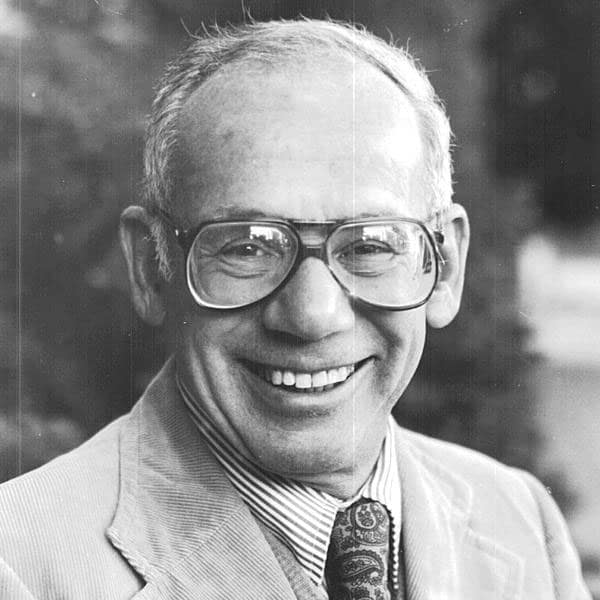
A professor emeritus of biological sciences at the University of California, Irvine, he has tried to draw attention to Williams people and their apparently innate musical talents, by writing scientific papers, establishing a foundation and music camp, speaking at synagogues and giving press interviews.
It has been slow going. One problem is that Williams Syndrome is a relative latecomer on the medical research agenda and affects only a small segment of the population.
Lenhoff says the condition affects one in 20,000 people, and the Williams Assn. has identified about 4,000 Williams people in this country and estimates that the total may be about 12,000.
They typically have a pixie-like appearance, with elfin noses, wide mouths, small chins and puffy eyes. Many have heart and blood vessel problems and most are below average height.
Gloria’s mother, Sylvia, sees another side of her daughter and other Williams people. “They’re very empathetic,” she says. “They know when you’re happy or sad, and if you’re sad they try to make you happy. And they have a very rich vocabulary.”
When Gloria was young, her parents looked to the Jewish community for help and found none. There were no programs, they say, for either Williams people, or for the 3 percent of Jews believed to be mentally challenged, “cognitively impaired,” “developmentally disabled” or, as Dr. Lenhoff prefers, “mentally asymmetric.”
When Gloria was in her teens, her father says, “We searched nationally, and there was not a single summer camp sponsored by Jews that would, for example, offer a special week for the Jewish mentally handicapped.
“The only camps that had such programs were sponsored by churches, usually fundamentalist, and she came back singing, ‘Jesus Loves Me’ — always on key — and we did not care. The Christians gave our daughter a good time and treated her with warmth and respect.”
Lenhoff grants that there has been some improvement in recent years, usually brought about by insistent parents, such as the Jeremiah Society in Orange County and the Keshet school in Chicago. Still, he thinks, the Jewish community continues to perceive the mentally challenged as the Haggadah’s “simple son.” We boast of our Nobel Prize winners but neglect the mentally disabled in our midst.
The mentally challenged are often seen as liabilities. “Unable to compete in the highly structured American Jewish community, they essentially become invisible,” maintains Lenhoff.
The one place that the Lenhoff family found well-run schools and active clubs for the mentally challenged was in Israel, where he spent two years as a visiting scientist.
Lenhoff says that when he discussed the contrasting Diaspora attitudes with Israelis, they charged American Jews with a galut (exile) mentality that sought to present only “perfect” Jews to their gentile neighbors.
Lenhoff tends to take a confrontational stance toward the Jewish “establishment,” as he did earlier as a leading activist on behalf of Ethiopian Jews, but his basic complaint is echoed by others.
One Los Angels mother, whose 3-year old son has been diagnosed with Pervasive Development Delay, notes that “resources for children with below-average intelligence in the Jewish community are practically non-existent.”
Becca Hornstein of Scottsdale, Ariz., recalls the time, some 20 years ago, when she gave birth first to an autistic son and then to a daughter with multiple deformities.
“Although the people in the small Jewish community in which we lived know of both situations,” she writes, “there was no visit from the rabbi, no platters of food to feed us when we came back from the hospital, no callers to admire the deformed baby, and no offers of child care so my husband and I could get away for an hour to catch our breaths.”
A recent article in the Jewish Theological Seminary Magazine concludes that Jews with severe developmental disabilities remain invisible and “may as well be living in the Dark Ages.”
Now, there appear to be changes. Dr. Kenneth Schaefler, director of special education and psychological services at the Jewish Federation’s Bureau of Jewish Education in Los Angeles, grants that more could and should be done for the community’s mentally and physically disabled.
But given finite resources, he feels that in recent years a considerable effort has been made to help the mentally challenged by the bureau, numerous synagogues, day schools and camps.
As examples, he cites his department’s programs to train special education teachers, develop appropriate lesson plans, integrate youngsters with disabilities into regular classes, and organize seminars for parents and teachers of mentally challenged children.
Two programs that have won national attention, “Kids on the Block” and “Glenn’s Friends,” use life-like puppets to sensitize youngsters to differences and disabilities among their peers.
Schaefler points to some outstanding early childhood programs for special needs kids at Valley Beth Shalom in Encino and University Synagogue in Brentwood, for teen-agers at Camp Ramah and bar/bat mitzvah preparations at the Chabad Center in Pacific Palisades.
Additional involved organizations include the Jewish Family Service, whose Chaverim program addresses the needs of 18-60-year-old adults, and the Etta Israel Center, which works closely with Orthodox and other synagogues to assist teenagers and adults with developmental disabilities.
The Etta Israel Center was recently chosen as the regional site for the “Schools Attuned” program, which helps teachers recognize, and respond to, differences in learning abilities among their students.
To assist parents, Schaefler’s department has produced an 89-page booklet, the “Guide to Jewish Education Resources and Community Resources for Children and Adults With Special Needs,” which can be obtained through the Bureau of Jewish Education.
The guide also includes listings for governmental, secular and academic resources.
For one-on-one advice and consultation, Schaefler has set up a Warm Line to his desk. Whatever the caller’s concern, he says, “I’ll try to help and try to cut the red tape.”
For information about Williams Syndrome, contact Dr. Howard Lenhoff, Williams Syndrome Foundation, University of California, Irvine, Irvine, CA 92697-2310; (949) 824-7259; e-mail: hmlenhof@uci.edu; Web site: www.wsf.org.
“Guide to Jewish Education Resources and Community Resources for Children and Adults With Special Needs,” is available for $5 (including shipping) through the Bureau of Jewish Education. (323) 761-8605. Most of the listings are also available on the bureau’s Web site.
Warm Line to Dr. Kenneth Schaefler: (323) 761-8629; www.bjela.org.