They sat like any other family in the noisy restaurant, trading conversation, stories, tales of the day past. But when the waiter brought their meal, something remarkable happened: The conversation stopped, hands were extended and grasped to form a circle around the table, eyes closed, and a quiet prayer was whispered. It took no more than a minute, and then the conversation resumed and dinner commenced.
I watched this scene with a mix of feelings: It is embarrassing to witness such an intimate ritual practiced in such a public, noisy, secular place. But this feeling dissolves quickly into wonder and envy.
Here are people who have learned to slow down the pounding pace of American life with a moment of meditation and prayer — people who have found a way to family wholeness in a centrifugal world. Here are people who grasp the miracle of a simple meal and understand the need for regular expressions of gratitude in the course of daily experience.
It’s only a little thing, and takes but a minute. But it has the power to change your life because it changes the way you experience the regular events of life. And that’s the essence of spirituality. Spirituality is not a hobby, not another task added to life. It is a way of framing the regular, reinterpreting the routine, locating the sanctity that hides within the mundane.
One of the casualties of modernity is contemplation. My ancestors walked to work each morning, and, at evening, they walked home. There was time to consider, to reflect, to wonder, to dream. Me, I wrestle my way onto the freeway each morning, and, with morning news, Howard Stern and Smashing Pumpkins in my ears, I fight my way to work through traffic. There are terribly few opportunities built into our lives for reflection, for contemplation. It takes an act of will to find that kind of quiet time.
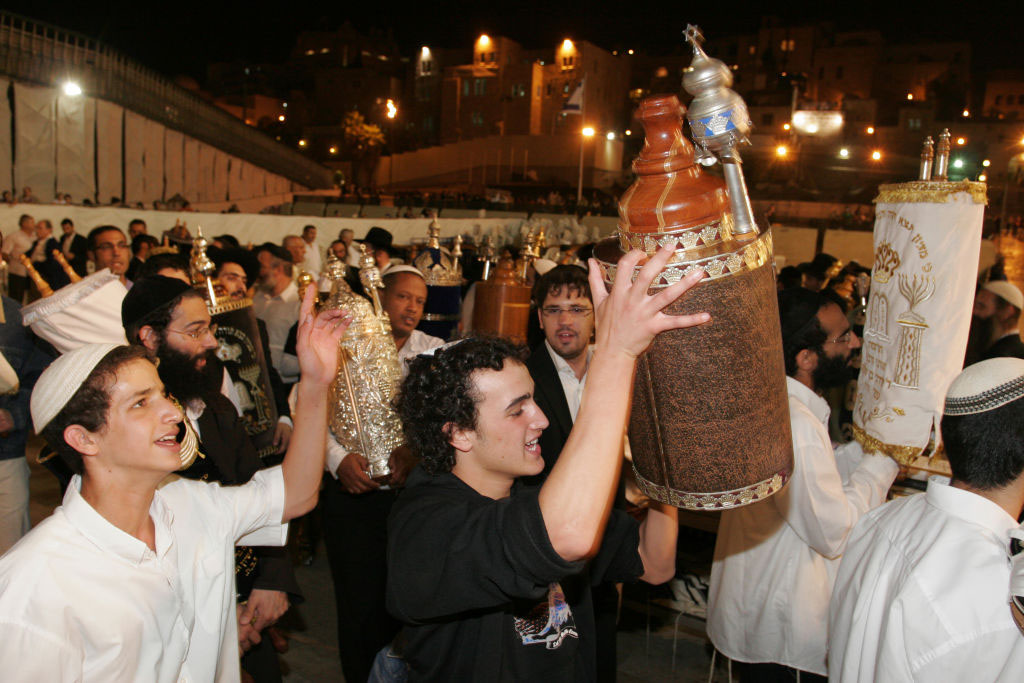
When the Temple of Jerusalem was destroyed, the rabbis offered verbal prayer as a substitute for the animal sacrifices ordained by the Torah in this week’s portion. They retained, in the way we pray, the structure and order of the sacrificial service. Ordered, institutional contemplation sounds like an oxymoron. But the rabbis understood that without the discipline of that ordered system, the tasks of life and the temptations of leisure would soon overcome our commitment to pray. They knew that given the chance, Dow Jones, Accuweather and Sigalerts would invade our silence.
“You give us 22 minutes, we’ll give you the world!” shouts one station. No. Give yourself three minutes, and you’ll find your soul. Can you begin the day with three minutes of meditation and reflection? You don’t have to be religious. You don’t have to believe. Just recollect the passions that brought you to this point in life. Reconnect with your deepest values. Evaluate where you are in life and where you’re going. Listen to the voice of your soul. Stand, if for but a few moments, in the presence of eternity and look back at your life. From the perspective of eternity, find the significance in your life’s pursuits.
And at day’s end, instead of the American ritual of closing the day with the 11 o’clock news and its daily recitation of murder, rape, lunacy, corruption, desolation, sports and weather, give yourself the chance to recognize the gift of this day past, to see how far you’ve come on your journey today, whom you’ve touched today and who has touched you. Take three minutes to celebrate the life you’ve lived today, and give thanks.
Prayer is not about changing the mind of God. It is about changing our minds. Prayer is not a request for beneficence to rain down on us from above. Prayer is a way to find the resources within us to meet life with hope and courage. Prayer is not about bringing heaven down. It is about lifting us up.
Ed Feinstein is rabbi at Valley Beth Shalom in Encino.