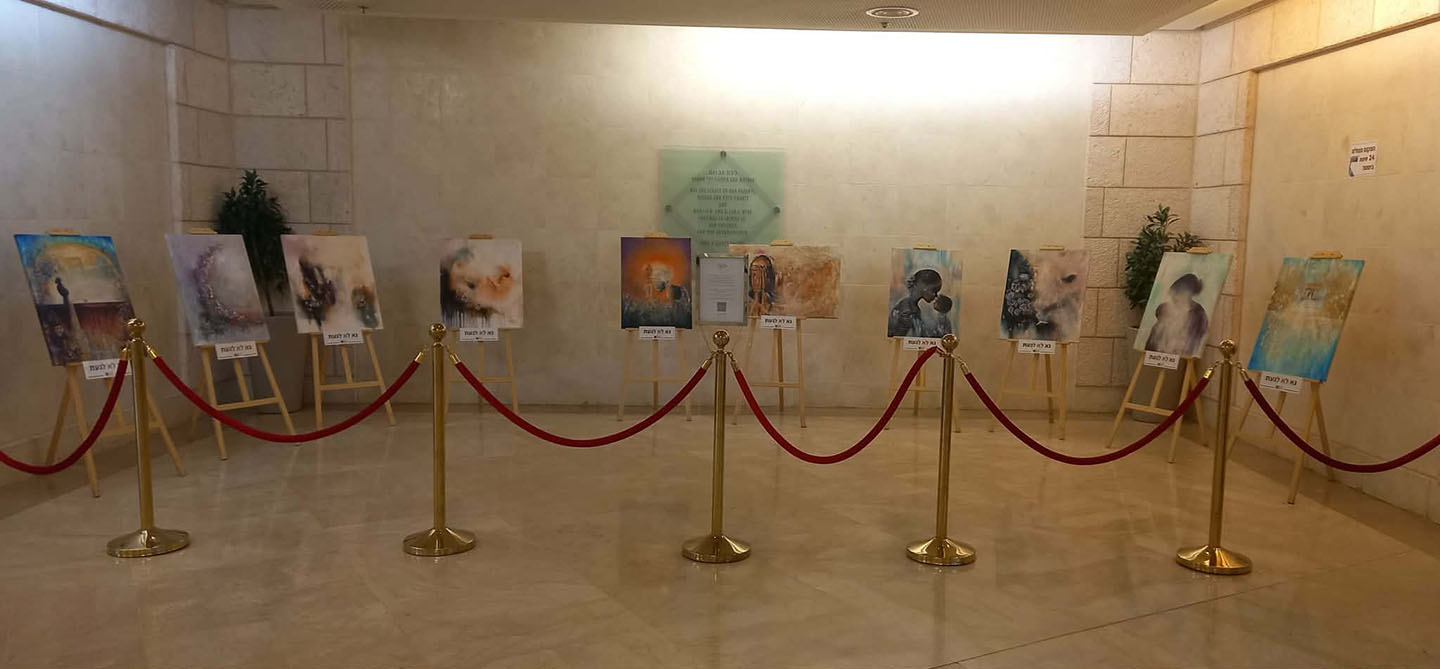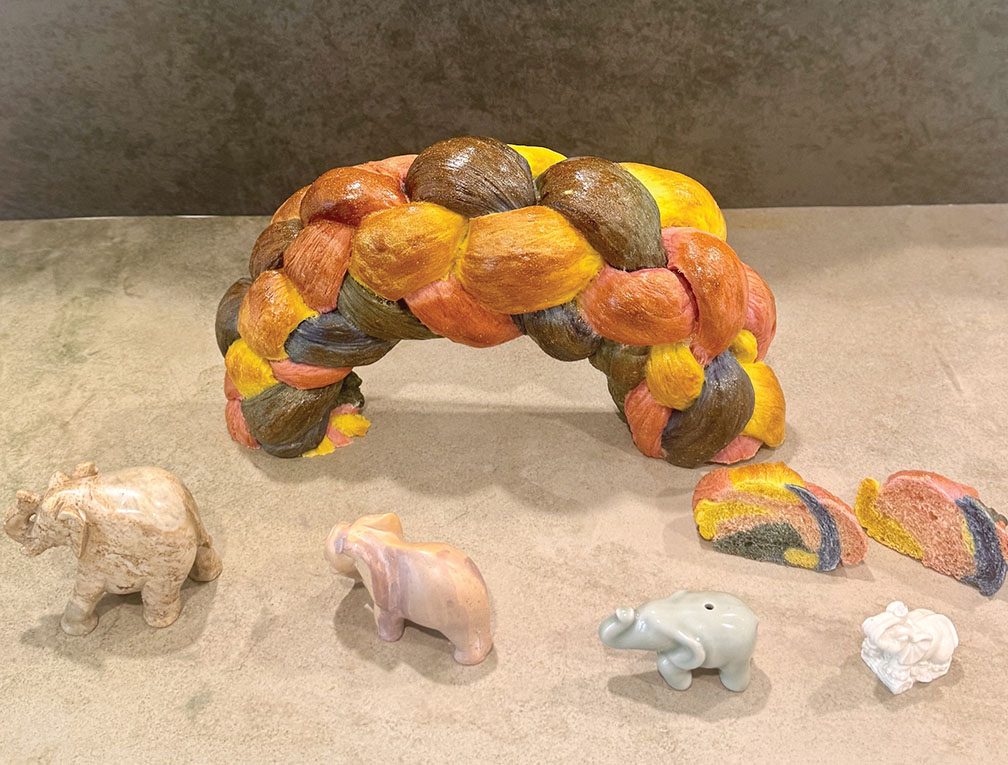

Jerusalem Design Week happens every year, but it was a first for some artists participating in the exhibition “Haready-Made: The Product in Orthodox Society.” Relating to this year’s overall theme of “Conserve,” the exhibition at the Jerusalem Theatre showcased objects used by members of the Charedi community — ultra-Orthodox Jews who reject secular life — in order to maintain their culture in socially liberal and tech-savvy Israel.
Noa Cohen, the exhibition’s curator, explained how the idea for the exhibition arose. While doing research on a different topic for her doctorate thesis at Israel’s Bar-Ilan University, Cohen stumbled upon the Art Shelter Gallery nestled in Jerusalem’s ultra-Orthodox neighborhood of Mekor Baruch.
“I realized a lot of artists [in this community] pursued very unique ways of making art. I volunteered as their curator for a few years and now I manage the Art Shelter Gallery,” she said. “The exhibition at the Jerusalem Theatre is a collaboration [between the gallery and Design Week].”
Cohen said that for some of the 15 artists participating in the exhibition, it was the first time they showcased their art in a public place. “I realized that there are many things in the ultra-Orthodox community not known by outside spectators, such as the way they live and how they make their products specifically tailored to their needs,” she said.
One of the displays in the exhibition was a mannequin whose head was covered by a bright, colorful headscarf (tichl). A cellphone was visible between the mannequin’s head and the headscarf. Artist Marcelle Bitton said this work is an adaptation, depicting how Charedi women often speak — often without using their hands — on “kosher” cellphones conveniently tucked underneath their tichls.
“There are many things in the ultra-Orthodox community not known by outside spectators, such as the way they live and how they make their products specifically tailored to their needs.” — Noa Cohen
“You can’t find these scarves in the stores; they are handmade. And kosher phones are usually small ones produced by Nokia or Samsung,” Bitton explained.
Unlike most Charedim, Bitton did not go through the community’s educational system and therefore ended up with experiences atypical of ultra-Orthodox women.
“You are inspired and want to express what you’ve experienced. The fact my artwork is being displayed during Design Week is already an achievement. Opportunities for Charedi artists to show their work are already very limited,” Cohen said. “It makes it more interesting to consider that there aren’t enough young, female artists within the Charedi community.”
Bar Mayer is another female artist who grew up within the Charedi community but left it in later years. Her display at Design Week featured a large portrait of her family tree.
“The work is the first I’ve done to reconnect with my family after many years of distance,” Mayer said. The decision to make a fresh start 19 years ago meant a formal break with her ultra-Orthodox community.
A quick glance at her art revealed signs of discord. Almost half of the family members presented in the tree were either absent in the space assigned for a portrait — which was often substituted by colored papers — or they appeared with their backs to the camera. Some members wore traditional Orthodox garb such as the black fedora and suit, although some did appear in modern clothing.
“Some of them didn’t understand why I was reconnecting with the community. Showing up with my camera was very invasive in a way,” Cohen said. “I don’t expect them to get me, because art is very marginal in the Orthodox world.”
For artists in the Charedi community or closely linked to it, participating in shows can be a thorny affair, especially if they take place on the Sabbath or involve an international audience.
“This type of exhibition shows the diversity of the Israeli art world,” Cohen said. “It’s much more authentic and an opportunity to experience a broader range of Israeli art. I see the exhibition as a bridge.”
In addition to the Design Week exhibition allowing them to experiment with their artistry, Bitton and Mayer emphasized that the event has motivated them to reconnect with their Charedi heritage.