fbpx

June 14, 2018

TABLE FOR FIVE: Korach

Weekly Parsha: One verse, five voices

Now Korah, the son of Izhar, the son of Kohath, the son of Levi … took men; and they assembled themselves together against Moses and against Aaron, and said unto them: “You take too much upon you, seeing all the congregation are holy, every one of them, and the Lord is among them; wherefore then lift ye up yourselves above the assembly of the Lord?” And when Moses heard it, he fell upon his face. (Numbers 16:1-4)

Rabbi David Fohrman
Aleph Beta Academy
The words are jarring: And Korach took. That’s it. It is as if the words head off the edge of a cliff, the transitive verb trailing into nothingness, bereft of the direct object that would give it meaning. What did Korach take? We don’t know. 

Or maybe we do. 

Rashi comments cryptically: “He took himself to one side, inasmuch as he created division in the community…” 

What does Rashi mean? Where did he get his interpretation from?

Rashi understood this: That which “takes” requires a direct object. It is not just a rule of grammar, it is a rule of life. When we take things, we reach for things we believe will fill a need that will somehow make us “larger.” In the best of circumstances, that drive can lead one astray. But there is a kind of “taking” that is even darker, one that doesn’t latch on to a particular possession that has caught one’s fancy. 

What happens when the drive to aggrandize oneself outstrips the mere attempt to accumulate possessions? It is then that taking becomes a political quest, a drive for raw power itself. The verb “take,” shorn of its natural partner in a direct object, becomes distressed. It recoils back on itself — until it ends up taking the person doing the taking. 

It is then that leadership becomes about “me,” at the expense of the others I nominally purport to lead. It is then that the community fractures, as a broken “taking” claims its lonely prize.

Sydni Adler
Student, Ziegler School of Rabbinic Studies
In last week’s parsha, we learned that there should be a cord of the bluish color t’khelet attached to the fringes at each corner of a four-cornered garment. In a midrash on this week’s portion, Korach asks, “Do the fringes on a fully t’khelet garment still need t’khelet?” “Yes,” Moses says. Korach is flabbergasted. “A garment that is all t’khelet is not kosher, but four threads make it kosher?” Korach continues to challenge Moses about the logic of mezuzot on doors in a house full of books containing the Shema, and Moses gives another unsatisfactory answer. Korach finds Moses’ methodology for interpreting Torah to be completely illogical, and his revolt begins.

As rabbinic Jews today, we often find ourselves in Korach’s shoes. Isn’t everyone holy enough to interpret the Torah, and if so, why follow antiquated talmudic interpretations of antiquated Torah laws? Even when we ask Korah’s questions, we still have the power to lift ourselves up into Moses’ dialectic relationship with the Divine: If we choose to join our Jewish communities in the process of responding to biblical and rabbinic traditions, we can shape halachah as much as our greatest prophet.

Perhaps, before we wrestle with philosophical analysis, we can experiment with leaps of faith, throwing ourselves into rituals and communal interactions. Then, we can analyze with our hearts along with our minds. Rather than assembling “against” our tradition, like Korach and his followers, let us assemble within, shaping our present and future interpretations of Jewish law and practice.

Rabbi Jill Jacobs
T’ruah: The Rabbinic Call for Human Rights
A challenge to his leadership arises and Moses falls on his face. This may not be the pose we expect from the man charged with leading the Israelites out of slavery and toward the Promised Land, nor from one who has already weathered multiple rebellions by his people. 

Classical interpretations of this response roughly divide into two categories: those who view Moses as despondent and those who see his prostration as a moment of prayer.

For the midrash, Korach’s rebellion constitutes the last straw for Moses, who has already pleaded to God on behalf of the people after three previous transgressions. This time, he collapses in despair (Midrash Tanchuma Korach 4:1). Some even see Moses as falling down in embarrassment over allegations about his character or leadership (Talmud Sanhedrin 110a; Bekhor Shor Numbers 16:4). 

Other interpretations picture Moses praying, and even summoning a moment of prophecy. Saadia Gaon (10th century) understands Moses to be prostrating himself in order to receive a vision from God. Such comments view Moses in parallel with Abraham and other prophets, who had a habit of falling on their faces when encountering God.

In this current moment of crisis in the United States and in the world, when we are experiencing attack after attack on democracy, human decency and human rights, despair may feel like the easiest stance. And perhaps, sometimes, we need to allow ourselves to feel that anguish — to fall on our faces in despair. But from that stance, we also must attempt to access the prophetic clarity necessary to move forward.

Rabbi Tal Sessler
Sephardic Temple Tifereth Israel
For Israeli theologian Yeshayahu Leibowitz, nothing was more spiritually heinous, vulgar and repugnant than Korach’s grotesque and preposterous theological assertion in the commencement of our parsha that “Kol ha’eda kedoshim,” namely that we are all intrinsically and inherently holy, simply because of our sheer biological facticity — because we emerged from a Jewish womb or underwent conversion. 

Holiness, Leibowitz reminds us, is not an a priori hereditary achievement. Rather, it’s a hard-earned individual accomplishment, for which we must incessantly toil every day anew. 

Ascending the existential rungs of sanctity and self-refinement isn’t a given. It requires constant avodah, which in Hebrew means both “work” and “Divine service.” 

Last week’s parsha concluded with parshat tzitzit, which includes the words, “Va’aseetem et kol mitzvotay, vee heey tem kedoshim le Elokheim,” meaning “And you shall perform all My mitzvot, and you shall become holy to your God.”

In other words, we are dealing here with cause and effect. It is because we perform the ennobling spiritual and ethical deeds known in Judaism as the mitzvot that we ascend to the rank of holiness. Judaism, as we are reminded in the sordid episode of Korach, is a meritocracy. We have to earn our spirituality. We aren’t “automatically” holy. Yes, we all possess incalculable worth and dignity by virtue of being in the Divine image, but holiness — that’s a different ballgame. You have to earn it and labor hard to achieve it every day anew. Holiness, Emmanuel Levinas reminds us, is a “difficult freedom,” to be mastered and achieved.

Rabbi Eli Fink
Jewish Journal
I kind of like Korach’s point. Equal rights! Moses seems not to have a compelling answer. First he faints and later he seems to be saying, “Be happy with what you have; it could be worse.” So why does Korach perish? He asked a legitimate question!

The problem was not with Korach’s question, per se. The problem was that the question was not genuine. If Korach really cared about equality and fairness, he would have asked for egalitarian treatment across all 12 tribes. He would not have asked for fairness only on behalf of the Levites.

Moses saw through Korach’s charade, replying, “Is it but a small thing unto you, that the God of Israel hath separated you from the congregation of Israel, to bring you near to Himself, to do the service of the tabernacle of the Lord, and to stand before the congregation to minister unto them?”

Read creatively, Moses is saying, “Korach! Working in the Tabernacle is a Levite privilege! The rest of Israel is excluded — it is unfair to them! Why not include them in your complaint? Clearly, this is not about equality — it is about your pride. You only care about yourself.”

One cannot advocate for equality, or any other just cause, disingenuously. When you come for the king, you only get one shot. Korach “took” his shot and missed horribly.

Sometimes authority and status quo must be challenged. But we must be careful that when we make our move, we are respectful, genuine and sincere.

TABLE FOR FIVE: Korach Read More »
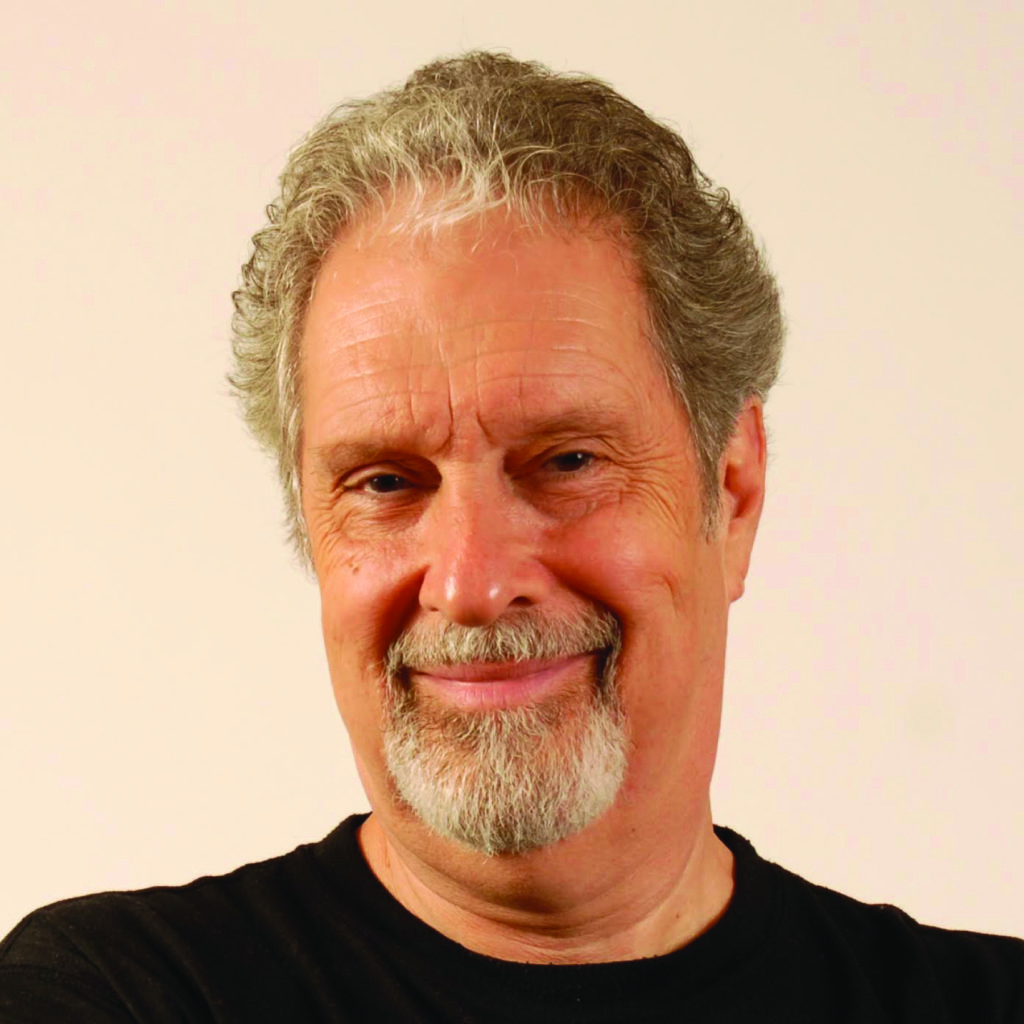
Bill Ratner: More Than Just a Familiar Voice

You may not recognize his face, but you’ve surely heard his voice. From the voice of Flint in the TV cartoon “G.I. Joe,” to the man who narrates the movie trailers for “Inside Out,” “Ant Man” and a slew of others, Bill Ratner is one of Hollywood’s premier voiceover artists. 

He’s also an award-winning author and essay writer. The 71-year-old currently is working on a memoir about growing up in an advertising family and being orphaned at 13. Before heading off to Italy this summer to participate in The Lemon Tree House artists-in-residence program for writers, he took time out to discuss with the Journal the voices in his head.

Jewish Journal: What drew you to voiceover work?
Bill Ratner: I was a lucky kid. My father was a creative director at an ad agency, and every day for me was “Take Your Kid to Work Day.” He dragged me into work on weekends, and I watched local TV news anchors and radio deejays duck into the sound booth to do voiceovers for commercials. I got a bird’s-eye view and a great education about the media. As a child of the ’50s, I was hooked on TV and was aware at an early age of the job of the TV booth announcer. He was invisible and seemed to have unlimited powers of communication, and always had a deep, impressive voice. 

JJ: How did you break into the industry?
BR: When I was 12, me and a group of boys on my block formed the Brotherhood of Radio Stations. We expropriated radios from our parents, connected microphones, created funky public address systems, wired our houses for sound and were dazzled by the sound of our own squeaky, adolescent voices.

JJ: How competitive is the voiceover business?
BR: Voiceovers were once the province of broadcast professionals, but celebrities have made vast inroads with voice acting in Disney, DreamWorks and Pixar animated movies, and they’ve shined a spotlight on the fact that one can make a career doing voiceovers. These days, anyone with a nice voice or an acting background is taking voiceover classes and hoping for the best. So the voiceover field has gotten increasingly competitive.

JJ: What does it take to be a successful voiceover artist?
BR: First and foremost is the ability to read, especially “cold read,” which means making sense of text you’ve not seen before. It’s amazing how many trained actors can’t interpret commercial or corporate copy, which is written very differently from dramatic text and often only barely resembles the English language. An actor’s job is to interpret a dramatic scene, but a commercial voiceover performer is often doing three things — playing the role of the trustworthy, likable spokesperson, telling a story and selling a product or service — all at the same time.

JJ: What is your favorite type of voiceover work?
BR: When I work for Discovery or the Smithsonian Channel, I am narrating long-form stories about an airplane disaster or the discovery of a lost civilization. Oral storytelling is the most ancient of presentational arts. It’s challenging. This kind of voiceover job is the most rewarding to me.

JJ: Which is the most challenging?
BR: Movie trailers. A narrator has only a few seconds to tell a story that filmmakers have spent years and tens of millions of dollars putting together. Studios audition dozens of voices for a movie campaign, and movie trailers are generally done by non-celebrity specialists.

JJ: Do you ever use your vocal skills to play practical jokes?
BR: I receive way too many junk phone calls, so recently I redid my outgoing voicemail message to say, “This call has been intercepted by the Fraud Detection Service. Please inform your employer that the line upon which you are calling may be disconnected as a result of this call. Thank you for your cooperation with the Fraud Detection Service.” I’ve memorized it, and I often perform it live when I pick up the phone and it’s a junk phone call.

JJ: How has your Jewish background informed your life?
BR: I didn’t experience my own Jewishness until my wife and I sent our daughters to the Silverlake Independent JCC for preschool. The director, Ruthie Shavit, a sabra, taught us Shabbat songs, holiday songs and performed wonderful daily rituals every morning. I call myself a Jewish ex-Unitarian agnostic. My daughters had their bat mitzvahs at Sholem Community Organization in Los Angeles, where they studied Yiddishkayt and Jewish culture and history. They’re grownups now and continue to celebrate our Jewishness as a family.

JJ: What do you do when you’re not creating strange and wonderful voices?
BR: I’m active in the storytelling scene. And I’ve been writing short stories and personal essays for a while and have been lucky enough to get a few published. I ended up with a book deal from a publisher I met at a storytelling conference and wrote “Parenting for the Digital Age: The Truth about Media’s Effect on Children and What to Do About It,” a collection of personal essays about working in the entertainment and broadcast industries, and how I tried to do for my children what my father did for me around media awareness. 

JJ: What’s your secret to staying married to the same woman for 33 years?
BR: I met my wife on an airplane. I fell in love with her while watching her stuff a large straw travel bag into the overhead [bin]. We began dating immediately. I introduced her to my therapist. We did couples therapy for the first 15 years of our marriage. Why wait until it’s too late? She’s an artist, an art teacher and an incredible mom. She is also the most patient, kindest, wryest person I know. I’m a lucky man.

JJ: What’s one thing people would be surprised to know about you?
BR: I know the words to the University of Minnesota cheer song from the 1920s.

Mark Miller is a humorist, stand-up comic and has written for various sitcoms. His first book is “500 Dates: Dispatches From the Front Lines of the Online Dating Wars.”

Bill Ratner: More Than Just a Familiar Voice Read More »

Sholom Aleichem Still Wowing Audiences

The Santa Monica Playhouse was packed for the opening night of  “Aleichem Sholom,” the fifth piece in a five-play cycle about the Yiddish writer Sholom Aleichem.

The play is based on his writings and letters, but Aleichem is probably best known as the author of the Tevye stories on which “Fiddler on the Roof” was based. 

“Aleichem Sholom” was adapted for the stage by Santa Monica Playhouse’s co-artistic directors and husband and wife, Chris DeCarlo and Evelyn Rudie, who play Aleichem and his wife, Olga.

The play opens with a beautiful black-and-white line drawing of a city street by Victor Sonora and the words “Sept 22, 1913, Warsaw.” Throughout the play, the drawings change, connecting the audience to the simplicity and innocence of Aleichem’s characters and the printed works in which they first appeared.

Some of the best lines come from Aleichem himself, or sound like they could have: “Just because a rose smells better than cabbage, doesn’t mean it will make a better soup!” 

The play itself is episodic, and it was hard to hear many of the lyrics in the half-dozen songs (some of which Aleichem wrote himself), which may have been due to a problem with the microphone on opening night.

Neither of these issues seemed to bother the audience, who laughed and clapped. Several stood at the end for an ovation. It made me think of the heyday of vaudeville in New York, and how exciting and reassuring it must have felt for dazed immigrants on the Lower East Side to hear the language of their childhoods spoken, the cadence and jokes and zeitgeist. 

It’s grounding to see this part of our shared past re-created in sunny Santa Monica, whether or not we actually grew up on tales of shtetl life. These stories of inequity and triumph, love and laughter, family and religion are part of our heritage and identity, and connect us to a part of ourselves.

The most impressive thing about the show is that it’s part of a project of 40-plus years to bring Jewish theater to life at the playhouse, called the Jewish Heritage Project.

Rudie and DeCarlo met at the playhouse in their teens. They officially formed the Jewish Heritage series in 1973 when they took over as co-directors from founder Ted Roter, who was the son of a Holocaust survivor and had already been producing works based on Aleichem’s writings.

Today, the couple remains focused on celebrating and preserving Jewish culture and heritage, and developing new, unique works. They seek submissions for the Jewish Heritage Project and for the regular season.

Sholom Aleichem was popular in his own time and remains so today. For more on the author, check out the 2011 documentary “Sholom Aleichem: Laughing in the Darkness.” 

Rudie pointed to the universality of Aleichem’s tales as the root of their appeal, and the reason she and DeCarlo focus on them. “We wanted to establish a tradition here of passing on stories about the common person. If you think about a people that hasn’t had roots or a homeland, what binds them together is their stories, their oral tradition. So much theater blossoms from that.”


“Aleichem Sholom” runs through June 25 at the Santa Monica Playhouse, 1211 Fourth St. santamonicaplayhouse.com.

Wendy Paris is a writer living in Los Angeles. She is the author of “Splitopia: Dispatches From Today’s Good Divorce and How to Part Well.”

Sholom Aleichem Still Wowing Audiences Read More »

Sight of the Source

We’ve lost sight of the Source it seems.
The Source of our waters — our sinks, our fountains,
the Beloved of our mothers, our fathers.
The lakes and rivers have been turned
to faucets and levers. A bond just about severed.

Oh, help us to return to our Source;
for even a moment of eyes gazing upon alpine shores,
of lungs breathing silvery air, oh even a moment
would be enough to enliven the desert cracks,
which run through my sink and soul.

Hannah Arin is a junior at Pitzer College pursuing a double major in religious studies and philosophy.

Sight of the Source Read More »

The O-Word

I see it here, I see it there;
some days, I seem to see it everywhere:
“Occupation!” so many cry,
never bothering to mention why
or how Israel came to control
certain land and the Western Wall.
Among the critics, too many complain
that all of Israel is occupied terrain.
As if an independent country reigned here in ’48.
As if Arabs didn’t refuse, in ’47, a Palestinian state.
As if, over decades, other offers didn’t come.
As if, all this time, Palestinians have abstained from
terror and incitement, murdering and maiming.
As if Israel deserves all — and I mean all — of the blaming.
But let’s assume that what everyone deplores
concerns only the map post-Six-Day War.
A war Arab provocations forced Israel to begin,
a war the Arab armies never imagined that she’d win.
But win Israel did, and as with elections, it’s true:
Wars have consequences, win or lose.
But recall that with Egypt, and Jordan, Israel’s leaders agreed
to significant concessions in exchange for peace.
Gaza, Israel exited more than a decade ago —
that’s something else many don’t seem to know.
So judge the occupation for particularities or duration,
but please don’t pin everything on the Israeli nation.
It takes more than one to tango and more than one as well
to sustain two states where two peoples can dwell.

Erika Dreifus is a New York-based writer, poet and book publicist. Visit her online at ErikaDreifus.com and follow her on Twitter at @ErikaDreifus, where she tweets “on matters bookish and/or Jewish.”

The O-Word Read More »

‘Mirage Factory’ Sharpens View of L.A. History

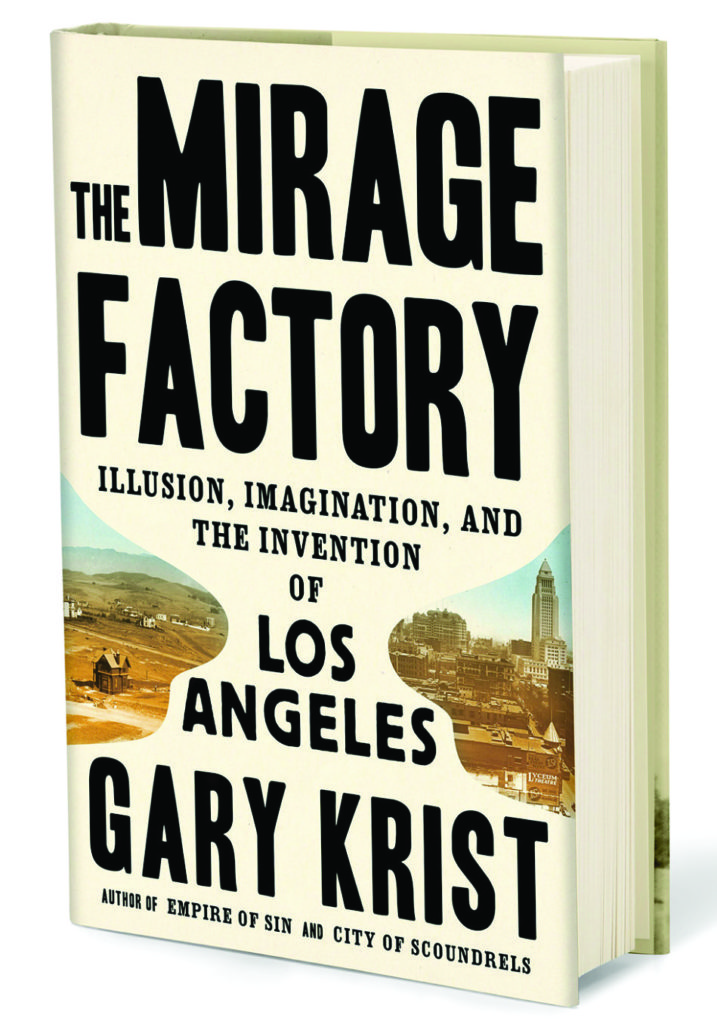
I recently bought (and often wear) a baseball cap with the following phrase embroidered in gold thread on the front: “CALIFORNIA LOCAL 1949.” Since that’s the place and year of my birth, I wear it with pride. And yet, even as a native and a lifelong resident of Los Angeles, I was wholly fascinated by Gary Krist’s lively and penetrating account in “The Mirage Factory: Illusion, Imagination, and the Invention of Los Angeles” (Crown). 

“This corner of Southern California — often bone-dry, lacking a natural harbor, and isolated from the rest of the country by expansive deserts and rugged mountain ranges — offered few of the inducements to settlement and growth found near major cities in other places,” Krist writes. “[T]he ‘gigantic improvisation’ that is modern Los Angeles” was the result of “a process rife with awkwardness, incongruity, and surprising moments of grace.” 

That’s a clue to the idea that runs through “The Mirage Factory” — Los Angeles is a “grand metropolis that never should have been” and “a certain amount of contrivance, or even trickery, would be required to bring resources, population, and industry to a place that lacked them all.” Since the streetscapes of Southern California have been deeply, even subliminally familiar to generation upon generation of movie-goers around the world for more than a century, we might assume at first that Krist is thinking of the movie business when he writes that L.A. is “an audacious projection of human will, imagination and vanity.” But much more than movie magic is on display in “The Mirage Factory.”

“[T]hree icons — an engineer, an artist, and an evangelist — both embodied and, to a unique extent, drove the three major engines of the city’s rise from a provincial player to world-class star,” Krist writes. He is referring to William Mulholland, who brought (or some would say stole) water from the Owens Valley; D.W. Griffith, the director who “almost single-handedly transformed the motion picture from a vaudeville-house novelty in a major creative (and fabulously lucrative) industry,” and Aimee Semple McPherson, a “pioneering radio preacher who, courting both scandal and fanatical devotion, founded her own religion and cemented Southern California’s reputation as a national hub for seekers of unorthodox spirituality and self-realization.”

Krist has specialized in writing best-selling biographies of American cities, including Chicago (“City of Scoundrels”) and New Orleans (“Empire of Sin”), and it seems almost inevitable that his eye has fallen on Los Angeles. He points out that L.A. started as an unpromising outpost of the Spanish empire when 44 settlers — “most of them of mixed African and Native American ancestry — arrived here in 1781. A century later, the population was still under 10,000. Only when Mulholland first delivered water from the Owens Valley in 1913 did Los Angeles begin its improbable transformation into an iconic world city as thousands and then millions of newcomers sought their destiny in Southern California.

Of course, the movie industry and its publicity machine played a leading role in exciting the imaginations of outsiders, but so did “the colorful labels … pasted on the crates of oranges and almonds they saw at their local grocers,” as Krist writes, and the radio broadcasts of McPherson, who was convinced that “Los Angeles was to be her Jerusalem, and she was to be God’s messenger here.”

The California dream has always had its dark side, of course, and Krist points out the racism that infected some of the most celebrated Hollywood movies, the bombings that were intended to stop the building of the Los Angeles Aqueduct, and the scandals that tainted both movie stars and evangelists. Even the phenomenal growth of Southern California in size, scale and sprawl came at a high price. Director William DeMille, brother of the famous Cecil B., was moved to compare Hollywood in its early days to what it soon became: “A more terrifying city full of strange faces, less friendly, more businesslike, twice as populous — and much more cruel.”

“That this megalopolis had grown up in such an unlikely place was, in retrospect, little short of miraculous — a bravura act of self-invention rooted in a culture of titanic engineering and cunning artifice.” — Gary Krist

Krist comes to a similar and highly ironic conclusion: “That this megalopolis had grown up in such an unlikely place was, in retrospect, little short of miraculous — a bravura act of self-invention rooted in a culture of titanic engineering and cunning artifice,” he writes. “Beginning with its conjuring of an oasis in the desert, an achievement itself made possible only through a campaign of deception and elusive intentions, the city had attracted the population it needed by selling another mirage: a lifestyle of leisure, health, easy prosperity, and spiritual fulfilment, all in a place where it never rains or turns cold.”

The three parallel life stories that Krist tells in detail in “The Mirage Factory” — Mulholland, DeMille and McPherson — reach an end-point in 1928, a benchmark year in which the city of Los Angeles boasted a population of 1 million. Still, he looks ahead to “the noir L.A. of the 1930s and 1940s, rife with all of the urban anxieties, municipal corruption, and social conflicts immortalized in the literature of the period.” He prefigures the titanic events of World War II, when Los Angeles finally became “a true world-class city.” 

Krist acknowledges the criticism that has been directed at Los Angeles, starting in the 1920s and continuing without pause thereafter. As recently as the 1980s, he points out, one urban theorist named Edward Soja dismissed Los Angeles as “a gigantic conglomeration of theme parks, a lifespace composed of Disneylands.” Surely Soja saw something very different on the streets of Southern California than the rest of us do. And Krist himself dismisses all of the doomsayers who regard the City of Angels as the ultimate dystopia. “[S]hort of some kind of disaster scenario recalling a Hollywood blockbuster,” he writes, “Los Angeles is not going to disappear anytime soon.” n 

Jonathan Kirsch, author and publishing attorney, is the book editor of the Jewish Journal. 

‘Mirage Factory’ Sharpens View of L.A. History Read More »

In Celebration of Our Fathers

I recently trespassed on David Rockefeller’s estate in Maine. I blame my father. Dad was an adventurous man who preferred the road less traveled.

His influence explains how I searched for and discovered the perfect secluded cliffside trail, which I later learned belonged to the Rockefellers.

My deceased father was there in spirit, cheering me on.

My memories of Dad inspired me to ask some well-known Angelenos to share stories about their fathers.


Rabbi Laura Geller, Rabbi Emerita Temple Emanuel of Beverly Hills
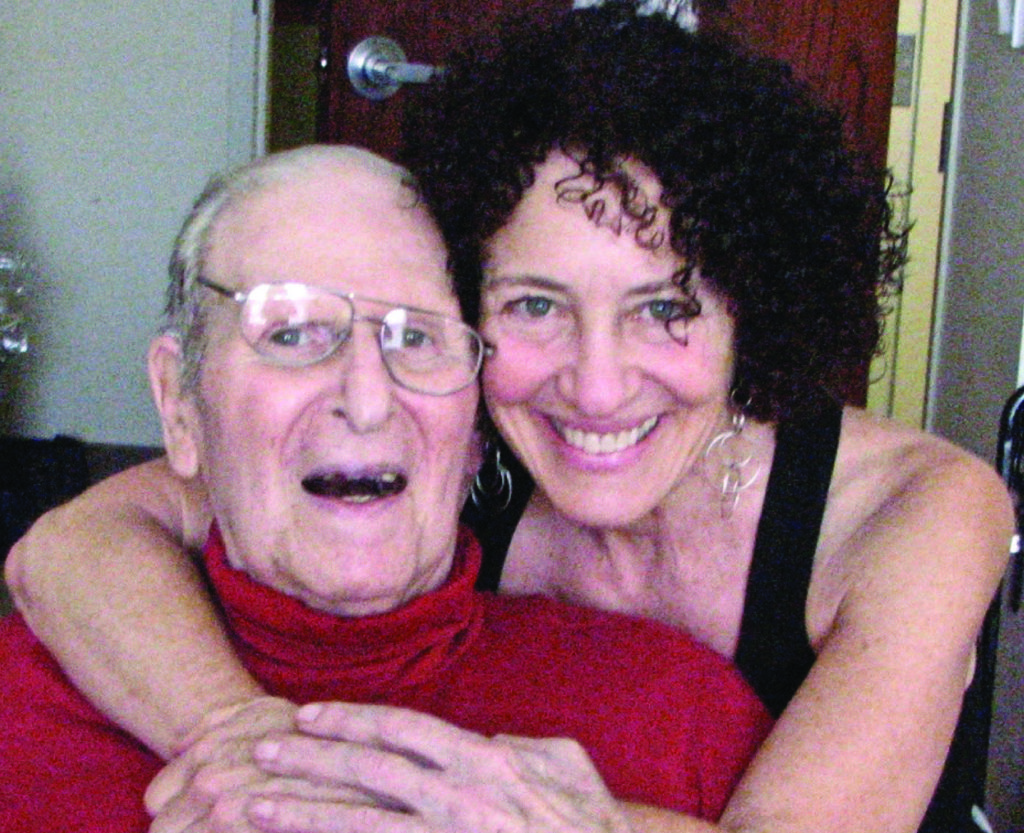
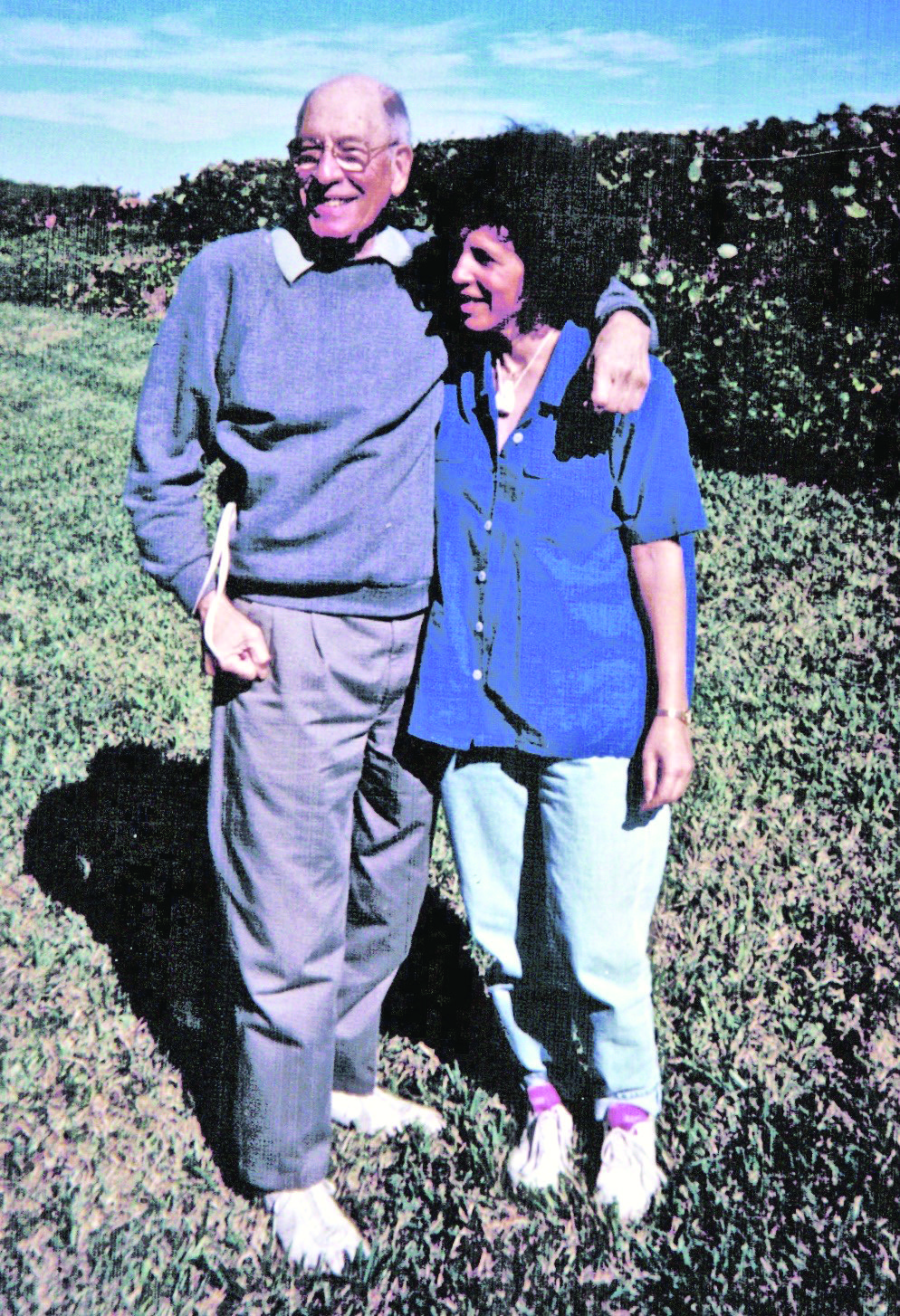
My father, Len Geller, grew up in New York. He was a very gentle soul who believed he was brought into the world to make other people’s lives easier, and that gave him comfort and purpose.  
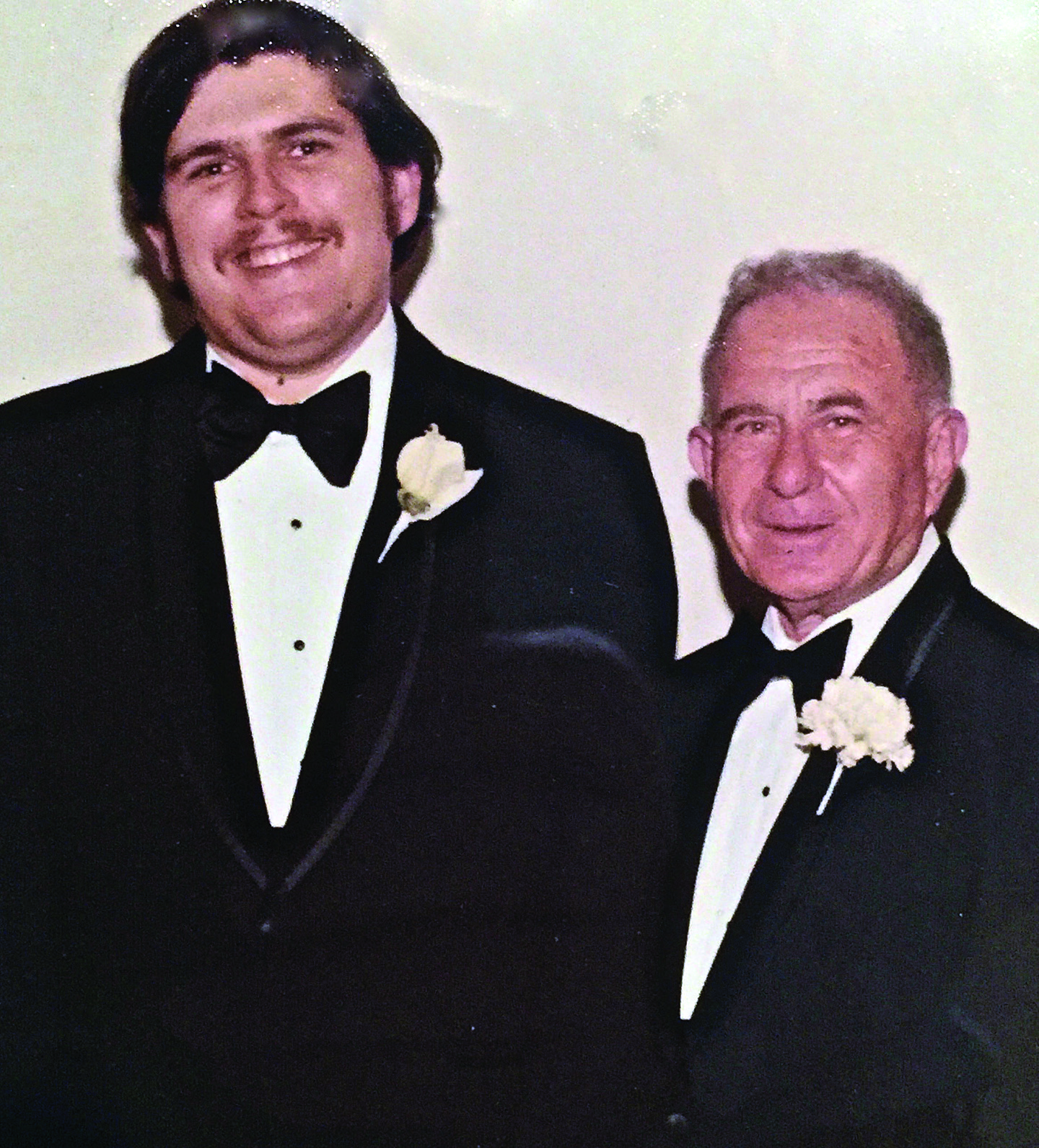
“My father believed that if people could really listen to each other, most of the evils of the world would disappear.” — Rabbi Laura Geller

When I was a child, my parents met with their synagogue’s social action committee. I snuck downstairs to listen and heard someone say they were “selling their home as a straw.” To me, a straw was something you drank chocolate milk with. My father explained that a straw was a white person who bought a house from another white person in order to sell it to a Black person, to help integrate housing. “I thought this was a Jewish meeting,” I said. “What does that have to do with being Jewish?” My father replied, “That is what it means to be Jewish.” 

While in college, I had a conflict with my father, and he wrote to me, “There is nothing more important than our relationship. I’m coming to visit you this weekend so we can talk this problem through and resolve it.” We talked, and the crisis evaporated. I learned from my father the importance of being gentle and kind in intimate relationships. He believed that if people could really listen to each other, most of the evils of the world would disappear.

Zev Yaroslavsky, former L.A. County Supervisor
My father, David Yaroslavsky, came from Ukraine to New York and eventually to Boyle Heights, where I grew up. He taught at Hebrew High and was a founder of the Hebrew Teachers Union here. 
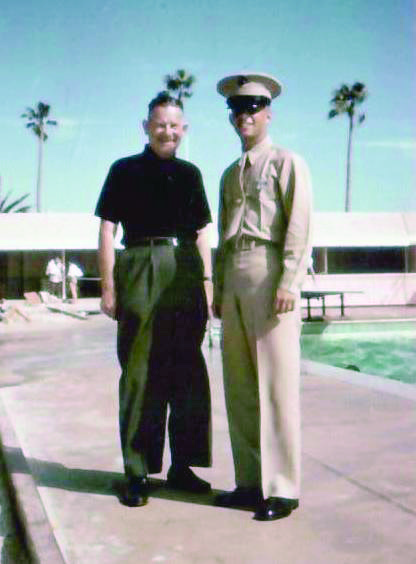
He was an avid reader, and not at all into sports. Nevertheless, for Father’s Day in 1959, I gave him two tickets to the Major League Baseball All-Star Game at the Coliseum. Despite the fact that Mickey Mantle, Yogi Berra and Ted Williams were playing, my father had no interest in the game. He brought all four of his Yiddish newspapers to read. While 99,000 people were cheering the game, my father sat, his head down, reading his Yiddish newspapers. 

My father had a great influence on me. He was both ideological and pragmatic, which I’d like to think I am. We didn’t always agree on politics, and I honed my debating skills with him at the Shabbat dinner table.  

He was 70 when he died suddenly in 1973. You think they’re going to be there forever, and I thought I’d have more time with him.

Ron Meyer, vice chairman of NBC Universal

My father, Edward Meyer, grew up in Berlin. In 1938, he escaped and was penniless when he arrived in America.  

He was a great father and friend, and hard working. He sold ladies’ dresses in towns across Arizona, California and Washington, traveling five out of six weeks. We never had any money. When he was home, he wasn’t on vacation. He still worked. It was a grueling lifestyle.

After I dropped out of school at 15, I sometimes drove my father on sales trips. He could not have worked any harder than he did. When he made a commitment, he kept it. He treated people the way he wanted to be treated. I hope I learned these things from him.

My father worried about me endlessly. When I was in the Marines, he worried that I’d be shot. When I dropped out of school, he worried about how I’d make a living. He lived long enough to see me in a coat and tie, working at William Morris. He was very relieved that I was on the road to something.

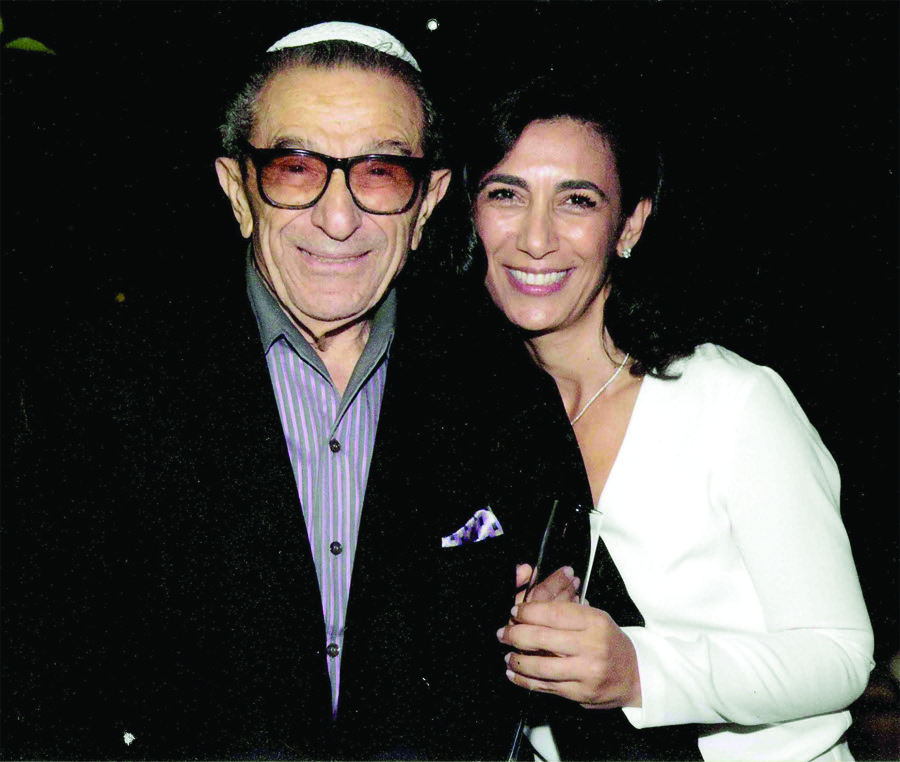
Sharon Nazarian, Anti-Defamation League senior vice president, and Younes and Soraya Nazarian Family Foundation presidentMy father, Younes Nazarian, is 87. He was born in Tehran, as was I. My father experienced tremendous anti-Semitism in Iran, as a child and later as a businessman. We left in 1978, lived in Israel for six months, and moved to Los Angeles in 1979. 
My father lost his own father when he was 3 years old. He was raised by his mother, who was a feminist and not bound by the norms of Persian culture.  

He was very engaged with his children in an Iranian-Jewish culture where that was the role of only the mother. He played an important role in nurturing and shaping his two daughters and two sons, raising us to be confident and self-assured. In his successful business, he often had international visitors for dinner, and we children were invited to join them. In the Iranian culture, children were not to be heard or seen, but during my father’s conversations with his guests he would ask our opinions. This left an important mark on all of us, instilling the idea that our opinions mattered.

Knowing about the anti-Semitism that my father experienced in Iran is intimately interwoven in my career of looking at anti-Semitism in the world today. My father has been a role model for me — my North Star. I hold him and his life story as a guiding light for me.

Ellie Kahn is an oral historian and documentary filmmaker.

In Celebration of Our Fathers Read More »

Fathers Building Futures With Kosher Caskets

Last September, I was at my annual writing retreat in Albuquerque, N.M., but it was the first year the gathering overlapped with Rosh Hashanah, so I went looking for a synagogue to attend services.  

Nahalat Shalom called itself  “a spiritual and cultural center for Jewish Renewal,” and the community welcomed us with open arms. Fifteen writers from our group (some Jewish, some not) attended a moving erev Rosh Hashanah service with close to 100 local residents. 

The president of the synagogue, Emet Ma’ayan, made his way onstage and welcomed our group in front of the entire congregation with a powerful message of inclusion. “After all,” he noted, “I used to be a woman.”

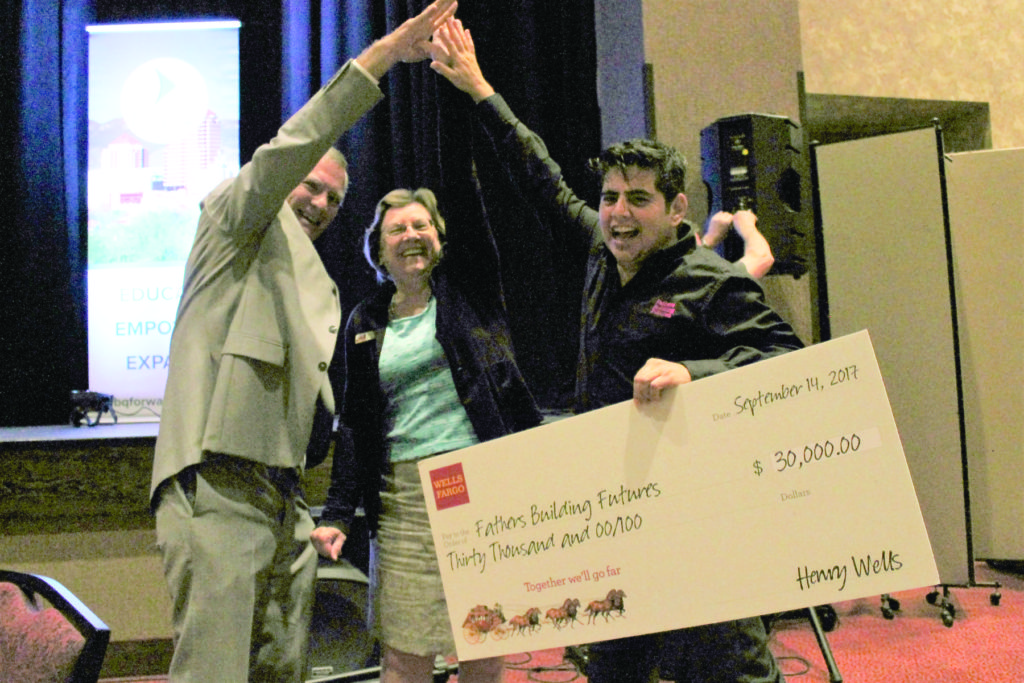
I also learned that Ma’ayan, 50, founded and runs a nonprofit called Fathers Building Futures, which helps incarcerated men find jobs once they have been released from prison. Among the skills the program teaches is how to build kosher all-wooden caskets, which are then sold to local funeral homes.

After I returned to Los Angeles, Ma’ayan agreed to a telephone interview to discuss his extraordinary Jewish journey and his work with Fathers Building Futures — a fitting tribute for Father’s Day. 

Born Dina Berger in New York, Ma’ayan said that “like many lesbians, somewhere along the way I realized it wasn’t just about my sexual orientation, it was a gender issue, too.”

Ma’ayan had been in a long-term relationship with another woman for 14 years before he began transitioning five years ago. He had a stepson with her as well as twins. Their relationship broke up not long after he began transitioning. 

Taking a small amount of testosterone, he started to feel better and shortly thereafter had chest reconstruction surgery. He decided to change his name from Dina to Dean “because it was simple.”

However, right before he got to the courthouse, Ma’ayan had a revelation. “Being a Hebrew speaker, I realized ‘Din’ is a heavy name. It means judge. So at the very last minute, I changed it to Emet (truth).”

His last name, Ma’ayan (spring of water), was the name he chose with his former partner, because it was the middle name of his stepson. He legally changed his gender at the DMV when Donald Trump was elected president. “I was really scared,” he said. “I don’t think I would have done it were it not for this political climate, because that wasn’t really my philosophy. My point even now is still not to be male, it’s to just ‘be.’ ” 

Part of Ma’ayan’s “being” is rooted in Jewish tradition. Raised in a Conservative Jewish household with three older brothers and Orthodox grandparents, Ma’ayan said “becoming a lesbian wasn’t necessarily breaking any religious doctrine, it was just the typical disappointment of your parents.”

After receiving his bachelor’s degree in sociology and Judaic studies from State University in Albany N.Y., he graduated with a master’s in Jewish communal services from Brandeis University and moved to St. Louis to take his first job at Washington University as the Hillel programming director, a job he remained in for six years. 

In 1998, together with his long-term girlfriend, Ma’ayan planned to move to California. “But I saw a movie called ‘Boys on the Side,’ which takes place in New Mexico, and I said, ‘That looks awesome. Can we move out there just for one year?’ ”

That was 20 years ago. Still steeped in a strong, Jewish, halachic tradition, Ma’ayan and his partner were shomeret Shabbat and kashrut, and he had begun wearing tzitzit under his clothes. They joined Nahalat Shalom, even going as far as buying a house that was within walking distance from the shul. But after being rejected when he wanted to use the mikveh, he became disillusioned with Judaism and drifted away from the Jewish community. 

He went back to school and studied counseling and fundraising, and obtained a master’s in social work. He then began an internship at PB&J family services. He rattled off sobering information: New Mexico ranks 49th or 50th among states for child well-being, with high infant mortality rates, hunger and incidents of domestic violence. “Our addiction and poverty and incarceration rate is among the highest in the country,” Ma’ayan said. “One out of every 10 children in New Mexico has a parent who is either currently or has been incarcerated.”

As part of his internship at PB&J, his job was to work in the jails with parents. “The men were told when they got out of prison if they did not find work and/or housing within 30 days, they’d go back. We saw so many people go back,” he said.

Undaunted, Ma’ayan sat down and wrote a grant proposal, and in 2011, PB&J was awarded a three-year grant from the Department of Health and Human Services to open up Fathers Building Futures. In 2014, Ma’ayan made Fathers Building Futures his full-time business, creating a board of directors and a sustainable model.

Today, Fathers Building Futures works in four industries, creating temporary job-training programs to help people get back on their feet. The four programs are: auto detailing, “which is fancy car washing,” Ma’ayan said; mobile power washing for fleets of cars; freight and delivery; and the kosher casket building.

“I guess the Jewish community and Judaism has infused itself here [at Fathers Building Futures],” Ma’ayan said. “The curriculum on how to teach fatherhood is really how to be a mensch.”

And it’s almost as though the kosher caskets were inevitable. “When I grew up, my grandfather would take us to the cemetery,” Ma’ayan recalled. “He’d volunteer to clean up.”

“I guess the Jewish community and Judaism has infused itself at Fathers Building Futures. The curriculum on how to teach fatherhood is really how to be a mensch.” — Emet Ma’ayan

And when he was in college, Chabad would send students on Halloween to the cemetery in Albany to do shmira (guard duty), fearing the Jewish tombstones would be attacked. Ma’ayan also spent time volunteering at the chevrah kadishah.

“But the reality is I’d never been around a group of people who have been around so much death [as these fathers have],” he said. “These are young men here. They are always going to funerals. When they were in their gangs, that was a big part of it.”

Fathers Building Futures had a woodshop and Ma’ayan wanted to come up with something the inmates could learn on Day One with very little experience, but also something that wasn’t too simple. The notion of making kosher caskets, without screws or nails, made sense. Ma’ayan invited a local rabbi to talk to the men about death and dying. “It immediately resonated with them, the sacredness of it,” Ma’ayan said. 

That path saw Ma’ayan circling back to Nahalat Shalom and a man by the name of Herschel Weiss who has a woodworking studio inside the synagogue. He asked Weiss to come and create a prototype for the casket. Then, they befriended the largest funeral home in town, French Funerals and Cremations, to mentor the fathers. 

Initially, French asked the fathers to build both adult and baby caskets, but the men rebelled. “ ‘We’re not making f—ing baby caskets,’ ” Ma’ayan recalled them saying. ‘We’ve buried our own babies!’

“I thought that was so powerful,” Ma’ayan said. “That they could articulate a line when it comes to their own trauma. And that’s what this whole work is about:  unpacking your trauma.”

Fathers Building Futures With Kosher Caskets Read More »

Local Business Gives Back for Father’s Day

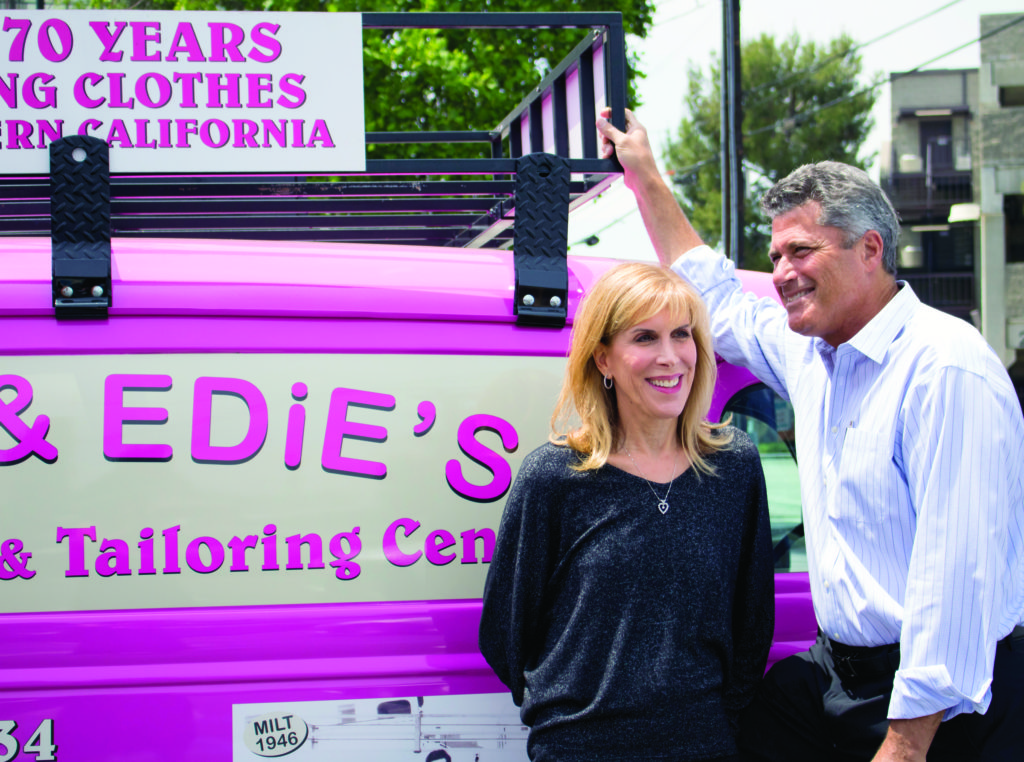
Milt & Edie’s Drycleaners & Tailoring Center, a family-owned dry cleaning business, has been a fixture in Burbank since 1988. In honor of Father’s Day, it is teaming with the organization Hope of the Valley to provide clothes for the homeless population of the San Fernando Valley.

As part of the “5 Garment Campaign,” when customers donate five garments to Hope of the Valley, Milt & Edie’s will take $50 off their dry cleaning bill. This isn’t the first time it has raised money for the organization. Every month, it donates abandoned clothes and for the past three years it has sponsored a major fundraiser, “Broadway to the Rescue,” featuring Broadway performers singing tunes they sang on Broadway.

Milt & Edie’s also services many of the shows filmed in the Burbank area, including “The Voice,” “Ellen” and “Criminal Minds.” 

Milt Chortkoff, who died this past December, began working in the dry cleaning business at 17, when he delivered clothes around Los Angeles for his father’s business, Hollyway Cleaners. He then consulted for Regal Cleaners in Burbank. Eventually, he purchased Regal Cleaners and renamed it Milt & Michael’s, for his son-in-law. In 2004, he changed the name to Milt & Edie’s to honor his wife. It is open 365 days a year, 24 hours a day, and offers free popcorn, cookies and coffee to customers every day, as well as free hot dogs on weekends.

Milt’s son-in-law Michael Shader is Milt & Edie’s CEO. Together with is wife, Beth, they have been running the family business since 2014. They originally connected with Hope of the Valley when one of their long-time customers, Michael-Leon Wooley, a Broadway performer and board member at the organization, suggested a collaboration. He asked for clothing donations because he knew people often forget to pick up the clothes. The Shaders began donating clothes every month, selecting pieces that were never collected and that had been in storage for over a year. 

“My father never passed an individual asking for money without giving. He would even pay for meals for individuals in a restaurant, never wanting to be identified by the waitress.” — Michael Shader

Shader said he learned about giving back from his own dad. “My father never passed an individual asking for money without giving. He would even pay for meals for individuals in a restaurant, never wanting to be identified by the waitress. My dad would buy sneakers and give coats. He became friends with individuals living on the street.” 

Shader added he felt it was important to provide for his community through the family business. 

“The evidence of the homeless is all around us,” he said. “We have a few homeless individuals who frequent our store and come in for the coffee or hot dogs. It’s heartbreaking to see individuals struggling, and Hope of the Valley is dedicated to helping the homeless in the San Fernando Valley.”

Hope of the Valley CEO Ken Craft said, “[We’re] thrilled that Milt & Edie’s is conducting the ‘5 Garment Campaign’ for Father’s Day. All clothing donations will be used to provide essential services to the homeless in the Valley. We are so thankful for the generosity and compassion of the most iconic dry cleaners in the Valley.”

Local Business Gives Back for Father’s Day Read More »

Creating ‘Windows’ Into Survivors’ Stories

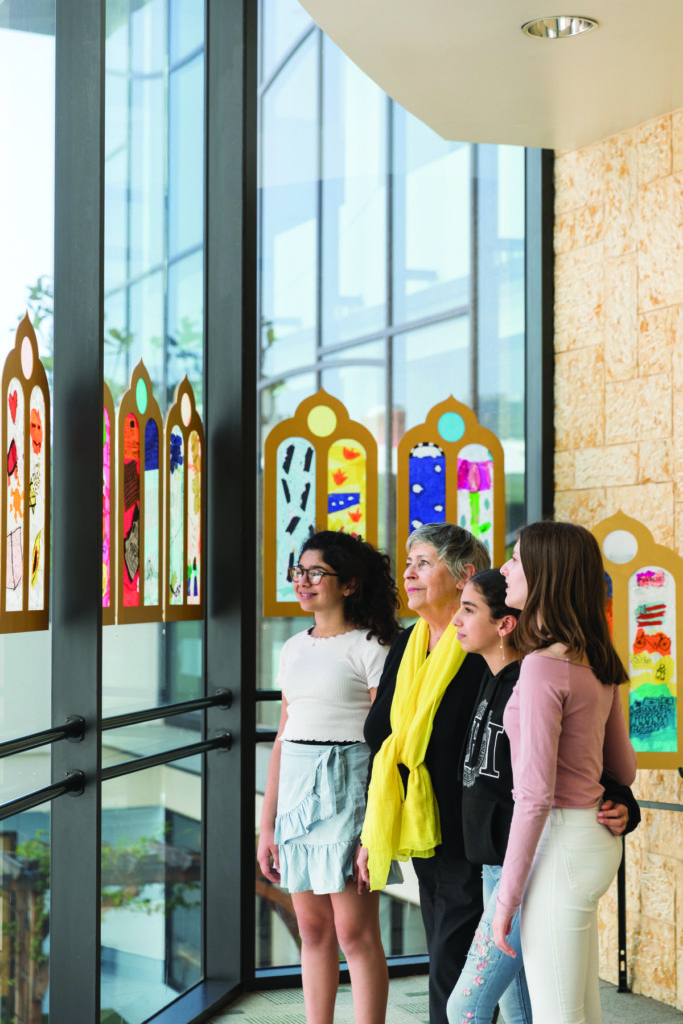
Enter the central atrium at Sinai Temple and the Alice and Nahum Lainer School on Wilshire Boulevard, and colorful stained glass “windows” now greet visitors.

The windows are actually made of paper and were designed by 48 seventh-graders from the Lainer School after conversations the children had with Holocaust survivors earlier this year. 

The students met with 21 survivors in February to hear their stories. They then created the windows based on their interpretation of the survivors’ stories. 

The program was co-created by Lainer Judaic Studies Director Irit Eliyahu, Jewish History and Rabbinics teacher Rebecca Berger, the Righteous Conversations Project, and teaching artists Ruah Edelstein and Masha Vasilkovsky. The entire project was made possible through a grant from the nonprofit organization Facing History and Ourselves.

The students spent three months working on the project and at the end of May, 16 of the survivors and the students came together again with friends and family at Sinai Temple for the unveiling of the windows.

Tiny replicas of the windows were presented to the survivors, along with pictures with their students that were taken at the original event by Righteous Conversations photographer Gina Cholick. 

“To tell a story is one thing,” Eliyahu told the Journal. “To take the story of a person and make it into an artistic exhibit is something [else].” 

“This was a window looking into somebody’s life and looking into a future,” she added. “A window is very symbolic.”

Thirteen-year-olds Joshua Roussak and Isaiah Ofek depicted the story of Frank Schiller, 92, from Schiller’s capture on his 13th birthday and his time in a ghetto, through his escape from a rail car into the forest.

“I feel like I learned bravery,” Ofek said, “because Mr. Schiller was brave enough to jump out of the rail car, being at risk of getting shot or captured by a Nazi.”

“Standing before these magnificent windows, I am struck by the power of curiosity and compassion and respect when it is expressed through the language of color, form and light.” — Samara Hutman 

“Besides risk-taking,” Roussak added, “I also learned to appreciate the great times in my life.”

Lizzy Getman and Sarah Hoorfar, both 13, met with 92-year-old Martha Sternbach. They created their window based “on one side the dark times and on one side the good times,” Getman said.

“And how she overcame [the bad times],” Hoorfar added. “She lived the hard times, so we could live the good times.”

Righteous Conversations Project Director Samara Hutman said the art exceeded her expectations. “It was not only the art but the quality of relationship that was built with deep respect and curiosity and a sense of wonder,” she said. “Standing before these magnificent windows, I am struck by the power of curiosity and compassion and respect when it is expressed through the language of color, form and light.”

Twelve-year-olds Alexis Harouni and Lauren Reoua met 87-year-old Dorothy Greenstein. One side of their window reveals a dark sky with stars to commemorate the memory of those lost in the Holocaust. The other shows  a bright flower to represent the growth of the Jewish people in the aftermath of the tragedy.

“My favorite part of this was interviewing Dorothy,” Harouni said. “It was very meaningful to be able to be the last generation to hear the stories personally and then be able to carry them on.”

Creating ‘Windows’ Into Survivors’ Stories Read More »