fbpx

June 14, 2018

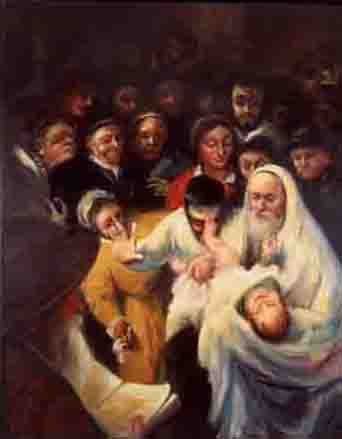
Blessing of the Brit

When our oldest daughter was pregnant and learned she was having a boy, there was never any doubt that we would all be celebrating a ritual circumcision after his birth. Even before he was born, we decided to co-sponsor the big event with his other grandparents because we all live in the same town.In recent years, controversy concerning circumcision has surfaced across the globe. In 2011, Gov. Jerry Brown signed a bill prohibiting California cities from banning the practice. As recently as this past spring, efforts to prevent circumcision were publicized in Iceland. These efforts always raise concerns for Jews and others about interference with religious freedom, and with good reason.

In the Jewish tradition, the rite of circumcision, known as a brit milah in Hebrew or more colloquially as a bris, marks a male’s entry into the covenant established between God and the Jewish people. The Torah states that God commanded Abraham to circumcise every male at the age of eight days.

Although the origins of this ceremony derive from the Torah, throughout the centuries the brit has represented a staple of Jewish culture. Its staying power even among nonreligious Jews is truly remarkable. The brit is similar to most other Jewish life cycle events in that it reflects a blend of rabbinic tradition and the cultural practices of the people. So although it is an enduring sign of the covenant, it also reflects the culture of the Jewish people across space and time.

Very little about the actual content of the brit as practiced today is found either in the Torah or the Talmud. The rabbis in late antiquity prescribed the particular prayers and blessings for a brit, but many of the actual customs were cultural innovations of the Jewish people. These customs also were heavily influenced by the cultures of the surrounding non-Jewish communities in which the Jews lived for centuries.

Many familiar aspects of the brit were drawn from the Christian baptism ceremony, a reality not all that surprising given that baptism replaced circumcision in early Christianity. The evening before circumcision was generally believed to be the most dangerous time for the baby and his mother, and so at one time Jewish communities held all-night vigils to protect the infants from evil spirits. There is much evidence to suggest that these vigils revealed a marked similarity to Christian customs that arose in connection with the evening preceding a baptism. Jews and Christians believed that the presence of food could mollify evil spirits and so the practice developed of a festive meal on the evening before the brit.

Throughout the centuries the brit has represented a staple of Jewish culture. Its staying power even among nonreligious Jews is truly remarkable.

The prophet Elijah also earned a prominent place in the brit. On the one hand, his role was derived from rabbinic interpretations of a biblical verse about Elijah that the rabbis believed referred to circumcision. Still, according to Jewish folklore, Elijah was the guardian angel of children and believed to have supernatural powers as a miracle worker. Even today, every brit has a special chair that is reserved for Elijah.

The history of the brit demonstrates that the staying power of Jewish tradition generally derives from its ability to forge Jewish law and Jewish culture, as well as adapt practices from the outside cultures in which Jews have lived for centuries. This history of unique Jewish content and selective adaptation from the host cultures is what has kept Jewish tradition alive and relevant for more than 2,000 years.

Vigils on the evening before the brit are no longer common, but we sat for hours after the ceremony with family and friends, munching on bagels and lox, enjoying our grandson, and feeling a deep sense of gratitude. The feel of the brit was very similar to the wedding of our children more than five years ago. Even the two rabbis who officiated at the wedding joined in our festivities — one Conservative and one Reform.

How blessed are we to be part of a tradition thousands of years old that furnishes ready-made opportunities to celebrate life’s milestones in a way that has evolved somewhat over time but still retains its uniquely Jewish character.


Roberta Rosenthal Kwall is the Raymond P. Niro Professor at DePaul University College of Law. She is the author of “The Myth of the Cultural Jew: Culture and Law in Jewish Tradition” (Oxford University Press, 2015) and is currently working on a book about
transmitting Jewish tradition in a diverse world.

Blessing of the Brit Read More »

Second Nurture Fosters New Family Paradigm

When Jerusalem-based Rabbi Susan Silverman was growing up in the United States, her parents brought foster children into their family’s home. “I saw, close up, what it meant for children to not have families of their own,” Silverman told the Journal in a Skype conversation. “It just stayed with me my whole life. I knew from when I was a kid that when I grew up I would adopt. And it became really clear to me when I became a rabbi that this was my passion and that would be my rabbinate.”

True to her word, Silverman, together with her husband, Yosef Abramowitz, adopted two children from Ethiopia and had three biological children. Then, 18 months ago, she toured the U.S. with her memoir, “Casting Lots,” which focuses heavily on her views on how to create intentional families. She was also busy creating Second Nurture, an organization dedicated to providing a path to adoption for “waiting” children by bringing together multiple adults from within the same community who are interested in foster-adoption, creating an adoption cohort and offering multilayered support throughout the adoption process.

Silverman launched pilot programs with three synagogue communities, one of which was at Wilshire Boulevard Temple with Rabbi Susan Goldberg. Twelve people signed up for the initial cohort, some of whom are interested in fostering,  some who want to foster-to-adopt, and others who simply want to be mentors or who are willing to take part in emergency care.

Second Nurture joined with a Los Angeles foster family association called Extraordinary Families as its social service partner, and is currently working with the cohort on the organization’s home-study program. 

Silverman said Second Nurture has just begun applying for grants, but over the last 18 months it has raised $100,000 from private donations. 

Second Nurture was a perfect match for Wilshire Boulevard Temple, Goldberg told the Journal in a phone interview. “My sister went through L.A. County foster and adopt. At adoption day, the head of the Department of Children and Family Services (DCFS) pulled me aside and said, ‘Are you a rabbi?’ ” Goldberg said that when she answered in the affirmative, the DCFS head replied: “If every faith community in L.A. would help to get just one kid adopted, we’d have no kids [needing adoption].”

“I really took that to heart,” Goldberg said, “and came back to our community and asked what would it look like if [the temple] started to get involved?”

In a serendipitous stroke, someone had already suggested that Silverman reach out to Goldberg and Silverman was in town at that time on her book tour. 

“If you look at the numbers, there are about 400,000 children in foster care in the U.S.,” Silverman said. “There are about 8 million kids in institutions worldwide outside family care and tens of millions on the streets. For many of those kids, the best solution for them is adoption.” 

The seeds of Second Nurture (whose website is at communityadoption.org) were born because “I started with a couple of assumptions,” Silverman said. “That every child who needs a family deserves to get one, and that more people will adopt waiting children if they know that they have a community that has their back.”

It was a no-brainer for Silverman to begin in the Jewish community. “First of all, it is the most cited obligation traditionally to take care of the orphan,” she said. 

Goldberg concurred. “That’s what temples are at their core: We support families in all aspects of the life cycle. Family is central to the Jewish community, but people make families in all different ways.”

“Moses was the first open adoption. Ruth was adopted by Naomi. Esther was adopted by Mordechai. We have these redemptive figures who were all adopted. That’s kind of intense.”  — Rabbi Susan Silverman 

Silverman also stressed that everyone in the cohort isn’t necessarily trying to foster or foster-adopt. “We’re educating the community as a whole,” she said, “setting up a system of support for the families.” One family may want to get support for children already in the their home, she said, and Second Nurture can help in preparing those kids for the introduction of a foster child. Another family who has brought home a child may need practical support, whether it’s diapers or a crib, or office space for the husband whose room is now being used for the foster child.

“The cohort is basically a support group on steroids,” Silverman said. 

Second Nurture also plans to take the issues related to adoption and fostering into the community.

“How do we train the teachers in religious school to deal with foster children coming home?” Silverman said. “Do we have some sort of celebration if they are bar or bat mitzvah age? How do we integrate adoption into our curricula and culture in a meaningful way so kids and families see themselves reflected in what it means to be Jewish?” 

“How rabbis speak about family on the pulpit, and making sure that we make room for everyone’s family no matter what that family looks like,” is important, Goldberg said. “And it’s an ongoing theme [in Judaism]. Look at how many Torah stories there are about infertility. Almost every matriarch struggled with getting pregnant.”

Silverman also spoke of the plethora of adoption stories in the Torah. “Moses was the first open adoption,” she said. “Ruth was adopted by Naomi. Esther was adopted by Mordechai. We have these redemptive figures who were all adopted. That’s kind of intense.”

Goldberg believes part of the reason the time is ripe for a program like Second Nurture in Jewish communities is because “there has been a huge impact that has come from there now being women rabbis. These were issues that weren’t discussed before.”

Goldberg tells the story of one of the first ordained female rabbis who had a congregant come to her to ask her how to have a mourning ritual around a miscarriage. That rabbi went to her head (male) rabbi and asked what to do. He told her nobody had ever mentioned such a thing to him.

“To talk about things like miscarriage and infertility and adoption with a supportive community helps struggling families,” Goldberg said. “And it helps them know there are many ways to have a child.”

“It’s so deep,” Silverman said. “There’s this midrash that makes me cry every time I read it: When the world was created, God separated the waters above from the waters below, creating the seas and the sky — and when this separation happened, the lower waters cried out, ‘Woe to us that we were separated from our creator.’

“It’s just such a powerful midrash,” she said, “and it’s also the essence of adoption. It’s all about how do we bring in this midrash when we’re teaching at Wilshire Boulevard Temple about adoption: how being separated from their creator is both an intense loss and act of creation at the same time.”

Second Nurture Fosters New Family Paradigm Read More »

She Joined the Tribe and Thrived

On a visit to Israel in the late 1990s, Karin Kloosterman saw a woman in Jaffa’s flea market buying a lamp and was inexplicably overcome with jealousy. She, too, wanted to call Israel home. It was a peculiar prospect, considering Kloosterman was born into a Christian family of Dutch and Scottish descent in Newmarket, a small town in Canada. 

But Israel’s “wildness and elegance,” its “humanness and immediate intimacy” drew her in and within weeks she had fallen hard and fast in love with the country and one of its denizens. However, both relationships were short-lived; and with a heavy heart, Kloosterman traveled to Switzerland to continue her postgraduate studies in zoology. One night she got high, and as she walked home with donkeys braying and colts cantering around, she thought, “What am I doing here?” 

“I felt stuck,” she said. “How could I unstick this stuck?” 

It was then that she knew she had to ditch her studies and move to Israel. 

Kloosterman’s mind and soul bloomed in the Jewish state. She went on to become a ceramics teacher, forge a career as a journalist, establish a groundbreaking website on environmental issues in the Middle East, meet her best-friend-cum-husband with whom she raised two children, and established a revolutionary internet-based agricultural startup. 

However, it was a piece of advice from a rabbi in Toronto that helped her navigate her path. Kloosterman was trying — and failing — to find her way out of a red-tape minefield in order to stay in Israel as a non-Jew when the rabbi told her: “Think spiritually. If you do so, everything will change.”

“And I thought, ‘Oh yeah, that’s it,’ ” she recalled. “Because up until then I’d seen everything as procedural.”

Two days later, she signed up for a conversion course at a religious kibbutz; and 10 months later she became a Jew. 

Kloosterman, 44,  credits her husband, Yisrael Borochov — then her best friend — with teaching her Judaism. The pair would stay up late into the night and discuss Jewish ethics, mitzvot, philosophy and Talmud.  

“He is probably my greatest rabbi,” she said.  

At the time, Israel was undergoing a solar energy revolution. 

“All the [expletive] who were running hedge funds had now decided to go into clean tech,” she said. 

Kloosterman decided to tap into the boom and founded Green Prophet, the region’s first website dedicated to news about sustainability. She soon found herself in the “very weird position where I was the biggest friend to the enemy,” with whistleblowers from Iran, Iraq, Syria and Lebanon disclosing to her their countries’ heinous environmental transgressions. 

Kloosterman is unforgiving when she discusses the punishments some of those informants faced for revealing things such as nuclear contamination and industrial pollution.

“They will make you disappear — that’s how the Arab world operates,” she said. “There is a minority of bullies who make life inconceivably horrible for people who want to make the world better.”

Israel’s “wildness and elegance,” its “humanness and immediate intimacy” drew her in and within weeks she had fallen hard and fast in love.

Her online journal cemented Kloosterman as an environmental activist and led her to create Flux, an internet company that aims to democratize farming by decentralizing and democratizing data on the blockchain.  

The company’s flagship product is Eddy, a robot — or “growbot” — that enables full-service hydroponic farming. It can make experts out of novices and shares its wealth of experience and know-how to smallholding farmers in India, Africa and China — essentially creating an Israeli agricultural extension service, literally in the palm of one’s hand, using a smartphone. 

Kloosterman is hyperbolic yet wistful about what’s next.

“I wish I knew,” she said. “Outrageous success? Farming on Mars? A novel about time travel while looking for God?”

She Joined the Tribe and Thrived Read More »

ARTIST OF THE WEEK: Mount Herzl Memorial 

Kimmel Eshkolot Architects
Mount Herzl Memorial

The Mount Herzl Memorial at Israel’s national cemetery officially was opened to the public after this year’s Memorial Day, Yom HaZikaron. Officially titled “The Memorial Hall of Israel’s Fallen,” the memorial commemorates Israel’s fallen soldiers with an undulating, funnel-shaped formation of bricks that opens the hall to the sky. The spiral comprises more than 23,000 bricks, with each brick honoring an individual soldier and lighting up on the anniversary of its respective soldier’s death. The building received the 2018 Royal Institute of British Architects Award for International Excellence as one of the 20 best new buildings in the world.

ARTIST OF THE WEEK: Mount Herzl Memorial  Read More »

A Rare Glimpse Into the Ultra-Orthodox World at Jerusalem Design Week

Jerusalem Design Week happens every year, but it was a first for some artists participating in the exhibition “Haready-Made: The Product in Orthodox Society.” Relating to this year’s overall theme of “Conserve,” the exhibition at the Jerusalem Theatre showcased objects used by members of the Charedi community — ultra-Orthodox Jews who reject secular life — in order to maintain their culture in socially liberal and tech-savvy Israel. 

Noa Cohen, the exhibition’s curator, explained how the idea for the exhibition arose. While doing research on a different topic for her doctorate thesis at Israel’s Bar-Ilan University, Cohen stumbled upon the Art Shelter Gallery nestled in Jerusalem’s ultra-Orthodox neighborhood of Mekor Baruch. 

“I realized a lot of artists [in this community] pursued very unique ways of making art. I volunteered as their curator for a few years and now I manage the Art Shelter Gallery,” she said. “The exhibition at the Jerusalem Theatre is a collaboration [between the gallery and Design Week].”

Cohen said that for some of the 15 artists participating in the exhibition, it was the first time they showcased their art in a public place. “I realized that there are many things in the ultra-Orthodox community not known by outside spectators, such as the way they live and how they make their products specifically tailored to their needs,” she said.

One of the displays in the exhibition was a mannequin whose head was covered by a bright, colorful headscarf (tichl). A cellphone was visible between the mannequin’s head and the headscarf. Artist Marcelle Bitton said this work is an adaptation, depicting how Charedi women often speak — often without using their hands — on “kosher” cellphones conveniently tucked underneath their tichls.

“There are many things in the ultra-Orthodox community not known by outside spectators, such as the way they live and how they make their products specifically tailored to their needs.” — Noa Cohen

“You can’t find these scarves in the stores; they are handmade. And kosher phones are usually small ones produced by Nokia or Samsung,” Bitton explained. 

Unlike most Charedim, Bitton did not go through the community’s educational system and therefore ended up with experiences atypical of ultra-Orthodox women.

“You are inspired and want to express what you’ve experienced. The fact my artwork is being displayed during Design Week is already an achievement. Opportunities for Charedi artists to show their work are already very limited,” Cohen said. “It makes it more interesting to consider that there aren’t enough young, female artists within the Charedi community.”  

Bar Mayer is another female artist who grew up within the Charedi community but left it in later years. Her display at Design Week featured a large portrait of her family tree. 

“The work is the first I’ve done to reconnect with my family after many years of distance,” Mayer said. The decision to make a fresh start 19 years ago meant a formal break with her ultra-Orthodox community. 

A quick glance at her art revealed signs of discord. Almost half of the family members presented in the tree were either absent in the space assigned for a portrait — which was often substituted by colored papers — or they appeared with their backs to the camera. Some members wore traditional Orthodox garb such as the black fedora and suit, although some did appear in modern clothing.  

“Some of them didn’t understand why I was reconnecting with the community. Showing up with my camera was very invasive in a way,” Cohen said. “I don’t expect them to get me, because art is very marginal in the Orthodox world.” 

For artists in the Charedi community or closely linked to it, participating in shows can be a thorny affair, especially if they take place on the Sabbath or involve an international audience.

“This type of exhibition shows the diversity of the Israeli art world,” Cohen said. “It’s much more authentic and an opportunity to experience a broader range of Israeli art. I see the exhibition as a bridge.”

In addition to the Design Week exhibition allowing them to experiment with their artistry, Bitton and Mayer emphasized that the event has motivated them to reconnect with their Charedi heritage.

A Rare Glimpse Into the Ultra-Orthodox World at Jerusalem Design Week Read More »

Murray Fromson, war correspondent, 88

Murray Fromson, renowned American war correspondent, university professor and fighter  for press freedom, with close ties to Israel, will be laid to rest Friday, June 15, at Mount Sinai Hollywood Hills in Los Angeles. Services start at 10 a.m.

Fromson died June 9 in his sleep in Los Angeles after suffering from Alzheimer’s disease for several years. He was 88.

Born Sept. 1, 1929, in the Bronx, N.Y., one of his early idols was legendary CBS correspondent Edward R. Murrow. “I was enamored of him,” Fromson recalled in a 2015 Jewish Journal interview. “I’d go to sleep with a pencil under my pillow, pretending I was a microphone.”

His family moved to Los Angeles when Murray was 11 and he celebrated his bar mitzvah at the old Sinai Temple. The start of his journalistic career was as a copy boy and stringer at the Los Angeles Times, followed by an stint in the Army as a reporter for Stars and Stripes. After his discharge, he joined the Associated Press, filing stories from across the United States and Southeast Asia.

In 1960, he followed in Murrow’s footsteps and became a network correspondent, first for NBC and then during a decades-long career with CBS. Abroad, he covered the Vietnam War, including the fall of Saigon, and at home he reported

Murray Fromson

on the Richard Nixon-John F. Kennedy presidential race and the civil rights movement in the South.

Fromson was deeply effected by the brutality he witnessed in Vietnam and the American  South. As an eye witness to so much hatred and devastation, Fromson said, “What can I say, except ‘When will this misery ever stop?’ ”

Fromson entered the struggle for freedom of the press in 1969, when President Nixon vowed to subpoena journalists to force them to reveal the names of anti-war activists.

With Tony Lukas of The New York Times, Fromson established the Reporters Committee for Freedom of the Press, which continues to this day.

During a two-year stint as CBS bureau chief in Moscow in the mid-1970s, Murray and his wife, Dodi, befriended many Soviet Jews who were barred from emigrating to Israel by the Communist government.

The Moscow experience made a strong impression on the two Fromson children, Lisa and Derek. The former, adopting the name of Aliza Ben Tal, studied at Ben Gurion University of the Negev (BGU) and subsequently worked in the president’s office as assistant for international affairs.

The Fromson parents joined their daughter’s effort by sponsoring an annual — and ongoing — Fromson Media Mission to BGU, which has brought the university’s accomplishments to the attention of millions of American readers and viewers.

Fromson joined the faculty of the USC in 1982 and served as director of its communications and journalism school for five years. He founded the university’s Center for International Journalism, which brought foreign journalists, mainly from Latin America, for study on the USC campus.

In a tribute to her predecessor, Willow Bay, current dean of the USC journalism school, told The New York Times, “Not only was professor Fromson one of the great journalists of his time, he was also a an extraordinary teacher and leader, who built the USC international journalism program from the ground up.”

In addition to Dodi, his wife of 57 years, and two children, Fromson is survived by two grandchildren.

Murray Fromson, war correspondent, 88 Read More »

Providing Leadership for Troubled Times

The following is the address Rabbi Artson delivered at the ordination ceremony for the Ziegler School of Rabbinic Studies, American Jewish University on May 7.

These have been brutal and soul-crushing times…
• The lack of civility that has swept the world, the inability of human beings to treat each other with kindness or gentility or dignity
• Our incapacity to extend the most fundamental kindness to each other
• The ways that crass vulgarity — words and behavior that once were impossible to imagine or to countenance in public — are now so commonplace that the only thing that makes us forget one obscenity is the next
• The rise of groupthink and the ability of human beings to make other people peripheral in their minds because of the way they live their lives, because of how they look, because of the color of their skin, because of their income or their neighborhoods
• The rampant resurgence of public anti-Semitism, racism and bigotry. It once was true that bigots had the temerity to cover themselves with a sheet, and now they walk freely and speak publicly without shame or second thought
• The rise of militant nationalism with the assertion that my nation, right or wrong, can do whatever it wants and trample yours
• The recourse of violence not as the last and final option but as the first
• The ongoing war against women and girls
• The ongoing bloody war against gays, lesbians and trans people
• The attacks against free speech
• The inability to allow people to offer different opinions than our own
• An unwillingness to value truth or science

… Small wonder that in our personal lives, our institutional lives, and on the global stage everyone feels on edge, under assault.

Wisdom in Hurban (Destruction)

We face an uncertain future in part because everything we thought we knew, everything we thought we could assume to be shared values and common discourse has been swept away. People live their lives with a sense of dread, a sense of meaningless rote, feeling unappreciated for the work they have done or they will do, a sense of going unnoticed. We lurch from one crisis to the next without any intelligent planning, without patience, without forethought.

You newly ordained rabbis are called to offer leadership in troubled times. Would that this were an age of resurgence, an age of good feelings, so I could offer you a very different charge tonight. But that is not the world in which your leadership will be launched. What wisdom can we bring to bear to the darkness? What can our ancient, sacred tradition offer us as we shoulder this heavy burden, as we strive for a world of compassion, dignity and goodness?

How brilliant that a central metaphor in our tradition for the last 2,000 years has been that of Hurban — destruction! We are the people whose homeland was ripped from us. We are the people whose Holy Temple was burned to the ground, not once but twice, and with it our capacity to serve God perfectly. The delusion that we live in a world of wholeness, a world of stasis, a world of calm, has been ripped from us again and again. We live in a state of Hurban.

Rabban Yochanan ben Zakkai once was walking with his disciple Rabbi Joshua near Jerusalem after the destruction of the Temple. Rabbi Joshua looked at the Temple ruins and said: “Alas for us! The place which atoned for the sins of the people Israel through the ritual of animal sacrifice lies in ruins!” Then Rabban Yochanan ben Zakkai spoke to him these words of comfort: “Be not grieved, my child. There is another way of gaining atonement even though the Temple is destroyed. What is it? We must now gain atonement through deeds of lovingkindness. For it is written: “I desire lovingkindness, not sacrifice (Hosea 6:6).” Avot De-Rabbi Natan 11a

Hurban and Healing
In a place of literal ruins, Rabban Yochanan rises up above his colleagues. He becomes our rabbi by offering us a way to see past the destruction. Not by pretending the destruction isn’t real, or cruel, or incapacitating, but by insisting we soar above it. His disciple, Rabbi Joshua, is trapped by his pain, by his fears, his anger, perhaps his guilt; he is blinded to any possible alternative ways to move. His teacher offers him the restoration of hope in three ways:

The first is that Rabban Yochanan broadens our vision of what is possible. My child, he says, I know you expect that sacrifice is the only way to atone. But lift up your eyes. Within the tradition there are other — in fact, better — ways to bring atonement, and if we recommit ourselves to deeds of lovingkindness, then we can gain atonement for ourselves, even amidst the ruins.

Second, Rabban Yochanan roots this idea in the power of relationship — it’s not a coincidence that he addresses his disciple as b’ni, my child. The evil that Hurban plots is to sever connectedness, to make us each shrink into our own, however we define those borders, until we are each of us and all of us truly isolated, alone, and thinking only of our own defense. B’ni, he says, break through the barrier of loneliness. We are not alone in this suffering, we remain b’ni/my child, and we do not suffer alone.

The third mode of hope Rabban Yochanan offers is to expand the realm of meaning making. In a world that assumes that the only way to achieve atonement is through the punctilious practice of ritual, he says, “No! no! no! I’m going to quote a text.” Because, it turns out that when you open yourself up to learning (all learning, but Torah learning especially), the learning transforms us. We take on someone else’s words, someone else’s thoughts, someone else’s experiences, and we enter inside those words or experiences. They become our own, and so our vision is one of new insight, new emotion. We learn to think the thoughts and feel the feelings of people we have never personally met. We try on perspectives outside our own lives and community. We cultivate empathy and imagination, and then we are renewed.

“Broader vision, strengthened relationships, rooting ourselves in sacred texts and transformational learning: these are the gifts that rabbis bring.”

Vision, Relationships and Learning
Broader vision, strengthened relationships, rooting ourselves in sacred texts and transformational learning: these are the gifts that rabbis bring. These are the treasures that Judaism offers, both as remedy and antidote. These are the sources of resilience and healing that we and all humanity need in these trying times.

In today’s storm of alienation and loneliness, bigotry and fear-generated hate, the Torah takes a stand as a haven and as a lifesaver, a tree of life offering shade, shelter and nourishment to weather the storm.

As we seek to survive the buffeting, brutality and uncertainties that we are facing today — and have faced for some time now — we turn to you, our future rabbis, to provide these blessings.

I bless you that where you stand and where you walk, you bring with you a Torah of vision, expanded to include possibilities that our fear renders temporarily invisible, a response that offers hope, not fear.

I bless you that you bring in your wake a Torah of covenantal relationship, so we remember that we are not alone. That no one need ever be truly alone, a response that mobilizes love, not rage, not hate.

And l bless you that where you teach and where you stand becomes a makom/place of Torah, of learning, so that those who are in your presence can open themselves to the transforming power of empathy, creativity and imagination, a response that values wisdom, not rash and crass impulse.

We must now gain atonement through righteous deeds of audacious lovingkindness, for it has truly been written for us: “ I desire lovingkindness, not sacrifice.”

Rabbi Bradley Shavit Artson holds the Abner and Roslyn Goldstine Dean’s Chair at the Ziegler School of Rabbinic Studies, American Jewish University. He is also the Dean of the Zacharias Frankel College of Potsdam University in Germany, ordaining Conservative / Masorti rabbis for Europe.

Providing Leadership for Troubled Times Read More »

OBITUARY: Murray Fromson, War Correspondent, 88

Murray Fromson, renowned American war correspondent, university professor and fighter  for press freedom, with close ties to Israel, will be laid to rest Friday, June 15, at Mount Sinai Hollywood Hills in Los Angeles. Services start at 10 a.m.

Fromson died June 9 in his sleep in Los Angeles after suffering from Alzheimer’s disease for several years. He was 88.

Born Sept. 1, 1929, in the Bronx, N.Y., one of his early idols was legendary CBS correspondent Edward R. Murrow. “I was enamored of him,” Fromson recalled in a 2015 Jewish Journal interview. “I’d go to sleep with a pencil under my pillow, pretending I was a microphone.”

His family moved to Los Angeles when Murray was 11 and he celebrated his bar mitzvah at the old Sinai Temple. The start of his journalistic career was as a copy boy and stringer at the Los Angeles Times, followed by an stint in the Army as a reporter for Stars and Stripes. After his discharge, he joined the Associated Press, filing stories from across the United States and Southeast Asia.

In 1960, he followed in Murrow’s footsteps and became a network correspondent, first for NBC and then during a decades-long career with CBS. Abroad, he covered the Vietnam War, including the fall of Saigon, and at home he reported on the Richard Nixon-John F. Kennedy presidential race and the civil rights movement in the South.

Fromson was deeply effected by the brutality he witnessed in Vietnam and the American  South. As an eye witness to so much hatred and devastation, Fromson said, “What can I say, except ‘When will this misery ever stop?’ ”

Fromson entered the struggle for freedom of the press in 1969, when President Nixon vowed to subpoena journalists to force them to reveal the names of anti-war activists.

With Tony Lukas of The New York Times, Fromson established the Reporters Committee for Freedom of the Press, which continues to this day.

During a two-year stint as CBS bureau chief in Moscow in the mid-1970s, Murray and his wife, Dodi, befriended many Soviet Jews who were barred from emigrating to Israel by the Communist government.

The Moscow experience made a strong impression on the two Fromson children, Lisa and Derek. The former, adopting the name of Aliza Ben Tal, studied at Ben Gurion University of the Negev (BGU) and subsequently worked in the president’s office as assistant for international affairs.

The Fromson parents joined their daughter’s effort by sponsoring an annual — and ongoing — Fromson Media Mission to BGU, which has brought the university’s accomplishments to the attention of millions of American readers and viewers.

Fromson joined the faculty of the USC in 1982 and served as director of its communications and journalism school for five years. He founded the university’s Center for International Journalism, which brought foreign journalists, mainly from Latin America, for study on the USC campus.

In a tribute to her predecessor, Willow Bay, current dean of the USC journalism school, told The New York Times, “Not only was professor Fromson one of the great journalists of his time, he was also a an extraordinary teacher and leader, who built the USC international journalism program from the ground up.”

In addition to Dodi, his wife of 57 years, and two children, Fromson is survived by two grandchildren.

OBITUARY: Murray Fromson, War Correspondent, 88 Read More »

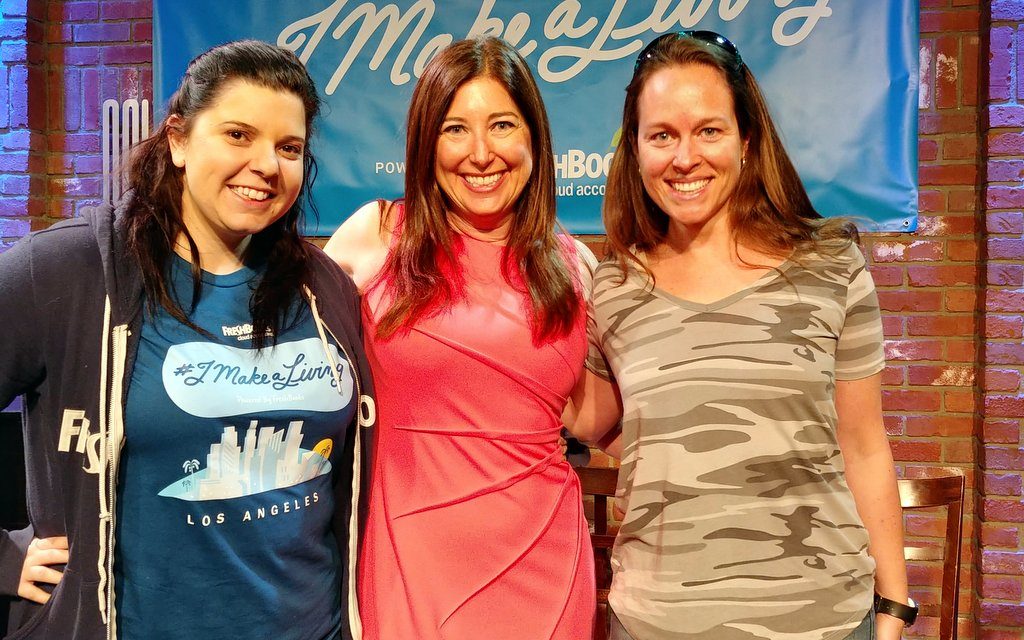
Lisa Niver with Sage and Meryl speaking at Freshbooks Improv

Did you see Lisa Niver at the Hollywood Improv?

Did you see me at the Hollywood Improv?

Don’t worry! I have the whole thing on video for you!

VIDEO: Watch Lisa Niver Live at the Hollywood Improv

What did Lisa say?
“When you enjoy what you do, it doesn’t feel like work. I often do things that are work, but I don’t feel I am really working”

Lisa Niver speaking at Freshbooks“I am impatient, but I am really perseverant.”

Lisa Niver Live on STAGE at the Hollywood IMPROV

“Use social media to support your interests and business and don’t let it be the boss of you.”

Live on Stage at the Hollywood Improv with We Said Go Travel

“My definition of success changes according to my needs, this year I am focusing on my business’ finances, last year it was about overcoming fears and trying new things.”

Lisa Niver featured speaker at the Hollywood Improv

Take Your Business to the Next Level

Running a small business is rewarding. But let’s be honest: It can also be challenging. Why not lean on others for support? The #IMakeaLiving event is here to help!

The #IMakeaLiving events bring together an eclectic group of small business owners for a lively, candid, and often hilarious, conversation.

Part small business boot camp, part group therapy, you’ll leave feeling inspired and motivated. Plus, you’ll get lots of actionable insights to take you and your business to the next level.

It’s free (yes, FREE) to attend and we’d love to see you there. (And, no, this isn’t one of those events that’s actually a sales pitch).

Event: #IMakeALiving powered by FreshBooks

When: Wednesday, February 21st, 9am–12pm

Where: Hollywood Improv Comedy Club, 8162 Melrose Avenue 90046

Cost: Free

Freshbooks Los Angeles #IMakeALiving

Learn more at We Said Go Travel and Lisa Niver.

Did you see Lisa Niver at the Hollywood Improv? Read More »

Widows, Orphans, and Strangers at the Border

“You will not undermine the justice due to a stranger or an orphan and you will not seize the widow’s garment as collateral.” Deuteronomy, 24:17

“Fathers and mothers have been humiliated among you, strangers have been cheated in your midst, orphans and widows have been wronged among you.” Ezekiel 22:7

“There is no greater or more glorious joy than bringing joy to the heart of the poor, the orphans, the widows and the strangers.” Maimonides, Hilchot Magila v’Hanukah, 2:17

On June 11, U.S. Attorney General Jefferson Beauregard Sessions ordered immigration judges to cease granting asylum in the United States to fugitives from domestic abuse and gang violence. This act should shock the conscience of every American, but for Jews it is a particular outrage.

Why does our Torah, echoed by our prophets and sages, exhort us repeatedly to care for the orphan, widow, and stranger and warn of catastrophes for those who ignore the call? In the patriarchal society of the ancient Hebrews, widows, orphans, and strangers were people without protection. They were socially naked, vulnerable, and, according to Jewish values, owed the community’s help.

Vulnerability is no shame in Judaism. We are all “the weak.” We are temporary, puncturable, fleshy creatures, puny even by mammalian standards. We are not made, as tigers are, to hunt alone. We are made to form communities, to speak, and to care. Our founding story of slavery and redemption reminds us of that mutual dependence and obligation which offers whatever glory humans can attain.

Women and children who live in countries where domestic abuse and violence are not taken seriously by authorities and where everyone but the most privileged is subject to impressment by brutal gangs are “members of a particular social group” with a “well-founded fear of persecution.” The Geneva Convention of 1951 and U.S. law allow such people to find asylum here.

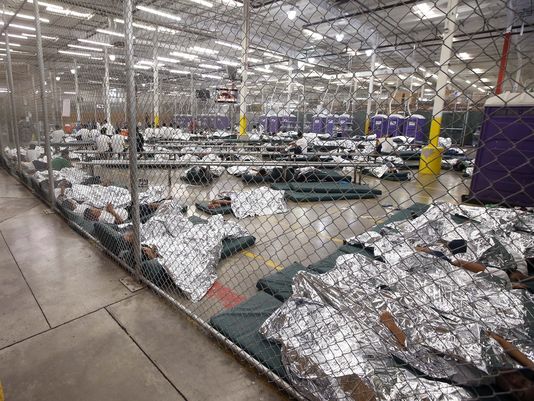
Yet, when such families present themselves at the border of our country, they have been pulled apart. Children are yanked out of their parents’ arms and forced into detention without explanation, often by people who cannot communicate in the child’s language. They are kept away from parents for months at a time, inflicting trauma that will reshape their brains and wound their hearts for a lifetime. This has been happened to all border-crossers and asylum-seekers since May when Attorney General Sessions declared a “zero tolerance” policy for every person who is caught or who presents themselves without documents at our borders. Previously, such families could remain together until the parents could make their case in court. This brutality does not reflect ‘how things have always been,’ it is a terrible new policy of the current administration.

Now Attorney General Sessions has said that women who have been beaten, raped, mutilated, or threatened with death by domestic partners and been routinely ignored by authorities in their birth countries don’t count as persecuted people who need our help. He has said that teens who have been threatened with torture, including sexual violence, if they themselves do not aid the perpetrators of such violence cannot count on us either.

We American Jews cannot allow this to stand. The fugitives from patriarchal violence who arrive at our borders are the widows, orphans, and strangers of our day. They are precisely the people we are commanded to help—those who, because of their position in society, are denied the political means to defend themselves where they are. We whose ancestors found sanctuary here are obliged to be the welcoming neighbors for whom those ancestors prayed.

There is much we can do. We can support a bill introduced by our state’s Senator Diane Feinstein, the Keep Families Together Bill along with the Help Separated Children Act (S2937) and S2468, which provides free counsel for children in immigration court. We can call and write the office of the U.S. Attorney General. Every day. We can march today with Families Belong Together.

We learn in Gittin 61a that, “The Rabbis taught, we support the non-Jewish poor with the Jewish poor, and visit the non-Jewish sick with Jewish sick, and bury the non-Jewish dead with the Jewish dead, because of the ways of peace.” We also act on behalf of the widow, orphan, and stranger, no matter where they are from.

Widows, Orphans, and Strangers at the Border Read More »