
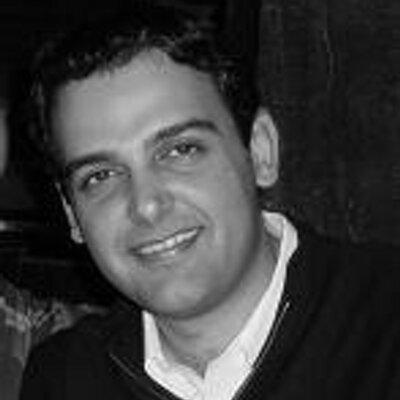
“He was shot with one bullet to his heart,” said my cousin Abe Berookhim, a Los Angeles Iranian Jewish businessman.At a Sinai Temple Men’s Club meeting earlier this month, Berookhim publicly shared the 30-year-old heart-wrenching story of his 31-year-old uncle’s arrest and execution at the hands of Iran’s Revolutionary Guard. Berookhim’s story is not only remarkable in itself, but it also had special meaning to me, as it was related to my own family’s tragic exit from Iran.
With Iran’s Islamic government stirring up trouble in the Middle East, Berookhim is among the growing number of local Iranian Jews who are finally beginning to speak out about the horrors they faced in Iran, part of an effort to give Americans a better idea of the enormous threat Iran poses to world peace.
Now in his late 50’s, Berookhim nostalgically recalled the prosperity and tranquility Jews living in Iran experienced prior to the revolution. His own family was among the many Jewish families who enjoyed that prosperity.
“We owned two hotels: Hotel Sina and Hotel Royal Gardens, which was a five-star hotel, with 500 rooms, five restaurants and different foreign visitors staying there,” said Berookhim. “I remember U.S. diplomats having their July 4th parties in our hotel.”
But the good times were short-lived as anti-Shah and anti-Western protests in 1978-9 flooded the streets of Tehran. When the Shah fled, chaos erupted in the streets, and angry Revolutionary Guards did not spare the Hotel Royal Gardens. The hotel was a symbol of the West, and as a result its windows were smashed, its curtains set ablaze, and one of its co-owners, Berookhim’s uncle Ebrahim, was arrested by the regime’s armed thugs.
“They blindfolded my uncle Ebi and took him to prison,” Berookhim said. “I was told by someone working in the hotel not to come there because the men who took Ebi were also looking for me.”
Iran’s new government — headed by the Ayatollah Khomeini — froze the Berookhim family’s accounts, confiscated their assets and prevented them from doing business in the country. Like many Jews living in Iran at the time, members of Berookhim’s family fled the country, but Abe Berookhim remained behind to gather some funds, even though he was on the regime’s “most-wanted list.”
Prior to the U.S. Embassy takeover, Berookhim, who had had close ties with the embassy’s employees, helped them sell the equipment in their facility amidst the chaos in Iran to provide them with cash while they were in hiding.
“One day I received an urgent phone call from the Consul General of the U.S. in northern Tehran telling me he and his people were hiding and needed food delivered to them,” said Berookhim. “So I had one of my employees from the hotel take them food.”
The danger and threats intensified with each passing day that Berookhim remained in Iran as Revolutionary Guard members were hot on his trail.
Berookhim said that when armed thugs came to arrest him, he would bribe and then befriend them. When one notorious armed leader named Mashala Ghasab was looking to kill him, Berookhim’s payment turned the thug into his personal bodyguard for the remainder of his days in Iran. Ghasab, who was also a well-known brutal killer for the regime, later helped Berookhim locate the Islamic judge determining the fate of his uncle Ebrahim.
“With tears streaming down my face I told him [the judge] about my uncle’s innocence,” said Berookhim, “but he rejected my pleas.”
After gathering enough money and successfully evading the authorities, Berookhim — disguised with a fake beard and Islamic garb and carrying false papers — boarded a flight for Germany. The flight’s pilot, a longtime friend, helped carry Berookhim’s U.S. currency onboard the plane prior to takeoff without being detected.
While Berookhim and his family were able to escape from Iran’s Islamic regime, Berookhim’s uncle Ebrahim was not so fortunate. The Revolutionary Guard executed the young man in prison on July 30, 1980. Tragically, Ebrahim’s 82-year-old father — who had been arrested along with him — was released prior to Ebrahim’s execution.
“They did not have any answer for killing him and said it was a mistake — it was a mistake that my family and I have been haunted by ever since,” said Berookhim.
My father, along with two other members of the local Jewish community, risked their lives by going to the prison morgue to retrieve Cousin Ebrahim’s body in order to give him a kosher burial. The regime’s prison officials refused to release the body until a substantial payment was made to “cover the costs for the bullet used in the execution.”
My father paid and was given Ebrahim’s bloody body and found it had been desecrated with markers. Eventually, Ebrahim was buried in the Jewish cemetery in Tehran.
The young Jewish man had been murdered for no reason, and the ordeal of retrieving his body traumatized my parents and extended family. It was what finally prompted them to realize Iran was no longer a safe place for Jews and that we had to leave the country where our ancestors had set down their roots more than 2,500 years ago.
A few months after Ebrahim’s execution, our family left behind everything we owned in Iran to come to America. We arrived with only the shirts on our backs to start our lives again from zero in a new country where we knew no one and had difficulty speaking the language.
Today, many Iranian Jews residing in Los Angeles argue about the reason for Ebrahim’s execution. Some believe he was executed to strike fear in the hearts of Jews in Iran and to force them to leave their substantial assets behind for the government to confiscate.
Others believe the execution was an act of revenge by Iran for Israel’s declaring Jerusalem as its undivided and eternal capital during that time.

































