When Italy’s first national Jewish newspaper launches this month, Italy will get what few Jewish communities around the world offer: a Jewish newspaper geared toward non-Jews.
Sponsored by the Union of Italian Jewish Communities, or UCEI, the umbrella organization that links Italy’s 21 established Jewish communities, the newspaper and an online Jewish information portal launched last year are part of a multi-dimensional media offensive aimed at bolstering the Jewish voice in Italy and creating a constructive dialogue between Jews and non-Jewish Italians.
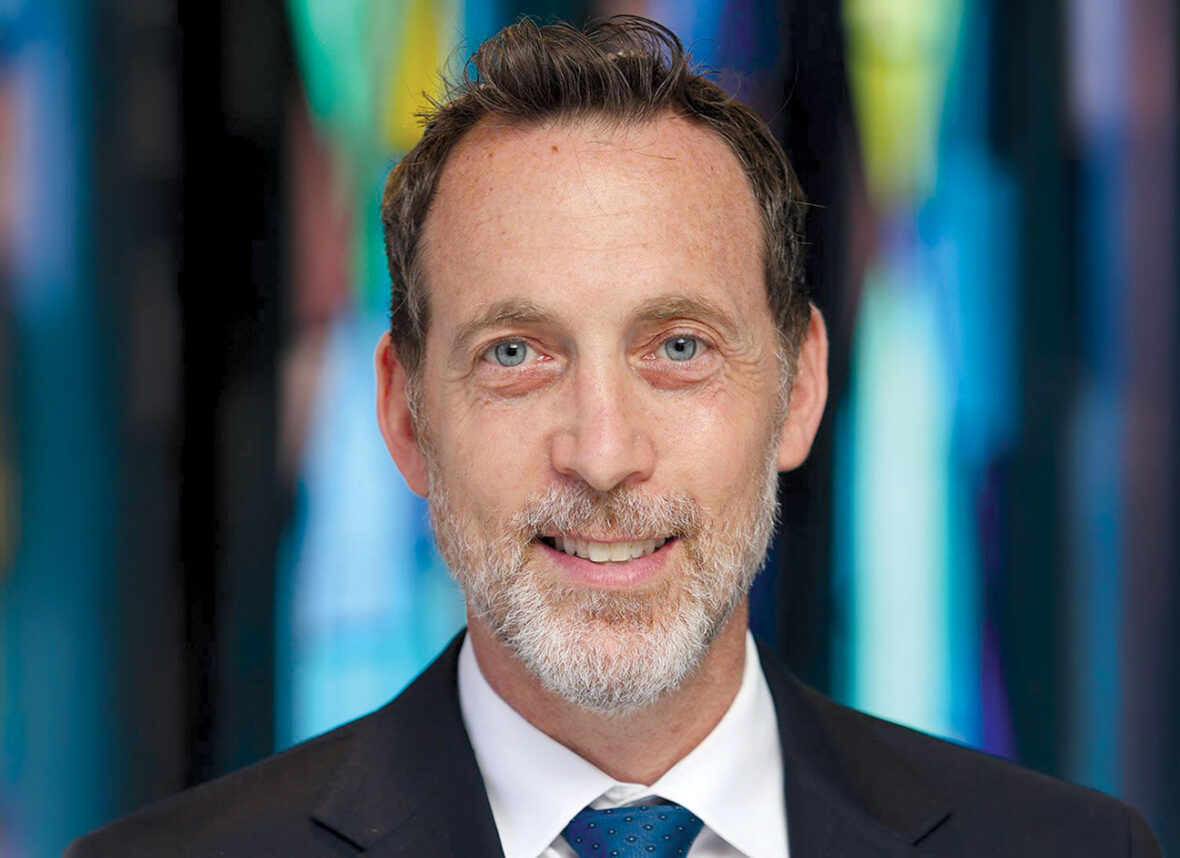
“Italian Jews are very representative of Italian society in general,” said journalist Guido Vitale, who directs the newspaper, Pagine Ebraiche (Jewish Pages), and the Web site, Moked.it. “I want to construct a piazza, an agora, where they can interact with each other and with Italian society.”
The impetus behind them is the UCEI’s desire to confront a seeming paradox: Italians are fascinated by things Jewish even though the country’s 30,000 Jews comprise a tiny fraction of the population of 60 million.
“There is a huge interest in Jews and Jewish culture here,” said Emanuele Ascarelli, who directs “Sorgente di Vita” (“Source of Life”), a biweekly Jewish television program co-produced by UCEI and state-run RAI television that draws 200,000 to 400,000 viewers. Ascarelli estimates that 90 to 95 percent of them are not Jewish.
Ascarelli says the new media initiatives reaching out to the non-Jewish world reflects a new self-confidence among Italian Jews.
“The Jews in Italy have changed a lot in recent years,” he said. “There’s no longer the sense of being in a symbolic ghetto. There is a greater openness to making ourselves known. The desire of non-Jews to know the Jewish reality thus meets with the desire of Jews to be known. This is a dynamic process.”
Numerous Jewish-themed cultural events, including festivals, food tastings, book launches and concerts, take place throughout the year throughout the country. In September, on the annual European Day of Jewish Culture, nearly 60,000 Italians — most of them non-Jews — flocked to Jewish-themed lectures, exhibits and other events held in nearly 50 towns and cities up and down the peninsula.
Scores of articles on Jewish-related topics appear in the mainstream media each week. In one year, Vitale said, the press review on Moked included more than 100,000 articles, most of them in the Italian press. Many, of course, are on Israel and the Middle East. But even elections to Jewish community organizations are apt to make headlines.
At the same time, ignorance about Jewish beliefs, traditions and values — not to mention Israel — is widespread in Italy.
“There is an incredible over-exposure, but the capacity for understanding is generally low,” Vitale said. “In the Italian mainstream media, Jews are usually the objects of news, of something happening. In Pagine Ebraiche, Jews will make their own voices heard.”
To be published monthly and with an initial press run of 30,000, Pagine Ebraiche will be sold at selected newsstands in major Italian cities. Its contents will include news reports, essays, commentaries, historical articles, cultural pieces and other material, all written to be accessible to the general public.
“Its role will be to speak to the external world, not the internal Jewish world,” Vitale said. “We want to open a dialogue with the external world.”
With non-Jewish Italians as its target audience, Pagine Ebraiche will not replace the Jewish print media in Italy, which include glossy monthlies in Rome and Milan with small press runs that are directed at Jewish readers.
The reasons for the prominence of Jews and Jewish culture in Italy are rooted in the long, complex history of Jews in Italy, as well as the symbolism attached to Jews as survivors who have maintained their identity despite waves of violent discrimination.
Jews have lived in Italy since ancient Roman times; the Rome Jewish community is the oldest continuous Jewish community in the Diaspora.
Over the centuries, popes persecuted Jews in parts of Italy. In the mid-19th century, Jews took an active part in the Italian Risorgimento, or liberation process. They won civil rights and became highly acculturated into Italian society.
But fascist dictator Benito Mussolini, allied with Nazi Germany, imposed harsh anti-Jewish laws, and about one-fifth of Italian Jews perished in the Holocaust. After World War II, Italy’s surviving Jews were bolstered by immigrants from many countries, including thousands who came from Libya fleeing anti-Semitic violence in 1967.
More recently, Palestinian terrorists attacked Rome’s main synagogue in 1982, and in 1986 Pope John Paul II made a historic visit there. He embraced Rome’s chief rabbi in a gesture that symbolized a new era in Catholic-Jewish relations.
“Everything that Jews do has a symbolism,” Ascarelli said. “What Jews say counts on issues such as immigration, minority rights, the Shoah, the culture of memory.”
UCEI President Renzo Gattega elaborated on this attitude in a report presented last year to the organization’s leaders in which he laid out the reasons for broadening the Jewish media to reach beyond the community.
“A minority like ours cannot only have the goal of recounting itself and its history, or only reacting to the initiatives and actions of others, be they positive or negative,” he said. “Rather it must act concretely to bear witness of its values, its identity, its vitality.”