








fbpx

Religion and Philosophy in the Shaping of an American President

[additional-authors]
May 29, 2012

Religious and social values of our Presidents have defined their ideas and shaped their public policies. Herbert Hoover’s Quaker ancestry, Bill Clinton’s Southern Baptist orientation, Jimmy Carter and his “born again” faith reflect but a selection of American Presidents who held strong religious beliefs that would also frame their presidencies.

In 2012 the American electorate are being introduced to two personalities with clearly distinctive social positions. President Obama can best be described as a Christian progressive, while Governor Mitt Romney is identified as a Mormon.  While the President appears to be less public about his religious engagement with a particular church at this time (previously while living in Chicago, the Obamas’ were members of Rev. Jeremiah Wright’s Trinity United Church of Christ), his religious values are very much in play.

Where Obama’s religious progressivism and political pragmatism make him comfortable to endorse same-sex marriage, stem cell research, and abortion, Romney’s Mormon faith gives definition to his positions on these policy questions, where his views differ from those of the President.

While some critics of the President describe him as a socialist, his philosophy is more about cementing and perfecting social and political changes.  His political roots appear to be tied to such notions as “open-minded experimentation”. He has been described as someone drawn to the ideas of “civic republicanism or deliberative democracy”, where the focus of the discussion is about advancing the common good. Taking his cue from Madison, Mr. Obama writes in his 2006 book The Audacity of Hope that the constitutional framework is “designed to force us into a conversation,” that it offers “a way by which we argue about our future.” Beyond political philosophy, the President has noted: “There is no doubt that the residue of Hawaii will always stay with me, that it is part of my core, and that what’s best in me, and what’s best in my message, is consistent with the tradition of Hawaii.”

In turn, the Governor’s views on American exceptionalism are likewise tied to his church’s view that this nation was chosen by God to play a special role in history, with its Constitution “divinely inspired.” The notion of “higher purpose” offers another explanation of how Mitt and Ann Romney understand their lives and mission.

Those who have studied Mr. Obama’s writings and speeches have suggested that his ideas reflect the work of Weber and Nietzsche, Thoreau and Emerson, Langston Hughes and Ralph Ellison.  He appears to have been influenced by such intellectuals as historian Gordon Wood, philosophers John Rawls and Hilary Putnam, the anthropologist Clifford Geertz, and the legal theorists Martha Minow and Cass Sunstein.

Mitt Romney appears to have been influenced by Napoleon Hill’s 1937 book, Think and Grow Rich. This text introduces the idea of the New Thought prosperity doctrine, which notes that the universe contains “infinite intelligence” into which one can tap and in turn achieve whatever one sets out to achieve.  The book was introduced to Romney by members of his Mormon community and tend to reflect his social views and economic priorities.

If one is to fully understand the frames of reference that define both President Obama’s and Governor Romney’s perspectives on this nation, it is essential to unpack their ideological and religious root systems.


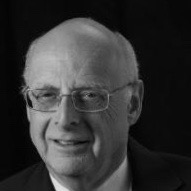
Dr. Steven Windmueller is the Rabbi Alfred Gottschalk Emeritus Professor of Jewish Communal Service at the Los Angeles campus of Hebrew Union College. His complete writings can be found at

Did you enjoy this article?
You'll love our roundtable.

Editor's Picks

A Night of Gratitude Honoring Dennis Prager

Latest Articles

A Jewish Victory

In the face of growing anti-Israel and antisemitic conduct in public schools, the Los Angeles Unified School District has delivered an important victory for our community.


Unbreakable Blue Thread: Reclaiming Our Past and Our Future

I write to you, all you first and second generations, and I assure you from generations five, six and seven that if we keep doing what we need to do, if we stand together, keep our traditions, educate ourselves in our ancient wisdom, keep Hebrew spoken and sung in our midst, we will not only endure. We Jews will thrive.

Unstuck in the Middle with You

Kwall, the Raymond P. Niro Law Professor at DePaul University College of Law, argues for a center defined by enough common commitments to make communal life possible.

Sewage Without Borders

Israel’s water security depends on what flows into the sea on the other side of all of them, and our water policy should start from that reality.

Torah Portion: Vayera

The parsha ends with the binding of Isaac, the Akeida, probably the darkest chapter in the entire Torah.

Let Them Talk

If we want our younger generations to love our faith, our culture, and our peoplehood, we need to be welcoming when they show interest and have a spark of curiosity.

A Wild and Improbable Story Hits Israel

It turns out that claim about Israel being a democracy wasn’t just propaganda. The two million Arabs who live in the world’s only Jewish state really do have the power to vote.

Why I Came to Vote in Israel

My journey to the ballot box was circuitous. The path I hope Israel will follow is derech Adonai: the way of righteousness and justice.


More news and opinions than at a Shabbat dinner, right in your inbox.















