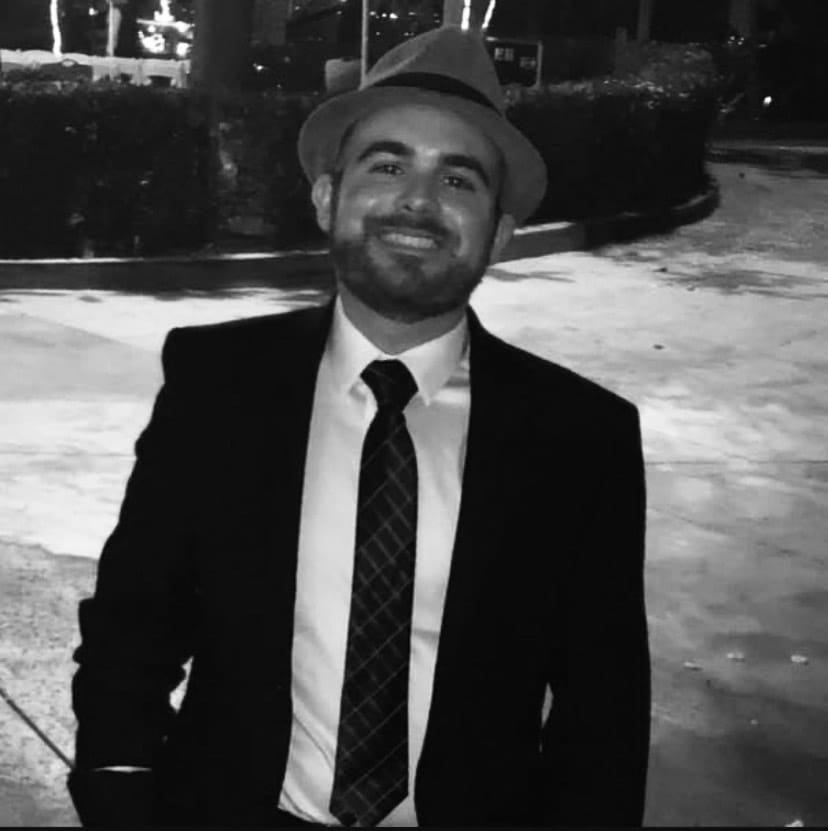

Three Israelis, including prominent activist Rudy Rochman, were arrested in Nigeria on July 9 while working on a documentary about various Jewish communities that aren’t well-known.
The two other filmmakers who were arrested are Andrew (Noam) Leibman and Edouard David Benayim. According to a July 14 statement from their families, the three filmmakers have been working on a documentary series called “We Were Never Lost” for more than a year and plan to interview Jewish communities in China and Afghanistan, among other countries.
“The documentary is not intended to make any political statements about the countries in which the filming will take place, nor does the filmmaking team endorse any political movements,” the statement read. “The team is simply there to observe the communities, learn about their experiences with Judaism, and explain some of the documentary filmmaking process with those in production.” They added that the filmmakers had brought “gifts with cultural symbolism” to these Jewish communities, including a Torah for the Nigerian Jewish community.
“Unfortunately, members of non-state political groups have hijacked for their own purposes images of the filmmakers gifting a Torah to the local community,” the filmmakers’ families said. “These individuals are distorting the intentions of the filmmakers in an effort to manufacture a connection to local political matters when no such connection exists. These politically-motivated actors have taken a simple gesture of kindness and twisted it in an attempt to create an alternate meaning.” The “non-state political groups” appear to be a reference to separatist groups, as an Israeli source told The Jerusalem Post that the filmmakers “were not involved in any separatist activities, but that separatists had posted photos of them making claims that drew the Nigerian authorities’ ire.”
Rochman, Leibman and Benayim are currently being held by Nigeria’s Department of State Services; their families are working the United States, Israeli and French embassies in order to secure their release.
Updated press release: pic.twitter.com/zm59pC2Lh5
— 🇮🇱 David Ha'ivri 🤠 دافيد هعفري (@haivri) July 14, 2021
The Times of Israel reported that the filmmakers had been visiting the Igbo community––who views themselves as “one of the lost tribes of Israel”––in Nigeria prior to being arrested. According to the New York Post, “Some of the Igbo people have been in conflict with the Nigerian government since 1967, when they declared independence from the nation, sparking a 30-month civil war that left over a million dead. The conflict never completely ended and last November, six Igbo synagogues were demolished by Nigerian soldiers.”
On July 8, the following statement was posted on the documentary series’ Facebook page: “We do not take any position on political movements as we are not here as politicians nor as a part of any governmental delegations.”
Various Jewish and pro-Israel Twitter users issued tweets praying for the filmmakers to be released as soon as possible.
“Rudy Rochman is a friend, colleague and a devoted leader of the Jewish people,” activist Hen Mazzig tweeted. “He went to Nigeria and delivered a Torah – an apolitical act. Please pray with me that he and his friends will be freed.”
Rudy Rochman is a friend, colleague and a devoted leader of the Jewish people.
He went to Nigeria and delivered a Torah – an apolitical act.
Please pray with me that he and his friends will be freed. pic.twitter.com/ZB3rJZqHd3
— Hen Mazzig (@HenMazzig) July 14, 2021
StandWithUs Israel Executive Director Michael Dickson also tweeted that Rochman is “a fearless Jew who works to bring Arabs and Jews together and to bring light to issues surrounding Israel” and that he is “praying for their quick return.”
https://twitter.com/michaeldickson/status/1415291560783192064?s=20