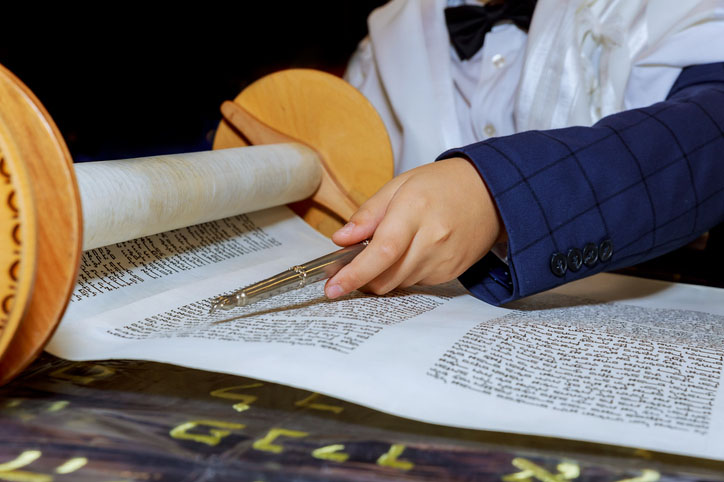
“If a man takes a vow to HaShem or swears an oath to establish a prohibition upon himself, he shall not desecrate his word; according to whatever comes from his mouth shall he do.” (Numbers 30:3)
As the Hebrews’ long journey through the wilderness comes to an end, God provides instructions to Moses regarding everything from the making of vows to settling the land of Israel. The entire physical journey is recounted at the beginning of Parashat Masei, including the names of each of the places where the Hebrews camped from the time of the Exodus.
Many of us may not have a relationship with some of the teachings found in these last chapters of Bamidbar, or with some of the locations, but we all can understand the power and importance of a vow; especially one that is not kept.
If you spend time among children, you will probably hear one of them say, “I swear to God that I will …”
Using this formula engenders trust among other children, who believe that the promise will be kept. But all too often there are children who will end up disappointed when that vow is broken. Making a commitment and not keeping it is sometimes a habit of children. Whether it is a promise to clean their room or an agreement that they forget about, children often need to be reminded of their previous words. It is an important part of the journey of parents and teachers to help children learn how powerful verbal promises are, and to teach them to be careful about making commitments that they may not be able to fulfill. As children learn and grow into maturity, they will, we hope, only make vows that they intend on keeping, and then harmonize their words with their actions.
When the Hebrews began their journey out of Egypt, almost four decades before the events in this week’s Torah portion, they were psychologically, emotionally and spiritually young. They had been slaves — not just physically, but spiritually as well. They needed one miracle after another to keep their faith in HaShem, and they constantly demonstrated their immaturity in their words and actions.
But 40 years in the desert brought a wisdom and maturity that allowed them to be ready for the statement made at the start of the portion. They had learned the value of keeping a vow and the pain of having vows broken. They were finally ready to hear Moses instruct them in God’s teaching that a man should do whatever he commits to from his mouth. They had grown, understanding that their words and actions must always be in harmony, and were finally ready to enter Eretz Yisrael.
We are regularly confronted in the media with the “role models” of business leaders and politicians as well as sports and entertainment “icons” who break their verbal commitments. Our children see that when someone breaks a promise they are still idolized. A great athlete breaks his marriage vows, and we ignore the issue in favor of cheering on his athletic prowess. A business leader breaks his commitment to his stockholders, and we soon forget what he did, choosing instead to focus on his new successful ventures. All too often this is the norm in pop culture: A broken promise is not really that important. But Torah teaches the exact opposite, and this is what we must teach our children. We are commanded to take our words seriously, to not take a vow or oath lightly, and to do what has “come from our mouth.” How much more beautiful and in harmony would the world be if our children can learn this lesson rather than its opposite? How much more balance will occur if children decide to emulate the man who keeps his word, rather than copy a different type of role model?
As we end this year and prepare for the High Holy Days in just two months, we need to remember to both be careful of the words we speak and to do that which we promise. Most important, we must teach future generations to have the maturity of the Hebrews as they were about to enter Israel. We need to teach and instruct them to both be careful of making vows and to act upon their words.
If we can teach this simple lesson, we truly will leave the world a better place than we found it. May we all be blessed to live, learn and teach these commandments regarding vows and oaths; and, as a result, may we all truly be strong and be strengthened.
Rabbi Michael Barclay is the associate rabbi at Temple of the Arts in Beverly Hills (templeofthearts.org) and the spiritual leader of Temple Ami Shalom (amishalom.org), a Conservative congregation in West Covina. He can be reached at {encode=”rabbi@amishalom.org” title=”rabbi@amishalom.org”}.