“Anyone who has never read the entire Chumash with Rashi is simply not Jewishly literate,” said Rabbi David Hartman, with whom I was studying 14 years ago at the Shalom Hartman Institute in Jerusalem. “It doesn’t matter whether you read it in Hebrew or English, but you must go through the Five Books of Moses with Rashi’s commentary.”
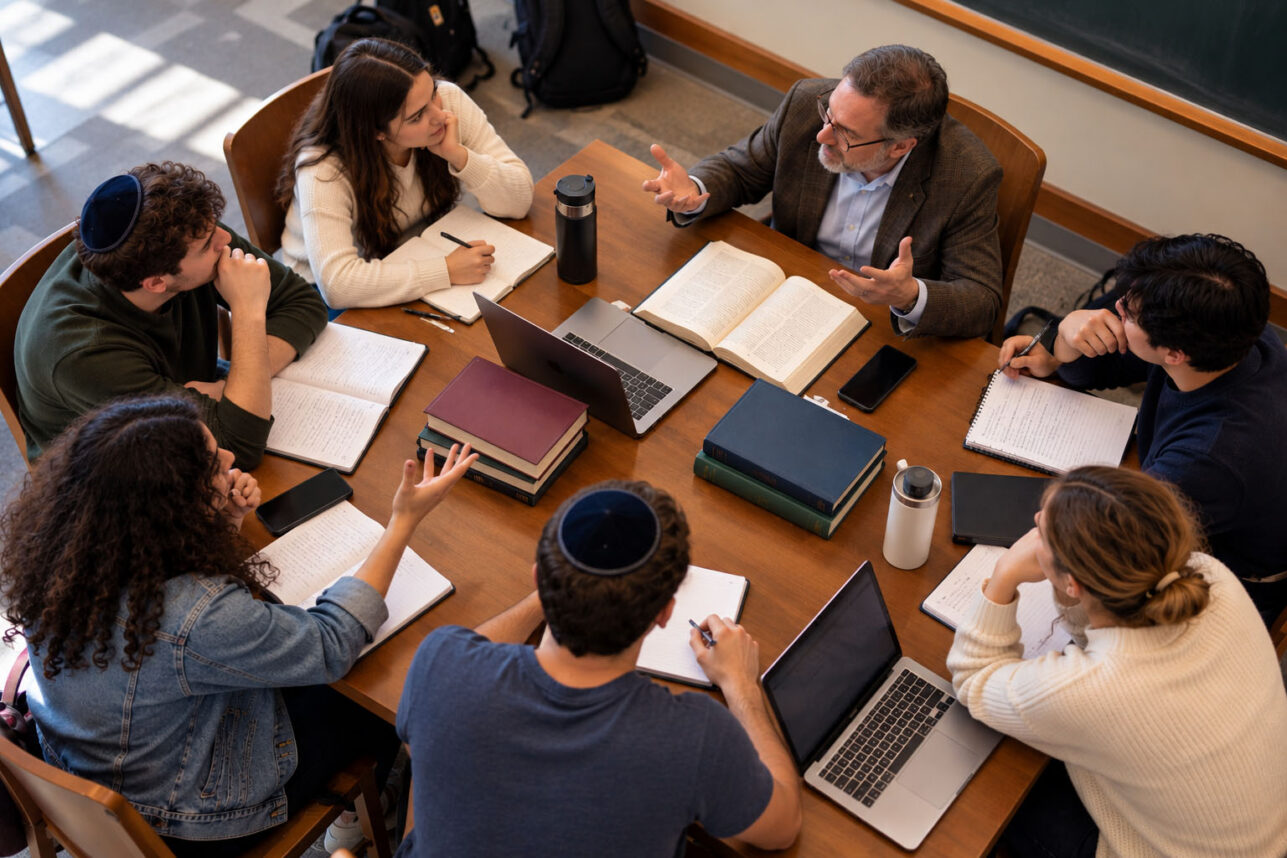
Inspired by Hartman’s words, I announced to my congregation that I would be reading Torah with Rashi every Sunday morning, and anyone who wanted to join me was welcome. So every Sunday morning for the past 14 years, a group of Temple Emanuel congregants meets for an hour and a half and reads verses from Torah in English with Rashi, the 11th century commentator through whose lens we interpret Torah.
Among the group are lawyers, doctors, professors, schoolteachers, business people, psychologists and homemakers. We try to make sense out of the commentary and the Torah text, and we allow the text to challenge us to think about our own lives. Over the years, we have learned together, mourned the death of one of our members and celebrated the simchas of other members.
Some weeks we cover only one or two verses because the conversation that ensues from our study is so rich. We finished this week’s Torah portion, Balak, just a few weeks ago. It took us three months because there is so much to talk about.
First is the simple narrative: Balak, king of Moab, sees that the Israelites won wars against the Edomites, Canaanites, Emorites and Amorites. He is frightened of the Israelites, so he sends word to Balaam, a non-Israelite prophet, with the request that he curse them.
God tells Balaam not to go with Balak’s messengers because the people of Israel are blessed. Balak asks again, and Balaam responds: “Even if Balak were to give me his house full of silver and gold, I cannot go against God’s word.” But Balaam asks God again and this time God says: “You may go but do only what I say to do.”
So Balaam, riding his donkey, goes with Balak’s men. God sends an angel, visible only to the donkey, to block the path. Balaam can’t understand why his donkey stops, so he hits his faithful animal three different times. Finally the donkey speaks out, and Balaam sees the angel with a sword drawn right in front of him.
Balaam can’t curse the Israelites no matter how much pressure Balak applies. Balak brings him to different vistas, hoping that changing the perspective might change the outcome.
Finally, overlooking the camps of the Israelites, Balaam utters the famous words of blessing: “How goodly are your tents, O Jacob, your dwelling places, O Israel.”
That talking donkey and our tradition’s understanding of miracles were good for one morning’s discussion. Another Sunday it was a conversation about the differences between Balaam and Abraham. A third morning focused on the question of why God was angry at Balaam for agreeing to go sinceGod had actually given him permission.
We reflected on those moments in our lives when we really knew that something was wrong but we kept asking for permission or trying to justify why we were going to do it anyway. We asked each other: When should “no” be “no,” no matter how inconvenient or difficult? Another day we looked at the notion that changing perspective, how you look at something, might change the way you think about it.
As rich as all those conversations were, for me the most powerful was the conversation about Balaam’s blessing: “How goodly are your tents, O Jacob, your dwelling places, O Israel.”
Rashi explains that the entrances to the tents were arranged so that each family had privacy. That insight led to an animated conversation about privacy and how much it is challenged by the ways in which we live our lives.
Then we talked at great length about why this blessing, which Rashi tells us was intended as a curse, became the blessing that the ancient rabbis choose to begin the morning service. We looked at the blessings from Psalms that follow these verses in our prayer book: “I, through Your abundant love, enter Your house; I bow down in awe at Your holy Temple” (Psalms 5:8). The movement from tents to dwelling places to houses to the Temple seems to be a move from the temporary to the permanent, exactly the feeling some of us have when we move from our ordinary lives into the sacred space that communal prayer offers. Speaking Balaam’s words in the support of our community helps us transform challenges into blessings.
At the rate we are going, we might finish the Book of Numbers by Rosh Hashanah. And I’m sure Deuteronomy is good for at least another year. And then? We’ll most likely start all over again. As we learn in Pirke Avot: “Ben Bag Bag says: Turn it over and turn it over, for everything is in it. Look deeply into it, and grow old with it, and spend time over it, and do not stir from it, because there is no greater portion.”
Thank you, Rabbi Hartman.
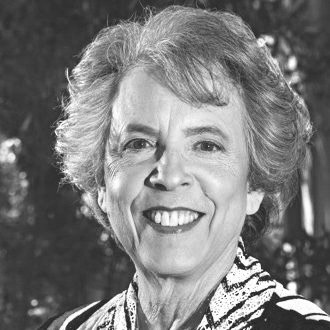
Laura Geller is senior rabbi of Temple Emanuel of Beverly Hills, a Reform congregation.