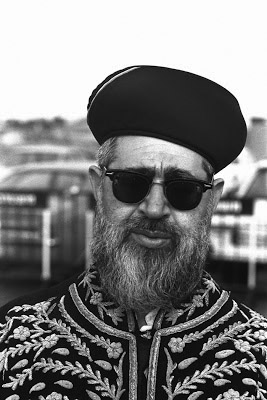
As we observe the 11th anniversary of the passing of Rav Ovadia Yosef z”l (3 Heshvan), we do so in the midst of a deep void in rabbinic leadership in Israel. When I say “Rabbinic Leadership,” I don’t mean rabbis who can deliver beautiful sermons or write thought-provoking essays. I mean Chief Rabbis, whose responsibility is for the collective good and welfare of the Jewish people.
Pirkei Avot teaches: “It is not words alone that count, but actions.” For a Chief Rabbi, “actions” means legal/halakhic rulings, especially those that require innovative thinking for the benefit of the larger population.
While many will remember Rav Ovadia Yosef as the founder and spiritual mentor of the Shas political party, his true legacy is that of a brilliantly bold halakhic decision maker, especially in the years when he was the Sephardic Chief Rabbi of Israel (1973-1983). As Chief Rabbi, he distinguished himself as a leader whose responses to difficult issues was not flowery sermons or wordy articles, rather creative halakhic rulings that directly addressed the crisis and sought to improve the troubled circumstances for the people affected by them.
Two outstanding examples help tell the story.
Agunot from the Yom Kippur War: Without any way of confirming the deaths of their husbands on the battlefields of the Yom Kippur War, 1,000 women were left in a halakhic state of limbo known as “Agunot” – “anchored.” Halakhically still married, they were unable to move ahead with their lives. This tragic halakhic-emotional status affected Rav Ovadia deeply, and he spent three years reviewing each case individually. His eldest daughter Adina told me she recalls hearing her father crying every night in his study as he read each women’s individual story. He ultimately “freed” all 1,000 of the women to remarry, stating that “when it comes to Agunot, I do not take the stringent approach of others. I follow the path of my predecessors, who sought other sides and other sides of sides with all of their might in order to be lenient in the matter of Agunot.”
The Ethiopian Jews: While the majority of the rabbinic establishment ruled against the Ethiopian Jews being halakhically Jewish, Rav Ovadia’s creative historical-halakhic responsa ruled that the Ethiopian Jews were halakhically Jewish, making them eligible to come to Israel under the Law of Return. His groundbreaking ruling not only restored human respect to the Ethiopian community, but also paved the way for “Operation Solomon,” when tens of thousands of Ethiopian Jews were airlifted to Israel.
Rav Ovadia’s son – Rav David Yosef – was recently elected Israel’s next Sephardic Chief Rabbi. He is a respected rabbinic scholar with halakhic rulings similar in lenience to that of his father.
May he fulfill his important position as Chief Rabbi with the halakhic creativity, courageous leadership and human sensitivity of his beloved father, Rav Ovadia Yosef, of blessed memory.
Shabbat Shalom
Rabbi Daniel Bouskila is the international director of the Sephardic Educational Center.