
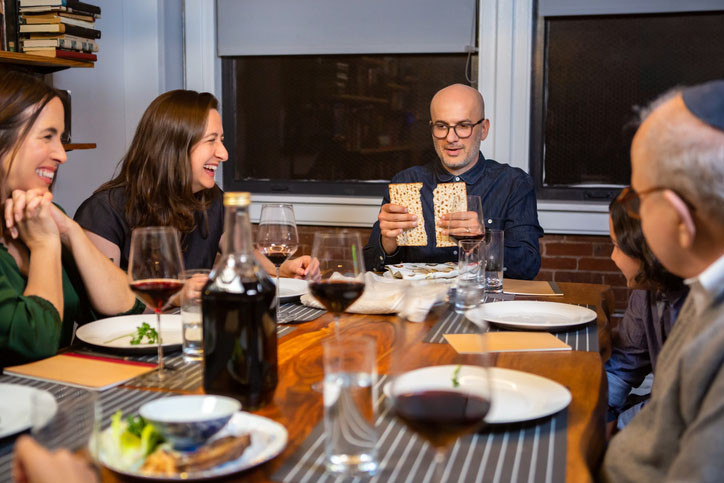
Why is Passover the most widely celebrated Jewish holiday?
One might point to the dramatic story. Another might suggest the emphasis on family and community gathering. I don’t think anyone would name the food selection as a reason for Passover observance.
Dr. Shuly Rubin Schwartz, Chancellor of the Jewish Theological Seminary, points out that Passover “…draws people in and the barrier to entry is low. The seder represents both a living Judaism and a practical Judaism that anyone can both access and contribute to.” Think about the seder itself. Most people take turns reading. The tunes of the songs usually stay the same. The story of fleeing slavery and yearning for freedom is understandable, relatable, timeless.
Passover resonates, which challenges Passover hosts near and far: don’t try so hard. Keep the barriers to entry low and let Passover speak for itself. Just one great question can spark conversation, transforming dinner into a classroom. Asking a child (or adult!) to dress up like Moses and explain his fear in being chosen allows everyone to connect to the courage needed to make pivotal decisions. Finding the guest that is willing to define narrowness (Mitzrayim/Egypt) in 2026 will have guests leaving, wondering about their own narrow straits.
In choosing just one or two different elements, Passover itself becomes the starring role. Giving space to remember who was at the seder last year and who we are missing. Exclaiming over the genius afikomen hiding places that are usually the same each year. Bonding with guests in tasting the first bite of matzah or the “traditional” jelly candy fruits that we can’t seem to avoid. Passover traditions, new and old, cause thousands of Jews to return each year, eager to learn, eat, celebrate, and share in the festival, together.
May it be a Passover in which all can participate. Engaging for the guests and a little less pressure on the hosts.
Shabbat Shalom
Rabbi Nicole Guzik is senior rabbi at Sinai Temple. She can be reached at her Facebook page at Rabbi Nicole Guzik or on Instagram @rabbiguzik. For more writings, visit Rabbi Guzik’s blog section from Sinai Temple’s website.