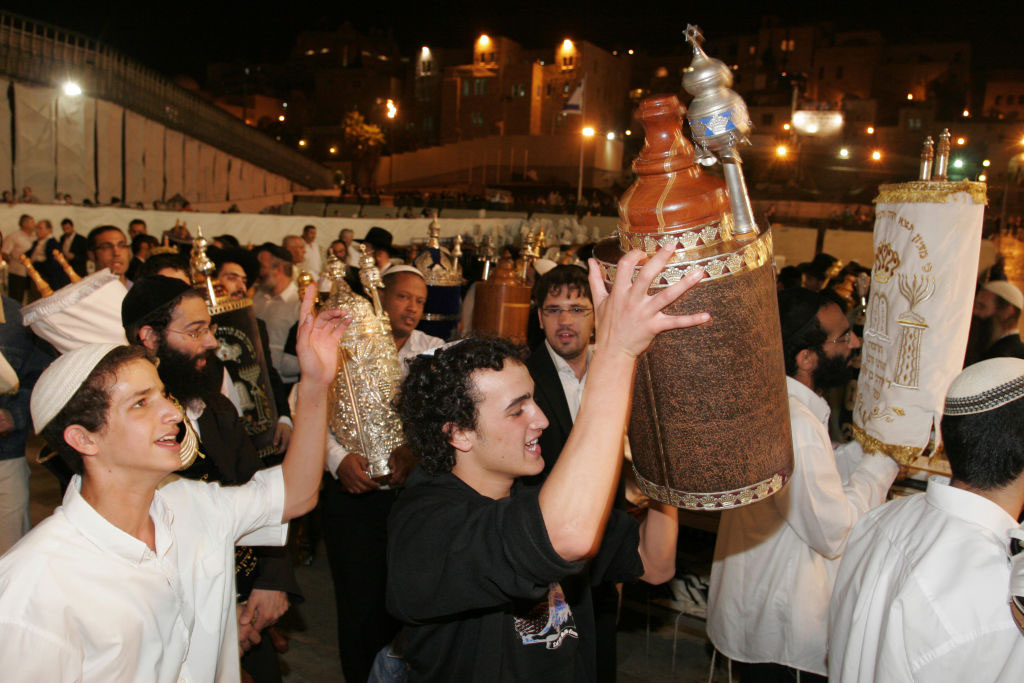
“Hey, Rabbi,” the bat mitzvah candidate said, “can I tell you about my mitzvah project? I’m raising money to help people join our synagogue if they can’t afford it.”
I was impressed. And moved. And shocked.
Why shocked?
Many religious schools require that bar/bat mitzvah candidates do a mitzvah project. Once upon a time, those projects were all Jewish in nature. Families would plant trees in Israel in honor of their guests or display material from local Jewish organizations on the tables at the celebration. Kids would donate some of their gift money to local Jewish federations.
For a while, bar and bat mitzvah candidates would symbolically share their ceremonies with Soviet Jewish refuseniks who were forbidden from studying Judaism.
But such specifically Jewish projects have gone the way of the VHS tape and the pet rock — hopelessly passe.
Over the last decade, bar/bat mitzvah projects have become decreasingly Jewish in their focus and intent. Mitzvah projects are far more likely to be focused on healing disease, or addressing environmental concerns, or raising money for disadvantaged kids.
In fact, my young friend’s idea to help subsidize synagogue dues for the less fortunate was, in fact, the only specifically Jewish mitzvah project I had seen in years.
I am all in favor of kids wanting to give to the wider community. Most adults and teachers would probably agree with me: Any kind of altruism, anything that carries kids out of their iPhone, selfie-addled worlds is good. But the flight from specifically Jewish concerns has its own set of worrisome implications.
First, it accompanies a gradual diminishment in Jewish ethnic feeling and connection — a diminishment that is part of larger trends within the American Jewish community.
When I have mentioned the importance of particularistic Jewish giving to parents, I get deer-in-headlights stares, as if parents find the very idea of giving to Jewish causes to be an embarrassment — too Jewish, too tribal. It is as if I am speaking a foreign language, which, in fact, I am: a language of Jewish peoplehood.
Second, I find myself reminding Jewish parents of the deeper ramifications of their kids’ choices. Here is what I say:
I know that your kids are going to want to give to various universal, communal and non-Jewish charities. We want to be helpful and to make a difference. That is what being Jewish is all about.
But here’s the deal. If your child doesn’t give to the United Way, someone else will step up to that worthy plate. The same is true with the local museum and symphony orchestra.
But if we don’t teach our kids how to give Jewishly, they will never learn. No one else will step up for them and those Jewish causes will go unsupported. Eventually they will die.
If only one generation of Jewish kids fails to learn how to support the Jewish community, the Jewish people and Israel, Jewish giving will be over. Because Jewish giving, like any kind of moral engagement, is a muscle. If you don’t develop the muscle, it atrophies.
So what can Jewish parents do to make sure they are keeping the chain of Jewish giving intact?
First, teach your kids about local Jewish needs, causes and organizations. Talk to them about the work of federations, community centers, Jewish family and career services. Take them to see what those organizations are really doing. Talk to them about projects in Israel. Teach them about what Jewish organizations are doing all over the world. Make it real for them.
Second, link your child’s interests to Jewish causes.
Your kid likes baseball? There’s JChoice.org, a group that provides baseball equipment and supplies to kids in low-income areas.
Dance? Give to The Israel Ballet.
Horses? Try the Israel National Therapeutic Riding Association, which uses horseback riding to help people coping with disability or injury.
There are other opportunities like these, many of them contained in “The Mitzvah Project Book,” by Liz Suneby and Diane Heiman. (Full disclosure: I wrote the foreword.)
Third, if you cannot find anything Jewish that interests your child, convert your child’s interest to a Jewish value. Give that value a Hebrew name.
Your child wants to raise money for a specific disease? Fine. Welcome to the world of “refuah” (healing).
Your child wants people to donate to help flood victims? Great. It’s called “tikkun olam” (repairing the world).
Your kid cares about animal welfare? Fantastic. Thanks for supporting “tzaar baalei chayim” (avoiding cruelty to animals).
Sure, tikkun olam is great. But “tikkun ha’am” — repairing the Jewish people — is just as important. We do that when we connect our values to our people and to our sense of what we believe.
Jeffrey K. Salkin is the rabbi of Temple Solel in Hollywood, Florida, and the author of “Putting God on the Guest List: How to Reclaim the Spiritual Meaning of Your Child’s Bar or Bat Mitzvah.”