fbpx

October 12, 2015

Israel’s opposition leader: Unity against terrorism no reason to join gov’t

The leader of the opposition in Israel said that it will not join the government to show unity during the current security crisis.

“We are all united in the fight against terrorism, but that is not a reason to join a failing government,” Zionist Union head Isaac Herzog said Monday night at the opening of the Knesset’s winter session.

Herzog called for a regional peace summit to restore calm, leading to catcalls from lawmakers of several parties, including his own.

Prime Minister Benjamin Netanyahu said in his address: “Terror is not a consequence of frustration at the lack of progress in the diplomatic process. It is clear that it comes from the desire to destroy us. That was the motive for terrorism in the early years of Zionism, and that’s what it is today.”

Netanyahu stressed that Israel is committed to maintaining the status quo on the Temple Mount and railed against the Palestinians’ use of “mendacious propaganda about the Temple Mount to make trouble.” He accused Palestinian Authority President Mahmoud Abbas of encouraging the current upsurge in terror attacks by disseminating such lies.

Lawmakers from the Arab Joint List, who have demonstrated in support of Palestinian attackers, walked out of the room when Netanyahu began speaking.

Israeli President Reuven Rivlin called the Knesset gathering a “celebratory occasion,” but added in the wake of the many terror attacks in recent days, “our hearts cannot celebrate.” He sent his wishes for recovery to those injured in attacks and expressed his support for the security services, saying “their fight is all of our fight.”

“Unfortunately, we live in a reality of bloody conflict,” Rivlin said. “There is no definite timeline to the end to this conflict, to this tragedy. What is clear is that the responsibility for our lives here, our lives here together, Jews and Arabs, rests on all our shoulders. What is clear is that the infrastructure to any solution is establishing trust between the parties.”

The Knesset voted against one of four no-confidence motions and was expected to reject the others.

Israel’s opposition leader: Unity against terrorism no reason to join gov’t Read More »

At Politicon, diversity and polarity make for entertaining (and loud) political fare

Partisan, political theater was on full display mid-afternoon on Oct. 10 at the Los Angeles Convention Center, as two of the panels at the inaugural Politicon conference overlapped.

In “Independence Hall,” a panel included Democratic strategists David Axelrod, James Carville and former Republican House Speaker Newt Gingrich, while next door in “Freedom Hall,” right-wing firebrand Ann Coulter debated Cenk Uyger, a left-wing activist and commentator.

Some of the louder Democrats in the crowd chortled as Gingrich talked economics, and whooped when Axelrod defended President Obama’s economic record. Meanwhile it seemed Uyger and the standing-room only crowd next door couldn’t quite tell whether Coulter was serious when she said it would have been better had the United States dropped a nuclear weapon on Iraq instead of toppling Saddam Hussein and then withdrawing.

“ISIS, when they put somebody in a cage and burned him alive, we thought they were the worst monsters on earth. You say you’d like to do that on a grand scale, because that’s what a nuclear weapon does,” Uyger said to Coulter, to large applause. 

“In response to 9/11, yes,” Colter responded, “we should not have sent ground troops. We should have dropped…in retrospect, now that we know we’re in a country that can elect Barack Obama, instead of bothering to create a democracy in Iraq, which we did, and which was working beautifully,” she said, to boos. “Are we getting back to immigration, the topic of my book, and technically the topic of this panel?”

The two-day conference, which ran Oct. 9-10, attracted about 9,000 attendees, according to event organizers, and brought together some of the nation’s most recognizable figures in politics, media and entertainment, including “The Daily Show” host, Trevor Noah, who performed a stand-up routine followed up by a conversation with Carville, the political commentator who helped Bill Clinton win the presidency, as well as Paul Begala, former Rep. Michele Bachmann (R-Minn.), John Avlon, editor in chief of the Daily Beast, with Edward Snowden, who became famous for leaking classified information from the NSA, appearing via live video from Russia.

Modeled after the wildly popular Comic-Con, Politicon’s first run was a sort of cholent for the political mind. There was the good – former Obama speechwriter, Jon Favreau, and Jay Leno-monologue writer and Democratic political consultant, Jon Macks on speechwriting; conservative radio host Hugh Hewitt, broadcasting his show live and interviewing, via telephone, Republican presidential candidate Carly Fiorina. There was the bad – a woman who screamed out “bulls**t!” to one of Gingrich’s points and then bragged about it after the panel. And there was the weird – ranging from the “Beats, Rhymes and Justice” slam poetry session to the cleverly and thematically cosplay-dressed attendees who got in for free.

In “Democracy Village,” the physical proximity of booths from different organizations, despite their stark ideological contrasts, created a bit of a compromising, kumbaya feel. Local conservative radio station KRLA, for example, bumped shoulders with the LGBT Republican Log Cabin Republicans, while just a few feet away were a Teamsters Local Union booth, and one for the Los Angeles County Young Democrats.

“This is really the intersection of politics and entertainment,” said Macks, who, in addition to his comedy writing, has also done debate preparation sessions with Obama, Bill Clinton, Joe Biden, John Kerry, and has done speechwriting for Sen. Elizabeth Warren (D-Mass.) and others. “When politics is entertainment, when 24 million people are watching Donald Trump debate, this is a chance for everyone from your political junkies to political nerds to your issue-oriented people to everyday citizens who are just interested in finding out and having some fun.”

Did Politicon, with its variety and diversity, change minds or create some ground for compromise? Probably not, but that wasn’t really its purpose. Like any convention – whether for comic books, fashion, politics or entertainment – many, maybe even most of the attendees, were those already passionate about, and probably set in, their political and ideological beliefs. But with commentators on opposite sides of the spectrum sharing a stage, and with activists from the left and the right schmoozing and working only a few feet apart, Politicon did deliver on its slogan, “Entertain Democracy.”

At Politicon, diversity and polarity make for entertaining (and loud) political fare Read More »

On Conservative Judaism, why all the talk about failure?

“In the United States, ‘Conservative Judaism’ is a synonym for failure.” So writes the Israeli journalist Yair Ettinger after interviewing a spectrum of American Jewish religious leaders. If, as it seems, this judgment has become the new conventional wisdom, we reject it as both inaccurate and destructive.

The rationale for such a gross generalization lies in the decline in numbers of Jews who identify with the Conservative label. In the decades after World War II, and as recently as 1990, the plurality of American Jews self-identified as Conservative. More recently, the Pew Research Center found that by 2013, the Conservative proportion had fallen to 18 percent. That quantitative loss has resulted in a shrinking population of synagogue members, fewer students enrolled in Solomon Schechter day schools — though not in Ramah summer camps — and more limited financial resources for the Conservative movement.

Shorn of any context, these trends seem to point to failure. But a more thoughtful approach might first ask: as compared to what?

True, the declines in Conservative identification are noteworthy relative to surging haredi Orthodox populations and the growing modern Orthodox numbers. But those are standards that no non-Orthodox group has matched. So the more pertinent question is: How do Conservative Jews stack up against the other non-Orthodox populations?

We might begin with “market share.” According to the Pew study, Conservative Jews comprise 20 percent of non-Orthodox Jews 45-59 years old and no less (20 percent) among those aged 30-44. In other words, the Conservative proportion of the non-Orthodox Jewish population is holding steady.

By comparison, 47 percent of non-Orthodox Jews 45-59 identify as Reform, but among their counterparts 30-44, the Reform share drops to 30 percent (with the no-denomination Jews picking up the slack).

What’s more, Conservative Jews have higher birthrates than Reform and non-denominationally identified Jews. Their intermarriage rate is far lower than for other non-Orthodox Jews. For those marrying since 2000, 39 percent of Conservative-raised Jews married non-Jews, as compared to roughly 80 percent for those raised as Reform or nondenominational. Conservative Jews are far more likely to enroll their children in more intensive forms of Jewish schooling and summer camping than other non-Orthodox Jews.

Among members of Conservative and Reform synagogues, large gaps open between them when they are asked about their attachment to Israel, attendance at Shabbat services, involvement with Jewish organizations and the importance of being Jewish in their lives. On all of these and other measures of Jewish involvement, Conservative congregants are far more engaged than their Reform counterparts.

The positive effects of a Conservative Jewish upbringing are most dramatically evident in the 30-44 category. In comparing Conservative-raised with Reform-raised individuals in this age group, we find that the former are far more likely to fast on Yom Kippur; twice as likely to belong to a synagogue and to feel that being Jewish is very important to them; three times as likely to send their children to day school; four times as likely to light Shabbat candles usually; and five times as likely to maintain what they regard as a kosher home.

Why, then, all the damning talk about failure? As the movement in the center, Conservative Judaism has taken fire from groups to its right and to its left since its founding.

Today, some in the centrist Orthodox world are campaigning to stamp out more open-minded approaches to modern Orthodoxy and find it convenient to belittle their foes either as crypto-Conservative Jews or as going down the same “failed” path as the Conservative movement. To the left, it has long been convenient to create the illusion that the Jewish population divides into merely two camps — between the Orthodox and everyone else supposedly marching under a so-called religiously “liberal” banner. The dichotomous language of “Orthodox” and “liberal” blurs very real distinctions in Jewish commitments and outcomes among Conservative, Reform and nondenominational Jews.

If we seek to strengthen American Jewish life, it makes no sense to demean and dismiss a movement with a proven track record of producing and retaining more highly engaged Jews than any other in the non-Orthodox world. And if the goal is to rebuild what we term “the Jewish middle” as a necessary step to reinvigorating Jewish life outside of Orthodoxy, bashing Conservative Judaism is self-defeating.

Wouldn’t the more responsible approach for those who profess to care about the vitality of American Jewry be to help the Conservative movement — even to praise it — so that it can continue to produce, mobilize and serve committed Jews?

(Jack Wertheimer is a professor of American Jewish history at the Jewish Theological Seminary. Steven Bayme has been a visiting professor at the Jewish Theological Seminary. Steven M. Cohen is a professor at Hebrew Union College-Jewish Institute of Religion and director of the Berman Jewish Policy Archive at Stanford University.)

On Conservative Judaism, why all the talk about failure? Read More »

From Madonna to Vampire Weekend, ‘super producer’ Ariel Rechtshaid makes his mark

What do Madonna, Vampire Weekend, Usher, the Plain White T’s and Justin Bieber have in common?

In addition to getting extensive play on Top 40 radio stations, they have all worked with Grammy-winning producer Ariel Rechtshaid, a Los Angeles native born to Israeli parents.

Rechtshaid, 36, has become one of the most eclectic and sought-after music producers in the industry. He’s probably best known for working on hits with Usher and Carly Rae Jepsen – she of “Call Me Maybe” fame — but his diverse resume is also filled with well-regarded indie acts like the funky R&B singer Blood Orange, folk rocker Cass McCombs and ’70s ballad-style crooner Tobias Jesso Jr. In fact, the LA Weekly dubbed him “the indie super-producer.”

At the moment, Rechtshaid is working with Haim — an ’80s-style pop-rock group composed of three sisters, also born to Israeli parents in Los Angeles — on the follow-up to their acclaimed 2013 debut album “Days Are Gone” that Rechtshaid also produced.

In spite of his success Rechtshaid — who is tall and lanky, with frizzy curls that spill onto his forehead — describes his rise through the industry in modest terms, as if his success has been the result of a series of chance developments. He explains his parents’ immigration to the United States much in the same manner.

“Growing up in Israel in the ’50s and ’60s, I think it’s just kind of a romantic idea to make it out to L.A.,” Rechtshaid said of his dad, who before moving to the U.S. would extend his radio’s antenna with tin foil in order to hear rock music. “Can’t read into it too much, it just kind of happened.”

Rechtshaid was born in a community near Beverlywood, in West Los Angeles, with a high concentration of Hasidic Jews, though his parents were not Hasidic. When he was 5, they moved to the diverse neighborhood of Van Nuys.

He describes his parents and his upbringing as “not very religious but inherently observant.”

Not surprisingly, it was also saturated with music. Rechtshaid got a guitar in sixth grade and started listening to punk rock and hip-hop; groups like the Beastie Boys and Talking Heads dominated his massive collection of CDs.

“It was an endless amount of music that I was buying,” he said.

In high school, Rechtshaid and some friends formed a ska punk band named The Hippos. With Rechtshaid as frontman and guitarist, the band released two successful records — one on a midsize label and one on a major label — and toured the country.

Around this time, Rechtshaid also began recording his friends’ projects in his parents’ garage. It was a more complete way of expressing himself through music than playing in a band, he explains. (Today’s producers often do more than engineer music; they guide the aesthetics of an artist’s sound and help the musicians write songs.)

“That band was really the reason why I got into producing and writing as, like, an obsession, because I didn’t really feel like I was expressing myself in that band at all,” Rechtshaid said. “And I wanted to learn how to.”

Amid this garage-recording period, he connected with the Plain White T’s. Rechtshaid helped the band record what would become its third album, released on a small indie label, which included the bare acoustic tune “Hey There Delilah.”

The album sold modestly and the band continued to fly under the mainstream radar. But two years later, after signing a major label contract, the Plain White T’s decided to put “Hey There Delilah”  on its fourth album, 2007’s “Every Second Counts,” in an attempt to get the song some radio play. It rocketed to No. 1 on the Billboard 200 Chart and sold millions of copies worldwide.

“It was really kind of a funny phenomenon,” Rechtshaid said.

By the time Rechtshaid worked with Usher in 2012, his career was already on the rise. But his work on the acclaimed track “Climax” earned him a Grammy Award and cemented his status as a unique industry talent. He went on to work with established pop royalty like Beyonce, Kylie Minogue, No Doubt and Snoop Dogg (during his reggae Snoop Lion phase).

Rechtshaid doesn’t have a signature sound as much as a penchant for sounding original in the studio — much like the innovative bands he listened to in high school (see the wacky vocal manipulations on Vampire Weekend’s “Modern Vampires of the City” album or the hushed instrumentation of the Usher track). It’s hard to pinpoint many trademark sounds in his work, but many of Rechtshaid’s productions feature a healthy dose of bass and fuzzy, almost garbled-sounding synthesizers.

Along the way, Rechtshaid has grown close to several of his collaborators, including other members of the tribe. He says he’s “very tight” with Haim as well as Ezra Koenig, the lead singer of Vampire Weekend (the group’s latest album includes a song about an Orthodox Jewish girl falling in love with an Arab falafel shop employee).

“He’s a really smart guy and he’s very knowledgeable about a lot of things, including Judaism,” Rechtshaid said about Koenig. “[O]ne thing we both are are American Jews in 2015. And there’s a lot to that, you know?”

From Madonna to Vampire Weekend, ‘super producer’ Ariel Rechtshaid makes his mark Read More »

Los Angeles Lakers blowout Maccabi Haifa B.C., US-Israeli ties are strengthened

Israeli and Jewish pride was everywhere on the evening of Oct. 11, as the Los Angeles Lakers and the Israeli Premier League team Maccabi Haifa Basketball Club (Maccabi Haifa B.C.) competed in an NBA exhibition game at Staples Center.

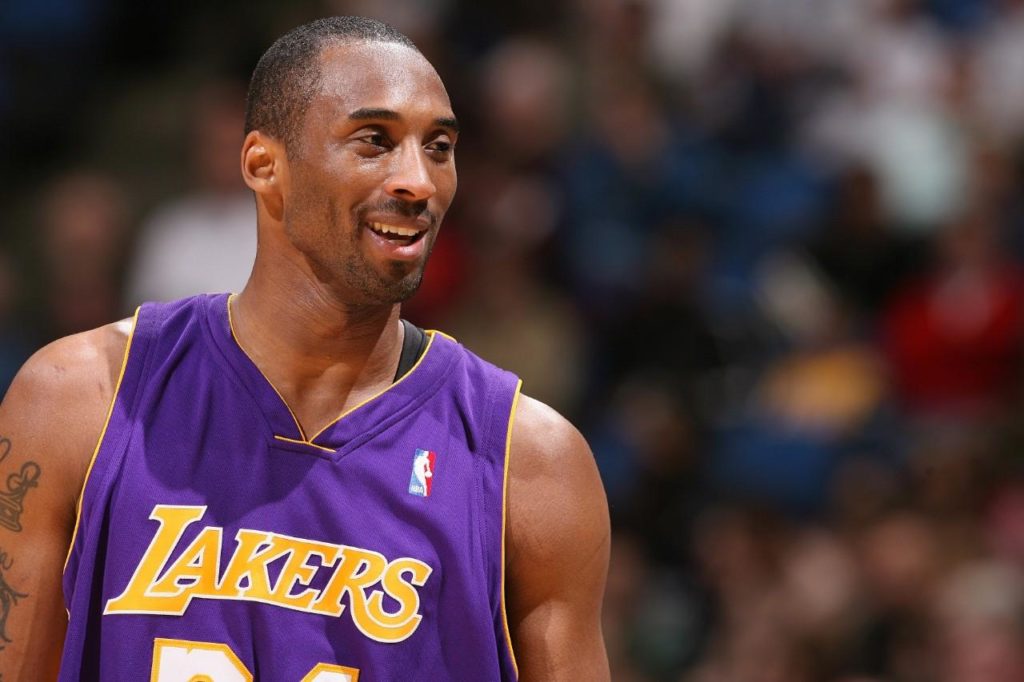
Maccabi Haifa B.C. players Renee Rougeau – a forward originally from Sacramento –  Jewish-American center Jeremiah Kreisberg and others lost to Kobe Bryant and the Lakers in a blowout, 126-83. Tip-off at the sold-out, evening matchup was 6:30 p.m. ,and the game ended at approximately 9 p.m.

The game served both as an exhibition game for the Lakers and an opportunity for Maccabi Haifa B.C. to raise funds for American Friends of Rambam (AFORAM)/Rambam Health Care Campus, in Haifa. Maccabi Haifa B.C. has adopted the hospital and health center as its charity, and the players are there, when necessary.

“Sports are a great connector, and the L.A. Lakers are obviously a really great team, and this helps us reach out to the community in a fun way,” AFORAM Executive Director Michelle Segelnick, who was at the game, said in a later interview.

The hospital touts itself as the “official hospital for the Maccabi Haifa basketball team.” It is the largest hospital in the north of Israel, and it has been involved in responding to mass casualty events abroad, as well, including at the Syrian border.

Meanwhile, the Israeli team’s game against the Lakers team was part of a multi-day trip to the United States, which also included a stop for a Q&A and lunch at Sephardic Temple on Oct. 10, as part of the team’s efforts to raise awareness for the hospital. The team also played an exhibition game against the Memphis Grizzlies on Oct. 8. The Grizzlies defeated Maccabi Haifa B.C. 97-84.

In a phone interview before the two NBA games, Jeff Rosen, the United States-based owner of Maccabi Haifa B.C., said the Israeli team, in competing against teams like the Lakers, is preparing for its own season, which kicks off in late October.

“We’re pretty excited about it. We’ve been working the last five seasons on NBA pre-season tours…it’s been a huge branding opportunity, and, of course, it just gets our guys ready with the highest competition in the world for our upcoming season,” he said.

Maccabi Haifa B.C. is one of 12 teams in the Israeli Premier League. The team is one of the strongest in the league, with its biggest rival being Tel-Aviv’s team, Rosen said.

“There is a highly competitive brand of basketball in Haifa. Today it would be an objective comment to say Haifa, along with Jerusalem and along with Tel-Aviv, are the three elite teams in the league,” he said.

“Basketball in general is the second-largest most spectator sport [in Israel], with soccer first,” Rosen added.

Ariella Steinreich, a spokesperson for AFORAM, said for the Israeli team to play against NBA teams reinforces U.S.-Israeli ties.

“It’s important for Israeli-American relations, to spread awareness about the game,” she said in a phone interview.

Her hopes came true at the Staples Center: an Israeli flag hung from the stadium ceiling, alongside an American and Canadian flags, a scoreboard displayed text messages from attendees during half-time, including, “Am Yisrael Chai” and “Oh Vey! Go Lakers!” and many in the crowd sported Magen Davidadorned garb.

Attendees included Santa Monica resident and self-described “lifelong Lakers fan” David Leifer, who found himself rooting against his favorite team on Sunday.

Leifer was there with Daniel Rude, a Los Angeles-based chiropractor and Beth Jacob congregant who wore a fuzzy top hat with a Jewish Star of David emblazoned on it. The Lakers led 63-40 at halftime — Maccabi Haifa B.C., whose players wore green uniforms, trailed throughout the game, struggling to complete plays close to the basketball hoop — prompting Rude to say it would take more than a prayer for Maccabi Haifa B.C. to catch up to the Lakers.

“No, not unless the messiah comes,” said Rude, when asked if the Israeli squad had any chance of closing the gap.

And while many in the crowd were rooting for the Israelis, Lakers star Bryant – as well as veteran Metta World Peace, who recently returned to the Lakers, and the young, upcoming guard Nick Young– garnered some of the loudest applause. This was L.A., after all.

And apparently, the excitement to see Bryant wasn’t only coming from the crowds.

“We’re totally pumped,” Rosen said last week over the phone of playing against the NBA legend. “I just hope the guys don’t get star struck getting Kobe Bryant’s autograph. I told them that after getting his autograph, they have to go back to practice. After that, I think we’ll do just fine.”

Los Angeles Lakers blowout Maccabi Haifa B.C., US-Israeli ties are strengthened Read More »

Islamic State can draw on veteran jihadists, ex-Iraq army officers for leadership

Islamic State leader Abu Bakr al-Baghdadi, one of the world's most wanted men, is counting on veteran jihadis and former Iraqi army officers who form the core of the militant movement to take over if he is killed.

New questions arose over Islamic State's leadership structure and who might succeed Baghdadi after Iraq's military said on Sunday air strikes had hit a convoy carrying him, though Iraqi security officials later denied this.

Baghdadi, who rarely appears in public and delivers few audio speeches, makes the vast majority of decisions, including which of the group's enemies should be killed.

His approval is needed even for decisions taken by the five-member Shura Council, which runs Islamic State and will elect a new a new leader if Baghdadi is killed, and he rules over a decentralized network of emirs in the field who run the everyday activities of the caliphate he has declared.

Baghdadi does, however, lean on a small circle of senior Islamic State aides such as Abu Mohammad al-Adnani, the group's official spokesman, as he pursues a mission which his fighters describe as “part of God's path to create a strong Islamic State that will rule the world.” 

Born in 1977 in Idlib, Syria, Adnani has delivered Islamic State's main messages, including its declaration of a caliphate, which was distributed in five languages.

The most important operatives include Abu Muslim al-Turkmani, a former general and military intelligence officer under Saddam Hussein who can provide Islamic State fighters with training and direction.

Baghdadi is also said by followers to rely heavily on Abu Omar al-Shishani, a senior commander in Syria. Born in 1986 in Georgia, which was then still part of the Soviet Union, he has a reputation as a great military mind and has long been at Baghdadi's side.

RUTHLESS AND SECRETIVE 

Sunday's air strike was at least the third attack on Baghdadi's entourage.

Despite his power – and a $10 million U.S. reward for information leading to his capture – little is known about a man who for his own survival has shunned the spotlight.

But it is clear he will go to all lengths to achieve his goals, as evidenced in Islamic State videos depicting the violent deaths of those who stand in its way.

Opponents have been beheaded, shot dead, blown up with fuses attached to their necks and drowned in cages lowered into swimming pools, with underwater cameras capturing their agony.

According to the U.S. reward notice, which depicts a round-faced, brown-eyed man with closely cropped beard and short dark hair, Baghdadi was born in the Iraqi town of Samarra in 1971.

The United States, which is bombing Islamic State targets in Iraq and Syria, first came across Baghdadi in Iraq in 2004 when it detained him at the Camp Bucca. He was later released.

A follower of al Qaeda during the early years of the U.S. occupation, he later branched out on his own, helping establish Islamic State.

When he seized tracts of Iraq and Syria and declared a so-called caliphate he hopes will span the Muslim world, he drew militants from around the globe to Islamic State, creating a diverse pool of fighters eager to rise up the jihadist ladder.

Baghdadi and his aides have thrown an already fractured Middle East deeper into turmoil and delivered a shock to global security on a scale not seen since the heyday of al Qaeda.

Baghdadi's followers' killings of Shi'ites on the Arabian Peninsula deepened divisions in the Muslim world and their brutality helped spur Russian military involvement in the region and worsen the most severe refugee crisis since World War Two.

Baghdadi has exploited conflict in Syria and Iraq to topple al Qaeda from its primacy in trans-national militancy, a huge loss of prestige for a group whose hijacked plane attacks killed nearly 3,000 people in New York's World Trade Center, Washington and Pennsylvania. 

The recruiting drum he beat was loud and clear: summoning followers to a pitiless jihad against Shi’ite heretics, Christian crusaders, Jewish infidels, and Kurdish atheists. He berated Arab despots for defiling the honor of Sunni Islam.

FAR-REACHING AMBITIONS

Islamic State became the first militant group to defeat an army when it swept through northern Iraq last year.

“Islam was never for a day the religion of peace; Islam is the religion of war,” he said in a speech released on May 14.

This year he set his sights on Saudi Arabia, birthplace of Islam, and his group launched an online magazine for Turks, who volunteered for his jihad in hundreds if not thousands.

Unlike al Qaeda, which focuses on hit-and-run attacks and bombings, Islamic State is more concerned with seizing and holding on to territory for the caliphate, acquiring tanks and weapons left by fleeing Iraqi soldiers along the way.

Stolen oil sold on the black market provides revenues as Baghdadi seeks military self-sufficiency.

Baghdadi's ambitions stretch far beyond the Middle East, where his men control large swathes of Iraq and Syria and rule over perhaps 10 million people. He has established a presence in Libya, enjoys support from militants in Egypt's Sinai desert and his suicide bombers have attacked a variety of targets in war-

Baghdadi has opened the door to foreign fighters, mostly Europeans and Americans who have latched on to his call for holy war and are able to return home with their passports to stage attacks. He also accepted a pledge of allegiance from Nigerian Islamists Boko Haram. 

Many young Islamists who were of school age at the time of the Sept. 11 2001 attacks on the United States now look for inspiration not to al Qaeda, whose leader, Ayman al-Zawahri, is in his mid-60s, but to Baghdadi, a generation younger.

Islamic State can draw on veteran jihadists, ex-Iraq army officers for leadership Read More »

In Putin’s policing of Middle East, some see a boon for Israel

As a defiant Russia again flexes military muscles in the Middle East and Eastern Europe, Cold War analogies are, perhaps, unavoidable.

The deployment last month of Russian warplanes in Syria laid bare Moscow’s readiness to use force to punish leaders who would challenge its authority — as in Ukraine, from which it annexed Crimea in March 2014 — and to defend its strategic allies, like Syria’s embattled president, Bashar Assad.

During the Cold War, Kremlin intervention generally meant bad news for Jews, who were second-class citizens, of sorts, in the Soviet Union — and for Israel, which the USSR regarded as an extension of its American rival. But observers of Russia’s current bid for greater influence in the Middle East say it may be a boon for Israel, which has strived in recent years to stay on the good side of Russian President Vladimir Putin.

“The main risk for Israel is not Assad but chaos” amid Syria’s bloody civil war of the past four-plus years, Ksenia Svetlova, a Moscow-born Israeli Labor party lawmaker, told JTA. “If the Russian deployment prevents it, then it can be a positive development.”

As Russia began beefing up its presence in Syria, Israeli Prime Minister Benjamin Netanyahu traveled last month to Moscow in an effort to avoid Russian-Israeli military entanglements in or over Syria, where Israel routinely retaliates for cross-border rocket attacks or goes on the offensive to eliminate certain types of weaponry. (“We are neither for nor against Assad,” The Economist quoted Netanyahu as saying during the Sept. 21 meeting.)

Netanyahu reportedly was satisfied with the outcome of the meeting, in which he discussed with Putin ways to avoid clashes with Russian troops during its retaliatory missions in Syria. Further high-level talks on Syria are scheduled to begin between Israel and Russia later this month, Israel’s Army Radio reported last week.

Netanyahu’s visit, and the understanding reached while in Moscow, speaks to his government’s broader policy of neutrality on Russia, which has set Israel apart from most Western countries. Last year, the United States, European Union, Canada, Australia and Japan introduced several rounds of trade and other sanctions on Russia.

During the Crimea annexation, and Russia’s subsequent arming of pro-Russian secessionists in Ukraine, Israel remained conspicuously silent.

Roman Bronfman, a former Meretz party lawmaker in Israel and prominent Russia analyst who was born in what today is Ukraine, lamented Netanyahu’s “recognition of Russian dominance by flying to Moscow, naming it the boss in another insult to Israel’s true ally, America.”

The Netanyahu trip to Moscow contrasted sharply with the U.S. position on Russia’s efforts. Last week, U.S. Defense Secretary Ashton Carter said that Russia’s military moves were “pouring gasoline on the fire” because Russian strikes reportedly have targeted U.S.-backed rebels — not the Islamic State terrorists that Moscow had singled out as the target of its operation.

To Bronfman, Russian deployment in Syria also means “opening a corridor for more presence on Israel’s borders by Iran and Hezbollah.” Syria, he explained, is after all a close ally of both the Islamic Republic and the Shiite militia.

The Netanyahu-Putin meeting demonstrated just how far ties between Israel and Russia have progressed since the Cold War, according to Mark Galeotti, a Russia analyst and professor of global affairs at New York University. For its part, Russia perceives Israel as a rare island of stability, he said.

To be sure Russia, which is the world’s second largest weapons purveyor behind the United States, is still arming Israel’s enemies, Iran included. But now Russia also buys Israeli arms, including drones. It also acts as a mediator for dialogue between Israel and parties with few or no Western contacts, such as the Assad regime and Hamas.

Russia’s intervention in Syria comes as the United States scales back its military presence in the Middle East as part of President Barack Obama’s policy of emphasizing diplomacy over force.

But Putin’s challenge to the West, observers say, lies not so much in its protection of the Assad regime but in his creeping influence with Iran and some American allies in the region, such as Egypt, Saudi Arabia and even Israel. In recent months, Russia has been wooing Cairo, Riyadh and Tehran — resulting in economic agreements on sharing nuclear energy and know-how with Saudi Arabia, and selling advanced weapons to Iran. Putin also invited Egypt to join the Eurasian Economic Union, Russia’s free-trade zone that now comprises only ex-members of the former Soviet Union.

“What is happening between Russia and Egypt, as well as Saudi Arabia, is indeed a new development that is meant to occupy the vacuum left by U.S. non-intervention, or the perception of it,” said Svetlova, the Israeli lawmaker and a former journalist specializing in the Arab-speaking world.

Netanyahu’s meeting with Putin coincided with Russia’s increased influence in some Arab countries with rulers who disapprove of Obama’s support for the Arab Spring revolutions and the nuclear agreement with Iran. Supporters both of Syria’s Assad regime and Egypt’s government led by Abdel Fattah el-Sisi in recent months have been displaying posters of Putin in Damascus and Cairo, where many now see him as a hero.

Meanwhile, the Saudi government criticized the U.S.-led nuclear agreement with Iran before ultimately giving its lukewarm consent to the deal.

And el-Sisi has had harsh words for Obama, who supported the revolution that in 2011 toppled the regime of Hosni Mubarak, a predecessor of el-Sisi.

“You left the Egyptians, you turned your back on the Egyptians,” el-Sisi said in 2013 of the Obama administration, “and they won’t forget that.”

In Putin’s policing of Middle East, some see a boon for Israel Read More »

Palestinian man killed after stabbing Israeli soldier, grabbing his gun

A Palestinian man on a bus entering Jerusalem was shot and killed after stabbing an Israeli army officer and stealing his gun.

According to police, the unidentified assailant also stabbed an Israeli passenger who struggled to stop him. Both the officer and civilian were taken to the Hadassah Medical Center in Jerusalem with moderate injuries.

After the attacker took the officer’s gun, police from the area who entered the Egged bus shot the man dead.

The incident on Monday night was the fourth similar attack in Jerusalem in a span of 12 hours.

Earlier in the day, a 13-year-old Israeli was injured while riding his bike by two Palestinian attackers, aged 13 and 15. An hour earlier, an 18-year-old woman was moderately wounded by gunshots after stabbing a border police officer.

Hours before that, an Arab man was shot and killed after attempting to stab an Israeli policeman in the Old City neighborhood.

Palestinian man killed after stabbing Israeli soldier, grabbing his gun Read More »

Cheshvan: Mushroom and Bean Soup

This originally appeared on Neesh Noosh.

In Israel, we begin saying the prayer for rain at the start of the month of Cheshvan (saying the prayer starts later outside of Israel). Rain is desperately needed in Israel and California, which has the worst drought on record. The primary ingredients in this soup require little water to be grown. They are also sowed in the ground and dark places, reflective of the shorter days as we approach winter. With the cooling weather, we start to stay inside more and perhaps become more insular and reflective in our nature. The month–which has no holidays–is sometimes referred to as “MarCheshvan.” Mar means bitter and the parsley leaves on top are symbolic of this bitterness.

Cheshvan: Mushroom and Bean Soup

Ingredients

  • 1 celery stalk, thinly sliced
  • 2 carrots, thinly sliced
  • 1 yellow onion, finely chopped
  • 2 cloves garlic, minced
  • 2 cups mushrooms, chopped
  • 3 cups cooked white beans (I used a mixture of gigantes and a gorgeous heirloom bean called Giele Waldbeanstje, or Yellow Forest Bean that I was given by members of the Netherland’s Slow Food chapter)
  • 1 cup broth
  • 2-4 cups water
  • olive oil
  • salt and pepper to taste
  • a tbsp or so of parsley, finely chopped


Preparation

1. In a pot, add 1tbsp olive oil and chopped celery, carrots, 1/2 of chopped onion. Cook over medium heat for about 10 minutes. To prevent sticking, periodically add vegetable broth.

2. Remove from stove top and place in a blender with 1 cup of beans. Set aside.

3. Add 1/2-1tbsp of olive oil to the same pot and add the second half of the chopped onions. Cook for about 10 minutes over medium-low heat until translucent and starting to caramelize. Add mushrooms and garlic. Cook for another 10-15 minutes. Slow add broth as needed to prevent burning.

4. Once onion-mushroom-garlic mixture is finished, add bean/vegetable blend to pot and remaining 2 cups of beans. Mix well. Add remaining broth and slowly pour water into pot. The amount of water used depends on how thick or thin you prefer the soup (I used about 2.5 cups of water). Simmer over low heat for about 15 minutes. Add salt and pepper to taste.

5. Ladle soup into bowls. Drizzle each with a bit of fruity olive oil and sprinkle with a pinch of chopped fresh parsley.

B’tayavon!

Cheshvan: Mushroom and Bean Soup Read More »

How to teach kids to support Jewish causes

“Hey, Rabbi,” the bat mitzvah candidate said, “can I tell you about my mitzvah project? I’m raising money to help people join our synagogue if they can’t afford it.”

I was impressed. And moved. And shocked.

Why shocked?

Many religious schools require that bar/bat mitzvah candidates do a mitzvah project. Once upon a time, those projects were all Jewish in nature. Families would plant trees in Israel in honor of their guests or display material from local Jewish organizations on the tables at the celebration. Kids would donate some of their gift money to local Jewish federations.

For a while, bar and bat mitzvah candidates would symbolically share their ceremonies with Soviet Jewish refuseniks who were forbidden from studying Judaism.

But such specifically Jewish projects have gone the way of the VHS tape and the pet rock — hopelessly passe.

Over the last decade, bar/bat mitzvah projects have become decreasingly Jewish in their focus and intent. Mitzvah projects are far more likely to be focused on healing disease, or addressing environmental concerns, or raising money for disadvantaged kids.

In fact, my young friend’s idea to help subsidize synagogue dues for the less fortunate was, in fact, the only specifically Jewish mitzvah project I had seen in years.

I am all in favor of kids wanting to give to the wider community. Most adults and teachers would probably agree with me: Any kind of altruism, anything that carries kids out of their iPhone, selfie-addled worlds is good. But the flight from specifically Jewish concerns has its own set of worrisome implications.

First, it accompanies a gradual diminishment in Jewish ethnic feeling and connection — a diminishment that is part of larger trends within the American Jewish community.

When I have mentioned the importance of particularistic Jewish giving to parents, I get deer-in-headlights stares, as if parents find the very idea of giving to Jewish causes to be an embarrassment — too Jewish, too tribal. It is as if I am speaking a foreign language, which, in fact, I am: a language of Jewish peoplehood.

Second, I find myself reminding Jewish parents of the deeper ramifications of their kids’ choices. Here is what I say:

I know that your kids are going to want to give to various universal, communal and non-Jewish charities. We want to be helpful and to make a difference. That is what being Jewish is all about.

But here’s the deal. If your child doesn’t give to the United Way, someone else will step up to that worthy plate. The same is true with the local museum and symphony orchestra.

But if we don’t teach our kids how to give Jewishly, they will never learn. No one else will step up for them and those Jewish causes will go unsupported. Eventually they will die.

If only one generation of Jewish kids fails to learn how to support the Jewish community, the Jewish people and Israel, Jewish giving will be over. Because Jewish giving, like any kind of moral engagement, is a muscle. If you don’t develop the muscle, it atrophies.

So what can Jewish parents do to make sure they are keeping the chain of Jewish giving intact?

First, teach your kids about local Jewish needs, causes and organizations. Talk to them about the work of federations, community centers, Jewish family and career services. Take them to see what those organizations are really doing. Talk to them about projects in Israel. Teach them about what Jewish organizations are doing all over the world. Make it real for them.

Second, link your child’s interests to Jewish causes.

Your kid likes baseball? There’s JChoice.org, a group that provides baseball equipment and supplies to kids in low-income areas.

Dance? Give to The Israel Ballet.

Horses? Try the Israel National Therapeutic Riding Association, which uses horseback riding to help people coping with disability or injury.

There are other opportunities like these, many of them contained in “The Mitzvah Project Book,” by Liz Suneby and Diane Heiman. (Full disclosure: I wrote the foreword.)

Third, if you cannot find anything Jewish that interests your child, convert your child’s interest to a Jewish value. Give that value a Hebrew name.

Your child wants to raise money for a specific disease? Fine. Welcome to the world of “refuah” (healing).

Your child wants people to donate to help flood victims? Great. It’s called “tikkun olam” (repairing the world).

Your kid cares about animal welfare? Fantastic. Thanks for supporting “tzaar baalei chayim” (avoiding cruelty to animals).

Sure, tikkun olam is great. But “tikkun ha’am” — repairing the Jewish people — is just as important. We do that when we connect our values to our people and to our sense of what we believe.

Jeffrey K. Salkin is the rabbi of Temple Solel in Hollywood, Florida, and the author of “Putting God on the Guest List: How to Reclaim the Spiritual Meaning of Your Child’s Bar or Bat Mitzvah.”

How to teach kids to support Jewish causes Read More »
