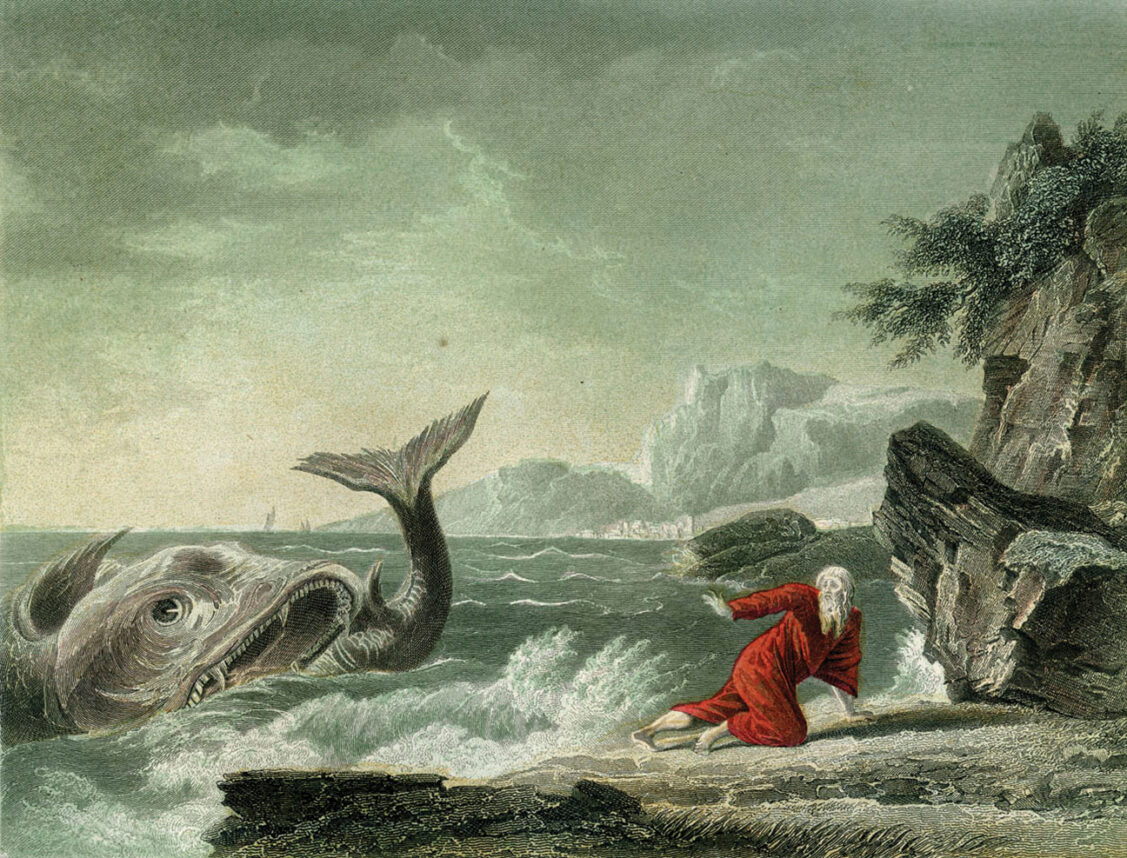
Balaam is hired in this week’s Parashat Balak by the Moabite King Balak to curse Israel as they traverse his territory, but Balaam blesses Israel instead with famous words now included in the morning liturgy: Mah tovu ohalecha Yaakov, Mishkenotecha Yisrael… “How good are your tents O Jacob, your dwellings O Israel…” (Numbers 24:5).
Balaam is the first non-Hebrew prophet so designated in Torah. However, Jewish tradition regards him very differently than the Hebrew prophets. In the 2nd century ethical treatise of the Mishnah, Pirkei Avot (5:22) Balaam’s negative qualities are juxtaposed against the virtues of Abraham thereby presenting the Jewish people with a choice – to go the way of Abraham or the way of Balaam:
“Whoever has the following three traits is among the disciples of our ancestor, Abraham, and whoever has three different traits is among the disciples of the wicked Balaam. Those who have a good eye (ayin tovah), a humble spirit (ru-ach n’mu-cha), and an undemanding soul (nefesh sh’pha-lah) are the disciples of our father Abraham. Those who have an evil eye (ayin ra-ah), an arrogant spirit (ru-ach g’vohah), and a greedy soul (nefesh r’cha-vah) are the disciples of the wicked Balaam.”
The Artscroll commentary on this text compiles many rabbinic reflections on the meaning and application of this passage (pages 361-367).
Rashi says that those with a “good eye” (ayin tovah) do not suffer from jealousy, and regard the honor of a friend as equal to their own honor. Rambam and Rav say that such people are satisfied with their own position and take delight in the success of others. The Sfat Emet says that these people so graced have a positive outlook on all things and begrudge others nothing.
Most commentators agree that a “humble spirit” (ru-ach n’mu-cha) refers to exceptionally humble and modest people in their relationships with God and their fellows.
The sages interpret an “undemanding soul” (nefesh sh’pha-lah) as referring to those who have mastered their “evil inclination” (yetzer), exercise self-control over their urges, lusts and desires, and eschew the accumulation of excessive luxuries.
The commentators then turn to the negative qualities of Balaam, the opposite of Abraham. Rambam understands that those with an “evil eye” (ayin ra-ah) are consumed by their appetite for wealth, by blinding jealousy and by resentment towards anyone who has attained success.
Those with an “arrogant spirit” (ru-ach g’vo-hah) harbor delusions of grandeur, ignore the beauty and value of others and are consumed with themselves and their own needs.
Those with a “greedy soul” (nefesh r’cha-vah) refers to people willing to stop at nothing to fulfill their needs.
Though Torah tradition regards Balaam as a prophet, he is nothing like Moses. Rabbi Levi Yitzhak of Berditchev explains:
“The greatest difference between them, visible to all, was that Moses during all of his life employed his gift of prophecy beneficially at all times. He put his own life at risk on behalf of his people many times when trying to save them from God’s justifiable anger at them. Balaam used his gift exactly in the opposite manner, as his accomplishments were achieved by invoking curses… The Ari z’l (Rabbi Isaac Luria) compared the vantage points from which both Moses and Balaam pronounced their respective prophecies. Both of them endeavored to procure the fulfillment of their prophetic announcements from the same lofty source in heaven; alas Balaam used his power destructively, whereas Moses invariably used his power constructively…” (Kedushat Levi, translation by Eliyahu Munk, Vol. 3, p. 668)
In conclusion, our classic sources remind us that Hebrew prophecy is about fulfilling God’s will, not our own, that our chief concern must be for the welfare of others, and that humility before God and our fellows is the purpose and fulfillment of the religious life.
Shabbat shalom!