
Jewish Contributions to Humanity #7:
Original research by Walter L. Field.
Sponsored by Irwin S. Field.
SIGMUND FREUD (1856-1939). b. Vienna, Austria. Modern psychology’s father.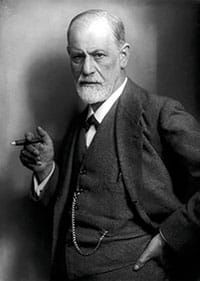
A revolutionary neurologist, psychiatrist and psychotherapist, Sigmund Freud was one of the most influential thinkers in terms of how we understand human nature. He’s known as the father of modern psychoanalysis, a field that mines the mind and how it’s shaped by childhood experiences, parental relationships, repression, and the subconscious. Born in what is now the Czech Republic, Freud lived most of his life in Vienna before fleeing to London in 1938, dying one year later of cancer. He left us with a treasure of insights into the mind, including his remarkable theory that the human psyche is composed of base nature (the id), ego (the “I”) and super-ego (moral conscience), and also the discovery that unresolved or repressed mental conflicts enter our subconscious, where they still impact us but in ways that could be difficult to pinpoint or understand. It’s no understatement to say he was one of the most influential people of the 20th century.
THEODOR REIK (1888-1969). b. Vienna, Austria. Freud’s protégé.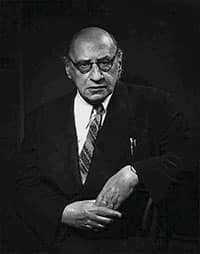
One of Freud’s first students, Reik, upon his immigration to America, was rejected at that time by the psychoanalytic community because he didn’t possess a degree in medicine. Soon thereafter he created the National Psychological Association for Psychoanalysis – which exists to this day in New York City – and participated in one of the first lawsuits that helped establish that non-physicians may practice psychoanalysis. His most impactful and lasting contributions came in the fields of the therapist-patient relationship and criminology. In the former, he elucidated how a psychotherapist can plum the depths of his or her own subconscious to better understand and treat patients and how therapists can become emotionally entangled with their patients. Reik also theorized that psychologically profiling criminals can help authorities identify and locate them, in part because out of an unconscious guilt criminals will sometimes leave clues that lead to their own capture.
ERICH FROMM (1900-1980). b. Frankfurt, Germany. The political psychologist.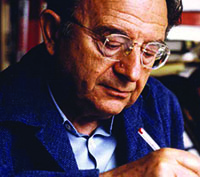 Heavily influenced by the Torah and Talmud in his early years but eventually becoming an atheist, Fromm was one of the 20th century’s most influential psychologists and sociologists—someone whose political thinking was deeply impacted by Marx and who was one of the unofficial founders of the field of political psychology. One of Fromm’s greatest insights, described in his seminal book, “Escape From Freedom”, is that humans will either embrace free will or run from it. Running from freedom, he believed, was a source of many psychological pathologies. Those who eschew free will, he believed, either conform to what they believe is society’s preferred personality, give over their free will to others, or engage in destructive behaviors towards others, effectively taking away other peoples’ freedom. In “Man for Himself”, Fromm put forward his belief that one of the core paradoxes of human existence is that we look for closeness and unity with others and an independent identity at the same time. The solution to this paradox, Fromm wrote, is to be oriented productively; that is, to have a purpose-driven life and to channel one’s talents into productive ends.