fbpx

Abbas says security coordination with Israel remains frozen despite removal of metal detectors

[additional-authors]
July 25, 2017
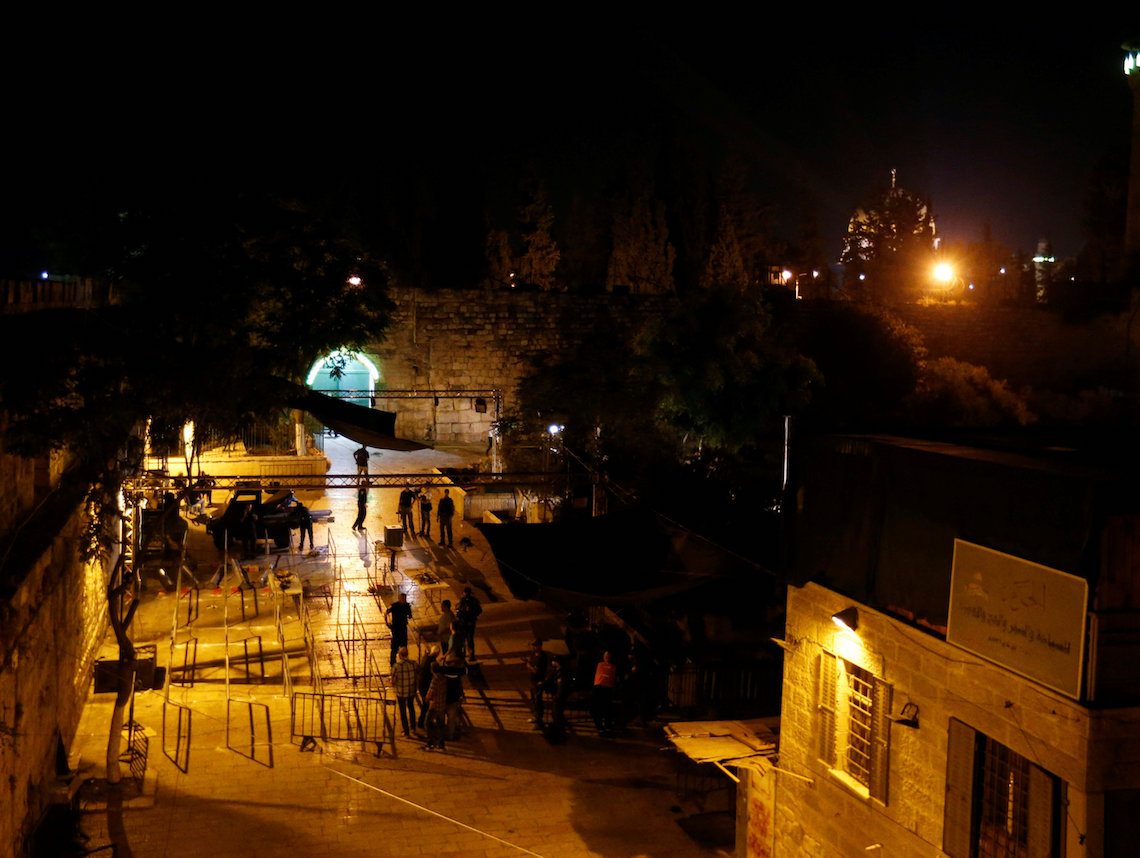
Israeli security forces remove metal detectors which were recently installed at an entrance to the compound known to Muslims as Noble Sanctuary and to Jews as Temple Mount in Jerusalem’s Old City July 25, 2017. Photo by Ammar Awad/REUTERS.

Palestinian Authority President Mahmoud Abbas said security coordination with Israel will remain frozen despite Israel removing the metal detectors it placed at the entrances for Muslim worshippers to the Temple Mount.

Abbas made the announcement on Tuesday hours after the metal detectors and security cameras placed at the holy site less than two weeks ago were dismantled.

“All new Israeli measures put in place since July 14 must be removed so things can go back to normal in Jerusalem and we can resume our work regarding bilateral relations,” Abbas said at the beginning of a meeting with the Palestinian leadership.

The metal detectors were installed at the entrance to the Temple Mount after three Arab-Israelis shot and killed two Israeli police officers there on July 14.

Abbas canceled scheduled security coordination meetings between Israeli and Palestinian officials on Sunday, two days after he announced that Palestinian leaders had frozen all contact with Israel over the newly installed security measures at the Temple Mount. It reportedly was the first time that security cooperation has been halted since Abbas was elected nearly a decade ago.

Late Monday night, the Israeli Security Cabinet said it would remove the metal detectors and security cameras and instead incorporate security measures based on advanced technologies, called “smart checks,” and other measures instead of metal detectors. Israel will pay up to 100 million shekels, about $30 million, over the next six months to install the new devices, which include sensitive security cameras.

Despite the removal by Tuesday morning of the metal detectors, Muslim worshippers have continued to stay away and pray at the gates leading to the holy site, as they have since the metal detectors were installed. At least five Palestinians have died in clashes between Palestinians and Israeli police over the security measures.


Did you enjoy this article?
You'll love our roundtable.

Editor's Picks

Latest Articles

A Bisl Sukkot ~ Don’t Be Afraid, Go Outside

The sukkah reminds us to go out into the world, especially when the comforts of insularity beckon us closer—to explore paths we have yet to take and seek journeys ready for wandering.

A Harira Hug in the Sukkah

I love making soup for this holiday because even if the days are still warm, the cooler evenings make you start craving something warm and comforting.

The Beat Goes On

While so much of the world seems obsessed with and consumed by its hatred of Israel and Jews, Israelis continue to build, create, work, celebrate, argue, raise families, and plan for the future.

Viral AI Video Targets Jewish Comedian

“The biggest concern is that people now have a pathway to shut down Jewish voices through complete falsities that people will believe. … For the future of Jewish entertainment, it’s very scary.”

Yiddish Historians: Writing in Their Own Language for Their Own People

Mark Smith has compiled an important anthology of Jewish history using 49 works by Yiddish historians to recreate or at least open the door to a world of Jewish thought that was once almost mainstream, but which no longer exists, except in the minds of too few specialists.

The Everlasting Melody

Most Jews who have sung “Eitz Chaim” over the past half-century probably never knew Portnoy. They did not know when he wrote the melody or how young he was when he composed it. They simply knew the song.

More news and opinions than at a Shabbat dinner, right in your inbox.