fbpx

July 25, 2017

Turkish president accuses Israel of trying to take Al-Aqsa mosque from Muslims

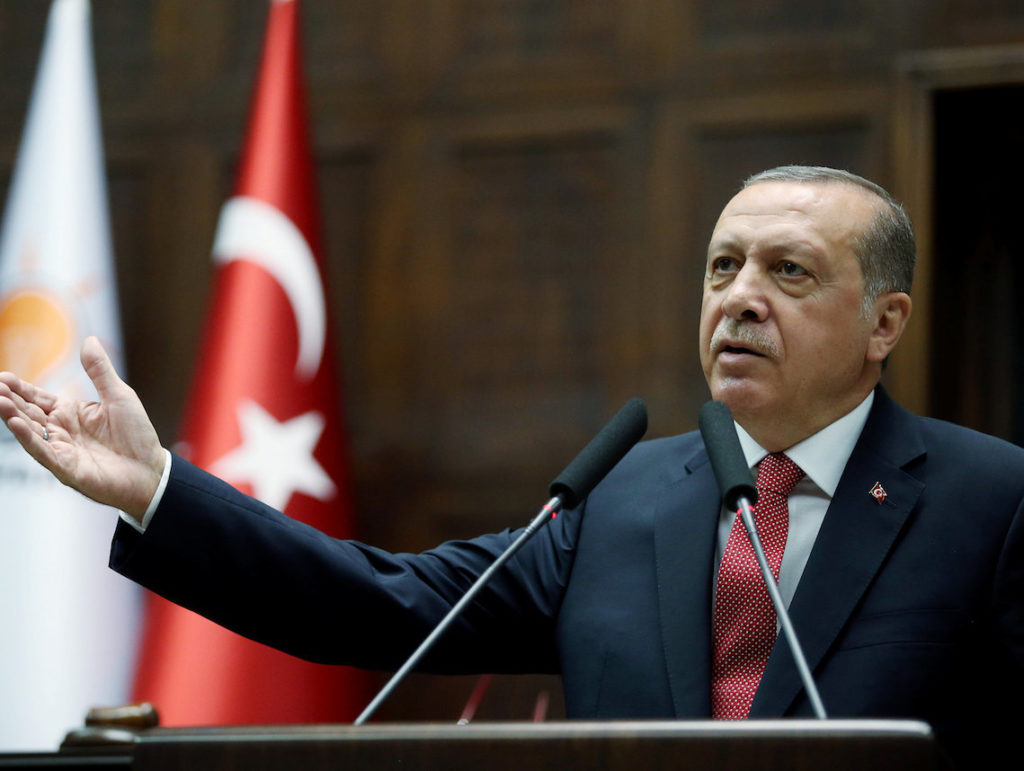
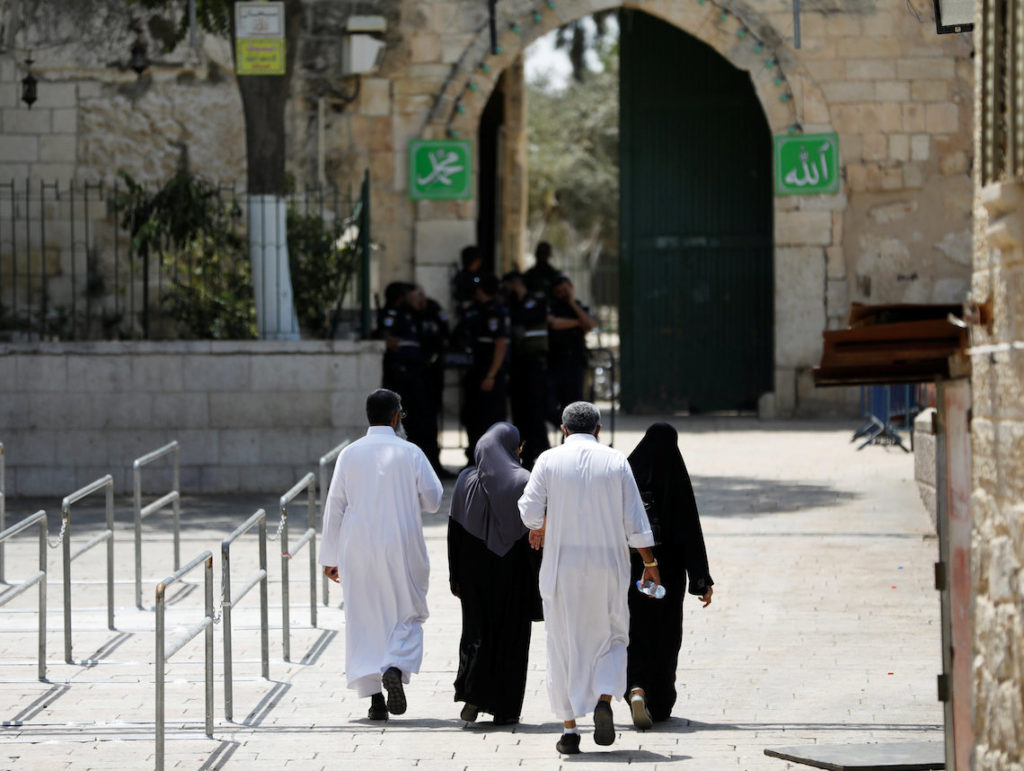
President Recip Tayyip Erdogan of Turkey accused Israel of attempting to take the Al-Aqsa mosque from Muslims using security as the excuse.

Erdogan made the accusation during a meeting of his AKP party.

“Everyone who knows Israel is aware that restrictions on Al-Aqsa mosque are not due to safety concerns,” he said during a speech in the Turkish Parliament in Ankara, according to reports. “When Israeli soldiers carelessly pollute the grounds of Al-Aqsa with their combat boots by using simple issues as a pretext and then easily spill blood there, the reason is we have not done enough to stake our claim over Jerusalem.

“From here I make a call to all Muslims: Anyone who has the opportunity should visit Jerusalem, Al-Aqsa mosque. Come, let’s all protect Jerusalem.”

Erdogan said he had heard that Israel had removed the metal detectors from the entrances to the Temple Mount for Muslim worshippers and hoped that “the rest will follow.”

“We expect Israel to take steps for the peace of the region,” he added.

Israel’s Ministry of Foreign Affairs in a statement issued Tuesday called the remarks “absurd, unfounded and distorted.”

“He would be better off dealing with the difficult problems facing his own country,” Foreign Ministry spokesman Emmanuel Nahshon said.

“The days of the Ottoman Empire have passed. Jerusalem was, is, and will always be the capital of the Jewish people. In stark contrast to the past, the government in Jerusalem is committed to security, liberty, freedom of worship and respect for the rights of all minorities. Those who live in glass palaces should be wary of casting stones.”

The Prime Minister’s Office in Israel also responded, saying in a brief statement: “It would be interesting to see what Erdogan would say to the residents of northern Cyprus or to the Kurds. Erdogan is the last one who can preach to Israel.”

Erdogan also decried two anti-Israel attacks in recent days on an Istanbul synagogue over the metal detectors, calling for a halt to such demonstrations.

“We have no issues with the houses of worship of Christians or Jews,” he said. “We have taken the necessary measures against the attacks planned on synagogues and temples in our country.”

Over the weekend, Erdogan called on the international community to intervene to get the metal detectors removed from the site.

The new security measures had been put into place after three Arab-Israelis shot and killed two Israeli police officers at the holy site on July 14. Once the metal detectors were put in place, Muslims refused to enter the Temple Mount, instead praying outside its gates, leading to clashes and the deaths of at least five Palestinians in recent days.

Despite the removal Tuesday morning of the metal detectors, Muslim worshippers have continued to stay away.

Turkish president accuses Israel of trying to take Al-Aqsa mosque from Muslims Read More »

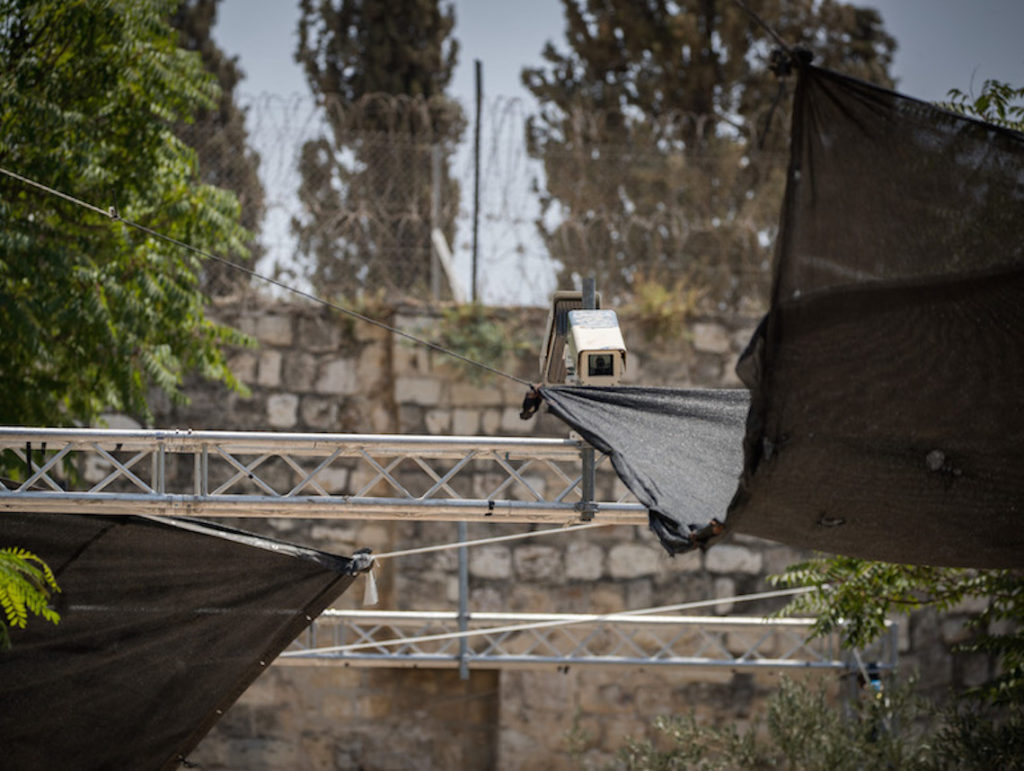
New security cameras at Temple Mount will respect public and its privacy, Israel Police say

The Israel Police said the new security cameras they plan to install at the Temple Mount will retain “full respect for the public and its privacy.”

The police released the statement Tuesday after rumors gained traction that the police had plans to install X-ray cameras at the entrances for Muslim worshippers at the Temple Mount.

Palestinian social media said that the cameras would be able to look at Muslim women’s bodies and could cause cancer.

“The Israel Police does not use any type of camera that harms privacy in any way and has no intention of using such cameras in the future,” the statement said. “The purpose of the cameras is to protect and guard public safety.”

This is done, the statement said, “while maintaining full respect for the public and its privacy, whether the people are worshippers or passersby, let alone women.”

Late Monday night, the Security Cabinet said it would remove the metal detectors and security cameras that were put in place less than two weeks ago and instead incorporate security measures based on advanced technologies, called “smart checks,” and other measures instead of metal detectors. Israel will pay up to 100 million shekels, about $30 million, over the next six months to install the new devices, which include sensitive security cameras.

A Waqf official told The Times of Israel that “the new high-tech cameras” would not be accepted in place of the metal detectors.

The new security measures had been put into place after three Arab-Israelis shot and killed two Israeli police officers at the holy site on July 14. Once the metal detectors were put in place, Muslims refused to enter the Temple Mount, instead praying outside of its gates, leading to clashes and the deaths of at least five Palestinians in recent days.

Despite the removal by Tuesday morning of the metal detectors, Muslim worshippers have continued to stay away and pray at the gates leading to the holy site.

Haaretz reported Tuesday that the cameras would rely on a database of photos of people who are deemed suspicious and would scan the faces of those entering the Temple Mount. The system is capable of scanning millions of faces for 12 distinct characteristics every few seconds, according to Haaretz.

Those in the database identified by the cameras can be taken aside for questioning or a body search.

New security cameras at Temple Mount will respect public and its privacy, Israel Police say Read More »

Abbas says security coordination with Israel remains frozen despite removal of metal detectors

Palestinian Authority President Mahmoud Abbas said security coordination with Israel will remain frozen despite Israel removing the metal detectors it placed at the entrances for Muslim worshippers to the Temple Mount.

Abbas made the announcement on Tuesday hours after the metal detectors and security cameras placed at the holy site less than two weeks ago were dismantled.

“All new Israeli measures put in place since July 14 must be removed so things can go back to normal in Jerusalem and we can resume our work regarding bilateral relations,” Abbas said at the beginning of a meeting with the Palestinian leadership.

The metal detectors were installed at the entrance to the Temple Mount after three Arab-Israelis shot and killed two Israeli police officers there on July 14.

Abbas canceled scheduled security coordination meetings between Israeli and Palestinian officials on Sunday, two days after he announced that Palestinian leaders had frozen all contact with Israel over the newly installed security measures at the Temple Mount. It reportedly was the first time that security cooperation has been halted since Abbas was elected nearly a decade ago.

Late Monday night, the Israeli Security Cabinet said it would remove the metal detectors and security cameras and instead incorporate security measures based on advanced technologies, called “smart checks,” and other measures instead of metal detectors. Israel will pay up to 100 million shekels, about $30 million, over the next six months to install the new devices, which include sensitive security cameras.

Despite the removal by Tuesday morning of the metal detectors, Muslim worshippers have continued to stay away and pray at the gates leading to the holy site, as they have since the metal detectors were installed. At least five Palestinians have died in clashes between Palestinians and Israeli police over the security measures.

Abbas says security coordination with Israel remains frozen despite removal of metal detectors Read More »

Three years in Israel and a family transformed

It was the unlikeliest of circumstances: a collision of fate, politics and passion that occurs perhaps once in a lifetime.

At President Obama’s request, our family moved to Israel to strengthen an already strong, but often tempestuous American-Israeli alliance and to promote his Administration’s broader agenda.

Our “shlichut” in Israel—our service in the Jewish state as American emissaries—would see the tail end of war and waves of terrorism; titanic struggles over policy, including over how to stop Iran’s nuclear program; and painful rifts during the transition from one president to the next.

Intermingled with this political drama, these three years had a transformative effect on our family, giving us much to reflect upon as we prepare to move back to the United States.

The experience taught us that Israelis have a tremendous capacity for progressive social change, a phenomenon that is all-too-often overshadowed by the worsening and dangerous stalemate in Israeli-Palestinian relations. It also allowed us to experience first-hand the new dynamism and mutually beneficial connections that are defining Israel-Diaspora relations.

Israel’s Public Education Renaissance

Perhaps predictably, our family journey in Israel began with a school search.

Leaving the cocoon of a synagogue pre-school and the intimate microcosm of a Jewish day school environment, we were suddenly faced with a wide variety of choices—options that reflect a budding renaissance in public education in Israel.

Our first discovery was that Israel has more choices than ever before.

From magnet and mixed religious/secular schools, to “democratic” and non-Orthodox religious schools, to the ultimate experiment in bilingual, mixed Jewish-Arab schools, the options are dizzying. There is even an all-outdoor “forest” kindergarten.

Unlike in America, private schools remain a rarity. And yet, the public education sector is becoming more and more flexible, adaptive and better funded. Anyone fixated on the latest Kotel dispute, for example, should keep in mind that in other social arenas pluralism is the defining feature.

Many of the latest innovations have a dual-purpose to better prepare children for 21st century challenges and to strengthen social cohesion in this most diverse of societies.

We made our choice and found a cherished elementary school, one of the oldest in the country, which is co-located with a pre-school and kindergarten. The schools serve Kfar Shmaryahu, Moshav Rishpon and the southern reaches of the “Hof Ha’Sharon” coastal region near Herzliya.

Our second discovery was that we were arriving in Israel at the cusp of the Jewish State’s new, grand experiment in early childhood education.

Publicly-funded pre-school was now available to all children from the age of three. It was a decidedly progressive policy move by a government led by Prime Minister Netanyahu that is all-too-often characterized outside Israel as “right-wing.”

Our youngest son, Gabriel, who turned three just before we moved to Israel, benefitted the most and attended the same municipal “gan” for the entire three years.

Responding to more and more research about the critical role in development played by early childhood education and adapting to changing work/life patterns in a society where more families have two working parents, Israel has reset the clock and public education now begins at age three.

Moreover, the day has been lengthened, typically until 2 p.m., and the country continues to experiment with a range of subsidized summer camp models that address long-standing family needs for affordable summer programming, as well as fostering stronger community ties.

Our son Ilan took a particular delight in the municipal summer camp and its intimate, nurturing atmosphere.

Life in the “Village”

With these schools serving as the principal anchors of our family life, we were quickly swept up into the singularly Israeli experience of a tight-knit community based on social solidarity and common purpose.

Kfar Shmaryahu, a village on the edge of the greater Tel Aviv metropolis, is a storied Israeli community founded by Jewish pioneers from Central Europe in 1937, during what is known as the Fifth Aliyah.

Today—at least in the public’s imagination—it is synonymous with wealth and privilege.

Yet we discovered something else, in the “Kfar” and in its lesser-known, yet also storied neighbor Moshav Rishpon. These are uniquely Israeli communities that blend national pride; a thriving Jewish life; an independent, entrepreneurial spirit; high culture; and a zest for life that manifests in everything from the annual children’s triathlon to the innumerable enrichment activities (“chugim”).

Our oldest son, Alex, joined the local chapter of the tsofim, or Israel Scouts, part of a chapter that changed its name nearly five decades ago to commemorate three alumni who fell in the Yom Kippur war.

The town rabbi, Ori Einhorn, serves as a beloved educator, community leader and a beacon of tolerance and moderation. His regular visits to the elementary school and the kindergarten are the delight of many children and their parents, and his chairing the 2nd grade ceremony where our son received his first copy of the Book of Books was a high point of our years in Israel.

Rabbi Ori’s shul, Heichal Ha’banim, is an anchor of Kfar Shmaryahu, with open doors that welcome the devout, the secular and everyone in between.

Toby, his wife, while raising five children somehow manages to also teach and mentor other women and open doors to Judaism that are self-empowering, intellectually challenging and deeply spiritual.

The town mayor, Dror Aloni, manages to fix every pothole, ensure community safety and improve every public facility, yet he also serves as an icon and a link to the broader national fabric and social tapestry that has been re-writing Jewish history every day for the past 70 years.

Son of the fabled Labor leader Shulamit Aloni, a former MK and Education Minister, Dror manages to infuse a pioneering spirit into every aspect of municipal life.

Through the myriad celebrations, from birthdays to national holidays, alongside the unexpected tragedies, including serious illness, spates of terrorism, and tragic deaths, we experienced a collective embrace that brought meaning, purpose and joy to our family, just as it offered support during so many of our own challenging moments.

One particularly difficult decision was when one of our children transferred to a school outside the community. Yet even then, he remained part of the “village” community, maintaining friendships, attending local “chugim” (after-school activities) and perfecting his excellent, accent-free Hebrew.

Not being citizens, we were unsure how tight the local embrace would be, yet were pleasantly surprised to be pulled so deeply and so thoroughly into this community, where people opened up their homes and also their hearts.

As a Jewish family, perhaps it was easier for us, compared to most other diplomats.

But beyond the ethno-religious bond, as representatives of America we also encountered daily life with Israelis who are a proud, independent and confident people, yet a society deeply aware and appreciative of the U.S.-Israeli alliance and all that it affords the still young and vulnerable Jewish state.

For any American diplomat, even amidst ugly and bitter political debates, the sheer breadth and depth of our alliance means that you carry on your shoulders the aspirations and the collective anxieties of an entire nation.

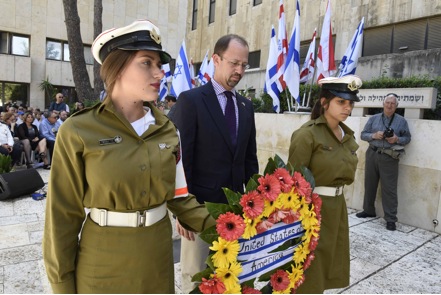
Whether laying a wreath at a memorial ceremony, or conversing with a taxi driver, Israelis we met all have a profound appreciation for their outsized relationship with America.

A Tale of Two Shuls

Israel is a “society pulsing with Jewish life,” as Daniel Gordis has recently written, which means a family’s choice of where to gather for prayer and fellowship is almost infinite.

We hit the jackpot.

Initially, we found a Masorti (Conservative) shul in a quiet suburb in the Sharon region northeast of Tel Aviv. It is a decidedly Israeli community, but with deep American roots. It is not uncommon on a Saturday morning to see local families from outside the synagogue bring their bnei mitzvah (girls included). It was eye-opening to watch these Israeli families—most Americans would call them “secular”—enjoy the open doors, the embrace of Torah, prayer and mitzvot, and the mixed gender seating.

Moreover, it gave us great hope for the long campaign for religious pluralism in Israel and a sense that the struggle must continue to be pursued both top-down, at the political level, and bottom-up, by steadily expanding the footprint of non-Orthodox religious life.

At our shul, the front row is always available and open to anyone, it is never reserved for a donor or VIP, and the sanctuary is filled with creative, learned congregants. On many holidays, it seems the majority of Torah readers are women.

Later on, we were blessed with the sudden appearance of a new kehillah (community) in Herzliya Pituach, where we lived, the newest link in a growing chain of Reform communities in Israel.

Rabbi Gilad Kariv, a captivating speaker, leading social activist and learned scholar, is the anchor of this emerging community that combines immigrants, Sabras, and itinerant diplomats and business emissaries.

The congregation’s dynamism, diversity and determination to grow is yet another sign that the cause of pluralism in Israel continues to inch forward, shul by shul, community by community.

Life in Israel always comes with questions.

From the beginning, there were the neighbors and friends who asked, in that direct and inimitable Israeli fashion: who would ever leave the comforts of America? Then, toward the end, we faced the opposite queries: why would we ever consider leaving? Why not stay? “Haven’t we heard about the upsurge in anti-Semitism in America?” one of the kindergarten teachers asked.

For some, our wandering back to America seemed to touch them personally, at once reminding them of their deep, local roots and uncompromising sense of national pride, and yet a reminder that families—including Jewish families—can find fulfilling, meaningful lives outside the Jewish state.

For our family, it was a wondrous, thrilling adventure. To be sure, we experienced all the challenges Americans are more familiar with—the hard-edge to society, financial stresses, friction between social groups, and ever-present security anxieties.

Yet we also experienced something else, something profound and deeply edifying about the way in which Israelis view their place at the center of the Jewish world and how they are striving to perfect their own society and also contribute to our common future.

For ourselves, our children and our family, we will be forever transformed.


Lasensky is a Visiting Fellow at INSS and Pressma is a health care policy expert.

Three years in Israel and a family transformed Read More »

This Jewish player won the World Series of Poker’s $8.15 million with a pair of 2’s

Scott Blumstein admits it: He never expected to get the card he needed to become the World Series of Poker champion.

Blumstein, 25, of Brigantine, New Jersey, pulled a deuce on the river — the final card of a poker round — to win with a pair of twos in a dramatic finish Sunday to poker’s most prestigious event.

The Temple University graduate — with a degree in accounting — took home the $8.15 million prize in the Texas Hold ‘Em tournament at the Rio in Las Vegas, as well as the coveted WSOP bracelet.

The odds of Blumstein, a Jewish player making his debut in the event, getting the needed deuce? About 93 percent against.

“I’m going to be honest, I was probably not as positive as I wish I was,” Blumstein was quoted as saying byESPN following his victory. “My mental coach is going to be mad at me that I wasn’t expecting a deuce.”

Blumstein topped a field of 7,221 players, the third largest in history, and dominated much of the final table. He grabbed the chip lead on Thursday and never relinquished it.

This wasn’t his first major victory: Last year Blumstein won nearly $200,000 at a tournament in Atlantic City, near where he lives.

Blumstein has been described in poker magazines and on television as a “grinder” — one who plays a lot of poker and considers it a career. It looks like that won’t change for the foreseeable future.

“A normally inconsequential [card] — the deuce — changes my life,” he said on ESPN, which televised the tournament.

His pair of deuces knocked out Dan Ott, a Pennsylvania, who picked up $4.7 million for finishing second. Frenchman Benjamin Pollak was third and won $3.5 million.

This Jewish player won the World Series of Poker’s $8.15 million with a pair of 2’s Read More »

Rabin Assassination: A Jewish Passion Play?

What do the arts tell us about the era we’re living in? A performance last week at New York’s Lincoln Center Festival brings that question back to mind.

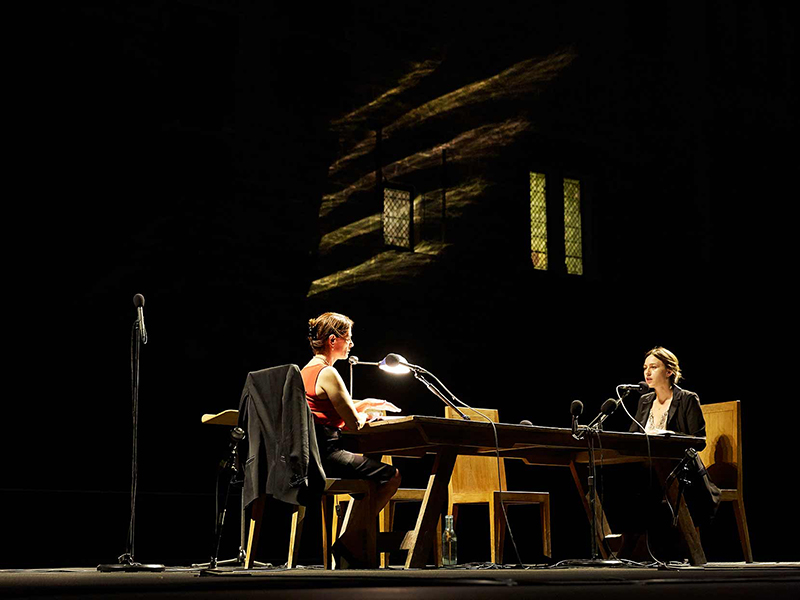
The multimedia work Yitzhak Rabin: Chronicle of an Assassination treats the same subject that its creator, Amos Gitai, explored in his film Rabin, the Last Day (2015). Here he uses live actors and musicians, together with video montage, to tell the familiar story of the tragic events of October-November, 1995.

The production brings to mind the Christian Passion play, an Easter tradition that tells the story of the trial and death of Jesus. Indeed some of the music in Chronicle is by Johann Sebastian Bach, whose Passion According to St. Matthew is one of the greatest musical Passions. It’s a natural model for telling the tale of a redeemer who fell victim to a political execution.

In a Passion play the story may be told by a narrator called the Evangelist. Here that role is filled by the words of Leah Rabin, spoken as news footage of the time unspools on giant screens at the back of stage.  The hopes surrounding a Labor Party peace rally in Tel Aviv build in counterpoint to the rage against Rabin at a Likud Party rally in Jerusalem’s Zion Square. Some in the angry crowd call for “Death to Rabin”; in the St. Matthew Passion the chorus cries, “Lass ihn kreuzigen” – “Let him be crucified.”

Any morality tale needs a villain, and both stories have a betrayer. In Gitai’s narrative it’s Benyamin Netanyahu, who stepped up to address the Likud rally, and who became prime minister a year later. Gitai implies that history might have been different had Netanyahu not added fuel to the flames that night.

Gitai’s creativity falters as the work reaches its final moments. He borrows gravitas from Shakespeare, quoting Mark Antony’s words over the body of Julius Caesar as if it were a prophecy for Israel. Antony foresees “domestic fury and fierce civil strife…Caesar’s spirit, ranging for revenge…shall cry ‘Havoc’ and let slip the dogs of war.” The show concludes with other words we know: the verses from the book of Kohelet/Ecclesiastes about “a time to love, and a time to hate; a time for war, and a time for peace.”

In a Director’s Note for this production Amos Gitai writes, “For me, the best tribute an artist can give his own culture is to be critical.” He’s not alone in that view, of course. But if an artist becomes critical by reflex, won’t he or she lose some originality and independence of thought? Chronicle of an Assassination rehearses a familiar view of a pivotal event. If Gitai expresses something different from his peers’ sympathy for Rabin’s aspirations and dislike for Netanyahu, that wasn’t apparent.

But perhaps Gitai is not to be blamed. In this historical moment, it’s become the norm to recycle accepted ideas—perhaps in a louder voice, in a more urgent vocabulary, or with more extreme expectations—but recycle nonetheless. We seem headed for what the poet saw a hundred years ago: “The best lack all conviction, while the worst are full of passionate intensity.”

Yeats continues, “Surely some revelation is at hand.” After decades of expressing views about the arts and society that have become predictable, can our artists challenge their own assumptions and surprise us by revealing something new? It seems about time.


Rabin Assassination: A Jewish Passion Play? Read More »

BDS activists prevented from boarding flight to Israel

Five members of an interfaith delegation to Israel were prevented from boarding their flight from Washington, D.C., reportedly due to their activism on behalf of the Boycott, Divestment and Sanctions movement.

The Jewish Voice for Peace organization said in a statement Monday that the delegation tried to check into its Lufthansa flight at Dulles International Airport, only to be told that the Israeli government had ordered the airline not to let the five passengers aboard.

In March, the Israeli parliament, or Knesset, amended the Law of Entry to prevent leaders of the BDS movement from being allowed into Israel. The amendment applies to organizations that take consistent and significant action against Israel through BDS, as well as the leadership and senior activists of those groups.

Lufthansa spokesman Tal Muscal confirmed that the delegation members were not allowed to fly per the Israeli government’s request. Lufthansa was not made aware of the reason for the order.

Muscal said the airline must obey government requests like these to block passengers from boarding flights.

“We don’t know who these people are,” Muscal told JTA. “We have no information as to why the Israeli government does not want them to enter. We simply have to abide by the rules and regulations of every country in which we operate.”

The Israeli Prime Minister’s Office declined to comment on the incident.

Three of the activists were from JVP, including a rabbi. The other two delegation members prevented from boarding the flight were Rick Ufford Chase of the Presbyterian Peace Fellowship in Rockland County, New York, and Shakeel Syed, a national board member with American Muslims for Palestine in Los Angeles.

The other 18 participants with the Interfaith Network for Justice in Palestine delegation arrived Monday morning in Israel and were allowed to enter after several hours of detention and questioning, according to JVP.

JVP states on its website that it supports boycott, divestment and sanctions against Israel.

“Israel denied me the ability to travel there because of my work for justice for Palestinians, even though I’m Jewish and a rabbi,” Rabbi Alissa Wise said in the JVP statement. “I’m heartbroken and outraged. This is yet another demonstration that democracy and tolerance in Israel only extends to those who fall in line with its increasingly repressive policies against Palestinians.

Syed said in the statement that he had his boarding pass in hand when “the Lufthansa representative informed me that they had a direct order from ‘Israeli immigration authorities’ to not allow us to board the plane. Furthermore, they refused to even show us the Israeli order.”

JVP said it is believed to be the first time that the amendment has been enforced before passengers boarded their flights to Israel and the first time that Israel has denied entry to Jews, including a rabbi, for their support of BDS.

Following the passage of the Entry Law amendment, several groups that promote BDS planned to organize delegations to come to Israel and test the boundaries of the amendment.

An anti-BDS bill making its way through Congress would expand existing law that bans boycotts imposed by foreign governments to include those imposed by international organizations like the European Union and the United Nations.

BDS activists prevented from boarding flight to Israel Read More »

This Israeli festival puts the ‘men’ in ‘menstruation’

In a grove in northern Israel, several dozen sweaty, shirtless Israeli men circle one another other on all fours, growling like bears.

They are acting out the occasionally surly stage of the menstrual cycle, just before menstruation begins. The bear is one of four “power animals” the men emulate in an effort to better understand the monthly rhythms of the women in their lives.

“A lot of men are afraid of dramatic women, but if you understand the changes going on every month, you can be more empathic and know you’re not to blame,” instructor Maoz Yaakov explained.

“Then you can be supportive, or you can be an asshole. It’s up to you.”

Yaakov’s self-help workshop — “Knowing a Woman’s Menstruation Cycle According to Shamanic Power Animals, Hormones and Libido” —  was one of dozens offered at the Shiva Festival, a biannual gathering dedicated to male empowerment. This summer’s installment, which attracted a record number of participants, ran for three days earlier this month at the Degania Kibbutz near the Sea of Galilee.

About 300 men gathered to explore alternatives to Israel’s sometimes macho society and develop the skills deemed necessary to be a successful husband, father and professional.

A group of about 40 men started the Shiva Festival in 2004 to pass the time while their wives attended the women’s Shakti Festival, also named for a gender-corresponding Hindu deity. While the women lost interest — the Shakti Festival ended years ago — the men’s gathering has since grown into a well-organized event.

This summer, Shiva Festival participants slept in tents, ate vegan meals, grooved to techno music and generally engaged in male bonding. Workshops — many of them inspired by shamanic practice — offered guidance on everything from meditation to digital seduction to making money. The vibe was emotionally supportive, with lots of long hugs and even friendly kisses.

Ariel Galili, a 40-year-old graphic designer from Kfar Saba who produced this year’s festival, said his goal was to offer alternatives to the Israeli male ideals of the tough guy pioneer or war hero.

Participants at the Shiva Festival explore alternatives to Israel’s sometimes macho society. (Courtesy of the Shiva Festival)

“I want Israeli men to see there are other options. They don’t have to be macho. They can be themselves,” he said. “The growth of Shiva shows they are looking for other ways.”

Galili also taught a “reverse breathing” meditation workshop that aimed to unearth buried memories — including, in some cases, of being born.

According to Danny Kaplan, the head of the masculinity studies graduate program at Bar-Ilan University, the Shiva Festival is an expression of the New Age-influenced “mytho-poetic” movement, which uses spiritual ceremonies and storytelling to promote self-understanding. Kaplan said the movement came to Israel from the United States in the 1990s as part of a larger shift away from traditional masculinity and toward “yuppie” values, like authenticity, introspection and work-life balance.

“You can say yuppie men look for more individual experiences,” he said. “A yuppie guy finds it more legitimate to go to a men’s group than a sabra of the 1960s.”

Despite rising in popularity, mytho-poetic ideas remain relatively fringe, Kaplan said. Galili said many of his male friends are uncomfortable when he brings up the Shiva Festival and consider it “weird” or “gay.”

“Most of the guys I play poker with really don’t know how to handle open-mindedness or emotions,” Galili said. “It’s just not part of the culture, and because of the army, I think a lot of Israeli guys are traumatized. For women, that kind of stuff is more normal.”

As far as gay men, Galili said, they are welcomed at the Shiva Festival without judgment. But he said the vast majority of participants are heterosexual.

Yaakov, 41, the leader of the menstruation exercise and a Mikhmoret-based sexual therapist, also taught a workshop to promote men’s acceptance of their penis. In one exercise, participants describe themselves from the perspective of their sex organ.

“It’s interesting to let the penis tell your story, and to laugh and cry about it,” he said. “You understand that every man has issues with his penis and his sexuality, and it makes you stronger.”

Tamir Weissberg, a 35-year-old dog trainer in the Netanya area, attended the Shiva Festival for the first time this month. He said he was a little uncomfortable at first, but after participating in the Native American-inspired sweat lodge ceremony on Thursday evening — involving hours of chanting in a steam-filled hut — and then jumping in the nearby Jordan River, he settled in.

“I’ve been to other similar festivals about self-improvement or learning about yourself,” he said. “But here you take away that element of women and it allows you to strip away all the airs. You have nothing to prove to anyone.”

Weissberg said the festival gave him a new perspective on his roles as a husband and father to two young children. In addition to making personal progress, he said, he connected with other men in a way he has not done since immigrating to Israel from Maryland eight years ago.

“A lot of the time you go through stuff in a relationship with your spouse, and a lot of the time you feel alone,” he said. “Here you’re in a situation and you realize you’re not alone.”

This Israeli festival puts the ‘men’ in ‘menstruation’ Read More »

New security cameras at Temple Mount will respect public and its privacy, Israel police say

The Israel Police said the new security cameras they plan to install at the Temple Mount will retain “full respect for the public and its privacy.”

The police released the statement Tuesday after rumors gained traction that the police had plans to install X-ray cameras at the entrances for Muslim worshippers at the Temple Mount.

Palestinian social media said that the cameras would be able to look at Muslim women’s bodies and could cause cancer.

“The Israel Police does not use any type of camera that harms privacy in any way and has no intention of using such cameras in the future,” the statement said. “The purpose of the cameras is to protect and guard public safety.”

This is done, the statement said, “while maintaining full respect for the public and its privacy, whether the people are worshippers or passersby, let alone women.”

Late Monday night, the Security Cabinet said it would remove the metal detectors and security cameras that were put in place less than two weeks ago and instead incorporate security measures based on advanced technologies, called “smart checks,” and other measures instead of metal detectors. Israel will pay up to 100 million shekels, about $30 million, over the next six months to install the new devices, which include sensitive security cameras.

A Waqf official told The Times of Israel that “the new high-tech cameras” would not be accepted in place of the metal detectors.

The new security measures had been put into place after three Arab-Israelis shot and killed two Israeli police officers at the holy site on July 14. Once the metal detectors were put in place, Muslims refused to enter the Temple Mount, instead praying outside of its gates, leading to clashes and the deaths of at least five Palestinians in recent days.

Despite the removal by Tuesday morning of the metal detectors, Muslim worshippers have continued to stay away and pray at the gates leading to the holy site.

Haaretz reported Tuesday that the cameras would rely on a database of photos of people who are deemed suspicious and would scan the faces of those entering the Temple Mount. The system is capable of scanning millions of faces for 12 distinct characteristics every few seconds, according to Haaretz.

Those in the database identified by the cameras can be taken aside for questioning or a body search.

New security cameras at Temple Mount will respect public and its privacy, Israel police say Read More »

Reform movement joins health advocacy groups in urging rejection of Obamacare repeal

The Reform movement joined an array of health advocacy groups in urging the U.S. Senate to reject a repeal of the Affordable Care Act, the signature Obama presidency health care reform legislation.

“Every U.S. Senator should vote no on health care repeal,” said the full-page ad appearing Monday in The New York Times signed by 28 groups.

The majority of groups were major health care advocacy organizations, including the Cancer Advocacy Network, the March of Dimes, the American Lung Association and the American Academy of Family Physicians. The Union for Reform Judaism was among a handful of faith-based groups, including Protestant and Roman Catholic.

Republicans have long objected to the legislation known as Obamacare, saying it has driven up insurance prices in some areas of the country and put Americans at risk. Defenders say it has expanded the number of Americans who are insured.

President Donald Trump has made its replacement the signature mission of his first year in office, and it seemed likely with Republicans controlling both chambers of Congress. The U.S. House of Representatives passed a replacement bill earlier this year. Republicans in the Senate, unable to come up with a compromise that would satisfy both moderates and hard-line conservatives among them, are now considering whether to simply repeal the bill, with a two-year delay to come up with a replacement.

A vote should take place this week; the outcome remains in doubt.

Health care advocacy groups, including an array of Jewish organizations, say a repeal could be disastrous, resulting in tens of millions of Americans losing their insurance. Also of concern are proposed cuts to Medicaid, the federal program subsidizing insurance for the poor.

Reform movement joins health advocacy groups in urging rejection of Obamacare repeal Read More »