This story originally appeared on themedialine.org.
A retro storefront greets the excited customers as they wait in line. The workers inside the small shop work at a feverish pace. A few sitting at a white table on high chairs outside the store examine those waiting with satisfaction. This is Cofix, the new sensation of the world of coffee, where only coins are needed for one simple reason: everything you could want is here for the low price of 5 shekels (less than $1.50).
“I just heard about it a few days ago, and yesterday someone recommended it to me. They said, ‘You have to go, you have to go! It's really good coffee, and it's only 5 shekels!’” said customer Yaara, who didn’t give her last name.
Since the grand opening of its store in Tel Aviv two weeks ago, Cofix has made waves in the Israeli coffee world. With a menu packed full of sandwiches, pastries and coffee, each for 5 shekels, Cofix is poised to change how Israelis treat (and buy) one of their favorite pastimes.
“When we thought about the idea of the stores, we thought, ‘It’s coffee for everyone,’” Hagit Sinover, a co-founder of Cofix, told The Media Line. “We don’t have [just] grown-ups, or children; we have all the ages.”
The success of Cofix relies solely on its low prices – the primary motivator for customers. A small cup of coffee at other chains, such as Café Aroma or Landwer Coffee, costs at least double, and sometimes even triple the price at Cofix. In a recent article in the Israeli press, executives from some of the major Israeli chains were said to have decided not to reduce their prices in the face of Cofix' fixed-price menu. The discussions, which appear to be extensive, have led some to wonder whether or not the major coffee companies are too cozy with one another and have engaged in price fixing.

In 2010, major chains in Israel increased the cost of their coffee in response to a rise in coffee bean prices. Yet since 2011, the price of coffee has fallen by 40 percent, according to the World Bank, while the major coffee shops have continued to make their customers pay a high premium for a cup of joe.
“The prices in Israel are very, very expensive,” Chen Katz said. “I am a student and the salary that we get at our jobs is very low. So if we can get a coffee or something to eat for 5 shekel it’s the best for us, especially for the students, the soldiers, the ones who don’t get a lot of money.”
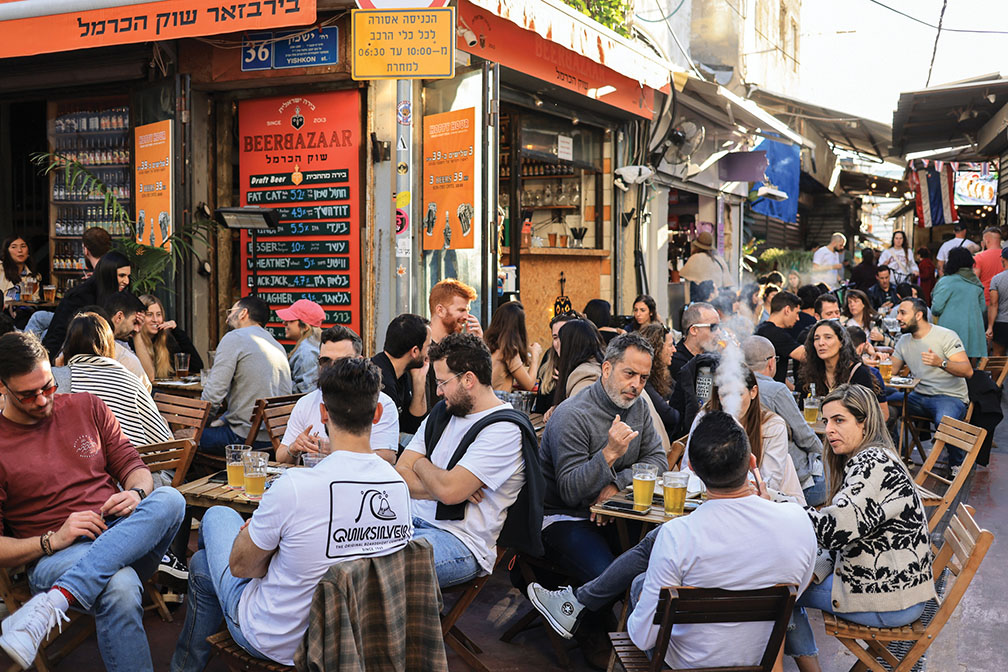
While Cofix caters to those looking for good quality products on the cheap, it is also attractive to those on the go. Compared with Aroma and Landwer, which have extensive seating areas, Cofix offers its customers just a few small tables on the sidewalk.
“It doesn’t cater to families that want to sit,” said Audrea Turgeman, “but I think it’s great for people that just want to grab something and go.”
While those on the move and looking for a cheap deal jumped at the idea of Cofix, others were simply intrigued by the store’s concept.
“I was very curious, it’s a new thing,” said customer David Flatau. “I think it has not only the coffee, the image or the idea here, which made me come here. Also, the coffee is fabulous. It’s very tasty and I was enjoying it very much.”
Sinover says that Cofix will open two more stores this month in Tel Aviv. After these locations have been established, and if they prove to be successful, the company will continue to open stores, with the goal of having 300 franchised Cofix shops dotting Israel over the next three years.
With a rapid expansion appearing imminent, both Cofix and its customers are looking toward a more affordable future.
“I’m impressed, I’m happy for them, and I’m happy for us,” Flatau said. “And I think this is a sign, a sign for all of what is happening in the country and I hope that it will do more.”
Managers at nearby Aroma and Landwer coffee shops refused to be interviewed for this story.