fbpx

June 10, 2026

What Antisemitism Requires of Us

A serious debate has taken hold in Jewish life over how to respond to surging antisemitism. It is often framed as a strategic argument, but beneath it lies a deeper question: What does this moment require of Jews?

One side believes the answer is to confront antisemitism in the broader culture: educating, persuading, building alliances and advocating against anti-Jewish hatred. The other has lost confidence in that project and argues that limited resources are better spent creating proud, educated Jews.

But antisemitism is more than an evil to be fought or withstood. It is also a calling – a summons to see what the hatred of Jews reveals about the society that produces it, and to reckon with the brokenness it exposes.

This is what is missing from much of the current Jewish debate. Fighting antisemitism and fortifying Jews against it are essential, and urgent. But they are not the whole of the matter. Anti-Jewish hatred also forces into view the lies, injustices and institutional failures, and urges us to confront them. That is not a distraction from Jewish survival. It is an integral part of what Jewish survival is for.

Nowhere is this clearer than on campus.

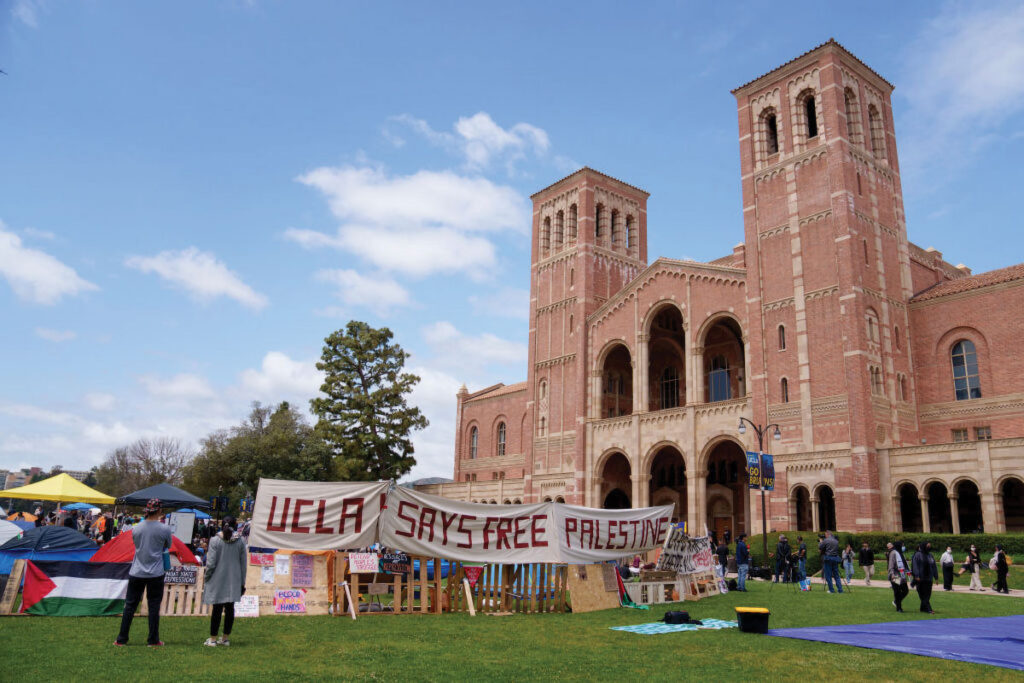
Since Oct. 7, 2023, universities and Jewish organizations have often treated campus antisemitism as a succession of incidents: harassment, encampments, exclusion, threats, administrative indifference. All of that is real. All of it matters. None of it should be minimized. Jewish students deserve protection, accountability and serious institutional response.

Strengthening Jewish life on campus is indispensable, too. Jewish students need community, literacy, confidence and organizations that deepen their connection to Jewish life.

Yet protection alone cannot repair the campus culture that made such hostility possible. A stronger Hillel or Chabad can help students endure that culture. It cannot, by itself, fix the university that produced it.

A recent study of three University of California campuses illustrates this larger point. In the two years following Oct. 7, incidents involving the harassment of Jewish students and others labeled “pro-Israel” or “Zionist” rose dramatically: over 3,000% at UCLA, 1,000% at UC Santa Cruz, and 500% at UC Berkeley.

Those surges did not arise in a vacuum. Across the three campuses, academic departments issued anti-Israel political statements, sponsored dozens of one-sided programs, promoted academic boycott-aligned campaigns through official channels and partnered with Faculty for Justice in Palestine chapters and antizionist student activist groups. Faculty also brought antizionist activism into their classrooms, from canceling classes for protests to reshaping course content around political advocacy.

The issue is not whether faculty members may hold political views or express them as citizens. Of course they may. The issue is whether the authority, prestige and infrastructure of the university may be used for ideological campaigning. A professor’s private speech differs from a department speaking institutionally. A course that exposes students to contested ideas differs from one that indoctrinates them with predetermined conclusions. A department that hosts genuine debate differs from one that lends its official channels to one-sided political messaging.

When those boundaries collapse, antisemitism doesn’t simply descend upon an otherwise healthy institution. It emerges from habits embedded in campus life. Jews may be among its most visible targets, but they are hardly the only ones harmed. Once universities trade inquiry for mobilization and scholarship for politics, all students are denied a serious education.

That is why familiar campus remedies feel inadequate. Listening sessions, task forces, statements of concern and mandatory trainings may help at the margins. But they often respond to the flare-up while leaving intact the machinery that generates it.

The response must go deeper: restoring the boundaries between scholarship and activism, individual faculty speech and institutional authority, education and indoctrination. It would insist that universities return to their core mission of teaching students how to think, argue, investigate and reach their own conclusions, not train them to serve a political cause.

The campus example brings the larger debate back into focus.

Jews need protection. Jews need stronger communities. But when antisemitism exposes a failure larger than the hatred itself, we should not look away. On campus, antisemitism shows us where the university has stopped acting like a university, and where the boundaries that should protect education from political coercion and students from institutionalized hostility have collapsed.

The same is true beyond campus. Antisemitism shows us where institutions have lost the capacity to keep hatred at bay — where rules are enforced selectively, intimidation is excused as social justice, truth yields to ideology and those with authority no longer defend the limits that make civic life possible.

That is why the current Jewish debate cannot end with a choice between fighting antisemites and strengthening Jewish life. Both are necessary, but neither fully answers what this moment requires. Antisemitism shows us where institutions are broken, standards have been corrupted and limits have been abandoned. What matters now is whether we see those failures and take responsibility for what we can repair. That, too, is part of Jewish survival: not simply continuing to exist, but remaining faithful to what Jewish existence requires of us.


Tammi Rossman-Benjamin is the director of AMCHA Initiative, a nonpartisan, nonprofit organization dedicated to combating antisemitism at colleges and universities in the United States. She was a faculty member at the University of California for 20 years.

What Antisemitism Requires of Us Read More »

Is History Asking Too Much of Us?

Walk past some of the most famous college campuses in America and you’ll see libraries containing centuries of accumulated thought. Red brick paths worn smooth by generations of footsteps. Places that helped shape not only the American story, but in many ways the modern world itself.

At the entrance to Harvard Yard stands Dexter Gate. Above it is inscribed a simple charge: “Enter to grow in wisdom.”

It is difficult to imagine a more noble aspiration. To learn. To grow. To encounter ideas larger than yourself. To leave wiser than when you arrived. And yet many of us will pass by these institutions carrying a complicated mixture of admiration and disappointment. The past several years have profoundly altered the way many Americans — and certainly many Jews — view elite universities. Institutions once imagined as beacons of intellectual courage have appeared confused, hesitant and remarkably incapable of producing the moral clarity they exist to cultivate.

How does that happen?

How do institutions filled with intelligence fail to produce wisdom?

How do communities blessed with talent fail to produce leadership?

How do good people lose faith in their ability to shape the future – how do they fail to show up for history, precisely when it seems to need them the most?

Perhaps the question is older than we think. It may even lie at the heart of one of the greatest national disappointments in Jewish history, found in this week’s parsha: the tragedy of the Meraglim — the spies.

Parshat Shelach opens with extraordinary promise. The Jewish people stand at the threshold of destiny. They have emerged from the crucible of bondage, heard the voice of God at Sinai, and now find themselves just days away from the fulfillment of centuries-old promises first made to Avraham. As the Rav notes in last week’s parsha, it is difficult not to become swept up in the excitement of Moshe’s words to Jethro:

Come with us.

History is about to unfold, and there is a place for you within it.

One can sense how painful it must have been for Moshe to record himself saying those words at the end of his life. Near everyone in the “us” he was referencing with such eagerness and anticipation would die in the desert. They would never cross the Jordan. Neither would he.

The tragedy of the Meraglim is not merely a story of failure. It is a story about one of the deepest convictions of Jewish life. One that declares that not only will redemption come, not only does history have direction, but that every individual is invited to participate in it, destiny is something each of us is asked to build toward.

This is a story of when that conviction begins to unravel.

Moshe sends 12 representatives to survey the land. No ordinary men, but princes of Israel. The best and brightest of their generation. These were men who had experienced miracles first hand. Nobody had received a more privileged education. No one knew more intimately what God was capable of. If anyone should have succeeded, it was them.

And yet they return with a report so devastating that it plunges an entire nation into despair.

The obvious question is not why they were afraid, but how they could have been. After watching the sea split, sustenance rain down from the skies, clouds of glory flatten their enemies, how could the words “it’s impossible” even leave their lips?

Again we are left wondering how the most privileged of educations could fail to cultivate the courage and clarity of purpose that it is designed to produce. The Zohar suggests that the spies feared losing their positions of leadership once Jewish life reorganized itself around the new realities that sovereignty would demand. It was this fear that inspired their misdirected report.

Yet these men were certainly not power-hungry autocrats. We are told that they are listed in order of greatness and Joshua is fifth. Joshua and Caleb both need special segulot to protect themselves from whatever human impulse was compelling enough to inspire this disastrous but apparently deeply human misimpression.

No, the Zohar must be identifying something subtler that they were afraid of losing than mere authority. Because now everything was about to change. The desert required one kind of leadership. A sovereign nation would require another. These were not cowards or men of little faith. Rather, they were men who could no longer imagine themselves inside the next chapter of the story.

Across the Jordan lay something enormous.

Israel was not merely a land, a military challenge or political transition, but the possibility of Jewish history becoming larger than anything they had previously imagined. And it would demand responsibility on a scale they had never known.

Manna would be exchanged for agriculture and its ensuing complications. Heavenly clouds of glory would be replaced by human armies that would forever redefine what it would mean to sacrifice, to fight for something, to create a destiny with one’s own two hands and the indescribable inestimable costs of it all.

The tragedy of the Meraglim was not that they encountered giants, it was that in the face of giants, they felt small. When man feels small in the presence of something great, he responds in one of two ways. Either he grows to meet it, or he cuts it down to match his lowest expectations of himself. Eretz Yisrael represented a destiny too large for their imagination.

A future too demanding.

A mission too consequential.

And so they begin searching for guarantees. Explanations as to why they will never succeed. All in an attempt to reduce the size of the future to something that felt manageable. To turn destiny into something that no longer required transformation.

But Jewish history has never worked that way.

God does not usually reveal the entire path before asking us to begin walking it. Avraham leaves home before being told where he is going. Nachshon steps into the sea before it splits. The generation of the desert is asked to cross a river before they know how the conquest will unfold.

The Meraglim are one of the first people in Jewish history to stand before the promise of redemption and ask whether it is realistic.

Whether it is practical.

Whether it is worth attempting.

Whether they belong there at all.

But they are certainly not the last. Who among us has not experienced it? Whenever a demand or a goal exposes the distance between who we are and who we could become, we are experts at explaining why the dream is unrealistic. Why the goal is naïve or the responsibility belongs to someone else.

Why history is asking too much of us.

Perhaps this is why Israel provokes such powerful reactions around the world.

For the Meraglim, Eretz Yisrael represented a future too large for their imagination. Responsibilities they did not yet know how to bear. A destiny that demanded they become more than they presently were. And for many people today, Israel continues to represent something similarly unsettling.

The return of an ancient people to history.

The persistence of a civilization that refused to disappear.

The possibility that ideals can become realities.

Like the spies, many encounter something larger than themselves and immediately begin cutting it down to size. They insist it is illegitimate. Impossible. Unworthy. A mistake. Because it is often easier to diminish a great project than to confront what it asks of us.

But this temptation is not limited to antizionists or university campuses.

The Meraglim are not merely a story about other people.

They are a story about us. Every one of us has moments when we stand before a future that feels larger than we are. A community that needs leadership. A calling that asks us to risk failure. A responsibility we secretly hope someone else will assume.

The Meraglim are not merely a story about other people. They are a story about us. Every one of us has moments when we stand before a future that feels larger than we are. A community that needs leadership. A calling that asks us to risk failure. A responsibility we secretly hope someone else will assume.

We tell ourselves we are being realistic. We call it caution or pragmatism. But often we are merely shrinking the dream to match our fears instead of enlarging ourselves to meet it. The question raised by the spies is not merely whether we believe in the future but whether we are willing to become the kind of people that future requires.

The Meraglim allow doubts in themselves to become doubts in God’s plan. Instead of asking, “What must we become?” they asked whether they could become it at all. Instead of asking, “What is needed from us here?” they asked whether they belonged in the first place. The distinction irreparably changed the course of Jewish history.

But not everyone in the story sees it this way.

The Parsha opens with the words “shlach lecha anashim” which the midrash teaches us defines the spies as men – anashim, as opposed to women. This, the Kli Yakar suggests, was their first mistake. If Moshe wanted spies who would see only the beauty and promise in the land of Israel, well then he should have sent women, whose unfailing chibat haaretz would have ensured a positive report.

Throughout Jewish history women repeatedly demonstrated a remarkable ability to remain attached to the future even when the present offers little evidence for hope. Wives and mothers in Egypt, bnot yisrael with the Golden Calf, and again with bnot tzlofchad — all insist upon their place within a future everyone had yet to see. Joshua and Caleb are also able to perceive rightly. What binds these two groups, perhaps not coincidentally, is that they are both inextricably linked with representations of the moon.

Tradition associates women with the holiday of Rosh Chodesh. Perhaps unsurprisingly, Tosafot suggests that Bnei Yisrael are “monin lalevnana” – we count the calendar in accordance with the moon for this very reason.

Every month the moon disappears. For a brief moment, the sky offers no evidence the light will return. And yet it is that moment at which Jews declare a new month. Not when the light is taken for granted, and tomorrow inevitable – but precisely when it is not. We sanctify the moon at the point of greatest uncertainty and darkness because we know that the absence of light is not the absence of a Divine destiny or a grand plan.

The Gemara in Bava Basra also compares Moshe to the sun and Joshua to the moon, who ostensibly would not shine as bright. Indeed, the sun may generate light. But it is the moon that receives it, reflects it and carries it into darkness.

Moshe would give us Torah, but Joshua would carry it across the Jordan and into the rest of destiny.

Moshe would reveal eternal truths, but Joshua would be the one to teach a nation how to build a future with them.

In the land of Israel, in all of the uncertainty and broadness it represents, it will be the sun that stands still for Joshua. Rav Yaakov Moshe Charlap writes that human potential expands in proportion to the greatness of the future one is willing to imagine.

The Meraglim believed the mission needed to be cut down to size, and failed to envision a version of themselves that could be as big as the future demanded. But Joshua understood that great missions do not sit and wait for great people to receive them. It is often the reverse –  that it is the great missions that create the great people.

Judaism has always been a civilization built on potential. Because Jews have never waited for certainty before investing in the future.

Naaseh vNishma.

We participate, build, and commit first. We know that the light comes afterward.

The Meraglim incorrectly understood their mission to be to evaluate if they were meant to enter the land at all. But that question had already been answered. God, History, the covenant had all answered it. The only remaining question was how.

How would they get there?

How would they grow into the people capable of inheriting it?

Joshua understood this. That is why when he later sends spies, he is already preparing the nation to cross the Jordan before they return. The Jewish people have never survived because we knew exactly what the future would look like. But because we never doubted that we had a place within it. And perhaps that distinction matters now more than ever.

One of the great temptations of modern life is to retreat into smaller and smaller stories. To define ourselves primarily through our faction, our social circle, our political tribe.

In America today, many people have stopped believing in the American story altogether. They invest in their camp, their coalition, their community, but no longer in the larger project that binds them together. The same danger exists within the Jewish world.

In America today, many people have stopped believing in the American story altogether. They invest in their camp, their coalition, their community, but no longer in the larger project that binds them together. The same danger exists within the Jewish world.

Faced with rising antisemitism, uncertainty and division, many Jews find themselves asking whether they still have a future in America. Others ask whether there is a future for the Jewish people at all. But these kinds of questions are at worst destructive and at best a waste of precious time.

For nearly 4,000 years, Jews have survived because we refused to surrender our place in the story. Thus the secret of national survival is perhaps the same as the secret of leadership: to look at an uncertain future and understand that the question was never whether there would be a place for you within it. But what you were prepared to contribute when you got there.

In many ways, the American story was built by people who thought similarly. The Founding Fathers did not launch a revolution because success was guaranteed. The odds were absurd. They faced the most powerful empire on earth. But they did not waste time asking whether they had a role in the story of America. They were too busy creating one, and with it, changing the world forever.

That is the challenge of the Meraglim, of citizenship and of history. To stop standing outside the story evaluating its chances of success. To stop asking whether there will be a future or whether you belong in it. And instead to ask the questions Joshua asked:

How do I help build it?

How do I prepare myself for it?

How do I become large enough to meet it?

The inscription on the Dexter Gate at the entrance to Harvard says: “Enter to grow in wisdom.” But there’s another inscription on the back: “Depart to serve better thy country and thy kind.”

The front of the gate speaks about knowledge. The back speaks about responsibility. The front asks what you understand. The back asks what you will do.

The Meraglim entered seeking wisdom. Joshua departed prepared to serve.

The Meraglim asked whether. Joshua asked how. And that made all the difference.


Adina Feldman is a Straus Scholar at Yeshiva University.

Is History Asking Too Much of Us? Read More »

Rosner’s Domain | Can Israel’s Image Be Fixed?

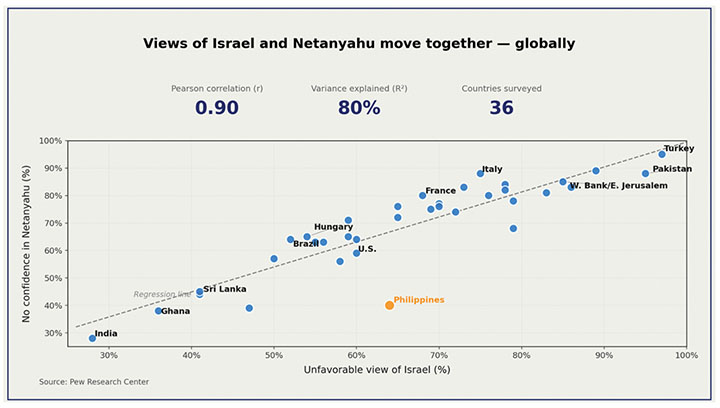
You may have already stumbled upon the headline: The world does not particularly like Israel, and to be precise, the world likes Israel less today than it did a year ago, though even then it was not exactly a passionate romance. We learn this depressing data point from a recent Pew Research Center poll that tracked global attitudes toward Israel, comparing views from last year to this year. The reality is that we have slipped a bit further, and to be perfectly precise, we slipped in two ways. The share of people saying good things about us went down, while the share of those saying bad things went up. Take the United Kingdom as an example, where 69% of the British public now holds an unfavorable view of Israel. That is an eight percentage point increase from last year. Meanwhile, only 25% view Israel favorably, which represents a five-point drop. You might tell yourself that this is just the work of the British Left. That is both true and untrue. It is certainly driven more heavily by the Left, but even among the British Right, 58% of respondents hold a negative view of Israel.

It is a similar, dizzying, and alarming story across the global right-wing spectrum, with negative views hitting 63% on the German Right, 66% on the Spanish Right, 64% on the Italian Right, 55% on the Australian Right, and 51% on the Chilean Right. The speed with which Israel has lost the Right in many countries over recent years is deeply worrying. On the American Right, those with a negative view of Israel remain a minority, but at 37%, it is no longer a small one. Israel has drifted from the ideal of bipartisan support to a partisan, right-wing reliance because there was no alternative, and now, in many nations, even that right-wing sympathy has evaporated, leaving support to a small minority.

One could argue that this is not the end of the world, because what goes down quickly can come up quickly, and the public proves time and again that opinions on distant foreign issues fluctuate easily. Conversely, one could argue that this is catastrophic. Israel is living in a total cognitive disconnect from the rest of the world. Israelis view themselves as fighting for survival, just, fair, moral and brave, while the rest of the world sees something else entirely, viewing Israel as a country that has lost its brakes, destabilizing the order and running amok without justification. This leaves us with two choices: either we are truly terrible at explaining our very correct position, or our position is simply incorrect.

What can be done about this? The following thoughts are not recommendations on how Israelis ought to vote in the next election, though they could certainly be interpreted that way. It’s possible that one of the fastest ways to change Israel’s global image would be to replace the leader at its helm. If there is one takeaway from the Pew data, it is just how inextricably bound Israel’s image is to the man who has personified it for decades, Benjamin Netanyahu. The two are so closely identified that it is difficult to spot the difference (to be slightly technical: we are looking at two variables that are almost entirely intertwined).

Naturally, this births a classic chicken-and-egg question. Do they distrust Netanyahu because they dislike Israel, or do they dislike Israel because they distrust Netanyahu? Perhaps both stem from a third variable not captured by the poll, such as specific Israeli policies, antisemitism or a mutual failure of communication. Whatever the underlying cause, the statistical reality presents an unambiguous picture. The correlation between negative views of Israel and distrust in Netanyahu is exceptionally high. Of course, there is an element of conceptual dependency here, since for a citizen in Italy, Poland or Indonesia, Netanyahu is the face of Israel, meaning the two metrics are not independent.

A few countries do deviate from this statistical trendline, showing that some publics can separate the country from its leader. In Western Europe and parts of Latin America, Netanyahu scores significantly worse than Israel’s general image would predict, meaning publics there judge the prime minister more harshly than the country itself. The script flips primarily in several Muslim majority or developing nations in Asia and Africa, where Netanyahu is actually preferred over the state he leads. And yet, the bottom line is clear: in the eyes of most of the world, Israel’s image and Netanyahu’s image are a single package deal.

Theoretically, this offers a clear path for a rapid rebranding experiment. You cannot swap out Israel to fix Netanyahu’s image, but you can swap out Netanyahu to fix Israel’s image. Whether it would actually work is not guaranteed. If candidates such as Bennett, Liberman or Eisenkot were elected tomorrow, the world might quickly prove nothing changed by scoring them the way it scores Netanyahu. But another outcome is also possible, where a new prime minister might command higher initial trust, dragging global favorability toward Israel upward along with them. Whether it is an experiment worth conducting is for the voters to decide.

Something I wrote in Hebrew

More than 100 days before Election Day, we don’t yet know what the political field looks like.

There are countries where political life is relatively straightforward, and the polling is similarly clear. Ask a Brit who they plan to vote for, and they will tell you Tories or Labour … Ask a German …  and she will answer the Social Democrats, the Greens or the Christian Democratic Union. There are a few paths available, and they are, on the whole, fixed. Then there is Israel, where nothing is permanent, everything is fluid and everything changes. This volatility makes it incredibly difficult to identify ideological differences, hard to make a voting decision and nearly impossible to accurately poll what Israelis will actually do at the ballot box…

A week’s numbers

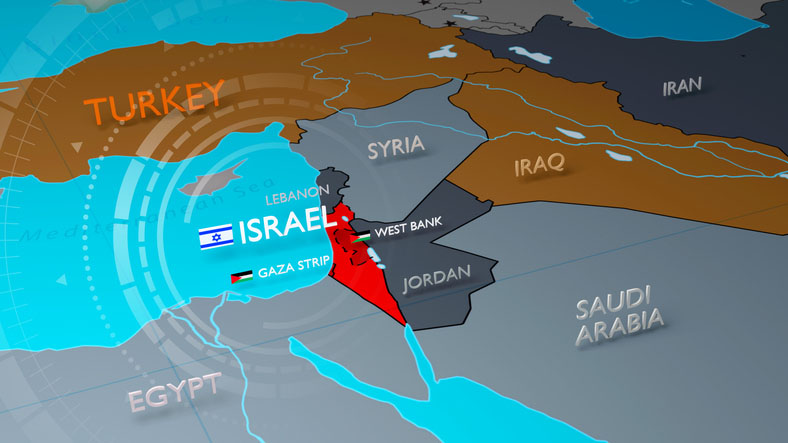
Negative view of Israel and the correlation to mistrusting Netanyahu around the world.

A reader’s response

Oren Benhar: “Do you expect Israel to act in Lebanon at some point without Trump’s approval?” My response: As you could see, the answer is yes, and no. More action – yes. Limitations – still in place.


Shmuel Rosner is senior political editor. For more analysis of Israeli and international politics, visit Rosner’s Domain at jewishjournal.com/rosnersdomain.

Rosner’s Domain | Can Israel’s Image Be Fixed? Read More »

The Nakba as Libel: How a Narrative Engine Drives Antizionism

In 2021, Dara Horn published a book with the arresting title “People Love Dead Jews.” Her central claim was that the world finds Jews easiest to mourn when they are powerless, and, well, dead. Oct. 7, 2023 tested and inverted that proposition: the world turned against its living Jews in the immediate aftermath of the deadliest attack on Jewish life since the Holocaust. Anti-Jewish bigotry surged globally, and by 2025, the death toll among Diaspora Jews had reached its highest point in more than thirty years.

Something has gone terribly wrong, and the reason is hiding in plain sight. For decades, we have allowed a lethal worldview to go unnamed and unchecked: antizionism. At its center sits a specific narrative engine: the Nakba. The argument here is not that people have no legitimate grievances or no right to a national narrative. It is that the Nakba narrative, as constructed and weaponized since the 1990s, does not merely tell a story of displacement. It functions as a libel. Understanding that distinction is essential to understanding why the world reacted to Oct. 7 the way it did.

The urgency of that distinction becomes clear when we consider a recent intervention in the debate. In the July 2025 issue of Sources Journal, Michael Koplow urged Jewish educators to take the Palestinian narrative more seriously, to understand not only that Palestinians view Israel as carrying out a Nakba, but why they think that. He argued that acknowledging the apartheid charge does not normalize it, and that acknowledgment is not the same as acceptance. Koplow is a serious thinker, and he is right that understanding is not endorsement, and that Jewish educators who refuse to engage Palestinian Arab experiences impoverish their students. But his argument contains an unexamined premise: that the Nakba narrative and the apartheid charge are political perspectives to be engaged, rather than libels to be identified. Collapsing that distinction is precisely how the antizionist era has advanced so successfully.

To see why, consider an analogy. We do not treat the deicide charge, the ancient claim that Jews killed Christ, as a legitimate Christian narrative worth acknowledging on its own terms. We recognize it as a libel. A libel does not merely assert something false. It assigns fixed moral roles, villain, victim, savior and draws on fragments of truth to sustain itself, moving from the particular to the universal to render a whole group morally indictable. The Nakba narrative does exactly this, and tracing its origins helps reveal how deliberately that architecture was constructed.

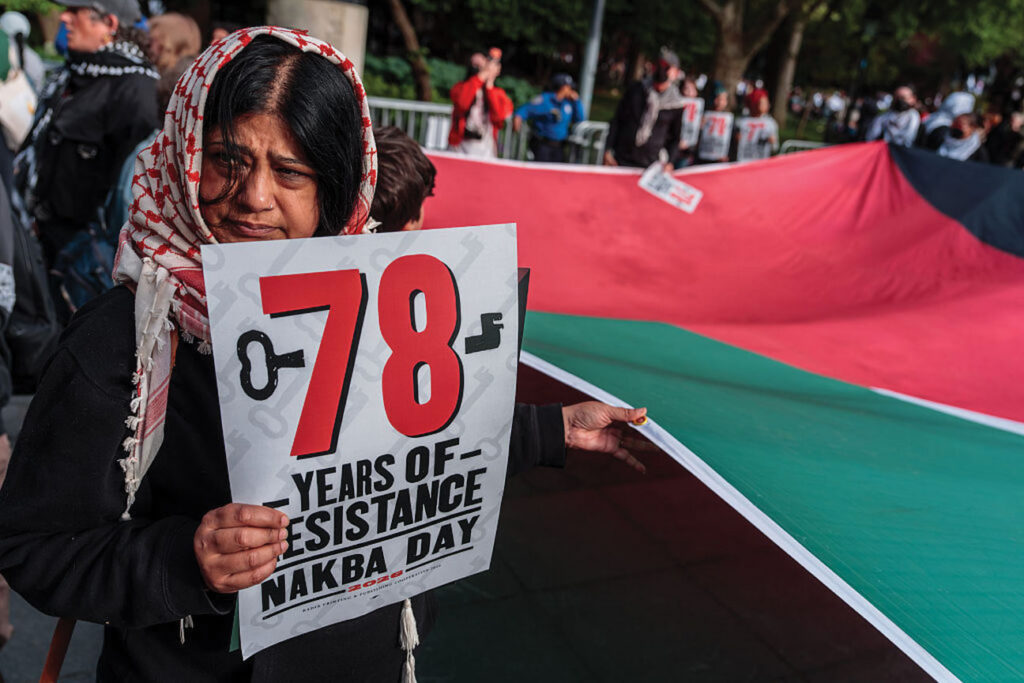
Yasser Arafat invented Nakba Day on May 15, 1998. The term itself was coined by Arab thinker Constantine K. Zurayk, who originally used it to describe the Arab states’ own failure, placing blame squarely on Arab leadership, not on Israel. For Zurayk the catastrophe was that Israel won and Arabs lost. The subsequent transformation of the term into an indictment of Zionism was not organic; it was institutional. The “Zionism Is Racism” resolution at the United Nations came alongside the creation of the Committee on the Exercise of the Inalienable Rights of the Palestinian People, which has worked ever since to depict Israel as a colonial apartheid regime. Though Resolution 3379 was rescinded in 1991, the apparatus continued operating, laying the groundwork for Nakba Day as a global institution and slowly normalizing the libel embedded within it.

What the narrative systematically eclipses in all of this is causation. The Arab refugee crisis would not have occurred had the Arab Higher Committee accepted the United Nations Partition Plan of 1947, which would have created both a Jewish and an Arab state. It would not have occurred had five Arab armies not invaded the fledgling Jewish state the morning after its declaration. And as Khaled al-Azm, Syria’s Prime Minister in 1948-49, later acknowledged: “Since 1948 we have been demanding the return of the refugees to their homes. But we ourselves are the ones who encouraged them to leave.” The refugees were real. The suffering was real. But the libel performs a series of moves that transform those facts into something categorically different: erasing the initiating context, erasing Arab agency and importing the moral vocabulary of settler colonialism to describe a movement of Jewish national return.

That final move, from the particular to the universal, is the most consequential. It is the same operation the deicide charge performed: from one man’s act to the collective guilt of an entire people. The Nakba narrative moves from the particular suffering of 1948 to the universal guilt of every Zionist, everywhere, forever. This universalization explains why antizionists talk about the “ongoing Nakba” because the point is not to document a historic event, but to indict Israel forever. It also explains why the murders, rapes and kidnappings of Israelis on Oct. 7 could be celebrated or simply ignored by self-described human rights advocates. By the time October 7 occurred, two decades of campus organizing, United Nations programming, and cultural production had prepared the ground. The Nakba narrative was the engine of that preparation.

Comparative literature illuminates this point. Jewish historical memory is suffused with catastrophe. Consider Psalm 137: “By the rivers of Babylon, there we sat, yea, when we remembered Zion.” Yet even this, one of the most achingly mournful texts in the tradition, is a memory of rupture that implies the possibility of return. And alongside the lachrymose tradition runs another equally persistent impulse: the drive to build. Wherever Jews settled in exile, they did not only mourn what was lost; they worked to create anew. This ethos is especially pronounced in early Zionist literature. In “How to Break a Heatwave,” a song by Naomi Shemer, the landscape is initially harsh and unyielding, a hill of dust, sun and thorns, but the pioneers respond not with despair but with ingenuity, draining swamps, laying pipes, planting trees. The catastrophe of exile is real; the response is generative.

One might argue that such optimism was easier to sustain in the context of return to an ancestral land rather than exile from it. But Isaac Babel offers a particularly telling illustration of an alternative orientation, because his experience of alienation was not chosen but imposed. A Russian-Jewish writer who lived through violent pogroms, Babel could have constructed his work as an extended indictment of Russian society. He did not. His early story “At Grandmother’s” explores the process of seeking acceptance within a culture that is hostile. Rather than reducing Russia to its violence, Babel gestures toward rapprochement through an enduring attachment to Russian literature and culture. The grandmother’s imperative, “Study! Study and you can have everything” is not a call to defy Russian society but to master its cultural world, to do whatever is necessary to endure and succeed within difficult conditions. This orientation is not naïve; it is a strategic relationship to history that allows for a future. It holds grief and forward motion simultaneously.

That simultaneous holding is precisely what is absent from Palestinian Arab literary culture as it has been institutionalized. Anton Shammas’ “Arabesques” (1986), written in Hebrew, is often celebrated as a gesture toward integration. But Shammas himself clarified that his purpose was something different: “What I’m trying to do is to un-Jew the Hebrew language, to make it less Jewish.” The act is not one of entering into a shared cultural space, as Babel entered Russian literature, but of attempting to redefine that space by stripping it of its Jewish particularity. Hebrew, here, is not embraced as the historical language of a people; it is reconfigured as a neutral medium that can be detached from Jewish identity. And where Babel’s grandmother urged mastery as a path forward, Shammas’ project implies that forward motion requires first evacuating the other’s presence. The contrast illuminates something important: what is at stake in Palestinian Arab literary culture, as institutionalized, is not the specific terms of a political settlement but the legitimacy of Israel as a Jewish state at all. Mahmoud Darwish, designated the national poet of Palestine, wrote “Intifada,” a poem that frames suicide terrorism as martyrdom, a canonical expression of nationhood that glorifies violence against civilians as its highest moral act, leaving no imaginative space for coexistence.

This is why Koplow’s call for acknowledgment, however well-intentioned, runs into a fundamental problem. We are not living in a moment of critical distance from the antizionist era: we are living inside it. Inside an ideological moment, acknowledgment is never neutral. Every institutional acknowledgment of the Nakba narrative as a legitimate perspective, rather than a libel to be analyzed, extends the libel’s reach. It signals to students, journalists and policymakers that the apartheid charge is a starting point for debate rather than the conclusion of a demonization project. Holocaust remembrance offers a useful contrast: that tradition condemns the Nazi regime without essentializing the German people as a whole, and institutionalizes through Yad Vashem’s Avenue of the Righteous the principle that evil is particular, not collective. The Nakba narrative does the opposite, reducing all Israelis to illegitimate usurpers and making it impossible to imagine a future not wholly defined by the past.

To ask Jewish educators to acknowledge the apartheid charge without first naming it as a libel is to ask them to participate in their own community’s demonization. The sincerity of a belief does not determine its moral status. Many Christians sincerely believed that Jews killed Christ; many people believed and still believe that Jews control the world. Libels are often sincerely held. Individuals like Yaron Lischinsky and Sarah Milgrim, and the 15 Jews killed in Bondi Beach, were targeted by an ideology that reduces living people to symbols of colonialism and illegitimacy. Naming that ideology clearly, refusing to dignify its central libel as merely a perspective worth engaging on its own terms, is not a failure of empathy. It is the precondition for any honest reckoning with what has happened, and what will continue to happen if we do not change course.


Naya Lekht is currently the Education Editor for White Rose Magazine and a Research Fellow for the Institute for Institute for the Study of Global Antisemitism and Policy.

The Nakba as Libel: How a Narrative Engine Drives Antizionism Read More »

Do Not Blame the Child, Blame the Leadership

This week began in a disturbing way in Israel. After the arrest of a Haredi draft dodger, hundreds of ultra-Orthodox protesters gathered outside the Beit Shemesh police station, where some broke into the compound, clashed with police, blocked roads and set fire to nearby vegetation.

The unrest then spread to Jerusalem, where demonstrators blocked major roads and caused severe traffic disruptions.

Days later, the situation crossed an even more dangerous line when ultra-Orthodox rioters attacked the home of Supreme Court Deputy President Noam Sohlberg, damaging his property and car.

The anger is real. Many Israelis serve, send their children to combat units and carry the burden of reserve duty while others avoid service. When draft dodging is followed by violent riots, blocked roads, attacks on police and vandalism against a Supreme Court justice’s home, the public anger explodes. But the problem is not every Haredi Jew. The real problem is the leadership that teaches people that defending the Jewish state is someone else’s burden.

There is a well-known Jewish phrase: “Make for yourself a rabbi.” In the ultra-Orthodox world, this is not just a religious saying. It is a way of life. People ask their rabbis what to study, how to educate their children, who to vote for and, in many cases, how to relate to the state and the army.

That is why the responsibility begins with the rabbis, politicians and community leaders who shape the culture and set the rules. They tell an entire public that it can live inside the Jewish state, enjoy its rights, budgets, security and protection, but not carry the basic responsibility of defending it.

If Haredi leaders from Shas and United Torah Judaism, together with the councils of Torah sages, set a clear and honest standard, only those who truly study Torah from morning to night receive an exemption, while everyone else enlists, the reality would look very different. Many Israelis who serve see the current system as lawlessness and abuse: people registering as yeshiva students not because they truly study all day, but because it allows them to avoid service. The blame belongs mainly to the leaders who have the power to change this system but refuse to do so.

This problem did not start yesterday. In 1948, David Ben-Gurion agreed to exempt about 400 yeshiva students from military service. At the time, it was a limited arrangement for a small group, created in the shadow of the Holocaust and the destruction of the Torah world. But what began with 400 students became a national crisis. By 2024, about 63,000 Haredi yeshiva students had become subject to the draft after the previous legal framework expired, and in 2025 the IDF said it would issue roughly 54,000 call-up notices to ultra-Orthodox seminary students. What began as a small exception has become a mass system.

The numbers show the problem clearly. That is why a real draft law must happen.

No more tricks. No more empty promises. No more fake targets. No more laws designed to protect politicians instead of protecting soldiers. The law must be simple: those who truly study Torah full-time, under a real and limited framework, can receive a special status. But those who are not truly learning, those who are working under the table or those who are simply using the system to avoid service must enlist or perform meaningful national service.

The greatest danger is that Haredi leadership is deepening the conflict inside Israeli society. When Israelis see draft refusal, violent riots and blocked roads, many begin to blame all Haredim, while serving citizens feel exploited. This is how a small group of leaders tears the Jewish people apart from within.

During the judicial reform crisis, calls for refusal from serving citizens were treated as a national emergency. The same standard must apply here. When rabbis, party leaders or politicians tell an entire public not to enlist, not to report to draft offices or to ignore military orders, that is also a call for refusal.

The answer is not hatred of ordinary Haredim. The answer is a clear law against organized calls for refusal. Any leader who encourages people to ignore the law should be investigated, brought to court and punished if convicted.

If Haredi leaders told every young man who is not truly studying Torah all day to enlist, many would. That proves the problem is not the ordinary Haredi boy. The problem is the leadership.

Israelis must stay united. Do not blame the small person who follows the system he was raised in. Blame the leaders who built that system and place their politics above the state.


Maoz Druskin writes about Israel, democracy and the challenges of national identity in modern societies.

Do Not Blame the Child, Blame the Leadership Read More »

The Courage of Jacob and Commitment to the Union

As America’s 250th birthday approaches, it is an occasion for all Americans to be grateful for their country and for American Jews to celebrate how Jewish ideas and individuals have contributed to the American story.

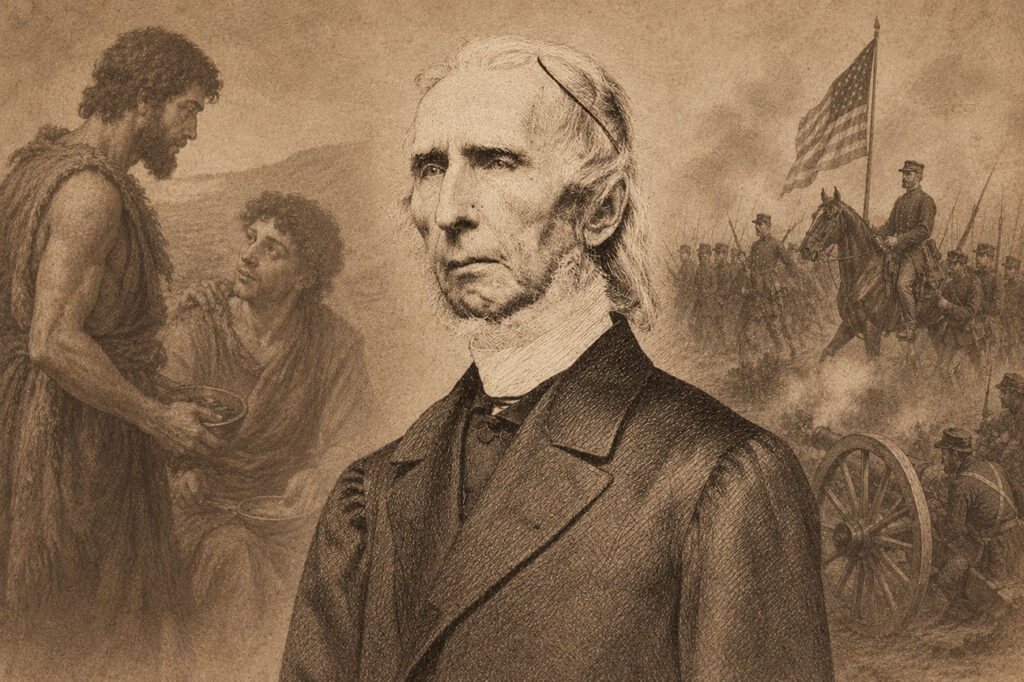
Case in point is the remarkable career of Rabbi David Einhorn. After the outbreak of the Civil War, Rabbi Einhorn was forced to flee from Baltimore to the North due to his abolitionist views. He accepted an invitation to lead Philadelphia’s Keneseth Israel Congregation, where he would remain until 1866, when he moved to New York. Having experienced first-hand the danger and divisiveness in the country, he nonetheless heeded with gusto President Lincoln’s call for Thursday Nov. 26, 1863 to be the first official Thanksgiving.

On that day, Einhorn delivered a sermon to his newfound community that drew from the covenantal courage of the patriarch Jacob as he readied himself to confront his brother Esau. Quoting the scene described in Genesis’s 32nd chapter, he began by acknowledging “Although the sad spectacle of fratricidal strife has not yet ceased, nor the time arrived, when we may joyfully wave the olive branch of peace, yet if we duly consider all the surrounding circumstances, the dread and apprehension which filled every heart at the commencement of this horrible conflict, we are made to feel the presence of an overruling providence, marvelous to behold, and which should cause every inhabitant of the North to exclaim in the language of Jacob, ‘I am not worthy of the least of all the mercies and of all the truth, which thou hast showed to thy servant’ [32:10]. When the Patriarch spoke these words he had likewise not yet reached the desired goal.”

Despite the difficult challenge that stood before him, “He nevertheless recalled to his remembrance the great things that God had done for him, and drew from this reflection renewed courage, hope and resolution.”

Einhorn then further articulated the analogy. “And has not God done great things for us also? He has blessed us with a surplus where want was impending, that might have produced the most dangerous consequences. He has maintained peace and order in our midst during the most violent agitations of party strife, and finally he has granted glorious victories to our armies over a potent enemy.”

The miraculous momentum in the North, was, Einhorn believed, because “God has directed it, God who loves liberty and who hates slavery – who declared to you O Israel at your national birth: ‘I am the Lord thy God, which has brought thee out of the land of Egypt, out of the house of bondage’ [Exodus 20:2] and who has also proclaimed to the American people, struggling for their birthright the promise made to Jacob ‘Return to thy heritage and I will deal well with thee’” [Genesis 31:3].

Jews, the rabbi felt, despite the personal travails his own beliefs had brought upon him, should uniquely rejoice in the war’s progress. After all, liberation of the slaves was a cause long dear to Jewish hearts. “And who ought to rejoice more at this state of things than we, the descendants of Abraham, of whom 40,000 were carried away into slavery by Titus; who during the dark ages were bartered like chattel, and whom the German emperors used to designate their body-servants?” he argued.

Overlaying Jacob’s commitment to the covenant of his fathers with America’s national character, Einhorn promised “neither will the American people sacrifice in this struggle their birth-right, the exalted mission of proclaiming freedom to all the world, though many a precious sacrifice it has already cost to bring this war to a happy issue in the interest and for the sake of the nation’s divine mission.”

Resting assured that the Union would prevail as the patriarch had, Einhorn concluded “And we, the inhabitants of this new world, shall we be afraid or think it even possible, that Esau in his robe of purple approaches to smite the mother, our republic, with the children? Never! The divine spirit that rules the events of the world has ordered it otherwise. Liberty, an emanation of this spirit, is designed to be purged and purified of the dark spot that still mars her heavenly countenance, that her light may shine brighter and fuller and gladden the whole earth with her lustre. A brilliant throne shall be erected for her in the new and in the old world, that when the storms and violent commotions shall have ceased, she may exclaim – ‘With my pilgrim staff have I crossed the sea to seek a place of refuge here, and now I have become two bands, bearing here and there the staff of rule and sway’” [Genesis 32:10].

Einhorn’s confidence was eventually confirmed. America, like the Jewish forefather, would survive its enemy and earn its birthright, confidently stepping forward into its future, proclaiming freedom to all the world.


Rabbi Dr. Stuart Halpern is Senior Adviser to the Provost of Yeshiva University and Deputy Director of Y.U.’s Straus Center for Torah and Western Thought. His books include the newly released “Jewish Roots of American Liberty,” “The Promise of Liberty: A Passover Haggada,” “Esther in America,” “Gleanings: Reflections on Ruth” and “Proclaim Liberty Throughout the Land: The Hebrew Bible in the United States.”

The Courage of Jacob and Commitment to the Union Read More »

Nothing to Fear but Fear

My friend Mina will hike almost anywhere in the world with little to no fear of what may be waiting for her around the next bend or behind a tree. It’s just not something she thinks about. I, on the other hand, if I know I’m going hiking, I start imagining bears two weeks before I leave my house. No, thank you.

Hiking in woods, forests and, particularly, jungle scares the be-Moses out of me. More than a few times a year, I’ll read about some poor schnook dragged away by a bear, then snapped in half like a breadstick. Or someone who got too close to a mountain lion’s cubs and becomes Uber Eats for her young family.

To me, every spider is a brown recluse. So, I stay home and watch TV; call me a white recluse.

My friend Jonas loves surfing. When I asked if he was afraid of sharks, he said no. I, on the other hand, am. The thought of standing on a surfboard also seems impossible, since I can hardly stand without falling over when I wake up in the morning.

I don’t know why I agreed to this, but my wife Nancy and I went snorkeling on an island near Bocas del Toro called Starfish Island. Just a short plane ride from Panama, Starfish Island is where you spy starfish the size of a large cheese pizza. My wife doesn’t seem to worry about something swallowing her up whole as she floats aimlessly, wide-eyed, enjoying the deep blues and vibrant yellows of the aquatic plants and gigantic starfish.

I, however, jumped in, saw one starfish, panicked, kept looking behind to see what was going to devour me, then climbed back onto the boat, leaving my wife, God forbid, to fend for herself. Was that wrong? Should I feel guilty?

People say, “Mark, these things don’t happen that often.” But they do happen. If I toss out a can of baked beans that expired one day earlier for fear of botulism, what do you think goes through my mind when it comes to bears, mountain lions, sharks and rattlesnakes?

“Don’t go” is what goes through my mind.

My son Eli went to China on business for 10 days and invited me to join him if I paid my airfare. He’d take care of the rest. Ten days in the top hotels, just father and son.

But I’ve read about innocent travelers who are occasionally falsely arrested in China.  And like most Jews, I like Chinese food, but not enough to spend 20 years in a Chinese prison eating fried rice seven days a week.  I regret that fear got the best of me, and I missed hanging out with my son. That may have been a poor choice.

If I’m such a scaredy-cat, why do my wife and I stay in a place like Los Angeles, with its soaring crime, very little help from the police and politicians who seem to side more with criminals than law-abiding people?

Many of our friends who have moved away did so to be nearer to their children and grandchildren. But most of my children and grandchildren are right here, smack dab in Los Angeles. It’s true, shark and snake bites don’t happen that often, but bad things happen very often here in Los Angeles.  We choose to stay, however, because we love our family, friends and community.

That’s why we put up with the homeless, mentally ill, home invasions, street crime, carjackings, extremely high taxes and antisemitism spiraling out of control. The shuls and schools have become fortresses. Real safety is nowhere to be found, and, truth be told, it never existed.

A day doesn’t go by that I don’t cross the street or go back the other way because I think I spot a potential lunatic half a block down.

So, for the foreseeable future, I’ll sit on the shore to watch Jonas surf, listen to Mina tell me about her hike and I’ll live with our home alarms, door cameras, bars on the windows and pepper spray, hoping one day life will return to the Shangri-La it never was.


Mark Schiff is a comedian, actor and writer and hosts, along with Danny Lobell, the “We Think It’s Funny” podcast. His new book is “Why Not? Lessons on Comedy, Courage and Chutzpah.”

Nothing to Fear but Fear Read More »

The Many-States Solution

Last week we discussed the declining support among both Israeli and American Jews for a two-state solution in which a Jewish nation and a recognized Palestinian country would exist side-by-side. However, that analysis neglected to mention a key constituency that still strongly favors such an agreement: Israel’s Arab neighbors.

No Israeli leader who hoped to remain in office would ever prioritize the preferences of Saudi Arabia, Qatar and other Muslim states over the wishes of Diaspora Jews, let alone over the desires of the Israeli people themselves. But the vast majority of Israel’s political, diplomatic and military experts recognize that lasting Middle East peace cannot be achieved without normalizing relationships with the Saudis and other regional powers. And the undeniable reality in a post-Oct. 7  world is that normalization won’t happen without a resolution of the Palestinian conflict.

That is the primary reason that the Oct. 7 murders and kidnappings occurred, of course: because Hamas’ leaders recognized such an agreement between Jerusalem and Riyadh was coming close to fruition. They understood that their horrific terrorist actions would immediately derail any progress in that direction. Their gruesome gamble has proven successful and the prospect for any formal Israeli-Saudi relationship is now at its lowest point in years.

This reality did not stop Donald Trump from recently demanding that Saudi Arabia, and even less plausible partners such as Turkey and Pakistan, should sign on to an expanded Abraham Accords and establish formal diplomatic relations with Israel. Trump explained his proposal as a price that Arab and Muslim nations should be required to pay in exchange for Trump ending the U.S.-Iran war — a flight of geopolitical fancy with no immediately recognizable prospect of occurring in today’s Middle East.

Trump’s mandate was a nonstarter for a number of reasons, the most significant being that the Arab world did not want war with Iran and argued strenuously against it as a threat to their stability and commerce. It has put their peoples and their economies at great risk, and as a result it has increased their level of distrust toward both the United States and Israel to even greater levels. If anything, the Iran War has created a more formidable obstacle to normalization than the Hamas attacks.

But Saudi Arabia and the other gulf states still want regional and domestic stability, they still want to expand their economic bases beyond what they are provided by their dwindling oil reserves, and they still want a reduced threat of violence that will help them achieve these goals. But they also recognize that Iran will continue to be a threat to them, that an alliance with Israel is the best protection against that threat and that the establishment of a Palestinian state is a prerequisite for both. There may have been a time before Oct. 7 when more broadly worded phrasing like “a path toward statehood” would have given both Israeli and Saudi politicians enough rhetorical cover to avoid hard and tangible commitment. But no more.

The option of creative diplomatic ambiguity is gone and may not return for many years. So there is a stark choice facing Benjamin Netanyahu (or more likely his successor). In the not-too-distant future, Israel’s prime minister will have to decide how and when to make this trade. The domestic political opposition will be withering – that was Hamas’ objective. The question is whether an Israeli leader can convince the country’s understandably suspicious electorate that such an audacious, potentially improvident but also potentially transformative step is the most likely and possibly the only path to long overdue peace for our people and our homeland.

As I stated earlier, Israel should — and will — never place the goals of its neighbors above the needs of its own people. But as we weigh the benefits and downsides of a potential two-state solution, the unguaranteed but plausible prospect of an unprecedented regional peace should be considered as part of that discussion. Throughout our history, the Jewish people have taken great risks to ensure our survival. The moment for a similar decision is rapidly approaching.


Dan Schnur is the U.S. Politics Editor for the Jewish Journal. He teaches courses in politics, communications, and leadership at UC Berkeley, USC and Pepperdine. He hosts the monthly webinar “The Dan Schnur Political Report” for the Los Angeles World Affairs Council & Town Hall. Follow Dan’s work at www.danschnurpolitics.com

The Many-States Solution Read More »

What Can AI Do for Us?

Pope Leo XIV’s new encyclical, “Magnifica Humanitas: On Safeguarding the Human Person in the Time of Artificial Intelligence,” is an important contribution to the growing global debate about AI. By placing artificial intelligence in continuity with “Rerum Novarum,” the landmark 1891 encyclical that addressed the social consequences of industrialization, the Pope argues that AI is the defining technological challenge of our age. Like the factory system in the 19th century, AI is transforming work, education, knowledge and human relationships.

The Vatican’s tone is cautious. It warns that AI can concentrate power, weaken human responsibility and reduce people to data points and economic functions. These concerns deserve serious attention. AI is not morally neutral, and its impact will depend on the values of those who design, regulate and use it.

Yet for Jews, in Israel and across the Diaspora, the conversation should not stop with warnings. Another urgent question is what good AI can do for Judaism, Jewish learning, and Jewish peoplehood. At a moment when so much attention is devoted to apocalyptic predictions and distant scenarios, Jews should also ask how this technology might serve the texts, relationships and responsibilities that have long sustained Jewish life.

Judaism has long been known as the tradition of the “People of the Book.” The study of texts is not a peripheral activity in Jewish life; it is one of its defining features. From the Bible and Talmud to medieval commentaries, responsa literature, philosophy and modern scholarship, Jewish identity has been shaped through reading, interpretation, debate and transmission. Learning is not simply an intellectual pursuit but a religious and cultural obligation, central to the formation of the Jewish person.

As Prof. Moshe Koppel has noted, AI can help scan and digitize old books, correct textual errors, identify citations, expand abbreviations, add punctuation and uncover connections across thousands of volumes of Jewish literature. Much of this work is already being pioneered through Dicta, the nonprofit research lab he founded, which develops digital tools for studying rabbinic texts. Tasks that once required years of specialized expertise may increasingly become available to students, educators and interested readers around the world.

The implications are significant. A student with a limited background could navigate complex rabbinic texts with greater confidence. Researchers could trace ideas across centuries of Jewish writing in seconds rather than months. Teachers could create customized educational materials adapted to different ages, languages and levels of knowledge. A student in Buenos Aires might read a Hebrew source sheet with explanations in Spanish; a rabbi in a small European community might prepare a class drawing on responsa literature that was previously difficult to access. AI has the potential not merely to preserve Jewish learning but to broaden access to it.

This is particularly important at a time when many Jews feel distant from traditional texts. AI may lower barriers that have long discouraged engagement. It can help translate difficult Hebrew and Aramaic passages, explain references and guide readers through unfamiliar intellectual terrain. Used wisely, it could bring more people into the world of Torah study. The goal should not be to make Torah study effortless. It should be to make the first steps less forbidding while preserving the discipline, patience and argument that meaningful Jewish learning requires.

AI also presents opportunities for strengthening Jewish peoplehood. Advances in translation technology may dramatically reduce barriers between Hebrew-speaking Israelis, English-speaking North Americans, European Jews, Latin American communities and others. AI could make Israeli scholarship, Hebrew-language educational resources and contemporary debates far more accessible to Jews around the world, while helping Israelis engage more deeply with the ideas and experiences of Diaspora communities. These tools could strengthen the sense that Jews everywhere are participating in a shared conversation despite differences of language and geography.

None of this means that Judaism should embrace AI uncritically. Translation can carry words across borders without necessarily carrying context, trust or the emotional weight that different Jewish communities bring to the same debate. In education, AI may encourage intellectual shortcuts, weaken the habits of close reading and sustained argument and tempt students to substitute generated answers for genuine learning. In Jewish study especially, there is a risk that the struggle with the ancient text – the very process through which understanding is formed – will be replaced by instant summaries and simplified conclusions.

Likewise, while AI can help connect Israel and the Diaspora, it can also make real connection harder to attain if technological mediation replaces personal encounter. Digital tools can translate texts, summarize debates and facilitate communication across distance, but they cannot substitute for the trust built through face-to-face conversation, shared study, visits, hospitality and sustained relationship.

The Vatican has offered an important warning about what AI may mean for humanity as a whole. Jews should take those concerns seriously. But our task is also more particular. A Jewish response to AI should begin neither with panic nor with technological enthusiasm, but with the question of whether this tool can help human beings become more responsible, more learned and more bound to one another.

Artificial intelligence may be the defining technology of our generation. The challenge is not only to prevent its harms. It is also to imagine what goods it should serve. Used wisely, AI could deepen Torah study, open inherited texts to new readers, bridge Hebrew and Diaspora conversations, and give educators new ways to serve their communities. But it will do so only if we remember that technology can assist learning, not replace it.

This is why the Jewish conversation about AI cannot remain abstract. Jewish communal institutions, universities, rabbinical schools, educational networks, philanthropies and research centers should begin convening this conversation now. We need working groups that bring together rabbis, educators, technologists, ethicists, scholars of Jewish thought and communal leaders to ask how AI should be used in schools, synagogues, yeshivot, Hillels, JCCs and Jewish learning platforms.

Encouragingly, some of this work is already underway. The Jewish People Policy Institute, for example, is developing a book project on the AI and broader technological revolution and the future of the Jewish people, bringing together scholars from different countries and disciplines to reflect on how emerging technologies may reshape Jewish education, identity, peoplehood, religious life and communal institutions. Just as importantly, such work asks how Jewish thought, values and practices might contribute to a more constructive understanding of the technological revolution itself.

That is the kind of effort we need more of. The question is not whether Jewish communities will use AI; they already are. The question is whether we will adopt these tools passively, or shape them deliberately according to Jewish values, Jewish learning and Jewish responsibility.


Dr. Ghila Amati is a Post-Doctoral Fellow at Hebrew University of Jerusalem and a Research Fellow and The Jewish People Policy Institute (JPPI).

What Can AI Do for Us? Read More »