fbpx

March 12, 2026

A Moment in Time: “When Losing an Hour Inspires Holiness”

Dear all,

That time change. That one hour we lose each spring. At least in the fall we gain something back. But this one…

“Why is it so dark?” my kids asked, rubbing their eyes.

I launched into a dissertation about daylight savings time. But the truth is Ineeded an explanation too—one that spoke not to my foggy brain, but to the feeling of losing an hour of sleep.

We made breakfast and turned on extra lights to push back the morning shadows. My kids yawned, and it struck me:

We lose time all too easily. An hour here, a moment there—regardless of what the clock says.

So the real question isn’t about changing the clocks.

It’s about how we use the time we have.

Am I spending time, wasting time, or investing time?

I don’t want to miss those yawns.

I don’t want to miss the dark shadows giving way to the light of the people I love.

I don’t want to miss the wonder in a child’s question—especially when it isn’t a childish one.

I don’t want to lose an hour. I don’t want to lose even a moment in time that could hold the holiness of life.

As Ecclesiastes teaches:

“For everything there is a season, and a time for every purpose under heaven.”

With love and Shalom,

Rabbi Zachary R. Shapiro

A Moment in Time: “When Losing an Hour Inspires Holiness” Read More »

A Bisl Torah — The Story You Need to Tell

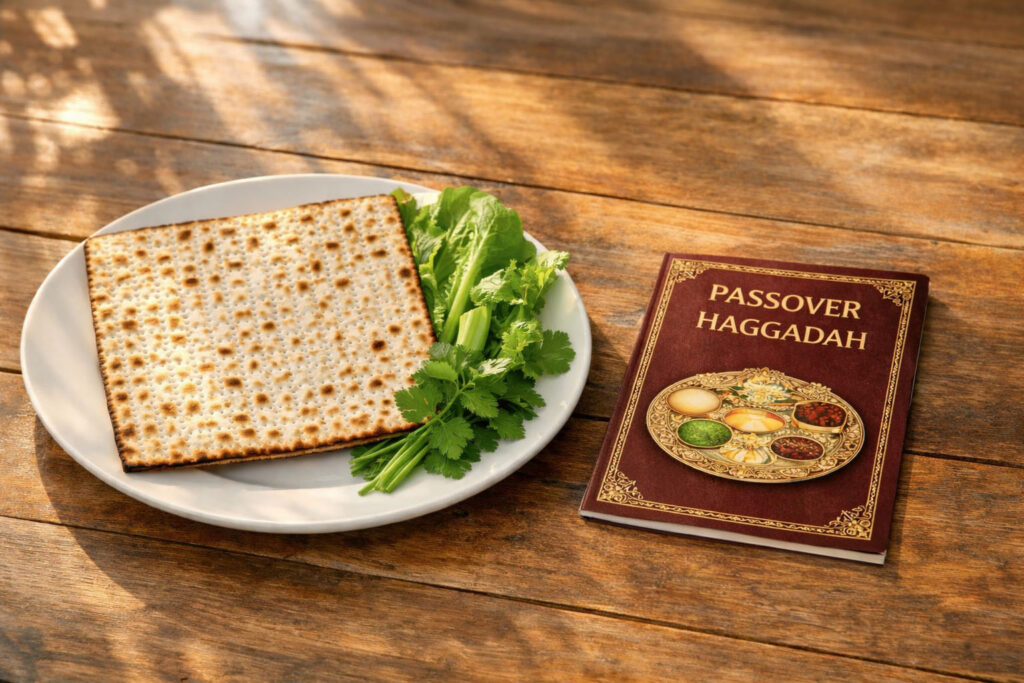
What’s the mitzvah of Passover? One commandment is to not eat leavened products. Another is to not see leavened products. But the steps of the Seder allow us to fulfill another mitzvah: to tell the story of the Jewish people.

The Haggadah, the book that we use during the Seder, informs of us what to share. Rabban Gamliel used to explain that if we don’t mention the Passover sacrifice, matza or maror (bitter herbs), we have not fulfilled our obligation. In other words, these three items help us understand the essence of the Jewish narrative.

The Passover sacrifice connects us to the ongoing worries, fears, and uncertainty our people face daily. Imagine the Jews during the first Passover Seder, Jews huddled at home, wondering what might befall them.

The matza symbolizes our current state, one in which we are committed to our thriving even when are faced with meager ingredients for survival. Just look at the Israelis celebrating weddings and b’nai mitzvah during ongoing bombardment. Matza reminds us how to eat, celebrate, and hold joy even when as a Jewish people, our spiritual sustenance may feel low.

And maror, the bitter herbs, teaches us that bitterness always exists. In our personal or collective narrative, tragedies and brokenness abound. Bitterness cannot and should not be ignored. It is seen and named on the Seder plate. And maror is not the only symbol we recognize. This means that bitterness is present, but it does not solely define who we are.

What is the story you will share about the Jewish people on Seder night? May the story you share be a reminder that through our fears and uncertainty, alongside the bitterness we experience, redemption awaits. Freedom is felt through a foundation of faith—and in knowing that every house around the world, on Passover, tells our ongoing, ever-evolving story. A story of survival. A story of joy. A story of hope.

A story that is both yours and mine to tell.

Shabbat Shalom


Rabbi Nicole Guzik is senior rabbi at Sinai Temple. She can be reached at her Facebook page at Rabbi Nicole Guzik or on Instagram @rabbiguzik. For more writings, visit Rabbi Guzik’s blog section from Sinai Temple’s website.

A Bisl Torah — The Story You Need to Tell Read More »

Is Religious Knowledge Receding or Revealed via Tephilllin, Phylacteries?

“When a human-designed software program  applies a model that no human recognizes or could understand,

are we advancing towards knowledge? Or is knowledge receding from us?”

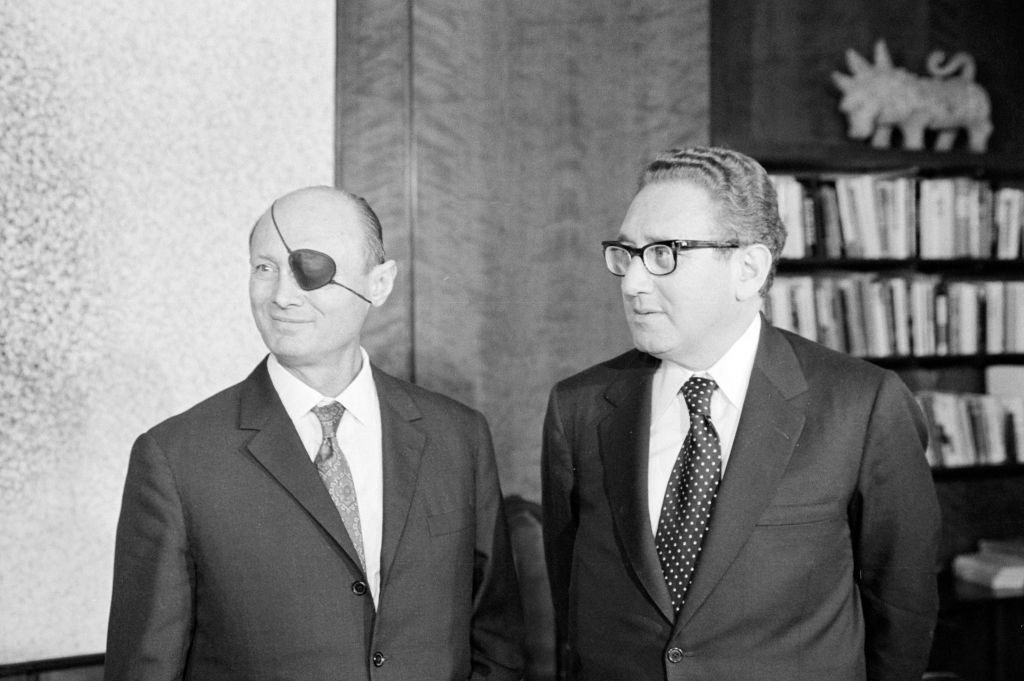
is a question for which Henry Kissinger and two most brilliant collaborators in the Age of AI all demand.

The latter answer seems redoubtable, according to this Doubting Thomas.

While knowing almost nothing about AI, I fear a  tohu flaw may lurk in its vohu program,

a pre-creation waste and void that might lead to a defeat of all humanity,

whose absence in it recalls a  problem that perhaps caused God to consult with Abraham,

refusing to prevent Sodom’s destruction with Abraham’s pro-semitic sanity.

Just as Almighty God did not rely upon the power of His quite mind-numbing numen,

so humans should not on AI, which might perhaps be called II, Intelligence that ‘s Inhuman,

divining God’s Religious Intelligence, R. I.,  promoted by tefillin, phylacteries

that need to be inscribed by pious Jewish scribes, not printed in frum factories.


Reviewing the concepts of “panopticon” and ”apophenia.” I wonder whether the rationale of tephillin, the phylacteries that Orthodox Jews place between their eyes every weekday, may be  related to the fact that the Torah sees the world as a panopticon in which God surveils all humans with His R. I.,Religious Intelligence, and whether the reason that tephillin, phylacteries, must be placed between the eyes (Exod. 13:9, 26; Deut. 6:8;,11:18)  is to enable Jews to access God’s R. I.  Perhaps it also enables God to access Jews’ minds with His R.I., finding significance in facts that might deserve derision, being derived from apophenia, a word that may have bilingual roots, as I suggest with a very open mind regarding the description of what Ezekiel describes as a  Divine Chariot in Ezek. 1:16:

מַרְאֵ֨ה הָאוֹפַנִּ֤ים וּמַֽעֲשֵׂיהֶם֙ כְּעֵ֣ין תַּרְשִׁ֔ישׁ וּדְמ֥וּת אֶחָ֖ד לְאַרְבַּעְתָּ֑ן וּמַרְאֵיהֶם֙ וּמַ֣עֲשֵׂיהֶ֔ם כַּאֲשֶׁ֛ר יִהְיֶ֥ה הָאוֹפַ֖ן בְּת֥וֹךְ הָאוֹפָֽן׃

As for the appearance and structure ha’ophanim, of the I, they gleamed like beryl. All four had the same form; the appearance and structure of each was as of one ophen, wheel, within another ophen, I.

I italicize ‘wheels’ above to indicate wheels within wheels, more easily recognized by A.I. than by our human brains.


Gershon Hepner is a poet who has written over 25,000 poems on subjects ranging from music to literature, politics to Torah. He grew up in England and moved to Los Angeles in 1976. Using his varied interests and experiences, he has authored dozens of papers in medical and academic journals, and authored “Legal Friction: Law, Narrative, and Identity Politics in Biblical Israel.” He can be reached at gershonhepner@gmail.com.

Is Religious Knowledge Receding or Revealed via Tephilllin, Phylacteries? Read More »

Dutch Mistreat: Anti-Zionists in the Netherlands Tried Disrupting My Zoom Lecture

StandWithUs Nederlands organized a four-city Dutch lecture tour for me this week. With flights from Tel Aviv canceled, I addressed three university audiences remotely. At Delft University of Technology, Palestinian hooligans tried intimidating me and shutting me down… via Zoom.

They failed.

Trying to shut down a Zoom lecture feels particularly pathetic and cowardly. It’s as anti-intellectual as razoring out a page from a textbook. It shows a fear of the ideas themselves.

Denouncing my invitation, anti-Zionists smashed over 25 plate-glass windows in two nights of vandalism. Their graffiti proclaimed: “Stop your Zionist war propaganda” and “stop zios.”  They spread butyric acid — a slimy substance smelling like vomit — on two buildings. They’re engineers, after all.

StandWithUs changed the location. I began my lecture “Anti-Zionist Rhetoric on University Campuses: An Academic and Zionist Response,” empathizing: “It’s hard to be a Jew on campus. It’s hard to be a Palestinian on campus, too.” I added that I never characterize “the” Palestinians — demonizing people. Instead, I criticize actions, political culture, charters, rhetoric, terrorism.

To inspire, I told a story of another student at a top technical university, Moscow Institute of Physics and Technology. In 1967, nineteen-year-old Anatoly Shcharansky noticed the anti-Semitic jokes targeting him change in six days. Instead of calling him weak and cowardly, Jew-haters called him a bully… following Israel’s Six Day War victory. Curious about how a country 2,700 kilometers away so affected him, he launched his Jewish and Zionist journey. In discovering his identity, he discovered his freedom, becoming today’s Zionist activist and human rights warrior, Natan Sharansky.

The “anti-Semite doesn’t make the Jew,” I explained. The Jew, the Zionist, makes the Jew. Beyond explaining how anti-Zionists – particularly mainstream Palestinian nationalists –fortified their anti-Zionism with traditional anti-Semitism, I wanted to end by celebrating Zionist empowerment, and liberal-democratic nationalist optimism, for Jews and non-Jews alike.

Air-raid sirens wailed in Jerusalem just as I began.

I was in my basement office. Although, it may not have been my most prudent decision, I kept lecturing. I’m an educator. I didn’t want to miss a thoughtful campus conversation about these issues.

Ultimately, the sirens weren’t what bothered us.

Within minutes, seven keffiyeh-masked hooligans intruded, to disrupt the event. Campus security watched haplessly – this university doesn’t remove protesters menacing speakers.

The browbeaters condemned StandWithUS as “Zionist” — God forbid. “We will not allow fascists, we will not allow Zionists, we will not allow racists, nobody that comes to spread hate in our university is allowed in this campus…” the ringleader said, “because Gil Troy, and I quote…. has called the Palestinians ‘Morally Bankrupt… bloodthirsty… and Jew-hating.’ This is deeply offensive and harmful language that promotes hatred and the dehumanization of an entire group….”

University of Ottawa demonstrators spewed the same misquotations at me last February — for anyone doubting the movement’s mass manipulation globally. But anyone paying attention could see the contrast between my professorial attempts at nuance and their menacing close-mindedness.

“He just said it’s hard to be a Jew in the university” — and a Palestinian — the organizer said, inviting them to participate.

Instead, they chanted, often reading off an iPhone: “Say it loud, say it clear: We don’t want any Zionists here.” They yelled “We don’t want any Zionist teachers,” and that perennial favorite, “Free Free, Palestine.”

I couldn’t respond effectively via Zoom to this surreal, impotent, attempt at long-distance intimidation. The other students seemed unruffled by this empty, performative gesture.

Somehow, StandWithUS found another room quickly and I finished with no further interruptions.

That’s when I got depressed. Even worse than the Palestinian Ku-Klux-Klanners cowering behind their keffiyehs, were the robotic questioners who sat quietly through the lecture. Their questions broadcast the affectless, programmed zealotry of Soviet Commissars.

Their questions – actually accusations – came straight from the Palestinian propaganda playbook, obsessed with delegitimizing Israel because of its supposed original sins in 1948. It’s Palestinian Perseveration, “the uncontrollable, repetitive continuation of a behavior, speech, thought, or emotion long after the original stimulus has ended.” Anti-Zionist automatons have been emitting the same biased nonsense for decades, worldwide.

I try to be respectful – with limits. I listened to every question – but cut off abusive libels alleging “white supremacy,” that Jews treat “goyim … like cattle” and that Israel “poisoned Palestinian water.” When one questioner prefaced a more-substantive critique calling me racist, fascist, and an academic disgrace, I said I’d answer the second half despite the insults.  When another student called me a fraud because “nations don’t have the right to exist, only people’s do,” I invoked my Quebec years where French Canadians, like Palestinians, and dozens of other peoples, have a national consciousness and aspriations but no state.

While patiently – not defensively – debunking the worst lies, I kept going meta. I wondered if they subjected any other nation to such a one-sided indictment, or harped on long-ago sins to doubt their own country’s legitimacy. I asked if they criticized any Palestinian actions, ever. I also invoked historical analogies including India-Pakistan circa 1948, while rejecting this obsession with trying to pivot all of history and politics today around your one particular favorite date.

When teaching in person, I scan, seeing who is open to listening, while relating to the unreceptive interrogator. It’s harder to do when you’re Zoomed into a lecture hall.

I like to think I raised some issues and offered framings people hadn’t considered before. But the evening’s Legion of Unfair Accusers hijacked the evening far more effectively than the disrupters did.  They set the Q-and-A’s tone, negating my talk’s focus, substance, romance, optimism, and nuance. They came to play Zionist Whac-a-mole, wielding the most cliched mallets.  It was like only being asked about Southern slavery after lecturing about America’s New Deal.

This experience should clarify two debates roiling the Jewish world. First, some thoughtful intellectuals treat “Anti-Zionism” as a philosophy, an intellectual movement, distinct from anti-Semitism. They see anti-Zionists reacting to various Western challenges or expressing particular jealousies regarding Israel’s ideological strengths.

Although I enjoy reading these insights, and object when Woke psychologists pushing “de-colonizing therapy,” mislabel Zionism as “a root cause of mental illness,” these obsessive anti-Zionists often broadcast psychological distress, transcending the philosophical. The masked bullies present as rageaholics addicted to hounding Zionists – and Jews, wherever and whenever possible. The tunnel-vision propagandists hooked on their 48-fixation present as flailing zealots ordering their increasingly-chaotic worlds around this one obsession.

More important, such encounters are warning flares. Beware, anti-Zionists feed off Diaspora Jewish insecurities.  Many American Jews especially, fear being outflanked on the left, becoming unpopular, exposed as un-hip.

Many of us have invested decades in updating, debating, refining, redefining, reviving, Zionism and the Zionist conversation globally – with pride and not abject apologetics. That mission includes engaging those, old and young alike, troubled by Israeli policies, personalities, actions, and history, yet still open-minded and open-hearted. Investing even one Jewish communal dollar in wooing – or demonizing – Ultra-Orthodox anti-Zionists (distinct from anti-Zionist ultra-Orthodox Jews), is worse than a waste of money. It risks empowering fanatics to prey on too many communal insecurities. And it will, inevitably, hijack the important, substantive, constructive, and lovingly-patriotic-even-if-critical conversations about Zionism, Israel, Judaism, and the Jewish people, most Jews worldwide still seek – and deserve.


The writer is an American presidential historian and Zionist activist born in Queens, living in Jerusalem. Last year he published, To Resist the Academic Intifada: Letters to My Students on Defending the Zionist Dream and The Essential Guide to October 7th and its Aftermath. His latest E-book, The Essential Guide to Zionism, Anti-Zionism, Antisemitism and Jew-hatred was just published and can be downloaded on the website of JPPI – the Jewish People Policy Institute.

Dutch Mistreat: Anti-Zionists in the Netherlands Tried Disrupting My Zoom Lecture Read More »

Dancing While The War Raged On – A poem for Parsha Vayakhel-Pekudei

Vayakhel-Pekudei — And he gathered / Amounts of (Exodus 35:1–40:38)

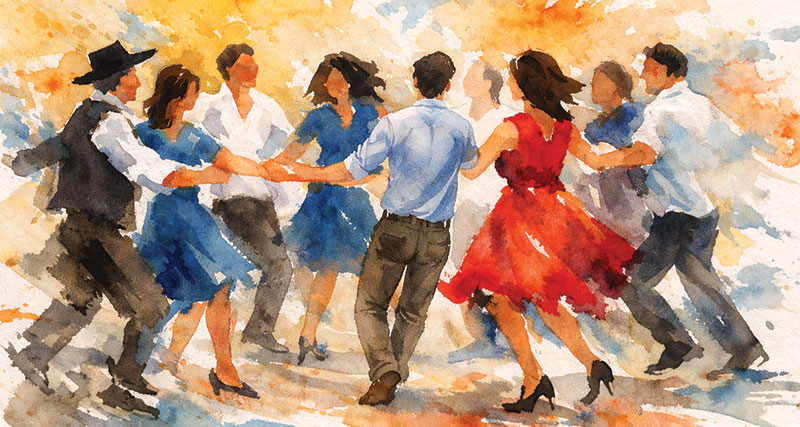
I just returned from B’nei Mitzvah in Chicago
where all the people of Israel (or so it seemed…
it was a big room…) gathered to celebrate two
more of our own, adding their strength to
our community’s continued existence.

War broke out in the middle of the festivities
as seems to happen far too frequently when
we gather to express joy and celebrate.
War has become an inevitable annoyance

in the middle of the Macarena, which isn’t
one of our dances, but it’s close enough
to the spirit of what we do when the night
comes and the Torah has been read and

it’s time for our newest adults to go up
in chairs, made possible by the strength
of those assembled. Everyone had a great
time, despite the war, which was so new

it hadn’t developed that new war smell yet.
I would gather anywhere, if invited, (The war
excluded) just to communicate to the inviters
my appreciation of the weight of the invitation.

When people so gather, I gather. When people
say give, I give. I’m not trying to show off.
I’m just following the example of the Red Sea
pedestrians at the foot of the mountain.

This is when they taught us everything – How to
gather and give, how to war and peace, how to Hora
and Macarena. This is the knowledge they inherited
in Chicago, while war danced the night away.


Rick Lupert, a poet, songleader and graphic designer, is the author of 29 books including “God Wrestler: A Poem for Every Torah Portion.” Visit him at www.JewishPoetry.net

Dancing While The War Raged On – A poem for Parsha Vayakhel-Pekudei Read More »

Suspect dead after car crash, shooting at Detroit-area Reform temple, largest in North America

Jewish institutions in the Detroit metropolitan area were on lockdown on Thursday after reports of an active shooter at Temple Israel in West Bloomfield, Mich., a suburb some 25 miles northwest of the city.

Authorities said the suspect, who drove a truck into the synagogue and opened fire, was fatally shot by security personnel. A local sheriff told the media that there are no injuries to report.

Police from multiple agencies were clearing the building amid the incident, which prompted precautionary lockdowns at nearby schools and Jewish community centers, the Oakland County Sheriff’s Office said. Smoke was seen rising from the truck, which caught fire outside the synagogue. Children from the synagogue’s nursery school were evacuated to a local Jewish community center.

The synagogue states that it is the nation’s largest Reform congregation and that its mission is to “create an inclusive center for our sacred community, framed through the lens of Reform Judaism.”

“We are authentic and caring, fearless and dynamic, home to many different types of individuals and families searching for connection and meaning in their lives,” it says.

The temple says that its congregation makes up 1% of North American Reform Jews and “often” has more than 1,500 people at its “gorgeous outdoor summer services.” Its website displays an Israeli flag prominently.

Smoke was seen rising from the building, which also houses the synagogue’s nursery school. A local television station reported that nursery school children have been taken off-site to a local Jewish community center.

Police could be seen on overhead footage swarming the area. The truck, which caught on fire, is reportedly the source of the smoke. People could be seen running from the building’s exits on video footage.

The Jewish Federation of Detroit stated that “we are aware of an active security incident at Temple Israel. Law enforcement are responding.”

“Our Jewish agencies are currently in precautionary lockdown. We ask community members to stay away from the area at this time,” it said.

Local reports indicate police from several nearby jurisdictions raced to the scene, as did fire trucks and ambulances.

FBI Director Kash Patel stated that FBI personnel are on the scene and called the incident an “apparent vehicle ramming and active shooter situation.”

Non-Jewish schools in the area are also on lockdown, according to the West Bloomfield School District.

Michigan Gov. Gretchen Whitmer called the situation “heartbreaking.”

“Michigan’s Jewish community should be able to live and practice their faith in peace. Antisemitism and violence have no place in Michigan,” she wrote. “I am hoping for everyone’s safety.”

This is a developing story.

Suspect dead after car crash, shooting at Detroit-area Reform temple, largest in North America Read More »

Print Issue: The Year Everything Changed | March 13, 2026

CLICK HERE FOR FULLSCREEN VERSION

Print Issue: The Year Everything Changed | March 13, 2026 Read More »

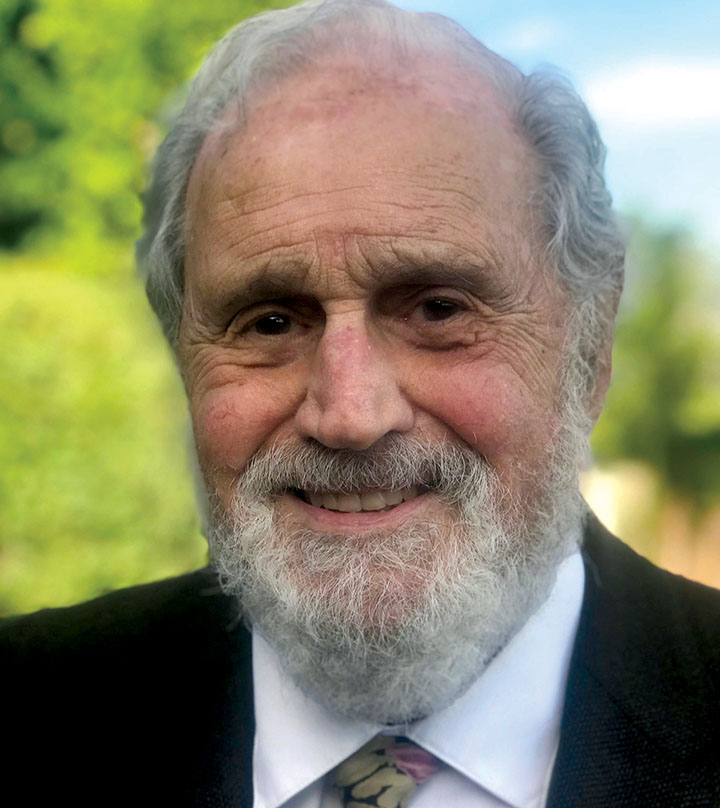
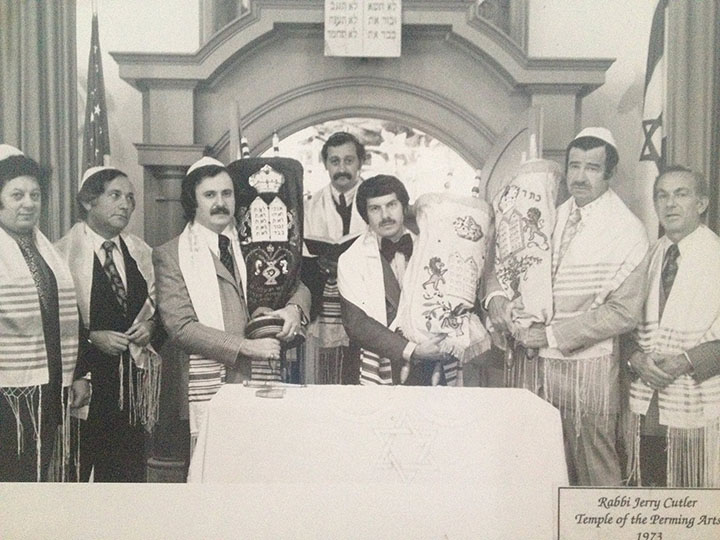
Rabbi Jerry Cutler, 91

Rabbi Jerry Cutler, founder of Creative Arts Temple in West Los Angeles, passed away on March 3. He was 91.

He is survived by his wife, Jeff, and his daughters Tess and Chelsana.

The son of an Orthodox rabbi in New York, Cutler trained as an Orthodox rabbi while side-hustling as a stand-up comedian. He performed gigs in the Catskills. He was ordained as a rabbi at 24. He also worked as a celebrity publicist whose clients included Frankie Avalon and comedian Slappy White.

In 1973, he founded Synagogue for the Performing Arts, drawing the likes of Walter Matthau, Ed Asner and Joan Rivers.

For Cutler, transitioning from stand-up comedy to the pulpit was, he once told The Los Angeles Times, a “natural segue.”

As Cutler dealt with personal issues and with growing disenchantment with synagogue life — “It was during yizkor services and somebody wanted to come in, but one of the major members wouldn’t admit him because he didn’t have a ticket. That was it!” he once said—Cutler stepped away from the synagogue. Returning to his entertainment business roots, he began writing plays and TV sitcoms.

In 1983, Cutler returned to the rabbinate and started Creative Arts Temple.

Cutler conceived of Creative Arts Temple as a place where Jewish celebrities could worship freely without being harassed as well as an accessible place offering affordable membership to struggling writers and unemployed actors.

Regarding the synagogue’s denomination, Cutler once described it to the Forward as “somewhere between Conservative and Reform. We’re traditional in our own way.”

Services for Creative Arts Temple were held at Hollywood Temple Beth El on the first Friday of each month. As the years went on, the synagogue became less known as a spiritual home for celebrities and industry professionals and more, according to its website, as an “unorthodox” congregation, one with “great concern for one another, our community and those in need.”

Cutler was also famously involved with Chabad. Throughout the 1980s and 1990s, his wife produced the annual Chabad Telethon while he was the popular master of ceremonies.

At the time of his death, Cutler was living in Rancho Mirage.

An online memorial for Cutler can be viewed at creativeartstemple.org/watch. 

Rabbi Jerry Cutler, 91 Read More »

Racing Back to War: Israelis Stranded Abroad Desperate to Return Home

While wealthy residents in Dubai are reportedly paying tens of thousands of dollars — in some cases up to $350,000 — to charter private jets and flee the region amid the war, Israelis stranded across the globe are doing the exact opposite, going to great lengths to return home. Some have even flown to Jordan and taken a cab to the border.

They do so fully aware of what awaits them: sirens, running to bomb shelters at all hours of the day and night and even, at times, hearing explosions nearby.

From Los Angeles to Thailand, Israelis are sitting anxiously, waiting for a notice from El Al or other airlines, hoping for a chance to board a flight back to Israel.

“A stranger might not understand it,” said Yagil Sahar, who was stranded in Los Angeles after his flight home was canceled. “Friends told me to continue my trip and enjoy it, but how can I, knowing my family is running to the Mamad and hearing sirens all day and night?”

Some travelers, eager to return home, chose not to wait for an available flight with El Al.

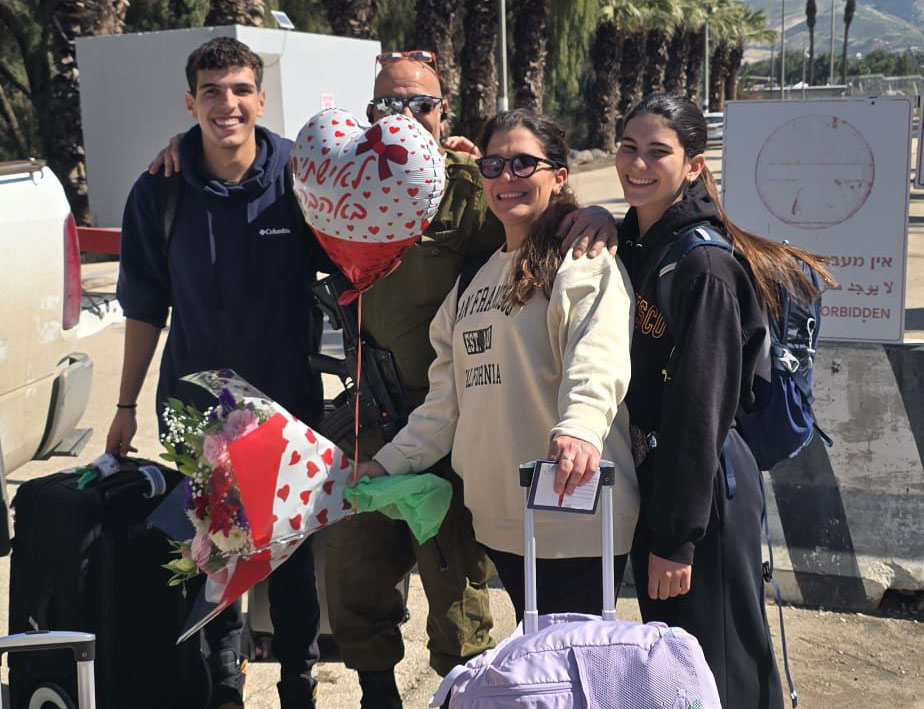
Naama Heineman was visiting her brother in Los Angeles for two-and-a-half weeks with two of her four children when the war broke out and their return flight to Israel was canceled.

Determined to get back home, she began searching for alternative routes. With most airlines canceling flights to Israel, there was only one option: fly to Jordan and cross the border by land.

“My husband and son were enlisted, and my father is elderly. I knew I had to get back and make sure he was okay,” Heineman said. “I called a friend who is a travel agent, and she suggested flying through Jordan and arranging for someone to meet us and escort us to the border with Israel.”

Heineman managed to book a flight on a Jordanian airline with a layover in New York and eventually landed in Amman with her two children, age 16 and 18.

“We were told to avoid speaking Hebrew and to keep a low profile,” Heineman recalled in a phone call from her home at Kibbutz Degania Bet. “There were no Israeli tourists in Jordan because of the war. The driver picked us up from the airport and took us to a hotel. We couldn’t go straight to the border because it was Ramadan and the border closed early.”

The driver, who was Druze, advised them to stay at the hotel and even brought them food. He also stayed at the same hotel to assist them and make sure they were safe. “It was all very stressful,” Heineman said. “I felt like people were looking at us suspiciously. I wouldn’t recommend doing a trip like this without someone waiting for you at the airport.”

Naama Heineman with her children, her driver (on the right) and Alex from New York in Jordan

The following morning, their driver took them to the border crossing with Israel, where they were met by someone from the kibbutz who works at the border — located not far from the community — as well as by Heineman’s husband.

Back in Israel, they were greeted by sirens and constant alerts on their phones instructing them to seek shelter. Still, Heineman does not regret her decision to return. “People told me to stay and try to enjoy the time in Los Angeles. El Al said it might take two weeks to arrange another flight,” she said. “But I couldn’t relax not knowing how my father was doing. I’m just happy to be back.”

Oksana Guriev, her husband and three children left Israel seven months ago following the first war with Iran. Her 16-year-old son, a talented jiujitsu athlete, had been accepted into an elite sports club, and her 14-year-old daughter is a soccer player.

“We initially came because of the kids and their sports opportunities,” Guriev said. “But after the first war with Iran, we also felt the need to leave for a while and just breathe. So we moved to Austin.” Living there, however, left her feeling unexpectedly disconnected. “I didn’t meet any Israelis, and suddenly I realized how much I miss Israel,” she said.

The decision to return home came even as tensions with Iran were escalating again and talk of another war intensified. Still, Guriev and her husband were not deterred. “Listen, we don’t have another country,” she said. “Despite everything, I love Israel. Suddenly we felt such pride in our country — how Israel stands strong against its enemies. I don’t think you can really understand that feeling if you’re not Israeli.”

Guriev was born in Russia and made aliyah in 2000 when she was 11.

Her original return flight to Israel was canceled after the war broke out, but the family was relieved to learn they had been booked on an El Al rescue flight scheduled to depart on March 8. “Right now we’re in New York just waiting to get on the plane home,” she said. “It’s funny — after the war with Iran we wanted to get out of there. And now I can’t wait to go back.”

Oksana Guriev with her husband and children waiting in New York for their flight back home.

Gali, a 26-year-old Israeli who asked to be identified only by her first name, set out on a four-month solo trip to South America and planned to end her travels with a few days in New York before flying home to Israel. But when the war broke out, her return flight was canceled, leaving her stranded in one of the most expensive cities in the United States.

To her rescue came Yakir Englander, senior director of IAC Gvanim and leadership education, who helped arrange a host family for her to stay with. Since the war began, Englander said 67 Israeli families have turned to him for help. “We help them with anything they need. … Sometimes they run out of medication, sometimes they need to see a doctor, and often they need a place to stay. Being stuck in cities like New York or Los Angeles can get very expensive, so we’ve connected them with families willing to host them.”

Friends and family have encouraged her to go out and enjoy the city. While she tries, she admits it isn’t easy. On Friday night she wanted to attend a Chabad dinner but hesitated, worried that something might happen amid the rise in antisemitism in New York. In a strange way, she said, she feels less afraid in Israel because the fear there is familiar. “I was in Israel during the entire war and always thought it would be better to be out of the country during a time like this,” she said. “But now that I’m out, I can’t relax or enjoy myself. I’m constantly worried about what’s happening back home.

“I’m in such a beautiful place, but some days I can’t even leave the room until the afternoon,” she said. “While it’s not fun hearing the sirens and running to the safe room back home, at least you are going through it with your family and friends. There’s strength in being together. For me, that’s less frightening than being a Jewish girl alone on the streets of New York.”

Racing Back to War: Israelis Stranded Abroad Desperate to Return Home Read More »

Healing Through Play: Mobile STEAM Unit Delivers Trauma Relief to War-Affected Communities

For two challenging years, When the sirens blared across the Galilee and Golan, children dove for cover, enduring the “boomim” that have defined their lives since Oct. 7, 2023. While the intensity of the fighting has shifted, the instability has not disappeared. But when the Wonder Wheels mobile unit arrives, they dive into science, technology, engineering, arts, and math (STEAM) instead. This is trauma-informed healing through play in action. A small hand grips a lavender-scented calming bag, holding it close. “Now I’ll be able to sleep at night,” the boy tells our staff, reflecting the profound need for stability and hope. We are delivering hands-on learning and building resilience for a generation growing up under conflict in a region that lacks a dedicated children’s museum.

The idea began with a dream. One Yom Kippur, I dreamed I was tasked with building a children’s museum, an interactive space devoted to STEAM where children could explore, create and discover. The task felt enormous, but the voice in my head urged me, “You know you don’t start ‘finished.’ Take baby steps.” When I began, I realized a stark reality that with more than 415,000 children, the Galilee and Golan, an underserved area under constant threat, had no dedicated children’s museums to support curiosity, creativity, and resilience.

Our plan was bold: to build a permanent, world-class museum in the North. But in October 2023, as the region erupted in conflict, the immediate psychological needs of these children became a national emergency. For a three-year-old, this war has shaped most of his life. For a nine-year-old, half of her schooling has been disrupted. Faced with this urgency, our emerging museum pivoted. We launched Wonder Wheels, a mobile outreach unit to bring interactive learning and moments of healing directly into schools and community centers when they needed it most.

With continued stress hanging in the air and the uncertainty of when the next siren might sound, we needed to maximize the therapeutic aspects along with the fun and learning. For that reason, we partnered closely with the Community Stress Prevention Center (CSPC), a leading trauma-focused organization. Their trauma team, led by Dr. Nira Kaplansky, ensures that every activity is designed to help children process trauma, restore a sense of personal control and build psychological resilience. This work addresses the present moment, helping children regain a sense of safety and stability amid ongoing uncertainty.

Wonder Wheels travels to schools and community centers, reaching children ages 3 to 12. Programs are designed to promote social, academic and emotional growth for children of all backgrounds and abilities, fostering true diversity in learning. Offerings include 10-session STEAM series that promote teamwork and creative thinking, along with a dedicated Resilience Program featuring hands-on projects designed to reinforce flexibility, problem-solving and inner strength. We also host pop-up events with playful STEAM tools such as kinetic sand, magnetic tiles and a puzzle-room veterinary clinic.

In northern Israel, small moments of normalcy matter. Two boys proudly share their handmade lavender sachets.

Since launching, Wonder Wheels has already touched the lives of over 10,000 children from 48 diverse communities across the northern conflict zone, including Jewish, Muslim, Christian and Druze communities. Teachers have noted that neurodivergent children in their classes also thrive with these activities. Principal Smadar Zanti of the Weizmann School in Acre shared, “Your mobile unit transformed our school into a space of exploration, curiosity, and emotion. Through play and solving challenges, the children learned about compassion, responsibility and teamwork and strengthened their sense of personal and social competence.” Parents echo this feedback, describing how their children still sleep with the calming lavender bags months later.

Meanwhile, architectural plans and the permitting process are underway for my original dream: The Children’s Museum of the Galilee, to be built on nearly five acres in the hills of the Lower Galilee, adjacent to the Kadoorie Educational Complex. Wonder Wheels will remain an essential off-site outreach program even after the permanent museum campus opens. Designed by an award-winning architect and exhibit design team, the sustainable campus is part of a broader effort to rebuild, reimagine, and reinvest in northern Israel. Wonder Wheels continues to respond to today’s crisis and will remain an ongoing mobile offshoot of the museum, while the permanent building will represent a forward-looking investment in the region’s future, creating an educational and cultural anchor that will serve generations to come.

The architectural concept for the Children’s Museum of the Galilee, a sustainable and permanent hub for innovation and regional development in the North.

Believe it or not, many children in northern Israel have never been to a museum, ever. As an American-born Israeli who has lived in the region for more than 20 years, I see firsthand how vital it is to create spaces that strengthen communities where needs are greatest. The Children’s Museum of the Galilee will not only fill an educational gap but serve as a beacon of hope, healing and possibility, rooted in the North and built for its future. Through joyful, informal learning, we are building more than a museum. We are building a brighter future for the children who call this region home.

To learn more about the Friends of Children’s Museum of the Galilee, visit www.ChildrensMuseumoftheGalilee.org


Laya Saul, a Los Angeles native and children’s author, founded the Children’s Museum of the Galilee to help build northern Israel and inspire a new generation of young learners.

Healing Through Play: Mobile STEAM Unit Delivers Trauma Relief to War-Affected Communities Read More »