fbpx

February 19, 2026

A Purim Bread to Gladden the Heart

The first time I remember receiving a mishloach manot is as a very young girl in Sydney. My father was very amused, having fun unwrapping the cellophane and revealing the many items from the gigantic basket to me. There was a huge pineapple and clusters of green grapes, apples, oranges and pears individually wrapped in tissue paper. There were many kinds of candy and biscuits (cookies), dried fruit and nuts and even a big bottle of grape juice.

This windfall of goodies seemed like a miracle to me. My mother was a “MAHA” mom, decades before anyone had heard of RFK Jr. She was the kind of mom who baked whole wheat bread filled with grains and homemade granola bars filled with seeds. Our refrigerator was filled with a lot of greens and the only prepackaged foods were milk, yogurt and cheese. She did buy me and my brother black licorice and potato chips (she was especially fond of the salt and vinegar flavor).

I remember my father explaining the Purim story to me and explaining that it is a mitzvah to give mishloach manot.

Of course, the amazing basket was from my grandparents, Aba Naji and Nana Aziza.

My grandmother also sent a big brown paper bag filled with her homemade baked Babylonian Jewish goodies. There were her crispy ba’ba tamar, date-filled crackers, sambusak bil jib’n, baked turnovers stuffed with a mix of salty, creamy cheese, and ka’ak, salty ring crackers.

The rabbinic dictum to give gifts of food (mishloach manot) to friends and family meant that across the Middle East and the Mediterranean, our Sephardic grandmothers would spend days baking sweet and savory delicacies to give to friends and family.

Nowadays, I have the good fortune of the community Purim Bake at Kahal Joseph, the Iraqi community synagogue. Rachel and I go every year and we join my mother and all the other beautiful members in baking the exact same recipes that were baked for generations in Iraq. The best part is hearing the wonderful conversations in Judeo-Arabic, the language that both my grandmothers spoke to me. It’s powerful to watch this baking legacy transmitted from the older generation to the enthusiastic young boys and girls who come to bake.

—Sharon

For Purim, the Jewish communities of North Africa make fijuelas, a sweet fried dough dipped in a honey syrup. They also bake a special Purim bread roll called Ojos de Haman (eyes of Haman), with a whole egg cradled in the bread, with two strips of dough on top forming an X.

The Ladino tradition for Purim is to bake biscocchos, bourekas and fulares, a bread-based roll holding a hardboiled egg with crisscross strips of dough over the egg representing either the caged Haman or the hanging of Haman.

My mother Rica was an expert in frying fijuelas, twirling the dough around a fork in the sizzling oil. She also made these little breads every Purim, no matter what. It was her very special family tradition.

One Purim, in our early years in America, she got home from work and realized that she had forgotten to make dough to bake them. She was so upset. But my clever mother found a solution. She made a small amount of dough with water, flour, yeast and salt. She took bagels from the freezer and boiled some eggs and she assembled Ojos de Haman. She rolled short dough ropes to crisscross over the egg that she had placed in the bagel hole, then she baked them. They weren’t the usual delicious rolls but we still enjoyed them.

In the last years of her life, I took on the job and I really believe it brought her a lot of joy and comfort to see that I was carrying on this fun and wonderful family tradition.

Nowadays, I make sure to bake extra for my cousins. This is a food that touches all of us in the deepest way. A reminder of my aunt and my mother who made it when we were kids. It doesn’t matter if we don’t eat the eggs. These Ojos are pure joy to have on the festive table.

Sharon and I wanted to share this idea for a useful Mishloach Manot. If you don’t have time to bake, order some crusty fresh baguette and make your friends and family extra happy.

—Rachel

OJOS DE HAMAN

NORTH AFRICAN PURIM BREAD

Serves 12

12 eggs

1 egg, beaten for egg wash

Dough

7 cups all purpose or bread flour, divided

3/4 cup sugar

3 Tbsp active dry yeast

2 1/2 cups warm water

1/2 cup avocado oil

1 Tbsp salt

2 Tbsp anise seeds

Place 12 eggs in a medium pot and cover with cold water. Boil over medium heat for 12 to 15 minutes. Drain water and set aside.

In a large bowl, mix 2 cups flour, sugar, yeast and water and leave to bloom for 5 to 10 minutes until frothy.

When the mix is frothy, add the remaining flour, oil, salt and fennel seeds. Knead by hand or in a stand mixer.

When dough comes together, cover with plastic wrap and a dish towel and allow to rise for one hour.

Preheat the oven to 350°F.

Line a baking sheet with parchment paper.

Punch the dough down, then divide the dough. Make 12 equal balls the size of your palm.

Take the remaining dough, flatten it and cut into 24 strips to hold the egg in place.

Take a dough ball and poke a hole in the center, as if making a doughnut. Place an egg in the center and put it on the baking sheet.

Place two strips of dough into an “X” atop the egg. Use the beaten egg as glue to secure the strips to the egg and bread roll. If the strips slide, hold in place with toothpicks.

Brush top of rolls with egg wash.

Bake for 20-25 minutes.

Optional: For dark crust, mix one egg with one yolk and 1 tablespoon honey.


Sharon Gomperts and Rachel Emquies Sheff have been friends since high school. The Sephardic Spice Girls project has grown from their collaboration on events for the Sephardic Educational Center in Jerusalem. Follow them
on Instagram @sephardicspicegirls and on Facebook at Sephardic Spice SEC Food. Website sephardicspicegirls.com/full-recipes.

A Purim Bread to Gladden the Heart Read More »

Elaine Hall: Jewish Disability Awareness and Inclusion Month, “A Different Spirit” and Papaya Boats

February may be Jewish Disability Awareness and Inclusion Month (JDAIM), but inclusive celebrations — and inclusivity — are not just for February … and special occasions. It’s a mindset. One you can carry with you year-round.

“To be inclusive is really natural; to be noninclusive is a learned attitude,” Elaine Hall, founder of The Miracle Project and contributor to “A Different Spirit,” told The Journal. “It takes 60 seconds to be open, willing and curious rather than judgmental, separate and nonwelcoming.”

It’s as simple as looking at someone with kindness when you first meet, and seeing what you can create together, which could be as simple as an encounter or a meal, as extensive as a celebration or an experience.

The Miracle Project is a fully inclusive theatre, film and social program for neurodivergent, autistic, disabled and nondisabled individuals, where they write, create and develop original musicals, music videos and films, but mainly create community. She is also co-founder of 1in4Coalition, a Hollywood disability advocacy group.

“A Different Spirit: Creating Meaningful B’nai Mitzvah for Children with Disabilities” addresses a similar, but different type of community experience; one that makes everyone – the guest of honor, as well as family and friends of all abilities – feel like they belong.

The book was created by Howard Blas (the director of the National Ramah Tikvah Network) and Ilana Trachtman (director of the acclaimed documentary “Praying with Lior”) after they recognized a need for guidance around celebrating b’nei mitzvah for youth who experience the world differently. The book brings together educators, parents and advocates — including Hall — to share models of ceremonies that are creative, accessible and personal.

“I had created one of the first b’nai mitzvah programs for autistic youth a number of years ago, called Nes Gadol, through Vista Del Mar,” she said. “My son, Neal, was the first bar mitzvah, so they asked me to share my ideas.”

Hall goes into Neal’s bar mitzvah story in more depth in her book “Now I See the Moon: A Mother, a Son and the Miracle of Autism.”

“I’m really honored to be included with these other wonderful contributors,” she said.

Celebrations are often built around food, but Hall believes they should also be built around awareness.

When planning a b’nei mitzvah or any large gathering, she encourages families to think beyond tradition.

“Each child is different; each person is different,” she said. “Tune into what that child wants and what makes them happy.”

She added, “If the child loves french fries … even though that may not be typical at a celebration, make sure there’s french fries on that table.”

In addition to the guest of honor, it’s important to make certain everyone feels like they belong. That means having lots of choices: gluten-free, sugar-free and heart-healthy options; going nut-free in case someone has a peanut allergy.

“I would check in with the guest list,” Hall said. “On the invitation, I would ask, ‘Are there any food sensitivities that we need to be aware of?’ I would also ask, ‘Is there anything that you would need so that you can participate most fully in this event?’”

Not just for b’nai mitzvah. Not just for parties. In any and every food or non-food situation, you want people to feel comfortable, like they belong.

Hall explains that in the neurodiverse world, some people are sensitive to textures, while some prefer foods separated rather than mixed together.

“I’m neurodivergent myself, so I have my particulars in how I eat my food,” she said. “I like having pretty much the same thing every day for breakfast and lunch; it just makes my life simple.” She also loves indulging in fresh fruit. Her papaya boat recipe is below.

These routines are rhythms that support well-being.

An internationally recognized leader in inclusion and belonging — and one of Hollywood’s first access coordinators for film and TV — Hall is constantly juggling big projects. She believes in finding harmony, since balance is often unrealistic with her workload.

“I could find special moments where my husband and I could go for a walk and watch the sunset, I could connect to my son – he loves going [for a] midnight mocha – and we can have that morning together,” she said. “That’s definitely not balance – it’s not equal to how much work I’m doing – but it is harmonious; sometimes it can just take a few minutes to tune into your spouse or your friends, check in and harmonize with them, be with them and still have to do a whole lot of other things.”

Because she has been so busy, Hall started talking to a nutritionist about food. She “invited” Hall to take five breaths before she starts to eat.

“Then [she said to] look at all the colors that are in my bowl and see the textures … give gratitude before [I] even start to eat and then cherish each bite,” Hall said. “And I tell you, it just makes every meal a gourmet meal.”

Learn more about Elaine Hall at TheMiracleProject.org, get a copy of “A Different Spirit” and/or contact CoachE@CoachEProductions.com.

For the full conversation, listen to the podcast:

Watch the interview:

Elaine Hall’s Papaya Boats

Maui-inspired, harmony-approved and perfect for any time of day.

Serves: 1–2

1 ripe papaya

Fresh lemon juice

Fresh berries (blueberries, blackberries, or strawberries)

1 small banana, sliced

2–3 tablespoons granola

2–3 tablespoons yogurt; could use coconut milk or almond milk yogurt

1 tablespoon chopped walnuts

Optional: chia seeds, flax seeds, additional nuts

1. Slice the papaya in half lengthwise.

2. Scoop out and discard the seeds.

3. Squeeze fresh lemon juice into the center of each half.

4. Fill the hollow with fresh berries.

5. Sprinkle granola over the top.

6. Add a generous dollop of yogurt.

7. Layer sliced banana and chopped walnuts.

8. If desired, top with chia or flax seeds or extra nuts.


Debra Eckerling is a writer for the Jewish Journal and the host of “Taste Buds with Deb.Subscribe on YouTube or your favorite podcast platform. Email Debra: tastebuds@jewishjournal.com.

Elaine Hall: Jewish Disability Awareness and Inclusion Month, “A Different Spirit” and Papaya Boats Read More »

Table for Five: Terumah

One verse, five voices. Edited by Nina Litvak and Salvador Litvak, the Accidental Talmudist

And let them make Me a sanctuary that I may dwell among them. Exactly as I show you — the pattern of the Tabernacle and the pattern of all its furnishings — so shall you make it.

– Ex. 25:8-9


Rabbi Sofia Zway

Base LA

Parsha Terumah opens with the instruction to build a home, a dwelling place, for God. God uses two different words, Mikdash and Mishkan, to refer to this dwelling place. One has to wonder: why does God use two different terms for this dwelling place? For the commentator Chaim Ibn Attar, the desert Mishkan, in its portability, serves as a temporary placeholder for the future Beit HaMikdash, God’s fixed dwelling place, in Jerusalem. But both of these terms are ambiguous and variable in relation to permanence and impermanence. Despite its concrete fixedness, the Mikdash is, in fact, impermanent. It is bounded, not only by its walls, but by time and space. We have borne witness to its destruction. A Mishkan, on the other hand, in its fluidity and transience, actually expresses some kind of permanence, for it has the ability to exist across time and space. The rabbis understood this on a deep spiritual level. They teach us that when the temple was destroyed, God journeyed with the Jewish people into exile. It was there that our ancestors built much of the Judaism that we have inherited: a Judaism oriented towards Jerusalem, but anchored in the wilderness of exile. The ambiguities in these words serve as a reminder from God that though the structures we build are ephemeral, God is eternal. No matter where we are in the world, no matter how grounded or how lost we might feel, God is always with us.


Yoni Troy

Executive Director, Hillel Montreal

This phrase encapsulates much of the meaning and practice behind our Jewish faith. While the verse can be understood literally as G-d’s commandment to us to build a Sanctuary, there is a deeper meaning relating to every moment of our lives.

Each one of us was created for a reason: to create a Sanctuary for G-d to dwell in. Not a physical sanctuary but a spiritual one. This world was created with the potential for good and evil, holiness and unholiness. Our goal in this world is to insert that. Every action that we do has the potential to create a Sanctuary for G-d here in this world. The more our actions are driven by purity of thought and mind, not ego, the more we grow G-d’s sanctuary.

Every moment of our lives we have the potential to harness the spiritual power that G-d has put in this world and make that into real, palpable, kinetic energy. This energy does not only affect our surroundings but our internal selves. Living to reveal the spiritual dimensions in this world and implementing G-d’s light is uplifting. It sends us above the trials and tribulations that we experience in this material world and allows us to live on a different wavelength. A spiritual one.

Witnessing the mental health epidemic spreading through the Western world one can’t help but notice the correlation to the departure from connection to the spiritual world and an increasing obsession with the physical. By letting G-d into our lives and living in a constant quest to do Hashem’s bidding we not only build a Sanctuary dedicated to him but live in it. Rising above the trials and tribulations this world poses.


Michael Berenbaum

American Jewish University

A Place In Which God May Dwell.

I’ve been wrestling lately with the difference between aspiration and achievement. Permit me not to tell you why – yet.

The Torah says “And you shall be onto Me a kingdom of priests and a holy nation.” (Exodus 19:6) Korach complained to Moshe: “All the community are holy and in their midst is the Lord.” (Numbers 16:3)

The arrogance of Korach was the confusion between aspiration and achievement. While the Torah tells the people Israel what it must aspire to become, Korach presumes that the people Israel have already achieved a state of holiness; he is certain – all too certain – that God dwells in their midst.

In this verse, God is demanding of the Jewish people that they make a sanctuary – the Hebrew is more complicated — Mikdash: an abode, a place to dwell; if such a place is not created, God’s presence is not guaranteed. Divine presence is dependent on human action, creating a place worthy of such Presence, perhaps more importantly, becoming a people worthy of that Presence.

I’ve been struggling with this question as I recite the prayer for the State of Israel which reads: “Our Father in Heaven, bless the State of Israel, the dawn of our redemption.” It is difficult for me to envision Israel with all its inner turmoil – the venom I hear between Jews – as the dawn of our redemption. The former Chief Rabbi of the United Kingdom Immanuel Jacobovits z’l suggested a slight emendation, adding the word sheteheh, that Israel may become that dawn. Would that we become so worthy.


Rabbi Ariel and Chana Margulies

Author, GeulaWives.org, FREE Marriage Resources

The Mishkan sanctuary is not just a physical structure, it is the interface for the manifestation of the Divine Presence into our world, lives, hearts and homes.

The foundational discourse of the Lubavitcher Rebbe, based on the Previous Rebbe’s Basi L’Gani (“I have come to my garden”) focuses on the completion of the Mishkan Sanctuary by Moshe, the seventh generation from Avraham being the culmination of the return of the Divine Presence to this world.

The Creator had a desire. That desire sparked this world into existence. To have a home. Home is where you can be yourself, essentially. Hashem wants to be invited into His world completely. You extend that invitation, in every mitzvah that you do.

The verse states, “among them.” The Sages derive that within them refers to each and every Jew. You are the home for Hashem. How? The next verse makes clear that this is not a mystery, the mitzvahs are how we invite Hashem in. By studying the pattern, Torah and implementing the pattern through the full beauty and grandeur of mitzvahs we make ourselves and this world a dwelling for the Divine. Specifically through our pleasure in the mitzvahs, and our beautifying them, we don’t just make a home, we make it a warm Jewish home. From where light is spread to the entire cosmos. When you light Shabbos candles this week, experience the invitation. We are the seventh generation. Our mission is clear, to welcome Moshiach, to bring Hashem home.


Rabbi Amy Bernstein

Senior Rabbi, Kehillat Israel Congregation

The Mishkan was a communal building project that former slaves could be proud of. Its many works of beauty would add dignity to their striving to achieve the radical new idea of being a holy people. The Temples in Jerusalem would do the same.

All of these Israelite structures were destroyed as were so many places since where Jews gathered to connect themselves to each other and to the Divine. Yet, the Jewish people are still here. Against all odds, am Yisrael chai.

We, the members of Kehillat Israel in Pacific Palisades now share the agony our generations of ancestors suffered of a town burned, all of us (from the Palisades) displaced, most of us still in exile over a year later. We know what it is to see our beloved Mishkan stripped bare due to toxic smoke and dangerous particles carried into every permeable surface by the burning up of the material lives of our community.

So many gracious and loving people have welcomed us into their own sacred spaces, so many people have worked to make it so that the space we rented for the evening was appropriate to a holy experience and our own fabulous congregation continue to show up, to be fully present and to remind us that the Mishkan was given for us to come together in building something beautiful that connects us to Source. When we truly strive to be a holy people what we need most is each other.

Table for Five: Terumah Read More »

Sparking the Soul of Sacred Practice

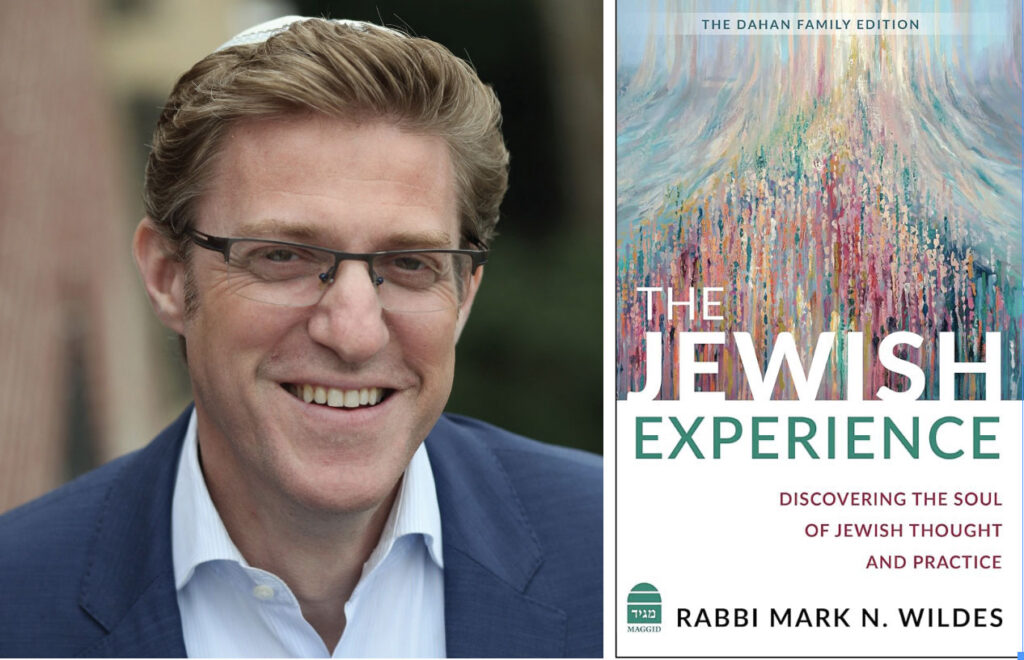
In a viral TED Talk with millions of views, Simon Sinek explained that the most successful organizations, companies and leaders communicate not only what they do or how they do it, but also why. Why should anyone care about their company or product as opposed to another? “If all Apple communicated was that they make beautifully designed computers, they wouldn’t outsell their competitors, because telling others what you do is simply not inspiring,” observes Rabbi Mark Wildes. “To motivate others to act, people need to know the why. This is the reason Apple’s marketing communicates why they exist. As Sinek puts it: ‘People don’t buy what you do but why you do it.’”

Wildes’ “The Jewish Experience: Discovering the Soul of Jewish Thought and Practice” aims to make the case for why be a committed Jew – why someone should buy in to being a thoughtful and dedicated practitioner of our faith.

Drawing on decades of teaching thousands of millennials at the Manhattan Jewish Experience (MJE), Wildes’ book presents, in a warm and accessible manner, the core beliefs and practices of Judaism – discussing God, Torah, prayer, charity, Shabbat and Tikun Olam – and seeks to answer the questions: Why do these beliefs and practices matter? How can they transform our lives today?

The argument to observe Shabbat, for example, is one that he believes is incredibly compelling in our high-speed age. “We all know when we’re really connecting with someone and how challenging it is to bond with others when we are competing with technology,” Wildes notes. “We live in such a distracting world. And that is why Shabbat is so imperative today. It is a kind of self-imposed blackout to ensure that we truly connect with each other, our community and our spiritual Source. That is why, of all the Torah’s observances which I have found young people attracted to today, hands down – it’s the Sabbath that wins. Hence the new ‘unplugged weekend retreats’ that have become so popular. These digital detoxing weekends, which first became popular in the United States and then found their way to Europe and Australia, stress mindfulness and begin by having everyone drop their smartphones into a black trunk. People understand that technology, while an indispensable tool for virtually every profession, is also keeping us from deepening our relationships and finding more happiness and meaning.”

Wildes’ case for prayer cites the contemporary American-born Israeli scholar Rabbi Yitzchak Ginsburgh. He suggests our liturgy is a reflection of the limitless love God has for the Jewish people, and the protection He has offered us for millennia. “According to some kabbalists, our prayers mirror Jewish history,” Wildes argues. “We start with the preliminary Birchot HaShachar, just as the patriarchs built a relationship with God before establishing a formal religion. We then move into the lengthy Psalms of Praise, in which we prepare to thank God for the Exodus, symbolizing our extended slavery in Egypt and preparation for freedom. The Shema speaks of the actual redemption from Egypt, while the silent Shemoneh Esrei represents the intimacy with God at the Red Sea. Our wandering in the desert parallels life’s challenges, which correspond to the afternoon prayers. Finally, in Maariv, recited in the dark, we ask God to end our exile and bring the Final Redemption.”

Wildes is, of course, a seasoned Jewish outreach professional. He knows there are countless Jews out there seeking to find their letter in the scroll, as Rabbi Lord Jonathan Sacks of blessed memory often put it. Citing the founder of Chabad Hasidism, Rabbi Shneur Zalman of Liadi, Wildes writes that: “For a Torah scroll to be kosher, there must be enough space around each black letter so that no two letters are touching. Our Sages teach that each of our souls corresponds to one of the 600,000 letters of which a Torah scroll is comprised. However, if one actually counts all the letters, they total just over 300,000! There are those of us who are ‘black letters,’ who are deeply connected and have found our place in Judaism. Yet, there are also those of us who are ‘empty space,’ who are still exploring our Judaism and developing our personal connection to our heritage. Yet for a Torah scroll to be kosher, both the black letters and the empty spaces must be included.”

In “The Jewish Experience,” Rabbi Wildes offers readers with both years of Jewish education and none at all an inspiring and informative guidebook to our most foundational beliefs and traditions. Even if you’re already bought in before you crack open its pages, after you’re done with the book, you’ll want to invest even more.


Rabbi Dr. Stuart Halpern is Senior Adviser to the Provost of Yeshiva University and Deputy Director of Y.U.’s Straus Center for Torah and Western Thought. His books include the newly released “Jewish Roots of American Liberty,” “The Promise of Liberty: A Passover Haggada,” “Esther in America,” “Gleanings: Reflections on Ruth” and “Proclaim Liberty Throughout the Land: The Hebrew Bible in the United States.”

Sparking the Soul of Sacred Practice Read More »

Charlie Kirk’s Last Stop: Shabbat

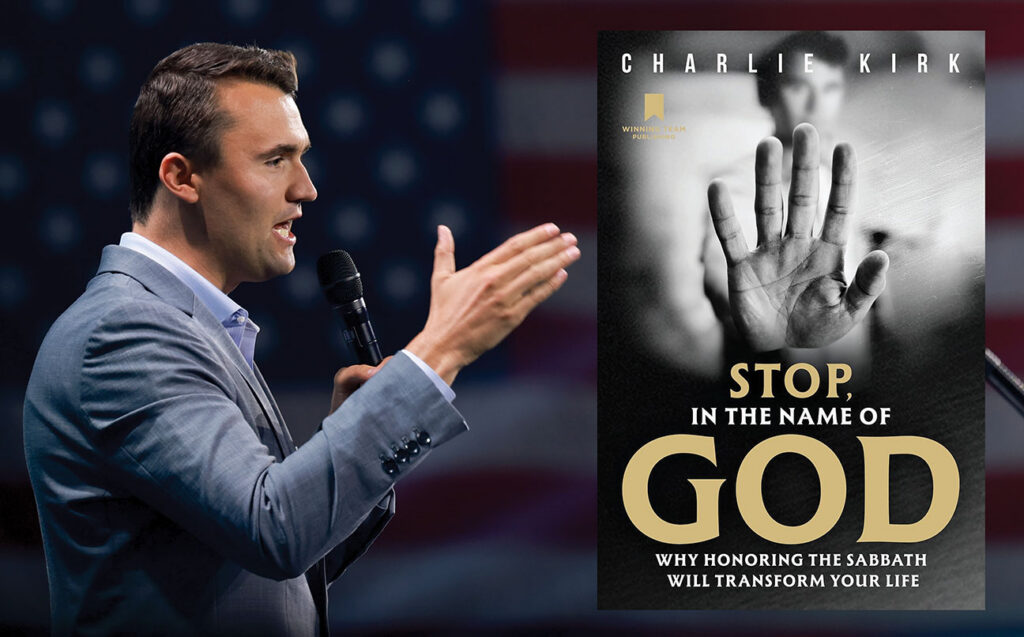
Charlie Kirk, the widely popular conservative activist who gained a national following in his mid-20s and was assassinated on a college campus in September 2025, is probably the last person you’d expect to embrace a Jewish ritual that forbids the use of digital devices from sundown Friday night to sundown Saturday night.

“I really don’t have time for that,” he tells a friend who suggested Kirk try observing the Jewish Sabbath. “I am running three different companies and have three hundred people on payroll. I have to raise $50 million a year and do three hours of radio a day. I will honor God by working harder, not by resting for a day.”

That is how Kirk, in his bestselling book, “Stop in the Name of God: Why Honoring the Sabbath Will Transform Your Life,” sets up the eventual decision that he says transformed his own life.

Given that the benefits of a day of rest in an overstimulated world have become so evident, one would think that Kirk’s book would be rather predictable.

It’s not.

One reason is that Kirk, a practicing Christian, was well aware that his religion was founded on the rejection of Jewish law, and Shabbat is the jewel of Jewish laws.

Kirk agonized over this question. “I have personally struggled with the idea of whether or not Christians are bound by the Sabbath…I wrestle with this greatly…I’ve spent years asking these questions with my Bible open and my heart burdened, trying to reconcile what feels like a glaring tension in Scripture.”

He reconciles this tension in several ways. First, by establishing the inherent human value of Shabbat:

“In a society where identity is increasingly tethered to output—where your worth is measured by how busy you are—the Sabbath invites you to stop and still be loved. Still be human. It rehumanizes us in a dehumanizing world… [the Sabbath commandment] upends social stratification by declaring that every human being, regardless of status, deserves dignity, rest, and space to breathe…it embraces every human regardless of their societal status.”

A second way he reconciles the tension is to focus on the shared Judeo-Christian belief in a Creator, framing Shabbat as a divine imperative.

“It is a weekly, embodied confession that we are created, not accidental. That there is a Creator, and He is not us,” he writes. “In a world governed by unrelenting drive, by the mantras of ‘faster,’ ‘harder,’ and ‘more,’ the divine voice says something astonishing: Stop. In His name, cease. Cease striving. Cease earning. Cease proving. Cease buying and selling and producing. This is not a suggestion. It is a divine imperative.”

This still leaves the stubborn fact that Christianity rejected Jewish laws. As Paul said in Colossians, “Let no one act as your judge in regard to food or drink or in respect to a festival or a new moon or a Sabbath day – things which are a mere shadow of what is to come.”

Kirk acknowledges the conflict:

“Few Christians today believe the Sabbath is on Saturday. Fewer still believe that it’s binding in any form. Most Christians see Sunday as the Lord’s Day and consider it a commemoration of the resurrection, not a Sabbath.”

Before making his case, Kirk is both candid and humble: “The following pages are not written from a mountaintop of certainty but from a well-worn path of seeking,” he writes. “I’ve come to believe that the Sabbath matters. That God’s rhythm is good. That rest is resistance in a world addicted to noise.”

Ironically, there is something Jewish, even Talmudic, about how Kirk resolves the dilemma:

“The argument that Christians are still bound to honor the Sabbath rests not on a single verse or cultural tradition, but on a rich, layered tapestry of biblical theology, covenant continuity, historical testimony, and pastoral wisdom.”

In any case, the book’s value doesn’t depend on Kirk’s compelling argument for why Christians should honor the Sabbath. In fact, he believes everyone should. That is why the book is, at heart, a love letter– a love letter from a faithful Christian who is grateful he has discovered this ancient Jewish ritual and wants to share it with the world.

It’s also a love letter to Dennis Prager, whose life’s work, Kirk says in his dedication, brought him to honoring the Sabbath.

“I am a close friend and student of Dennis Prager,” he writes in his introduction, “and for years I heard him brag about how he honors the Sabbath and how it’s the best part of his week. At times I found myself almost jealous of Dennis while listening to his Fireside Chats. ‘I’m too busy for that!’ I would say to myself when Dennis would air his monologues touting the biblical and moral importance of honoring the Sabbath.”

Kirk’s book is not only an homage to his teacher; it’s also an emulation. It is now his turn to share the wealth. He does so by taking the reader on a journey of spiritual and historical discovery.

His chapter on “The History of the Sabbath” is required reading for any Jews interested in their tradition. Kirk delves into the biblical, historical and mystical roots of the holy day, including how Shabbat sustained the Jews after the destruction of the Holy Temple: “The Sabbath became a portable sanctuary, a cathedral not in stone, but in time. When sacred space was razed, sacred time remained…the observance of Sabbath in exile was thus not an act of nostalgia but one of covenantal defiance… Sabbath became the connective tissue of Jewish identity, threading continuity through rupture.”

He quotes Jewish luminaries such as the late Chief Rabbi Jonathan Sacks– “The Sabbath is the most radical thing in the Torah”– and Rabbi Abraham Joshua Heschel– “The Sabbath is not an interlude but the climax of living.”

In a more ethereal passage, he quotes theologian Jacques Ellul: “God’s rest was not withdrawal from the world, but entering it in a new way, as the God who delights.” Thus, Kirk adds, the Sabbath is “a mystery of presence. It is not an interruption of history; it is the moment when history steps into the holy.”

With all of its eloquent homilies, historical references and spiritual reflections, ultimately, Kirk’s book can be summarized as a passionate and earnest pitch for personal transformation.

“I intend to persuade you of something that may, at first, seem quaint, old-fashioned, or even unnecessary: that the Sabbath is not merely a helpful tradition or a cultural relic—it is essential to the flourishing of the human soul,” he writes at the outset.

Does he succeed?

I think he does, for two reasons. One, you tend to believe him. The man reeks of sincerity. Two, he has done his research. When he waxes passionately about the Sabbath, it comes with plenty of knowledge, whether the lens is scientific (the Sabbath improves your sleep), spiritual or historical.

None of this should surprise us. Kirk made his reputation and gained millions of followers by traveling the country and engaging with college students, many of whom disagreed with his conservative views. He had a gift of debating with knowledge and civility, but he also had a gift of persuasion.

That confidence comes through in the book.

“We have laid out a robust case for why the Sabbath can truly transform your life—not as a burdensome rule, but as a lifeline of renewal,” he writes in his conclusion. “In a culture addicted to motion and noise, turning off your phone, quitting the scrolling, silencing Netflix, and stepping away from the endless stream of notifications is nothing short of radical.”

What becomes clear about this message is that with the explosive growth of technology that physically isolates us more and more, the value of Kirk’s book will only grow with time.

This is especially relevant given the sudden rise of A.I. companions, a much more dangerous category of addiction. On top of regular digital content like social media, now millions are getting addicted to digital relationships.

“Seventy-two percent of American teens have turned to A.I. for companionship,” researcher Amelia Miller writes in The New York Times. “A.I. therapists, coaches and lovers are also on the rise.”

This anti-human development is moving so fast it is adding a poignantly heroic dimension to the soothing rhythms of Shabbat. This sacred Jewish day, which liberates us from the addictive scourge of digital screens, if only for a day, may well become humanity’s last stand against the digital barbarians coming for our souls.

For the millions of humans who are replacing real humans with digital screens and artificial companions, Charlie Kirk, in his final act, has offered an answer: Stop and take a day off to rescue your humanity.

It’s called the Sabbath.

Charlie Kirk’s Last Stop: Shabbat Read More »