There is no shortage of Holocaust dramas, and although countless stories have been told throughout the years, the Nuremberg trial is one that’s often retold.It has been the subject of, among others, the Academy Award-winning 1961 drama, “Judgement at Nuremberg,” the 2000 miniseries “Nuremberg” and a 2006 PBS documentary.
The new film “Nuremberg,” released earlier this month, once again looks at this pivotal moment in history. Leading Nazi officers stood trial for crimes against humanity, war crimes and crimes against peace. The trial took place in the same city where Hitler announced the antisemitic Nuremberg Laws on Sept. 15, 1935, during the annual Nuremberg Party Rally. These laws laid the legal foundation for the systematic persecution of Jews in Germany.
Among other restrictions, the laws banned marriages and extramarital relations between Jews and “German or related blood” citizens. It forbade Jews from employing German women under 45 in their households. It stripped Jews of German citizenship, making them subjects of the state rather than full citizens.
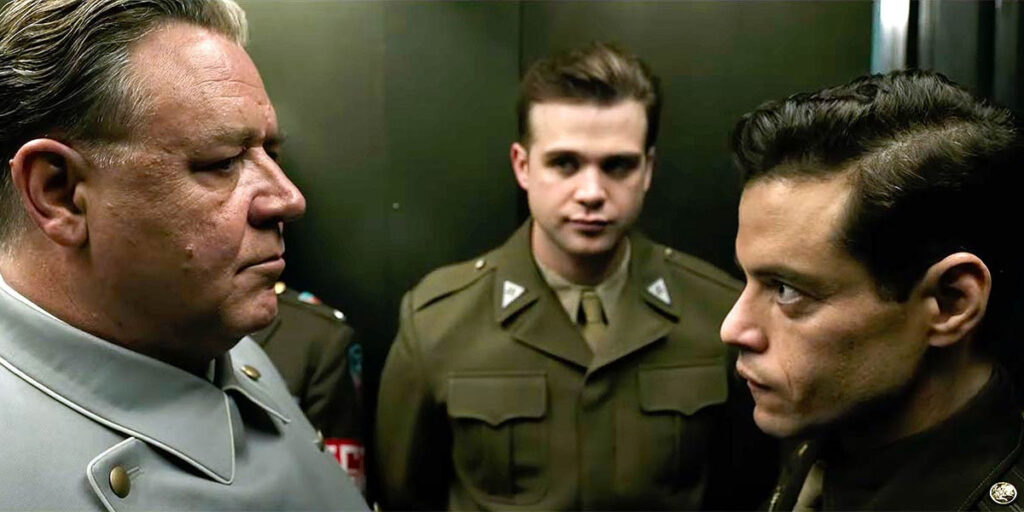
Director and screenwriter James Vanderbilt’s film is based on the 2013 book “The Nazi and the Psychiatrist” by Jack El-Hai. It follows U.S. Army psychiatrist Douglas Kelley (Rami Malek), who is tasked with assessing the personalities and monitoring the mental states of Hermann Göring (Russell Crowe) and 21 other high-ranking Nazis in preparation for the Nuremberg trials.
The first half of the two-and-a-half-hour film focuses on Kelley’s unsettling relationship with Göring as he tries to gain his trust and understand not only why he and others followed Hitler so blindly, but how human beings become capable of such extreme evil. The second part shifts into the courtroom, tracking the historic proceedings.
In a press conference, Vanderbilt said he hadn’t known that psychiatrists were involved in evaluating prisoners during the war. After reading Jack El-Hai’s book proposal, he immediately knew he wanted to tell this story. “It was the quickest I said yes to anything in my life,” he recalled. Still, it took 13 years for the film to reach the screen.
Robert Jackson (Michael Shannon) was an associate justice of the U.S. Supreme Court who took a leave from the bench to serve as the Chief U.S. Prosecutor. At the opening of the trial on Nov. 21, 1945, he delivered one of the trial’s most powerful statements: “The wrongs which we seek to condemn and punish have been so calculated, so malignant, and so devastating, that civilization cannot tolerate their being ignored because it cannot survive their being repeated.”
“The U.S. Army wasn’t interested in a trial at all,” Vanderbilt noted. “There was actually a standing order that Churchill and Roosevelt had agreed upon to shoot these men within 48 hours of their capture. And Jackson said no, this is an incredibly important thing that we have to do.”
Malek, 44, born to Egyptian parents who immigrated to the United States in 1978, described how emotionally charged the filming was. “I could see a chin quiver. I could feel my heart racing … It wasn’t about who would give the better performance, but who would allow us to tell this story about moral courage and resilience.”
Malek, who previously stared in “Bohemian Rhapsody” and “Oppenheimer,” said he was drawn to roles that probe tension, identity and moral responsibility. “Choosing those stories is my way of engaging with complex ideas of silence or complicity,” he explained. In his view, “Nuremberg” forces a deeply personal question: “What do we do in the face of injustice?”
He called his work in the film one of his highest achievements, not just artistically but morally.
“I’ve always been drawn to roles that raise questions rather than give easy answers,” he said. “Whether it’s about identity or power or responsibility.
“Choosing those stories is my way of engaging with complex ideas of silence or complicity.”
Crowe, almost unrecognizable as Hermann Göring, plays the Luftwaffe chief as a man who is charming, manipulative and narcissistic. When Kelley sits down to speak with him, he doesn’t initially appear monstrous at all — just another man worried about his wife and daughter, a reminder of how deceptive human evil can be.
Because the events take place after the war, there aren’t any shocking scenes of Nazi brutality, except for some archival footage that was included during the trial scenes. We see men who look like walking skeletons and piles of bodies being shoved away by a tractor.
Shannon was in awe of the man he portrayed and said it was a humbling experience. “What he accomplished in his life is staggering in comparison to what I’ve accomplished in my own. I guess the one solace of being in what can be considered at times a pretty silly profession is that you get to inform the world, other people, about things that they probably don’t know much about and things, situations, people, stories that are important.”
“Nuremberg” is ambitious. Vanderbilt filmed the courtroom exchange between Crowe and Shannon in a single day. This is one of the best and strongest scenes in the film. Vanderbilt described it as “a verbal gunfight.”
But at times, it tries to cover too much: Kelley’s investigation, the courtroom drama, the political backdrop and even a brief romantic subplot. Yet the film’s strongest scenes are also its quietest: two men in a small room, one searching for humanity, the other trying to rewrite history.
While the film doesn’t reveal anything new or answer the question it sets out to explore — how human beings are capable of such unimaginable cruelty — its value lies in raising the question at all. Eight decades after the Holocaust, we continue to witness acts of brutality against Jews, and even more disturbingly, we still see people justifying it, ignoring it or even celebrating the suffering of Jews. In that sense, this film feels more relevant today than ever. It serves as a necessary reminder, and a history lesson, for those who never learned about it, or have chosen to forget.
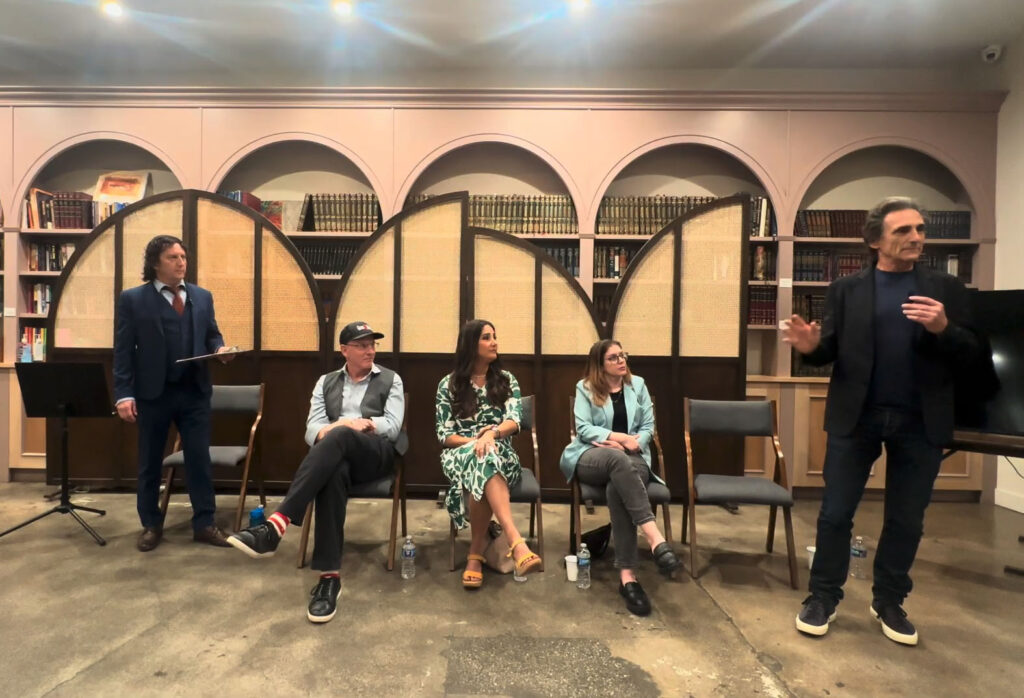
On Oct. 29 in Beverly Hills, Jew in the City founder Allison Josephs joined Marcus Freed, founder of the Jewish Filmmakers Network (JFN), for a public panel —a first official collaboration between Josephs’ Hollywood Bureau — now known as the Jewish Institute for Television & Cinema (JITC)— and Freed’s expanding global network of Jewish creatives.
The event at Happy Minyan also featured producer Lawrence Bender, director Sal Litvak, and screenwriter Allison Peck.
Josephs told the Journal her Hollywood Bureau of JITC was created to address what she described as a longstanding gap in media advocacy.
“The NAACP has a Hollywood Bureau, the Muslim Public Affairs Council has a Hollywood Bureau, GLAAD has one; until now, Jews didn’t,” Josephs told the Journal.
Her organization began as Jew in the City in 2007, countering stereotypes of Orthodox Jews. Their current mission is to be a voice in the entertainment industry by advising writers, producers, and studios on Jewish representation. Josephs said the work has become more urgent since Oct. 7, when misinformation and caricature of the Jewish community fueled exponential antisemitism.
“The automatic assumption that exists still in Hollywood today is why do Jews need help? Jews run Hollywood. So we’re not necessarily welcomed in with open arms as every other minority group is,” Josephs said. “If it were so easy, probably another organization would’ve done this much sooner, but we’re the only ones doing this. And it’s not easy work because you have to have uncomfortable conversations.”
Josephs presented findings from a study conducted with USC’s Norman Lear Center — the first comprehensive review of Jewish representation in 25 years. The research, titled “Jews on Screen: The Visibility and Representation of Jewish Identity in Contemporary Scripted TV,” analyzed 108 Jewish characters and 30 portrayals of Orthodox Jews from television shows in 2021-2022.
“There’s a lack of authentic casting of Jews,” Josephs said. “We were only able to find 56% of actors casted playing Jews were confirmed Jews. And with other groups, there seems to be a higher level. Judaism is not only a religion, we’re also an ethnic group.” She clarified, though, that JITC is “not here to be watchdogs” but to be “ partners with the studios so that we can say to them, ‘we love that you did this, and next time it would be even better if you did that.’” She added, “if we just come out swinging and saying, ‘you suck, you’re the worst, there’s no hope for you,’ then that’s not a very productive conversation.”
For Freed, a British actor and filmmaker, he created JFN for the 2023 Sundance Film Festival’s Shabbat Tent, organized by Rabbi Yonah and Rachel Bookstein of Pico Shul and Jewlicious. It has since held gatherings in Los Angeles, London, New York, Edinburgh, Cannes, and online.
“The event with Lawrence Bender, Allison Josephs, Sal Litvak and Allison Peck was fascinating because it was the first official collaboration between our two organisations,” Freed told the Journal. “We have different missions but have a shared space. For the Jewish Filmmakers Network I very much focus on community building and bringing together Jews in the industry.”
Freed said the network remains an inclusive, non-religious space.
“I’m coming at it from the perspective of being a professional actor and filmmaker, but also being a community organiser and rabbi—even though it’s a completely non-religious space, it’s totally inclusive to Jews as well as some non-Jewish allies who come along.” Freed described the work by JFN and JITC as “absolutely, desperately needed.” Their joint event showcased three recent productions that as great examples of progress in Jewish storytelling: Lawrence Bender’s “Red Alert,” on Paramount+, Sal and Nina Litvak’s feature film “Guns & Moses,” and screenwriter Alison Peck’s Netflix film “You Are So Not Invited to My Bat Mitzvah” —from Adam Sandler’s Happy Madison Productions.
“I wanted it to be focused on Jewish joy,” Peck said about “You Are So Not Invited to My Bat Mitzvah. “I was very careful to not include stereotypes as much as I could, but also to make it feel realistic. The easy way of doing it is like throwing money at the bat mitzvah and making it a money situation. So we really focused on making it about the things that the character Stacy (played by Sunny Sandler) wanted for her Bat Mitzvah. She’s a bratty 12-year-old and not because they’re just filthy rich… it wasn’t a problem she had with being Jewish, it was just the situation of the pressures of being 12, 13 years old.”
Producer Lawrence Bender spoke during the panel about making “Red Alert” for Paramount+, a scripted show about the Oct. 7 attacks. He was especially moved by the survivors who came to the sets where they were being portrayed by actors.
“We have these extraordinary people that we were honored to have on our set who are still a year and a half later, very traumatized,” Bender said. “So I spent a lot of time with them. One thing that I found is that they felt isolated. They felt alone. The very people who were attacked, the very people who need love and need to be held and need to be recognized are the very ones who are feeling like alone in the world, which became even more of a driving mission for myself to be able to tell their stories and make sure people in the world knew who they were.”
Sal Litvak, writer and director of “Guns & Moses,” talked about what he’s observed amongst Jewish actors in Hollywood since Oct. 7.
“There’s a lot of Jewish actors in Hollywood who have been silenced since October 7th and who don’t want to play Jewish roles,” Litvak said. “They don’t want to be typecast. They’re afraid that they’re going to be in that Jewish box too much. I hope that we’re going to see a lot more projects with a diversity of Jewish characters. I mean, we’re ancient people. Forget the stereotypes. We can offer hundreds of different nuanced experiences on screen that haven’t been depicted or portrayed before at all, because being an ancient people, it brings a lot to the table.”
Josephs said all three examples matter because they show range. “It’s not one version of being Jewish,” she said during the panel. “You have an Israeli story, an Orthodox story, and a Reform or secular story, and they all show pride without self-hatred.”
In November 2024, JITC held its second Jewish Media Awards to celebrate authentic Jewish storytelling and representation. The event, at the Lincoln Center in New York, recognized the virtues of Jewish storytelling in “Fauda” and “Jewish Matchmaking” on Netflix, and the Sheryl Sandberg documentary “Screams Before Silence.” The third Jewish Media Awards ceremony is slated to take place in 2026.
Just last month, JITC launched the “Like a Jew” short film and awareness campaign inspired by Always’ “Like a Girl” initiative. The video challenges Hollywood stereotypes by featuring young Jewish children describing what it means to “act like a Jew.”
Freed sees the work of JFN, Josephs’ JITC, as well as the concerted efforts by showrunners and filmmakers as a crucial solution in an industry that feels increasingly hostile to the Jewish community.
“These [films and shows] are so much more than just works of art,” Freed said. “These are tremendously healing to the Jewish soul in addition to their entertainment levels.”
A Thanksgiving Feast is carbs galore. Sweetness is another hallmark of this holiday meal. The only thing that’s better is when both are mixed together.
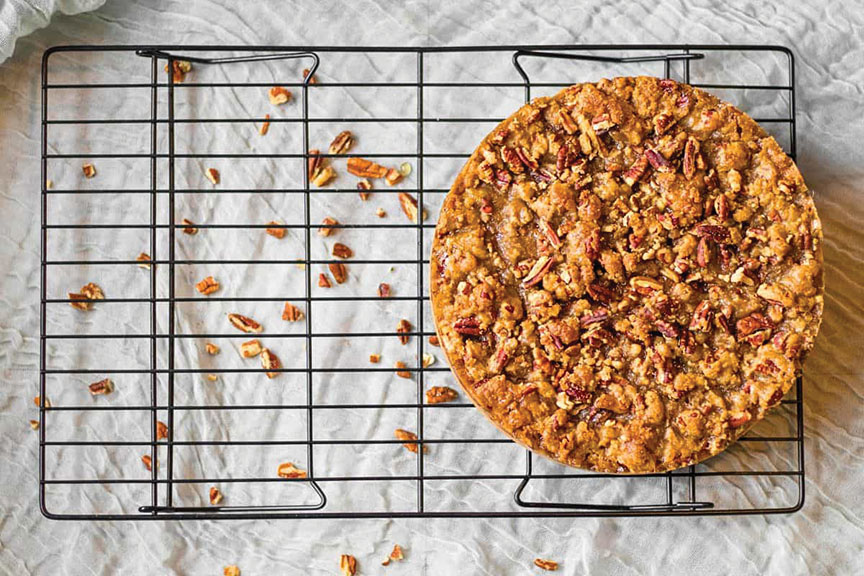
Food blogger Marni Katz’s favorite Thanksgiving recipe is a sweet potato casserole that her mom made for Thanksgiving. It’s something she always served as part of dinner, and not dessert.
“She also whipped [it] up for Passover, Rosh Hashanah and lots of special Shabbat dinners,” Katz, SimpleGrayTShirt.com, told The Journal. “It can be made parve or dairy, [is] so simple to make and [is] a reminder that traditional recipes don’t have to be fancy!”
Simple Sweet Potato Pie
12 Servings
Filling:
40 oz can sweet potatoes/yams, drained
½ cup sugar
½ cup almond milk or whole milk, soy milk, coffee rich
1 tsp vanilla
2 eggs
Topping:
¾ cup brown sugar, packed
½ cup flour
1 cup chopped pecans
¼ cup butter, margarine or plant-based butter substitute
1. Prepare an 8″ springform pan by spraying liberally with cooking spray and wrapping the bottom in aluminum foil. Preheat the oven to 400 degrees.
2. In a blender or large mixing bowl with a hand mixer, combine drained sweet potatoes, sugar, almond milk, vanilla and eggs until smooth. Pour the filling mixture into the prepared springform pan.
3. In a small bowl, combine brown sugar, flour, pecans and butter. Once combined, spread evenly on top of sweet potato mixture.
4. Bake at 400 degrees for 35-40 minutes, until the middle is set.If it’s getting too dark, but the middle is not yet set, lightly cover with foil.
Pumpkin-cranberry muffins are a great alternative — or addition to — Thanksgiving dinner rolls.
“I am a third-generation American — my grandmother was born in Boston — so Thanksgiving is an important part of our family celebrations,” Karen Dennis, a healthcare publicist, told the Journal. “The vibrant taste of the cranberries contrasts beautifully with the sweetness of the pumpkin and added sugar.”
They freeze well. Plus, you can have fun with the presentation.
“Often, I bake them in a metal turkey mold that I bought on Amazon instead of the muffin-sized mini loaves,” she said. “If I bake it in loaves, I place it on a wooden cutting board which looks so pretty.”
Pumpkin Cranberry Muffins
3 cups of flour (white or whole wheat)
3 cups of sugar (scant)
1 ½ tsp of cinnamon
½ tsp baking powder
1 tsp baking soda
1- 15-ounce can of pumpkin (not pumpkin pie filling)
1 cup of canola oil
3 large eggs
1 bag of fresh cranberries
Preheat the oven to 350°F. Spray muffin tins with Baker’s Joy (Pam with flour).
Mix the pumpkin, oil and sugar. Add the eggs. Then mix in all the dry ingredients with a wire whisk. Fold in cranberries. Pour batter into mini loaf mold (makes 5) or one large loaf or in muffin pans (makes 24-28).
You can sprinkle the top with pumpkin seeds or Grape Nuts for crunch.
Bake for 35 to 45 minutes.
AThanksgiving meal would not be complete without a proper dessert … or desserts!
“The classic pumpkin pie is the perfect addition to the Thanksgiving meal,” Adaeze and Lenny Rosenberg, owners of New York Bagel Deli & Bakery in Santa Monica, told The Journal. “It is a truly divine experience, while creating additional memories with loved ones.”
Classic Pumpkin Pie
Yields: 3 8-Inch Pies
24 oz. pumpkin filling
12 oz. brown sugar
1 oz. corn starch
Pinch of salt
4 whole large eggs
24 oz. evaporated milk
2 ½ oz. cinnamon
3 pre-baked pie crusts
1. Pour all the filling ingredients into a mixing bowl.
2. Mix all ingredients in a mixing bowl with a wire whisk till smooth.
3. Pour mix into 8-inch pie tins with a pre-baked pie crust to the level of the pie tin.
4. Bake at 375 degrees for 35 minutes.
Pam Stein, In Pam’s Kitchen, has a delicious dessert alternative that’s worthy of a place on your Thanksgiving table.
“Made in the microwave, this apple cranberry crisp is not only quick and convenient, but it also embodies the seasonal flavors of a traditional apple pie,” Stein told The Journal. “In this recipe the apples are unpeeled, giving them extra texture and a rustic appeal, the dried cranberries add a tanginess and bourbon deepens the flavors to create a dessert that is grounded in the harvest season.”
If you’re juggling multiple dishes, this recipe is a stress-free way to add a homemade dessert to your menu.
“In the midst of Thanksgiving chaos — when ovens are packed with turkeys, stuffing and other delish sides — having a dessert with minimal prep time that cooks in minutes, without competing for oven space, is a lifesaver.“
Apple Cranberry Crisp
Serves 4-6
For the Topping:
½ cup rolled oats
¼ cup all-purpose flour
¼ cup brown sugar
3 Tbsp unsalted butter, melted
For the Apples:
4 medium apples, unpeeled, cored and thinly sliced
3 Tbsp brown sugar
1 tsp ground cinnamon
½ tsp ground nutmeg
1/8 tsp ground cloves
2 tsp lemon juice
¼ cup bourbon
2 tsp cornstarch
1/3 cup dried cranberries
1. For the topping: In a small bowl combine oats, flour and brown sugar. Pour in the melted butter and stir until the mixture forms a crumbly texture. Set aside.
2. In a medium bowl add the brown sugar, cinnamon, nutmeg and cloves. Add apples and lemon juice.
3. Whisk together the bourbon and cornstarch in a small bowl to make a slurry. Pour slurry over the apples and mix to coat.
4. Add apples and liquid to a shallow 7 cup, microwave-safe dish (about 8 inches diameter).
5. Sprinkle the dried cranberries over the apples.
6. Dot the oat mixture evenly over the apples.
7. Cook on high power (100%) for 8-10 minutes, until the apples are bubbling and the topping is golden. Let rest for 5 minutes.
8. Serve warm with vanilla ice cream or whipped cream.
9. Cover and refrigerate leftovers for up to 3 days.
Thanksgiving is about more than just the food — it’s about spending time with your loved ones.
Whether you — or someone you love — is vegan, and/or you need some vegan options to add to your kosher Thanksgiving table, Michelle Harris, host and producer of “Alive & Well” on JLTV, has you covered.
“All of our recipes are plant-based, so they are always kosher,” Harris told The Journal.
“Alive & Well” is a half-hour, magazine-style program, which provides information on healthy, modern green living.
Harris’ charcuterie board is a unique spin on the traditional board.
“It still has treats guests will love but you would never know they are plant-based,” she said. “It’s perfect for a Thanksgiving starter.”
Plant-Based Charcuterie and Cheese Board
Fresh seasonal fruit (in this case I used fresh pears and organic red and green grapes)
Dried cranberries and multi-colored jumbo raisins
Sambucol Black Elderberry Gummies
Macadamia nuts
Almonds
Mini breads (I used mini-naan breads)
Flatbread crackers
Hummus (works great plain or flavored like red pepper hummus)
Plant-based cheese (I used one of my favorites: Kite Hill, Violife Smoked Plant-Based Provolone)
Mia plant-based carpaccio
Yves pepperoni slices (these are delicious and taste just like “real” pepperoni)
Rosemary and other fresh herbs to garnish
Assembly is easy for any charcuterie or cheese board. I use a combination of ramekins for dips or nuts and display the fruits, breads, crackers and plant-based cheeses throughout the board.
Garnish and serve!
“Homemade cranberry sauce is easy, and tastes much better than canned,” Harris said.
Orange Cranberry Sauce
1 12oz package fresh cranberries, rinsed
1 cup orange juice
1 cup raw sugar (or sugar alternative of your choice)
Combine orange juice and sugar in a saucepan and stir. Add cranberries and bring to a gentle boil. Continue cooking until cranberries are soft (usually about 10 to 15 minutes). Remove from heat, allow to cool to room temperature and then stir. Refrigerate until ready to serve.
If you need or want a plant-based main, you have plenty of options.
“Most supermarkets and natural grocers carry a variety of plant-based turkey alternatives,” she said. “Best of all, many also include stuffing.”
Some of her favorites:
• Tofurky Veggie Roast and Wild Rice Stuffing. Tofurky is the OG vegan “turkey-style” roast. The wild rice stuffing is amazing. This roast needs basting in order to prevent dryness.
• Garden Holiday Roast. This is my go-to holiday roast. It’s easy to make and tastes incredible. It comes stuffed and with gravy.
• Field Roast Celebration Roast. Field Roast has a “celebration,” as well as a hazelnut and cranberry option. The celebration is plain but stuffed and comes with gravy. The cranberry is wrapped in vegan puff pastry.
• Whole Foods Mushroom and Root Vegetable en Croute. This is available through food service and is a great main dish that is not a turkey substitute but delivers on flavor!
Don’t forget to leave room for dessert!
“Pumpkin pie is a time-honored Thanksgiving tradition,” Harris said. “My pumpkin pie recipe is plant-based and deliciously decadent!”
Pumpkin Pie
Crust
1 cup whole grain pastry flour
1 Tbsp raw sugar
5 Tbsp olive oil margarine (I use Earth Balance)
3 Tbsp cold water
Combine pastry flour with sweetener. Add the olive oil margarine. Next stir in the water one tablespoon at a time. Once all the ingredients are moist, you no longer need to add water. Roll out the dough. Place on a pie plate and cut away excess dough at edges. Use a fork to prick the crust.Bake at 350°F for 15 to 20 minutes until lightly browned. Allow to cool.
Pumpkin Filling
1 package Japanese silken tofu
16 oz can of pureed pumpkin
1tsp cinnamon
1/4 tsp nutmeg
1tsp vanilla extract
1 cup brown sugar
1/3 cup raw sugar
1/4 tsp ground cloves
1 Tbsp olive oil
1 tsp ground ginger
Preheat the oven to 350°F.
Place tofu in a blender or food processor. Blend until smooth. Next add the pumpkin and blend. Then add the cinnamon, nutmeg, vanilla, cloves, olive oil and ginger. Blend again.
Pour filling into the crust and bake for 1 hour or until it sets. Usually it’s a good idea to cover the exposed crust with tin foil so that it doesn’t burn.
Cool the pie and serve as is or with a dollop of non-dairy whipped cream such as Truwhip and enjoy!
My father was literally the dark, handsome, silent type. A man of deeds, not words. Every morning, he would leave the house early. But before leaving, he would bring my mother a tray of toast in bed and three tall glasses of freshly squeezed orange juice for her, my brother Rafi and me.
In the summers, our Sydney home was filled with the intoxicating perfume of ripe peaches, perfect green Thompson grapes and the intense tropical scent of sweet, juicy mangoes. (Those same Australian mangoes are selling right now at Gelson’s in Century City for $10.99 each. And they’re worth it!)
In the winter, my father had to be content with boxes of apples and oranges. He always took the greatest pleasure in buying boxes of fruit and vegetables from the wholesale produce market. It was a throwback to life in Baghdad where the women stayed in the home and the men shopped for food in the souk. His other great pleasure was growing fruits and veggies in his garden.
One of my favorite memories of my father is of him dressed in a smart white shirt and dress pants, standing on the roof of the shed in my backyard, harvesting tangerines from the tallest branches of our tree.
I always feel so incredibly blessed because my home has so many fruit trees. The citrus trees include tangerine, orange, lemon and kumquats. Our front yard is overshadowed by a large tree that produces mutant citrus fruit with thick skin like a pomelo and dry in edible flesh. I also have a loquat tree, a pomegranate tree and a passionfruit vine that my father planted for me.
This Orange Blossom Olive Oil Cake is an easy one-bowl recipe. This moist, tender cake perfectly balances fresh orange essence with the earthy notes of extra virgin olive oil. The soft, slightly dense, crumb contrasts perfectly with cream cheese frosting. (We used Toffutti cream cheese, powdered sugar and fresh lemon zest to keep it non-dairy.)
The happiest part for me was decorating the cake with delicate sprigs of thyme and bright citrus from my garden.
—Sharon
Orange Cake is always a favorite of the Moroccan kitchen. (I mean I literally put orange zest in all my baked goods!) And this cake is especially lovely because of the olive oil. Just perfect for dessert on Shabbat, served with a steaming cup of fresh mint nana tea.
—Rachel
Orange Olive Oil Cake
3 large eggs
1 1/2 cups sugar
1 cup plain almond milk
1 1/3 cups extra-virgin olive oil
1/2 cup freshly squeezed orange juice
1/4 cup Grand Marnier or triple sec
2 tsp vanilla extract
Zest of 1 orange
2 cups all-purpose flour
1 tsp kosher salt
1/2 tsp baking powder
1/2 tsp baking soda
Preheat the oven to 350°F and set the rack in the center of the oven.
Line the bottom of an oiled 9-inch round cake pan with parchment paper.
In the bowl of a stand mixer, combine the eggs and sugar and beat until a creamy yellow.
Add the almond milk, olive oil, orange juice, liqueur, vanilla and orange zest, then beat until combined.
Add the flour, salt, baking powder and baking soda and whisk gently until combined, taking care not to overmix the batter.
Pour the batter into the pan, then tap the pan on the counter to rid the batter of any air bubbles.
Bake for about 50 to 55 minutes or until a toothpick inserted in the center of the cake comes out clean.
Allow the cake to cool completely. Frost the cake with a favorite frosting or sprinkle with confectioners sugar.
If desired, garnish with slices of pink grapefruit, blood orange, tangerine and kumquats and sprigs of fresh thyme.
Sharon Gomperts and Rachel Emquies Sheff have been friends since high school. The Sephardic Spice Girls project has grown from their collaboration on events for the Sephardic Educational Center in Jerusalem. Follow them on Instagram @sephardicspicegirls and on Facebook at Sephardic Spice SEC Food. Website sephardicspicegirls.com/full-recipes.
Chestnuts will always be a wintertime favorite for me. When I was younger, my father had his own way of celebrating the winter season — he would come home with big paper bags filled with raw chestnuts. My parents would roast tray after tray in the oven and the whole house would fill with a warm, sweet aroma.
We would sit together in front of the TV, peeling each one and enjoying that creamy, melting nutty flavor.
My mother would take some of those chestnuts and incorporate them into her cooking. She made the most delicious jelly roll cake, but instead of the typical fruit jam, it was filled with a smooth, sweet chestnut cream and finished with a glossy layer of chocolate. She also made a rich gravy with chestnuts and mushrooms, perfect for pouring generously over turkey, roast chicken and mashed potatoes and even puff pastry.
My parents’ love of chestnuts came from their childhood winters in Larache, an ancient port city in northwest Morocco. On street corners, Arab vendors roasted chestnuts over braziers, selling them to passersby in little paper cones. My father could never resist those chestnuts.
Even now, whenever I spot whole chestnuts still in their shells, I buy a few pounds and take them straight to him. A nostalgic treat that instantly brings him back to memories of Larache evenings, cold air, glowing coals and the irresistible smell of roasted chestnuts.
Nowadays, I use the packaged roasted chestnuts from Trader Joe’s or Pico Glatt Market. It’s so much easier for cooking and baking. But nothing compares to the joy of finding the real thing, whole and rustic, just the way my parents remember them. It’s a taste of our childhood winters, our family table and our Moroccan history.
—Rachel
Growing up in Australia, the seasons were reversed, so Decembers weren’t spent with chestnuts roasting on an open fire.
My first memory of roasted chestnuts was in December in Rome when I was 12 years old. My father was so excited to see the street vendors hawking them, just as they had in his Baghdad youth.
My mother Sue described her most cherished memories of sitting in her Baghdad home, with three generations of her family drinking cardamom tea, eating dates and walnuts and ka’ak (crisp, salty ring crackers topped with sesame seeds). In winter, the highlight was the chestnuts nestled in the coal embers of the “ja’fuf,” a small oven.
Some of my fondest memories are when my father would roast chestnuts for Ariel and my girls when they were little.
Chestnuts are really the unsung ingredient of festive holiday fare. We hope you enjoy this incredible recipe for golden turkey breast with potatoes and chestnuts.
—Sharon
Roasted Turkey Breast with Potatoes & Chestnuts
This aromatic one-pan winter roast features juicy turkey breast served with rustic potatoes and savory chestnuts. The wine and mustard marinade elevate the flavor, making this festive platter perfect for Shabbat and holidays. This dish guarantees effortless elegance and cozy comfort!
1 (6-pound) turkey breast
6–8 large Yukon gold potatoes, peeled and cut into big chunks
6 large shallots, quartered
3 packages roasted chestnuts, roughly chopped
Marinade
2 cups water
1 cup white wine
¼ cup olive oil
2 Tbsp Dijon mustard
2 Tbsp chicken consommé powder
1 Tbsp fresh thyme, or 1 tsp dried thyme
1 Tbsp sweet paprika
Salt and pepper, to taste
Preheat the oven to 325°F on the Roast setting.
Place the turkey breast in a large roasting pan. Place the potatoes and shallots around the turkey.
In a bowl, whisk together the water, white wine, olive oil, mustard, consommé powder, thyme, paprika, salt and pepper until well combined.
Pour the marinade evenly over the turkey, potatoes and shallots.
Roast uncovered for 1½ hours.
After 1½ hours, add the chestnuts, mixing them gently into the potatoes. Baste turkey breast, potatoes and chestnuts with pan juices.
Return the pan to the oven and continue roasting, until the turkey reaches an internal temperature of 165°F, about 30–45 minutes more, depending on the oven.
Remove the turkey from the oven, tent the roasting pan with foil and allow to rest for 15 minutes.
Carve the turkey into thin slices, then place on a serving platter. Arrange the roasted potatoes, shallots and chestnuts around the turkey, then spoon the pan juices overthe roasted turkey and vegetables.
Serves: 8
Active Time: 15 minutes
Total Time: About 2 hours 30 minutes.
Sharon Gomperts and Rachel Emquies Sheff have been friends since high school. The Sephardic Spice Girls project has grown from their collaboration on events for the Sephardic Educational Center in Jerusalem. Follow them on Instagram @sephardicspicegirls and on Facebook at Sephardic Spice SEC Food. Website sephardicspicegirls.com/full-recipes.
One verse, five voices. Edited by Nina Litvak and Salvador Litvak, the Accidental Talmudist
And Jacob gave Esau bread and lentil stew, and he ate and drank, and he rose and went on his way; thus Esau despised his birthright.
– Gen. 25:34
Gila Muskin Block
Executive Director, Yesh Tikva
We all know the story: Esau is hungry and wants to buy a meal of bread and lentil stew. Jacob agrees, but only on one condition, Esau must first sell him his birthright. The story concludes with our parsha: “And Jacob gave Esau bread and lentil stew, and he ate and drank, and he rose and went on his way; thus Esau despised his birthright” (Gen. 25:34).
At first glance, the detail about Esau eating and drinking seems almost superfluous. Why does the Torah tell us this? The Bekhor Shor offers a compelling explanation: the parsha clarifies that even after Esau ate, drank, and regained his strength, he still despised his birthright. His choice was not the product of momentary hunger or weakness. It was not a lapse in judgment that faded once he was sated.
Indeed, Esau’s willingness to trade something eternal for something fleeting remains intact even after he is nourished. He is calm, deliberate, and at peace with the transaction. The Torah emphasizes this to show that Esau’s birthright, his spiritual inheritance, holds no weight in his eyes.
Despite Esau’s blindness to its worth, Jacob, our forefather, recognizes the profound value of the birthright and eagerly acquires it. He sees beyond the immediate, understanding the spiritual inheritance it represents. The lesson I take from this story is to pause and consider the value of the gifts, responsibilities, and opportunities entrusted to us, and to cherish them with the clarity and purpose of Jacob.
Baruch C. Cohen
Los Angeles Civil Trial Attorney
THE MEAL THAT EXPOSED A SOUL
On the surface, the scene is simple: a hungry man, a bowl of stew, a quick meal. But the Torah is never that simple. It paints the moment with devastating precision. Esau comes in from the field exhausted, driven by appetite, consumed by the urgency of now. Jacob offers him bread and lentils. Esau eats, drinks, rises and walks away. Then the Torah reveals what actually happened beneath the surface: “Thus Esau despised his birthright.”
This was not a foolish bargain. It was a spiritual diagnosis. Esau’s flaw wasn’t that he sold something precious, it was that he felt no reverence for it in the first place. The birthright represented destiny, responsibility, covenant, the weight and wonder of the future. But Esau lived only in the present moment. If it didn’t satisfy immediately, it held no value. Jacob saw eternity behind the invisible. Esau saw only his hunger.
And so this becomes not a story about two brothers, but a story about us. Every day, the Jacob within us reaches upward, toward meaning, purpose, slow greatness. And every day, the Esau within us lunges for comfort, distraction, and the warm bowl of “right now.”
The danger isn’t the stew. The danger is letting the stew define what matters. Esau didn’t merely relinquish the birthright, he walked away full but spiritually empty, unaware of the greatness he abandoned. The Torah leaves us with a single, piercing question: What sacred possibilities are we trading for momentary relief?
Rabbi Ari Averbach
Host, “Moral Courage” podcast, Temple Etz Chaim
Judaism is built on the idea that we can disagree with each other and still remain civil. In so many other parts of our lives, if we don’t see eye-to-eye, then the conversation is over. In Midrash and commentaries over the course of millennia, sages posit what they believe the Torah is saying in its holy concision, and we hold multiple truths at once.
A favorite example is on this one line of Torah. Ibn Ezra, a Medieval Spaniard who wrote thoughts on nearly every verse of the Bible, read this line and said, “Clearly, Isaac and Rebecca had no wealth, which is why there wasn’t a fight over the birthright.” It would be like arguing over half of dad’s failed business. He then goes on to give several examples from the Torah that seem to support the claim that Isaac and Rebecca were destitute. A century later, Ramban, more of a mystic, wrote, “Ibn Ezra is totally confused. How can he be so blind? It is laughable!” (Ooh … drama between rabbis!) He notes that there are five verbs in a row in this sentence. Esau ate, drank, rose, went and despised. “Fools have no desire for anything but immediate pleasures, taking no thought for tomorrow.”
He contends that Esau is denied the birthright and the blessing because he is only interested in instant gratification. The one who carries the torch of sanctity must always be thinking of how it affects the next generation. And we still do.
Dr. Sheila Tuller Keiter
Judaic Studies Faculty, Shalhevet High School
Who would make the better action figure, Jacob or Esau? Jacob is great, but Esau comes with a fur robe and hunting bow accessories. Esau is the man of action, especially in this verse: Esau eats, drinks, rises, and goes, four verbs in rapid succession, and then he disparages. How do those four actions connect to rejecting his birthright?
Some argue Esau lives purely in the physical realm, acting solely to satisfy his physical desires. He despises the birthright because he rejects the spiritual legacy of Abraham and Isaac. This argument certainly succeeds if what Esau rejected was the brit, the covenant. But here Esau rejects the birthright, i.e. his inheritance rights. Nothing could be more material than inheritance. Rather, Esau, the man of action, aspires to live by the fruit of his own labors, to be a self-made man. He hunts for his sustenance. He depends on no one. Yet, for once, he is forced to rely on his brother’s kindness and humble food. What shame he must have felt accepting Jacob’s charity! No wonder he despises his birthright. He never wants to inherit, to take handouts, to be reliant on family kindness again.
Esau’s defiantly individualistic spirit is admirable, yet our tradition places a premium on collective responsibility. We rely on family and communal support, which creates a reciprocal responsibility to sustain the institutions that support us. The Jacob action figure doesn’t come with cool accessories. Rather, he makes himself an accessory to the rest of Am Yisrael.
Rabbi Nicholas Losorelli
Jeffrey & Allyn Levine Assistant Dean, AJU Ziegler School of Rabbinic Studies
Our patriarch Jacob, who famously wrestled with a divine being earning the name Israel, took advantage of his brother Esau, who had just returned from hunting. Jacob saw Esau famished at death’s door, and though you would expect him to do anything to save his brother’s life, he didn’t. Instead, Jacob put his brother in an impossible predicament: “I see you’re starving to death, and I’ll give you food, but only if you first give me your birthright.” Is that a choice? No! In his fragile state, Esau is compelled to say, “I’ll give you whatever you want.” And, despite this profoundly fraught moment, Jacob is still our heroic patriarch. Why?
Well, Jacob wasn’t always a hero. He hadn’t yet faced his choices and wrestled with the divine and human, he was still a scared child subject to the dynamics of his parents, and as a result he made decisions not of his own making, but certainly of his own doing, and while he is not responsible for the making, he is responsible for the doing.
What does this tell us? It tells us that if we have agency —the ability to do something — then we must take that agency seriously. When faced with issues not of our own making, we stand with the agency to make the same choices that got us there, or to make different choices. And to make a different choice in moments like these, can be a truly heroic act worth remembering.
On Oct. 7, 2023 Jonah Platt was rehearsing for the West Coast premiere of the play “The Engagement Party” at the Geffen Playhouse in Westwood.
It’s a play about a friendly gathering that devolves into a slew of accusations over a missing engagement ring. Tempers flare and bridges are burned, possibly forever. It is very much a metaphor for how Platt and the Jewish community would navigate the many layers of tension about the Israel-Hamas war and Judaism itself over the next two years.
This would end up being Platt’s last acting role since October 2023
A year later, the parallels were hard to ignore. The 2024 Presidential election caused a fracturing in the Jewish community about Israel, about the U.S., about memory, about being Jewish. Just like in “The Engagement Party,” the family felt broken, the air filled with accusations and a fleeting trust. People who once assumed they understood each other were suddenly unsure of where anyone stood.
On Oct. 7, Platt was in the middle of that run. Since then, he says “I haven’t spent much time pursuing performing opportunities. I’ve been really consumed by Jewish advocacy.” Oct. 7 divided everything.
Platt is a husband, a father and part of a family in the public eye. Six weeks earlier, he had buried his lifelong friend from the Sinai Akiba Academy, Marc Becker. At Becker’s shiva, Platt said, “Marc had room for everyone in his heart. His hand was forever outstretched.” When the attacks happened, Platt felt pulled toward work that could hold tension instead of escape it.
Two months later, in December 2023, Platt sat on a Jubilee “Middle Ground” panel with an Israeli artist, an Oct. 7 survivor and two Jewish creators. Across from them were four pro-Palestinian advocates. It was an early, fierce debate on social media about the war.
Thirty-six minutes in, Platt tried to frame the room in human terms. “One side has their story, their truth, their lived experience, the other has the same, we don’t have to convince the other to see it the exact same way,” he said. “We just have to see each other and acknowledge that we’re both in this situation … and treat each other like human beings and find the way out of it.”
The pushback came fast.
By summer 2024, Platt eased away from looking for the next role and started shaping a project built around long conversations. The months after the attacks were full of arguments, pressure, fear and confusion. He wanted a space where people could talk without trying to win.
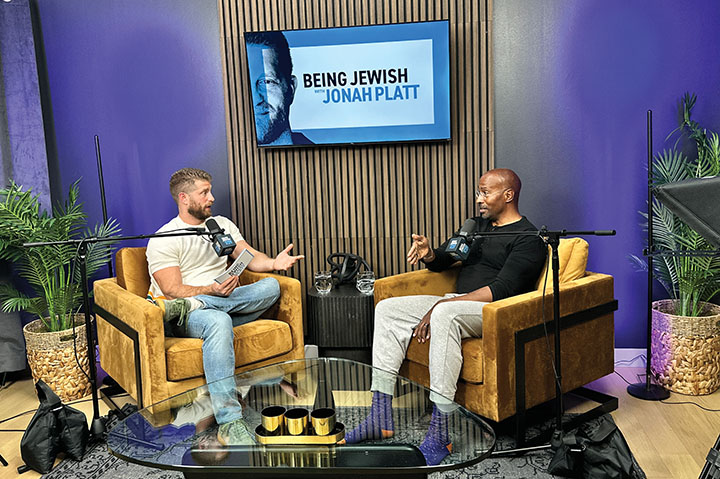
He built “Being Jewish with Jonah Platt” around a simple structure: an opening monologue, a guest, and enough time to think.
The guest list grew fast: actor Skylar Astin (“Pitch Perfect”) was the guest on the first episode, helping Jonah explain why this show exists at all; TikTok star Montana Tucker came on to talk about fame, family and what it meant to speak up about Israel during the 2024 election; Rabbi David Wolpe, who has known the Platt family for over 30 years, wrestled with Platt about “shortcut empathy.” More and more prominent guests showed up: English comedian David Baddiel, and author Dara Horn, then Auburn Men’s Basketball head coach Bruce Pearl — who falls on the opposite side of the political spectrum compared to Platt. Actor Jason Alexander stepped into a raw conversation about hostages and public pressure. Van Jones, the first non-Jewish guest, spoke as a Black ally who has spent years thinking about the bond and the gaps widening between the two communities.
Jonah Platt with Van Jones
“Van is, to my mind, the number one ally the Jewish people have,” Platt said. “He’s unbelievable. And I’ve learned a lot from him both in our episode and in real life and my numerous interactions with him. He’s definitely a teacher of mine … in the ways the black community thinks about the Jewish community or doesn’t think about them … and also in how to be a leader and then to inspire people.”
Platt is still regularly seen on stage, but in different settings. He hosts community events, gives talks and sometimes sings at the end of his own episodes. He credits his formative years in high school for his fluency in handling audiences on the fly.
He looks back at his acting career with affection, but without much longing. “There are aspects of it that I think of fondly, but don’t necessarily miss,” Platt said. “I’m just so fulfilled by what I’m doing now.”
What he does not miss is waiting for permission. “While I was doing the acting and the entertainment stuff, something I missed really desperately was leading,” Platt said. “It was really difficult in my entertainment career … I never got to call my own shot about anything, let alone lead a team and inspire people and mentor and make folks better at what they do. I love all that stuff, and now I get to do that. And so that alone has been super rewarding and a really wonderful trade off.
“Honestly, if it’s between the day-to-day grind of auditioning for stuff, praying somebody gives me a chance and running a team of people, half of whom I only know because they reached out to me and said, can I be a part of what you’re building? It’s totally worth it.”
The Journal asked several Israel Information Influencers based in Los Angeles what they would hope to read in a cover story about Platt. The first question was always about his older brother, Ben, and his own public condemnations of Israel. In our interview, Platt did not run from the topic, but was also careful not to turn it into a family spectacle.
“I’ll just speak generally, so not myself specifically, but something that many people can relate to is there is someone in your life, whether it’s a relative or a colleague or a friend or whatever, who you do not see eye to eye with on the Israel issue or maybe any issue affecting Jews at all,” Platt said.
He drew a line between casual acquaintances and the people who matter. “To the degree that is an important person in your life … if it’s somebody you care about and in all other circumstances would want to have a good relationship with, I think you got to prioritize the relationship,” he said.
What has allowed him to do that in personal relationships is “having face-to-face, calm, compassionate, lowered stakes conversations, lengthy conversations, like four-hour conversations,” Platt said.Those talks do two things.They allow him to “really check the temperature of this person and where they might be coming from. … I then can sort of see for myself, okay, they don’t want to wage jihad on me,” he said. “They’re not that. They just have this unfortunate sort of misunderstanding out of propaganda and ignorance. And at least now I see where it comes from and I understand where they stand as a person on this, and I can release a little something in my heart.”
He is blunt about the limits of any one conversation. “We’re not going to solve the Middle East,” Platt said. “Somebody will message me, what are we going to do about this person? And I’ll say, it doesn’t matter, that one person believing A, B or C [has no] bearing on anything, unless you’re talking about a political leader or a world leader or something. No one person’s opinion on the Middle East or Jews is moving the needle … So we just have to chill out, keep the relationship first.”
If nothing changes, he said, that can still be a kind of answer. “After you’ve had this talk, if they’re not moving the needle at all on it, it’s something you don’t need to keep talking about,” he said. “And maybe that means that person isn’t as close to you as they could be, and that’s okay. And we have to be okay with that. It’s better to keep them in your life. It’s not an all or nothing situation.”
The Four Cs
The clearest window into his method came in a monologue at the start of episode six of “Being Jewish” with actor Jackie Tohn (“Nobody Wants This”), when he described a night at Cosme in New York.
He sat at the bar next to a woman who opened with politics before he even sat down. “Before I had even pulled out the chair, she asked, Where are you from? I said, ‘California.’ And she goes, ‘So you’re a liberal.’ … This was before my ass hit the seat. I said, ‘I’m Jonah.’ And just like that, we were off to the races.’”
They shared an entrée and a long, improbable conversation. Out of that night, he laid out what he calls his “Four Cs” for difficult conversations:
Curiosity.
“C number one stands for curiosity,” he said. “This one is probably the most important. If you want any hope of success, you must enter conversations with a sense of genuine curiosity. You have to want to hear and understand other people’s ideas and ways of thinking.”
Calm.
“C number two is calm,” he said. “You must enter the discussion from a dispassionate place of low stakes. If you’re too worked up, it’s already over. The fate of the free world does not rest on you making or defending your point.”
Camaraderie.
“C number three, camaraderie,” he said. “Allow yourself to be tickled rather than prickled by the outrageous notions of your partner. Laugh, smile, share an entrée … The open, dispassionate sharing of ideas should be a fun exercise in human connection.”
Compassion.
“And last, but certainly not least, C number four, compassion,” he said. “You must be operating from a baseline assumption of shared humanity and good faith. That whatever ideas someone may have, it is their own life experience that has led them to this point, not some nefarious plot or mental health breakdown.”
He stressed that this does not apply to every person in every setting. “Of course there are people with whom a conversation of this nature may not be desirable or even possible,” Platt said. “After all, it takes two to tango.” But for the people in your life who matter, he sees these tools as a practical baseline.
“At the end of the day, most of us want the same things,” he said. “Security. Opportunity. Prosperity. The chance for a better tomorrow for ourselves, our families, and our communities. Right? Lead from that.”
Jonah grew up watching his mother, Julie Platt, move through Jewish life in public and private. Julie spent her childhood in Wichita, Kansas, often one of the only Jewish students in her class. In their joint podcast episode, she describes the shock of arriving at Camp Ramah in Ojai. (Jonah is also a Camp Ramah alum). “I mean, everywhere I turned were Jews my age,” she said. “I just couldn’t get over it. I got to have friends my age who were Jewish.”
Camp led to decades of leadership. Julie eventually served as Chair of the Jewish Federations of North America and became a central figure in efforts to secure Jewish institutions, push for better Holocaust education and invest in young adult programming.
Jonah does not see his podcast as following in her footsteps, but the pattern is visible: Jewish identity as a source of duty, not only background. Still, she was the final episode of the first season of the podcast and one of the last before the two-year anniversary of the Oct. 7 attacks.
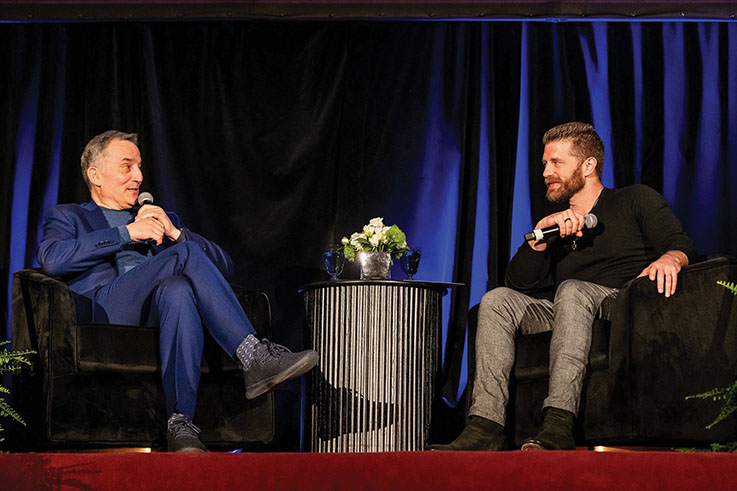
Rabbi David Wolpe with Jonah Platt
Platt said that his mother describes his show to people who don’t indulge in podcasts as “a clear, wide-ranging look at Jewish life with guests who care about Israel, Torah, culture and responsibility.”
Jonah grew up watching his father, producer Marc Platt (“Philadelphia,” “Legally Blonde,” “La La Land” among his credits), work on stories that tried to say something about the world, not just pass time. That sense of weight shows up in how he thinks about guests, topics and tone. He is not chasing viral moments. He is looking for work that holds up when people listen again.
They maintained a home where Shabbat dinners, synagogue life and charity work were the expectation. It was a home where creativity was encouraged quite a bit. He also knows that not every Jew grew up with such support, which shapes how he talks about “Jewish unity.”
“What Jewish unity should mean is the understanding … it’s like the aliens are coming,” Platt said. “Is planet Earth going to get over its bull and band together to fight the aliens, or are they going to keep fighting each other and make it easy for the aliens?” For him Jewish unity “means a recognition of we have some really big fish to fry and we all have the same fish to fry,” he said. “And it would really behoove all of us to at least agree on that and be able to work together on that. And we don’t all have to agree on everything. I mean, we never will, and we’re all living our Jewish lives very differently. But if we can get to a place of mutual respect and communication, that to me is Jewish unity … we’re all rowing in the same direction, even if it’s at different speeds and it looks a little different.”
“If we can get to a place of mutual respect and communication, that to me is Jewish unity … we’re all rowing in the same direction, even if it’s at different speeds and it looks a little different.”
He is blunt about how far we still are from that. “We are really siloed,” Platt said. “We are not communicating, we are not working together, we are not together. And that’s the most important thing … we just don’t even speak to each other enough to agree.”
Platt has three children now, the youngest born in June of this year. His oldest is six and a half. His oldest son has already joined him on the podcast in a recurring segment he calls “L’dor V’Adorable.”
Parenting, Platt said, has sharpened the same muscles he uses in public conversations. “As any parent can tell you, every day is an exercise in patience,” he said. “I think I was already a pretty patient dude, and having kids, I’m at my patience peak because that’s the way to effectively parent, right?”
Knee-jerk reactions, he said, show “you’re not listening really to what’s being communicated by the other person,” he said. “You’re just sort of lost in your own immediate emotion and reaction to it as opposed to stopping and going, well, let me think about that for a second. Let me consider it and then respond.”
He tries to bring that same pause into online and offline arguments about Jews and Israel. “The way in which I try to parent in that way is very much how I try to engage online and in conversation,” he said.
Sometimes his kids’ questions are strange and blunt. “My son asked me the other Monday night, if you were going to get cut in half, which half would you want to keep, the top half or the bottom half?” Platt said. “I just answered … I said I think the top half. He was like, yeah, I think the top half also.”
“Being Jewish” is hard to cut into 10-20 second clips that go viral on TikTok. Platt recognizes that but still refuses to pander to the algorithm and trade discourse for viral hysteria. “We’re in where we’re catching people in 30-second clips, there’s so much depth and thought to everything that I’m doing and every opinion that I lay out,” Platt said. “And if I err there, I’ll rescind it or I’ll change it.”
He said people often do not know what to do with someone who refuses all-or-nothing tests. “People don’t always know how to deal with somebody who’s comfortable holding multiple truths and saying, I’m happy when this team does A, B, and C, and I don’t like when they do D and F, and I’m happy when that team does A, B, and C, and I don’t like when they do D and F,” he said. “It’s not all or nothing stuff. I’m just so not all or nothing, whatever is what’s up, I’m all about.”
He sees the same thing in Jewish discourse around identity and observance. “There are many Jews today who are happily assimilated and looking for ways to integrate their Jewishness into a modern American secular life and society, and nobody’s wrong there,” he said. At the same time, he hears Orthodox friends who, in his words, “really seemed to not have an understanding of who and what those people are.”
“All that says to me is like, man, we are not talking to each other,” Platt said. “We are not communicating, we are not working together, we are not together.”
The Mission for the Next Quarter-Century
Looking ahead, he took a breath and laid out two goals. “What I think the next 25 years of Jewish life needs to prioritize is inclusivity,” Platt said. “That means Jews including other Jews, it means Jews looking at how to interact and commune with both non-Jews and intersectional Jews.”
“What I think the next 25 years of Jewish life needs to prioritize is inclusivity. … That means Jews including other Jews, it means Jews looking at how to interact and commune with both non-Jews and intersectional Jews.”
He pointed to projects he has already started. “I’ve done a number of, well now I’ve done two sort of projects with trying to bring together Jews, Latinos and J-Tinos, and I’m planning one next year for Asians, Jews and Jewish Asians,” he said. “I’ve done plenty of stuff with Black Jews. Those intersectional Jewish groups I think get sort of way under-supported.”
A word that Platt keeps bringing up is inclusivity. There’s no one right way to be Jewish,” he said. “And I think as a community we’re not doing a great job at that.”
The second piece is about how Jews see themselves. “Getting folks to flip that switch from the fear-based mindset. I need to keep my head down, I need to blend in, I need to hide the Jewish star, I need to apologize for my success,” Platt said. “And ditch that and flip the switch to, I’m proud of being Jewish. I have a lot of respect for myself as a Jew. I celebrate our accomplishments and I’m going to take up space as a Jew in the public square and normalize that Jews are here, we’re not going anywhere and we have much to offer.”
Platt sees this way of thinking as paramount for the survival and thriving of the Jewish people. “Not only is that the right way to be in life and the best for everybody, it also happens to be, I think, the only real antidote for anti-Jew hate,” he said.
Platt still thinks like a performer. He still loves a live room, a laugh, a clean turn of phrase. The difference is that now the set list is Jewish life, not a musical score. “Being Jewish” continues to release episodes on a weekly basis. There is already so much healthy discourse on the show that he knows it will eventually become a book.
“Yes, I definitely have it in my head to do a book that I’m just desperately looking to have the time to focus on and have not found that time yet,” he said. “But I hope to find it in the near future. But yes, that’s definitely in my mind.”
For now, he is staying with the work in front of him: the podcast, the events, the inbox full of messages from listeners trying to figure out how to stay Jewish in public without tearing each other apart.
He does not claim to have the answers. He is building a place where people can talk without destroying each other. For this moment, that is the job. And people are showing up for it. ■
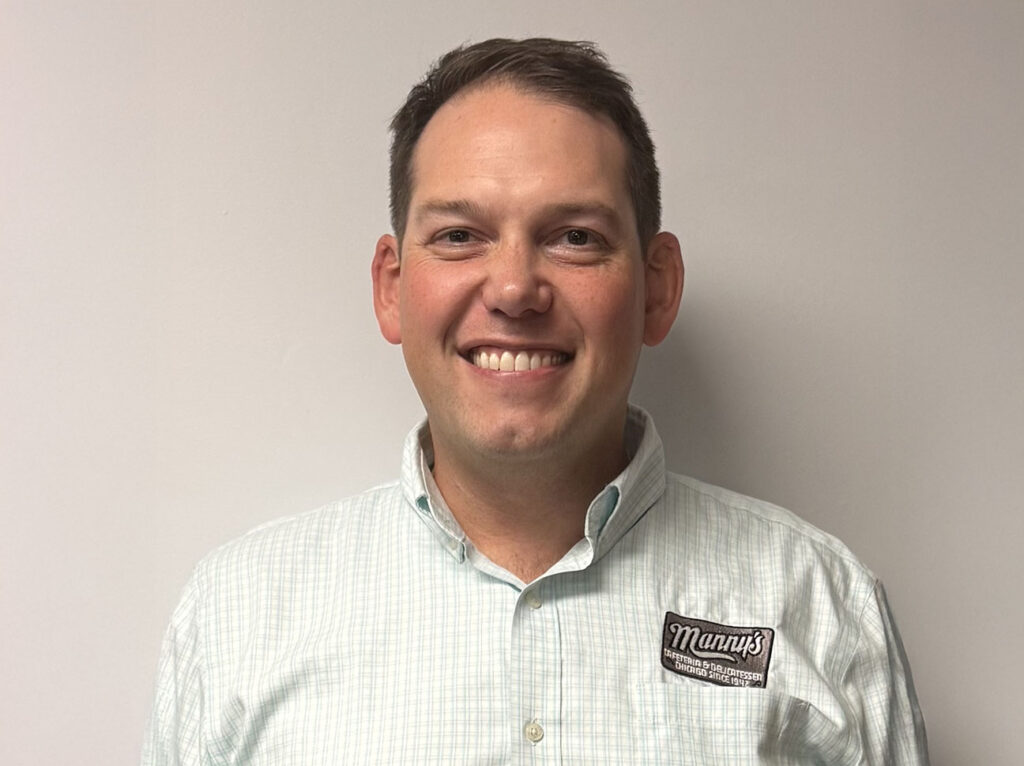
Dan Raskin is the fourth-generation owner of Manny’s Cafeteria & Delicatessen. The legendary Chicago institution, started by his grandfather and great uncle, has been serving classic deli fare since 1942.
“[When the deli first opened] our customers were primarily Jewish – I would say 95 or even 100 percent,” Raskin told the Journal. “And now maybe 10% of our customers are Jewish.”
Raskin believes that’s likely common for the delis in larger cities, like Chicago and Los Angeles, and he attributes it in part to a love of old-school European, house-made food.
“I see a lot of the different cultures come in here, not just for corned beef and pastrami sandwiches, but for the short rib and the liver and onions and the dishes that are homemade that you can’t get everywhere,” he said. “I think that people want to continue to have this type of food, but they want to make sure it’s authentic and the highest quality.”
Then there’s the nostalgia factor.
“Everybody is happy when they’re eating, especially when [it’s] something that’s nostalgic to them,” Raskin said. “Whether you’re eating a bowl of matzo ball soup here, or eating it at home, you think of the people that surrounded you when you ate it.”
Manny’s has tried different specials over the years. Yet, their menu has remained mostly the same.
“We end up buying from over 100 different vendors just to make sure we get all the products that we really like,” Raskin said.
This includes tomato sauce, matza meal, even the same chickens.
“That’s really been my goal: to not change anything here and keep providing the exact same ingredients, the exact same end product,” Raskin said. “And to be here as much as I can.”
Raskin’s great-grandfather, Jack, and Jack’s brother, Charlie, started Manny’s, because they wanted to own their own business, instead of continually working for other people.
“They thought that it would be a great idea to go into the Jewish deli business,” Raskin said.
They bought an existing Jewish deli on the north east side of Chicago in the West Rogers Park area, learned their recipes and created their own from family recipes.
“They soon realized the reason that deli was for sale was because that neighborhood was changing a lot,” he said.
They moved the deli closer to downtown; the family business grew from there.
“Their next location used to be called the grocery store, called Sunny’s,” Raskin said. “And, after they built out the whole restaurant, they didn’t have enough money to replace the whole sign, so they just took the first two letters and changed it on the sign and just named it Manny’s after Manny.”
The restaurant went from Charlie and Jack to Jack’s son Manny. Raskin’s dad, Ken, took over the business when Manny got sick. Now, it’s Dan Raskin’s turn.
Even growing up, Raskin, one of four siblings, knew he wanted to follow in his family’s footsteps.
“I would work on weekends, my grandma … or my dad would drive me to work before I had my license,” he said. “My dad told me that if I wanted to work full-time, I had to go to school, so I went away to college and came back and worked the next day.”
Raskin, who seemingly always had “mustard” running through his veins, learned to cook everything on the menu over one summer. Their main cook worked from one until nine in the morning, so Raskin did too.
“It was a challenge, learning how to wake up at that time and work all night,” he said. “But it was interesting to really get into it; to do the whole whole menu from a full week, over and over until you learn the whole menu.
“I definitely think it was one of the biggest things that I’ve done since I’ve been here that helped me succeed.”
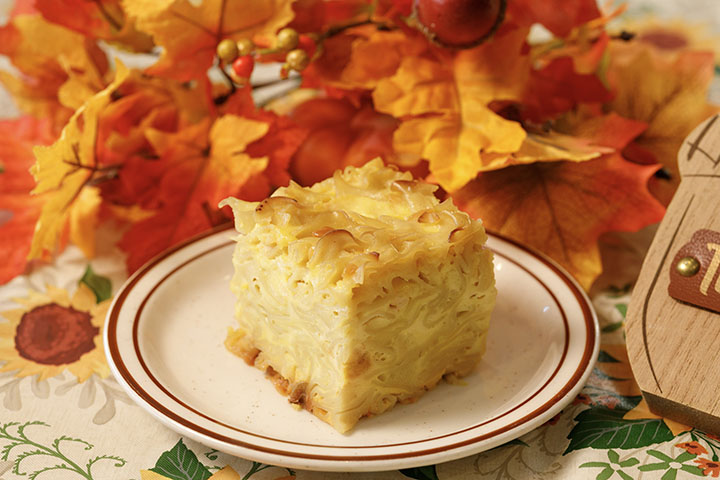
One of Manny’s few additions is a sweet kugel Raskin helped create.
“We used to make a different type of noodle kugel that was very savory,” Raskin said.
Raskin remembered having sweet kugel growing up; his wife and her family did the same, so he asked his dad why their kugel was not sweet at the restaurant.
“He’s like, ‘I don’t know; that’s always the one we made,’” Raskin said. “So I was like, ‘I’m going to start making a sweet one.”
That recipe is below.
“Ever since, it’s been one of our best sellers as a side on every Jewish holiday or even Thanksgiving,” he said. “People either pick it up directly from us or just remake the recipe that we share.”
Boil noodles according to package directions and drain well. Let cool.
Add in sugar, eggs, salt, cottage cheese, melted butter, sour cream and golden raisins (if using) in a mixing bowl.
Coat an 11 x 13 casserole with nonstick cooking spray.
Cover with foil and bake in a water bath for 70 minutes. Uncover for the last 20 minutes and serve.
This is a perfect side dish.
Debra Eckerling is a writer for the Jewish Journal and the host of “Taste Buds with Deb.” Subscribe on YouTube or your favorite podcast platform.Email Debra: tastebuds@jewishjournal.com.
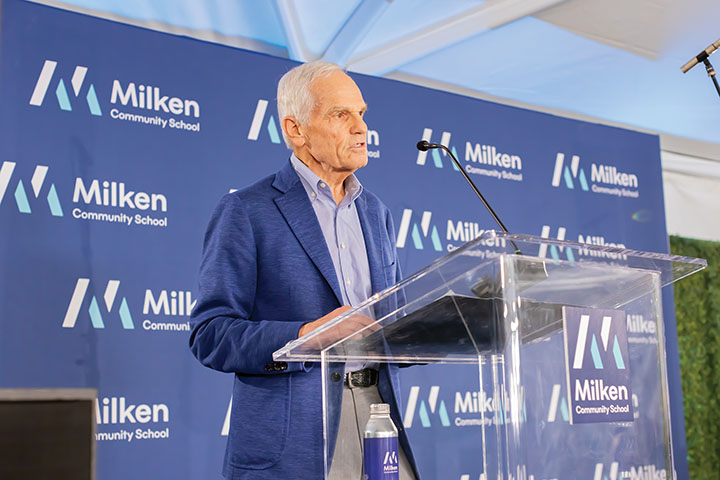
It is so great to be here this morning as we reach this important milestone in a project that began almost two years ago with the acquisition of this property at Milken East — the former Familian campus of the AJU. This project of the Milken Community School is as important for our Jewish community as any project I have been privileged to be a part of.
Together, we are transforming Jewish education in Los Angeles and assuring Jewish continuity by educating the next generation of Jewish leaders in our tradition — in Torah — our guidebook for how to live a productive and meaningful life that has sustained us for over 3000 years. Community support for this project gives us each the opportunity to pass to the next generation the birthright that our parents and grandparents passed on to us as we are instructed to in the Shema “you shall teach them diligently to your children”
My father, Raymond Sandler, Zichrono Livracha, immigrated to this country from Latvia to Tulsa, Oklahoma in 1921 at the age of 8. My paternal grandfather, Moses Sandler, was a Talmudic scholar and a very pious man. Before he passed away in 1931, he instructed my father as follows: “My son, I want you always to be a good Jew and the most important part of being a good Jew is to be a good human being. Adhering to our religious rituals, while most important, does not in and of itself make one a good Jew. Of course, I would like for you to adhere to these rituals, but I realize that many of the detailed requirements of our religion will be most difficult for you to observe in this modern world in which we live. (And that modern world was Tulsa, Oklahoma in 1931.) So, if you must neglect some of the rituals, you must never forget that being a good Jew means being a good human being, a good, kind and sincere person. No matter in what part of the world you may be, when others seek goodness, let them turn to you. When they need kindness, let them see it in you. When they yearn for the good open Jewish heart, let them feel it in you.”
That is the tradition I come from.That is the tradition we all come from.
If my grandfather was concerned about the continuation of that tradition in Tulsa in 1931, you can only imagine what he would have thought in 1964 when Look Magazine, one of the most prominent magazines at the time, ran a cover story entitled the “Disappearing American Jew.” The premise was that due to a high intermarriage rate, a low birth rate, and the inevitable loss of identity as Jews became more and more assimilated, Jews would practically disappear as Jews by the year 2000. Well, Look Magazine is gone and we are still here.
Yet, what concerned my grandfather in 1931, and what resulted in this Look Magazine article in 1964, still exists in 2025. Are we teaching our children what it means to be a good human being in the Torah sense?
When I look around at gatherings of various Jewish organizations here in the United States and in Israel, I ask myself, Who will be the leaders of these important organizations 30 years from now?
We are far more assimilated into American culture today than we were in 1931 or 1964. Despite the recent increases in antisemitism, it had been very comfortable for Jews to live in this country in a way that concerned my grandfather when he referred to the difficulty of being an observant Jew in what he referred to as “this modern world.”
The answer to my question as to who our leaders will be has become obvious. It will be those who care about Torah, who care about Jewish continuity — it will be those who have been taught Torah and learn who they are, where they come from and why it is important — and I mean important to them. It will be graduates of Jewish camps and Jewish day schools. It will be graduates of Milken Community School.
It is the graduates of the Milken school today who are leaders at the top colleges and universities that they attend. We are so proud of how our graduates have navigated on campuses during these challenging last couple of years. And they will be the first to tell you that they are able to navigate and be leaders on campus because of the education they received at Milken — both secular and Torah.
We are training our future community leaders, business leaders and even political leaders in the tradition of my father and my grandfather — the tradition of your ancestors. And in order to really be successful and teach more students and attract more families to strengthen our school and our community, we need to convince those families that Milken is as outstanding as any school, Jewish or otherwise, in our community. Jewish parents will not send their children to a school if they believe there is a better school a few miles away.
I can assure you that we provide the finest education to our students — secular, spiritual and ethical — today. Our graduates attend the finest colleges and universities. We will only continue to attract the families and students that will assure Jewish continuity and leadership with the state-of-the-art facility we are building to go with our incredible educators.
And when I speak about outstanding educators, I think back on the privilege I had of chairing the board at Brentwood School and leading a search committee for a new head of school there, and the fact that I have had that same privilege here at the Milken Community School. I have never worked with a more committed and talented head of school than Dr. Sarah Shulkind. Nor with a more committed and talented team of educators than the team assembled here at Milken.
And now, with your partnership, we will have that state-of-the-art facility to match and to attract the best and the brightest from our community. Sarah, thank you and your team for taking us to this point of excellence. I am honored to partner with you in this incredible opportunity.
I will close by recounting an experience that I had seven years ago in interviewing Prime Minister Benjamin Netanyahu in Israel. We discussed all the complex and difficult issues from two-state solution to challenges in Israel to conversion law. At then at the end of the interview, as I was thanking him, he paused and said though he was confident we would be able to address the many challenges we discussed, there was something that he was concerned about that transcended politics and everything else — and that was loss of identity.
He quoted Rabbi Hirsch from New York who had said that those who are not committed to Jewish survival will not survive as Jews. The prime minister went on to say that for there to be continuity of Jewish communities in the world we need to develop Jewish education and the study of Hebrew. We need to bring young Jews to Israel, and to understand that our future depends on that continuity of identity and consciousness.He closed by stating that what is most important, that every Jew should remember, is we are one people and should be proud to be Jews.
Here at the Milken Community School, we are educating young Jews who know Torah. They know who they are and where they come from. They know we are one people and they are proud to be Jews.
Or in the words of my grandfather, when one seeks goodness, they can turn to our students, when one needs kindness, they will see it in our students, and when the world needs a good open Jewish heart, it will feel it in our students.
Thank you all for being here and supporting this most important and transformational project.