fbpx

November 5, 2025

The Rise of Jewish Self-Defense Organizations

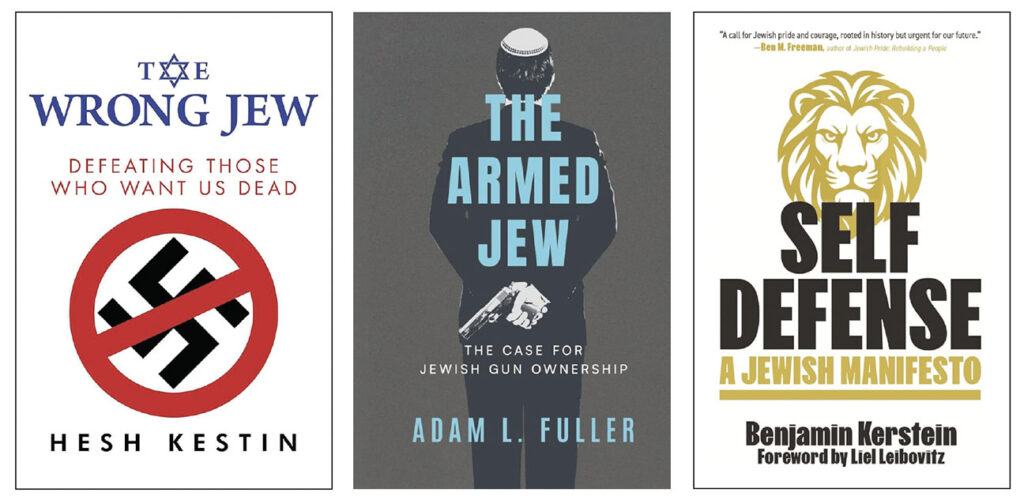
There has been a lot of recent discussion about the need for Jewish self-defense. Several books and op-eds have been published advocating for American Jews to start waking up and taking this issue a lot more seriously. The contributions to this new literature come as violent antisemitic attacks continue to mount every week. Some of these include Hesh Kestin’s “The Wrong Jew: Defeating Those Who Want Us Dead,” Benjamin Kerstein’s “Self-Defense: A Jewish Manifesto,” and my own, “The Armed Jew: The Case for Jewish Gun Ownership.” All of these were published recently by Wicked Son. There have also been several op-eds in major Jewish publications, such as David Bernstein’s piece titled, “Jews and Guns: Time for a Reckoning?,” published here in The Journal on Aug. 25.

In “Self-Defense: A Jewish Manifesto,” Kerstein writes, “American Jewish life is highly organized, with an alphabet soup of groups involved in every aspect of life, including fighting antisemitism. There are combative organizations dedicated to different aspects of the battle, from lawsuits to billboards. But there is currently no organized, nationwide movement dedicated to the cause that is at the true heart of the matter: self-defense.” (pp. 9-10)

Kerstein’s book is important and timely and I highly recommend it. However, I need to correct the false assumption being made in that excerpt. There are indeed Jewish organizations for self-defense. Some of them are private regional and even national shooting clubs and training academies that are dedicated to preparing Jews for firearms proficiency. Others are armed security and intelligence sharing networks that work across Jewish communities that interface with federal law enforcement agencies. 

It is vitally important that we not forget that these organized resources exist. They are the necessary starting points from which we can build a greater and more efficient national movement even beyond what is already in place.

On the West Coast, there is an organization called Magen Am (“Shield of the People), led by Rabbi Yossi Eilfort. Its website describes its mission by saying, “We train and empower secure Jewish communities, so they may live and practice in peace.” In the Pennsylvania Catskills is Yonatan Stern’s Cherev Gidon Israeli Tactical Training Academy. There are also organizations called “Glocks and Barrels,” “Guns and Moses,” “Jews Can Shoot,” and now “Lox and Loaded,” which has many chapters in cities across the United States and rapidly expanding into more locations.  

In Northeast Ohio, where I live, there is a new 501(c)(3) nonprofit organization of which I am on the Board of Directors, called the High Value Training Academy (HVTA). It’s led by a very eager and enthusiastic Jewish NRA-certified instructor named Jeffrey Goldstein, whose personal story and passion for teaching Jews to shoot I tell in my book, “The Armed Jew.” If you live in the Cleveland, Akron or Youngstown areas, HVTA raises money to offer discounted full day courses and no-cost small group lessons at nearby gun ranges.

As for organizations that work with the government, the Secure Communities Network (SCN) has been in place since 2004. Having come a long way since its inception, SCN has greatly improved its intelligence gathering processes under the directorship of Michael Masters, whom the Jewish Telegraph Agency has dubbed the Jewish community’s “anti-terrorism czar.”  There is also the Community Security Service (CSS) headed by Richard Priem. Without revealing too much of what I know about SCN’s and CSS’ specific achievements, I can only say that this nexus of Jewish communities and law enforcement agencies across the country has indeed thwarted many violent assaults on synagogues, JCCs and day schools before they happened.

I also want to commend David Bernstein for writing a very important piece to encourage more progressive Jews to start engaging in a new conversation about gun ownership. My only disagreement with him, however, is that we should not be supporting a national gun registry or red flag laws. The former would not be good for Jews, as gun registries have historically led to gun confiscations by oppressive governments. The latter policy, reg flag laws, wrongly deny people their Second Amendment right to bear arms without due process. Moreover, his claim that “guns kept in the home are 43 times more likely to kill a family member than an assailant” is a debunked statistic that exacerbates the already deep problem of hoplophobia (fear of guns) among Jews.

Those of us committed to promoting Jewish self-defense must continue writing and speaking out. But more than engaging in this conversation, Jewish communities need to start acting. In the last chapter of my book “The Armed Jew,” I provide many suggestions as to how our communities that are not doing so already could start putting self-protection with firearms into coordinated effect.

The Jewish Diaspora does indeed have organized apparatuses to build upon. If we are going to promote our self-defense, we must recognize what is currently available to us already as the foundation of a much more efficient movement. 


Adam L. Fuller, PhD is Clayman Professor of Jewish Studies and Associate Professor of Political Science at Youngstown State University. 

The Rise of Jewish Self-Defense Organizations Read More »

‘The Buddy System’ Authors Want to Combat Loneliness

When lifelong friends Aaron Karo and Matt Ritter launched their podcast “Man of the Year” in November 2022, it began as a series of comic discussions about male friendship. 

Now, with the release of their Audible Original audiobook “The Buddy System: A Modern Man’s Guide to Mastering Friendship and Leveling Up Your Life,” Karo and Ritter have distilled three years of podcasting into a single, five-hour listen that feels both structured and spontaneous.

Karo sounds like he’s a natural at making friends. Ritter sounds like everybody’s top pick for “kindest dude I know.” Listening to “The Buddy System” feels like sitting across from two friends who can finish each other’s sentences but approach life from opposite ends of the dive bar. What separates Karo and Ritter from other hosts (and now co-writers) is their mindful reflections and respect for the pitfalls of friendship — without cutting back on the sprinkles of boorish buddy behavior.

Karo is the methodical one. He’s obsessed with structure, his email inbox at zero, can vibe with anyone— yet still keeps a spreadsheet of people in his life. He’s been publishing humor and cultural commentary since his college days at Penn, when his “Ruminations” email list went viral. He has since written seven books, including “Ruminations on College Life.” 

Ritter, a lawyer-turned-comedian and TV writer, is a husband and father whose overflowing inbox drives Karo crazy. It wouldn’t be a stretch to assume that this combination of authors would lead to worthless friendship advice like “just be yourself” and “you know, just shoot the s—.”  

The origins of their book come from the inspiration for their podcast. “Man of the Year” derives from an annual tradition amongst their buddies. 

“Every year on the Tuesday before Thanksgiving, we gather at a steakhouse in Brooklyn and vote on which friend had the best year,” Karo told The Journal. “That tradition kept our crew going strong for 35 years.” That Thanksgiving week ritual, the annual “Man of the Year” dinner, is only part of their podcast story.  After two decades of social media and post-pandemic isolation, adult connection has atrophied. Their podcast — and now their book — offer ways to rebuild that muscle.

“Men are in crisis,” Karo said. “There’s a friendship recession, and who better to help than two guys who consider themselves the champions of friendship?”

Over the past three years, Karo and Ritter have touted “Man of the Year” as the “number one friendship podcast in America.” With episodes like “How’s Your Mental Health?” and “Friendship Dry Spells,” their audience was far beyond just dudes. Women tuned in too for a litany of reasons, with many writing to the hosts that they did so to understand how men talk when they actually open up.

The podcast had a special guest for its 100th episode in October 2024: then-U.S. Surgeon General Dr. Vivek Murthy. He spoke about how friendship strengthens immunity, reduces anxiety, and even extends lifespan. Murthy deputized both of them as “Chief Friendship Officers of the United States.” 

“You go to a trainer for your body, a therapist for your mental health,” Ritter told the Journal. “We’re talking about social fitness…you have to be intentional about it.”

Part of what makes “The Buddy System” work is what it avoids. There’s no jargon about optimization, biohacking, no “modules,” no motivational hard sell. “The Buddy System” is one of the rare podcast-to-book spinoffs that delivers even more value. 

“Everyone talks about making friends or keeping friends,” Ritter said. “But articulating how adults can deepen friendships, that middle space, was tricky … You can’t just say, ‘Hey, I’d like to take our friendship to the next level.’ We wanted to show what that looks like — more honesty, more consistency, more intentional time — without making it sound like a self-help cliché.”

Part Two of the book, “Leveling Up,” they admit, was one of the hardest to write. Translating subtle emotional shifts into something actionable took work. Yet it’s those moments — the “LUMOs,” or Level-Up Moments — that have given the book such value to anyone looking to tweak how they maintain meaningful friendships. 

When they first began dividing up the manuscript, Karo took the lead on chapters that required data, psychology, and structure. Ritter gravitated toward the sections on grief, fatherhood, and vulnerability. 

“Certain sections, like ‘Dad Friends’ or the parts about grief, were definitely more Matt’s wheelhouse,” Karo said. “It ended up being a perfect meld of our very different personalities.”

Underneath the humor, The Buddy System acknowledges what’s at risk when friendship fades. 

“I know it sounds a little trite, it’s easy to be there when things are going well,” Karo said. “It’s really you being there for your friends when things aren’t going well and that’s the kind of thing that you remember. And those are the tougher, that’s tougher friending. It’s easy friending when things are going great. It’s tougher for when they’re not.

That theme carries through the podcast too, particularly in episodes like “Friendship First Responders,” where Ritter tells the story of his wife going into labor and instinctively calling Karo. That episode influenced chapters such as “The Hard Times” and “Friendships Worth Saving.” In both formats, that’s the heartbeat of their work: showing up, following through and refusing to let silence or busyness dissolve connection.

The timing of “The Buddy System” couldn’t be better — or more sobering. According to the American Survey Center, 15% of men report having zero close friends, nearly five times higher than in the 1990s. The U.S. Surgeon General has even labeled loneliness an “epidemic.” 

The book is comforting and motivating for adults of all ages — not just men in their 30s and 40s — for navigating social life. This book is useful for everyone to do an audit of how they approach friendships. The listeners who grew up with lousy parents or corrosive friends will find as much value in this book as the social director of any given friend group. 

Karo and Ritter both grew up with strong examples of friendship in their parents’ generation.

“My parents have incredible social fitness,” Karo said. “They have a lot of friends. They have rituals, which is one of our key tenets.”

Both Karo and Ritter are Jewish, and as a parent himself, Ritter sees belonging to a synagogue as part of his friendship health.

“We grew up in Plainview, New York in all-Jewish town, and so there were sort of varying levels of Jewish identity,” Ritter said. “I think we didn’t sort of even realize that the world wasn’t like towns filled with Jews. Then we moved to New York and you’re kind of surrounded by it. But I’ve actually recently started going to temple again, and we joined the temple because we wanted our child to have Jewish identity and we actually wanted to meet some parents. So we’re actually using the temple as our “third place” — something I never actually thought I would end up doing. And here I’m actually meeting other young parents through the temple.”

By the time the authors reach the “Tradition!” and “Trophy Life” chapters, their message feels earned: ritual and recognition — no matter how goofy — are what keep friendships alive. And of course, love. They end each of their podcast episodes with a sincere “I love you” to each other.

The friendship recession is real. So is the exhaustion that comes with adulthood, parenthood and constant connectivity. “The Buddy System” doesn’t promise to fix that. It offers something smaller and more radical: a reason to text someone, plan something and follow through.

The Buddy System: A Modern Man’s Guide to Mastering Friendship and Leveling Up Your Life”  by Aaron Karo and Matt Ritter is available exclusively on Audible

‘The Buddy System’ Authors Want to Combat Loneliness Read More »

Can Jonah Feingold Strike Rom-Com Gold?

What exactly did Leo Kander and Eva Shapiro do under the moon years back at summer camp? It’s a question asked by the new indie comedy “31 Candles” by Jonah Feingold, who stars, wrote and directed the film. 

Leo wants to get close to bar/bat mitzvah tutor Eva Shapiro (Sarah Coffey). He was never a bar mitzvah, and though he’s about 17 years late, he hires her to teach him, hoping he can get her to fall in love with him. Feingold and Coffey have great chemistry and a palpable comedic connection, including the awkwardness of her being almost six inches taller than the 5-foot 8-inch Feingold.

For most rom-coms, it’s a simple formula: boy meets girl, they fall in love, encounter some obstacles, almost break up, then get back together. Did Feingold feel any pressure to deviate from that and present a nuanced story?

“I did,” Feingold told The Journal. “This is the second movie I’ve made where (the ending is) not traditional. … I was excited because it is a fitting end for the character. I was happy to have an off-beat ending as opposed to the traditional rom-com.”

Feingold said he never had a bar mitzvah, though his parents and sister had bar and bat mitzvahs. “In a sense, I treated the movie as my bar mitzvah,” he said.

It’s nearly impossible for someone who doesn’t speak Hebrew to learn a bar mitzvah parsha in a couple of months. In “31 Candles,” Eva tries to teach Leo the trope, or cantillation notes by using different moves on the basketball court.

Feingold previously directed “EXmas,” a Christmas movie about a guy who feels it’s odd when he arrives to see his family for the holiday and his ex is there. Should we expect Feingold to do a Jewish holiday movie to rival it?

“I would love to make a Hanukkah movie,” Feingold said. “There’s a shortage of really strong ones. The Hanukkah movie I’d want to make is a Jewish East Coast family that clashes with a jolly-old reindeer family from the Midwest. In one setting you get to see both sides of culture and both sides of the festivities.”

Feingold’s comedic delivery has a pinch of Ben Stiller and a drop of Jesse Eisenberg that’s crossed with Seth Meyers. Coffey has a quirky bluntness and she’s totally believable; when Eva tells Leo he has a terrible personality, she manages to do it in an endearing way.

Coffey has a fine voice. Eva, an actress as well as a bar mitzvah tutor, sings “After You Get What You Want, You Don’t Want It” for an audition.  She also belts out in a wild “Ose Shalom” joined by the great comic, Judy Gold. Jackie Sandler, Adam Sandler’s wife, is endearing in the small role of Leo’s mother.

“31 Candles” is a surprising film with plenty of laughs that lets you fall in love with Leo and Eva and is a much-needed romantic comedy that charts its own course. How did Feingold find Coffey? 

“Sometimes I beat myself up just for just lying in my bed and scrolling on TikTok,” he said. “The one time it really paid off was when I came across her work. I said, ‘Let’s get together for coffee,’ no pun intended because her last name of Coffey. I brought my camera with me, and we did a camera test. I was curious how we would vibe. I watched the footage back and I was like, ‘Oh my God, this is Eva Shapiro.’ I was lucky to find her and she’s a wonderful human being.”

It was “incredibly difficult” for Feingold to write, direct and star in the film. Sometimes he was left wondering if he nailed a scene with nobody to tell him whether he did or not. But he was confident due to having little pretense and focusing on the result.

“The reason I wanted to play the character is I’m really not afraid to fall on a banana peel,” he said. “I think most men starring in romantic comedies worry a lot more about looking hot and being cool than being vulnerable, perhaps comedic or being laughed at. I was not afraid to do that. I just wanted to play a fun character.”

He hopes people feel some sort of warmth and happiness from the movie and understand that many things in life are lessons — relationships can evolve, they can get either better or worse.

Feingold said it was the most famous Jewish director who first made him think making movies should be a career for him. The reason he’s a director is Spielberg’s “Hook.” He saw it 100 times and was blown away. “My parents loved movies and I was quickly introduced to Billy Wilder, Nora Ephron, Albert Brooks and Woody Allen.”

While Feingold has primarily lived in New York, he has also spent time in Los Angeles.

“The difference in dating is it’s an easier thing to do in New York,” he said. “There’s happenstance and serendipity. You can lock eyes on the subway.  You can go on the apps and go to a show or a basketball game. I found LA tough because you can’t walk someone home. You have to both go to your cars. Then you have that awkward goodbye. It’s just more complicated to me.”

Feingold said he’s working on a rom-com script called “Young at Heart” about his parents. This movie also has a unique premise: Two 70-year-olds wake up in their 20-year-old bodies, and the question is whether or not they will fall in love once again.

In a world where most rom-coms are cliché-riddled, “31 Candles” is a fun ride where Feingold has taken his shot with a unique story and he’s hit the mark. Feingold is a filmmaker to watch. 

Can Jonah Feingold Strike Rom-Com Gold? Read More »

How Antisemitism on Campus Sparked a Jewish Revival Among Students

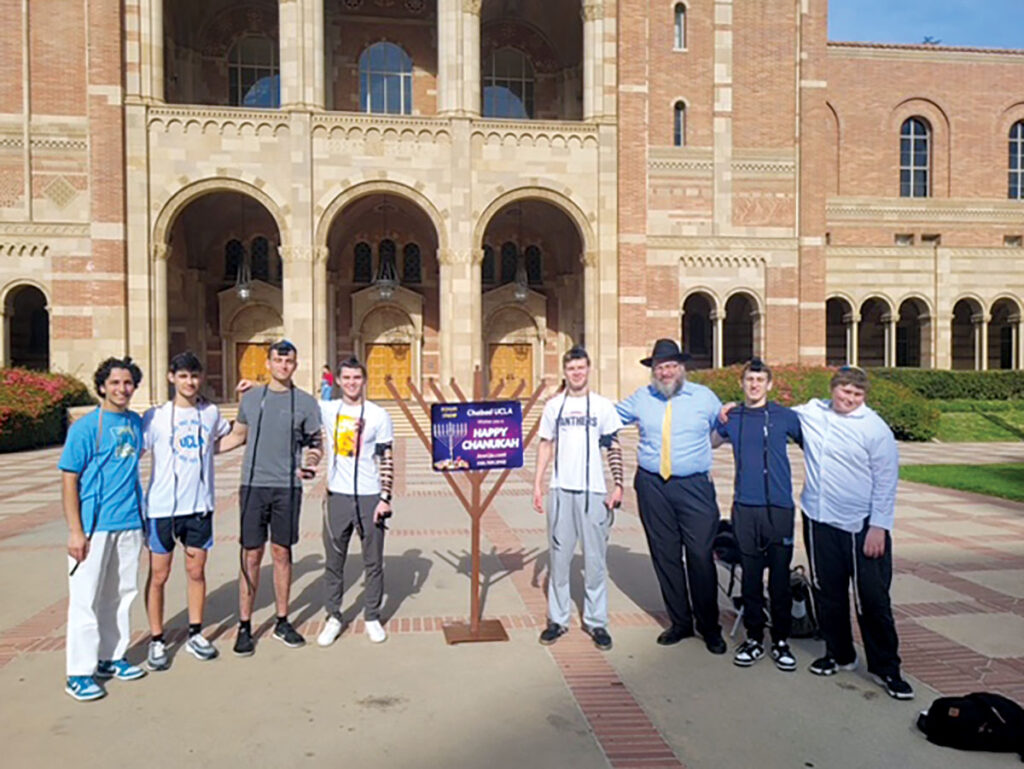
Across the U.S. and especially on campuses that have experienced some of the worst cases of antisemitism, such as UCLA, Jewish students have found solace and comfort through Chabad and Hillel.

It has been difficult to be a Jewish student in the U.S. since Oct. 7. Many have faced severe incidents of antisemitism, which were often overlooked by campus administrations. In response, Jewish students — some of whom had never previously given much thought to their religion or participated in synagogue life or Shabbat dinners — have begun turning in large numbers to Jewish organizations on campus, particularly Chabad and Hillel.

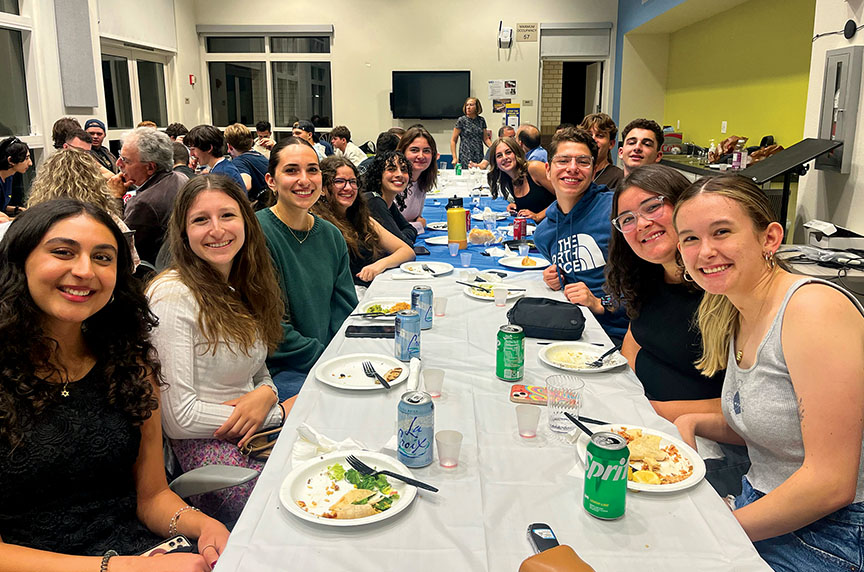
It’s particularly evident at the Chabad House on the UCLA campus. Just before Oct. 7, an average of 100 students attended Friday night dinners. Now, it’s up to 190 students. And the numbers have remained steady; each and every Shabbat since the war began, they have been flocking to the Chabad House to enjoy a warm dinner with their peers. The numbers have nearly doubled, and no one is happier than Rabbi Dovid Gurevich, who has served as the Chabad rabbi at UCLA for the past 19 years. “In terms of the climate, it’s calmer on campus, but it’s not 100% where it should be,” he said. “There is definitely still some fear of expressing Jewish identity. Some are still hesitant to wear outward displays such as a Star of David, an Israeli shirt or to have a mezuzah on their door. But it’s gotten a lot better in terms of the open, in-your-face kind of hatred they experienced a year or two ago.”

Chabad operates on college campuses nationwide, offering Shabbat dinners, holiday celebrations and other programs that are open to students free of charge. Rabbi Gurevich says that this phenomenon isn’t unique to Chabad at UCLA — it’s happening across U.S. campuses. Jewish students feel a stronger connection to Judaism, and their Jewish identity is playing a bigger role than ever before.

It appears that the surge in Jewish life has been seen on virtually every campus,  Gurevich said. “Even though not all were impacted by antisemitism like ours, I think that with everything that’s going on in the world, [Jewish] students are embracing their identity, and it plays a bigger role than ever before.”

Eli Tsives, 20, an active student at UCLA’s film department when the war began, experienced his first incident of harassment shortly after Oct. 7, when pro-Palestinian students blocked him from reaching class. He recorded and shared the incident online, and the video went viral. Tsives soon became a vocal advocate, giving interviews to the media and exposing the hostility Jewish students faced on campus. In one clip, he even confronted a professor who accused Israel of committing genocide.

“Things have significantly calmed down,” said Tsives. “They still hold protests from time to time, but it’s no longer a hot topic.”

Like many other students, he began attending Shabbat dinners and says it gave him a sense of family. He agrees that the experience has strengthened many students’ Jewish identity. “For me, it’s more cultural,” he said. “I don’t think my religious level has changed, but for some people it has.”

Rabbi Daniel Levine, who has served as the rabbi for Hillel at UC Irvine for nine years, also teaches Jewish history at the university. He saw the same surge in numbers of students attending Shabbat dinners since Oct. 7. 

Hillel of UC Irvine

“We used to have 20 to 30 students, now we have 60 students and sometimes even 100 every Friday night. We used to host students in our apartment,” Levine said, “but as attendance kept growing and we didn’t have enough room for everybody, we moved to a house.” 

In the immediate aftermath of Oct. 7, he said, Jewish students were stunned by the open support for Hamas and the hostility they saw on campus. There was no compassion for what had happened to innocent Israelis, but there was blatant hatred and anti-Israel sentiments right after, on Oct. 8 and on. 

“It shocked a lot of our students, and they felt very isolated,” said Levine. “Just being Jewish meant they weren’t fully accepted — whether it was on the soccer team, in the LGBTQ community or any other group. The flip side was that many began spending more time at Hillel, using this as an opportunity to deepen their knowledge and connection.”

Levine believes that Jewish campus life must go beyond simply responding to hate. “I’m a big believer that the Jewish community can’t just be reactive — we need to be proactive,” he said. “I don’t want Jewish students to feel that their Jewish or Zionist identity is defined solely by fighting back. I want them to see their Jewishness as something deeply positive — through ritual practice, visiting Israel, going on Birthright,and embracing the richness of Jewish learning and community.”

That positive vision, he said, has guided Hillel’s efforts to create an inclusive, welcoming space where students can strengthen both their knowledge and sense of belonging. “We have to be realistic — yes, there are those who oppose us,” he said, “but we can choose to respond by building something beautiful and lasting.”

Arielle B., a student at UC Berkeley, said that the highlight of her week was going to Chabad on Friday nights. “My family doesn’t do Shabbat dinners, so when I first arrived here, I never thought of going to one. It wasn’t something that interested me. But after experiencing what happened on my campus after Oct. 7, I needed support. I wanted to be with other Jewish students who would understand what I was going through, so I started going to Shabbat dinners. Not only did I find that support, but I also fell in love with the Jewish tradition. It felt so spiritual and beautiful that I kept coming week after week.”

Now, when Arielle goes back home for vacation, she insists that her family light the candles and sit down for Shabbat dinner. “I discovered the beauty of my religion because of what happened on Oct. 7, and from talking with other students, I can tell you I’m not the only one. So at least one good thing came out of all the hatred and antisemitism we experienced on campus.”

Even as tensions have eased, participation in Shabbat dinners at Hillel and Chabad has remained strong. Students, Levine said, have discovered the beauty of Judaism, along with a renewed sense of community and belonging. “This is one of the silver linings of the tragedy we’ve lived through,” he said.

How Antisemitism on Campus Sparked a Jewish Revival Among Students Read More »

Spice of Life: A Perfect Pumpkin Flan

Flan, a soft, creamy custard  with a clear caramel topping, has always been close to my heart. As a young boy growing up in the port city of Larache in northwest Morocco, my father was very thin and often sick. My grandmother Raquel, for whom I am named, decided that she would strengthen him by baking him a flan every single day. Every day, he would return from school, sit at the table and eat the entire flan. His siblings were not allowed to touch it. Within a few months, the flan worked its magic and he was strong and healthy again.

Naturally, this dessert always brings that happy memory back to him and flan is still one of his favorites. Growing up, my mother often made it for us too. That smooth caramelized custard was a regular treat in our home.

Flan was popular in medieval Spain and Sephardic cooks were known for their simple, elegant desserts, transforming eggs, sugar and milk into something silky and soothing. After the Expulsion of 1492, although they were scattered across North Africa and the Ottoman world, these women brought their treasured recipes with them. They soon adapted the flan recipes to the flavors they found in their new homes. In Morocco, they would have added orange zest; in Izmir, a splash of rosewater.

It’s pumpkin season and that means pumpkin in everything. Pumpkin pies, pumpkin muffins, pumpkin bread, pumpkin cheesecake and, of course, pumpkin spice lattes. When I found a can of pumpkin purée in my pantry, it inspired me to make a pumpkin flan.

Adding pumpkin felt like the perfect bridge between fall in America and the flavors I grew up with. It’s a natural extension of that long Sephardic tradition of adapting the ingredients of our new homes.

Pumpkin, or “calabaza” in Ladino, has long been a symbol of sweetness and abundance. It shows up as a star ingredient to eat with couscous, in stews, mixed with feta cheese in flaky borekas, and as a sweet jam preserve. We even serve it in the Rosh Hashanah Seder, where it is a symbolic food, eaten as a sign of good fortune and hope for the new year.

This time, I made my flan with coconut milk instead of regular milk, a small modern touch that worked beautifully. It reminded me that Sephardic cooking has always evolved, absorbing the new without losing its essence.

While pumpkin flan may fit in perfectly with an American seasonal trend, for me, it is something deeper. This pumpkin flan is a bridge between the generations of my family, a chance to imagine the kitchen of my grandmother Raquel.

Each spoonful imparts a taste of family memory, Jewish migration and the soft sweetness of home, wherever in the world that may be.

—Rachel

The first time I made a baked custard was as a teenager in Bellevue Hill, a suburb of Sydney. I made it in my aunt Rebecca’s kitchen, from a recipe lovingly handed down by her elegant mother-in-law, Judy Clifford. The recipe was exactly the same as a typical flan recipe, with a mixture of eggs, sugar, milk and vanilla. But the flan was topped with an elegant flutter of sweet, nutty, earthy nutmeg. It was so delicious!

The ancient Romans invented beating eggs to create honey-sweetened, as well as savory, custards. The recipe spread throughout Europe, but it was the Spanish who refined the dish, adding the signature caramel topping to the flan.

As Rachel writes, Sephardic Jews brought flan with them when they left Spain. But the conversos (Crypto-Jews) that remained in Spain used a dairy-free flan as a way to outsmart the inspections of the Inquisition. They called it Flan de almendras y naranja, which translates to Almond and Orange Flan. They used ground almonds and orange juice instead of milk, thus enabling them to eat a “dairy” dessert after a meat meal.

We hope you try this wonderful dessert for Shabbat and the upcoming Thanksgiving holiday. It’s sure to wow your guests.

—Sharon


Flan de Calabaza

Pumpkin Flan

1 cup sugar, for caramel

6 eggs

1/2 cup sugar

1 cup pumpkin puree

1 cup coconut milk

1 Tbsp vanilla

1 tsp pumpkin spice or cinnamon


Preheat the oven to 350°F.

Prepare a bain-marie by filling a large ovenproof dish with 2″ of cold water.

Prepare the caramel for the bottom of the flan by placing a cup of sugar in a heavy bottomed pot. Melt over low heat until sugar forms a golden syrup. Pour the hot syrup very carefully into a glass pie dish or metal cake pan, making sure to coat the bottom and sides of the dish.

In a large bowl, use a hand mixer or a whisk to blend the eggs, the remaining sugar, pumpkin, coconut milk, vanilla and pumpkin spice until the mixture is smooth.

Pour the custard mixture into the prepared baking dish.

Place the flan in the center of the bain-marie, then cover the entire baking pan with foil. Making sure not to spill the liquid, place in the oven and bake for one hour.

Remove flan from the oven when the edges are firm and the center is jiggly. Let flan cool on the counter, then place in the refrigerator for 6 hours or overnight.

Before serving, allow the flan to come to room temperature.

Remove from flan mold by placing a dish on top, then flip and give it a shake. If flan doesn’t slip out, let it rest upside down until it falls out.


Sharon Gomperts and Rachel Emquies Sheff have been friends since high school. The Sephardic Spice Girls project has grown from their collaboration on events for the Sephardic Educational Center in Jerusalem. Follow them
on Instagram @sephardicspicegirls and on Facebook at Sephardic Spice SEC Food. Website sephardicspicegirls.com/full-recipes.

Spice of Life: A Perfect Pumpkin Flan Read More »

Cook Something Bold Day is Nov. 8

Cook Something Bold Day is November 8. Some food sites also call it, Cook Something Bold and Pungent Day.

The “anti-caterer,” Chef Rossi from The Raging Skillet, and Pam Stein from In Pam’s Kitchen love to mix and match flavors and textures. Consider these recipes a starting point for your next “bold” cooking adventure.

Growing up, Chef Rossi couldn’t stand “boring little green balls” aka Brussels sprouts.

“One day at a fried food shack, I was introduced to crispy fried Brussels sprouts in chili and honey [which] was downright tasty,” Rossi, author of “The Raging Skillet” and “The Punk-Rock Queen of the Jews” told the Journal. “Of course, being the cheffy lady that I am, I felt a need to give my own spin to things and what was born was Chef Rossi’s bad ass crispy Brussels.”

Chef Rossi’s Bad Girl Brussels Sprouts

Trim off the crappy ends of as many brussels as you want to eat. Go for at least a couple of pounds. They are addictive.Cut them in half. Toss in olive oil, kosher salt and fresh ground pepper. Lay them out in a single layer on a baking sheet. You may want to put a piece of parchment paper down for an easier clean up later. Preheat the oven to 400.

Roast for about a half hour until nice and crispy on the outside but soft on the inside. (Like me!)

Make my special Bad Girl Sauce too. Mix a pint of Thai sweet red chili sauce with a shot of fresh lime juice and two shots of tamari. I like gluten-free tamari. Toss up the brussels in this and its yowza yum. You can do this ahead and then heat up the saucy sprouts as you need them.

***

“I am partial to Frank’s Hot Sauce for all my Buffalo recipes,” Rossi Said. “I love to go a step further and top with celery salsa; Buffalo chicken loves celery!

Chef Rossi’s Buffalo Chicken Baby Tacos

I use boneless chicken breasts or boneless chicken thighs.

I put my chicken in a baking pan that I have sprayed with cooking spray. Then I whisk Frank’s Red Hot Sauce with a plop of ketchup, a few good drizzles of olive oil and two drizzles of Worcestershire. I pour this over my chicken. I love to marinate this overnight, but you do not have to.

Preheat your oven to 375°F and cover with foil. I let it roast for 20 minutes. Then I uncover and roast till done, maybe another 15 to 20 minutes, depending on the size of the chicken.

After this chicken cools down I either pull this chicken by tearing with two forks or just go lazy girl and slice it up. After it’s all pulled or sliced or rough chopped, I take the marinade that was left in the baking pan, bring it to a boil and then pour over the chicken until it’s nice and wet. I always add more Frank’s and adjust with salt and pepper. This can all be done a day ahead.

Heat up and serve in your favorite taco. I’m partial to soft corn tortillas myself, but float your boat.


Celery Salsa

Mix a coffee cup of fine diced celery, a plop of fine minced red onion and 1 plop of fine minced jalapeno with a few drizzles of fresh lime juice, salt and pepper to taste and a handful of chopped fresh cilantro.  YUMMA TUMMA!

***


“This veggie melt with spices and cherry jelly is a sweet and savory mashup that’s unapologetically unexpected,” Stein told the Journal. “It celebrates daring choices, perfect for Cook Something Bold Day.”

She added, “The contrast of gooey cheese with savory sautéed veggies and the zing of cherry jelly pushes flavor boundaries and wins.”

If you crave comfort food with an edge, this sandwich delivers.

Veggie Melt

Yield: 2 Sandwiches

Ingredients

4 ½ Tbsp extra virgin olive oil, divided, plus more for toasting bread

1 medium onion, thinly sliced

1 Tbsp brown sugar

1 cupSliced cremini mushrooms

½ large red bell pepper, sliced into thin strips

1 tsp paprika

½ tsp garlic powder

Pinch of salt

2 ciabatta rolls, sliced in half lengthwise

4 Tbsp cherry jelly or preserves, divided

2 slices provolone cheese, divided

½ cup arugula or spring mix salad, divided

Instructions:

  1. Heat 1-½ tablespoons olive oil in a skillet over medium low heat. Add the sliced onions.
  1. Cook slowly, stirring occasionally. After 15 minutes add the brown sugar and stir to coat.
  1. Continue cooking for an additional 10-15 minutes, until the onions are brown and caramelized. Remove onions from the pan and set aside.
  1. In a medium bowl, add mushrooms, red pepper slices and 3 tablespoons olive oil. Sprinkle it with the paprika, garlic powder and salt. Toss to coat the vegetables.
  1. Raise heat to medium and add the peppers and mushrooms to the skillet.
  1. Cook until peppers soften and mushrooms are slightly browned, about 4-6 minutes. Remove from heat and set aside.
  1. Lightly drizzle the cut side of each roll with olive oil.
  1. Raise heat to medium-high. In a separate skillet, place cut-side of rolls down and toast until golden, about 2-3 minutes.
  1. Spread 2 tablespoons of cherry jelly on the bottom half of each toasted roll.
  1. Top jelly with the caramelized onions followed by the pepper and mushroom mix, dividing them equally between the sandwiches.
  1. On each sandwich place a slice of provolone on top of the veggies.
  1. Put the open sandwiches in the skillet used for toasting the rolls. Cover the skillet and cook until the cheese is melted, about 2-4 minutes.
  1. Add ¼ cup of arugula or spring mix on top of the melted cheese. Close the sandwich with the top half of the roll.
  1. Press lightly, slice in half and serve warm.

 Note: This recipe was originally created to mark the release of the duet “Living Proof by Jon Bon Jovi and Jelly Roll and was called a JBJ Jelly Roll. In place of the paprika, garlic powder and salt listed in the printed recipe, the original version used 1½ teaspoons of JBJ Soul Seasoning – Original Flavor, a product of the JBJ Soul Kitchen. Their mission is one of tikkun olam, repairing the world with proceeds from the sale of this spice blend going to help support those facing food insecurity.

***

 Looking for a snack with a bold twist? Pam Stein’s peanuts and cashews are coated in a pumpkin spice blend along with earthy cumin and honey for a sweet-savory kick.

“Crunchy, addictive and easy to make,” Stein said. “Add them to a glass jar and you have a quick and easy homemade seasonal gift.”

Pumpkin Spice Nuts

Yield: 2 ½ Cups

Ingredients:

2 Tbsp unsalted butter, melted

½ tsp vanilla extract

2 Tbsp honey

2 Tbsp brown sugar

1½ cups unsalted peanuts

1 cup unsalted whole cashews

For the Spice Blend:

½ Tbsp ground cinnamon

½ tsp ground ginger

¼ tsp ground nutmeg

¼ tsp ground cumin

⅛ tsp ground cloves

Instructions:

  1. Preheat the oven to 325°F. Line a baking sheet with parchment paper and set aside.
  1. In a small bowl stir together the ground spices and set aside.
  1. In a medium bowl, whisk together the melted butter, vanilla and honey. Add the brown sugar and the spice blend. Whisk until combined.
  1. Add peanuts and cashews. Stir until nuts are well coated.
  1. Spread nuts in a single layer on the prepared baking sheet. Roast for 20-25 minutes, stirring halfway through to prevent burning.
  1. Let cool on the baking sheet.
  1. Keep in an airtight container at room temperature for up to 2 weeks.

Cook Something Bold Day is Nov. 8 Read More »

Table for Five: Vayera

One verse, five voices. Edited by Nina Litvak and Salvador Litvak, the Accidental Talmudist

And Abraham approached and said, “Will You even destroy the righteous
with the wicked?”

– Gen. 18:23


Rabbi Rebecca Schatz

Associate Rabbi of Temple Beth Am

Abraham is a character born out of trauma. Noah before him does not say anything when God informs him the world will be destroyed. Maybe he couldn’t, maybe he didn’t want to, or maybe his relationship with God wasn’t strong enough to know it was a possibility to ask or fight. However, Abraham has that proximity to God to challenge a choice if he believes it is wrong or immoral. 

At the beginning of this parsha, Abraham sees three people, and although he is still recovering from the physical covenant with God of brit milah, he takes care of them. Thus, we learn to visit the sick and to welcome in the stranger. However, we also learn that Abraham is a person who cares for humanity, potentially because Noah did not. 

God wonders whether to share the plan of Sodom and Gomorrah with Abraham. Eventually, Abraham is told and responds with the question in our verse. Abraham believed in God who had compassion and could answer a question before acting. Midrash Tanchuma teaches that “proof of this is that even when [hu]mankind sins against God and provokes anger, (God) relents and seeks an advocate to plead on their behalf.” 

As humans, we always have options and choices to make. Are we only making decisions based on history, or fear? Are we making our decisions or responding to those poorly made before us? We need to ask more questions and have more conversations before we accept that the innocent will be punished with the guilty.


Michael Milgraum 

Psychologist and Author

This question of punishing the righteous along with the wicked does sound like a challenge to Hashem, even a protest. Abraham raises a question that, despite the thousands of years that separate us and him, has not diminished in its raw emotional intensity. In fact, I would argue that his question has intensified, in the shadow of the brutal and traumatic history since his time, particularly the unparalleled carnage seen in modern times. 

What is interesting about this quote is that it’s a question not a statement. And I believe in its form as question there is embedded an element of hope. It is the same hope that anyone standing before a judge, parent, king or King of Kings might long for — that the authority figure render a just judgement that does not make the righteous suffer for the misdeeds of the wicked. So often we look around the world and the opposite seems to be true. But being Jewish gives us a responsibility — to strive to generate the longing and faith that we do not see the whole picture, and that justice will be served in the fullness of time, taking into account not only this world but the World to Come. Nonetheless, beyond this, we also must learn from Abraham’s example of protest. The world we see is often not the world that should be. And we should act locally and pray globally to make it the more righteous and just world that we yearn for.


Rabbi Aryeh Markman

Executive Director: Aish LA/Jewish American Summit 

Can you imagine Abraham having this conversation with God about Gaza? Would you entertain the subject or allow the Gazans to be obliterated down to the last child? The question is not, “Is this right or wrong?” — Torah doesn’t deal in right and wrong. The Torah deals in the binary code of “Is this true or false?” Right and wrong can be a slippery, subjective slope. True and false is black and white with no grey, running on God’s software. Unlike Noah, who was told the Flood would wipe out mankind and obediently built an ark without complaint, Abraham stands up for a corner of humanity involving the Sodom region in Canaan. 

Factoid: This scene is soon after Abraham undergoes the brit milah/circumcision commandment. He is transformed from a more reflexive, contemplating personage into an assertive force, prepared to stand in contradiction to God. There is a difference between Jews and non-Jews. We have the brit, the covenant with God, which demands and empowers us to constantly improve ourselves and the world. The Talmud states everything we do either elevates or reduces us and our surroundings. Thus, our actions are either true or false. The world, by contrast, witnesses mass killings among rival groups and is silent, while we insert ourselves in harm’s way to, literally, protect our enemies. Just ask the IDF! 

The Torah is teaching us that Abraham is the progenitor who taught us, in a place of 100% evil we still must ask, “Are any righteous home?”


Rabbi Cheryl Peretz 

Vice Dean, AJU Ziegler School of Rabbinic Studies

God decided that the wickedness of Sodom and Gomorrah warranted their destruction. When God revealed the plan, Abraham did not remain silent. He stood before God and pleaded on behalf of the innocent who might live among the guilty. 

With willful determination and passion, Abraham implored God not to destroy the cities if 50, or 40 or even 10 innocent people could be found. A few verses beyond this moment, Abraham’s bold prayer — “Shall not the Judge of all the earth do justice?” (Genesis 18:25) — reflects both deep faith and moral courage. 

Abraham was not from Sodom and probably did not know anyone there beyond his nephew Lot, who is not mentioned here. Yet he understood that the inhabitants were fashioned in God’s image and were therefore as worthy as he himself. Though Sodom and Gomorrah were ultimately destroyed, Abraham’s plea left behind a timeless spiritual lesson — a legacy for which we can strive to live. We lose our sense of humanity when we can no longer recognize the humanity within others. When we fail to see each person as deserving of compassion, dignity, and love, we deny the very essence that connects us all. We are not measured by how we treat those who are like us, but by how we respond to those who are different. Whenever our words or actions strip others of their worth, we diminish ourselves. To be truly human is to honor the sacred spark of humanity in every person.


Rabbi Natan Halevy

Kahal Joseph, www.kahaljoseph.org

Abraham embodied the divine attribute of lovingkindness, as noted in Sefer HaBahir, where his merit shielded others — even the undeserving — from punishment and destruction. 

When learning that Hashem planned to destroy Sodom, Abraham’s reaction was not quiet acceptance or prayer, but passionate and courageous argument. This appears uncharacteristic of one whose essence was mercy. The resolution lies in understanding that Abraham’s kindness was not emotional indulgence but disciplined service of Hashem’s ultimate will. His compassion flowed through reason, allowing him to act firmly when necessary to uphold divine justice. When Abraham “approached” Hashem, it was not physical but spiritual. He invoked three divine names — E-lokim, E-l and the Tetragrammaton — each representing a different mode of address: confrontation, appeasement and heartfelt prayer. He challenged the decree by asking whether Hashem would destroy both righteous and wicked together, questioning whether anger could truly overpower mercy. Abraham’s plea affirmed that mercy must prevail; the merit of the few can sustain the many. 

Believing that righteous individuals must exist within Sodom, Abraham argued that sparing them could inspire repentance among others. If Hashem punished the righteous alongside the wicked, moral order itself would be undermined; if only the righteous survived, they would still suffer the anguish of loss. Hashem acknowledged Abraham’s profound reasoning, agreeing that if 50 righteous could be found —  10 for each of the five cities — their merit would suffice to save all. Even when reduced to 10, the minimum for a minyan, Abraham demonstrated that a small community of righteousness can uplift and transform an entire society.

Table for Five: Vayera Read More »

A Problem-Solving Politician for the Future

“This country will be the same as I grew up. One where I can wear my Star of David out as I did growing up. I want the same for my daughter and every Jewish American,” said Republican Ohio Rep. Max Miller, 36, in response to my question about the stunning normalization of antisemitism, both in the U.S. and globally. 

“My father taught me when I was just a small boy that when faced with this kind of hate, we need to keep our chest up and go about our business,” he added. “That is how we win. We will not back down, we will not cower, we will not be intimidated. I will continue to speak truth to power. I will not condone hate and antisemitism within our country or the world.”

Miller is one of only four Jewish Republicans in Congress. During his first term in 2023, he introduced legislation that stripped Rep. Ilhan Omar (D-Minn.) of her assignment on the Foreign Affairs Committee. Omar has been a key figure in radicalizing Democrats against Israel and the Jewish people (“It’s all about the Benjamins”).

Indeed, in his two years in office Miller has already gained a reputation as a fearless legislator who gets stuff done. “He’s the best problem-solving member you have never heard of,” Nancy Jacobson, founder and CEO of the centrist group No Labels, said. Or as President Trump put it: “A passion — he’s got a passion for this country like you wouldn’t believe.”

A Marine reservist who worked on Trump’s 2016 and 2020 campaigns and in the White House before running for office in Ohio’s 7th Congressional district, Miller has had to endure attacks from the left, culminating in a hit piece in Politico, which tried to paint him as “privileged” and “elitist” for the sin of having been born into a prominent, hard-working family. An astute politician, he understands that today’s left is unable to appreciate a smart, proud Jewish guy who refuses to bow down to extremism. His take on New York Democratic Mayoral candidate Zohran Mamdani sums it up:

“He represents the worst brand of politics that is ascendant on the American left. This is about the very real, very ugly face of antisemitism that is exploding on the American Left. New York City, which has the largest Jewish population outside Israel, is about to elect a communist, antisemitic mayor who pals around with known jihadist co-conspirators of terror attacks, who called to globalize the intifada and spews dangerous rhetoric. 

“This is a serious time for America’s future, and the future of Jewish Americans within it.”

Strong Jewish identity

Miller was raised in Shaker Heights, Ohio, in a Conservative kosher home. “Growing up, being Jewish was a huge part of my life,” he told me. Every Friday, his grandparents hosted 30-40 people for Shabbat dinner. His grandparents ran Forest City Enterprises, “a real estate company that was started from nothing,” says Miller. “My bubbe was a Republican who ran for Congress in 1980. She is the inspiration and driving force for my public service, and why our family is Republican.”

I asked him what he thought about the growing antisemitism in the GOP, fomented by extremists like Tucker Carlson and Candace Owens. “There have always been fringe antisemitic voices in American politics, and these influencers are unfortunately the worst of us in our party. I have been a loud advocate for Israel and the Jewish people, and I will continue to do so.”

On Fox News in July, Miller attributed the global spike in antisemitism to the influence of Iran and Russia. He also directly called out Rep. Thomas Massie (R-Ky.) and Rep. Marjorie Taylor Greene (R-Ga.) as two members of the House GOP caucus who have engaged in antisemitic rhetoric and actions. “I wish Democrats had the courage to call out those on their side of the aisle,” he added.

Miller is a co-sponsor of the Antisemitism Awareness Act, a bipartisan bill that would require the Department of Education to use the International Holocaust Remembrance Alliance definition of antisemitism, including anti-Zionism is antisemitism, when investigating discrimination claims on college campuses. He’s also a co-sponsor of the Fallen Servicemembers Religious Heritage Restoration Act.

“Every American who puts on the uniform deserves to be remembered with dignity and respect,” Miller said. “Many brave servicemembers made the ultimate sacrifice while defending freedom in World War I and World War II — but due to clerical errors or concerns for their safety during service, their religious identities were not properly recorded. This bill is a meaningful step to correct those errors and ensure these heroes are laid to rest with the honor and dignity they deserve.”

Due to the sheer scale of burials that occurred during World War I and II, hundreds of Jewish American servicemembers killed in action were improperly buried under Latin Cross grave markers, rather than Stars of David. Clerical errors are to blame for many of the improper burials, but some are the result of American Jewish soldiers not wanting to publicly display their faith on dog tags as they fought against Nazi Germany.

Problem solver

Already known as an astute problem solver, Miller was selected by his fellow sophomore Republican members to serve on the Steering Committee, which decides committee membership for members of the Republican conference. He is also a member of the Republican Study Committee and Main Street Caucus. 

Miller also sits on the House Ways and Means Committee; Subcommittee on Oversight; Subcommittee on Work and Welfare; and the House Committee on Science, Space and Technology, He is committed to supporting the NASA Glenn Research Center in Cleveland and has argued for moving NASA’s headquarters to Ohio. 

“My greatest accomplishments over the last two years are two-fold,” Miller told The Journal. “First, the constituent service work that my office has done, returning nearly $20 million to constituents that they were owed by federal agencies, helping folks get passports and resolving issues with the Veterans Administration, which has been so rewarding and will continue to be a top priority.”

“Second, I was able to deliver significant tax relief to my constituents by passing a bill that makes the standard deduction from the Tax Cuts and Jobs Act permanent. Over 90% of taxpayers in my district use the standard deduction, so this helps out the vast majority of my constituents, regardless of political affiliation.

I asked him what he hopes to accomplish moving forward. “As a member of the House Ways and Means Committee, I am committed to delivering more jobs, higher wages, and greater investment in America. Right now, I am working on legislation to bring clarity and parity to the tax code in the cryptocurrency sector. I also formed a Health Advisory Council to help me find solutions to the healthcare challenges the American people are facing. Real solutions, not just Band-Aid fixes. I am committed to building a future that works for families across Northeast Ohio and our country.”

Moral clarity

Miller is not afraid to address complex issues that need immediate attention. In September he wrote an op-ed for The Washington Times on why Cleveland needs the National Guard. “More than 80% of Americans say crime is a ‘major problem.’ My constituents in the suburbs are afraid to go into the city. As elected officials we have a responsibility to protect our communities when local resources are overwhelmed or when local officials refuse to use them.

“This is not about militarizing our neighborhoods; it’s about restoring order and safety … The safety of our citizens is not negotiable. If parents are afraid to let their children play outside, if shop owners fear opening their doors, if commuters dread walking to their cars at night, then we have already failed them. It’s time for action.” Miller has also addressed the contentious issue of China. “Make no mistake, China is America’s adversary; we should not be dependent on China for essential components of American industries.”

He has focused on China’s control of global EV battery manufacturing capacity. “This is not only a threat to American workers but a national security risk. If China’s threatening behavior on the world stage worsens, the Chinese Communist Party could restrict battery exports to the United States and our allies, crushing the American high-tech battery industry and threatening the revitalization of American manufacturing. Reducing the reliance on supply chains controlled by our adversaries is necessary and urgent.”

Political violence

In June, Miller was “run off the road” while driving in his congressional district by a man displaying a Palestinian flag and yelling “death to Israel.” An Ohio resident was later arrested. The incident happened a week after the shooting of two Democratic Minnesota state legislators and their spouses, and a month after two Israeli Embassy staff members were fatally shot outside the Capital Jewish Museum in Washington, D.C.

“As a Marine, a proud Jewish American and a defender of Israel, I will not hide in the face of this blatant antisemitic violence. We need to continue to call out hate of all kinds wherever it is found. On top of that, Congress must continue to send a clear message that antisemitism is against American values and cannot be tolerated. Federal discrimination laws have to be enforced.”

I asked him if he still wears his Star of David every day, in today’s rendition of the 1930s. “Yes,” he said. “Every day.” 

We’re no doubt going through the worst antisemitism in a century, but if we are going to get through it, we will need courageous leaders who know how to solve problems and won’t allow this country, Israel, or the West to fall. We will need leaders like Max Leonard Miller, a bipartisan hope for the future.


Karen Lehrman Bloch is editor in chief of White Rose Magazine.

A Problem-Solving Politician for the Future Read More »

Let’s Just Say It: Anti-Zionism Is Racism

On Thurs, Nov. 13, the Consortium for Palestine Studies and the Palestinian Student Union will host a conference at UCLA that will revisit “Zionism as a form of racism.”

Yes, you read that right. After accusing Zionism of the worst sins on the planet—from genocide to colonialism to apartheid—anti-Zionists are now bringing back the big one: “racism.”

Needless to say, no one at the conference will be there to argue for the other side.

No one will share, for example, that Zionism represents one of the peak moments in Jewish history—the return of a people to its biblical homeland after yearning for 1900 years to come home to Zion.

No one will talk about the Zionist state as a multicultural nation where non-Jewish citizens serve on the Supreme Court, graduate from its medical schools and serve as speakers in its parliament.

Attendees at the conference won’t hear that Zionism has managed to create a free and open society despite being surrounded by enemies sworn to its destruction.

Or that the Zionist state is home to the Arabs and Muslims with the most freedom and opportunities in the Middle East.

Or that it has made immeasurable contributions to the world in technology, agriculture, medicine and humanitarian aid, and is a global leader in innovation and water technology.

No one will hear that side of the story because the purpose of the conference is not a search for truth but indoctrination to delegitimize the Zionist state.

Never mind that bashing Zionism these days is anything but courageous. In fact, it’s the ultimate conformism: you take the most unfairly maligned country on earth—Israel—and just pile on, knowing it can only make you more popular.

To add an academic patina to their conference, the organizers will revisit the 1975 UN “Zionism is Racism” resolution to “explore its contemporary relevance.” (Even a tough-on-Israel UN ended up rescinding that resolution by a vote of 111 in favor, 25 against.)

Evidently, fifty years after that UN calumny, this group of UCLA anti-Zionists are hoping to resuscitate an infamous lie.

This level of brazenness is evidence of the renewed chutzpah against Jews and Zionism we’ve seen since Oct. 7. Just take the most offensive accusations and slap them on Zionists. There are no consequences.

Thus, if you’re a UCLA student, you may well learn on Nov. 13 that being pro-Israel makes you a racist. How’s that for a message of complexity and nuance?

How does one even begin to counter such accusations? How does one respond when a charge is so defamatory? 

The only answer that comes to mind is an idea I heard last Saturday night from my friend Judea Pearl: organize a counter-conference on the same day and title it, “Why Anti-Zionism Is Racism.”

Fight chutzpah with chutzpah. 

It turns out there’s a case to be made that anti-Zionism is indeed a form of racism.

For starters, denying a people’s movement for self-determination in its ancestral homeland smacks of racism. Opposing this right, while supporting it for others, is blatantly discriminatory. 

Because a core part of modern Jewish identity is a connection to Israel, anti-Zionism inherently targets Jews as an ethnoreligious group, another form of racism and bigotry. 

Furthermore, according to the International Holocaust Remembrance Alliance (IHRA) definition of antisemitism, claiming that the “existence of a State of Israel is a racist endeavor” is considered an expression of antisemitism.

This counter-conference, however, should not just target anti-Zionism; it should also target the shameful indoctrination we’ve been seeing at more and more universities.

It’s one thing for street activists to throw out reckless accusations and never care about showing the other side. But a so-called “academic” conference? The Nov. 13 hatefest is worthy of the nastiest activists — one-sided propaganda with an anti-Israel agenda.

We should hold universities to a higher standard of discourse. UCLA, and its student body, deserve better.

Hateful speech may be protected by the first amendment, but a university is allowed to shape its own speech policy. That policy must be driven by an honest search for truth.

A conference that attaches the worst sin to Zionism is not searching for truth. It is searching for yet another way to disseminate its contempt for one country, the only country in the world that happens to be Jewish.

How racist of them.

Let’s Just Say It: Anti-Zionism Is Racism Read More »

Rosner’s Domain | The Tomer-Yerushalmi Affair: A Cover-Up Tale

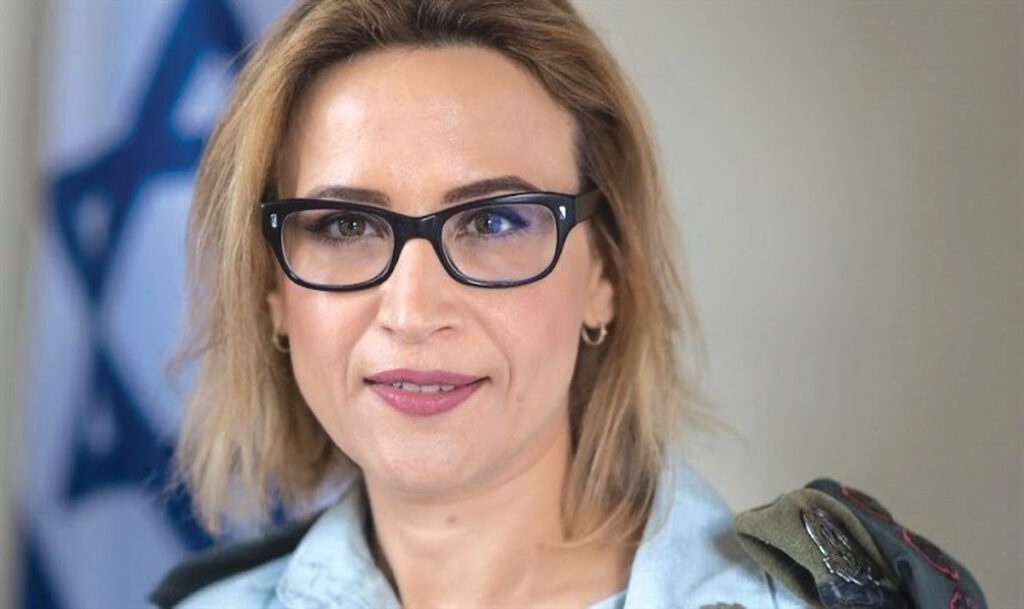
The story I’m about to tell isn’t easy to compress into an 800-word column. But it’s worth trying, because it distills many of Israel’s ills into a single narrative. It begins with allegations against IDF soldiers who abused Palestinian captives in a detention facility. IDF Military Advocate General Maj. Gen. Yifat Tomer-Yerushalmi was in charge of the investigation. This was no simple task: elected officials defended the soldiers, demanded the probe be halted and questioned the motivation, patriotism and professionalism of Tomer-Yerushalmi and her colleagues. Two ministers and four Knesset members even broke into the facility in protest.

In response to the outcry, the general made a problematic — yet explainable — decision: she ordered a subordinate to leak an incriminating video showing the soldiers handling a prisoner roughly, possibly criminally so. The video persuaded many Israelis that the investigation was justified, but it was also used by international critics as “proof” that the IDF commits war crimes. Politicians then demanded the leaker be identified — and that’s when a problematic move (a leak) slid into the criminal. As so often, it’s not the crime, it’s the cover-up. The general and some of her colleagues engaged in one, including, among other things, false statements to the High Court.

It all blew up last week. The general was outed as the leaker. She resigned as details of the cover-up emerged. An investigation was promptly launched, and right-wing politicians smelled blood in the water. The new scandal seemed to validate two of their sharpest claims: (A) that legal elites make their own rules; (B) that the indicted soldiers were victims of legal hacks lacking patriotism. 

The affair morphed into a toxic blend of the fight over judicial reform and the fight over responsibility for the war. Attacks on the resigning general turned personal and vindictive: “Arrest her,” “put her in chains,” “make her pay a heavy price.” It was the Israeli version of the infamous 2016 “lock her up” chant at Trump rallies. Prime Minister Netanyahu declared the leak “the most serious PR attack” against Israel in the country’s history — a ridiculous claim. Then, on Sunday, Tomer-Yerushalmi left what looked like a farewell letter and disappeared. Israelis feared the worst, but after hours of frantic searching she was found alive — without her phone.

She hadn’t harmed herself. But she did manage to lose the phone somewhere in the Mediterranean — hardly a detail that evokes sympathy or concern for her well-being. It was the phone the police needed to search, the phone that might have held more incriminating data. On Monday morning, she was arrested.

This story matters because it compresses Israel’s external and internal battles into one episode. Israel’s controversies are all here.

There’s the war against a vicious, murderous, cruel enemy — and the way such a war inevitably erodes any sympathy for enemy detainees. The general insisted on investigating a possible crime that many Israelis would not consider a crime, certainly not one warranting the indictment of soldiers. If some soldiers were overly cruel to a Palestinian detainee — the soldiers’ advocates would assume — the detainee probably deserved it. Remember: these soldiers acted while Israeli hostages were still trapped in Gaza tunnels, in dire conditions. No wonder the public found the indictment hard to accept, or struggled to sympathize with the general’s legal and moral logic.

There’s also the ongoing effort to erode the power of the legal establishment and limit its ability to define the permissible bounds of behavior for politicians, officials and soldiers. The main targets in this socio-political struggle are the High Court justices and the attorney general, but the Military Advocate General is a prime target too. She is part of the elite, a member of the “legal gang” that insists on rules many Israelis see as unnecessary, harmful, excessive — or all of the above.

Tomer-Yerushalmi handed the system’s critics a costly gift. She went after soldiers — exposing herself to accusations of unpatriotic behavior. She did so in wartime — exposing herself to claims of aiding the enemy. She covered it up with the help of peers — affirming “deep state” charges. She lied — exposing the hypocrisy of legal bureaucrats who present themselves as guardians of morality while pursuing their preferred policies.

And she made life harder for Israelis who still want Israel to keep its high moral standards—not out of concern for the enemy, but out of concern for Israel’s character. When her transgressions became public, those Israelis were mostly embarrassed. More than a criminal, Tomer-Yerushalmi — and her collaborators — are an embarrassment.

Something I wrote in Hebrew

Explaining Jewish-Americans to Israelis isn’t always easy: 

The “Jews for Mamdani” are very loud. They have a prominent presence in several media outlets. They have a powerful megaphone, held by a few public figures and rabbis. They also have a few vocal supporters in Israel who echo their messages as if they were those of a large community. They can create the impression that they are far more numerous than they really are. I’ve already encountered several Israeli politicians who asked me, in shock, “How can it be that the Jews support the anti-Israel Mamdani?” Well — they don’t. They do not support him.

A week’s numbers

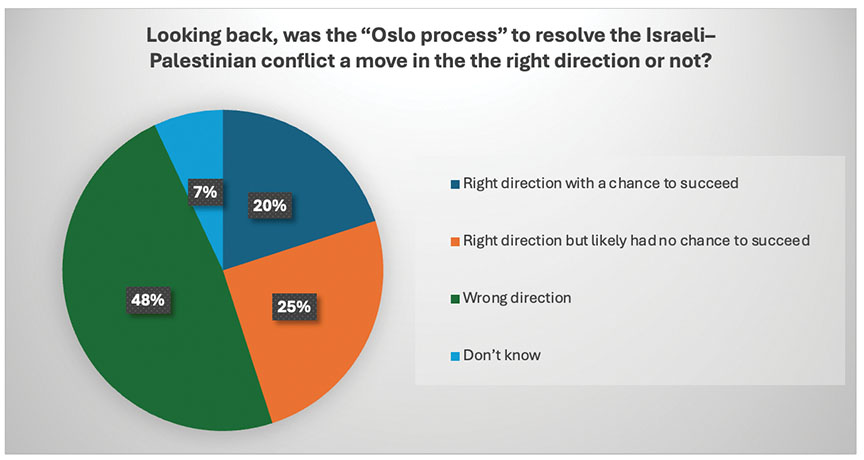
In a week of marking the 30-year anniversary of the Rabin assassination, Israelis see the Oslo Accords mostly unfavorable (JPPI numbers).  


A reader’s response

David Ezra writes: “Shmuel, you should write something about what’s happening in Lebanon.” My response: Right. Maybe next week. (In the meantime, read the WSJ report under the headline: ‘Hezbollah Is Rearming, Putting Cease-Fire at Risk’.)


Shmuel Rosner is senior political editor. For more analysis of Israeli and international politics, visit Rosner’s Domain at jewishjournal.com/rosnersdomain.

Rosner’s Domain | The Tomer-Yerushalmi Affair: A Cover-Up Tale Read More »