fbpx

July 23, 2025

Table for Five: Matot-Masei

One verse, five voices. Edited by Nina Litvak and Salvador Litvak, the Accidental Talmudist

These are the journeys of the children of Israel who left the land of Egypt in their legions, under the charge of Moses and Aaron.

– Num. 33:1


Dini Coopersmith

Principal, Maayanot haTorah seminary, www.reconnectiontrips.com

The Baal Shem Tov says that the journeys in the desert, from the time they left Egypt until entering the land of Israel, correspond to each Jewish individual’s personal journey from the time they’re born till they reach the next world, and to our destiny as a nation, until the end of days.

When we each are born, we go through trials and tribulations, like in the desert. Each set of circumstances we encounter on our journey is specifically tailor-made for us to reach our tikkun and achieve our purpose in life. The names of the encampments hint to what needed to be accomplished in that place. For instance, ”charada” = ”fear / anxiety.” Kedushat Levi says in this place they fought negative anxiety and supplanted it with true awe / reverence of God. And so they traveled, fighting the forces of evil, until they fulfilled their mission, finally ready to enter the land of Israel. 

How did they know what to accomplish in each encampment? They were ”in the hands of Moses and Aaron,” who guided them on how to fulfill their mission effectively. Each of us struggling through life would do well to have a guide or mentor, who can tell us where to turn at every fork in the road. How encouraging to realize that the Jewish nation today is surely being led by God and His messengers, through these last few encampments in our glorious history, fighting the forces of darkness and evil at every turn, readying us for our final destination: Am Yisrael Chai!


Benjamin Elterman 

Screenwriter, Essayist, Speechwriter at Mitzvahspeeches.com

From here, the Torah will list 42 locations the Israelites traveled during their time in the wilderness. Forty-two, huh? According to the space farce “Hitchhiker’s Guide to the Galaxy,” 42 is the answer to the meaning of life, the universe, and everything. Interesting. Did you know one of the names of G-d is made up of 42 letters? Or that when Nechemia rebuilt the walls of Jerusalem, he did so in 42 parts? Even the name of this book of the Torah, Bamidbar means “42 words” (if you’re familiar with gematria). Also the v’ahavta of Shema has 42 words. Well, “Hitchhiker’s” author Douglas Adams may not have been far off. But even though the space comedy has the answer, the joke is they forgot the question and the characters are left with, what does 42 mean? The Baal Shem Tov said that these 42 stops in the wilderness parallel the 42 stages of life. We think of our lives in just a few steps; diapers, childhood, adolescence, early adulthood, parenthood, middle age, getting social security, and diapers again. According to the Baal Shem Tov, a person goes through many more intermittent steps. New jobs, relationships, dealing with hardships, finding new mentors, achieving new spiritual levels, and, of course, many setbacks. As the Torah lists each of the stops of the Israelites, it is incredibly helpful to reflect on the benchmarks of our lives to regain perspective of where we’re going and to see how much progress we’ve made.


Rabbi Elchanan Shoff 

Rabbi, Beis Knesses of Los Angeles

The midrash writes “Why did each of these travels deserve to be mentioned in the Torah? Those locations welcomed the Jews, God will reward them, as Isaiah (35:1) says, ‘The desert will rejoice … and blossom like a rose.’” The Midrash continues, “Now, if a desert that welcomes the Jews will blossom, how much more so one who welcomes Torah scholars into their midst.” The Midrash concludes, “Just as deserts will blossom, civilizations will revert to deserts, as it says, (Malachi 1:3) ‘I will make [Esav’s] hills desolate and his inheritance into a snake-infested desert.’” 

Wherever Jews have lived, all through their journeys, they have turned wildernesses into blossoming meadows. Monotheism  — the idea of morality and Truth  — was spread by the Jew. Wherever the Jew has lived, that idea has taken hold. Where they have not, it has not. The deserts that have welcomed the Israelite have become Edens. Those who reject them will eventually descend into chaos. The midrash teaches: we need to be welcoming to the Torah scholars in our midst. They should be spoken about in our homes; their ideas should be taken seriously. The society that rejects the Jew will crumble. In the great words of Malachi, last of the prophets, a time will come when large civilizations of Esav will revert to chaos. A world that rejects Am Yisrael and our message cannot last. By welcoming true Torah scholars into our lives, by faithfully committing to our destiny, we bring blessing wherever we’re welcomed.


Baruch C. Cohen, Esq. 

Law Office of Baruch C. Cohen

THESE ARE THE JOURNEYS – NOT JUST WHERE WE WENT. BUT WHO WE BECAME. 

The Torah lists 42 stops. Some lasted years, others just days. Some were detours, some disasters. But none are skipped. Why? Because every stop matters. Even the messy ones. 

You can leave Egypt in one night. But Egypt doesn’t leave you so fast.

We all have our Egypts — wounds, fears, regrets. And though we may move forward, healing has its own landscape. God is not just the God of destinations. He is the God of detours, of breakdowns, of progress measured in quiet resilience. 

“These are the journeys” isn’t just a historical record. It’s your story. Your pain. Your growth. Your wandering. And it’s all remembered — by the God who never left your side. Even when you thought you were standing still, you were traveling. Even when you wanted to give up, you kept moving.

Moses and Aaron led them. You’re not alone either. Torah walks with you. God walks with you. So when you reach your Promised Land, whatever that looks like, you’ll see the truth: Every step shaped you. Every stop refined you. And every part of the journey — especially the hardest ones — was holy.


David Brandes

Screenwriter | thequarrelmovie.com

Why does Moses feel it necessary to recount the Israelites’ long and sometimes grisly journey through the wilderness yet again? Taken in context it can be seen as a thoughtful nation-building exercise. Addressing the new generation poised to enter Canaan, Moses’ “second law” serves as both a historical review and a poignant farewell. 

The recitation acts as a powerful teaching tool. The generation that rebelled at Kadesh-Barnea, transforming an 11-day journey into years of wandering, had largely perished. It’s for their descendants that Moses methodically details each stop. This isn’t just geography; it’s memorializing their shared history, underscoring the severe consequences of disobedience as well as the vital importance of faith. Moses highlights the failures of the past — the grumbling, the idolatry, the lack of trust — at each location, serving as a veiled warning. The recounting emphasizes God’s faithfulness towards his people. Despite the Israelites’ persistent rebellion, God consistently provided sustenance, protection, and guidance thereby reinforcing their shared memory as a nation. It’s a testament to divine steadfastness amidst human frailty, a crucial message for a people about to face formidable challenges in the Promised Land. 

Finally, this is Moses’ last will and testament, a final address from the leader who intimately shared their journey yet was denied entry into the land. By reliving these moments, he connects with the people one last time, imparting wisdom gleaned from 40 years of shared struggle and divine intervention. This recapitulation is no less than a powerful narrative of remembrance, preparation, and enduring covenant.

Table for Five: Matot-Masei Read More »
Director Hopes His Documentary Can Bring Missing Person Home

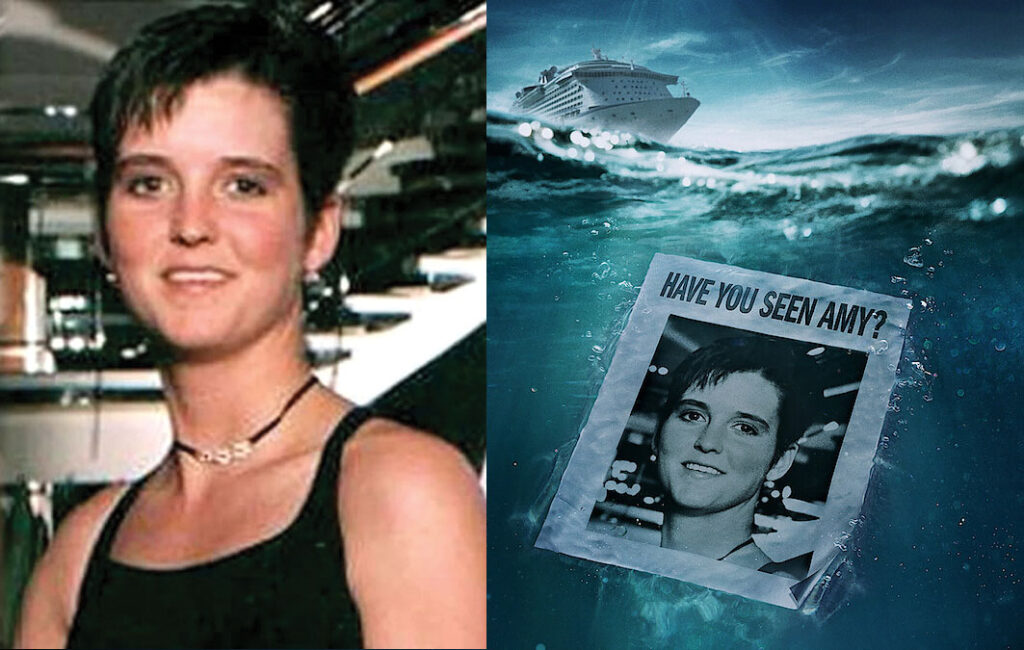
Every parent’s worst nightmare is that their child could be murdered or die from an accident. A missing child can be equally, if not more harrowing. The Netflix documentary “Amy Bradley is Missing” is a must-see that raises many questions with few concrete answers. 

In 1998, Amy Bradley, 23, went on a Royal Caribbean cruise with her family. On March 24, she returned to her room at 3:40 a.m. She was last seen by her father at about 5:30 a.m. and was gone by 6:00 a.m.

A body was not found. Adtzere Mentar, Curacao harbor police chief says in the film that with the current, a body should have washed up on shore and even if she was eaten by a shark, an arm or a leg should have turned up. 

Video footage shows her dancing happily with bass player Alister “Yellow” Douglas in the ship’s nightclub. He has denied being involved in her disappearance. His daughter says his story was missing a lot of parts. Two women on the ship claimed to have seen him with Bradley. If this took place on American soil, Douglas would have been arrested, FBI agent Erin Sheridan says, adding they don’t know what happened to Bradley and that it is ”a puzzle that’s extremely difficult to put together.” One man says he saw Douglas with Bradley four months later on a beach. Did she accidentally fall in the water or jump to commit suicide? Was she murdered? Was she kidnapped by sex-trafficked and is still alive? All theories are presented in the harrowing and riveting documentary.

Sheridan says “anything could have occurred” and Amy’s room was cleaned before they got there so evidence could not be preserved. 

Bill Hefner says in January 1999 he violated Navy rules to “stop in a bar I wasn’t supposed to be in” and saw men with guns. A petite white girl with dark hair told him “They’re holding me against my will, I need help.” She told him her name was Amy Bradley, telling him she left the ship on her own to get drugs and was now stuck. He assumed she was a prostitute and said he didn’t report it because he was two years away from retirement and would have gotten into trouble. “If you were in a brothel when you shouldn’t be, why would you out yourself to millions of people when you know they will judge you,” Mark said. “Theres noting to gain.”

Judy Maurer says she saw Amy in Barbados. She says she had wild and crazy black hair and had “an awful look on her face.”. The woman said her name was Amy. She says se believed the woman was forced to do something she didn’t want to do. 

Amy’s mother is asked if her daughter is alive, why wouldn’t she at least call home? While no clear answer is given, there is speculation that if she was kidnapped, she may have been told her family would be killed if she contacted them, or she may have had kids. There are many conflicting possibilities, and it is gut wrenching to watch her helpless mother distraught. Life for the family was turned upside down in an instant. 

The last of three episodes will make your head spin. It includes Mollie McClure, a woman who says she was intimate with Amy and reveals a note from Amy (prior to her disappearance) A cruise employee appears nonchalant and says he believes Bradley fell or jumped from the ship. 

Mark, who directed the film with Phil Lott, said he thinks Bradley is alive. “You go through different stages when you work on these projects,” Mark said. “I went into it thinking she is definitely alive. I want to use the documentary to help the parents find her. I became conflicted as I learned more. I have to present each theory and see if there is validity. Somewhere along the way it seemed just as likely as she was sex trafficked or maybe she walked off the ship. I knew audiences would want to dissect the story. Personally, I have to cling to the idea that she’s out there somewhere.”

Director Hopes His Documentary Can Bring Missing Person Home Read More »

Is the New Superman About the Israel-Gaza War?

The most important thing needed in the new “Superman” film was to give the Man of Steel some life. Jewish actor David Corenswet is handsome and buff, but he also delivers the goods as an actor, showing some real emotion. Nobody will be better than the iconic Christopher Reeve and we shouldn’t expect anyone to be like him.

Corenswet has great chemistry with Rachel Brosnahan of “The Marvelous Mr. Maisel” who plays Lois Lane. (In this universe, she knows that Clark Kent is Superman). They live in Metropolis and work at The Daily Planet.

But the film’s best moment doesn’t involve fighting or flying. It’s when Lois gets an exclusive interview with Superman, who is dressed as a regular guy. She asks tough questions, including whether or not he consulted with the American president before taking action to stop an attack by a Putinesque leader of Boravia on the fictional Eastern European nation of Jarhanpur.  Superman doesn’t think it matters, because he prevented a war. Millions who watch will learn what “off the record” means.

Superman was created by two Jewish men — Jerry Siegel and artist Joe Shuster — and first appeared in Action Comics, published on April 18,1938. Sent to Earth from the dying planet Krypton by his parents Kal-El lands in the Midwestern town of Smallville, and is adopted by the Kents, who name him Clark.

Nicholas Hoult, as the supervillain Lex Luthor— in this movie, a billionaire tech executive with close connections to the U.S. government — steals the show. Luthor is determined to rid the world of Superman. He never calls Superman by his name, referring to him as “the Kryptonian,” or “the alien.” In one of the movie’s wittier touches, he shows Superman his disinformation center, where he creates his online “content”; it’s a room filled with thousands of chimps chained to keyboards. He also creates a deep fake where Superman’s parents claim they sent him to Earth to conquer the planet. This is a fitting nod to how misinformation can make people think anything. The war that Superman stopped was plotted by Luthor, who would take over half of Jarhanpur while his company, LuthorCorp, will profit off of war. 

Superman is helped in his fight against Luthor by the Justice Gang: Mister Terrific (Edi Gathegi) The Green Lantern (Nathan Fillion) and Hawkgirl (Kendra Saunders), setting up the DC Comics Universe with an “Avengers”-style army of superheroes. Their  scenes clutter the storytelling; “The Justice Gang” is neither exciting nor amusing.

But Bovaria, led by a white man who appear to be Russian, invades a poorer and barely armed country Jarhanpur. In DC comics, both countries were located in Eastern Europe. No religion is mentioned in the film.

Gunn has not said if the war is supposed to represent what we have seen in the Middle East. I don’t think it was his intention to be pro-anything or for the movie to be about Israelis and Palestinians, but there are some parallels. You could argue that the brown-skinned and poorly armed Jarhanpurians are a stand-in for Palestinians, while the white Boravians are Israelis. There are Trump haters who will compare the president  to Lex Luthor and point to his comment to turn Gaza into a Riviera that America would own as similar to Luthor owning part of Jarhanpur. But Trump made those comments on Feb. 4, 2025. Filming for “Superman” was completed in July, 2024. So that could not have been written to mimic what Trump said. Reportedly the first draft of the script was done prior to Oct. 7, 2023, but the final script was not completed until Feb. 2024, so it is possible Gunn had the war in mind. That the audience should sympathize with an underdog is common in many films. 

“Superman” is a successful film that gives the audience what it wants as well as some things it could do without, unless you are an over-the-top dog lover. While some of the plot is predictable, the two lead actors carry the film with performances that mitigate a script that is bloated.

Is the New Superman About the Israel-Gaza War? Read More »

Ten Secrets to Academic Success | Remember Why You’re Going to College

Last April, I visited Boston addressing the New Anti-Semitism, the Academic Intifada, and the Great Betrayal American Jews experienced as Woke U becoming Jew-Bashing U. One morning, I jogged to Harvard. Running along the Charles River, the heaviness of the wars against Israel and against the Jews lifted. Reaching Harvard Yard, I time-traveled. The decades separating me and today’s undergraduates – and some of the anger distancing me from some Harvard colleagues – vanished – at least temporarily.

I remembered my undergraduate years as a Harvard Crimson Key tour guide sharing Harvard lore. Here – Weld 32 — is where John Kennedy lived in 1936-1937. There — the Sever Hall basement bathroom — is where Marilyn French was inspired to write her feminist blockbuster The Women’s Room.   

The students looked unchanged: fresh-faced, enthusiastic, adults-in-the-making. You imagined all the brain-power churning. You could taste the wealth and power epitomized by the historic buildings, and some well-dressed, older, corporate types wandering the Yard, escorted by eager-beaver undergrads. You felt like harvesting the pheromones from the budding romances, as young couples arm-in-arm exited their dorms – or his or her dorm. And you remembered, beyond it all, how this universe was fueled by ideas, ideas, and more ideas.

In short, a year after the encampments, amid the confusion as Jews wondered how America’s president could be so illiberal yet so against anti-Semitism, the university’s forever-magic triumphed. Despite its problems, North America’s Higher Education system remains the most marvelous laboratory for instilling knowledge, nurturing ideas, generating innovations, and cultivating young minds invented since the Babylonian Yeshivas. That’s why so many of us oppose what’s happening on campus – while still encouraging students to enter what could be toxic environments.

“Look at me,” I tell students, “I’m a case of arrested development. I got to university and never left.” But many of us fear that the liberal-minded, critical, substantive university I fell in love with, left us.  

These then, are the clashing realities every thoughtful student, Jewish and non-Jewish, faces.

Just as David Ben-Gurion advised Zionists during World War II to fight the British as if there were no Nazis, while fighting with the British against the Nazis, modern students must live a paradox.  The Academic Intifada continues. Beyond demonizing Israel, Zionists, Jews, a small fanatic group of “hack-ademics” hijack the holy classroom podium. They turn it into a political platform obsessed with romanticizing “the oppressed” while targeting the “oppressors.” While it’s worse in elite social sciences and humanities faculties – my world — some medical schools teach “DeColonizing Anatomy,” not basic bone structure, and some mathematicians brand adding numbers correctly “white supremacist.”

Similarly, some overly-influential students practice an all-or-nothing politics of intolerance, orthodoxies, litmus tests and cancel culture. 

So, yes, dear students, as this series will teach, you must be ready to resist this academic intifada. But only a small minority of hyper-politicized faculty and students have ruined the atmosphere. Their toxicity varies from campus to campus, department to department, class to class. 

Beware, if you see it everywhere – you’ll learn nowhere; it’s much harder to learn, laugh, live, thrive, if you’re constantly tense or on the defensive.

The greater obstacles to good education include parents’ and students’ obsession with credentials, grades, and future jobs, combined with too many professors’ over-investment in research, not teaching.

Relax. Make sure to see the magic, seek the magic, and cultivate higher education’s forever-magic. Your parents, your society, your upbringing, have given you a mind-expanding, soul-stretching, character-building opportunity. Unlike in much of the rest of the world, most young Americans and Canadians don’t have to serve in the army or work so many hours that they cannot enjoy the four-year-gift of college, which nearly 40 percent extend to graduate school.  

Make sure to see the magic, seek the magic, and cultivate higher education’s forever-magic. 

Start a new ritual: on your first day of school, call – don’t text – the people in your life most responsible for this gift. A little gratitude goes a long way to helping you see the good around you not just the bad, and in this case, appreciate the structures of education that still work, beyond the misfires.

Throughout the next ten weeks, this column will advise learners of all ages – and their parents – to maximize the wonderful opportunities many take for granted. You want to take challenging, thought-provoking, classes from open-minded, rigorous professors and don’t just go for the “gut course” – easy grade. You want to learn how to be an effective educational consumer, advocating for your rights when necessary, but seizing great learning moments always. You want to taste what it’s like to live the life of ideas, staying up late arguing with friends about the meaning of life, who your role models are, and what is the best ice cream flavor.  And I hope you’ll have experiences that get you questioning some of your core assumptions, either to change them, or to dissect them, re-examine them, reaffirm them, and then defend them passionately.  

You want to taste what it’s like to live the life of ideas, staying up late arguing with friends about the meaning of life, who your role models are, and what is the best ice cream flavor.  

To model the kind of journey you might follow, applying eternal wisdom from great books, to how you learn, think, live, consider Pirkei Avot, Ethics of the Fathers, 4:1. Ben Zoma said: “Who are wise? Those learning from everyone” – your peers have much to teach, along with your professors. 

“Who are mighty? Those subduing their evil inclinations….”  Life unsupervised easily degenerates into life undisciplined. Know who you are, what you want, and how to limit yourself to achieve your best self.

“Who are rich? Those rejoicing in their lot….” Universities are filled with smarty-pants superstars who can outdo you – alongside normies who find you intimidating. Spend less time competing with others, or feeling inadequate, and find your inner satisfaction, your balance, your happiness with who you are and what you have.

Finally: “Who gets honored? Those who honor others….” Ultimately, Woke U runs on disrespect. A small, self-righteous, overly-influential group dismisses open-ended inquiry and thoughtful disagreement. 

Go in the other direction. Cultivate respect for others, stay open-minded, self-controlled, and satisfied with who you are – and be grateful for the magnificent opportunities universities offer to flourish.


Gil Troy, a senior fellow in Zionist Thought at the Jewish People Policy Institute, is an American presidential historian. His latest books, “To Resist the Academic Intifada: Letters to My Students on Defending the Zionist Dream” and “The Essential Guide to October 7th and its Aftermath” were just published. 

Ten Secrets to Academic Success | Remember Why You’re Going to College Read More »

If Not Now When: On the Restoration of the American Dream

In all his timeless wisdom that touched the lives of children across multiple generations, Fred Rogers was able to reduce societal issues to their most essential root cause. With regard to the acute housing crisis that Los Angeles has experienced since the 1970’s, we can look to Mr. Rogers for guidance through his words that are just as relevant today as they were several decades ago: “ We live in a world in which we need to share responsibility. It is easy to say that it is not my child, not my community, not my world, not my problem. Then there are those who see the need and respond. I consider those people my heroes.”

Los Angeles, a city defined by its dynamism and diversity, has long struggled with a paradox: a housing market both vibrant and inaccessible for many. Amid skyrocketing rents and an aging population, the need for both “missing middle” and senior housing has never been greater. As policymakers attempt to shift the collective mindset and policy orientation from that of scarcity to one of abundance as articulated by Ezra Klein and Derek Thompson in their book Abundance (Avid Reader Press-2025)—and recent reforms to the California Environmental Quality Act (CEQA), including those spearheaded by Governor Gavin Newsom in the latest state budget, we are presented with a once in a generation window of opportunity to reimagine Los Angeles’ housing future. For the first time since the 1970s, these reforms offer real hope for a new era of housing affordability in a city where 65% of residents have been priced out of homeownership due to a witch’s brew of bad policy and community obstruction.

In Abundance, Ezra Klein and Derek Thompson challenge the notion of scarcity that has long dominated American policy debates, particularly around housing. He writes, “Scarcity is not just an economic concept—it is an organizing principle. It shapes our politics, our expectations, and our sense of what is possible.” Klein argues that America’s housing crisis is not inevitable, but rather the result of deliberate policy choices that have constrained supply, stifled innovation, and limited affordability. The theory of abundance is the belief that there are enough resources, opportunities, and success for everyone. In contrast to a scarcity mindset which assumes limited resources and that one person’s gain is another’s loss, an abundance mindset fosters optimism, generosity, and a belief in limitless possibilities. Klein’s vision is grounded in a proactive embrace of abundance: “We must move from a mindset of managing scarcity to one of creating abundance. That means building more, and building better, so that opportunity is not a zero-sum game, but something we can expand for all.” This philosophy resonates particularly in the context of Los Angeles, where the demand for housing—especially for those in the missing middle (households too wealthy for subsidies but too poor for market-rate homes) and for seniors—far outpaces supply.

The California Environmental Quality Act (CEQA), enacted in 1970, was designed to protect the state’s natural resources. However, over time, its procedural requirements have been weaponized to delay or block much-needed housing developments. Projects for multi-family developments, infill housing, or even senior living communities have often faced years-long delays due to litigation, environmental reviews, and local opposition. This is not a red or blue story of identity politics. Rather, this is a man-made crisis of what happens when the last people to make it through the door of homeownership slam it shut behind them creating a political economy that thrives on the perpetuation of scarcity. As Los Angeles grew more affluent through the myriad of industries that have defined its exceptionalism, so did it grow more exclusionary. In essence, housing scarcity, as perpetuated through the abuse of CEQA by NIMBY (not in my backyard) groups and financial competition is the result of trying to preserve one’s upward mobility by denying access to others through the endless petitions, lawsuits and review processes that all lead to the road of nowhere.

In 2024, Governor Gavin Newsom and state lawmakers placed a major emphasis on CEQA reform in the California budget bill. These new reforms are designed to further streamline the approval process for housing and infrastructure projects, with an explicit focus on addressing California’s acute housing shortage. Newsom’s CEQA package introduces faster timelines for judicial review, narrows the scope for lawsuits that can delay projects, and expands exemptions for dense infill housing, particularly around transit and in areas zoned for higher density. The reforms also reduce procedural barriers for adaptive reuse of existing buildings, which is crucial for both missing middle and senior housing.

For the first time since the 1970s, these sweeping reforms signal a genuine possibility that California—and Los Angeles in particular—can break the cycle of scarcity and high costs. As State Senator Scott Wiener, a leading advocate for housing reform, has stated, “We are finally turning the page on decades of housing dysfunction. CEQA reform gives us the tools to build the homes Californians desperately need.” Wiener emphasizes the significance of these changes: “For forty years, CEQA has too often served as a weapon against affordable housing. These reforms represent a new chapter—one where we can build responsibly, quickly, and with a sense of purpose.” By embedding these measures in the state’s budget, the Newsom administration aims to accelerate the delivery of housing across California, providing cities like Los Angeles with stronger tools to meet their residents’ needs. CEQA reformers hope to “clear the path for the kind of abundant, inclusive growth that cities like Los Angeles so desperately need,” echoing Klein’s call for abundance.

The missing middle—duplexes, triplexes, townhouses, and small-scale apartments—has been largely absent from Los Angeles’ housing landscape. Decades of zoning restrictions, community pushback, and CEQA-related procedural delays have made it nearly impossible to build this kind of housing in many neighborhoods. Klein notes in Abundance: “We are not suffering from a lack of space or resources, but from a lack of political will and imagination. The missing middle is a casualty of that failure.” The new CEQA reforms, reinforced by the latest budget provisions, specifically address this by granting categorical exemptions for projects that fit within existing zoning and meet rigorous environmental standards. This streamlining not only cuts years off the approval timeline but also reduces project costs, making it economically feasible for developers to build at a scale that matches local needs. Senator Wiener, reflecting on the impact for the missing middle, remarked, “When we make it easier for communities to add gentle density, we expand access to affordable homes for regular people—teachers, nurses, and young families. That’s how we keep our neighborhoods vibrant and inclusive.”

Los Angeles is also home to a rapidly growing senior population, with estimates suggesting that more than 20% of Angelenos will be over 65 by 2035. Yet, as Klein observes, “Our built environment lags far behind our demographic reality. Senior housing is often an afterthought, wedged into the margins or priced far out of reach.” Recent reforms, especially those included in Governor Newsom’s latest budget, incorporate expedited CEQA review for age-restricted projects, incentives for integrating accessibility and medical support, and carve-outs for retrofitting existing buildings. Developers are now empowered to pursue mixed-use senior communities, located near transit and amenities, without the specter of years-long legal challenges. “Housing for older adults shouldn’t be a luxury,” says senior advocate James Lin. “With CEQA reform, we’re finally seeing projects that prioritize accessibility, community, and dignity move forward.”

Klein’s argument in Abundance is ultimately about believing in the capacity to do better. “Abundance is a political project,” he writes. “It asks us to commit to a future where everyone has enough, where our cities are places of possibility rather than battlegrounds over scraps.” CEQA reform, though not a panacea, represents a concrete step toward that future. By accelerating the approval process and lowering barriers to entry, the reforms—especially those advanced by Governor Newsom in the budget bill—promise a wave of new housing that can fill the gaps for both the missing middle and seniors. Yet, challenges remain. Local opposition, rising construction costs, and persistent NIMBY sentiment continue to threaten progress. As Klein warns, Abundance will always have enemies. It threatens the comfort of those who benefit from keeping others out.” Still, as Senator Wiener puts it, “This is our chance to show that California can lead—not just in innovation, but in compassion, in inclusion, and in giving every resident a shot at a decent, affordable home.”

For Los Angeles, the intersection of Klein’s vision and CEQA reform is a chance to rewrite the city’s housing story. The shift from scarcity to abundance requires sustained effort, vigilant oversight, and community buy-in. It demands not only legislative change but also a cultural transformation: the willingness to welcome new neighbors, to imagine new possibilities, and to build for the future. Los Angeles stands at a crossroads. In a recent interview with California Insider, land use attorney David Rand articulates that what has been more insidious than single developments that have been stopped due to frivolous CEQA lawsuits  has been “all of the great projects that never went forward at all since the developer and their investors knew that if they had proposed a particular project in a particular location, that they would have likely been sued and therefore made a business decision to take a pass and develop somewhere else.” Lauding Governor Newsom’s bold stance on transformative housing reform, Rand further states that he feels “emboldened by the incredibly consequential reforms” and while the tangible effects in the macro sense will take a few years in their implementation, we are already starting to feel the practical effects of this legislation where projects in progress are now pivoting to this more expedited route.

The lessons of Abundance and the promise of CEQA reform—now bolstered by decisive action in the state budget—offer a blueprint for meeting the needs of today’s Angelenos and generations to come. For the first time in nearly half a century, there is hope that the obstacles to housing affordability can be meaningfully overcome. By embracing abundance, removing barriers, and building the housing that communities need—especially for the missing middle and seniors—the city can live up to its potential as a place of opportunity, inclusion, and hope. “We can have cities where people of all ages and incomes can live well,” Klein urges, “It just takes the courage to say yes—to abundance, to opportunity, and to each other.” I think Mr. Rogers would concur with that statement and that speaks volumes.


Lisa Ansell is the Associate Director of the USC Casden Institute and Lecturer of Hebrew Language at Hebrew Union College-Jewish Institute of Religion Los Angeles.

If Not Now When: On the Restoration of the American Dream Read More »

Rosner’s Domain | Is Iran Still an Existential Threat?

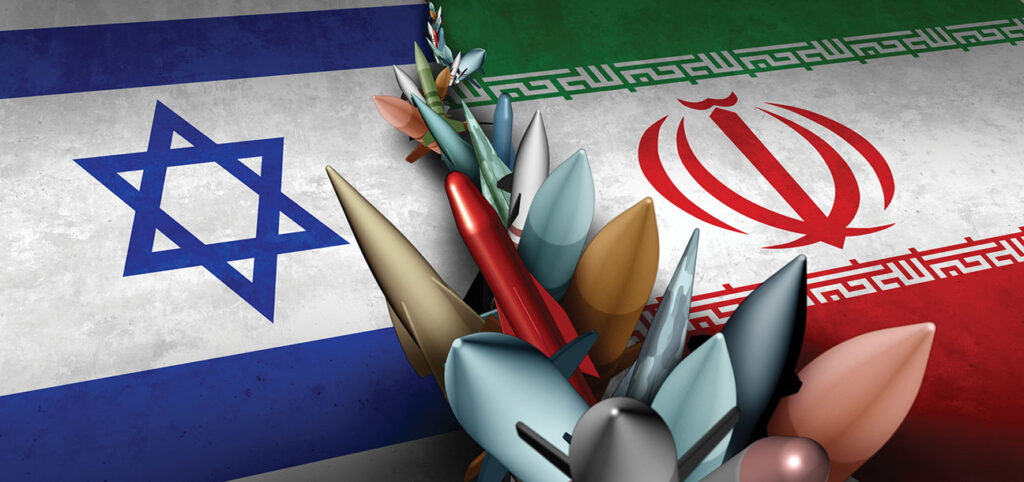
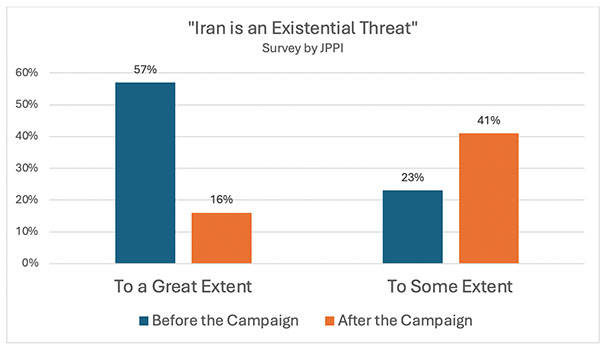
Was Iran ever truly an existential threat to Israel? Some Israelis say it never was. Most of those who say so are Arab Israelis. But even among Jews, there are a few who agree and a few more who say Iran was an existential threat “only to a small extent.” Most Israelis, however, believed that on the eve of the recent military campaign against Iran — just a few weeks ago, even if it feels like an eternity — Iran was, “to a great extent,” an existential threat to Israel.

To accept that Iran posed such a threat, one must trust Israel’s leaders, and especially the person who led it more than anyone else in recent decades: Benjamin Netanyahu. He was the one who repeatedly used this terminology. He was the one who consistently explained to both Israelis and foreigners that an Iran actively seeking nuclear weapons constituted an existential threat to Israel. As noted, most Israelis believe him on this matter. But not equally. Nearly all Likud voters — Netanyahu’s party — believe that before the war, Iran was an existential threat “to a great extent.” Among voters of the Labor Party, a smaller party on the other end of the political map, there’s some skepticism. A third of them agree with Likud voters. But two-thirds ranked the threat lower, as existential “to some extent.”

What do Israelis imagine — or what did they imagine — when they think of Iran as an existential threat? Some envision an Iranian missile with a nuclear warhead striking the heart of Tel Aviv. Other Israelis—should we call them more sophisticated?—don’t necessarily imagine an Iranian missile being fired at Tel Aviv, but rather the missile that merely threatens it. Its very existence is the existential threat, because it limits Israel’s freedom of action in the region. According to this view, a credible announcement that Iran possesses a nuclear-capable missile is in itself the beginning of that threat’s realization.

On June 24, exactly a month ago, the Israeli government announced that “Israel has removed an immediate, dual existential threat — both nuclear and ballistic.” This statement came with the start of a ceasefire. Since then, there’s a debate about what Israel and the U.S. achieved in their operation. Not everything is known. Not everything will be known soon. The affected facilities are underground. It’s quite possible that even the Iranians are still trying to figure out what exactly happened to them. And once they do, they’re unlikely to share it. In other words, when Israel announced that it had “removed” the threat, it did so based on partial information. 

Earlier we asked: Was Iran an existential threat to Israel? Now we ask: Is it still an existential threat? We asked both these questions in a poll. And just as we said about the first question — that believing Iran was an existential threat requires belief in Israel’s leaders’ narrative — we say the same about the second: to believe that Israel “removed an existential threat,” one must again trust the narrative of its leaders. We, the citizens, have no way of knowing what Iran had, or what it still has; what its past intentions were, or what its current intentions are; what capabilities Israel had when it acted to remove the threat, or what it has now to prevent it from reemerging. All we have are our ears, a degree of judgment and what the leaders tell us or leak to the media.

Nearly six out of 10 Israelis say that on the eve of the operation, Iran posed an existential threat “to a great extent.” Fewer than two out of 10 believe that after the operation, Iran still poses a threat “to a great extent” That indicates a success. Is it a success of the campaign? Perhaps. But it is more a success for the leaders involved — Netanyahu and Donald Trump — in convincing Israelis that the operation succeeded. Four out of 10 Israelis now believe that Iran is no longer an existential threat, or that it is one “to only a small extent.”

Who is most convinced of this? Here’s proof that what’s at stake is not a careful analysis of reality, but mainly trust in leadership. Those who believed, on the eve of war, that Iran was the most severe threat — are also those who now most firmly believe that the threat has been diminished. They believed the leaders’ dire warnings before the campaign — they now believe the leaders’ triumphant declarations afterward. Let’s look again at voters of the two parties we mentioned earlier. Among Likud voters, four out of 10 no longer believe Iran poses a significant existential threat. Among Labor voters, only two out of 10 say the same. The former believed—and still believe — what the government said and says. The latter did not believe — and still don’t.

And Iran? It remains a threat. If we set aside “existential,” which is vague in meaning, the Iranians certainly have motivation, an ideology, a hostile regime, and malicious intent. They may have fewer resources. One hopes they have fewer resources. But resources are things that deplete — and then accumulate again. In other words — it’s easier to accept Israel’s use of the word “immediate” in its announcement. It’s harder to accept the word “removed.”

Something I wrote in Hebrew

Political analysis of many polls led me to the following conclusion:

The Jewish center-left enters the election cycle with a maximum potential of about 40% of the Jewish public. That’s it. There aren’t enough Israelis in this camp to form a coalition — unless, of course, one decides that the camp includes Arab parties as well. But that brings additional challenges, since quite a few Jewish centrists in Israel would then prefer to shift rightward themselves. In other words: Israel’s political game is played within the relatively narrow field of those who define themselves as “moderate right” or “center-leaning right.” These are not part of the third of voters who are clear supporters of the current government. They may choose someone or something clearly right-wing, but not necessarily aiming for a hard-right coalition — as long as they’re convinced the outcome will still be “right-wing.” Because they’re not leaving the right, no matter how many categories you offer them.

A week’s numbers

Still a threat, but Israelis see it as a reduced one after the Iran campaign. See column above.


A reader’s response

Amy Tuchman asks: “How can I defend Israel when so many innocent Gazans are killed when they try to get food?” My response: It’s not an easy question to answer briefly, but I’d start by being skeptical about pronouncements on the number of casualties whose source is Hamas and its allies.


Shmuel Rosner is senior political editor. For more analysis of Israeli and international politics, visit Rosner’s Domain at jewishjournal.com/rosnersdomain.

Rosner’s Domain | Is Iran Still an Existential Threat? Read More »

Remembering Laura Ben-David

It seems that almost everyone has a Laura Ben-David story (or more than one). Her Facebook page is filled with tributes and I recommend visiting it.

I’ve known Laura for years but our relationship strengthened when I reached out to her in 2016, knowing she was working for Shavei Israel, the organization headed by Michael Freund that “Helps Lost and Hidden Jews throughout the world to return [to Israel].” I told her we’d like to invite the women who were believed to be from the tribe of Menashe, who had come from India and were living in Kiryat Arba, to our Raise Your Spirits Theatre show “SISTERS! Daughters of Tzelofchad” as our guests, as the daughters of Tzelofchad were from the tribe of Menashe. (Yes, last week’s parsha.)

A scene from “Sisters” by Laura

When I realized that our wonderful in-house photographer, Rebecca Kowalsky, couldn’t be there that night, I asked Laura if she could take a few photographs.

She did one better. She photographed and wrote a blog for Times of Israel about the show, called “Raising our Spirits: A Photo Essay,” including some of her wonderful photographs, one of which became an iconic photo of the show and is included in a video clip of one of the songs in the show. A song whose title is, so appropriately, “How does one Remember?”

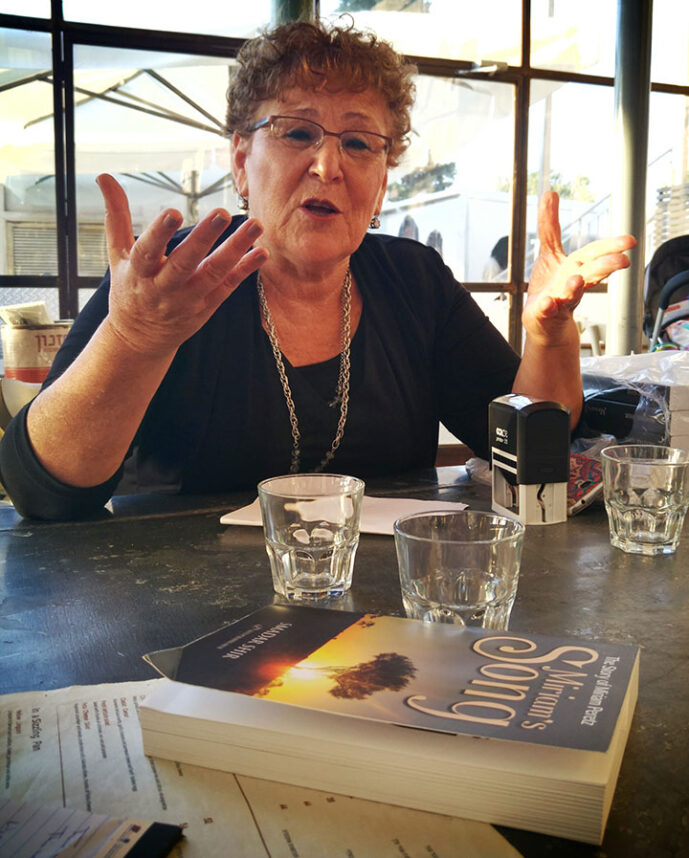
Later in 2016 Laura and I were both at a press event for Miriam Peretz. I was writing a review of Miriam’s book, “Miriam’s Song: The Story of Miriam Peretz,” and asked Laura if she had a good photo to include, and she sent me the one also included here. She was always so generous with her time and her work.

Miriam Peretz by Laura

That same year, while decluttering closets, I gave Laura some winter coats and jackets to give to the B’nei Menashe in Kiryat Arba. She said they would love them, as they did not come with winter clothes from India. She took them, and later I gave her more.

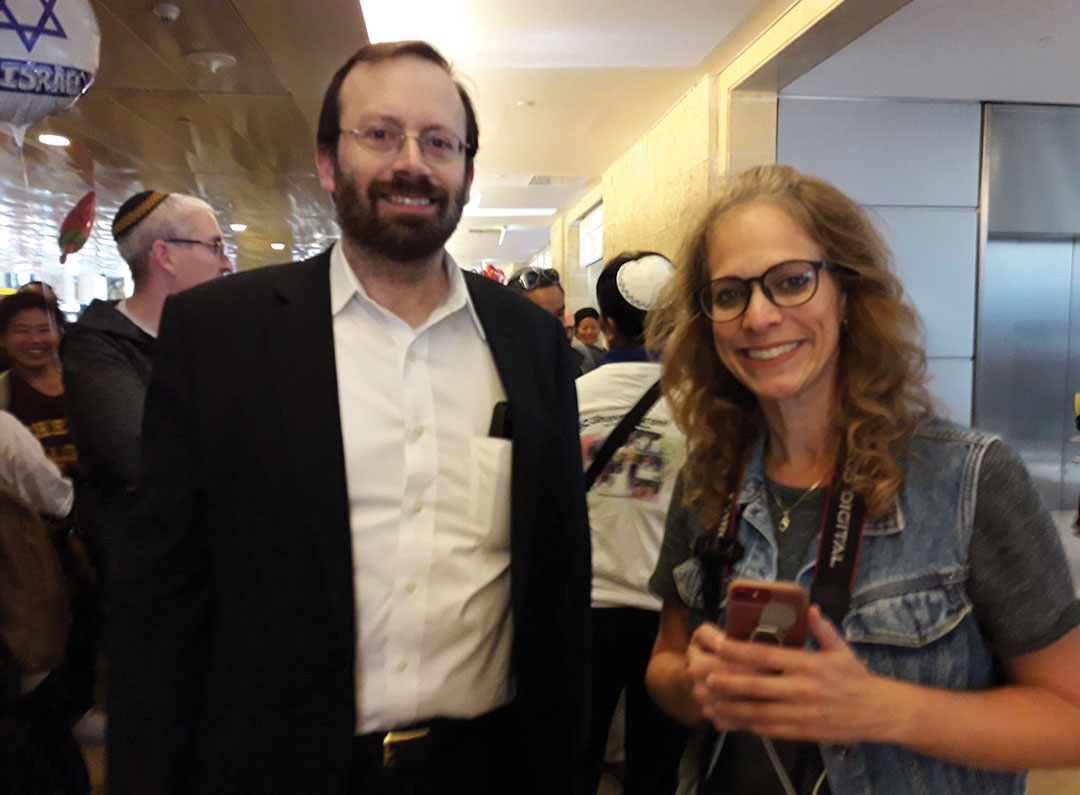
And then, in 2017, I went to the airport as another group of B’nei Menashe were landing in Israel and I took some photos of my own. Laura, of course, was there also. Some of those photos are here. Joining in meeting them at the airport and welcoming them on aliya to Israel was my way of “celebrating” a year since my cancer diagnosis, and I was thank God healthy.

Michael Freund with Laura at airport Nov 2017 Photo by Toby Klein Greenwald

In 2020, when we were cleaning out our costume closet in the Gush Etzion community center theater, I found some sweatshirts with show logos that were never sold. I asked Laura if she wanted them for her B’nei Menashe people. She said yes! And they took them. She always had B’nei Menashe on her mind.

Then, in 2022, I was at the bat mitzva party of Halleli Markowitz, an enchanting, talented girl with Down Syndrome and daughter of Gaby Shine.  Halleli and Gaby had both performed in our latest show, “Joseph & the Amazing Technicolor Dreamcoat.”  I saw Laura there, as photographer, with Raphael M. Barishansky, who later became her husband, and got a photograph of Laura in action and also with Raphael. Those are also included here.

Laura and Raphael at Halleli bat mitzva. Photo by Toby Klein Greenwald

Finally, in November 2023, when Laura had cancer, I invited her to meet me at the Muffin Boutique in Jerusalem, to give her some encouragement, having been through my own cancer journey. We sat and chatted. I was moved by her inner quiet and grace. That’s who she was.

Safe travels, Laura. You have touched more lives than you can ever imagine. We were lucky to have you as long as we did.


The author is an award-winning journalist and theater director and the editor-in-chief of WholeFamily.com

Remembering Laura Ben-David Read More »

Nahmanides and Now

As Israel’s war against Hamas seemingly enters its final stages and the cycle of weekly Torah readings completes Numbers and looks ahead to Deuteronomy, it’s a fitting time to consider the juxtaposition between our current historic moment and biblical history.

As my Yeshiva University colleague Dr. Michelle J. Levine notes in her recently released volume “Navigating Wilderness,” the completion of Numbers sets up Moses’ last speech to the Israelites on the cusp of the Promised Land, which constitutes the rest of the eponymous lawgiver’s Five Books. Citing the 13th-century medieval Spanish scholar Moses ben Nahman, Nahmanides (in Hebrew, Ramban), Levine notes how, after four decades of desert wanderings, “Moses implores his people to draw the proper lessons from their wilderness experiences. Moses appeals to his fellow Israelites to use their past to summon the correct teachings that will provide them with the means to forge a bright, thriving future in their land where they will fulfill their national destiny, for which they were redeemed from Egypt.”

We are a generation that has similarly experienced the trials, tribulations and torments of Oct. 7 and its aftermath, a wilderness whose two years have often felt like 40. But just like our ancestors, we have emerged nationally refreshed and revitalized, with the ability to appreciate the miraculous nature of Israel’s national identity anew. The 12-day war against Iran being so lopsided, without a single combatant on Israel’s side being killed, is just one example of the Jewish state’s shockingly successful recovery.

Even The New York Times recently admitted “It’s Israel’s Middle East now. After three-quarters of a century fighting hostile neighbors, the tiny Jewish country, about the size of New Jersey, has all but vanquished its enemies — Hezbollah in Lebanon, Hamas in Gaza, Houthis in Yemen and now even Iran itself, the one backing them all. The exercise of raw power has allowed Israel, for the first time since its creation in 1948, a future mostly free from immediate threats.” The Abraham Accords have withstood the strain of the Israel-Hamas war, with the prospect of other countries joining the Accords on the horizon.

One might be accurate in considering Israel to be as securely in Jewish hands now as it was when Joshua first succeeded Moses in leading the Jewish people into our covenantally promised homeland.

Nahmanides’ comments on Deuteronomy are therefore particularly apt. 

“It is known that Israelites were warriors and valiant men in war …,” the renowned sage wrote in his biblical commentary. But, Moses adds, don’t think “my strength and the power of my hand provided me with this valor” (Deuteronomy 8:17). As Nahmanides elaborates, “even this military prowess that you have done by your strength, it is God who gave you this strength when you did this.” 

Noting the successful transition from vulnerable wilderness-wanderers reborn into a military power, Levine adds “The mediation between the binary opposition power/powerlessness in relation to the Israelites’ changed status can only be achieved by acknowledging that all of the Israelite sources of strength originate from God and only God.” Moses reminds the Children of Israel that God not only enabled them to emerge from the dark despair of Egypt, He performed continuous miracles which enabled them to recover, rebuild, and flourish like never before. Israel’s “newfound strength,” Levine writes, “is framed in the proper perspective.”

Like Moses standing upon Mount Nebo viewing the land of milk and honey and basking in its beauty, we too, after a tiresome trek through troubling times, should take a step back and meditate lovingly and longingly for the fulfillment of the potential of the Promised Land once more. While being immeasurably grateful for the heroism of its human defenders, we should also, like our biblical predecessors millennia ago, be sure to thank God, the ultimate source of our continued sustenance and strength.


Rabbi Dr. Stuart Halpern is Senior Adviser to the Provost of Yeshiva University and Deputy Director of Y.U.’s Straus Center for Torah and Western Thought. His books include “The Promise of Liberty: A Passover Haggada,” which examines the Exodus story’s impact on the United States, “Esther in America,” “Gleanings: Reflections on Ruth” and “Proclaim Liberty Throughout the Land: The Hebrew Bible in the United States.”

Nahmanides and Now Read More »

The Silent, Potent Magic of Shabbat

I grew up not knowing that Shabbat could be a special day. My week was punctuated by going out on Friday and Saturday nights, and by working on Saturday and Sunday so I would have enough money to pay for the “fun” of those two evenings. It was only in college, as I began to learn about Judaism, that Shabbat grew important to me. 

The requirements of my classes and the demands of my extracurricular activities easily exceeded whatever time I allotted to them. No matter how much I studied there was always more I could master, more I could do. Sometime during my junior year I decided to set a limit to my work. I resolved not to write or read any assignments from sundown Friday night to sundown the following evening.

I remember breaking the news to some of my friends. One particularly accomplished friend, astounded at my declared intention, exclaimed “How can you afford to take off 24 hours a week?”

How could I afford not to?

Few of us work for necessities. Most American Jews are far wealthier than our grandparents would have dreamed possible. We aspire to elegant cars, beautiful homes, luxurious vacations and powerful careers. Many have attained them. All we lack is the time to enjoy our possessions, to relax with those we love, and to nurture our souls.

According to a cover story in Time Magazine, the amount of leisure time for the average American has declined by 37% in the past 15 years, and the average time spent at work has increased from 41 to 47 hours per week. As burdensome as that increase may be there are many who would consider a mere 47-hour week a relief! In 57% of American families, both parents work and generally are unable to attain the level of comfort and security that their parents maintained with just one person earning income.

We possess things in abundance. But we are constantly short on time. While possessions may indeed facilitate living, living itself can only be done in time. Without quiet time we have no chance to renew our energy, to remember what all the rushing and labor is for. Without a chance to be with those we love we spend far too much of our family time either presenting or enduring reports on “what I did today” or in arguments aggravated by fatigue and distance. Our children grow up too quickly, and we don’t participate as actively as we would want in their wonderful and fleeting infancies. Our time is already consumed by work and exhaustion.

Just as the shortage of time distances us from our spouses or lovers, our friends and our children, our constant mad rush also attenuates our connection with who we are and what we value. The strains of work follow us into our homes, into our recreation and into our bedrooms. Too tired or too stressed to really absorb any human contact, we steal brief naps, squeeze in an hour of exercise and return to work irritable and undernourished in matters of mind and spirit.

Is this the life we raise our children and grandchildren to live: a life in which they are managed by their work, in which there is rarely a break from chores, tasks and possessions? Is this the life we mean to live, until we are too worn and too ill to sustain such a pace?

There is another possibility. The remedy to all this busyness and pressure already exists; it has been tested over the years, and it is readily available wherever Jewish communities nurture their identities. The remedy is Shabbat (the Sabbath, the seventh day).

A short digression to reinforce the point: The final step in the Jewish conversion process involves a ritual immersion in a Mikvah (a ritual pool of water), a ritual circumcision for men, and finally, an interview before a board of three rabbis or knowledgeable Jews to ensure the sincerity of converts and to gauge whether they know enough about Judaism to make an informed choice. One such rabbi recently asked a young woman to share her favorite Jewish ritual or holy day. Without hesitation, she said “Shabbat.” He then asked her to compare Shabbat to some physical thing, and to explain her comparison. 

After a moment of introspection she announced that Shabbat is like a cruise vacation.

Imagine, she said, taking a 24-hour cruise each week. Once on board, there are no chores, because it isn’t possible to bring any work on board. There are no ringing phones, no blaring announcements, no driving, congested freeways or deadlines. All meals have already been prepared and will be served with elegance. Whatever the passengers desire has already been placed on the ship before the cruise embarked.

The vessel sets sail as the travelers gather to sing, to savor a candlelit dinner, embellished with red wine and a bread so rich it tastes like cake. Surrounded by family and friends, with nowhere to rush off to afterward, each traveler can slowly relish the sumptuous dinner in peace.

The next morning, as was true the night before, there are no chores, no tasks, no deadlines. So everyone spends time fruitfully by gathering with other passengers, by talking about matters large and small — the questions and interests that tend to get lost in the shuffle of daily life. They sing a little, meditate a bit, even taking some time to study some aspect of Jewish history or religion. There are people enjoying walks around the deck, or playing favorite games together.

After enjoying another elegant meal at lunch the passengers stroll to their cabins for a nap, or, perhaps, to read simply for pleasure. At the end of the cruise, as the ship approaches its berth, everyone gathers on deck to hold a candle lighting ceremony to mark the end of a restful, lovely time.

Each week, from Friday night just before sundown until an hour past sunset on Saturday night, the entire Jewish People whoever and wherever they are are invited to sail on just such a voyage. The luxury liner, Shabbat, provides for the needs of its passengers — offering a period free from concerns, free from stress and free from the mundane demands of career, achievement, and of doing.

Shabbat represents more than just freedom from obligation. The Seventh Day is also an opportunity for a deeper freedom, the liberty to spend undistracted time with those we love, the freedom to gather with other Jews to remember and learn what being Jewish is all about, the freedom to take a walk or a nap.

Protected by Shabbat from the need to produce or to do, we engage the possibility of learning to live and to be. Shabbat teaches us how to celebrate existing, and how to dedicate that existence to making the weekday world a more compassionate, more humane, and therefore more Godly, place

In a world that doesn’t know how to rest, Shabbat can offer a haven that is more than simply dozing. In a society filled with loneliness, Shabbat provides the structure to build community, to nurture families, and to comfort individuals. In an age searching for meaning, Shabbat offers access to values and traditions that cultivate the best that we can be, that reach beyond the ages, and that links us to God.

Shabbat can be a seventh of our lives – time spent renewing suppleness of spirit and love of life. A sign of love between us and the Holy Blessed One, its transforming powers await our desire to set sail

Our cruise awaits.


Rabbi Dr Bradley Shavit Artson (www.bradartson.com) holds the Abner and Roslyn Goldstine Dean’s Chair of the Ziegler School of Rabbinic Studies and is Vice President of American Jewish University in Los Angeles. He is also Rabbinic Leader of the Abraham Joshua Heschel Seminary in Potsdam, Germany, ordaining Conservative rabbis for Europe. He is currently completing a new book, “Wells of Wisdom: Ancient Insight for Thriving Humans.”

The Silent, Potent Magic of Shabbat Read More »

A Train of Jew-Hate, Left and Right

I’ve felt a train speeding down the tracks since I was a kid. Felt the ground trembling beneath my feet — not always audible — but always present. Today, it’s not just a feeling. The train is real.

Swastikas carved into desks. Drawn on lockers in thick black marker. Jewish kids slammed into lockers while the others — the non-Jews — walked by untouched. I saw it. I heard it, too: “Himmelman, you’re one of the good Jews. Not like those other f—ing kikes.”

This essay is about more than antisemitism. But it begins with that deathless, shape-shifting depravity. There is a new form of Jew-hatred rising, and like every other form before it, it wears the mask of moral clarity.

“You know who the Jews are. The same ones behind the slave trade, the banks, the media …” — Ice Cube, 2020

There’s always a reason. The Jew is too poor, or too rich. Too much of a capitalist, too much of a communist. Too distant, too embedded. Too degraded, too powerful. A one-size-fits-all animus that never disappears — only burrows beneath the surface and waits. And when societies begin to crack, when people grow desperate or disoriented, it crawls out again.

Clearly, that’s the time we’re living in now.

And who do we blame? Not the Seminole Indians, of course — that wouldn’t make any sense; there are so few of them. The Jews? They’re statistically inconsequential too. Just 0.2% of the global population. But they “run the world, right? Isn’t that what we’re hearing now—from the far left and the far right?

And their state, that Jewish state — that “ethno-state,” that “colonial oppressor,” that “Nazi regime.” That’s the one that must be condemned.

Surely we’ve evolved past this, haven’t we?

Apparently not.

We don’t scrutinize the ethno-nationalism of France or England. We don’t question why dozens of Muslim-majority countries identify openly with Islam, or why countries like Belgium and Greece still maintain official state religions. But we fixate on Israel.

Why? Well, you may have your reasons. But I’ll tell you up front. I’m not buying them.

Here’s mine:

It’s because Israel is Jewish. And because Jews are never allowed the same dignity as everyone else.

Israel has become a global scapegoat — a moral punching bag for the weak and the weak-minded. No longer just the “apartheid state.” It’s worse. It’s the new Nazi Germany. Its soldiers are the new SS. Its mission, we’re told, is genocide.

Nazis? Never mind that the Jews of Europe didn’t launch wars or invade sovereign nations. Never mind that they didn’t kidnap, burn or rape. Those facts are inconvenient.

And if you’ve heard there’s a genocide, it must be true.

“The Jewish usury and banking systems caused the Holocaust.” — Mahmoud Abbas

If you’ve heard it from Qatari-funded news outlets, from wise, chin-scratching professors, from famous actors, musicians, and self-proclaimed humanitarians, or from the United Nations — which, between 2015 and 2023, passed 154 General Assembly resolutions against Israel, compared to just 71 for the rest of the world combined, including North Korea, China, Syria and Iran — well, it must be true.

And we dare not examine the facts. Gaza’s population has been growing — even during the war. In 2012, it was 1.64 million. By 2023, it had reached over 2.2 million. Even after Oct. 7, and even amid an ongoing war, the population has continued to rise.

Yes, the war that Hamas began has created many horrible, many tragic deaths, deaths of civilians. It’s also a war that could end tomorrow morning with the release of every hostage, the living and the dead, along with Hamas’ surrender.

“The Day of Judgment will not come until Muslims fight the Jews and kill them …”  — Hamas Charter, Article 7

But that doesn’t matter. I know this because I don’t hear a loud, clear cry against Hamas, except from people whose sense of right and wrong hasn’t been hijacked. What matters most is outrage. What matters is purity of moral posturing. What matters is declaring:

Not Iran, where homosexuals are hanged from cranes.

Not China, where Uyghurs are enslaved.

Not Sudan, where Black Christians are massacred by Muslims in the tens of thousands.

Not Hamas. Whose charter calls for the deaths of Jews everywhere — and who has shown on 10/7/2023, just what that looks like.

Not Hezbollah, who until they were neutered by the singular brilliance of the IDF, had served as the Iranian regime’s chief weapon of terror against the Jewish State.

But Israel. The sole democracy in the Middle East, the sole nation of the Jewish people.

“Black people are the true Hebrews. Jewish people have stolen our identity.” — Nick Cannon

Let me take you back — not all the way to the Bible — but to a foundational idea that Judaism gave the world. An idea that has been appropriated, distorted, and universalized beyond recognition.

Judaism taught:

• “So God created man in His own image…” (Genesis 1:27)

• “You shall love the stranger, for you were strangers in the land of Egypt.” (Deuteronomy 10:19)

• “Do not pervert justice … Judge your neighbor fairly.” (Leviticus 19:15)

These were radical declarations for their time: that all human beings carry divine dignity, that strangers deserve compassion, and that justice must not be partial. All of it true. Then, as now.

“Rothschild Zionists … are a secret cabal of Jews controlling world events.” — David Icke

But hundreds of years later, a man named Paul took these Jewish principles and gave them a new context. Perhaps he believed in them. Perhaps he saw an opportunity to enlarge his flock. Either way, he flattened them into a new doctrine: universal love. We are to love everyone equally. No hierarchy, no divisions.

But the very notion of universal love is false. It has never once been practiced by any nation or human being. Love, which is rooted in particularity — in real families, in real tribes, in real history and in real individuals with names and faces — was suddenly meant to be all-encompassing. A love with no borders, no loyalty, no distinction.

It may sound beautiful. But it’s a lie. And as we’ve seen throughout history — even, and especially, from its most ardent purveyors — it was never practiced. Certainly not as it pertained to the Jews, whose slaughter was commonplace and unspeakably horrific, right through the 20th century.

Real love cannot be universal. Its nature is fiercely specific.

I have two sons. And I love my sons more than I love your sons. That’s not wrong, that’s not exclusionary. That’s human. That is where I come to know how to extend my love to others outside my sphere of particularity.

Universal love, when it becomes dogma, leads not to compassion — but to abstraction. And abstraction can be brutal.

“The Jews are a base, whoring people … their synagogues should be set on fire.” — Martin Luther

The Jews never bought the myth of universalism. They remained stubbornly particular. Even under pain of death, they did not accept Jesus. They did not accept Muhammad. And so, they became heretics. Outsiders. Dangerous. Fair game for pogroms.

This has long been true of those who demanded submission to a universal ideal — first from the Church, then from the State. That tension never went away. And today’s secular progressives — as we’ve witnessed on university campuses — have inherited the same Paulist, universalist theology, even while rejecting religion itself. They preach universal compassion — but not for the Jews. Never for the Jews.

Dangerously, the most radical ends of the ideological spectrum now appear to be marching in lockstep.

“I’m not anti-Semite, I’m anti-Termite. The Jews are my enemy.” —Louis Farrakhan

Because the Jew is still particularist.

Still a profound Peoplehood, a family.

Still inconvenient.

And Israel — the world’s only Jewish state — is the ultimate embodiment of that refusal to blend in. It is unapologetically Jewish. It defends borders that make up its ancestral homeland. It mourns its dead. It loves its own. Just like everyone else does.

But unlike everyone else, it must be punished.

I know people who are disturbed by my support for Israel. They can’t understand why I won’t use the word “genocide” in reference to Gaza. They speak with such certainty, such righteousness.

But genocide is not merely a descriptor. It’s a death sentence.

If Israel is committing genocide, then Israel must be destroyed.

If Jews support genocide, then Jews must be stopped.

This language — this canard, this blood libel dressed up as moral concern — is not neutral. It is a weapon. And it places a target on every Jewish back.

“Why can’t Israel just sit down with Hamas and hash it out?,” they say.

“What does war ever solve? Why can’t those Israelis just stop the fighting?”

“The Jews are an ignorant and barbarous people, who have long united the most sordid avarice with the most detestable superstition.” — Voltaire

Because war sometimes does solve something — when your daughters are raped, your babies beheaded, your people dragged into tunnels. Because war becomes the only path when your enemies are awake underground, plotting the next massacre.

But safe in LA, in Minneapolis, in Boulder, one needn’t be too concerned. And if a conditionally pacifist-minded person felt threatened, he or she would simply dial 911, knowing that the police would wage a potentially deadly little war on their behalf.

Here are my questions:

Why are so few people calling on Hamas to release the hostages?

Why aren’t more voices demanding that Egypt open its sealed-tight border with Gaza — that it take responsibility for its role in creating the so-called “open-air prison”?

And while Netanyahu is being excoriated — and perhaps he deserves some of it — no one seems to offer an alternative for dealing with Hamas. The unspoken answer is chilling in its passivity: Israel should simply learn to live with them intact.

“The Jews were responsible for bringing Negroes into the Rhineland with the clear aim of ruining the white race.” —Adolf Hitler

Would you live with a monster under your bed?

Would you be content leaving a terrorist army — bent on your death, and your family’s — entrenched underground and still capable of murder, a mile from your home?

War is horrific. It always is. The deaths of innocents are tragic beyond words.

And war, at times, is also defense. War is what happens when love is particular enough—powerful enough — to fight for. Deep enough to want to live for.

If you believe that all ideologies are the same —  that deep down, all of them are good—you will find it impossible to comprehend Oct. 7. You will only understand war when its violence comes banging on your door, as it has for the Jews, both historically and today. And only if your moral compass hasn’t been warped will you recognize this truth: evil is not an abstraction to be wished away.

“It’s about time we had an intifada in this country.” — Hatem Bazian (UC Berkeley)

In 1935, the writer Ben Hecht stood in New York and warned of what was coming:

“Of the 16,000,000 Jews in the world, more than half are trapped inside Europe. They are facing death, and no one sees the train coming down the track.”

I see that train too.

And this time, I refuse to pretend it isn’t real.


Peter Himmelman is a Grammy and Emmy nominated performer, songwriter, film composer, visual artist and award-winning author. 

A Train of Jew-Hate, Left and Right Read More »