
As Israel’s war against Hamas seemingly enters its final stages and the cycle of weekly Torah readings completes Numbers and looks ahead to Deuteronomy, it’s a fitting time to consider the juxtaposition between our current historic moment and biblical history.
 As my Yeshiva University colleague Dr. Michelle J. Levine notes in her recently released volume “Navigating Wilderness,” the completion of Numbers sets up Moses’ last speech to the Israelites on the cusp of the Promised Land, which constitutes the rest of the eponymous lawgiver’s Five Books. Citing the 13th-century medieval Spanish scholar Moses ben Nahman, Nahmanides (in Hebrew, Ramban), Levine notes how, after four decades of desert wanderings, “Moses implores his people to draw the proper lessons from their wilderness experiences. Moses appeals to his fellow Israelites to use their past to summon the correct teachings that will provide them with the means to forge a bright, thriving future in their land where they will fulfill their national destiny, for which they were redeemed from Egypt.”
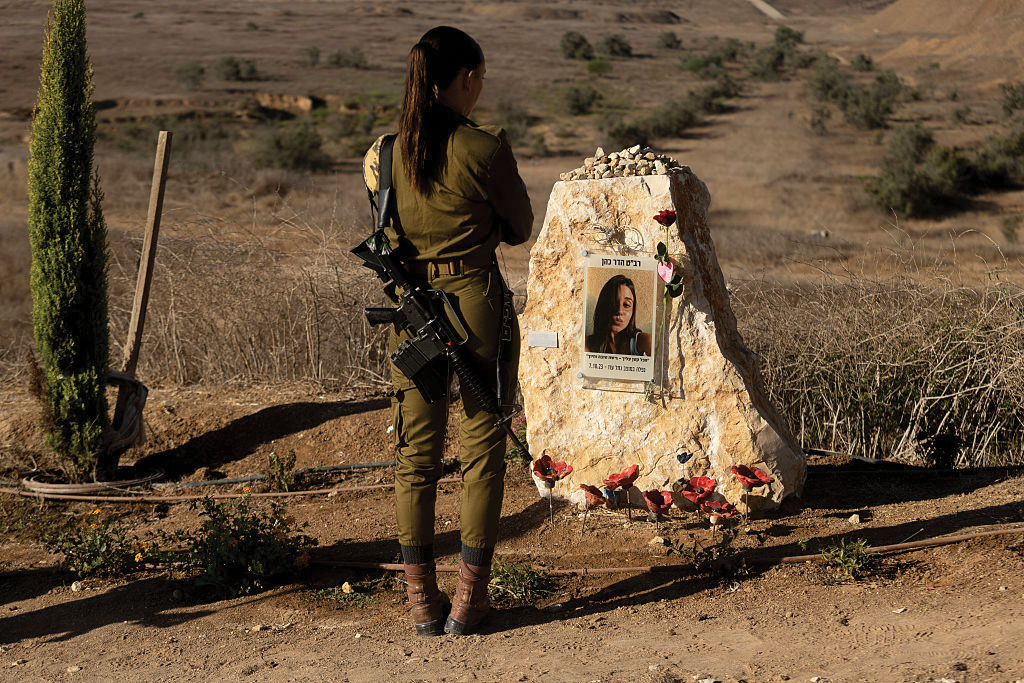
We are a generation that has similarly experienced the trials, tribulations and torments of Oct. 7 and its aftermath, a wilderness whose two years have often felt like 40. But just like our ancestors, we have emerged nationally refreshed and revitalized, with the ability to appreciate the miraculous nature of Israel’s national identity anew. The 12-day war against Iran being so lopsided, without a single combatant on Israel’s side being killed, is just one example of the Jewish state’s shockingly successful recovery.
Even The New York Times recently admitted “It’s Israel’s Middle East now. After three-quarters of a century fighting hostile neighbors, the tiny Jewish country, about the size of New Jersey, has all but vanquished its enemies — Hezbollah in Lebanon, Hamas in Gaza, Houthis in Yemen and now even Iran itself, the one backing them all. The exercise of raw power has allowed Israel, for the first time since its creation in 1948, a future mostly free from immediate threats.” The Abraham Accords have withstood the strain of the Israel-Hamas war, with the prospect of other countries joining the Accords on the horizon.
One might be accurate in considering Israel to be as securely in Jewish hands now as it was when Joshua first succeeded Moses in leading the Jewish people into our covenantally promised homeland.
Nahmanides’ comments on Deuteronomy are therefore particularly apt.
“It is known that Israelites were warriors and valiant men in war …,” the renowned sage wrote in his biblical commentary. But, Moses adds, don’t think “my strength and the power of my hand provided me with this valor” (Deuteronomy 8:17). As Nahmanides elaborates, “even this military prowess that you have done by your strength, it is God who gave you this strength when you did this.”
Noting the successful transition from vulnerable wilderness-wanderers reborn into a military power, Levine adds “The mediation between the binary opposition power/powerlessness in relation to the Israelites’ changed status can only be achieved by acknowledging that all of the Israelite sources of strength originate from God and only God.” Moses reminds the Children of Israel that God not only enabled them to emerge from the dark despair of Egypt, He performed continuous miracles which enabled them to recover, rebuild, and flourish like never before. Israel’s “newfound strength,” Levine writes, “is framed in the proper perspective.”
Like Moses standing upon Mount Nebo viewing the land of milk and honey and basking in its beauty, we too, after a tiresome trek through troubling times, should take a step back and meditate lovingly and longingly for the fulfillment of the potential of the Promised Land once more. While being immeasurably grateful for the heroism of its human defenders, we should also, like our biblical predecessors millennia ago, be sure to thank God, the ultimate source of our continued sustenance and strength.
Rabbi Dr. Stuart Halpern is Senior Adviser to the Provost of Yeshiva University and Deputy Director of Y.U.’s Straus Center for Torah and Western Thought. His books include “The Promise of Liberty: A Passover Haggada,” which examines the Exodus story’s impact on the United States, “Esther in America,” “Gleanings: Reflections on Ruth” and “Proclaim Liberty Throughout the Land: The Hebrew Bible in the United States.”