For 35 years, Rabbi David Woznica has appeared on stages teaching about and interviewingsome of the giants of Jewish life. But it started from a more modest place.
In 1978, Woznica joined the Brandeis Camp Institute (BCI) in Simi Valley and served on the BCI staff the next year; six months later his phone rang. He had caught the eye of Dennis Prager. Prager asked if Woznica could come to his office. When he got there, Prager asked “Why don’t you work with me? I am looking for an assistant.” In his early 20s, in graduate school, he thought this would be more interesting. That led to applying to rabbinical school, 11 years at the prestigious 92nd Street Y in New York, and 21 years as an associate rabbi at LA’s Stephen Wise Temple here. Rabbi Woznica is effusive in thanking others for his success at every step of his career. He typically begins by crediting his family, who introduced him to Judaism at Ada Ari El in Valley Village.
“I’ve thought about this a lot. My parents certainly created and shaped my Jewish soul,” says the rabbi. His mother Sue’s 98th birthday is nearing. His Polish-born father, Sam, a survivor of Bergen-Belsen, passed away 15 years ago. “He was liberated in 1945,” said his eldest child. “He didn’t speak about it much.” He felt the weight of it at his ordination in 1990 at Temple Emanuel in New York.
At ordinations “they often call the names of family members no longer living. I remember because my Dad’s parents were murdered and so were four of his five siblings. He was one of two who survived. I remember the names being read off — all of the Woznicas who, of course, I never met.
“I could not stop crying. There are tears of joy, but these tears were for all of them – and what they might be thinking while watching from above, since I believe there is an afterlife.” Without doubt, he concluded, “my parents really shaped a beautiful Jewish soul.” From his time at BCI, Woznica looks toward Prager and Joseph Telushkin, Prager’s lifelong friend. Both men, he said “had tremendous influence on me. We had so many scholars, so many teachers (at BCI) that it really gave me an outlook on Judaism” for the first time. No one who has ever heard Woznica speak – whether at Wise, the 92nd Street Y or when he guested at shuls across the country, Canada and South America – ever has doubted that.
“I had never really thought of Judaism,” he said. “I am ashamed to say this — but I never really thought of Judaism as an ethical system. I had thought – all too often – what do I want from God? I have a deep belief in God. I know I am blessed to have that.” Working with Prager and Telushkin “was the first time I heard someone say, ‘Don’t only ask what you want from God. A more important question is: What does God want from you?'”
“The minute you ask,” Woznica said, “to me, the answer is the Torah, which offers a blueprint for life. And this did influence my decision to go into the rabbinate even though I wasn’t sure if I was worthy of it — or if it was the right thing.This doesn’t mean my belief isn’t challenged because it is,” he said. Regularly.”
Although they loved New York, the rabbi and his wife, Beverly, are both LA natives, and worried about raising their two sons far from their family. He went to a very special person for advice. As the rabbi explained it, he had “the privilege of becoming close” with Elie Wiesel. “I did several public dialogues with Prof. Wiesel – five in New York and two here in LA. I consulted him about our decision. I had a relationship with him where he and I could speak.”
The rabbi and Wiesel met at Wiesel’s Upper East Side apartment. “He said, ‘How can you leave when you have such a great life here?” the rabbi recalled. When Woznica mentioned being closer to his and his wife’s families for the boys’ sake, Wiesel “looked at me with tears in his eyes. ‘Now I understand,’ he said. ‘You should go.’”
Sometimes you have to do what is most practical, Woznica said. “There is tremendous opportunity we have in this generation and future generations. Often, this involves leaving cities where our families are, sometimes for awhile, sometimes longer. I applaud people who do that. But there often is a price paid, and the price is the people in your life to whom you are closest may not be part of your daily life. For me, my family, and, frankly, my friends, are far more important than the city I live in.
“I love Los Angeles. For me, it is the [Stephen Wise] synagogue, the people around me, and my Shabbat table, since I have a group of friends I am with regularly. Stephen Wise is my first and undoubtedly only pulpit.”
Rabbi Woznica concludes his love story warmly. “With great love and respect for all of the wonderful congregations in Los Angeles, I fell in love with this temple’s activity, the tumult, the Zionism, the fact there are different perspectives rabbis have here as well. We are aligned on many things, not on others. As a result, we have a very wide tent within parameters.”
The rabbi could be said to be a one-man wide tent: He grew up in a Conservative community, makes his living at one of the country’s largest Reform congregations and talks to congregants about lessons from the Chabad Rebbe.
“I have come to appreciate differing views — within parameters. If you love tradition, you can find a home here. If you love innovation, you also can find a home here.”
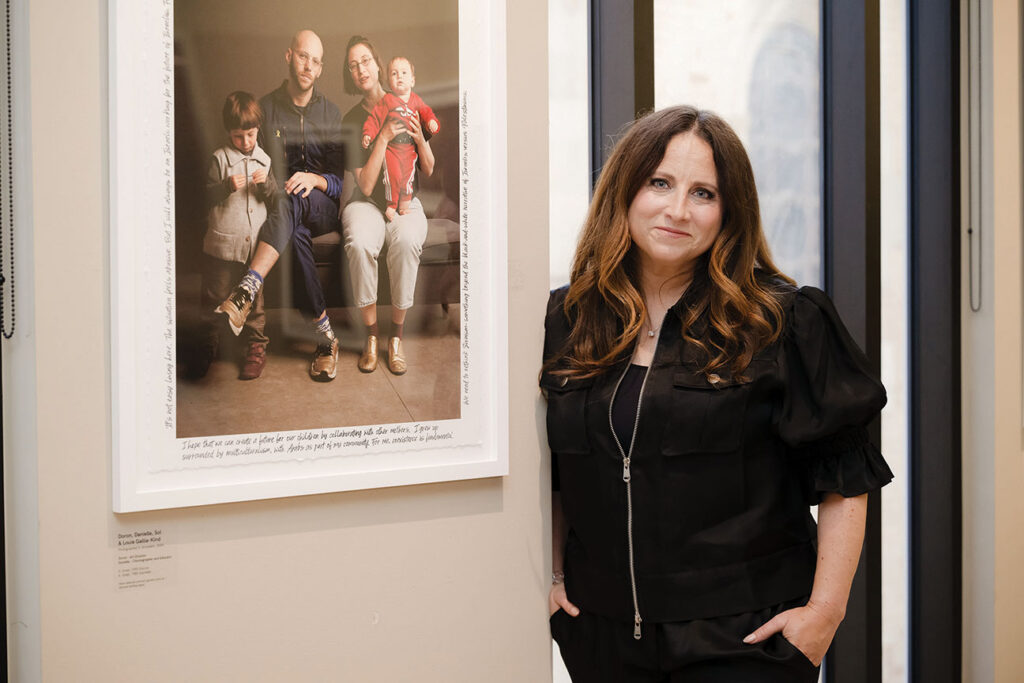
Artist Shlomit Levy Bard’sphotography exhibition, “(RE)Defining Zionism: Portraits and Perspectives from a Post-October 7 Israel,” captures the complexity of what Zionism means in the aftermath of Oct. 7, challenges simplified narratives and highlights the diversity of Israeli society.
Currently on display at Hillel at UCLA, the exhibit is as much a storytelling exhibit as it is a photography display. Photographs of a cross-section of Israelis from all backgrounds and walks of life are surrounded by quotes handwritten on the frames of each photograph. The quotes are from each photographed individual, discussing what Zionism means to them.
More than 60 Israelis, including ordinary citizens and well-known figures, are portrayed in the exhibition. Some proudly identify as Zionist. Others declare themselves “anti-Zionists.” Some rebuke the question altogether, saying circumstances demand that Israel make peace with its neighbors regardless of one’s ideology or political beliefs.
Among those pictured in the thought-provoking display is Basma Hino, a Druze woman and restauranteur. Since Oct. 7, Hino has prepared meals for Israel Defense Forces soldiers. When Hino learned that many of the soldiers couldn’t eat her food since it wasn’t kosher, she sought out kosher certification for her restaurant.
Hino’s story, Levy Bard said during an event at her exhibit hosted by OpenDor Media on May 28, was “one of my favorite stories here.”
Another image in the exhibit depicts an ultra-Orthodox IDF soldier who makes handcrafts out of the shrapnel from rockets launched into Israel. Another shows a young woman who’s framed by a quote that reads, ”I grew up in a religious Zionist home, as one of six siblings. But I don’t know what to think about Zionism now.”
Another image features a woman whose head is covered. She’s dressed in modest clothing. The quote running alongside the photograph reads, “I’m a Zionist. My grandfather was an ultra-Orthodox underground fighter, and my grandmother grew up in Jerusalem. My other grandparents were Holocaust survivors.”
And yet an image hanging nearby features an older bespectacled man, a biochemist, encircled by a quote that says, “I’m an anti-Zionist. I don’t believe that countries have the right to exist; people have the right to exist.”
Levy Bard described the display as a “traveling exhibit,” one with educational goals. She hopes the exhibit, as it travels to different universities, can be accompanied by a curriculum.
Photographer Shlomit Levy Bard speaks during a May 28 exhibition event at Hillel at UCLA. (Photo by Ryan Torok)
Levy Bard is originally from Israel and currently lives in Los Angeles. In capturing these images, she traveled across her native country, including in Haifa, Jerusalem, Tel Aviv, Beersheva and the Gaza border.
“We were dragging around a studio and studio equipment and setting up in all kinds of random places, in some cases in the middle of a dirt field, and in some cases in somebody’s house, and driving all over Israel,” she said.
She worked closely with Anushka Hauerstock, a recent LA transplant from Israel who produced the exhibit. In many cases, Hauerstock introduced Levy Bard to those pictured in the exhibit.
“The first question that people usually have for me is, ‘How did I find all these people.’ In some cases, they were people who I was connected with, some of them on social media, and in some cases I was able to find them through my producer, Anushka,” Levy Bard said.
Others photographed include ZAKA volunteer Avichai Amusi as well as an Ethiopian Israeli woman whose very existence, Levy Bard said, challenges the idea of Israel being a Eurocentric, homogenous society.
“Basically, the goal was to photograph a wide cross-section of Israelis talking about what Zionism is, so that’s the question I came with,” Levy Bard said. “There’s a huge variety of perspectives that are presented here, and a huge diversity in who these people are and what they believe.”
For the photographer, some of the most gratifying exchanges have been with those who learned about a facet of Israeli society that had previously been unknown to them, including that there are Black Jews living in Israel.
Since the exhibit debuted at Hillel at UCLA, various educational events have taken place in the gallery space housing Levy Bard’s photographs. The recent event on May 28 was hosted by OpenDor Media, a nonprofit that produces videos and social media content about Israel, Zionism and Judaism.
The centerpiece of the recent event — a panel that examined the role of social media in the current debates around anti-Zionism and antisemitism — featured Eden Cohen, head of social and website at OpenDor Media; Matthew Nouriel, community engagement director at JIMENA: Jews Indigenous to the Middle East and North Africa; and Emmy-nominated Jewish journalist Jacki Karsh.
Levy Bard’s exhibit remains open at Hillel at UCLA through June 13, Monday-Friday, 10 a.m.-4 p.m., and by appointment June 13-August 15.
At a time when free expression and cultural identity feel like they are under threat, a powerful new platform has emerged to amplify Jewish voices and those of their allies across college campuses worldwide. The OCU Chronicle — a quarterly Substack publication created by students, for students — is more than just a newsletter. It’s the spirited companion to Our Campus United, offering a bold, unapologetic space where Jewish students can speak freely, celebrate who they are, and find strength in the community.
From thought-provoking opinion pieces to cultural commentary, lifestyle content, music playlists and exclusive interviews with Jewish founders and thought leaders, The OCU Chronicle is redefining what student journalism can be: joyful, resilient, and unafraid. The platform also features a companion podcast, where stories are deepened through raw, personal conversations — allowing voices that are often ignored in mainstream spaces to finally be heard.
Many Jewish students have faced resistance from editors at campus newspapers when trying to express their views — particularly on topics involving Israel, antisemitism, the recent pro-Palestinian encampments and more. Their opinions were often censored or dismissed outright.
(On a personal note, when my daughter was writing for The Daily Californian, the independent student-run newspaper serving the University of California, Berkeley, she referred to Hamas as a terrorist organization in an article. To her surprise, the editor refused to allow that description and removed it. When she asked for an explanation, the editor replied, “They also called Nelson Mandela a terrorist.”)
Mandana Dayani
Editor-in-Chief Mandana Dayani spoke with The Journal about what inspired the creation of The OCU Chronicle. After speaking with students from universities across the U.S., one sentiment kept coming up.
“They felt they were being silenced and pushed out of their campus newspapers,” said Dayani. “They weren’t allowed to present their point of view. My philosophy is to meet students where they are. When you look at trends, we noticed that a lot of them are on Substack, and that’s what inspired the idea to create a new space for these students so they won’t be silenced anymore — and can share whatever point of view they have.”
To give voice to Jewish students who felt unheard, Dayani and her organization, the Calanet Foundation, launched The OCU Chronicle. It offers a dynamic and unapologetic platform where Jewish students and their allies can speak freely. Its content spans everything from powerful opinion pieces and Jewish cultural commentary to entertainment, interviews and even a curated playlist by a renowned DJ.
Contributors include Jewish students, emerging leaders, and prominent voices such as Miami Marlins owner Ari Ackerman, Nova Festival Exhibit CEO Josh Kadden, and actors Jonah Platt and Emmanuelle Chriqui.
The OCU Chronicle features a range of fascinating stories and thought-provoking articles. Forty contributors took part in the inaugural issue, which officially launched on May 12 and is available online to anyone who registers. One particularly compelling piece was written by an anonymous author who described inviting pro-Palestinian demonstrators and individuals from the encampments out for coffee or lunch — an effort to open dialogue and explore the possibility of finding common ground.
Israeli journalist and activist Emily Schrader was interviewed by The Chronicle about the cost of staying silent in the face of rising antisemitism. Columbia student Eden Yadegar, who testified before Congress about her experiences on campus, sat down with U.S. Representative Dan Goldman (D-N.Y.) for a candid conversation. And Josh Kadden opened up about his life after Oct. 7 and the personal mission that now drives him.
“There is no reason why these students need to be silenced,” said Dayani, “especially when they are telling their own truth and their own personal stories. I think The Chronicle became a place for all of us to just have this conversation. I think because of my work, I’ve always believed that storytelling is the most important way to shape culture and change narratives,” Dayani said. “For these students not to be able to tell their stories feels like such a tragedy. You can actually see how much people are learning from each other through these conversations and podcasts we have. It’s really moving.”
Dayani hopes to welcome even more contributors in the coming months, including younger voices from high schools around the country. “The more the merrier — we want to see this platform growing,” she said.
The second issue of the OCU Chronicle is slated for the fall, just in time for back-to-school season.
Visit the OCU Chronicle at theocuchronicle.substack.com. If you are interested in contributing to The OCU Chronicle, write to: chronicle@ourcampusunited.com
What was originally planned as a celebration of Israel’s 77th Independence Day turned into an evening of unity, grief and resolve.
Hosted at the Dolby Theater, the event — organized by the Consulate General of Israel to the Pacific Southwest, in partnership with StandWithUs, IAC, and the Jewish Federation of Los Angeles — was the first major community gathering since last week’s terrorist attack in Washington D.C. that claimed the lives of two Israeli Embassy employees.
The guests stood for one minute of silence in memory of Sarah Milgrim and Yaron Lischinsky, who were murdered on May 21 outside the Jewish Museum in Washington, D.C.
With security tight and emotions raw, the evening struck a balance between solemn remembrance and a show of solidarity. Outside the venue, on Hollywood Boulevard, a small group of protesters waved Palestinian flags and shouted slogans. Some attendees reported being harassed while entering and leaving the theater. However, they went unnoticed by those who parked at the Dolby Theater.
Master of Ceremonies comedian Elon Gold reminded everyone why humor is a Jewish survival tool. After discovering a large portion of the audience was from the Persian-Jewish community he announced:
“I live among the Persian community. After the ads for this event ran in The Jewish Journal, they were knocking on my door like, ‘Can you give me 19 tickets? Just me and my family.’” The crowd roared, the moment a welcome break from the heaviness of the headlines.
Consul General Israel Bachar opened the night with a passionate speech. “When the silent majority accommodates, rather than confronts, hate-filled slogans like ‘Free, Free Palestine’ and ‘Intifada Revolution,’ words turn into bullets — like those 21 bullets that killed Yaron and Sara.”
Bachar pointed the finger not just at the gunman, but at a wider movement. “The pro-Hamas Palestinian movement, financed here in America by the Muslim Brotherhood, collaborates with neo-Marxist groups who call for the elimination of democracy. It endangers America’s security and calls for the destruction of Israel. But let me say this clearly: Israel is not going anywhere. Israel will win — with YOU!”
Erin Molan
Erin Molan, the Australian television presenter who was fired from Sky News Australia in December 2024, and who is widely believed to have lost her job due to her outspoken support for Israel, also spoke. Since her departure from Sky News, Molan has continued her activism and taken on new projects, including hosting a news show on X.
As one of the evening’s featured speakers, Molan shared her personal story.
“If you told me I’d go on my show, condemn a terrorist group, and it would endanger my life, I would’ve said, ‘You’re dreaming.’ I thought what I said was obvious,” she said.
Fearing for both her own life and her six-year-old daughter’s, Molan made the decision to send her daughter to live with her ex-fiancé so she could continue to speak out forcefully and without restraint.
“I knew it wasn’t going to be easy,” she said. “I’ve lost all my jobs. I live under constant threat. But I wouldn’t change a thing. I spoke from the heart. And I will keep speaking, because they don’t only want to destroy Israel — they want to destroy all of us. This threat is existential.”
Another emotional moment came when the audience heard from former hostage Eliya Cohen. Another freed hostage, Eli Sharabi, was scheduled to speak but was unable to attend. Instead, Cohen, who had been held in Gaza for 505 days, took the stage. He was kidnapped by Hamas from “The Bunker of Death,” where 16 young men and women were murdered. Cohen was taken hostage alongside friends Or Levy, Alon Ohel, and Hersh Goldberg-Polin, who lost an arm in the attack. Cohen recounted how he endured unspeakable torture, starvation, and mental anguish while in captivity.
Former hostage Eliya Cohen
Speaking publicly for the first time since his release, Cohen described how he initially believed his fiancée, Ziv, had died in the attack. He clung to the hope that she might have survived — and she did, miraculously, after being buried under bodies in the same small bunker.
Cohen also shared some words for his friend Alon Ohel, who remains in captivity.“He is one of the most gentle men and a pianist. When we said goodbye he was crying. I said, ‘Don’t worry, you’ll be released in a few days,’ but I was wrong. Until we meet again in Israel — it’s not over. And that’s why I stand here tonight. We have to bring him home to his family.”
Since his release in February, Cohen has also learned that another close friend, Elkana Bohbot, remains in Gaza. “He needs to come home to his wife and family,” Cohen said. “We are here celebrating independence. For me, independence is the ability to live freely. The fact that I survived and that I’m standing here in front of you tonight is a miracle. After 505 days, I know the true meaning of freedom — and fighting for the others [still there] is the most Jewish, Israeli, and human thing we should do.”
The evening concluded with musical performances from Israeli pop star Itay Levy and local singers Eden Kontesz and Gilat Rapaport. Fourteen-year-old Kontesz performed “New Day Will Rise,” the Israeli song that took second place at Eurovision. As the music filled the Dolby Theater, many audience members stood with hands on hearts or arms around one another, waiving the Israeli and American flags.
Their message was clear: no amount of fear, hatred, or loss will silence this community.
Governor Gavin Newsom announced that Los Angeles Jewish Health (LAJHealth) has been awarded $28 million from the California Department of Health Care Services. This funding is the first round of funding for Proposition 1’s Bond Behavioral Health Continuum Infrastructure Program (BHCCIP) Round 1: Launch Ready initiative, a component of a historic $3.3 billion investment in behavioral health infrastructure across the state.
The $28 million grant will support the expansion of inpatient behavioral health services for seniors, addressing California’s growing senior behavioral health crisis.
The state’s senior population is projected to almost double by 2040, said LAJHealth’s Dale Surowitz, and this grant will help provide better and expanded services to older adults.
Dale Surowitz
“We’re seeing a huge increase in the number of seniors as life expectancy rises. In LA alone, between 2020 and 2040, there will be a 93% increase in the number of seniors 65 years of age and older. People are living longer, and as a result, they are facing more challenges — whether related to Alzheimer’s, dementia, depression, or other mental health concerns.”
Given that many seniors facing cognitive and mental health challenges such as dementia or Alzheimer’s are unable to advocate for themselves, it’s easy to understand why this group is so often overlooked.
“We are very thankful to Governor Gavin Newsom and the state for awarding this grant,” said Surowitz. “Many of these seniors don’t have families, or their children are unable to spend time at home with them when these issues develop. It also puts tremendous strain on their caregivers. Those are often their elderly spouses, which creates a significant burden. This grant gives us the opportunity to help those seniors and give caregivers some breathing room to care for themselves as well.”
“We currently care for 1,000 residents and another 4,000 seniors in the broader community, so we’re seeing this need firsthand,” Surowitz said. “That’s why this new unit will allow us to better serve the growing number of seniors who require these services. Studies show there is a significant shortage of acute psychiatric beds for older adults.”
Surowitz said the number of seniors experiencing behavioral health issues — particularly those who are low-income, medically complex or socially isolated — is rising sharply.
There is a troubling correlation between old age, low income, loneliness and depression. Often, seniors go undiagnosed and untreated. It becomes a vicious cycle: elderly individuals may be taking medications for other health conditions, some of which can trigger depression or mood changes. Without proper diagnosis, symptoms worsen. And as life expectancy increases, the number of dementia and Alzheimer’s cases rises, making early mental health intervention even more critical.
Thanks to the grant, LAJHealth will not only be able to add more beds but also develop new programs.
The current plan is to add 30 to 33 additional behavioral health beds at their Reseda facility. These will serve geriatric psychiatric and mental health patients and will also help ease the burden on local hospitals. Their hope is not only to offer these inpatient services but also to expand their programs to address both the physical and mental health needs of the broader Jewish community.
“It will take us anywhere from two to three years to complete the process,” said Surowitz. “Once completed, it will help local hospitals, where many seniors are stuck in emergency rooms waiting for beds. The impact is going to be significant.”
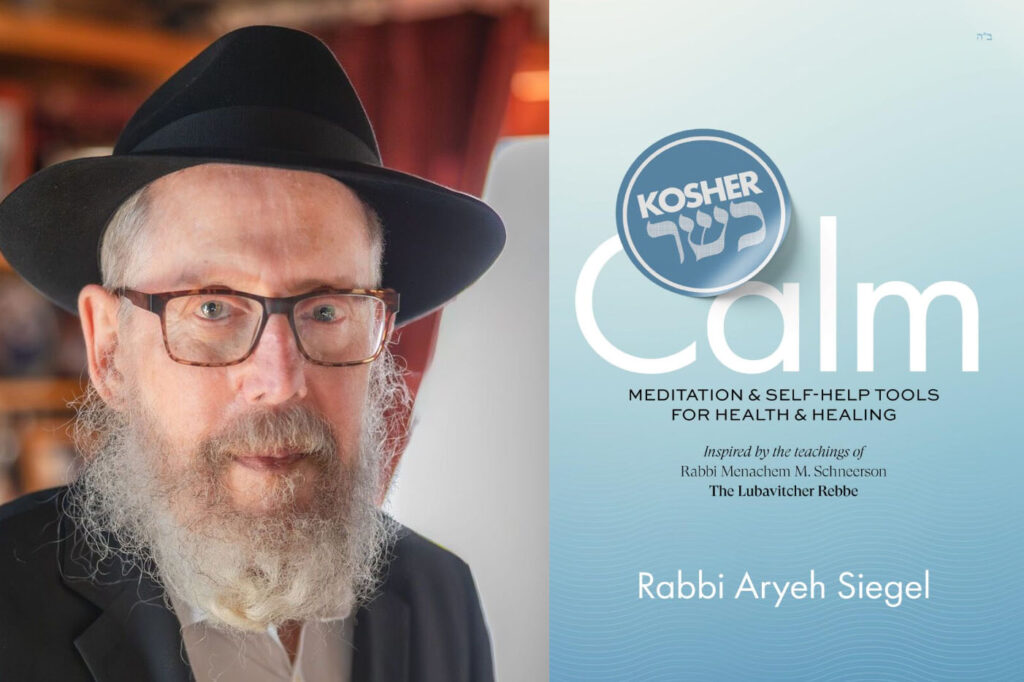
The year was 1971. Aryeh Siegel was a graduate student at Berkeley, and he had just learned about Transcendental Meditation, known as TM. Developed by Maharishi Mahesh Yogi, TM involved silently repeating a mantra in one’s head as a form of meditation, and it quickly caught on amongst young people and celebrities.
After becoming a TM teacher and a senior member of the organization, Siegel found that it was corrupt and, as he put it, a cult. He also learned that the Lubavitcher Rebbe, Menachem Mendel Schneerson, a huge spiritual leader at the time, was against Jews practicing TM and other forms of meditation with Eastern religion roots, as it was not in line with Jewish law. However, the Rebbe still saw the value in meditation in general, and how it could help people; there just had to be a kosher way to do it.
“Beginning in 1962, the Rebbe urged Jewish mental health professionals to create kosher meditation protocols, though those protocols never materialized,” Siegel told The Journal. “My book is my attempt to finally answer that call. Drawing on my expertise in meditation, I share a simple, yet effective, technique fully aligned with Torah law, along with additional tools for stress relief and building emotional resilience.”
“Kosher Calm” includes a curated selection of letters from the Lubavitcher Rebbe’s extensive correspondence on the critical need for therapeutic meditation. Chapters cover topics like how to prepare to meditate, managing restlessness, mind-body techniques that help with certain health conditions, and mindfulness.
In the chapter on learning how to meditate, Siegel takes readers step by step; he also posts meditation videos on his YouTube channel for visual help. After instructing readers on how to meditate, he writes, “During your session, you might have experienced moments of deep peace interspersed with periods of mental activity. Some people find that their awareness stays on the surface, dwelling on everyday thoughts. Others drift between states of calm and mental chatter. Whatever you experienced is exactly what needed to happen.”
According to Siegel, who lives in Los Angeles, meditation can not only help relieve stress but also help with preventing physical ailments. “When you’re stressed, your body’s ‘fight-or-flight’ system kicks in, releasing hormones like adrenaline and cortisol,” Siegel said. “While this helps in emergencies, constant modern stressors mean your body rarely gets a break. Chronic stress can cause health issues, weaken your immune system, disrupt sleep, impair memory, and cloud decision-making. It can even push people toward unhealthy habits. Since most stressors are beyond your control, meditation offers a way to break the stress cycle, calm your mind, and protect your health.”
So, what makes meditation kosher? Siegel said it must be strictly nonidolatrous, “free of Hindu mantras, foreign rituals, or religious symbols, any of which could potentially violate avodah zarah (prohibitions against idolatrous practices).” For example, to make meditation kosher, you could focus on a Hebrew word and approach meditation as a method for healing, not for worship.
“This therapeutic approach differs from traditional Jewish spiritual practices such as hisbonenus (contemplation) or hitbodedut (secluded prayer),” said Siegel. “Rather than serving as a path to spiritual insight, the Rebbe viewed kosher meditation as designed to restore psychological balance.”
For Siegel, meditation was life-changing. He found it at a time when he was a stressed-out grad student with a new baby, sleepless nights, academic deadlines, and financial pressures.
“That’s when meditation entered my life,” he said. “It wasn’t just a technique; it felt like a lifeline. For the first time, I experienced a sense of temporary calm that sometimes comes from fixing something, but from within.”
Siegel continued, “Meditation gave me a quiet space where I could pause, reset resulting in more clarity and resilience. It didn’t solve all my problems, but it changed how I faced them, and that, in a very real way, changed my life.”
When my brother Rafi and I were little, we loved hearing stories of my father’s life growing up in Baghdad. He would tell us about his father’s wholesale food business and his silly Arab workers who would try to cheat him and how my grandfather would always outsmart them. He would tell us about his clever mother who managed a household of nine children, along with her mother and married siblings. He would tell us about his eldest brother Moshe who was very active in the T’nuah (the Zionist movement for emigration to Israel) and his own role as a runner taking messages from cell to cell. He never told us that being a “Zionist” was a crime punishable by hanging, but he did tell us how his mother would be so angry that Moshe involved my young father in his underground activities.
He told us about his escape from Iraq over the mountainous border into Iran when he was 15 years old.
He told us about his life in Israel as a young man. He never mentioned the food rationing and the other difficulties of life in Israel in the ’50s.
We constantly asked him about the time our Uncle Shlomo was almost kidnapped by a Muslim vendor in the Arab souk.
Every day Shlomo, who was six years old at the time, would pass by this man’s stall on his way home from school. The man would smile at him and hand him a candy, slowly earning my uncle’s trust.
One afternoon, he kept delaying Shlomo at the stall. Then it became dark and all the other vendors had left for the day. The Arab man turned mean and grabbed Shlomo to take him to his house. Shlomo began crying. As luck would have it, two Jewish soldiers had just defected from the Iraqi army. They saw that my uncle was fair skinned with green eyes and was dressed in European style clothing in contrast to the Arab peasant who was wearing a dishdasha (a long cotton robe) and babruch (thin sandals). They began to speak to Shlomo in Judeo-Arabic and soon rescued him from the wicked Arab.
June 1st was the 84th anniversary of the Iraqi Farhud, a Nazi-inspired pogrom against the Jews that ended in 180 tragic murders, 1800 savage injuries and the ransacking and plunder of countless Jewish homes and businesses.
My father was six years old at the time of the Farhud. When the family saw the loud, angry mob coming down their street, his uncle Shalom picked up a heavy metal tool. My father said to him “There are so many of them! What can you do by yourself?”
Everyone ran up to the roof of the house (roofs in Iraq were flat, so that people could sleep up there on hot summer nights). Eventually their Egyptian Moslem neighbor Abu Nahas, a coppersmith and bookbinder, allowed them to take refuge in his house for a few days. He even tried to guard their house, but the mob ransacked the house, taking the valuables and leaving all their dishes and cutlery strewn in the dirt outside.
My father never told us the sad details — the savage butchering and murders. He would always laugh and say that after the Farhud, until the day his family left for Israel 10 years later, the neighbors children would come to the door every few days and ask my grandmother for sugar and other household staples or for treats and toys. She always gave it to them.
This Father’s Day, I will miss my strong and handsome, intelligent and witty, kind and wise father. I will continue to do my best to honor his legacy and be forever grateful for the love he gave us.
—Sharon
It’s Father’s Day — and that, of course, means grilling.
If you know my father Messod, you know he’s a gourmet, a lover of good food. But he’s a very picky eater and I don’t mean just picky about taste. He’s particular about everything — the place, the smell, the presentation, as well, of course, as the flavor. As far as eating goes, he mainly sticks to French, American and Italian cuisines. Sushi, Chinese and Mexican, you ask? Not for him.
Well, with one exception. A few years ago, he tried tortilla chips and he loved them. We were all so excited and hopeful that it might open his horizons to more Mexican food. It didn’t!
Unless I make it. If I cook it, he’ll eat it. Even Mexican food. As long as it’s not too spicy!
I cook for my father a few times a week. It’s not easy because he gets bored by food. I have to keep the recipe ideas fresh and new.
My mother always looked out for my father’s health. She lovingly took care of him and completely spoiled him.
All his grandchildren adore going out with “Papi.” He has a deep appreciation for the finer things in life, and dining out with him means great food. Most often, a fine dining experience.
My father is very handsome. He has green eyes, a signature mustache and is always impeccably dressed. He speaks French, Spanish and English, sometimes all at once. He often blends words from different languages mid-sentence, leaving you to figure out what he’s saying.
He always worked in finance, so before the check even arrives, Papi can guess the total. And he’s right about 98% of the time! Waiters are often intimidated by him, but by the end of the meal, they’ve usually fallen in love with him.
Luckily for me, my father absolutely loves a good barbecue. Whenever my father hears the word “barbecue,” his eyes light up. Always a favorite!
I’m his only daughter, and I can truly say he’s always spoiled me. Since my mother passed away, we have grown even closer. I treasure every moment we share.
Happy Father’s Day, Papa. I love you!
—Rachel
For our Father’s Day recipe, we decided to make pargiyot, boneless chicken thighs. We love cooking pargiyot because they stay really juicy on the grill.
We created a marinade with our favorite spices — sweet paprika, sumac, cumin and Aleppo pepper, along with olive oil, freshly squeezed lemon juice and grated garlic. The flavors infuse into the chicken and form a wonderful crust on the grill.
We are obsessed with all the mini vegetables available at the market. To serve alongside the the pargiyot we made baby vegetables. We coated them in olive oil, salt and pepper and let the grill work its magic. The baby eggplant comes out smoky and perfectly creamy and velvety. The baby zucchini is tender and crisp with a sweet, grassy flavor. The grilled mini peppers are soft, juicy and deliciously caramelized.
Serve this incredible platter alongside fresh pita, an Israeli salad and roasted potatoes for the most perfect Father’s Day meal ever.
Even Papi would approve!
—Rachel and Sharon
Grilled Pargiyot
3 pounds boneless chicken thighs
Marinade:
1/4 cup olive oil
2 Tbsp sweet paprika
1 Tbsp cumin
1 tsp sumac
1 tsp Aleppo pepper
1 tsp kosher salt
3 large garlic cloves, grated
1 large juicy lemon, juiced
In a small bowl, combine the oil and all the spices and whisk until smooth. Add the lemon juice and continue whisking. Then add the garlic.
Place the chicken thighs in a large bowl. Pour the marinade over the chicken, making sure to coat all sides of the chicken.
Place in the refrigerator for one hour.
Heat the grill for 20 minutes until is very hot. Place the chicken pieces a few inches apart on the grill.
Grill for 10 to 15 minutes on each side. Depending on the barbecue, chicken may need a longer or shorter cooking time.
Serve on a large platter with grilled veggies and a dollop of pesto or tahini dressing.
Sharon Gomperts and Rachel Emquies Sheff have been friends since high school. The Sephardic Spice Girls project has grown from their collaboration on events for the Sephardic Educational Center in Jerusalem. Follow them on Instagram @sephardicspicegirls and on Facebook at Sephardic Spice SEC Food. Website sephardicspicegirls.com/full-recipes.
You’ve heard of Christmas in July. How about Hanukkah in June?
While the first Friday of the month, June 6, is National Donut Day, these wonderful treats can — and should — be enjoyed year-round. Here are some recipes to try.
Laurie Fleming, founder of Fork to Spoon, makes delicious donuts in the air fryer. “Air fryer Jewish donuts, or sufganiyot, offer a healthier, crispy alternative to the traditional deep-fried version,” Fleming told the Journal. “These fluffy, jelly-filled treats cook quickly in the air fryer, maintaining their deliciously soft center while achieving a golden, crunchy exterior.”
She added, “Perfect for celebrations or a sweet snack, they’re easy to make with less mess!”
Air Fryer Sufganiyot (Jam-Filled Doughnuts)
1 cup water
1/2 cup butter, unsalted
1/4 tsp salt
1 cup all-purpose flour
4 large eggs
1 cup powdered sugar
1 cup strawberry jam
In a medium saucepan, heat water, butter, and salt to a rolling boil.
Stir in flour all at once and continue stirring until the flour mixture cleans the sides of the pan. It should all be gathered into a ball.
Turn off the heat and let the mixture cool for about 10 minutes. The mixture should be warm before you start adding the eggs.
Add the eggs one at a time until the mixture is smooth.
Place a sheet of parchment into the air fryer basket. Using a small scoop or a tablespoon, drop the dough mixture onto the parchment leaving about a ¼ inch of space between each one.
Place the basket in the air fryer and cook the doughnuts at 350 degrees for 15 minutes or until the tops of the donuts are golden brown and the centers are hollow. You may have to do this in batches depending on the size of your air fryer.
Once the donuts are cool enough to handle, fill them with the strawberry jam and sprinkle them with powdered sugar.
Note: The easiest way to fill the donuts is to use a plastic squeeze bottle. Just insert the tip and fill the donut with the jam until you can feel it get a little heavier. The amount of jam you fill it with is up to you, but I like to aim for about 2 teaspoons of jam for each donut.
Banana strawberry donuts blend two of Pam Stein’s favorite flavors. “The sweetness of the strawberries pairs perfectly with the mellow taste of bananas,” Stein, founder of In Pam’s Kitchen, told the Journal. “Dipping them in a rum glaze adds an additional burst of flavor.”
These donuts are baked, rather than fried, making them a “slightly healthier twist than the classic bakery items,” she said. “Best of all, using oat and almond flours, these donuts are gluten free.”
Banana Strawberry Donuts (Gluten Free)
Yield:16 mini donuts
1-1/4 cups oat flour
1 cup almond flour
2 tsp baking powder
1/8 tsp salt
2 large eggs
1 cup mashed banana (overripe bananas mashed with a fork)
1/4 cup milk
3 Tbsp raw honey
1 Tbsp dark rum
1/3 cup finely chopped fresh strawberries
For the Glaze:
1 cup powdered sugar
2 Tbsp heavy whipping cream
1 Tbsp dark rum
To make the donuts:
Preheat the oven to 350°F. Lightly coat 1 12-cavity mini donut pan with nonstick cooking spray. Set aside.
In a medium bowl add the oat and almond flours, baking powder and salt. Whisk to combine.
Add the eggs, mashed banana, milk, honey and rum. Stir until well combined. Mix in the chopped strawberries.
Using a #30 cookie scoop (or two tablespoons) fill the cavities of the donut pans, filling each 2/3 way full. Smooth the batter to make it level.
Bake for 15-18 minutes or until a toothpick inserted in a donut comes out clean.
Remove from the oven and cool in the pan for 5 minutes. Transfer to a wire rack to cool completely.
Repeat with remaining batter.
To make the glaze:
In a small bowl add the powdered sugar, whipping cream and rum. Whisk until smooth.
When donuts are cooled, dip each donut in the glaze and return to the wire rack for the glaze to set.
Store donuts in an airtight container for up to 4 days
Every time Varda Meyers Epstein reads about traditional beignets, like the ones you find in New Orleans, she wants to give them a try.
“When I saw the iconic beignet scene in the movie “Chef,” I was crushed,” Epstein, communications writer at Kars4Kids, told The Journal. “Apparently, like Key Lime Pie, beignets just don’t taste the same outside their place of birth.”
Five years ago, she decided to make sufganiot with a difference in honor of both Hanukkah and her son’s birthday.
“I figured that since I keep kosher, it is unlikely I will ever taste the real thing even if I go to New Orleans, so I might as well give it a shot,” she said. “This is my own recipe, enriched with cream and laced with vanilla, my favorite flavor.”
Varda’s Wannabe Cajun Beignets
1 package dry yeast (about 2 1/4 tsp)
1/4 cup warm water (100–110°F)
1 Tbsp granulated sugar
4 cups all-purpose flour
1/2 tsp salt
1 cup heavy cream
1 tsp vanilla extract
2 large eggs, lightly beaten
Vegetable oil, for deep-frying
Powdered sugar, for dusting
In a small bowl, dissolve the yeast and sugar in the warm water. Let it sit until foamy, about 5 minutes.
In a large mixing bowl, combine the flour and salt. Stir in the cream, vanilla extract and eggs. Add the yeast mixture and stir until a soft dough forms.
Turn the dough out onto a floured surface and knead gently until smooth (about 2–3 minutes). Place the dough in a lightly oiled bowl, cover with a clean kitchen towel, and let rise in a warm place until doubled in size — about 1 to 1 1/2 hours.
Once risen, punch down the dough. Roll it out on a floured surface to about 1/4-inch thickness. Cut into 2-inch squares or rectangles.
Heat vegetable oil in a deep fryer or heavy pot to 365°F (185°C). Fry the dough pieces in batches, turning once, until golden brown and puffed — about 1 to 2 minutes per side.
Drain on paper towels. While still warm, dust generously with powdered sugar.
One verse, five voices. Edited by Nina Litvak and Salvador Litvak, the Accidental Talmudist
The Lord then spoke to Moses saying: Tell the children of Israel: When a man or woman commits any of the sins against man to act treacherously against God, and that person is [found] guilty, they shall confess the sin they committed, and make restitution for the principal amount of his guilt, add its fifth to it, and give it to the one against whom he was guilty.
– Num. 5:5-7
Nili Isenberg
Pressman Academy Judaic Studies Faculty
You may have seen the video circulating of some 50 young hooligans on bicycles pulling up to a 7-Eleven store at the corner of Olympic and La Cienega, ransacking the entire establishment in a matter of minutes.LA County District Attorney Nathan Hochman recently held a press conference outside this very store near our school to discuss his efforts to prevent retail theft which has become ever more frequent and alarming. Bibi’s Bakery and Pizza Mark are just two other recent victims of crime in our own local neighborhood.
The Torah is tough on crime, mandating punishment whether with fines, lashes, stoning, or even death. The Torah also calls upon sinners to take responsibility for their actions. Midrash Sifri points out that “the first step in rehabilitation of the sinner must be his confession.” In legislating such procedures the Torah establishes a culture of accountability. Rabbi Samson Raphael Hirsch (1808 – 1888) beautifully observes that, “This power in man, which enables him to rule over himself in freedom, is the core of his personality; it is a portion of God from on high.This power manifests itself whenever man does his duty in freedom.” And when sinners neglect their duty, they act treacherously against God.
As the Israelites begin setting up their community here in the desert, their instructions lay out a plan for establishing an encampment around the Tabernacle, keeping themselves centered on God and God’s laws.How can we help our own society today recognize such a higher authority?
Baruch C. Cohen, Esq.
Civil Trial Attorney
When Words Heal and When They Harm
There is a sacred power in confession. In Parsha Nasso, the Torah commands that when one wrongs another, they must not only repay the debt — they must confess the sin aloud. Why? Because silence corrodes the soul. But a sincere confession, offered with humility and ownership, becomes a balm — restoring dignity to the wronged and integrity to the wrongdoer.
I have seen it with my own eyes: an 8-year contentious litigation between business partners dissolved — not through legal maneuvering, but through a heartfelt, trembling apology. No excuses. No justifications. Just raw truth, spoken with courage. In that moment, what years of court filings could not accomplish, one honest sentence did.
But beware the counterfeit. An insincere apology — hollow, coerced, or laced with defensiveness, reopens wounds and deepens betrayal. It is not confession; it is manipulation. It says: I want this over, not I want to make it right.
The Torah’s demand is clear: “They shall confess the sin they committed.” Not generalities. Not evasions. The sin — named, owned , and addressed. Only then can restitution be real. Only then can healing begin.
Because when an apology is genuine, it doesn’t just mend relationships — it cleanses the soul. But when it’s false, it’s another sin dressed as virtue. And God is not fooled.
Miriam Mill-Kreisman
President, Tzaddik Foundation
When you wrong someone, it’s not just against the person — it’s a betrayal of G-d Himself. That’s the Torah’s main point in Bamidbar 5:5–7: Sin against a fellow Jew, and you’ve trespassed against Hashem. Why? Because every person is b’tzelem Elokim — a reflection of the Divine.
The Torah demands more than an apology: vidui (confession), repayment — plus a fifth. That extra bit? It’s not a penalty. It’s a principle: Teshuvah isn’t about getting back to zero. It’s about rising higher than where you started.
And here’s the twist: “ish o isha” — man or woman. Rashi notes this isn’t typical. Usually “man” covers both. But when it comes to hurting another, the Torah shouts: Equal accountability. Equal power to rise.
The Lubavitcher Rebbe explained: harming another Jew wounds the Shechinah, the Divine presence, itself. The fix? Confession that reconnects you with your truest self. And that added fifth? It’s the spiritual boost to turn the stumble into a launch.
Now imagine this: Just as the Torah doesn’t settle for neutral, but demands elevation — what if those who bash Israel and the Jewish people didn’t just stop? What if they turned around and honored us? Not tolerance — respect. Not silence — support. That’s true repair: when the world itself rises from the darkness.
In Torah, we don’t just heal — we transform. And in that, lies the Jewish future.
Kari Gila Sacks
LCSW
This week’s Parsha is always connected to Shavuot, celebrating our receiving the Torah at Mt. Sinai as “One People with One heart“ (Rashi). At the time of the revelation of the Ten Commandments, half of which are between us and G-d and the other half are between us and our fellows, we had achieved a special unity. This holiday is not solely a commemoration of our historical betrothal to Hashem but is an opportunity to renew our commitment to our Father and to His children.Nasso highlights the dual obligation we have to the Jewish people and Hashem in its description: “when a man and woman transgress against their fellow man, this being a disloyalty to the Almighty …”Our Rabbis called this “Derech Eretz Kadma L’Torah!” One’s interpersonal behavior precedes the Torah. Rav Dessler in “Michtav M’Eliyahu” explains that one who does not respect others lacks the attributes for success in Torah.Rav Dessler’s concept that derech eretz is a prerequisite for Torah echoes the Mishna in Pirkei Avots 3:2 which states: “Without derech eretz there can be no Torah.” Rabbeinu Yonah explains: One must first improve one’s own character traits and excel in derech eretz in order to fully absorb and appreciate Torah. To preserve our sacred covenant with G-d, we must do right by His children.Our commitment to Hashem and our obligation to our fellow Jew are reciprocal. As long as we’re treating Hashem’s children righteously, our loyal and faithful closeness to Hashem endures.
Elan Javanfard L.M.F.T.
Professor & Author, “Psycho-Spiritual Insights” blog
The Chizkuni, quoting the Sifri, comments: ”Ve’ashmah hanefesh hahi, ve’hitvadu… zeh binyan av lechol hameitim sheyitvadu vidui.” (“This is a foundational model for all sinners: the first step is confession”).
This model highlights a deep psychological insight: the difference between guilt and shame. Guilt says, “I did something bad.” Shame says, “I am bad.” Guilt can be a healthy, moral emotion — it arises when we act in ways that betray our values or harm others. It motivates repair. Shame, on the other hand, attacks the self. It says the problem isn’t what I did — it’s who I am. And when people feel shame, they often hide, deflect or shut down rather than change.
The Torah’s process offers a brilliant antidote: it invites guilt, not shame. The sinner is told to speak the wrongdoing aloud (vidui), take responsibility, and then make amends — not just by paying back what was taken or harmed, but by adding a chomesh, a symbolic fifth. This added step signals a deeper level of repair. It says, “I’m not just fixing what I broke — I’m investing in becoming a different person.”
This is not about punishment. It’s about restoring integrity. The process reaffirms that a person is more than their worst act. As the Sifri emphasizes, vidui is the essential first step — not because God needs to hear it, but because we need to say it. Confession is not humiliation. It is the gateway to reclaiming our wholeness.
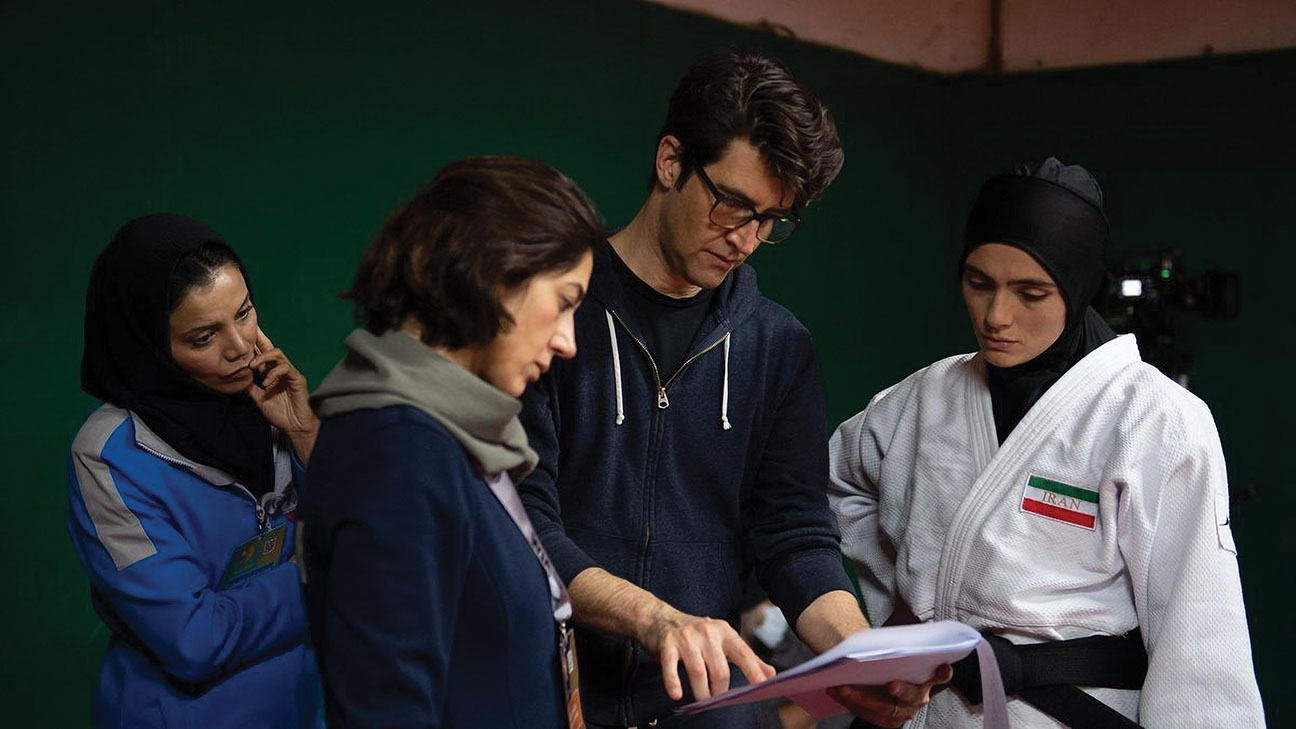
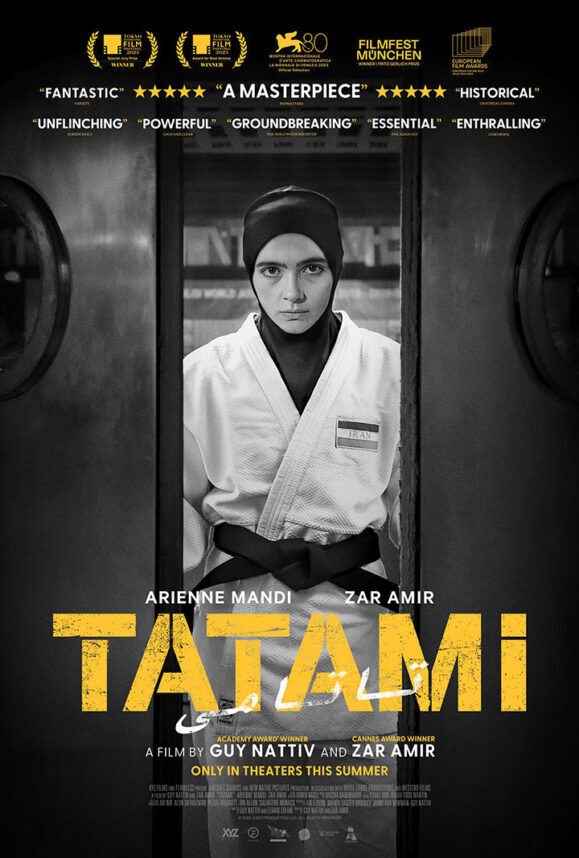
The feature film “Tatami” — co-directed by Israeli and Iranian filmmakers Guy Nattiv and Zar Amir Ebrahimi — is a groundbreaking collaboration between Israeli and Iranian directors. The story of how the two came to work together is as compelling as the film itself.
Set to open in select U.S. theaters on June 13, “Tatami” follows the story of Leila, an Iranian judo athlete who faces political pressure from her government to fake an injury and withdraw from the world championships rather than compete against an Israeli rival in the final. Leila must choose between following orders or risking her life, her coach’s life, and the safety of her family.
The story, inspired by true events, first came to Nattiv’s attention when he learned about Saeid Mollaei, a world champion judoka who was instructed by Iranian officials to deliberately lose his semi-final match at the 2019 World Championship to avoid a potential final against Israeli judoka Sagi Muki. Iran has a longstanding policy of refusing to compete against Israeli athletes. Mollaei was reportedly warned he would face serious consequences if he defied the order.
His public criticism of the regime and decision to flee made him a target, placing both him and his family in danger. Mollaei ultimately escaped to Germany, where he was granted refugee status. He later competed for Mongolia as part of the International Olympic Committee’s refugee team.
In July 2022, the long-delayed match between the Iranian and Israeli judokas finally took place at the Budapest Grand Slam. Mollaei won by immobilization in the third round of the tournament, and he and Muki — now friends — embraced after the fight.
Muki celebrated the moment in a post on Instagram as a “victory of sport over politics,” praising “the ability of sport and friendship to bridge all the gaps.” “Thank you, brother,” Mollaei replied.
“I started writing a script based on that story in the middle of the pandemic,” Nattiv told The Journal. “And then the Iranian women’s revolution erupted following the murder of Mahsa Amini in 2022. Iranian female athletes found themselves caught up in the same kind of turmoil as Saeid Mollaei and that sparked my imagination.”
Nattiv realized that it wouldn’t feel right for an Israeli filmmaker to tell this story alone. Acknowledging that he didn’t know much about Iranian culture, he decided he needed a partner — an Iranian one — to help bring the story to life authentically.
Nattiv realized that it wouldn’t feel right for an Israeli filmmaker to tell this story alone. … He needed a partner — an Iranian one — to help bring the story to life authentically.
After watching “Holy Spider,” directed by Iranian filmmaker Ali Abbasi, he was deeply moved by the performance of lead actress Amir. Right after the screening in Los Angeles, he approached her and proposed they collaborate. “I told her it was one of the most powerful performances I’d ever seen and asked what she thought about co-directing with an Israeli-American filmmaker,” said Nattiv.
Amir who won the Best Actress award at the 2022 Cannes Film Festival for her performance in the film, asked for a week to consider the idea. “For her, agreeing to this project was a bold statement,” Nattiv said. “The Iranian regime had already persecuted her and she knew this would put her at even greater risk.”
Two weeks later, she got back to him and said simply, “I’m in.”
Director Guy Nattiv (middle) with co-director Zar Amir (on his left) and leading actress, Arienne Mandi (Right).
This was no easy decision and Amir knew there could be serious consequences to collaborating with an Israeli director. In 2008, she was forced to flee Iran after becoming the center of a national scandal when a private sex tape — allegedly recorded by her then-boyfriend — was leaked online. Amir was branded a criminal by the regime, and faced a potential prison sentence and 99 lashes. She sought refuge in Paris and restarted her acting career there with Mohamad Rezaierad’s play, “Silent Taheregan’s Dream.”
In a statement released at the time, Amir reflected on the nature of the Iranian government, saying, “What I have learnt about the Iranian government is that as long as you are afraid they can arrest you, they can kill you, they can make trouble around you. But as long as you are not afraid, it is going to be fine.” Nattiv recalled her telling him, “All my instincts are telling me, ‘Be careful, this will put you in a very problematic position.’”
Still, she felt the story was too important not to tell, and agreed not only to co-direct, but also to play the role of coach Maryam and serve as casting director. “She deeply respected the fact that I didn’t let my ego take over and say, ‘I can do this alone, I don’t need a partner,’” Nattiv said. “She brought in Iranian actors from ‘Holy Spider’ — amazing actors — and she deepened her own character in the script. I also brought on Iranian screenwriter, Elham Erfani. Suddenly, it became a cast of women, including women producers and a female director.”
“As an Iranian, I was already very familiar with some of the athletes with the same story,” Amir said. “I also had a chance to get to know personally a judoka who had been through the same issues and became part of a refugee judo team. The story itself was something that I knew was important to be told and Guy’s artistic vision was a great motivation for me to get involved in the movie, not only as an actress, but also in casting and production, and ultimately, as a co-director.” Nattiv’s wife, actress Jaime Ray Newman (“Catch Me If You Can,” “Rumor Has It”), is both one of the producers and has a role in the film.
Nattiv, who won an Oscar for his 2018 short film “Skin” and directed the 2023 film “Golda,” starring Helen Mirren, initially considered making “Tatami” as a short film. But when he pitched the story to Keshet International in Israel, they told him that the story deserved to be a full-length feature.
Erfani and Nattiv were inspired by many Iranian athletes who faced similar challenges by the Iranian regime. “Sadaf Khadem the first female boxer from Iran who defected to France and became a champion of women’s rights was one of our inspirations,” said Nattiv. “She faced many obstacles while still concentrating on her sport. Another heroic Iranian sportswoman is the rock climber Elnaz Rekabi, who competed without her hijab knowing she could face death back home, and Kimia Alizadeh, who was the golden child in Iranian fencing during the Rio Olympics and decided to defect with her husband because of governmental threats.”
Amir naturally took the lead on cultural authenticity and working closely with the actors. “The way we started our collaboration was more or less for me to focus on actors and the Iranian aspects of the story, and Guy was focused very much on the technical aspects,” she said.
That division of labor proved productive, and according to Amir, “once we went into the shooting process, everything became very smooth and fluid between us.”
The production took place in Tbilisi, Georgia and had to be conducted in absolute secrecy. “Two days before shooting, an Iranian assassination squad was caught trying to kill an Israeli businessman,” said Nattiv. “I got a call from the Israeli embassy warning me to be careful. Zar got a similar call from the French embassy. We had bodyguards and made the film completely under the radar.”
For Nattiv, the character of coach Maryam had to come from a female perspective — and Amir was key. “Zar is one of the deepest, most emotional, nuanced performers I have worked with,” he said. “Every day she came in with 100 new ideas to deepen Maryam. It was glorious to watch her and shape this character with her.”
Maryam, a former judo champion turned coach, isn’t just a character with physical strength — she represents a woman scarred by the system, searching for redemption in a place where women’s rights are continuously under siege.
With Sadaf Khadem, the real-life Iranian boxer who had to flee the country after defying government restrictions, serving as a consultant, the film was grounded in authenticity. But it was Amir who brought Maryam’s emotional arc to life with precision and vulnerability, elevating the narrative into something much more powerful — a quiet but fierce rebellion against injustice.
“For me the film is all about pushing boundaries, fighting for freedom, sticking to your own values and goals and staying on the side of justice and humanity,” said Amir. “These themes will always be universal because they are so important. People may experience struggle in different ways and situations, but in the end we all live in the same world.”
“For me the film is all about pushing boundaries, fighting for freedom, sticking to your own values and goals, and staying on the side of justice and humanity. … People may experience struggle in different ways and situations, but in the end we all live in the same world.” -Zar Amir Ebrahimi
It all came together beautifully, resulting in a gripping film that holds your attention from start to finish. The title, “Tatami,” refers to the traditional Japanese mat used in judo competitions.
The story takes place over the course of one intense day at the World Judo Championships in Tbilisi. Leila Hosseini (played by Arienne Mandi of “The L Word: Generation Q”) is the captain of the Iranian team, determined to win the gold medal. Back home in Iran, her loving husband and young son, along with friends packed into their living room, watch her matches with pride and excitement. At her side is coach Maryam Ghanbari, a former judo star herself, who supposedly injured her leg just before she was set to compete against Israeli champion Yael Arad at the Seoul Olympics.
Upon arriving at the stadium, Hosseini is warmly greeted by Israeli judoka Shani Lavie (Lir Katz). The two athletes seem friendly and exchange pleasantries. As the competition advances, both Hosseini and Lavie defeat one opponent after another. But early in the day, Hosseini begins receiving calls from the head of the Iranian Judo Federation, pressuring her to withdraw before she’s forced to face Lavie in the final. The pressure intensifies, escalating into threats — some relayed through Iranian embassy officials in Tbilisi — putting Hosseini’s resolve to the ultimate test.
“The film was shot in black-and-white to reflect the world these women wake up to — a black-and-white world,” said Nattiv. “It’s a monochrome world, their heads are covered, and it felt representative of the environment they come from. The frame is also square, symbolizing the constriction of their world. The claustrophobia in which they live, the inability to dance, to sing …”
During the process of working on the film, both directors became very close. They found they have a lot in common. Nattiv calls her “my sister.”
“We feel the same way about what’s happening in the world. We have exactly the same taste in food, music art and films, more European, more boundary-pushing, so it was a very organic process,” said Nattiv. “We just clicked and our first day on set was like we had worked together as partners for years. We want to make another film together.”
During the film’s editing, Nattiv arranged for Amir to visit Israel. The Iranian woman was shocked to experience the country she had heard so much about throughout her childhood. For years, she had been brainwashed against Israel, but here she was, sitting in a Tel Aviv café, enjoying the food and the vibrant street life.
“She said, ‘It feels like home, it’s like Iran, it’s the same vibe. It’s unbelievable,’” said Nattiv. “They were taught that Israelis are the devil and we were also told that Iranians hate us. But it’s not true. Iranians and Israelis can be friends, but only if we are outside of our countries.”
“They were taught that Israelis are the devil and we were also told that Iranians hate us. But it’s not true. Iranians and Israelis can be friends, but only if we are outside of our countries.”- Guy Nattiv
Nattiv said he has many friends in the film industry from the Middle East, including Jordanians, Iranians, and Palestinians. He often urges them to channel their anger about the political situation in a more effective way. “I tell them, stop engaging in the online poison, make movies. Art is our weapon.”
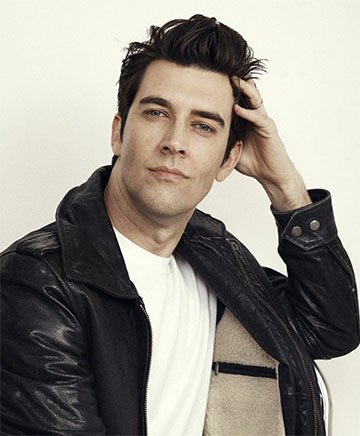
Guy Nattiv (Photo by Shai Franco )
These days, Nattiv is working on his next film, “Harmonia,” a personal story loosely based on the life of his grandmother, a Holocaust survivor who left her family in Israel in the 1980s and joined a cult deep in the forests of Virginia. Carrie Coon, who recently starred in “The White Lotus,” will play the role of Rita, who joined the cult.
The plot follows her two daughters, Ella and Jo, who set out on a journey to rescue their mother — only to find themselves slowly drawn into the manipulative group.
A few years ago, Nattiv considered making a documentary about his grandmother’s story, and traveled to Virginia himself to see where his grandmother had lived. According to Nattiv, she handed over all her Holocaust reparation money from Germany to the cult leader. She left her husband, moved to the heart of a Virginia forest, took drugs, and eventually died of starvation at the age of 69. She was buried there.
“My grandmother was born in Poland and endured the Holocaust in the harshest way. Her entire family perished, and she suffered from PTSD and depression. She carried survivor’s guilt — ‘why was I the one who survived?’ Many Holocaust survivors struggled with this, and back then, no one really knew how to treat it or what to do with those feelings. Some survivors talked about what they went through, and others didn’t. And so, in her 50s, she left the family and traveled to join a cult whose leader was Israeli.
“My mother got used to the fact that her son tells stories, and she appreciated that I was making a film about her mother because she knew it came from a place of love, not judgment,” Nattiv said. “The film isn’t based directly on her story but is inspired by my grandmother. It’s rooted in the DNA of what she experienced.”
Another personal film Nattiv and his wife are planning to shoot is “Life, Unexpected,” about their own journey as a couple, their four-year long-distance relationship until Nattiv received his green card and moved to the U.S. and the challenging road they took to become parents.
In 2013, the couple endured a devastating stillbirth. After that, they went through numerous unsuccessful IVF treatments. Eventually, with the help of a surrogate, their daughter Alma Ness was born in September 2018. A year later, their second daughter, Mila Nico, was also born via surrogate, premature at 25 weeks and weighing just 1.5 pounds. She spent 80 days in the NICU at a Las Vegas hospital before finally being released home.
A proud father, Nattiv frequently shares photos of his daughters on Instagram and Facebook. “The entire exhausting, emotional journey to parenthood was more than worth it,” he said.
“Everything we do today comes from a deeply personal place — it’s art that comes from initiative. We don’t wait around for something good to fall into our laps. That’s why we started our own production company, New Native Pictures,” Nattiv explained. “Most scripts that come your way as a director don’t blow you away. There was one that I read and loved and agreed to do — but that’s rare.
“We’re currently working on five projects at once and also bring in other writers. We’re like a creative farm — a small boutique producing things we truly believe in. We’re a team, we talk about everything. I write, she listens to my ideas. It’s fun because it all stays within the home. We’re making art that says something about life.”
“Tatami” opens June 13 at the IFC Center in New York City and on June 20 at the Laemmle Royal in Los Angeles. A special prerelease screening will take place on June 11 at the Museum of Tolerance, in collaboration with the Los Angeles Jewish Film Festival, Maccabi USA, and Project Max.













 Set to open in select U.S. theaters on June 13, “Tatami” follows the story of Leila, an Iranian judo athlete who faces political pressure from her government to fake an injury and withdraw from the world championships rather than compete against an Israeli rival in the final. Leila must choose between following orders or risking her life, her coach’s life, and the safety of her family.