fbpx

April 23, 2025

How to Build Your Brand & Your Dating Profile ft. Aliza Licht

This week, your schmuckgirls are back with a very special and interesting guest but of course they start you off with their weekly updates. Marla and Libby share about their Passover holiday and what they broke the holiday with and discuss fun upcoming plans.  Post-Passover catch-up includes indulging in food, quality time with loved ones, and upcoming events like FIDF gala and anniversary cruise.

They then welcome best-selling author and award-winning marketer, Aliza Licht! (0:09:23) She starts off sharing about how one blind date has turned into her 24+ year marriage and her unexpected shift from pre-med to fashion and PR. (0:18:26) – Aliza then shares about how she worked through multiple roles in fashion industry, taking risks to follow dreams and eventually ran a huge Instagram page known as DKNY PR Girl. (0:21:51) – She then discusses her move into starting her own podcast and crazy stories of how she unintentionally got her guests talking about topics they weren’t supposed to. (0:31:49) – The trio then discuss about personal branding and how to stand out on social media.  (0:37:04) – Aliza then shares about how she’s worked to balance her brand with her desire to speak up for her community and how she faced backlash for not staying silent after October 7th. (0:53:47) – In the fun world of dating, Aliza analyzes Marla’s Hinge profile and gives tips on how to optimize your personal brand on dating apps. 

You can follow Aliza on Instagram @alizalichtxo and Schmuckboys @schmuckboysofficial.

How to Build Your Brand & Your Dating Profile ft. Aliza Licht Read More »

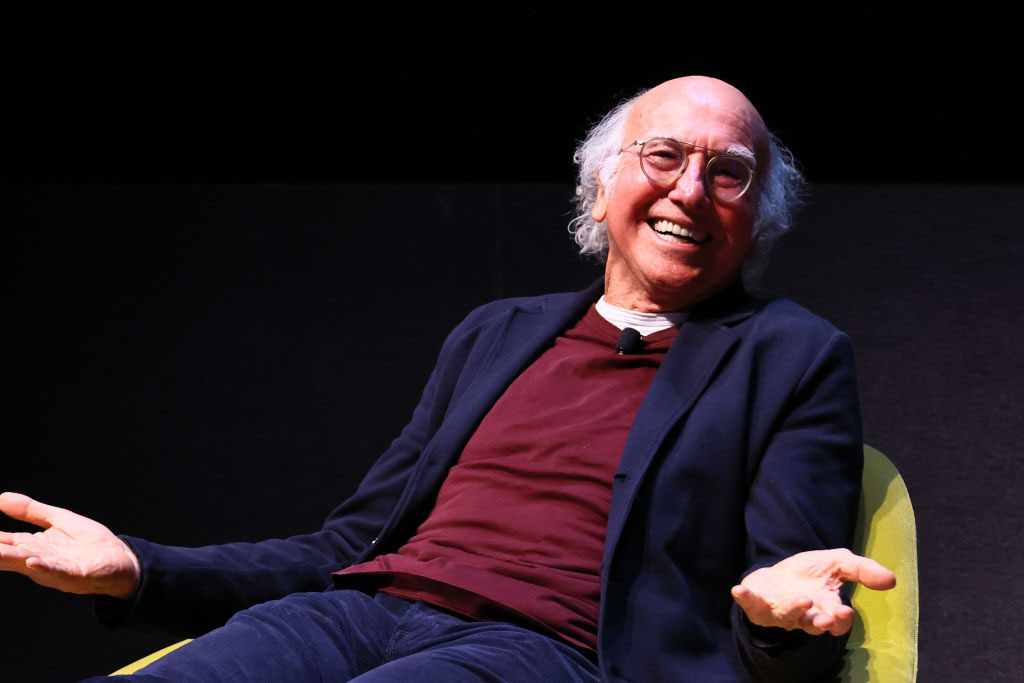
Larry David Refuses to Be Offended

I might be the biggest Larry David fan on the planet. It’s not just the zany concoctions David comes up with in “Curb Your Enthusiasm”; it’s also his disposition to offend everyone.

“Curb” is built to offend. Over 12 seasons, the show took on virtually every taboo imaginable, from the Holocaust to incest to the disabled to #MeToo to racism to Jewish-Palestinian relations, among many others. And yet, despite the cringe, David got away with it.

Why? Because the show is funny. Like, really funny.

One of my favorite episodes was when David took on Trump. His ingenious angle was to use a MAGA hat to get out of trouble with an angry biker or a lunch date with a boring TV producer. It played seamlessly into David’s character– putting his own petty needs first, even if it meant showing something that makes his fans recoil.

In this fearless and edgy eagerness to offend everyone, David has become an exemplar for that ultimate freedom we call free speech.

But with one recent op-ed in The New York Times titled “A Private Dinner with Hitler,” he undermined his own principle of freedom to offend.

Evidently, David was offended that his friend and comedian Bill Maher had dinner with the reviled Trump and had the nerve to say he found him to be “gracious and measured.”

Being a superstar comedian, David could not just come out and say he was offended. So he created a fictitious dinner with the Fuhrer, perhaps hoping that the humor would help his admonition go down easier.

“Imagine my surprise when in the spring of 1939 a letter arrived at my house inviting me to dinner at the Old Chancellery with the world’s most reviled man, Adolf Hitler,” David begins his witty op-ed. 

This is an obvious reference to Maher’s dinner with Trump, an encounter David satirizes as hopelessly naïve.

“Eventually I concluded that hate gets us nowhere,” he writes. “I knew I couldn’t change his views, but we need to talk to the other side — even if it has invaded and annexed other countries and committed unspeakable crimes against humanity.”

Ironically, when Maher defended himself from critics who bashed him for meeting Trump, he used the same argument David mocked. Yes, there’s value in talking to even those we despise.

“I had the opportunity to talk to Donald Trump and say things to him that maybe he never hears,” Maher said on the 2angry men podcast. “Literally to speak truth to power. I shouldn’t take that opportunity?”

But let’s assume, for the sake of discussion, that there was no value in meeting with Trump. So what? Does Maher need our approval for whom he chooses to talk to? And let’s accept that David was deeply offended by Maher’s decision to meet Trump. Again, so what? David has made a living out of offending people. Can’t he be offended for once? Is he the only one who’s free to offend? Freedom for me but not for thee?

If anything was offensive, it was David dredging up the darkest evil in Jewish history and insulting the 6 million souls who perished under Hitler.

He tried to camouflage his offense with humor:

“[Hitler] said he was starving and led us into the dining room, where he gestured for me to sit next to him. Göring immediately grabbed a slice of pumpernickel, whereupon Hitler turned to me, gave me an eye roll, then whispered, ‘Watch. He’ll be done with his entire meal before you’ve taken two bites.’”

Is that funny? Yes, but it’s funny with a Hitler analogy and a political agenda, two things that undermine the humor. David’s agenda in “Curb” was pure — to make us laugh. In the op-ed, it was to scold a friend who offended his sensibilities. 

A comic who has crossed all the red lines scolds a friend for crossing a line that offends him? And he uses Hitler to do it? Someone who refuses to be offended is neither funny nor interesting.

That said, has David’s op-ed curbed my enthusiasm for his show? Not a chance. My life would be diminished without the guaranteed laughs I get from “Curb.”

But I can see yet again how politics and Trump Derangement Syndrome can take people off their game. Trump already takes more than enough heat from his many critics, and this country already has way too many scolds. If there’s one thing we could use right now, it’s a little laughter to give us a break from the around-the-clock hell of politics.

Had David sent his piece to the Jewish Journal, I would have told him just that, even if might have offended him.

Larry David Refuses to Be Offended Read More »

Why California Is in Dire Straits

You may have heard of the recent resurrection of the dire wolf. This scientific miracle came about through extracted DNA from the blood of the gray wolf and rewritten into the genetic code to match the sequence from dire wolf fossils.

In California, we need another resurrection of an endangered species  — the California middle-class homeowner. Ironically, both the miracle and the tragedy are entirely man-made, and both phenomena possess the potential to unleash unintended consequences that could redefine our understanding of how we live on this planet. 

California’s housing crisis is not a naturally occurring condition. Nor is it an unavoidable result of market forces, population growth, or even the climate crisis. Rather, it is a deliberate policy choice propped up by decades of anachronistic zoning and construction policies that have allowed wealthy homeowners, entrenched local governments, and bureaucratic red tape to keep desperately needed housing from being built.

According to the California Association of Realtors 2024 Traditional Housing Affordability Index, only 15% of the state’s homebuyers could afford to purchase a median-priced existing single-family home. In Los Angeles, where the median list price is $1.2M, the numbers are even worse with only 13% of households able to purchase the median single-family home with a household income of close to $250K necessary just to qualify. The human cost of the layers of policy failures that have an omnipresent chokehold on housing development have regretfully come to define the image of the state itself. As of January 2024, there were over 187,000 homeless individuals in the state with over 5.2 million, or 18% of California adults reporting that their housing situation was unstable. Further, an EdSource analysis reveals that in Los Angeles County, nearly half (46%) of LAUSD employees, including teachers, are housing insecure, soaring rents making housing unaffordable for many residents. 

The extinction of the California homeowner is easy to understand with its ossified forms of local governments often resisting reforms and maintaining outdated zoning laws that hinder the construction of multifamily housing. These all contribute to an artificial scarcity of available homes. When all that is left of this once golden state are the ultra-rich and those who depend almost entirely on government assistance, a close look at the calcified remnants of a once vibrant middle class will reveal the following clues about how and why it became extinct:

• Impact of Zoning Laws: Restrictive zoning laws have historically prevented lower-income residents from accessing wealthier neighborhoods, exacerbating economic disparities and driving up housing costs. This has led to a decline in population in major cities like San Francisco and Los Angeles, as residents leave in search of affordable living conditions. 

• Racial and Social Justice Issues: The housing crisis is intertwined with social justice, as exclusionary zoning practices often target low-income and nonwhite communities under the pretext of preserving neighborhood character. This systemic issue continues to hinder equitable access to housing. 

• Need for Reform: Despite state-level initiatives to promote housing development, local governments frequently ignore or resist compliance, worsening the crisis. Effective solutions require political will to dismantle exclusionary practices and streamline housing approvals. 

• Broader Economic Consequences: The housing shortage stifles economic growth, as businesses struggle to attract talent due to high living costs. With tech companies relocating to states with more affordable housing, California risks losing its competitive edge.  

With tech companies relocating to states with more affordable housing, California risks losing its competitive edge. 

• Unaffordable public higher education: The University of California system was initially designed to be tuition-free for California residents. However, over time, tuition and fees have increased significantly, making the UC system one of the most expensive public university systems in the nation further pricing out middle-class families from achieving a staple of middle-class upward mobility. For in-state residents, the total cost of attending UCLA for four years is approximately $170K. With the average median income in Los Angeles at approximately $87K, higher education is no longer affordable to a middle-class household living in Los Angeles County.

• Corruption and the Housing Industrial Complex: LA city officials face challenges in tracking homelessness spending, primarily due to the Los Angeles Homeless Services Authority’s (LAHSA) inadequate data collection and accountability measures. An audit of $2.4 billion in city funding revealed that poor documentation made it difficult to track expenditures, and the agency did not verify whether invoiced services were actually provided. The audit highlights insufficient financial accountability and a lack of uniform data standards, which increased the risk of misallocation of resources and hindered assessment of the effectiveness of homelessness assistance services.

While it may be hard to anticipate the consequences of reintroducing extinct species back into the ecosystem, we are indeed experiencing the consequences of failed housing policy across the once great state of California with the extinction of the middle-class homeowner unfold before us in real time. One might even argue that between the resurgence of the dire wolf and the deliberate perpetuation of our dire housing crisis, it is the latter that is far more predatory.


Lisa Ansell is the Associate Director of the USC Casden Institute and Lecturer of Hebrew Language at Hebrew Union College-Jewish Institute of Religion Los Angeles.

Why California Is in Dire Straits Read More »

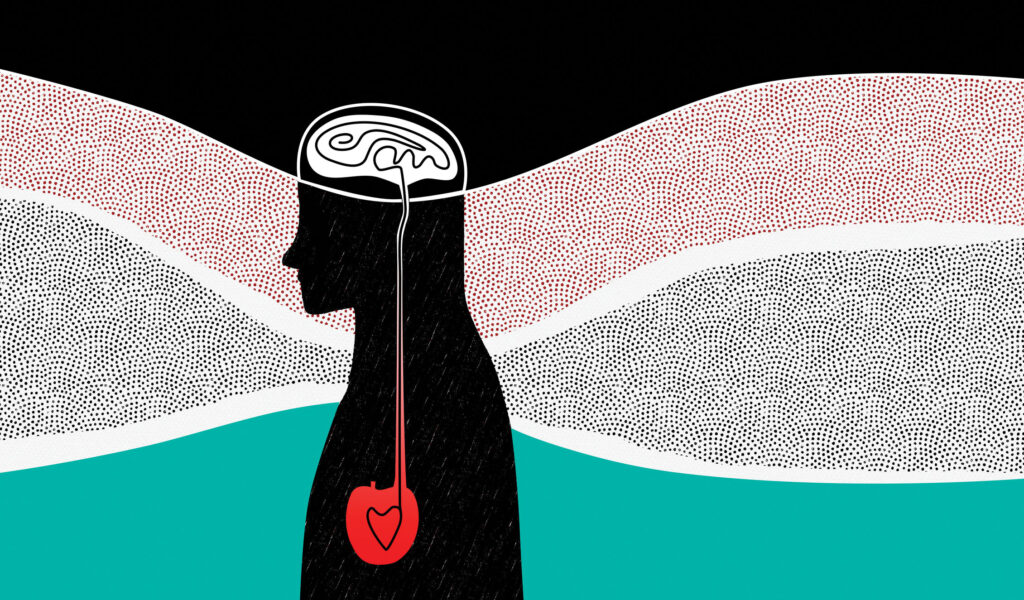
It’s Human Intelligence that Listens to the Heart of Things

I recently confronted the frightening truth that relying on technology over human insight, human intelligence (HUMINT), can be as life threatening to our personal health as it was to Israel’s security on October 7.  

I understood this too clearly when a doctor told me outside the operating room there was a chance my husband would not survive the procedure he was undergoing. No, he wasn’t wounded in battle – he had his chances long ago in Israeli wars and service in the reserves. No. this was from a combination of age and, dare I say, failure of the sophisticated technological tools we rely on to tell us if we are not well. A failure that reminded me of what we in Israel experienced on October 7 when technology did not withstand enemy tactics, prevent the breach of our borders, or warn our protectors of an attack in progress. 

HUMINT, a new word for me, is the intelligence gathered by humans. Spies. Agents embedded in enemy territory who supply intel on impending attacks. On October 7 we did not have HUMINT in Gaza, but we did have the tatzpitaniyot, the field observers, on our side of the border. They sit for hours, focused on screens aimed at Gaza. They observe. They study movement and tactics. They look for changes from the norm.  This they did with perfection, but their reports were ignored by their superiors.  

In our personal case, David suffered from chest pains when walking or exercising. “It’s my heart,” he said. He understood the warnings from his body, but no one really listened. Again, the field observers came to mind because they “live” in Gaza. They discover the slightest nuances of behavior that indicate danger. Like we do with our own bodies. The observers knew an attack from Gaza was imminent yet were ignored. They knew that those “trial balloons” with incendiaries and explosives were preparations for an invasion. They knew those gatherings of hundreds of Gazans along the fences were preparations for war.  They insisted an attack was coming but were ridiculed, their reports disregarded. HUMINT was ignored.

My husband insisted his chest pains were from his heart. He recognized the pain from 19 years ago when he had stents inserted. He knew. But his claims were rejected, nullified by advanced technology showing negative results for different tests that should detect heart disease.  He’s an 82-year-old man who was perhaps becoming delusional. Paranoid. Someone who does sit-ups and lifts weights every day and then goes to instruct gun owners how to shoot, is not paranoid. But he is 82. HUMINT was ignored.

 “Ah, come on. Your myocardial perfusion imaging is perfect. You have proof right here that your heart is fine!” 

This sounded like what the observers had endured:

 “Ah, come on, banot — girls. Hamas is just rattling the cage. They are deterred. Nothing to get hysterical over.”

My husband was luckier than our country. When pains became more frequent, he was finally referred to the emergency room and admitted.

The doctor on rounds the next morning read his history and listened to his heart. 

Here’s the difference. She understands HUMINT. She read his chart. She questioned. She listened carefully and intently— with kavana—to his heart. And she heard the heart’s plea for help. 

“There is a serious problem here,” she said. 

An angioplasty was scheduled. The procedure was complicated and risky but thankfully successful. Instead of suffering the cardiac arrest they said he was headed for, my husband was released after three days in ICU in time to celebrate Passover with the family.

Technology—hi-tech, computerized tests, sensors, and cameras—is not the end-all. These tools exist to assist, not replace. I pray that technology will never again overshadow HUMINT—the invaluable resource that listens to the “heart,” senses the nuances of change in the enemy, in patients, and in ourselves.

Why do we not listen to those who are in the best position to know?


Galia Miller Sprung moved to Israel from Southern California in 1970 to become a pioneer farmer and today she is a writer and editor. 

It’s Human Intelligence that Listens to the Heart of Things Read More »

The Key to a Strange Post-Passover Custom

Is there anyone who doesn’t love the taste of warm challah on Shabbat? Many eagerly chomping down on their first bite of braided bread following the conclusion of Passover might be surprised, however, when their teeth clank against metal. 

In what is surely one of our tradition’s most curious practices, some bake what is called “schlissel challah,” from the German/Yiddish word for “key,” as a special segulah, or good luck charm, the first Sabbath after the Festival of Freedom, during which leaven was forbidden. Others don’t bake a key into their challah, but rather bake their challah in the shape of a key.

As the masterful scholar of the history of Jewish customs Rabbi Zvi Ron has documented, Rabbi Pinchas Shapiro of Koretz (1726-1791), a student of the founder of Hasidism, the Baal Shem Tov, is the first to mention this practice – though not in the manner in which it is known today. In the “Imrei  Pinchas,” a collection of Rabbi Shapiro’s teachings put together by his students, he is recorded as having taught “On the Shabbat after Pesach we make [the challah] like matzah, hinting at the matzot eaten on Pesach Sheini,” the 14th of the month of Iyar, a month after the eve of Passover. On that day, those who were impure during Pesach itself could bring a replacement paschal sacrifice at the Temple. “And,” the teaching continued, “we make incisions into the challah with a key, hinting that the gates are opened until Pesach Sheini.” 

The holes, in other words, are made with a key in a challah which was made flat and round like a matzah for the occasion, to imitate the unlocking of a door. This was to show that the spiritual uplift and opportunities of the holiday’s central ritual continue for another month. With the Passover prefiguring the Messianic redemption, and the matzah serving as its central symbol, the turning of the key into a matzah-looking challah as a reassurance that, as Ron puts it, “although Pesach has passed and the awaited redemption did not materialize, there is still the possibility of a second chance at redemption, as demonstrated by Pesach Sheini.”

Pricking bread dough with a fork or some sharp tool, it turns out, is not a uniquely Jewish practice. Called “docking,” the technique is applied to flatbreads, often with spiked rollers, to help the steam to escape and prevent air bubbles from ruining a flat pastry base.

Subsequent to Rabbi Shapiro’s recording of the practice, Rabbi Avraham Yehoshua Heshel (1748-1825) added another spiritual layer. “We make dots on the holy bread on this Shabbat with keys,” he recorded in his book “Ohev Yisrael,” “to hint that we are opening a little through fulfilling the mitzvah of Shabbat.” Since the gate of potential redemption is agape at this time, it is incumbent upon us to add merits, such as observance of Shabbat, to hasten the Messiah’s arrival.

Additional meanings accrued in later years.  The first rebbe of Sighet, Hungary, Rabbi Rabbi Yekutiel Yehuda Teitelbaum (1808–1883), suggested that since the Torah portion for the Shabbat after Passover is usually Shemini, in which the Bible discusses kosher food, we mark our challahs to demonstrate that eating proper food is “the key to serving God in all things.” 

Others presumed that the symbolism commemorated the key to where one keeps the chametz sold to a non-Jew prior to Pesach, retrieved once Pesach has ended.

The most common explanation for the custom relates it to sustenance. That’s because at the end of “Ohev Yisrael,” the grandson of Rabbi Avraham Yehoshua Heshel added an appendix. He mentioned there that he heard “from people who can be relied upon, that they heard from the holy mouth of the author,” that “the challah a shape of a key is made.” It is explained that “at this time when the Israelites were eating from the manna, from the time that the omer offering was brought and on they no longer ate from the manna as it is written, ‘The day after the Passover, that very day, they ate some of the produce of the land: unleavened bread and roasted grain’ (Joshua 5:11).” The key thus represents divinely granted provisions. 

This explanation has become predominant — as given modern life’s constant financial pressures, many have presumed that it can’t hurt to hope that a small key might help grant you God’s generosity (that is, of course, unless you accidentally bite it).

Ron notes that the tacked-on note is not as unusual as one might think. Many regional Jewish customs in prior centuries added shapes to a regular challah to mark special occasions. Some baked the shapes of birds, ladders, hands — and, yes, keys —  that might facilitate the ascent of prayers to Heaven during the High Holiday Season. It was no surprise then, that the custom naturally evolved from baking bread in the shape of a key to baking an actual key into the bread, first recorded as the practice in the home of Rabbi Betzalel Yair of Aleksander, Poland (1865-1935), and now shared on Fridays by countless social media users throughout the TikTok-sphere.  

Whether or not one savors some schlissel challah this year, one can still take its central message to heart: Though the Festival of Freedom has passed, one can and should continue to be sustained by the faith in redemption the holiday inspires.

Whether or not one savors some schlissel challah this year — and if one does, what form that bread takes — one can still take its central message to heart. Though the Festival of Freedom has passed, one can and should continue to be sustained by the faith in redemption the holiday inspires.


Rabbi Dr. Stuart Halpern is Senior Adviser to the Provost of Yeshiva University and Deputy Director of Y.U.’s Straus Center for Torah and Western Thought. His books include “The Promise of Liberty: A Passover Haggada,” which examines the Exodus story’s impact on the United States, “Esther in America,” “Gleanings: Reflections on Ruth” and “Proclaim Liberty Throughout the Land: The Hebrew Bible in the United States.”


The Key to a Strange Post-Passover Custom Read More »

The Journey to Sinai: Refining Our Soul as Jews and Americans

I sit here on the fifth day of Passover, in this country, and find myself torn and distraught. Rabbi Jonathan Sacks z”l in his commentary on Passover reminds us it is “… a sustained critique of power at every level: political, economic, military … the use of power by one human over another is a form of violence.” That doesn’t mean we don’t focus on ritual, depth of spirit, Divine presence, and family sharing but surrounded by a Pharaoh-like government, where the ‘will,’ of one man is exerted on all facets of this country, I can’t help but despair of a kind of enslavement that is being foisted on all of us. In the words of Anne Applebaum, journalist and historian, “an attempt is being made to reshape the culture,” as well as the rule of law and the constitution.

Passover is a historical and spiritual moment in the Jewish calendar. But it is only the beginning, for ultimately, it is about taking us on a journey through the desert towards Shavuot, standing at Mt. Sinai where we become a people. The experience of slavery, Kabbalistic commentary emphasizes, was necessary so that the people could truly understand what it felt like to be a slave so when they would come to stand at Sinai, committing to a Covenant with G-d, they would appreciate that the laws, both Oral and Written Torah, were key to creating a society based on the dignity for each human being including the values of Chesed, Lovingkindness, G’vurah, healthy boundaries and discernment, and Rachamim, Compassion. In fact, the journey from this holiday to the next is an opportunity to refine our character, so we can stand at the end of seven weeks feeling we deserve and have earned the gifts from the Holy One that guide and inspire the goodness for all members of the society. 

What was originally an agricultural activity, taking a measure of barley (Omer) from its harvest, and creating an offering to G-d, was an expression of gratitude. Kabbalah has transformed this initial activity into a beautiful spiritual practice, The Counting of the Omer, moving through the seven weeks by attending with deep contemplation, each week, on one value or characteristic. These are an expression of the Seven S’firot, emanations or channels, located within the body. The seven are Chesed (lovingkindness), G’vurah (strength, discernment, boundaries), T’ferret (Beauty, Harmony), Netzach (action, assertion), Hod (Gratitude, humility), Y’sod (Foundation thru relationship), and Malchut (connecting with the earthly female divinity, Shechinah). Moving from one to the other we expand our inner awareness and perfect who we are, a mindful and soulful human being.

The first week after the seder focuses on Chesed, lovingkindness, generosity, and caring expressed in relationship to ourselves and to others. 

The first week after the seder focuses on Chesed, lovingkindness, generosity, and caring expressed in relationship to ourselves and to others. The challenge of course is that we are surrounded by cruelty, inhumanity, destruction, chaos, and moment-to-moment change and uncertainty. So many of us, in our attempt to live out empathy for the other, as a result of reading and experiencing the Haggadah, feel for one man, Kilmar Abrego Garcia, languishing in a horrific prison in a foreign country. And we haven’t forgotten the hostages in Gaza suffering beyond imagination. It is hard not to be pulled to feel confusion, anger, rage, sorrow, and demoralization witnessing such defiance of what we have held dearly since our own country was founded. It is one of the most dichotomous of experiences, a most profound lived awareness of cognitive dissonance.

It’s not hard to get in touch with Chesed when we hear of victims of shootings, people kidnapped off the streets, from cars, and homes, those whose rights are diminished in a democratic society, bullying and punitive behavior on agencies, companies and universities, imperiousness on individuals who are perceived as the enemy, and those now jobless because of the careless and inept decision-making coming from this administration.

This holiday is to teach what matters, what to value, and to let it instruct how we should engage with each other and the values that underpin a lawful and compassionate society. The level of protest is becoming exponential, hopefully giving strength to each of us to speak out and support the courage to fight a despotic leader. As we move towards receiving Torah let us remember how crucial the law is, how important mitzvot are, and that they must lead us to nurture not only our Jewish values but also those of our home country,


Eva Robbins is a rabbi, cantor, artist and the author of “Spiritual Surgery: A Journey of Healing Mind, Body and Spirit.”

The Journey to Sinai: Refining Our Soul as Jews and Americans Read More »

The Trifecta Mainstreaming Holocaust Denial

Fourscore years. That’s how long it’s taken for the Holocaust to evolve from what almost everyone considered the exemplar of evil to a shibboleth that can be denied, minimized or mocked. Men and women with ginormous public platforms and expertise drawn from Wikipedia have discovered that nothing so assures greater celebrity as going after the Jews, and above all their most horrific suffering. 

These self-made pundits remind their millions of followers on Spotify and YouTube that our government lied about COVID originating in a Chinese lab, about Iraq’s Weapons of Mass Destruction, about Russian involvement in the 2016 presidential election — so what else are they lying about? The answer comes with dismal predictability: The Jews. The elites don’t want you to know the Jews murdered JFK, are the hidden hand behind 9/11, that they operate a vast pedophilia ring. But the ultimate taboo, which these “brave” influencers will speak out about is the truth of the Holocaust. Far from harming them, their “revelations” assure a higher profile and greater status. Each is followed by ooh-I-can’t-believe-he-said-that squeals and, above all, clicks. Antisemitism is a social media goldmine.

Dan Bilzerian (social media following: 32 million) told Piers Morgan a few months ago: “I believe that Jewish supremacy is the greatest threat to America, and I think it’s the greatest threat to the world today.” He says he would bet his vast fortune that the number of Jews killed in the Holocaust was under 6 million, but in any case, “Jews have killed far more Christians than that. I mean it’s not even close, if you look at the Bolshevik genocide, the Holodomor … they basically invented the genocide.”

Candace Owens (social media following: 25 million) has gone Kanye West-level deranged, informing listeners on her YouTube channel that Frankists, a 19th-century cult founded by a Jewish apostate, are leading present-day pedophilia cabals, that AIPAC murdered JFK and that should anything happen to her, the Jews did it. She hasn’t gotten around to full-bore Holocaust denial — yet — but mocks the horror surrounding it. Because we live in an age in which everyone someone doesn’t agree with is just like Hitler, Owens suggests that Hitler is simply a bogeyman for the naïve. In an episode titled “He Who Must Not Be Named” — “he” being Hitler — Owens mentions the Holocaust only to take potshots at it, claiming the well-documented reports of Dr. Mengele’s sadistic experiments are “absurd.” Anyway, she says, the Allies did the same as the Nazis or worse. 

It’s this latter argument — we’ve committed monstrous crimes, so when our government declares someone an enemy, they’re hypocrites and we shouldn’t believe them — that resonates with people on the political left as well as right. And because our government and its allies have done some questionable if not terrible things throughout history, there is a need to reflect deeply on our predecessors’ actions — to try to consider their circumstances as best we can, then ask where they might have gone wrong. But that would require reasoned, informed analysis and nuance — precisely the opposite approach of what these latter-day gurus are doing. Their argument isn’t that the struggle against Nazism should be considered in less black-and-white terms — it’s to turn reality on its head, declaring the good side evil, and implicitly exonerating what used to be rightly condemned. 

Typical of our age’s “experts” is self-styled historian Darryl Cooper, who has called Winston Churchill “the chief villain” — worse than Hitler — of the Second World War and tweeted that Hitler’s invasion of France was “infinitely preferable in virtually every way” to wokeism. It’s a message at least partially palatable to the far left, who love his take on Churchill and the murderous imperialist Allies. 

But the main thing extremists of the left and right, not to mention the Islamists, can agree on is that the Zionists are behind every evil, Israel is committing genocide and the Holocaust is, if not made up in whole or part (“I don’t think a single Jew died in gas chambers,” podcaster Jake Shields tweeted), then at least exaggerated or exploited for the Jews’ nefarious purposes.  

This week we mark Yom HaShoah, remembering the 6 million Jews… Simply remembering and upholding truth become acts of defiance. So we must.

Holocaust denial is nearly as old as the Holocaust itself — which is to say, it’s very modern. Already by 1950, a French Communist, Paul Rassinier, had written a book doubting the existence of Auschwitz’s gas chambers and the Nazis’ policy of extermination. In 1959, American clergyman Gerald L. K. Smith published the claim that 6 million Jews were not killed during the Holocaust, but had peaceably immigrated to the United States during the war. Over successive decades the left and right nourished, and fed on each other’s, Holocaust denialism. By 1989 Sweden-based Radio Islam introduced Islamist Holocaust denial to Europe, making the great trifecta — far left, far right and Islamist — complete. It’s always been there, percolating on society’s margins — although it does depend on what one considers “the margins.” 

Now, with the advent of social media, it’s becoming mainstream. Not just widely discredited podcasters like Tucker Carlson, but largely respected ones like Piers Morgan, Theo Von, Stephen A. Smith and, above all, Joe Rogan are inviting on people with views that would have been scorned a few years ago but are now welcomed as daringly heterodox. 

This creates a real dilemma. Free speech is essential to a free society. Calling to censor views that are disgusting but not immediately dangerous — meaning, explicitly calling for violence — is a big mistake that can only backfire. Podcasters like Rogan can make a legitimate-sounding claim that in providing a platform to these figures, they are simply championing free speech. But as Douglas Murray told Rogan during his recent appearance on Rogan’s show: “I feel you’ve opened the door to quite a lot of people who’ve now got a very big platform, who have been throwing out counter-historical stuff of a very dangerous kind.” 

That about sums it up. This week we mark Yom HaShoah, remembering the 6 million Jews, including one million children, who were murdered in the Holocaust. Meanwhile we can’t help but think of the Jews murdered on Oct. 7, those still being held hostage, and the tsunami of antisemitism directed against the state founded with the vow “Never Again.” Simply remembering and upholding truth have become acts of defiance. So we must.


Kathleen Hayes is the author of ”Antisemitism and the Left: A Memoir.”

The Trifecta Mainstreaming Holocaust Denial Read More »

Yom HaShoah and the Weight of Words

Each year on Yom HaShoah, we remember the 6 million Jews murdered in the Holocaust. We remember in synagogues and ceremonies, in classrooms and public squares. We light candles, recite names, and pause to bear witness. But memory is not static. It requires vigilance — especially when the language we use to describe genocide is increasingly distorted, politicized, and misunderstood. This year, Yom HaShoah falls during April, a month that also marks Genocide Awareness and Prevention Month — a sobering reminder of just how many communities are called to mourn in this same stretch of days.

I teach a course at the University of Southern California, “Antisemitism, Racism, and Other Hatreds.” Each spring, my students study the Holocaust, the Armenian Genocide, the Genocide against the Tutsi in Rwanda, and Guatemala. They come from diverse backgrounds — some have never encountered these histories before. For many, the class is their first deep encounter with genocide as lived experience, not just historical fact.

It is not easy material. But that is the point.

Genocide education often risks oversimplification. Timelines, statistics, and legal definitions take precedence over human stories. We learn about regimes, perpetrators and treaties. What we don’t always learn is what genocide feels like. What it does to language, family, tradition and identity.

We name the violence. But we lose the people.

This is a mistake — especially on Yom HaShoah, a day created to remember the lives, not just the losses.

This semester, I invited two survivors to speak with my class. Pinchas Gutter survived the Warsaw Ghetto and six concentration camps. Edith Umugiraneza lived through the 1994 genocide in Rwanda. They did not compare their experiences. They shared their truths. And in doing so, they called on us not to memorize their suffering, but to understand its ongoing impact.

That’s what Yom HaShoah must do. It’s not only about looking back. It’s about learning how to move forward with responsibility and with precision.

Lately, I’ve grown concerned about how casually the word genocide is being used in public discourse. Since Oct. 7, the term has appeared in social media posts, placards, and political statements, often stripped of legal meaning or historical context. At best, this is careless. At worst, it is deeply disrespectful.

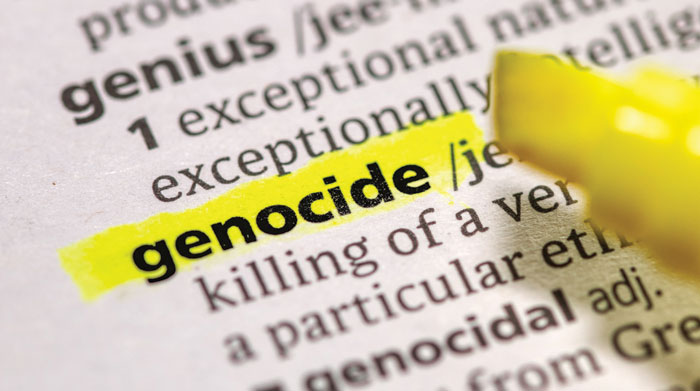
Genocide is not a synonym for tragedy. It is not an emotional expression. It is a legal term coined in 1944 by Raphael Lemkin and brought into International Law in 1948 to describe the planned destruction of a people — the very crime committed against Europe’s Jews. 

Lemkin’s word filled a linguistic void. Before genocide, we didn’t have a way to name what had happened. That made it harder to prosecute and even harder to prevent. The term exists not to dramatize, but to clarify. And clarity matters—especially when lives are at stake.

When we misuse the word genocide—when we apply it to situations that do not meet the definition—we do more than dilute its meaning. We risk erasing the specificity of the very crimes the word was invented to describe.

This doesn’t mean we avoid uncomfortable truths or look away from human suffering. Quite the opposite. As survivor George Papanek said in his USC Shoah Foundation testimony: “Just because the Nazis are gone does not mean that evil is gone in this world.” He wasn’t making comparisons. He was making a call to action — to be engaged, to stay alert, to act when needed. But also to be careful not to make all evils equivalent.

That nuance matters. We cannot protect memory by flattening it. Nor can we build empathy by weaponizing language.

Yom HaShoah reminds us that the Holocaust was not inevitable. It was made possible by a series of silences, failures, and choices.

Yom HaShoah reminds us that the Holocaust was not inevitable. It was made possible by a series of silences, failures, and choices. If there is one lesson to carry forward, it is this: language shapes memory. And memory shapes our moral imagination.

What we say, and how we say it, matters.

So this year, I ask: How do we teach the Holocaust in a world that increasingly struggles to distinguish history from rhetoric? How do we speak for the dead without simplifying their lives? And how do we make sure that in trying to connect the past to the present, we don’t lose the integrity of either?

Memory, like justice, depends on the responsibility that remembrance requires.


Stephen D. Smith is CEO of Memory Workers and Executive Director Emeritus of USC Shoah Foundation. 

Yom HaShoah and the Weight of Words Read More »

Less Is More

Passover is my favorite holiday. I love the storytelling and singing at the seder, taking that first bite out of the Hillel sandwich and seeing my home looking sparkling clean. 

Another part of Passover that I truly appreciate is the minimalism. Without a world of ingredients to work with, cooking becomes much easier. When I don’t have access to all my stuff, I don’t have so much to think about. Stepping away from my phone for the first and last days, and mindfully existing in the moment, is a huge blessing. 

For those eight days, life is simpler. I get to focus on my family, which is the best way to spend my time. I also connect with Hashem and take a pause from my hectic everyday life. 

I’ve come to realize that when I lead a more minimal life – like I do over Passover – I am happier. I don’t need so many things to feel like my life has meaning. In fact, sometimes, things just get in the way.  

I’ve come to realize that when I lead a more minimal life – like I do over Passover – I am happier. I don’t need so many things to feel like my life has meaning. In fact, sometimes, things just get in the way. 

We live in a materialistic society where we are told to feel like we never have enough. There is always a new iPhone we can get or trending purse we should buy or some shoes we must have in our closet. If we want to be happy, we need to purchase that shiny new thing – or else we risk not fitting in, not being liked, not being popular. All of this is confirmed by social media influencers, whom we mindlessly worship and strive to be like. 

But when we analyze what makes our lives joyful, the stuff we own is pretty far down on the list. It often feels like a burden; just ask anyone who has cleaned their house for Passover and had to shift a million things around, or who had to clear out a garage or move to a new place. When we try to keep up with what’s trending now and spend money on things, it doesn’t satisfy the spiritual need we’re actually missing.

Passover reminds us of this. Sure, we had good food from the Nile River, but we were slaves. We had very few things in the desert, and that’s where we finally became free. On Passover, chametz isn’t just about food; it’s also about the things in life that hold you back, that keep you spiritually enslaved. 

As we are still reflecting on this past holiday, I urge you to take a look at what really makes you happy in life. Is it a fancy watch, or cuddling with your spouse? Is it the newest SUV, or hearing your children laugh? Is it the latest designer shirt, or having a cup of coffee and catching up with your best friend?

We must listen to our inner voice when it comes to our happiness and not what the outside world is telling us. An advertisement may try to convince you that you need a product, but you very likely don’t. You were fine without it before, and you’ll be fine without it in the future. 

If you struggle with this, I suggest writing down a list of your priorities in life and focusing on those things instead. For me, I want to sit and make artwork with my daughters, take my baby son on walks and go see my husband perform stand-up comedy more often. I’d love my life to be filled with quieter moments of connecting with Hashem and my loved ones. I’m going to literally and metaphorically declutter my life so that I can hone in on what really matters. 

As we come out of Passover with a new motivation to be free, I urge you to try to lead a more minimalistic life. I guarantee you: Less is more.


Kylie Ora Lobell is an award-winning writer and Community Editor of the Jewish Journal. You can find Kylie on X @KylieOraLobell or Instagram @KylieOraWriter.

Less Is More Read More »

The Sound of Silence

There is a saying: “Nothing is noisier than a house with children, and nothing quieter than a house without children.”

As an only child, our home was as quiet as a library closed for the week. In wintertime, the sun sometimes dropped as early as 5 p.m. — not much time for my friends and me to make noise. I would come home from school, watch TV, and try to get out of doing homework. The only thing heard was me tapping a pencil as I pretended to do a math problem. 

After dinner, Mom and Dad were in their bedroom smoking and watching their shows while I watched in my room on my 12-inch black-and-white portable. I craved the noise of my friends.  

Thirty-plus years later, God gave me a wife and three noisy boys. When I was not on the road working, not a day went by (for the next 18 years) without me playing some game with someone.  Every inch of our 1,706-square-foot house was filled with noise. The $7,000 hearing aids that I wear today are partially due to all the noise in our home during those years. If we didn’t hear anything for 10 seconds, we would run to ensure they were all still alive. 

On Shabbat, the back and front yards were filled with our kids and their friends playing wiffle ball, slip and slide, table games, and kids accusing each other of cheating. There were tears, an occasional broken bone, and screaming so loud that only a jet filled with people dropping from the sky could rival it.  The dog gobbled up everything edible that dropped on the floor. 

Every parent comes close to going insane during those early years. Then they must scramble when they find out the kids are getting out of school at noon instead of 4 p.m. Who’s screaming now as they must leave work early for the fifth time that month?

Yet, I miss those days more than you can imagine. There was an aliveness to them that nothing else compares to.

Now, as empty nesters, except for an hour before bed, neither my wife nor I watch much TV. I use a small Bluetooth speaker to play classical music when I write at home. When my wife works from home, except for clicking her keyboard, our house is quiet.

The days of Shabbat meals with 15 people jammed into a table that fits only 12, mostly kids, are long gone. If it’s just us, we enjoy a low-key meal, reading, and a nap. We chat, but we are not Lillian Hellman and Dashiell Hammett discussing our latest novel or play while getting drunk, hurling obscenities, and then passing out. Amazingly, they got a lot done. 

It’s a quiet life — and a good life. As I get older, I’ve learned to make friends with the quiet. 

But now, once again, new noise has entered our lives. These are our grandchildren. Let the screaming begin.

But now, once again, new noise has entered our lives. These are our grandchildren.  Let the screaming begin.

Today, all three of our kids have their own places. Two of our three have children, and their homes are filled with screaming, arguing, bartering, and love.

My wife and I sit in our chairs, watching with delight as they tear up our house. We love it. Once again, our living room has been transformed into an indoor park/gym. Toys are strewn across the floor. The couch has been turned back into a trampoline. Lamps are being knocked over. The living room rug is used as a changing table. The old dog our kids grew up with has passed, but the new one has taken up the role — gobbling chicken nuggets and Pringles and running off with parts of their toys.

For many years, there were no toys in the house. Back are the fire truck, kitchen set, and magnet tiles. Also, “Goodnight Moon,” along with “Where’s Waldo?” — and God bless Waldo, who, without Botox, hasn’t aged a bit. Let’s not forget pulling the dog’s tail. 

God willing, my wife and I will remain in good health and still be able to bend down to play on the floor and pick up what’s left after they’ve gone home.

These may be the best years of our lives.


Mark Schiff is a comedian, actor and writer, and hosts, along with Danny Lobell, the “We Think It’s Funny” podcast. His new book is “Why Not? Lessons on Comedy, Courage and Chutzpah.”

The Sound of Silence Read More »