fbpx

January 1, 2025

Meet the Sidekick for Superhero Moms: How Vivs, Brandon Lurie’s AI App, is Helping Out Motherhood

As a young child, Brandon Lurie was always in awe of his mom. In his eyes, she was a superhero. She raised five children, prepared breakfast each morning, and, as they ate, packed their lunchboxes, scheduled a dentist appointment for one of the boys, shuffled them into the car to drive them to school before heading to work. “I remember thinking that being a mom is a hard job. My mom was always busy, always doing something, always on the go,” he said.

This month, Lurie launched Vivs.co an AI assistant for busy moms who juggle countless tasks and need a personal assistant. Lurie hopes it will become Israel’s next startup unicorn.

After the Oct. 7 Hamas attack on Israel, many mothers lost children, or their children were injured at the Nova Festival or in battle. Even for those not directly affected, the stress of the situation weighed heavily. Lurie began reflecting on the immense mental load of motherhood, and that’s how he developed Vivs, named after his mother, Vivian. 

“Moms are superheroes, but even superheroes need sidekicks, and this is going to be every mom’s sidekick,” Lurie said in a phone interview from his home in Israel. “It’s an all-in-one app for moms — a singular place where they can manage the entirety of their mental load, from carpooling and meal prep to grocery shopping, appointments, home stocking, Amazon returns and more.”

“Moms are superheroes, but even superheroes need sidekicks and this is going to be every mom’s sidekick.” 

– Brandon Lurie

The application simplifies daily responsibilities for moms. For instance, it can suggest meal ideas, provide recipes and even order all the necessary ingredients to be delivered to their homes, alleviating the constant decision-making that comes with motherhood.

“Around March of this year, I started reaching out to moms to learn about a typical day in their lives and the challenges they face,” said Lurie. “I talked to hundreds of moms — secular and religious alike — from both the East and West Coasts and discovered some of their biggest challenges. Then, I developed an AI around those insights.”

To help bring his vision to life, Lurie recruited Ari Ackerman, an engineer he met through a mutual friend. “I was looking for someone to help me build this and we hit it off right away,” said Lurie.

The two worked quickly. “We started writing code on Nov. 1 and we launched the product by Dec. 1,” he added.

Lurie moved to Israel from the U.S. after graduating from NYU in 2017. “I always knew I wanted to make Aliyah and I never looked back. I met my wife four years ago at a Shabbat dinner. It was the first time in my life I didn’t think about anything else but the conversation we were having,” Lurie, whose professional background includes strategy and consulting in venture capital, said.

Just days after its launch, Vivs already had 500 users and the numbers continue to grow. Users can ask the app to plan recipes for the entire week, specifying restrictions like, “I keep a kosher home,” or, “I have one child who doesn’t like broccoli and another who is allergic to peanuts.” Moms can also customize their preferences by setting time limits for meal preparation — restricting it to 30 minutes or less — or by choosing their preferred cooking methods, such as stovetop, oven or microwave.

Vivs takes the mental load of meal planning off moms’ shoulders. What makes it particularly appealing is that users don’t even have to shop for ingredients. The app generates a grocery list, places the order and ensures everything is delivered to their doorstep the same day.

“We learned that many moms have Amazon packages piling up by their doors and wish they had an app to remind them when to return items,” said Lurie. “So Vivs now includes a feature that tracks return deadlines and locations. You can set reminders for each package and know exactly when and where to send them.”

The application is completely free and anyone can log on to Vivs.co to start using it.  “Right now, we’re a small start-up in Jerusalem running fast, but we have the ambition to build one of the largest companies in the world,” said Lurie. 

Vivs doesn’t stop at meal planning and returns. The app can also send reminders when household essentials, like toilet paper, are running low and will take inventory to identify what else you might need. 

One of the newest features, which Lurie is particularly excited about, allows users to scan their receipts. Vivs will then generate dinner ideas based on the ingredients already in the home. “It’s inventory management and dinner prep all wrapped in one,” he added.

“Being a mom is a job like any other. Yet, unlike every other job, it doesn’t have its own hub to manage its workflow — until now,” said Lurie. “Vivs aims to fill that gap and serve as a vital tool for the most important job in the world: being a mom.”

Meet the Sidekick for Superhero Moms: How Vivs, Brandon Lurie’s AI App, is Helping Out Motherhood Read More »

Campus Watch January 2, 2025

UMich Anti-Israel Student President, VP Removed from Office

The anti-Israel student president and vice president of the University of Michigan’s Central Student Government (USG) were removed from their respective positions after the Central Student Judiciary (CSJ) found them guilty of dereliction of duty.

The Michigan Daily reported that the CSJ rendered their verdict on Dec. 23 based on evidence that Alifa Chowdhury had skipped four meetings as president and that Elias Atkinson, as vice president, did not organize monthly meetings as mandated.

As previously reported in Campus Watch, Chowdhury and Atkinson were impeached in November after facing allegations of incitement to violence; the allegations stemmed from a meeting in October in which anti-Israel protesters became confrontational after a measure that would have sent $440,000 to a West Bank university failed. Chowdhury was also impeached over allegedly engaging in cybertheft by changing the password to the CSG Instagram account and issuing a post expressing frustration that the measure didn’t pass. The CSJ found Chowdhury and Atkinson to be not guilty over those allegations.

Rep. Gottheimer Condemns Rutgers Faculty Unions’ BDS Support

Rep. Josh Gottheimer (D-N.J.) issued a statement on Dec. 20 condemning faculty unions at Rutgers University for adopting a resolution supporting the anti-Israel Boycott, Divestment and Sanctions (BDS) movement.

According to The Jerusalem Post, 58% of faculty in the Rutgers Adjunct Faculty Union and the Rutgers American Association of University Professors-American Federation of Teachers voted in favor of the resolution, which called for the university to divest from companies that conduct business with Israel and suspend the university’s partnership with Tel Aviv University. The resolution accused Israel of genocide and ethnic cleansing. 

“I strongly condemn hatred and antisemitism,” Gottheimer said. “The hate-motivated, antisemitic BDS movement calls for the eradication of the democratic State of Israel, America’s key ally. It is unacceptable and has no place on college campuses or in our country – especially at Rutgers. In fact, under New Jersey state law, it is illegal for New Jersey state pension and annuity funds to invest in companies that boycott Israel or Israeli businesses. I urge Rutgers University to immediately and publicly reject this harmful resolution and reaffirm its commitment to fostering a safe and inclusive environment for all students and faculty.”

16 GMU Law Profs Call on University President to Take Stronger Action Against “Pro-Terror Organizing”

Sixteen professors at George Mason University’s (GMU) Antonin Scalia Law School sent a letter to university President Gregory Washington via email urging him to take stronger action against “pro-terror organizing” on campus.

The professors wrote, per The Daily Signal: “It would be very nice and indeed useful right now to be able to tell colleagues, friends, and reporters who are inquiring that the university administration has done everything it could to disassociate itself from those who have been fomenting antisemitic, pro-terrorist sentiment on campus, but we both know that would be false.” The professors argued that the university should not view “overt pro-terrorist organizing at GMU as solely a matter of freedom of speech” and that Washington needs to denounce pro-terror protests on campus and enforce. Further, they contended that the university has only enforced a no-mask policy “in a desultory manner, and only upon the insistence of the state’s attorney general.” 

Washington responded by stating: “We have spoken out and condemned the Oct 7 attack twice. We have spoken out against antisemitism directly in our communications as well. We have also engaged our faculty publicly to help educate students on this matter and both Jewish and Muslim faculty have responded with programs addressing the conflict.” Regarding the no-mask policy, Washington said that “we have been told by the Commonwealth’s Attorney that offenses will be treated as only secondary offenses, and thus not something that police would be warranted to cite individuals for unless they were also being cited for a primary offense.  Our request for clarification went to the Attorney General, and we still await his response.”

Australian University Investigating Sociology Fellow for Calling for “End of Israel”

The Australian-based Macquarie University is investigating anti-Israel activist Randa Abdel-Fattah, a Future Fellow in the school’s sociology department, over comments calling for the “end of Israel.”

The university told The Daily Telegraph: “The university is aware of comments made on social media by a member of its staff that have caused concern and distress among some members of the community … Where there is found to be a breach of policy, the university will act to address the matter under its policies and procedures.” The Algemeiner noted that, among other things, Abdel-Fattah has stated on social media: “May 2025 be the end of Israel. May it be the end of the US-Israeli imperial scourge on humanity. May we see the abolishment of the death cult of Zionism and the end of US empire and finally a world where the slaughter, annihilation, and torture of Palestinians is no longer daily routine.” Abdel-Fattah has received an $802,000 grant for her research at the university, funded by tax dollars.

Campus Watch January 2, 2025 Read More »

The Rustic Charm of Mushroom Tartlets

Now that the fun and commotion of Hanukkah and the winter holidays are behind us, we wish you all a very happy and healthy new year!

Today I went for a walk in the early morning fog. I made the decision that I no longer want to sit in bed for an hour, sucked into scrolling social media. I want to move more and take care of my health. Looking back at 2024, I realize that it has been a year filled with great emotion and some wonderful milestones (including the college graduation of our daughter Rebekah). In May, Neil and I traveled on a Sephardic Educational Center mission to Israel. We stayed at the Sephardic House Hotel in the Old City. From there it is a short walk to the Kotel, but it is always breathtaking to see the glory of the Western Wall and the many Jews praying there at all hours of the day and night. 

On the mission, led by the incomparable Rabbi Daniel Bouskila, our wonderful group of Angelenos met the brave families of the hostages and survivors of Oct. 7. We bore witness to the atrocities that occurred at the site of the Nova Festival and Kibbutz Kfar Aza. We went to the “car cemetery” and to the Har Herzl National Military Cemetery, with its many fresh graves of young heroes. It was heartbreaking and difficult to process all the emotions. 

Then on May 11, we had a call in the middle of the night. That’s when our son Sam told us that our first grandchild, a little girl, had been born. 

Our whole world changed forever. Being a grandmother has given me the greatest joy and my heart bursts when I hold her. I have so much hope for her and her life as a Jew in America. 

I have greater understanding of the love my parents had for my brothers and me and their grandchildren. I better understand the life messages my mother conveyed to me. 

I’ve also realized that I need to build my strength and stamina. Holding a baby and getting up off the floor at the same time is probably the hardest thing I can do. No joke!

I pray that in 2025, light and love will prevail. That Jews can live without fear and can continue to be a shining light and force for good in this world. I am so very grateful for all the blessings in my life and so very thankful to the people Israel for their strength and sacrifice. 

Sharon and I look forward to cooking many more delicious recipes and telling meaningful stories. 

—Rachel 

Every Friday, I stand at my white marble kitchen counter and I cook. Every week, I cook the same roster of ingredients — chicken and fish, ground beef and roasts, rice and pasta and many brightly colored, fresh vegetables. While the ingredients and spices are similar each week, my menu is often inspired by the wish to please the palate of the people for whom I’m cooking that particular Shabbat. I try to imagine the pleasure my husband and my children, my nieces and nephews, my dear friends and cherished guests will have in eating each dish I prepare. 

It’s a lot of standing and chopping and stirring and pouring and watching the oven and stovetop, but I’m grateful for the job. It is a privilege to nourish the people at my table and it’s a miracle to take simple ingredients and to transform them into something delicious, nutritious, joyful. 

As we cook each Shabbat, you dear reader, are always on our minds. Rachel and I are always thinking of recipes, dishes, flavors, ingredients and techniques that we can share with you.

This week, after a week of parties and gatherings, latkes and sufganiyot, Rachel and I didn’t want the festivities to end. 

So we are sharing with you an easy, but really festive recipe — mushroom tartlets. 

The recipe calls for sautéing portobello, shiitake and cremini mushrooms then baking them in puff pastry. Kind of like an open bureka, but just a little more elegant. The only skill required to make these savory treats is patience. Patience to lay each square of puff pastry in a muffin tin and then to spoon in the sautéed mushrooms, brush the exposed pastry with a little egg wash and bake in a very hot oven. 

You can keep them pareve for Shabbat or add a bit of crumbled feta or shredded mozzarella for a dairy brunch. 

These tartlets are the perfect combination of crispy pastry and earthy mushrooms!

—Sharon 

P.S. My first grandchild, also a little girl, was born Dec. 3. The Sephardic Spice Girls franchise is secure!

Mushroom Tartlets 

1 package frozen puff pastry, thawed 

3/4 cup avocado oil, for sautéing 

2 lb mix of portobello, shiitake, and cremini mushrooms, thinly sliced 

Trader Joe’s Mushroom Umami Seasoning Blend, or soy sauce

Salt and pepper

1 Tbsp potato starch

1 egg, beaten  

Preheat oven to 425°F. 

In a skillet, warm 1/4 cup of oil over medium heat, then add the a third of the mushrooms. 

Sprinkle with a dash of umami seasoning, salt and pepper. 

Sauté the mushrooms until they are nicely browned, then transfer to a bowl. 

Repeat until all the mushrooms are sautéed. 

Sprinkle potato starch over the mushrooms and toss lightly. Set aside. 

Spray two muffin tins with cooking spray. Cut the puff pastry into 4-inch squares. Slightly stretch each piece of pastry and place in muffin hole. Pastry should extend over the edges.

Arrange sautéed mushrooms in each pastry shell. 

Brush edges with egg wash and bake for 10 to 12 minutes, until pastry is golden brown.


Sharon Gomperts and Rachel Emquies Sheff have been friends since high school. The Sephardic Spice Girls project has grown from their collaboration on events for the Sephardic Educational Center in Jerusalem. Follow them
on Instagram @sephardicspicegirls and on Facebook at Sephardic Spice SEC Food. Website sephardicspicegirls.com/full-recipes.

The Rustic Charm of Mushroom Tartlets Read More »

A Moment in Time: “A Ritual for the 8th Day of Chanukah”

Dear all,

All Jewish days, including Holy Days and Festivals, begin at sunset with the lighting of candles. (This has to do with the teaching in the book of Genesis during creation: there was evening, there was morning – in that order). Once sunset hits, the Jewish calendar turns a page to the next day. In Los Angeles, sunset is at about 4:55 on January 2. So while 4:50 is the 2nd of the Hebrew month of Tevet, 4:56 is is already the 3rd of Tevet.

We begin Shabbat in the evening.

We begin Rosh HaShanah in the evening.

Yom Kippur ….

Passover….

And of course, Chanukah.

Now, while these other special days have rituals at the end (Havdalah for Shabbat, Break-the-fast for Yom Kippur, Pizza for Passover), Chanukah doesn’t really have a ceremony beyond the 8th night. And very rarely do we even consider that Chanukah continues beyond the eighth night and onto the 8th day that follows.

And so – with the candles already melted, the latkes long digested, and the dreidels at rest, what might we do to remember that the miracle continues through the next day?

I suggest this – not only for the 8th day of Chanukah, but for any day that might otherwise seem ordinary.

Before sunset, take a moment in time to affirm that the miracle is not that God weaves into our lives. Rather – it’s about what we do once God’s intervention takes a rest. It’s our response. It’s our action. It’s the light we carry. It’s the humanity we bring to each day. With that affirmation, light one additional candle along with your commitment to always be a light.

With love and shalom,

Rabbi Zach Shapiro

A Moment in Time: “A Ritual for the 8th Day of Chanukah” Read More »

Table for Five: Vayigash

One verse, five voices. Edited by Nina Litvak and Salvador Litvak, the Accidental Talmudist

And God said to Israel in visions of the night, and He said, “Jacob, Jacob!“ And he said, “Here I am.“

-Gen. 46:2


Rebbetzin Miriam Yerushalmi

CEO S.A.N.E; author, “Reaching New Heights” series

Night is the time of darkness, which represents evil, the absence of light and goodness. It represents concealment, the opposite of revelation, a time when we cannot easily see what is around us and aren’t sure what is or isn’t there. With this verse, Hashem comforts Jacob that even though it is nighttime, He will give him a vision, clarity, the settled mind to understand that Hashem is always there with him. It is a message for us that even in the dark, we can say, “I see You, G-d.” There is a famous saying, “All is in the hands of heaven except yirat shamayim.” “Yirat [shamayim]” can mean fear [of heaven], but it can also mean sight. G-d is calling us to see Him even in the night. The more we see Him, the more we are seen by Him, the more we can say, “Here You are, and here I am.” With the light of emunah (faith), and bitachon (trust), we can “see” G-d in whatever is happening. The word emunah comes from the root l’amen, to train. We have to train ourselves to have emunah and bitachon. They are like night-vision goggles that allow us to see in the darkest darkness, to see through all the falsehood and recognize Hashem in everything. That is our ultimate free choice, and the way to bring miracles — because when you see G-d even in your challenges, Hashem reciprocates and sees you in them, and will bring about the miracles you need. 


Rabbi Abraham Lieberman 

Judaic Studies, Shalhevet H.S.

This verse is revealing while also difficult, as it posits “visions of the night” and a Divine call, with the subject, Jacob, responding “here I am.” The initial statement tells us that Hashem directed this call to Israel but addressed him as Jacob. The doubling of his name also seems to speak to the urgency of the matter. Commentators have argued in all other similar cases, where Hashem repeats the name of whom He is calling (Abraham, Moshe, Shmuel etc.) and they all respond “Hineini– here I am.”. They view it either as a term of endearment therefore the name gets repeated or as a term of immediacy. Commentaries also point out that “visions of the night” are not like the dream Jacob had regarding the ladder (Genesis 28:12) but a different sort of prophetic message. I believe that this verse has a profound message behind it, one of significance for future generations. All Divine messages carry an eternal communication. The initial calling is to Israel, then it turns to be specific, to Jacob. As the Nation of Israel (Bnei Israel) we are a community of faith, the descendants of Jacob, individuals. Yet our history will be replete with exile, persecutions, antisemitism (visions of the night) and at points with redemptions. In those dark moments it is the individual (Jacob) who needs to respond. Only then does Hashem respond as He does here in the next verse: “Don’t be afraid I am with you,” even in those dark moments. 


Rabbi Avraham Greenstein

AJRCA Professor of Hebrew

Rashi comments on this verse that the repetition of Jacob’s name here is an expression of divine affection. God knows that Jacob is uncertain about leaving the Holy Land and “descending” into the impurity of Egypt, so He seeks to reassure Jacob of His love and providence. Jacob’s trepidation is not without basis. Egypt is a place that has heretofore occasioned frightening encounters for Abraham and his descendants, and it is the country that will keep them enslaved for centuries. Jacob is made to know that God will not leave him just because he is going to a place that is ungodly. It is striking that whereas the verse itself refers to Jacob as Israel, God in the verse calls him Jacob. The Ramban comments that this is to indicate that the victory and power expressed by the name Israel (meaning: One who “has contended with beings both divine and mortal and succeeded” Gen 32:29) is not what his descendants will experience in Egypt. Jacob is correct to fear Egypt. His descendants will suffer degradation there. Nevertheless, God reassures Jacob that He will descend to Egypt with Jacob, and He will take him, i.e. Israel and his children, out of it. This passage affords us a profound lesson. We are not promised that our good and reasonable decisions will turn out well, and we have no guarantee that we are not headed for suffering. However, we do have God’s promise that even in our despair God will be with us.


Dini Coopersmith

Torah Educator, Trip Director, www.reconnectiontrips.com

Netivot Shalom speaks about the two names Jacob and Israel, as being two necessary approaches in serving God. Both were perfected in our third and most balanced Patriarch. Initially, the name Jacob denotes a reactive state; fighting against evil, ”holding on to the heel” of Esau, surviving each confrontation with the yetzer hara, making sure to stay afloat and not drown in the sea of distractions and meaninglessness. Yisrael is the letters ”li rosh”: leading with my head, being proactive, serving God with understanding, mind over matter, in an ideal state, taking initiative, overpowering evil, as the angel said after the struggle at dawn: ”You have wrestled with powers and men and you have prevailed.” Now, Israel is heading to Egypt, where he knows his children will be enslaved for many years. Instead of being in the Land of Israel, where ”the eyes of Hashem supervise His people from the beginning of the year to the end of the year,” where miracles happen, where Hashem’s love is palpable, they will be in a place of impurity and defilement. He is understandably anxious. Hashem calls Israel Israel to encourage him “in the visions of the night”: When things are dark and difficult, you are Israel, and have the potential to overpower and overcome all these challenges, but in Egypt you must use your ”Jacob” trait, to struggle and fight the forces of impurity and survive. And I will be with you throughout and will eventually bring you out, to realize your full potential as the nation of Israel.


Gavriel Sanders

Jewish Year Abroad Contentpreneur

In our text, Jacob declares the phrase ”hineni” – ”I am here, I am present.” Appearing seven times in the Bible, it is first said by Abraham, then Esau, Jacob, Moshe, the prophet Shmuel, the prophet Isaiah, and finally King Solomon. Six of these occurrences are in response to a divine encounter, while one, the opening dialogue between Isaac and Esau, is person-to-person. The meaning behind these three monosyllables is profound. Being “here” signifies being present and available. For our day, we can connect this notion to being fully in the moment, free from concerns about the past or future – open and willing to engage with what is before us. I once heard (possibly from Rabbi David Aaron of Isralight) that we are always in one of two states: We are either ”now here” or ”nowhere.” If you examine these words, you’ll see they are composed of the same letters, but the difference lies in the space. That’s where the hineni comes in! Hineni creates that space, allowing us to be truly present. It enables us to be available for what can only happen in the now. Too often, we are consumed by digital distractions, missing the spiritual encounters that arise when we are centered in the present. We lose the quiet power of simply being here. However, we can choose to stop, right now, and reconnect with a fresh hineni. By doing so, we reclaim the opportunity to experience the moment fully, with clarity and openness. Chag Hanukkah Sameach!

Table for Five: Vayigash Read More »

Gift that Keeps Giving and Curves Straightened

The Talmud teaches us the lights of Hanukkah should burn
till there are no pedestrians who are going to the market.
It’s not to gifts that Jewish eyes on Hanukkah should turn,
but to the flames in their menorah’s holy spark kit.

The festival thus differs from the gentile holiday
on which most people focus on the presents on their firry tree.
Since it is not a major mistletoe and holly day,
on Hanukkah all Jewish minds should be from marketing quite free,

not thinking about shopping extravagant supplies
ordered electronically, unlike the lights we kindle
on Hanukkah, in numbers that increase each night, their light
memorializing miracles whose memory we don’t allow to dwindle.

When we are home and are not thinking about buying
gifts for family and friends, we celebrate the best of all
our memories, how we miraculously still survive, relying
on God, helped by the heroes who made possible this festival

that’s celebrated in some public places with an imitation
of the menorah that from seven branches grew to eight,
unlike the curved ones on the arch of Titus. Following the illustration
made by Maimonides, Chabad’s menorah’s branches are not curved — but straight.


In “Straightening Out the Menorah,” Jewish Review of Books, 12/25/34, Reviel Netz writes:

https://jewishreviewofbooks.com/jewish-life/17870/straightening-out-the-menorah/

Chabad’s campaign of public menorah lightings began in San Francisco, in 1975. Two local Lubavitcher rabbis, Chaim Drizin and Yosef Langer, met with the program director of the local public television station and Bill Graham, San Francisco’s famous Rock and Roll impresario (and Holocaust survivor, born Wulf Grajonca in Berlin), and came up with the idea of erecting a twenty-five-foot-tall mahogany menorah in Union Square on Hanukkah. Although the menorah has returned to Union Square every year since then (along with the eighty-three-foot-tall Macy’s Christmas tree), its shape—giant bent L-shaped arms emerging sideways and then upwards from a center column­—is now unique in the vast landscape of Chabad menorahs. Just a few years later, the Lubavitcher Rebbe, Menachem Mendel Schneerson, established the now-iconic Chabad menorah: eight straight arms, pointing upward diagonally, four on each side, emerging from an unadorned central pole. This austere figure is now familiar from hundreds of public lightings around the globe. Like some other Chabad traditions, it seems to be a charming ritual idiosyncrasy until, beneath the surface, you discover a grave point of doctrine…..

Actually, the fact that the classic image of the Temple menorah, with its gracefully curved arms, comes from the famous triumphal arch in Rome (which depicts the ignominious defeat of the Jews and the sacking of the Temple in Jerusalem in 70 CE) was a strike against considering it either authentic or beautiful in the Lubavitcher Rebbe’s opinion.

In a talk, or sicha, delivered in 1982, Schneerson drew upon the great Yemenite-Israeli scholar Rabbi Joseph Kafih’s edition of Moses Maimonides’s Commentary on the Mishna, which reproduced Maimonides’s own hand-drawn sketch, or diagram, of the menorah as described by the mishnah. As Kafih noted, this drawing was attested to in the best Yemenite manuscripts, as well as the famous autograph manuscript held in Oxford (Bodleian Ms. Poc. 295), and it contradicted the “fake” image on the Arch of Titus, which the founders of the State of Israel had ignorantly chosen as the seal of the new state.

In an extended digression to the mishnah’s remark that menorah’s limbs and lamps must all be intact for any of them to be valid (Menahot 3:7), Maimonides says that he has seen fit to draw the shape or form of the Temple menorah, the tradition for which “is in our hands,” in particular the relative placement of the cups, bulbs, and flowers that adorn the menorah.


Gershon Hepner is a poet who has written over 25,000 poems on subjects ranging from music to literature, politics to Torah. He grew up in England and moved to Los Angeles in 1976. Using his varied interests and experiences, he has authored dozens of papers in medical and academic journals, and authored “Legal Friction: Law, Narrative, and Identity Politics in Biblical Israel.” He can be reached at gershonhepner@gmail.com.

Gift that Keeps Giving and Curves Straightened Read More »

Where Is God?

In “Night,” Eli Weisel recounts seeing a Jewish child die by hanging during the Holocaust. 

“Where is God?” someone called out.

“This is where,” Weisel said in his heart. “Hanging here from this gallows …”

The question, “Where is God?” is the central question posed to us by the Holocaust, by the sheer magnitude of the destruction, the debasement of all human value, and the mass-production of suffering.

Weisel’s answer, that God was dead — a victim of Nazi cruelty — could have been the final word on the matter were it not for two other historic developments that took place in the 20th century. 

In Israel — the creation of a sovereign Jewish state and the return of the Jewish people to their ancient homeland for the first time in two millennia. 

In the United States — a golden age of Jewish prosperity and social mobility. 

These developments retroactively changed our perception of the Holocaust itself. It was no longer just the worst atrocity of its kind in history, but the last of its kind as well. Its final message was one of survival, not destruction. 

God received a stay of execution. 

In the wake of Oct. 7, however, this post-war narrative of Jewish history has taken a hit. Hamas’ massacre was nothing like the Holocaust in scale, but it nonetheless discredited the notion that the Jewish people, having survived an attempted extermination, would now live happily ever after. 

And across the world from Israel, the shocking surge of antisemitism in America that followed Oct. 7 revealed that the Golden Age for Jews was but a brief, anomalous chapter — one which has seemingly come to a close.

And so the question comes rushing back: Where is God?

Rabbi Irving (Yitz) Greenberg has an answer. God is still here. But He’s giving us some space. 

Rabbi Greenberg, now in his early 90s, is a renowned scholar, teacher, author and spiritual leader. He is famous throughout the Jewish world for his radical suggestion that the covenant between God and the Jewish people was broken by the Holocaust, an idea that he softens and develops in his new book, “The Triumph of Life: A Narrative Theology of Judaism” (Jewish Publication Society, 2024).

In this work, Greenberg backs off from the idea that the covenant is broken. Rather, it has entered a new phase, a phase in which God has contracted Himself, so to speak, in order to give humans more freedom. 

Like a parent taking their hand off the back of the bicycle, God is letting us ride on our own, which means, of course, that we might fall. “The sobering lesson is that, once human beings took full charge of realizing the covenant, there were no guarantees (or divine controls) to assure the ideal outcome.” 

God is not hiding His face to punish us, but rather to push us. God wants us to grow up and reach our full potential as “managing partners” in the work of this world. 

For Rabbi Greenberg, this means that it is our job to make sure that human life is valued on earth. When confronted with the forces of death, we mustn’t despair or fall into nihilism. Rather, we must go all in on life. 

“Upholding life,” Greenberg writes, “is the core of Jewish teaching, in the Bible and in Judaism’s subsequent orientation to both daily and ritual behaviors.”

This means valuing every single human life as an image of the divine. It also means using our amazing intellectual capacities “to overcome poverty, hunger, oppression, war, even sickness, and thus roll back the realm of death.”

Now, it’s no innovation to say that Judaism values life, but Rabbi Greenberg takes this idea to new depths, suggesting that Judaism calls us to fight death to the very end. “Let us go step by step along the vector of increasing life, curing illness, preventing death, as far as we can go.”

It’s no innovation to say that Judaism values life, but Rabbi Greenberg takes this idea to new depths, suggesting that Judaism calls us to fight death to the very end.

Rabbi Greenberg’s abhorrence of death (“Death is the ultimate contradiction to human dignities”) reminded me of tech billionaire Bryan Johnson, known for his zealous quest to defeat aging and live forever, a quest that has included receiving regular plasma transfers from his own son. 

I bring up Johnson to point out that the desire to conquer death can lead somewhere obsessive, dark and post-human. Death, after all, is a part of life. And no religion that embraces life — in all of its fullness — can reject such a crucial part of the human experience as our encounter with our own finitude.

Taken as a whole, the book seeks to reconcile the diverse threads of Rabbi Greenberg’s worldview. As a work of “narrative theology,” it weaves these threads into a cohesive story about God’s relationship with humanity.

It addresses the black hole of the Holocaust alongside the redemptive arc of the state of Israel. It upholds Orthodoxy while embracing social justice causes, including LGBTQ inclusion in Judaism. It reaffirms the covenant but does so on the premise that God will not save humanity from itself.

In this, it aligns with thinkers like Rav Shagar, who reimagine Judaism in ways compatible with postmodern sensibilities. 

Yet, in a postmodern era defined by the collapse of grand narratives, Rabbi Greenberg’s very effort to impose narrative coherence on theology seems to undermine his project. 

There is something appealing about the idea that God wants us to mature and take greater responsibility for our moral and religious lives. Moreover, the idea has deep Jewish roots. In the famous Talmudic story of the Oven of Akhnai, for instance, God delights when his children defeat him in a Halachic debate.  

There is something appealing about the idea that God wants us to mature and take greater responsibility for our moral and religious lives. Moreover, the idea has deep Jewish roots.

But the idea of an evolving covenant, in which God’s role continuously shrinks, at times struck me as a Jewish version of the “God of the Gaps” idea, in which God is invoked to explain phenomena that science has not yet understood — His role shrinking as knowledge expands.

And ultimately, I felt that this theory was too tidy to answer the aching question posed by the unnamed man in “Night.”

That said, I am glad that Rabbi Greenberg no longer sees the covenant as broken. This verdict comes from his observations of Jewish life after the Holocaust. To his amazement, the Jewish people did not walk away from the Torah. Instead, they drew closer. 

We still pray, study, keep kosher, wrap tefillin, and welcome Shabbat. We stand under the huppah and bring new children into the covenant. We wash our dead and lay them in the ground. And then we do it all over again. 

Rabbi Greenberg’s book is an attempt to justify this, but perhaps it needs no justification.

Betrayed by history and unsure of where God is, what else do we have but this stubborn insistence on life?

Matthew Schultz is a Jewish Journal columnist and rabbinical student at Hebrew College. He is the author of the essay collection “What Came Before” (Tupelo, 2020) and lives in Boston and Jerusalem.  


Excerpt from ‘The Triumph of Life’

Responses after the Holocaust 

When I first began to respond to the Holocaust theologically, I was under the spell of the traditional view of Divine control of history. I had lived in a universe where God ruled, where every year people were put on trial for their lives, their fate depending on whether they had done more good or more evil in the previous twelve months. Along with Jews worldwide I prayed: “Our Father, Our King, we have no King but You … nullify the plans of those who hate us.” 

These views were pulverized in the Shoah. When I read that in the burning pits of Treblinka, if the “[guard] was kind, he would smash the child’s head against the wall before throwing him into the burning ditch; if not, he would toss him straight in alive,” I could not reconcile that with God’s Presence in the world. I am an observant Jew, and all my life I have loved doing the mitzvot. But I went through days when I put on my tefillin and such scenes flooded back into my mind. I choked on the words of the prayers and could not say them. I certainly could not accept that this cruel fate was inflicted on the Jewish people because of their sins. 

Why did I not let go of my faith entirely? A lifetime of religious observance and experience held me. Also, my most intense years of immersion in the Holocaust were spent in the Land of Israel (1961–62; 1974–75). Every day there I experienced not only the triumph of death in the Shoah, but the power of life. Walking the streets of Jerusalem, my eyes feasted on neighborhoods restored after thousands of years, and my ears heard the prophet’s predicted “sounds of revelry and joy of groom and bride” (Jer. 33:10–11). In the renewed city, God’s Presence was manifest. I sensed that I was witnessing the renewal of the covenant by the Jewish people and by God. This new birth was reversing the Nazi death blow, and proving that God “had planted eternal life in our very being.” In my mind, the twin death star of the Holocaust and life star of Israel were locked in unrelenting combat. I was totally held by both, and mired in a standoff between their two gravitational pulls. 

It became increasingly clear to me that this was not only a personal crisis of my own faith. The existing religious and secular understandings of faith and truth would have to be transformed to be credible in light of the Shoah. Religion as it had existed before the Holocaust had been unable to prevent the Nazis; nor could theology explain their regime of death. Heinrich Himmler, the chief architect of this realm of death, insisted to his confidant, Felix Kersten, that SS men must believe in God, otherwise “we would be no better than the Marxists.” At the same time, sometimes atheists were more able than religious people to understand and respond to the Holocaust. The philosopher Albert Camus, an atheist, described himself yearning and praying in vain for a word from the pope opposing the Final Solution. He expressed his disappointment and disillusion on realizing that being Christian did not make people more likely to support the Resistance. If the Nazis could see themselves as people of faith and see God as integral to their project, if an atheist could understand the absolute need to oppose the horrors of the Final Solution while the pope himself could ignore it, then something must have been wrong with inherited approaches to religion.

In the same way, in the early State of Israel, religion did not seem to predict people’s commitments to protecting the Jewish people. To me, the State of Israel was the most powerful and persuasive proof of the presence of God in history and of the ongoing viability of the covenant. Yet the majority of Jews then populating the Jewish state were nonobservant and secular — and many of them literally gave their lives defending it. In my view, by spending their lives building the homeland, these secular Jews were giving witness and “proving” God’s promises were true, regardless of the fact that many of them would have denied they were doing so and would have even rejected belief in God. By contrast, many ultra-Orthodox Jews in the Land of Israel had exempted themselves from the army to study Torah and engage in religious ritual activities. I concluded that in this world, actions speak louder than words. Religious is as religious does. In Israel, as in the Holocaust, Jews’ degree of religious conviction did not predict their degree of participation in the causes that advance the goal of life and flourishing for the Jewish people.

I struggled to find a conception of religion that would explain how people’s relationships with God could so completely fail to explain their behavior in their greatest moral and political test. I was already moving toward understanding the Shoah as reflecting a new age of greater Divine hiddenness and greater human responsibility, yet I remained mired in the traditional framework of covenant, in which Israel witnessed to God and worked for tikkun, while God directed history and protected Israel. Ultimately, I had to acknowledge the truth in Elie Wiesel’s words: “For the first time in history this very covenant [of reciprocity] is broken.” Protestant theologian Roy Eckardt’s argument also helped sharpen the nature of the crisis. Eckardt claimed that God must repent — we would say, in Jewish terms, must do teshuvah — for having given His chosen people an unbearably cruel and dangerous task without having provided for their protection. Part of me found this compelling. Since God had failed to uphold the covenant by failing to save the people of Israel, therefore, as a just deity, God had to withdraw the covenantal obligation.

It seemed clear to me that, had the covenant between God and the Jewish people been the same as the traditional version, then God’s behavior during the Holocaust would certainly have broken that relationship. But even as I developed these thoughts, the evidence around me showed that the Jewish people continued to live in covenant with God. Although the Nazis had killed an estimated 80% of the rabbis, scholars, and full-time students of Talmud alive in 1939, within a half century, there were more rabbis, scholars, and full-time students of Talmud than ever before, in any age of Jewish history.

I was inspired by the example of Naphtali Lau-Lavie, scion of a devout Orthodox family in Kraków, grandson of a distinguished rabbi who survived harsh labor camps in Hortensia and Czestochowa. He was liberated in Buchenwald at the age of 19, while nearly all of his family had been killed. After his liberation, he spent two weeks without putting on tefillin or engaging in prayers. Then he received a note saying: “You have to say Kaddish because your mother is no longer alive. She died in Ravensbrück.” In that moment, he decided that he would live his life and raise his children in the traditions of Israel, and eventually he came to live in Israel as a fully observant Jew. Although its very basis seemed smashed, the covenant was operating at full blast in Jewish life worldwide.

Trying to reconcile these two contradictory understandings, in a 1982 essay I offered the possibility of a voluntary covenant: “The covenant  … was broken but the Jewish people, released from its obligations, chose voluntarily to take it on again. We are living in the age of the renewal of the covenant. God was no longer in a position to command but the Jewish people was so in love with the dream of redemption that it volunteered to carry on its mission.” According to this understanding, God did break the covenant by allowing the Holocaust to happen — but, in practice, the covenant was still functioning, because the Jewish people had chosen to uphold its side of the terms. The covenant had none of its old obligations and enforcement mechanisms, but it remained a commitment and set of actions the Jewish people could take on to further the dream of redemption through partnership with God.

Where Is God? Read More »

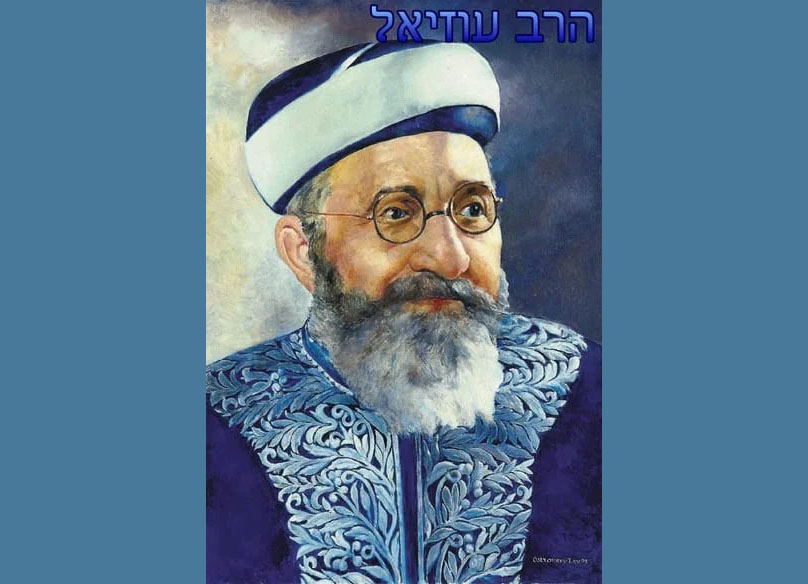
Sephardic Torah from the Holy Land | Rav Uziel’s New Year’s Resolution

When is the “New Year” celebrated in Israel? According to several polls asking Israelis which “New Year” they celebrated – “Rosh Hashanah” or “December 31” – the overwhelming answer was “Rosh Hashanah.” Whether in the synagogue, at home, or a picnic at the beach, Rosh Hashanah is for most Israelis the “Israeli New Year.”

Having been a student, congregational rabbi and teacher my entire life, I always connected to Rosh Hashanah as the beginning of “my year.” In school or in synagogue life, the year begins in the fall, lasts through June, then there’s summer. I never connected to beginning a year “in the middle of a year” that already begun!

Now that I live in Israel, where the transition from December 31 to January 1 happens without a ball dropping in Dizengoff Center, do I even care about this New Year?

The answer is yes, because the one nice thing about January 1st is the idea of a “New Year’s Resolution.” For whatever reason, I’ve never associated Rosh Hashanah with New Year’s Resolutions, so I’ve always looked at January 1st as the opportunity to “start fresh” or “restart.”

Does living in Israel impact how I now view “New Year’s Resolutions”? Definitely. I love Israel – its people, its cafes, its street culture, its literature, its music. I love the spirit here. In Randy Newman’s lyrics about my former abode, “aint nothing like it nowhere.”

But I despise Israel’s divisive politics – those in the knesset, in the religious world, and especially the continued “ethnic identity politics” that politicians and rabbis use and abuse. I hate all of that as much as I love everything else here.

So as an Israeli who is also a rabbi and works in the public sphere of Jewish life in this country, my New Year’s Resolution for 2025 comes courtesy of my rabbinic role model and inspiration, Israel’s first Sephardic Chief Rabbi – Rav Benzion Meir Hai Uziel.

In 1953, Rav Uziel composed a spiritual will whose words ring more powerfully today than when he wrote them. This section of his document is my 2025 New Year’s Resolution, my first-ever as a permanent resident of Israel:

“Preserve with absolute care the peace of our nation and of our state – ‘And you shall love truth and peace’ (Zechariah 8:19) — because disputes and divisiveness are our most dangerous enemies. By contrast, peace and unity are the eternal foundations for the national sustenance of the House of Israel. Therefore, remove all causes of divisiveness and disputes from our camp and our state, and place in their stead all factors that will lead to peace and unity amongst us.”

Whether or not Israelis celebrate the secular New Year, this is a resolution that this entire country must adopt.

Shabbat Shalom


Rabbi Daniel Bouskila is the international director of the Sephardic Educational Center.

Sephardic Torah from the Holy Land | Rav Uziel’s New Year’s Resolution Read More »

Two Israelis Injured in New Orleans Truck Attack, Israel Foreign Minister Confirms

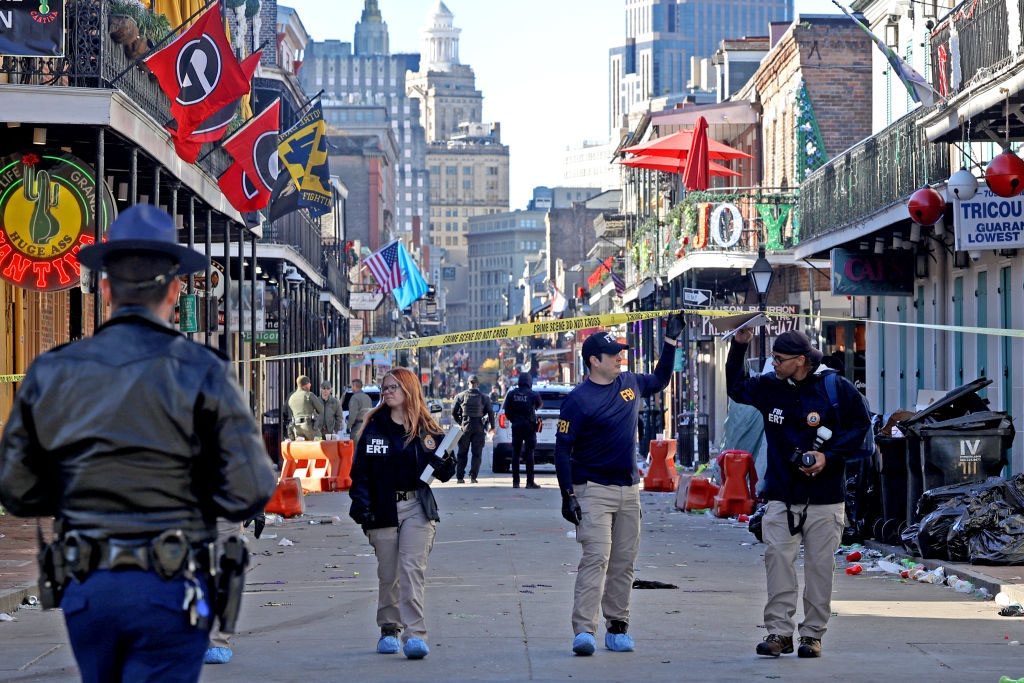
At least 15 people were killed and over 30 injured in a New Year’s Day truck attack in New Orleans on Wednesday. Among the injured are two Israeli citizens.

“Wishing a swift recovery to the two injured Israeli citizens and all the wounded,” Israeli Minister of Foreign Affairs Gideon Sa’ar wrote on X. “I instructed Israel’s Consul General in Houston to immediately deploy a representative to the scene. Terror has no place in our world. Israel stands in solidarity with New Orleans and the United States.”

Terror has no place in our world. Israel stands in solidarity with New Orleans and the United States.” – Israeli Minister  of Foreign Affairs Gideon Sa’ar

No further details were available as of press time about the two Israelis who were injured. Livia Link-Raviv, Consul General of Israel to the Southwest in Houston, was not available for comment.

The Federal Bureau of Investigation said that the attack occurred at approximately 3:15 a.m. Central Standard Time, when 42-year-old Shamsud-Din Jabbar drove a white Ford F-150 Lightning EV pickup truck into a crowd of people gathered in New Orleans’ French Quarter on Bourbon Street for New Year’s celebrations.

“After hitting the crowd, [the subject] exited the vehicle and fired upon local law enforcement,” the FBI statement said. “Law enforcement returned fire, and the subject was pronounced deceased at the scene. Two law enforcement officers were injured and transported to a local hospital.”

Eyewitnesses said the streets were packed with hundreds of revelers and that Jabbar’s path was unobstructed as he plowed into the victims. Witnesses told NBC News that at least six of the deceased appeared to have been killed instantly.

Blocks away from where the attack in New Orleans occurred,  nearly 70,000 football fans were expected to attend the Caesar’s Superdome Wednesday evening for the Sugar Bowl game between the University of Georgia and University of Notre Dame. The game has been postponed until Thursday, January 2nd. Super Bowl LIX is also set to take place in the same stadium on February 9th.

The FBI said that Jabbar was a U.S. citizen from Texas and that the truck “appears to have been rented.” A flag representing the Islamic State of Iraq and Syria (ISIS) was found on the truck. The FBI is “working to determine the subject’s potential associations and affiliations with terrorist organizations.”

Jabbar was born in the U.S. in 1983 and served over a decade in the U.S. Army on active duty from 2007-2015, which included a deployment to Afghanistan from February 2009-January 2010. He served as reservist until 2020, and achieved the rank of staff sergeant. He graduated from Beaumont, Texas Central High School in 2001, according to CBS Affiliate KFDM news.

At 7:00 p.m. EST, President Joe Biden spoke about the attack in New Orleans, saying that the situation is fluid and that no one should jump to conclusions as law enforcement and the intelligence community “look for any connections, associations or co-conspirators.”

The President also addressed another truck incident today — a Tesla Cybertruck explosion that took place outside the Trump International Hotel in Las Vegas.

“We’re tracking the explosion of a Cybertruck outside the Trump Hotel in Las Vegas” Biden said, adding that authorities are “investigating this as well, including whether there’s any possible connection with the attack in New Orleans.”

ABC News reported that “multiple law enforcement sources” said that “the Cybertruck that exploded in Las Vegas was rented on Turo — the same app sources said was used to rent the pickup truck used in the deadly attack in New Orleans.”

Clark County Sheriffs in Nevada said that the Cybertruck was rented in Colorado and arrived in Las Vegas at about 7:30 a.m. on Wednesday. One person — the driver inside the truck — was killed in the Las Vegas explosion and seven  people were injured; all currently in stable condition.

“New Orleans is a place unlike any other place in the world,” Biden said at the end of his remarks. “It’s a city full of charm and joy. So many people around the world love New Orleans, because of its history, its culture and above all its people. So I know, although this person committed a terrible assault on the city, the spirit of New Orleans will never, never, never be defeated. It always will shine forth. We’ve seen that time and time again throughout its history.”

Two Israelis Injured in New Orleans Truck Attack, Israel Foreign Minister Confirms Read More »

Ruth Kennison: The Chocolate Project, Bean-to-Bar and Dark Chocolate Truffles

Honey represents a sweet Jewish New Year! Why not kick off the calendar year by indulging in chocolate. Just make sure it’s the good kind.

“When you’re using really good chocolate, it just elevates everything,” chocolatier and chocolate educator Ruth Kennison told The Journal.

Kennison, who is based in Los Angeles, has turned the love of chocolate she had growing up into her fourth career.

“I remember on my 16th birthday, every guest brought me a box of Godiva chocolate,” Kennison said. “No one told them to; it was just a known fact that that’s what I wanted was chocolate.”

After several careers and lots of traveling, Kennison and her husband decided to kind of settle down. When she became pregnant, Kennison took a pastry certification program and became a pastry chef.

“My good friend was opening a cooking school … I’d been teaching pastry making with her, and she saw I was a very good teacher,” Kennison said. “She said [to] choose one thing and become an expert at it.”

The answer was obvious: chocolate. Kennison went on a deep dive that included French pastry school and The Chocolate Academy. A trip to Paris led to an origin trip to Mexico, where Kennison met farmers, saw cacao trees and learned how chocolate was processed from bean to bar.

“I thought I’d never had any artistic bone in my body; I was an organizer and a production assistant and all sorts of things,” she said. “And I realized, this is this form of art that combines food and chocolate and art.”

She returned to Los Angeles and decided to become a chocolate educator, which includes teaching bean-to-bar chocolate making.

“Chocolate comes from a fruit [that] grows only 10 to 20 degrees above and below the equator … so it grows in West Africa, Asia, Central America, South America and Mexico.,” she said. “When you open it, [the] white stuff is fruit and it tastes like lychee, and then inside of it are the little cocoa beans that need to be fermented to be made into chocolate.”

Thanks to the craft chocolate or bean-to-bar movement, Kennison explained that there are fewer steps between the farmers and the makers. The price may be a bit higher, but you can taste the difference.

“Chocolate makers are buying much higher quality cacao, paying the farmers more … and they are roasting the beans very, very gently,” she said. “Industrial chocolate makers burn the cacao and they add things like vanillin, which is … a chemical that imitates vanilla to hide notes of bad chocolate.

“Bean-to-bar makers aren’t even adding vanilla because they’re just roasting the beans very low and slow, so you’re getting the pure natural flavors of the bean, similar to wine; and when that batch of cacao goes away, you’ll never have that exact bar again.”

Kennison does chocolate tastings the way sommeliers do wine tastings.

“My goal is to make people that are chocolate consumers and more educated about their chocolate,” she said. “I really want people to read packages and be aware; ask questions of their grocers, like, ‘Where is this chocolate from?’ It will change the whole supply chain.”

Kennison noted that while kosher chocolate has a reputation for being not so great, there are places, such as Letterpress in Los Angeles, which have wonderful bean-to-bar kosher chocolate.

Once you have quality chocolate, there are plenty of things you can make. Kennison likes to use all parts of the cacao, which includes the cocoa nibs, which she said are crunchy, nutty and bitter. It’s the “good stuff.”

For instance, Kennison loves vanilla soft serve ice cream with homemade caramel sauce, cocoa nibs and sea salt. She also makes double chocolate chip cookies, and includes the cocoa nib for a little crunch.

Chocolate truffles, she explained, are one of the simplest things to make. They have only three ingredients – chocolate, cream and butter – and you can add flavors to them in different ways.

“It can be a coffee chocolate truffle by steeping coffee in your cream,” she said. “I just made a London fog truffle with Earl gray and vanilla.”

Kennison’s dark chocolate truffle recipe is below.

“Another recipe I love is something Jose Andres once told me to make,” she said. “Take a baguette, cut it into rounds and [put] a very good piece of dark chocolate [on top]; put it so quickly in the broiler that it melts, but [is] still holding its shape, and then put the  best olive oil possible, drizzled, and then also some salt on it.”

Some of the best Jewish treats are made with chocolate. And a lot revolve around Passover, such as flourless chocolate. You can also make chocolate macaroons or a coconut macaroon, where you dip the bottom of it in chocolate.

“I make the matzah crack every year,” she said. “I make a homemade caramel and then throw tempered chocolate on  … and then sprinkle it with all sorts of nuts and cocoa nibs; don’t forget your cocoa nibs!”

Go to Chocolate-project.com to learn more about Ruth Kennison and her upcoming chocolate-centric classes and events, including ones at The Gourmandise School in Santa Monica. Follow @ChocProject on Instagram and Facebook.

For the full conversation, listen to the podcast:

Dark Chocolate Truffles

8 ounces of high quality dark chocolate (look for Valrhona, Tcho or Republica del Cacao), chopped

½ cup of heavy cream

1 Tbsp (13 grams) room temperature butter, cut into small pieces,

Pinch of Maldon sea salt

In a small saucepan bring the heavy cream to a boil and turn off.

Place chopped chocolate in a medium sized bowl, pour the heavy cream over the chopped chocolate.

Wait 1 minute and then whisk the cream into the chocolate until it creates a shiny ganache. Whisk in the butter and salt.

Let chocolate ganache set overnight at room temperature.

Roll the ganache into round truffles then roll them in your favorite topping! Try cocoa powder or crushed nuts.

For optional flavors: Steep an ingredient (like coffee or tea) into the heavy cream, remove and follow the recipe.


Debra Eckerling is a writer for the Jewish Journal and the host of “Taste Buds with Deb.Subscribe on YouTube or your favorite podcast platform. Email Debra: tastebuds@jewishjournal.com.

Ruth Kennison: The Chocolate Project, Bean-to-Bar and Dark Chocolate Truffles Read More »