fbpx

September 19, 2024

The Straight Path – a poem for Parsha Ki Tavo

And it will be, if you do not obey the Lord, your God, to observe to fulfill all His commandments and statutes which I am commanding you this day, that all these curses will come upon you and overtake you. ~ Deuteronomy 28:15

When I was there
when half of us were
up one mountain

shouting blessings
and the other half
up another shouting curses

I can’t remember which one
I was standing closest to.
I can hear them both

every time I put my ear
to a sea shell or
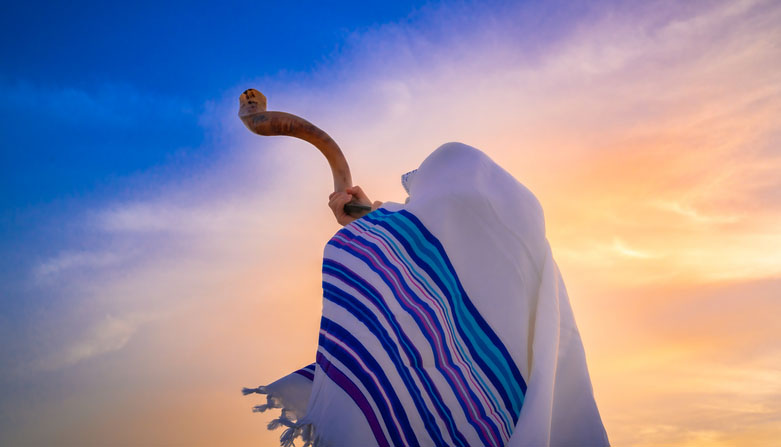
when the shofar blows.

Not warnings to be
good or bad, but the
consequences of

which one we choose.
The bad far outnumber
the good. This is the

Biblical equivalent of
scaring us straight.
The last thing you want

is to be eaten by birds.
Trust me on this.
Those little dinosaurs

are waiting for their
chance to take it all back.
So as tempted as you may be

to go left or right
it is the straight path
which keeps you at the table.

It is the straight path
which keeps the bread
in your kneading bowl

from being cursed.
It is the straight path
which keeps you from

confusion, illness, insanity,
It is the straight path
which keeps the worms

from devouring your grapes,
which keeps the rain
from turning into dust.

It goes on and on.
Stay on the straight path
my friends. It may be more

narrow, but it will forever
keep you from returning to
the narrow place.


Rick Lupert, a poet, songleader and graphic designer, is the author of 28 books including “God Wrestler: A Poem for Every Torah Portion.” Find him online at www.JewishPoetry.net

The Straight Path – a poem for Parsha Ki Tavo Read More »

Etrog: The Heart of Sukkot Unites Farmers and Volunteers on the Gaza Border

The life of a farmer is never easy. They are constantly at the mercy of Mother Nature. Will it rain? Will high temperatures ruin the crops? Can they keep insects away? In Israel, however, farming is even more challenging, especially for those living near the Gaza border, where they face not only the elements, but also neighbors who literally want to kill them.

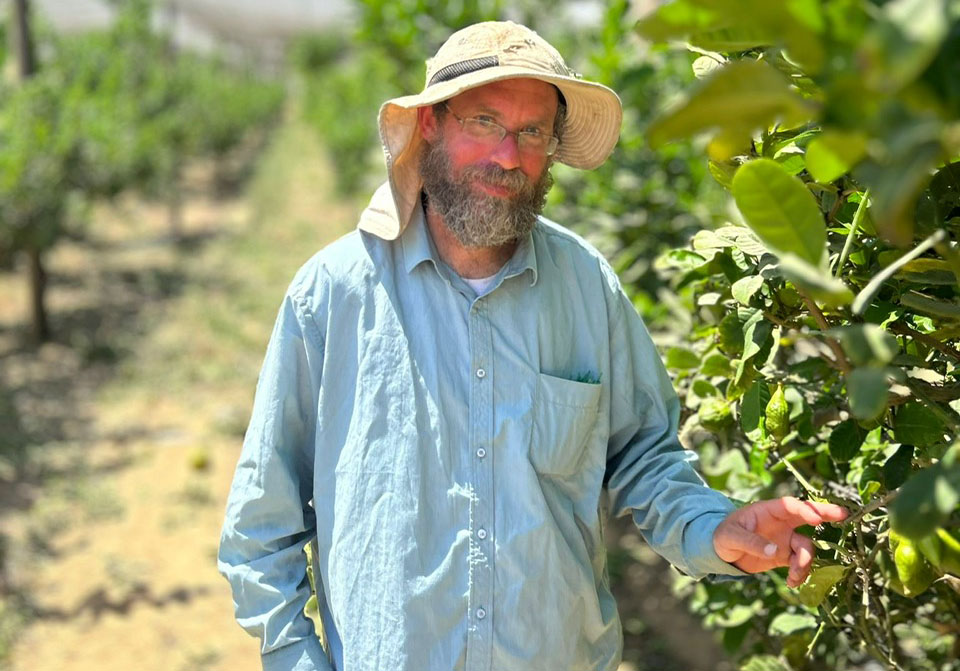
Alon Gotliv, a farmer near Kerem Shalom, a kibbutz located by the borders of the Gaza Strip, Israel and Egypt, experienced this danger firsthand. On Oct. 7, one of his workers was murdered by Hamas. Another worker, a man from Thailand, survived by hiding in a greenhouse.

“We found him after two days. He was completely covered in red tomato sauce,” Gotliv recalled. After being rescued and cleaned up, the worker immediately left Israel, joining other Thai laborers who returned to Thailand.

“They all came back after two to three months, bit by bit. Every 20 days, another worker came back, but in the meantime, we needed workers, and there were none,” Gotliv said.

Gotliv farms citrons, clementines and avocados on 50 acres, producing about 70,000 citrons annually. For the first few weeks following the attack, no one was allowed to return to the fields. When the restrictions were lifted, Gotliv, like many other farmers, found himself without workers. But something remarkable happened: People from across Israel volunteered to help. They weren’t experienced farmhands — they were doctors, lawyers, teachers, engineers, beauty queens — people from all walks of life.

“It was incredible. I had never met these people, but they came from all over Israel,” Gotliv said. “One volunteer, a senior cardiologist, came to pick etrogs (citrons) and got all scratched up because the tree has very sharp thorns. The volunteers were a tremendous help, but they weren’t skilled workers. One tried to prune a tree and accidentally cut it down entirely. Still, I was deeply grateful. They saved me.”

“It was incredible. I had never met these people, but they came from all over Israel.” – Alon Gotliv

Once the workers from Thailand returned, Gotliv had to move quickly to prepare his produce for shipment. To support him and other farmers like him, Rabbi Mickey Katzburg, founder of The World Center for Jewish Education, launched the Chessed Etrog Project.

According to their website, “Each year, we select a deserving cause to receive the proceeds of our project. We handle the marketing and logistics, allowing the recipient to continue their hard work of serving the community. This year, we are proud to support the farmers of the Gaza Periphery who have been severely impacted by the events of this past year.”

Rabbi Katzburg added, “We wanted to offer added value. We reached out to Jewish organizations in the USA and the U.K., inviting them to join the project. All funds collected go directly to benefit the selected cause.”

The first project provided food for children. Another helped families forced to evacuate their homes after the war. Early in the year, the organization approached Gotliv and invited him to participate in their current initiative. They have since contacted synagogues, Jewish schools, JCCs and Jewish organizations, encouraging them to purchase citrons from Israel. So far, they’ve sold 5,000 in the U.S., but they hope to sell many more.

In the San Fernando Valley, Chani Saelman helps with local operations and connects buyers with the project. Individuals are also welcome to purchase citrons to use in their sukkah.

The citron (etrog) is one of the four species used during Sukkot, along with the myrtle (hadas), tall palm (lulav), and willow (aravah). There are many interpretations of why these specific species were chosen. One popular explanation is that they represent different parts of the human body: the palm symbolizes the spine, the myrtle the eyes, the willow the lips and the citron the heart. By bringing them together, worshippers demonstrate their intention to unite all parts of themselves in the service of God.

The etrog, which has a lemony taste and fragrance, represents a pious and learned Jew who combines knowledge with good deeds. The lulav, which has a pleasant taste but no fragrance, symbolizes someone who studies Torah but is less active in performing good deeds. The myrtle, with its pleasant fragrance but lack of taste, represents those who do good deeds but do not engage in Torah study. Finally, the willow, lacking both taste and fragrance, symbolizes those who neither study Torah nor perform good deeds.

“There’s something special about the four species,” said Gotliv. “This project gives us strength and an opportunity not only to fulfill a mitzvah, a good deed, but also to unite us as a community. What I witnessed in the months after Oct. 7 was so heartwarming. I will be forever grateful for all those who came to help and all those Jews abroad who purchase our citrons and participate in the Chessed Etrog Project.”

To order citrons and help Israeli farmers, visit

https://jewisheducation.net/chessed-etrog.

Etrog jam

So, what do you do with the citron after Sukkot? There are many things you can make usingcitron, from citron tea to candies.

Here is a recipe for Citron Jam:

Materials:

2 citrons cut into cubes

2 cinnamon sticks

2 star anise

14oz of sugar

Preparation:

Put the citrons in a pot with boiling water.

Bring to a boil and filter about seven times.

Then return the citrons to the pot, add the sugar, cinnamon and anise and cook over medium heat until the sugar dissolves.

Lower the heat and cook for about an hour and a half on low heat.

Allow your preserve to cool and transfer it some glass jars and keep refrigerated.

Etrog: The Heart of Sukkot Unites Farmers and Volunteers on the Gaza Border Read More »

The Shofar Validates God as the Jews’ Constitutional Monarch

Adom Olam, the Ruler of the universe,
recognized as constitutional monarch of all Jews,
since with a shofar we are able to converse
with Him, and wordlessly express our loyal views,
as Abraham did famously on Mount Moriah
when offering instead of Isaac a wild ram,
of God’s mysterious demand not a denier;
He’s God whose name means “I am who I am.”
This is His motto, one He hopes each loyal Jewish subject understands,
not only as what defines Him, but a point of view that He from every Jew demands.

The Adon Olam, a song by Ibn Gabirol with which many prayer services conclude, implies that God is a constitutional monarch, an inference  Meir Soloveichik implied but did not express explicitly  on 9/5/24 in his podcast, “Coronation Night,” in which, after informing his audience that the first night of Rosh Hashanah is called by some Jews Koronatzie Nacht, Coronation Night, he recalled a midrash in which Rabbi Pinhas states that the angel who is appointed to coronate God takes the prayers of all Jewish communities throughout the world and weaves them into a crown that the angel places on God’s head. Rabbi Meir added that his uncle, Rabbi Joseph Soloveitchik, used to recall how in his childhood his hasidic teacher taught him: “Do you know who crowns God on Koronatzie Nacht?  Yankel the tailor, Berel the shoemaker and Zalman the water carrier.”

Here is the first verse of the Adon Olam

אֲדוֹן עוֹלָם אֲשֶׁר מָלַךְ

בְּטֶֽרֶם כָּל יְצִיר נִבְרָא:

לְעֵת נַעֲשָׂה בְחֶפְצוֹ כֹּל,

  אֲזַי מֶֽלֶךְ שְׁמוֹ נִקְרָא:

This is my translation:

Regarding the on Olam, Master of the Universe, Who reigned

before any creature was created,

there came a time this was confirmed by universal assent:

that is when His Name was proclaimed King.

Exod. 3:14 states:

יד  וַיֹּאמֶר אֱלֹהִים אֶל-מֹשֶׁה, אֶהְיֶה אֲשֶׁר אֶהְיֶה; וַיֹּאמֶר, כֹּה תֹאמַר לִבְנֵי יִשְׂרָאֵל, אֶהְיֶה, שְׁלָחַנִי אֲלֵיכֶם.  14 And God said unto Moses: ‘I AM THAT I AM’; and He said: ‘Thus shalt thou say unto the children of Israel: I AM hath sent me unto you.’

In 1 Sam. 15:29  Samuel says to Saul, explaining to him why God replaces him with David:

וְגַם֙ נֵ֣צַח יִשְׂרָאֵ֔ל לֹ֥א יְשַׁקֵּ֖ר וְלֹ֣א יִנָּחֵ֑ם כִּ֣י לֹ֥א אָדָ֛ם ה֖וּא לְהִנָּחֵֽם׃

Moreover, Netzah. the Glory, of Israel does not deceive or change His mind, for He is not human that He should change His mind.”

The term נֵ֣צַח יִשְׂרָאֵ֔ל, Netzah Yisrael, describes God as a constitutional monarch who changes His mind, contrary to what is stated  in the verse that precedes this.

וַיֹּ֤אמֶר אֵלָיו֙ שְׁמוּאֵ֔ל קָרַ֨ע יְהֹוָ֜ה אֶֽת־מַמְלְכ֧וּת יִשְׂרָאֵ֛ל מֵעָלֶ֖יךָ הַיּ֑וֹם וּנְתָנָ֕הּ לְרֵעֲךָ֖ הַטּ֥וֹב מִמֶּֽךָּ׃ {ס}

And Samuel said to him, “The LORD has this day torn the kingship over Israel away from you and has given it to another who is worthier than you.

The counterintuitive nature of the decision contradicts the heavenly decision of God in the story of the debate regarding the purity of the oven of Akhnai, well summarized in Wikipedia but more fully recorded  in the Talmud in Baba Metsia 59b.:

עָמַד רַבִּי יְהוֹשֻׁעַ עַל רַגְלָיו וְאָמַר: ״לֹא בַשָּׁמַיִם הִיא!״ מַאי ״לֹא בַּשָּׁמַיִם הִיא״? אָמַר רַבִּי יִרְמְיָה: שֶׁכְּבָר נִתְּנָה תּוֹרָה מֵהַר סִינַי, אֵין אָנוּ מַשְׁגִּיחִין בְּבַת קוֹל, שֶׁכְּבָר כָּתַבְתָּ בְּהַר סִינַי בַּתּוֹרָה ״אַחֲרֵי רַבִּים לְהַטֹּת״. אַשְׁכְּחֵיהּ רַבִּי נָתָן לְאֵלִיָּהוּ, אֲמַר לֵיהּ: מַאי עָבֵיד קוּדְשָׁא בְּרִיךְ הוּא בְּהַהִיא שַׁעְתָּא? אֲמַר לֵיהּ: קָא חָיֵיךְ וְאָמַר, ״נִצְּחוּנִי בָּנַי! נִצְּחוּנִי בָּנַי!״

Rabbi Yehoshua stood on his feet and said: It is written: “It is not in heaven” (Deuteronomy 30:12). The Gemara asks: What is the relevance of the phrase “It is not in heaven” in this context? Rabbi Yirmeya says: Since the Torah was already given at Mount Sinai, we do not regard a Divine Voice, as You already wrote at Mount Sinai, in the Torah: “After a majority to incline” (Exodus 23:2). Since the majority of Rabbis disagreed with Rabbi Eliezer’s opinion, the halakha is not ruled in accordance with his opinion. The Gemara relates: Years after, Rabbi Natan encountered Elijah the prophet and said to him: What did the Holy One, Blessed be He, do at that time, when Rabbi Yehoshua issued his declaration? Elijah said to him: The Holy One, Blessed be He, smiled and said: My children have triumphed over Me; My children have triumphed over Me.

The words נִצְּחוּנִי בָּנַי! נִצְּחוּנִי בָּנַי imply that God Himself is a constitutional monarch, His title נֵ֣צַח יִשְׂרָאֵ֔ל   not only denoting “Glory of Israel,” but “The God over whose decisions the Israelites may triumph as that of Rabbi Yehoshua does over the opinion expressed by Rabbi Eliezer, since God as Netzah Yisrael  is a constitutional monarch.

How incredible it was of Rabbi Yehuda Leib Maimon (1875-1962) to introduce into in the statement of the Independence of the State of Israel a reference to God, describing Him נֵ֣צַח יִשְׂרָאֵ֔ל, Netzah Yisrael, meaning not only “Glory of God” but “Constitutional Monarch of Israel,” the term used by Samuel  in 1 Sam. 15/29, describing  God when He changes His mind by appointing David to replace Saul. He implies that though He seems to be changing His mind, He is actually acting with divine right as Israel’s constitutional monarch, a right that true kings of Israel like David share with God in imitatio dei.


Gershon Hepner is a poet who has written over 25,000 poems on subjects ranging from music to literature, politics to Torah. He grew up in England and moved to Los Angeles in 1976. Using his varied interests and experiences, he has authored dozens of papers in medical and academic journals, and authored “Legal Friction: Law, Narrative, and Identity Politics in Biblical Israel.” He can be reached at gershonhepner@gmail.com.

The Shofar Validates God as the Jews’ Constitutional Monarch Read More »

A Bisl Torah – Sounds of the Shofar

It was Erev Rosh Hashana in Auschwitz and Birkenau. 1944. Rav Tzvi Hirsch Meisels and his son just arrived to the death camp.

Somehow, the Rav smuggled a shofar into the barracks. His son begged him not to blow the shofar, knowing the sounds would alert the guards and surely seal his father’s fate. But the Rav looked at the prisoners, condemned boys going to the gas chambers. He said, “What will happen, only God knows.” He blew 100 blasts of the shofar and the boys were thrilled. They blessed the Rav with a long life.

The next day, the boys were taken to the gas chambers. Somehow, miraculously, the Rav survived.

Even though the boys knew death was imminent, the shofar gave them hope. A few moments tethering them to a world outside the horrors of Auschwitz. Often, we liken the shofar to an alarm clock. But the shofar is also a call to remember. Recalling that which grounds us, remembering the values that define our souls and giving us inspiration from the past to put one foot in front of the other. A loving nudge from our ancestors sharing, “This time may be hard for you. It was for us as well. We are with you in your pain. Be comforted. We are with you as you seek a brighter path forward.”

This year, may the sounds of the shofar strengthen you, enabling the voices of the past to bolster your spirit.

Together, may we walk into a year of renewed faith and an abundance of blessing.


Rabbi Nicole Guzik is senior rabbi at Sinai Temple. She can be reached at her Facebook page at Rabbi Nicole Guzik or on Instagram @rabbiguzik. For more writings, visit Rabbi Guzik’s blog section from Sinai Temple’s website.

A Bisl Torah – Sounds of the Shofar Read More »

A Moment in Time: “Making Jewish Choices from Random Daily Stuff”

Dear all,

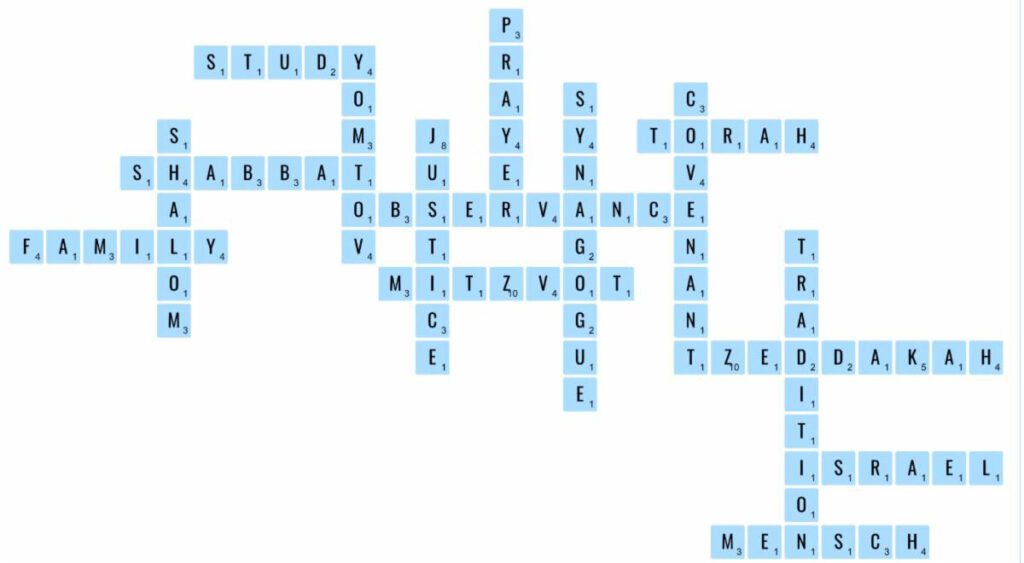
I’ve been an active Scrabble player for years now, and I enjoy how random tiles can transform into point accumulating words. As I was playing recently, I thought about how Jewish life parallels my Scrabble board.

Each day comes with new opportunities. How will we manage our time? What choices will we make? How can the simplest of interactions transform into a Jewish value?

Last week, a child walked into Temple Akiba with a five dollar bill. “Rabbi,” she said, “I found this on the ground, and I wanted to place it in the Tzeddakah box.”

That’s how we find a Jewish value from random daily stuff.

This week, a Bar Mitzvah student told me his football jersey was number 54. While the number was arbitrarily assigned, he recognized it as “triple chai” (18/ life).

That’s how we find a Jewish value from random daily stuff.

What value will you find this week? What meaning will you seek out, creating a holy moment in time out of an ordinary world?

The tiles of life are all there. It’s in your hand to put them into a meaningful order!

With love and shalom,

Rabbi Zach Shapiro

A Moment in Time: “Making Jewish Choices from Random Daily Stuff” Read More »

Print Issue: The Case Against Divestment | Sep 20, 2024

CLICK HERE FOR FULLSCREEN VERSION

Print Issue: The Case Against Divestment | Sep 20, 2024 Read More »

Sephardic Torah from the Holy Land | A Global Day of Judgment

On May 23, 1960, Israeli Prime Minister David Ben Gurion convened a secret meeting of his cabinet ministers, and made the following dramatic announcement:

“Not long ago the [Israeli] security services found one of the great Nazi war criminals – Adolf Eichmann, who was responsible along with other Nazi leaders for what they called the final solution to the Jewish problem, that is, the extermination of the six million Jews of Europe. Adolf Eichmann is already under arrest in Israel and will soon face trial in Israel, in keeping with the laws governing justice for the Nazis and their helpers.”

For the very first time, a Nazi would stand trial on Jewish soil, tried by the legal system of a sovereign Jewish state. This was a moment of reckoning for the Jewish people, when the whole world would stand witness to a Nazi being tried in Jerusalem.

But fifteen years earlier, on September 7, 1945, Rabbi Uziel called for a Holocaust trial of a different kind. Just one day before the first post-World War II Rosh Hashanah, Rabbi Uziel published an article depicting that year’s Rosh Hashanah as a “global day of judgment for all nations.”

Jewish tradition marks Rosh Hashanah as Yom Ha-Din – Judgment Day – when – on the anniversary of the creation of humanity – God sits in judgment over all of humanity.

What made Rosh Hashanah 1945 different?

“In these past several years, humanity was condemned to the fires, blood and destruction of a terrible world war,” wrote Rabbi Uziel. “Our world was subject to the terrifying threat of an evil and malicious regime, whose tyrannical rule was revealed in all its ugliness and depravity by the concentration camps and crematoria that it left behind for all of the world to see.”

Rabbi Uziel called for a global trial, not with judges in Jerusalem, but with the ultimate “Judge of all of humanity”:

“In the shadow of this destructive world war, all of humanity are now summoned before the Divine throne of justice, trembling in the presence of God on this Day of Judgment.”

What would be the prosecution’s accusation to the nations of the world – to those who murdered six million Jews, to those who collaborated in mass murder, and to those who stood by silently in the face of a systematic genocide?

“Today you stand trial for what you have done, and for what you could have done but did not do.”

From the post-Holocaust Rosh Hashanah in 1945, to the Eichmann Trial, to the post October 7th Rosh Hashanah in 2024 – this accusation still stands.

Shabbat Shalom


Rabbi Daniel Bouskila is the international director of the Sephardic Educational Center.

Sephardic Torah from the Holy Land | A Global Day of Judgment Read More »

Campus Watch September 19, 2024

Cornell Prof Who Called Oct 7 “Exhilarating” Returns to Campus

Cornell University Professor Russell Rickford, who infamously referred to the Oct. 7 massacre as “exhilarating,” has returned to campus.

Rickford had been on voluntary leave ever since he made those comments in October  2023; Rickford subsequently apologized for the remarks. The university told The New York Post that they did not discipline Rickford, but wouldn’t say if the professor was paid while on leave. Joel Malina, Cornell’s vice president of university relations, told the Post that the university didn’t discipline Rickford because his remarks “were made as a private citizen in his free time” and thus were protected as free speech.

Rep. Claudia Tenney (R-N.Y.) sent a letter to Cornell Interim President Michael Kotlikoff expressing her outrage at the university’s decision. “Professor Rickford holds a position within the university that allows him to mold and influence young minds,” Tenney wrote. “This position demands a higher standard of behavior, one that is free from antisemitic rhetoric and vocal support of terrorism. By perpetuating these abhorrent views, Professor Rickford has not only violated his ethical responsibility as an educator, but has also jeopardized the safety of the Jewish community and tarnished Cornell.”

UMich Jewish Student Attacked

A Jewish student at the University of Michigan was assaulted on Sept. 15 after being asked if he was Jewish.

University President Santa Ono said in a statement on Sept. 16, “Over the weekend, one of our students was attacked off campus simply for answering ‘yes’ in response to the question ‘are you Jewish?,’ We strongly condemn and denounce this act of violence and all antisemitic acts. Antisemitism is in direct conflict with the university’s deeply held values of safety, respect and inclusion and has no place within our community.” He added that Ann Arbor police are investigating the matter.

UVA Rejects Calls to Divest from Israel

The University of Virginia UVA Investment Management Company (UVIMCO) announced on Sept. 13 that they will not be divesting from companies that conduct business with Israel.

In February, a nonbinding student referendum calling for the university to divest from Israel passed with 67.87% of the vote, according to The Daily Progress. UVIMCO Chief Operating Officer Kristina Alimard said during a Board of Visitors meeting on Sept. 13, “We are not divesting from any investments in response to the student referendum that was passed earlier this year. Our primary objective is to generate strong adjusted returns for the University of Virginia. We do not utilize divestment or negative screens for nonfinancial reasons.”

Anti-Israel Protesters Disrupt Jewish Speakers During UW Board of Regents Meeting on Antisemitism

Anti-Israel protesters disrupted Jewish leaders who were speaking during a University of Washington (UW) Board of Regents meeting on Sept. 12, prompting the meeting to end early.

The Washington Examiner reported that “approximately a dozen anti-Israel speakers made uninterrupted arguments for why they feel the school should divest from companies associated with Israel” but five Jewish speakers were subjected to “jeers and chants” and the sixth Jewish speaker didn’t get a chance to speak. Board Chairman David Zeeck adjourned the meeting early after issuing multiple warnings to the disrupter; campus police escorted the Jewish speakers, regents and the UW president out of the meeting. 

“We were talking about harassment that Jewish students have experienced [on campus], and that is exactly what happened in the room,” Jewish Federation of Greater Seattle CEO Solly Kane told the Examiner. “We were repeatedly interrupted. We were not given the opportunity to speak without disruption, and I think that that speaks to the problem on the campus.” Kane also claimed that Zeeck had said that the protesters would be removed by campus police if they disrupted the meeting, but his actions didn’t match his statements.

ADL: 477% Increase in Anti-Israel Incidents on Campuses

The Anti-Defamation League (ADL) released a report on Sept. 16 stating that there was a 477% increase in anti-Israel incidents on college campuses in the United States from June 2023-May 2024.

The ADL recorded 2,087 incidents in total, the highest amount that the ADL has ever documented; the figure included protests, assaults, vandalism and divestment resolutions. The Jewish organization also noted that they didn’t include anti-Israel panels, speeches, webinars and the like as they have previous years because “these numbers were exceedingly high” in the past academic year. The campus with the highest number of anti-Israel incidents was Columbia University at 52 incidents, followed by the University of Michigan with 37, Harvard University at and UC Berkeley at 36 each and UCLA at 35.

“Since the Hamas-led Oct. 7 attack on Israel, the anti-Israel movement’s relentless harassment, vandalism, intimidations and violent physical assaults go way beyond the peaceful voicing of a political opinion,” ADL CEO Jonathan Greenblatt said in a statement. “Administrators and faculty need to do much better this year to ensure a safe and truly inclusive environment for all students, regardless of religion, nationality or political views. They need to start now.”

Campus Watch September 19, 2024 Read More »

Rabbis of LA | It’s Been a Relief for Rabbi Reznick to Come Home

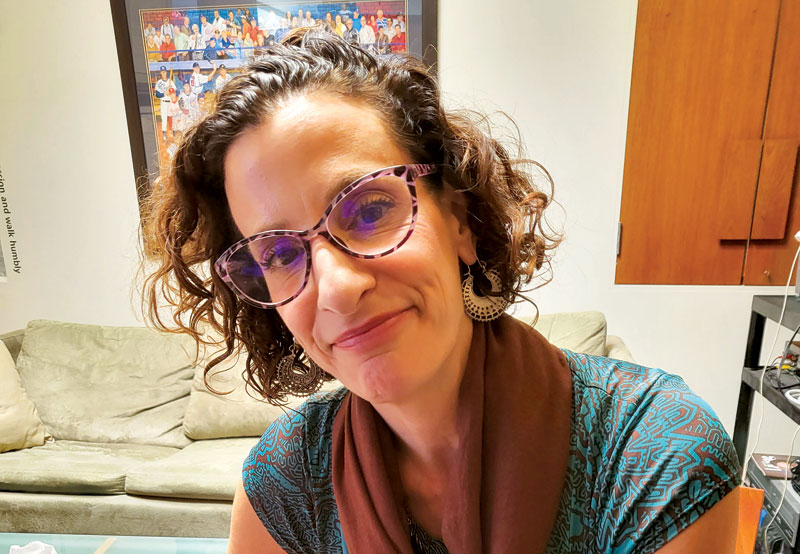
When she stepped up to the pulpit of Congregation Kol Ami on July 1, Rabbi Lindy Reznick, “a big-city girl” who spent the last five years in small-town Redlands, was sure this is where she belonged.

In her second-story office in West Hollywood, she explained why: “I feel much more comfortable here, being myself, not having to choose my words quite as carefully. That is a comfort and a relief.”

She made the 86-mile move from Redlands eagerly. “I am an Angeleno,” she said. “Part of it is coming home to a familiar Jewish community, knowing some of the players and institutions. This doesn’t feel like an adjustment, I know how to live in more than one world.” A graduate of the Institute for Jewish Spiritualities, she studied how mindfulness and meditation can link to Jewish texts. “I always have been someone who has engaged in those worlds. What is most alluring about the Kol Ami community and congregation is the place it has in the history of the LGBTQIA+ and the L.A. Jewish community,” the rabbi said. “Those two things are deeply close to my heart, my own identity. They came together at a perfect time.”

“What is most alluring about the Kol Ami community and congregation is the place it has in the history of the LGBTQIA+ and the L.A. Jewish community. Those two things are deeply close to my heart, my own identity. They came together at a perfect time.”

After spending her youth overcoming childhood disabilities, 16-year-old Lindy was introduced to yoga. “Given my background as a dancer, movement, wellness and understanding how our bodies affect our hearts and minds always has been central to what I do. That is one piece of who I am as a rabbi.” She wants to know peoples’ stories, find out who they are and why they do what they do: “Meeting people authentically, as themselves, being accepting of that, and being someone who is deeply curious about the story.” Rabbi Reznick attributes her curiosity to her background in theater. “Core to the work I do is being able to see someone as they are.”

As a clergyperson who is queer and out, she feels “a responsibility to those who have been hurt by religious institutions, especially in the queer community, to be a safe space for them. 

“As a clergyperson, I should be a safe space for all people.”  And Kol Ami’s location in West Hollywood means “a blended community with an amazing (31-year) history.”

She sees her rabbinate as a “safe space for people who have been shunned by religious institutions because of their identities.” How does she shepherd them to the mainstream? “It’s all about relationships,” she said. “Meeting face-to-face, getting a sense of each other, knowing the beauty of our tradition, showing some difficult texts may not have been intended in the way they are used as weapons.” And you have to “acknowledge the hurt done by religious leaders that perhaps was misappropriated.”

In the rabbi’s view, the real healing work comes in developing a sense of trust, and then being embraced “by this incredibly warm community.” Welcoming is a big part of who she is both as a rabbi and a human being, “It’s about embracing diversity, it’s about justice, about love, about an openness and pushing forward.”

Rabbi Reznick’s first jobs were teaching:  pre-school, Mommy and Me, kindergarten, day school, religious school. “I always have been a Jewish educator,” she said, “and the arts were close and dear to my heart.” But now, the Santa Monica native and mother of two has expanded her focus. “Arts and education have been central pieces of my identity,” she said. “Spiritual wellness also is a core anchor.” She proudly recalls being raised in a family that, while not religious, believed deeply in art, theater and music. She was a performer growing up. “An actress and a dancer,” she said. “I always was in the artistic world. I never was a visual artist, but I always had a deep love for the visual arts. I have done a number of workshops through the visual arts. I believe in art as a process.”

Explaining the distinction between visual and non-visual, she said “like Midrash, it is something we do to express our spirituality, to express our hearts, our souls.” To say it differently, she is “more interested in the process, the healing, the wellness that comes from it rather than the final product.”

As for what led her to the rabbinate, Rabbi Reznick looked back to her “many amazing mentors. I was teaching at the time at Wilshire Boulevard Temple, working with Rabbi Elissa Ben-Naim, when I realized everything I love is in the rabbinate.”

Well, almost everything.

“I also knew I wanted a family,” Rabbi Reznick said. “It wasn’t the easiest life. It took a while for me to believe I could balance all of it. Thank God I did.”

Surveying her office once more, Rabbi Reznick concluded, “I feel like I am home. I feel much more comfortable here, being myself, not having to choose my words quite as carefully. It is a comfort and a relief.”

Fast Takes with Rabbi Reznick

Jewish Journal: What is your next important goal?

Rabbi Reznick: To build a thriving Kol Ami for the next 30 years. To expand Kol Ami’s mission, influence in West Hollywood and the L.A. Jewish community.

J.J.: Your favorite Shabbat meal?

RR: My favorite is a home-cooked meal with a mix of people I love – my children, my friends from inside and outside of the Jewish community – where we can have a beautiful interfaith experience with all kinds of foods and stories.

J.J.  What is your main hobby?

RR: I do yoga. I hike. I love the Peloton. I read voraciously. One of my favorites was written by a spiritual mentor in college who is not Jewish, Dr. Fran Grace, “The Power of Love.”

Rabbis of LA | It’s Been a Relief for Rabbi Reznick to Come Home Read More »

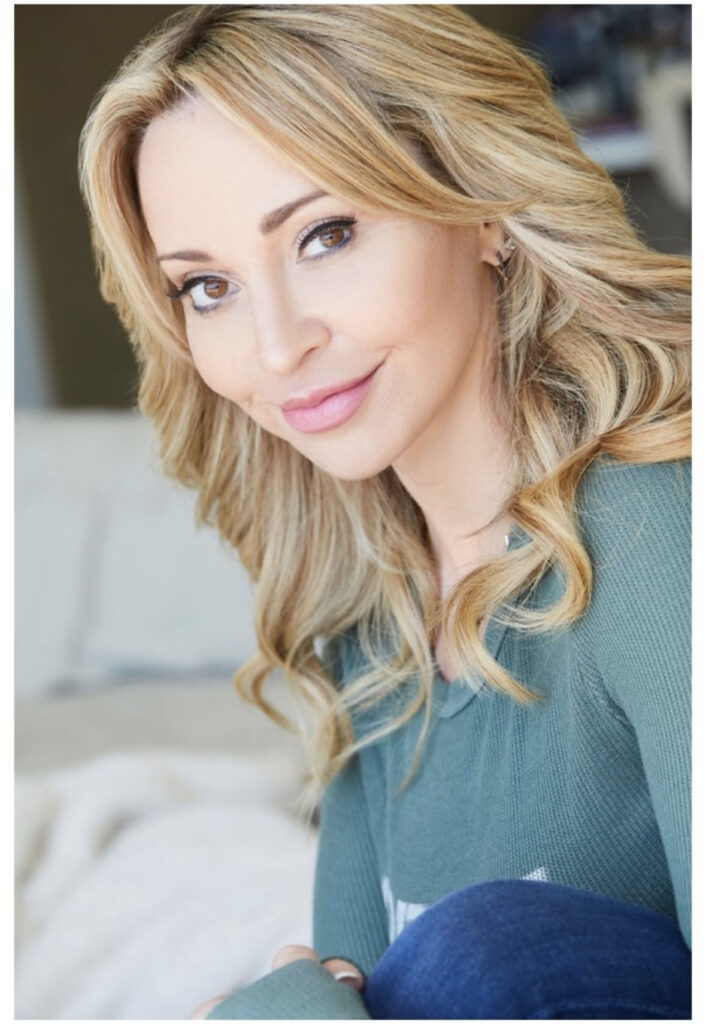
Tara Strong: From Powerpuff Girl to Real-Life Jewish Superhero

Tara Strong, a prolific voice actress who is best known for playing Bubbles on “The Powerpuff Girls,” has always been a proud Jew. Growing up in Toronto, she went to Hebrew school and sang in the children’s choir at her synagogue. 

Before Oct. 7, Strong’s Instagram – where she has over 650,000 followers – was filled with pictures of her meeting fans at Comic Cons across the country, videos of her doing different voices and posts showing her life in Los Angeles. But once that tragic day hit, she knew she couldn’t stay silent; her feed also became pro-Israel and pro-Jewish, and she advocated on behalf of the hostages. 

“Because I have a voice, I need to speak out, even when it’s scary,” said Strong. “My goal is to keep spreading the truth.”

“Because I have a voice, I need to speak out, even when it’s scary.”
– Tara Strong

Strong has kept on supporting her people even as she faced backlash for it. Shortly after Oct. 7, before Israel went into Gaza, she posted on X, “This is only the beginning. They were smart to start with a country people love to hate. This is only the beginning.”  

Her detractors said she was being Islamophobic, and she was panned in some left-leaning media outlets. The creator of a show she was set to work on, “Boxtown,” fired her for her post.

“He said he was a big fan, and I connected him with my agent to get him a SAG waiver,” Strong said. “And then I did a Kickstarter for him to help him raise money for his project. He quoted my post and said, ‘This is a disappointment.’ He told his followers I was saying this about the people of Palestine, but I was talking about Hamas terrorists murdering Israelis. To have my words twisted and made to seem like I don’t have sympathy for the innocent Palestinians was devastating to me.” 

Even though Strong lost the job, she gained support from the Jewish community and pro-Israel people alike. “So many people were saying, ‘You were my childhood, I loved you for so long, and thank you for speaking out,’” she said. “I lost half my family in the Holocaust. Every Jewish person is here because their ancestors survived being hunted.” 

Strong, who wears a Star of David necklace, grew up in a family that was actively involved in their Judaism. Her grandfather was a cantor, and her grandmother ran a catering business inside of Beth Radom Congregation in Toronto, where her mom also worked. “We had a kosher kitchen and kept the traditions, which were very important to us,” she said. “We’d light candles every Friday night and do big Passover seders.  The traditions brought my family together.”

“We’d light candles every Friday night and do big Passover seders.  The traditions brought my family together.”
– Tara Strong

The voice actress sang in the Yiddish theater in the seventh grade, and when she was 13, she landed her first agent. She soon voiced Hello Kitty and worked on projects with Mr. T and Anjelica Huston. When she was 16, she went on the March of the Living and sang on an album that was recorded at Auschwitz-Birkenau concentration camp.  

“I felt so proud to be Jewish on the march,” she said. “Elie Wiesel was with us, and he started to cry. He said it was so nice to see all these young people there.”

Strong moved to L.A. when she was 20 and started racking up credits in animation. Along with her role as Bubbles on “The Powerpuff Girls,” she also played Dil from “Rugrats,” Timmy Turner on “The Fairly OddParents,” Barbara Gordon/Batgirl on “The New Batman Adventures” and Raven on “Teen Titans.” 

She frequently appears at Comic Cons, where she interacts with fans. 

“A lot of people come out to Comic Cons, pull out their Jewish stars from underneath their shirts and say, ‘Am Yisrael Chai,’” she said. “They’re afraid to show their Star of David.”

Strong hopes that by continuing to speak up, she can make the world a safer place not just for Jews, but for everyone. 

“It starts with undoing years of antisemitism and this cycle of hate,” she said. “It takes everybody to do that. I feel like I can’t stop being compelled to help. I want us all to come together and live in peace. That’s the truth.”

Tara Strong: From Powerpuff Girl to Real-Life Jewish Superhero Read More »