fbpx

August 28, 2024

AIPAC Vandalized for Second Time in a Month

AIPAC’s headquarters in Washington, D.C. were vandalized for the second time in a month on the evening of Aug. 25.

According to The Jerusalem Post, Palestine Action US posted a video to Instagram showing the AIPAC building being smeared with week-old dog feces mixed with red paint. The words “F—Israel” and an inverted red triangle, which according to the Anti-Defamation League (ADL) is “a symbol that in certain cases can signify support for violent Palestinian resistance against Israel,” can also be seen on the building in the video.

In the comments section, Palestine Action US shared what they said was an anonymous submission stating that “last night a group of autonomous actors left AIPAC’s D.C. headquarters a message that their racist, genocidal blood money has no place buying U.S. elections. AIPAC just spent more than $25 million to unseat Rep. Cori Bush (D-Mo.) and Rep. Jamaal Bowman (D-N.Y.).” The anonymous submission lauded Bush and Bowman for being “outspoken” in their support for a ceasefire in the ongoing Israel-Hamas war as well as an arms embargo against Israel.

“@AIPAC, your blood money is not welcome buying U.S. elections, and we will not let you silence the voices calling you out for the genocidal, racist, corrupt oppressors that you are,” the post concluded, calling for a “Free Palestine til its backwards” with the inverted red triangle on each side of the sentence.

The Metropolitan Police Department (MPD) issued a statement on Aug. 26 saying that two suspects “intentionally damaged items and spray-painted offensive language onto the façade of the property” at 11:55 p.m. on Aug. 25. The MPD released two photos of the suspects, who appear to be two hooded women. The police are investigating the matter as a potential “hate or bias” crime.

AIPAC spokesman Marshall Wittmann told The Journal that it was the second time the organization’s building was vandalized this month. “We will not be deterred by the illegal actions of these extremists in our efforts to strengthen the U.S.-Israel relationship,” the spokesperson said.

On Aug. 4, the AIPAC headquarters were defaced with the words “F— Israel” spray-painted in red and the police are searching three masked suspects, Jewish Insider reported.

AIPAC Vandalized for Second Time in a Month Read More »

Chef Susan Feniger and Others Are Cooking for Kamala

On Thursday, Aug. 29, 55 chefs – and more than 15,000 foodies – will come together in support of Cooking for Kamala.

The online event, which runs from 5 – 6:30pm PT, is the latest in a series of Zooms designed to inspire and energize supporters and fans of the vice president/Democratic nominee for president Kamala Harris.

“In Jewish families, so much is about sharing special moments around food,” chef Susan Feniger told The Journal.

The second gentleman is Jewish. Plus, it’s known that Harris loves to cook.

“Helping support Kamala in this way feels very Jewish,” Feniger said

Spearheaded by chefs Feniger, Suzanne Goin and Stuart O’Keeffe, and with the support of congressman Eric Swalwell (D- Dublin), Cooking for Kamala will be hosted by Padma Lakshmi and Joel McHale and feature a variety of chefs and Harris-Walz surrogates.

Feniger, Goin and O’Keeffe will demonstrate quick versions of three of Harris’ favorite dishes. This includes Feniger’s Straight From the Coconut Tree Cookies; they’re “sort of macaroon-y,” she said.

Recipe is below.

Feniger had been thinking about doing something revolving around cooking to support Harris, when, the next day, she got a text from someone on Rep. Swalwell’s team. They asked if she’d be interested in putting something like this together. Feniger started working with Goin and O’Keeffe. The response has been amazing. Other Jewish chefs in attendance include Ruth Reichl, Nancy Silverton and Jonathan Waxman.

“What makes these “for Kamala” Zooms so powerful is they are informative,” Feniger said. “And also there is so much enthusiasm.”

The event is free, though people can donate, whether or not they attend.

“People are able to celebrate and be energized with likeminded people,” she said. “To have 15,000, or 20,000 people all on the same page is amazing.”

Learn more and register at bit.ly/signup-cookingforkamala and follow @susanfeniger on Instagram.

Straight From the Coconut Tree Cookies

Makes 20 to 24 cookies

1 cup pecan halves

1 Tbsp unsalted butter, melted

2 ½ cups sweetened shredded coconut

½ cup chopped dried apricots

½ cup chopped semisweet chocolate or chocolate morsels

7 ounces canned sweetened condensed milk

Preheat the oven to 325°F.

Line a cookie sheet with parchment paper, or use a nonstick pan.

Toss the pecans in the melted butter to evenly coat. Spread the nuts on an ungreased baking sheet and bake for 10 to 15 minutes, or until golden and aromatic. Set aside to cool, and then roughly chop. Place the chopped pecans and remaining ingredients in a bowl and mix with a wooden spoon until moistened.

Spoon about 2 tablespoons of batter for each cookie onto the lined cookie sheet and gently flatten to circles of about 2¼ inches in diameter. (These cookies do not spread.)

Bake for 10 minutes or until the coconut turns very pale golden, being careful not to over brown. Transfer to racks to cool.

Chef Susan Feniger and Others Are Cooking for Kamala Read More »

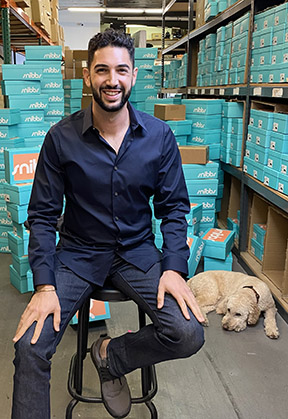
Daniel Shemtob: Snibbs, Hospitality and Matzo Pizza

Hospitality is front and center in everything chef and restaurateur Daniel Shemtob does.

The all-star winner of Food Network’s “The Great Food Truck Race” with The Lime Truck and the chef behind Downtown LA’s Hatch Yakitori, Shemtob is also co-founder of Snibbs, the world’s most comfortable non-slip shoe.

After a painful fall in the kitchen, about two weeks before opening Hatch, Shemtob partnered with renowned orthopedic surgeon Jason Snibbe (LA Lakers, Clippers and The Kardashians) and entrepreneur Haik Zadoyan, his high school best friend, to create Snibbs.

“I herniated and slipped my L5 and L4 disc, which is pretty much the lowest part of your vertebrae,” Shemtob told the Journal. “I’m 23, 24 years old, and I’m watching someone else open my line, which, as a chef, is a very difficult thing to do.”

Shemtob went down a rabbit hole of wondering, ‘Why isn’t anyone making good footwear? Why isn’t there anything that actually speaks to the worker, to the chef?’

Snibbs footwear was born!

“I knew I could make it look cool, but I wanted to make it good for you, which is why I partnered with Dr. Snibbe, who I named the company after,” he said. “There was an element of making it good for you and making you feel good in the footwear.”

It took five years to make the first shoe; two years for the second.

“We had three separate groups of consultants from Nike, Jordan, Adidas,” Shemtob said. “We had two different factories [and] two trips to China to make this shoe that we’re really proud of.”

He added, “I think the element of perfecting the product is the reason why we’ve done so well.”

While there are nuances, whether you are developing a recipe or a great pair of shoes, you start with a product and then you reiterate, perfect, test and reiterate again.

“It took me about two to three years to write the menu for Hatch,” Shemtob said. “It was a labor of love, and there was a lot of making small changes [to sauces and recipes].”

Shemtob added, “The only downside to footwear is you have to wait somewhere between 20 and 40 days every time you make a change.”

Outstanding service sets a restaurant apart, and that is something that has translated well to Snibbs.

“Because we’re hospitality people … whenever customers need something, we go above and beyond,” he said.

Shemtob, who started The Lime Truck in 2010, a week before his 21st birthday, has always loved experimenting with food.

“We were so inconsistent and so not professional that we couldn’t make the same menu twice, so we used it as a strength,” Shemtob told the Journal. “We did a brand new menu every day on the food truck, which was pretty prolific at the time.

“We would do dishes from $3 to $100, and that led us to win the Best New Restaurant [in Orange County], which was the only food truck ever to have won that.”

They knew they were onto something.

“We opened our first fast casual restaurant, TLT, in Westwood,” he said. “I had a knack for fast casual, for food trucks, and I wanted to try California fine dining, … and that’s when I opened Hatch.”

Shemtob’s passion for cooking, which he says came from the love of food in his Iranian Jewish home, has always endured.

“I had this epiphany this past weekend, when we had an impromptu [barbecue]” he said. “I just moved to a new home and we wanted to have some people over.”

Normally he would have prepared a couple of items in advance.

“You want to host, and not just be cooking the whole time; everything I do [is] from scratch, so it takes a while,” he said. “I realized … I get almost as much joy from cooking as I do with being with my guests and being with my friends.”

Instead of rushing the cooking, so that he could host better, he enjoyed the process.

“I was like, ‘You know what, I’m doing exactly what I was supposed to do,” he said. This is my way of showing love to my friends and family.”

One of Shemtob’s first memories of cooking was at age six or seven, when he made matzo pizza for his family during Passover.

He took some matzo, and put tomato sauce, olives, cheese and mushrooms on it. Then put it in the toaster.

“I was about to eat it, and my dad’s like, ‘Hey, what’s that?’ And I was like, Oh, it’s matzo pizza.’ And he’s like, ‘That looks really good; let me have a bite.’”

Shemtob’s father, mother and brother all wanted one.

“Seeing their excitement and that I pleased this household of foodies on one of my first tries [was amazing],” he said. “I don’t know if they were just humoring me, but I think they liked it.”

Learn more at Snibbs.co and Danielshemtob.com and follow @snibbsfootwear  on @daniel.shemtobInstagram.

For the full conversation, listen to the podcast:


Debra Eckerling is a writer for the Jewish Journal and the host of “Taste Buds with Deb.Subscribe on YouTube or your favorite podcast platform. Email Debra: tastebuds@jewishjournal.com.

Daniel Shemtob: Snibbs, Hospitality and Matzo Pizza Read More »

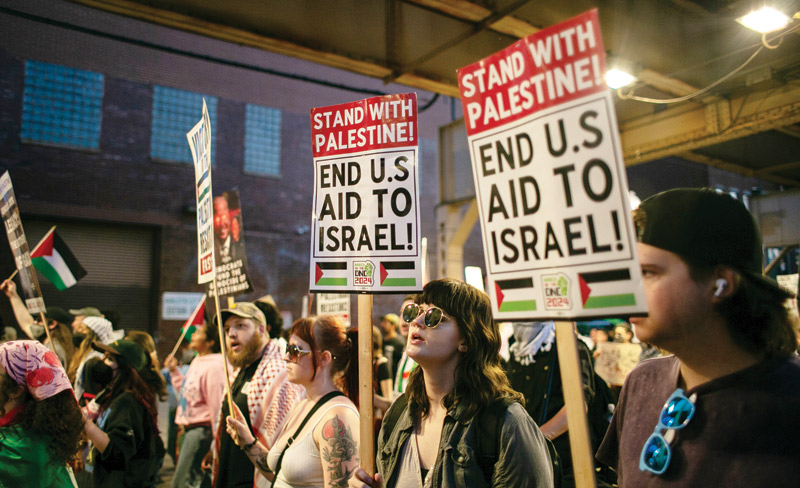
Did the DNC Make the Right Call on a Palestinian Speaker?

Should there have been a Palestinian speaker at the Democratic National Contention? That was the question on everyone’s mind last week, and frankly, the answer seems obvious — yes. 

To say that there shouldn’t be “a Palestinian speaker” is like saying that there shouldn’t be a Black speaker, or a Jewish speaker, or a gay speaker. Whosoever would oppose a speaker’s presence at the DNC solely on account of their race or eth-nicity would seem to have no place in the party. 

And yet, this framing of the question is misleading and incomplete. The Uncommitted Movement — the main Democratic caucus pushing for a Palestinian speaker — does not exist in a political vacuum. Their main goal is to steer the Democratic Party towards a radical arms embargo on Israel.

And so a more honest question would have been: Should the Democratic Party put a promoter of a cruel, misguided, and reckless policy on the main stage at the most important party event of the year?

A more honest question would have been: Should the Democratic Party put a promoter of a cruel, misguided, and reckless policy on the main stage at the most important party event of the year?

From where I sit, the answer is no. 

Israel is still under attack by an alliance of malign actors shared by the United States as enemies. These include Iran and its many proxy armies such as Hezbollah, Hamas, and the Houthis in Yemen, whose slogan, lest we forget, is “God Is the Greatest, Death to America, Death to Israel, A Curse Upon the Jews, Victory to Islam.” 

Let’s not misinterpret what an arms embargo means. Those who want an arms embargo are those who want to see Israel defenseless against enemies sworn to its destruction; who want the Iron Dome to run out of ammo as Hezbollah rockets continue to destroy buildings in the north and push farther towards Tel Aviv; who long to see what would have happened to the Jewish state if the Jews were too weak to repulse Hamas’ invading army on Oct. 7.

Let’s not misinterpret what an arms embargo means. Those who want an arms embargo are those who want to see Israel defenseless against enemies sworn to its destruction.

On Sunday we woke up to news that Israel had thwarted a major Hezbollah attack that could have caused serious damage and loss of life for innocent Israelis. Those who want an arms embargo are those who wish Sunday’s headline was different, telling of death and destruction instead of resilience and self-defense. 

Most Democrats, to their great credit, still find such a policy abhorrent.

One Palestinian speaker pushed by the Uncommitted Movement was Georgia State Rep. Ruwa Romman. Her undelivered speech was published in Mother Jones. 

In it, she refers to the war in Gaza as “the massacres in Gaza.” Obviously, this is a mischaracterization of the war itself. It is also a slap in the face to Joe Biden, who endorsed and shaped that war, and to Kamala Harris as well. Are we shocked that they didn’t want to platform this perspective at an event designed to drum up enthusiasm for the VP-turned-presidential hopeful? 

In a pathetic imitation of evenhandedness, Romman calls to “free all the Israeli and Palestinian hostages.” But Israel has no hostages, which are definitionally people seized for the purpose of extortion. Israel has prisoners. Many of them are guilty of perpetrating the most gruesome of Oct. 7’s crimes. Hamas has hostages. Young women, children, elderly, and the disabled. According to Romman, Yahya Sinwar himself would be considered a freed hostage. 

When Rachel and Jon Goldberg-Polin, parents of the Israeli-American hostage Hersh Goldberg-Polin, took the stage at the DNC, they were right to acknowledge the great tragedy that this war has brought upon the people of Gaza, and right to pray for the war’s speedy end. 

The suffering of Palestinians is not to be ignored, and it was important to make space for it at the DNC. But as for empowering the Uncommitted Movement — a group that openly despises the policies of the current candidate and her predecessor — it seems fairly obvious that saying no was the right and only choice for the Democrats to make.


Matthew Schultz is a Jewish Journal columnist and rabbinical student at Hebrew College. He is the author of the essay collection “What Came Before” (Tupelo, 2020) and lives in Boston and Jerusalem.  

Did the DNC Make the Right Call on a Palestinian Speaker? Read More »

Empathy is Bipartisan

If you saw it you would understand. The heartbreak. The utter heartbreak.

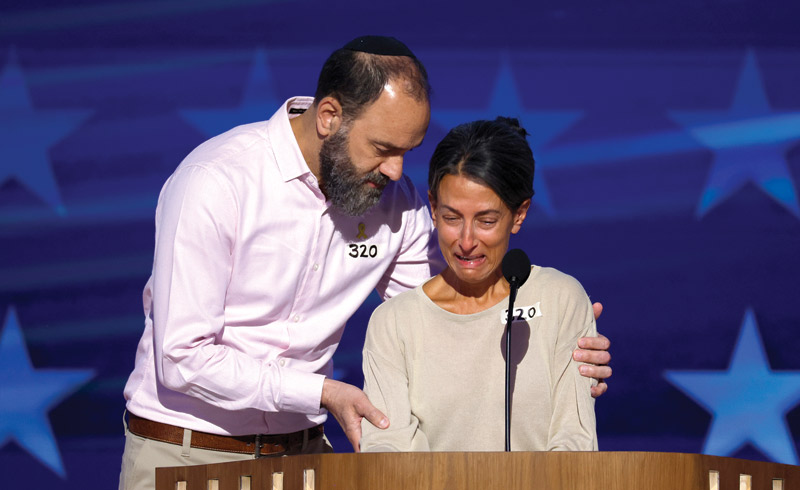
Right before she begins her speech at the DNC with her husband Jon at her side, she hears tens of thousands of people chanting “Bring Them Home.” Rachel Goldberg puts her hand on her forehead and then collapses on the lectern, her body convulsing as she begins to cry. Jon helps her stand and says to her gently, “You’ve got this.” And then, “Let’s go.”

And she starts to speak: “At this moment 109 treasured human beings are being held hostage by Hamas in Gaza. They are Christians, Jews, Muslims, Hindus, and Buddhists. They are from 23 different countries. The youngest hostage is a one-year-old, red-headed baby boy. And the oldest is an 86-year-old mustachioed grandpa. Among the hostages are eight American citizens. One of those Americans is our only son. His name is Hersh. He’s 23 years old.”

She tells us that Hersh is a happy go lucky young man who loves soccer and music, and is obsessed with travel, his room at home filled with atlases and travel books.

If the impassioned plea by Jon and Rachel on behalf of their child and the rest of the hostages doesn’t open your heart, I can’t imagine what would.

This is an issue that, no matter our politics, every American should be fighting for, along with every person of conscience in the world.

Jon referenced this directly when he said, “We are heartened that both Democratic and Republican leaders demonstrate their bipartisan support for our hostages being released.”

At last month’s RNC gathering, Orna and Ronen Neutra, the parents of Omer, age 22, another Israeli-American being held hostage in Gaza, spoke and there as well we heard the convention participants chanting in one voice, “Bring Them Home.”

Empathy should be bipartisan and, yes, empathy should extend to the innocents in Gaza who suffer mostly because of the intentional cruelty of the Hamas leadership. 

Jon and Rachel demonstrated powerfully their own empathy by acknowledging that the agony they feel is not unique. It is shared of course by the families of the other hostages and it is experienced as well by millions of others in the region, Israeli and Palestinian alike, who are affected by the awful war initiated by the terror attacks of Oct. 7: the tens of thousands of Israelis who have had to evacuate their homes; Gazan families who desperately seek safety in the middle of a war zone; survivors of the Nova music festival who struggle with the horrific trauma they witnessed; soldiers who are asked to do hard things so that terrorists might be brought to justice, hostages might be rescued, and whole communities kept safe.

There is so much agony on every side. As Jon put it: “There is a surplus of agony on all sides of the tragic conflict in the Middle East. In a competition of pain there are no winners. In an inflamed Middle East we know the one thing that can most immediately release pressure and bring calm to the entire region: a deal that brings this diverse group of 109 hostages home and ends the suffering of the innocent civilians in Gaza.”

We need to bring Hersh and Omer home, now, along with Kfir and Ariel, Carmel and Liri—every last one of them including the dead so that we might bury them properly.

It’s been far, far too long. 

The masking tape on Jon and Rachel’s shirts made this clear, noting exactly how many days have passed since the hostages were taken: 320.

It’s been almost a year since these sons and daughters, mothers and fathers and grandparents were stolen from their lives and their families — almost a year of unimaginable agony.

Our broken hearts must remain open. We must hold on to our capacity for empathy.

Our broken hearts must remain open. We must hold on to our capacity for empathy. 

Last week’s Torah portion Eikev points the way.

“Cut away the thickening about your hearts and stiffen your necks no more. For the ETERNAL your God is God supreme and Sovereign supreme, the great, the mighty, and the awesome God, who shows no favor and takes no bribe, but upholds the cause of the fatherless and the widow, and loves the stranger, providing food and clothing. You too must love the stranger, for you were strangers in the land of Egypt” (Deuteronomy 10:16-19)

Our Torah calls us to stop being hard-hearted, stubborn and stiff-necked, to see the pain of the orphan and the widow, the agony of the stranger, of the other.

Our Torah calls us to stop being hard-hearted, stubborn and stiff-necked, to see the pain of the orphan and the widow, the agony of the stranger, of the other. 

These verses remind us that empathy is divine, a Godly attribute that as God’s creations we can actually hope to attain.

We can do this. We are capable of seeing the agony of the other. We can cut away the “thickening of our hearts” and love even the stranger. 

And then, regardless of race or religion, political affiliation or ethnic background, we will someday experience justice, liberty and peace together.


Rabbi Yoshi Zweiback is the Senior Rabbi of Stephen Wise Temple in Los Angeles, California.

Empathy is Bipartisan Read More »

In G-d (and Preemptive Strikes) We Trust

In case you missed it, early Sunday morning, 100 Israel Air Force (IAF) fighter jets preemptively struck thousands of Hezbollah rocket launchers across southern Lebanon — launchers that were going to fire at Tel Aviv and northern Israel at 5 a.m. The IAF thwarted a major attack against two-thirds of Israel (the central and northern areas), in an incredible show of might, intelligence and preemption. 

The attack offered three reminders: First, Oct. 7 was nothing short of a metaphorical sledgehammer to Israel’s decades-long mystique as a preemptive powerhouse. On an emotional level, Israel needed Sunday’s strikes, especially given that it finally conducted a major preemptive operation after nearly a year of tit-for-tat violent exchanges with Hezbollah. 

Second, even preemption has its limits. Just ask the 60,000 Israelis who still cannot return to their homes in the north because Hezbollah could still annihilate them and their loved ones.

And third, we inevitably take Israel’s preemptive strikes for granted. After the incredible IAF strikes in Lebanon on Sunday, most Jews in the Diaspora worldwide didn’t seem to bat an eye. 

Perhaps we can’t bring ourselves to have total faith in Israeli intelligence again after Oct. 7 (it’s a sad and unjust thought). Or perhaps we have become accustomed to Israeli preemptive strikes, whether in Lebanon, Syria or Iran, because we know that a country that is surrounded by so many venomous enemies cannot afford to be reactive. 

But I have always treated Israeli preemptive measures as singular miracles. Perhaps it is because I was born in and spent part of my childhood in the Middle East. In that region of the world, no one can afford to leave things to chance or, worse, to assign good intentions to nefarious foes (if only more leftist protesters who excuse Hamas’ atrocities understood this principle).

I still remember my parents’ strategy for preventing scorpions from entering our home back in Tehran: They preemptively trapped and destroyed the scorpions before they could even reach several yards from our steps. “If they’re already approaching us,” my father warned, “We’ve lost the upper hand. Don’t ever delay safety.”

What those 100 Israeli fighter jets accomplished this weekend in annihilating thousands of Hezbollah rocket launchers was nothing short of miraculously life-saving. But gratitude also leaves space to acknowledge reality. Israel must increase its preemptive measures against Hezbollah and its proxy, Iran, until each one of those 60,000 citizens is able to return home. 

Israeli Prime Minister Benjamin Netanyahu promised that the strike wasn’t “the end of the story.” Let’s hope so. It’s devastating to balance the dream of Israel as a first-world, thriving democracy with the current reality of an Israel with tens of thousands of abandoned homes in the north, a massacre against communities in the south, and an economy that is struggling so badly that even most of the souvenir shops in the Old City of Jerusalem are closed. 

In a weekly cabinet meeting, Netanyahu said, “The IDF intercepted all the drones that Hezbollah launched at strategic targets in the center of the country. [Hezbollah leader Hassan] Nasrallah in Beirut and [Ayatollah Ali] Khamenei in Tehran should know that this is another step on the path to changing the situation in the north and returning our residents safely to their homes.”

I am certain that Israelis appreciate what transpired early this week. Perhaps the residents who have fled the north also appreciate that their long-abandoned homes are also a little safe. But more than anything, I am certain that they want to return home. 

Regarding opening our eyes to miracles, I love to keep company with those who remain in a life-long state of wonder; indeed, the ability to identify and celebrate the wondrous may distinguish the young from the old, the content from the unhappy, and the grateful from the perpetually-lacking. 

It may sound strange, but I believe that pausing in wondrous awe and gratitude over a preemptive air strike is a metaphor for living life with intent, decimating passivity along the way. It also permeates other spaces and thoughts, prompting us to contemplate the many instances in which we have experienced miracles small and large through early action. 

As children, how many times did our parents preempt disasters that would have irreparably hurt us? Every vaccine, every demand to buckle a seatbelt, and every time they advocated for us, whether at the office of a dismissive doctor or a hard-hearted school administrator, was a preemptive act fueled by love. 

As adults, do we ever thank ourselves for preempting danger, catastrophes or illnesses through our choices? And who else in our lives continuously takes action to ensure we are physically, emotionally and spiritually secure?

Did the world, and Middle Eastern states in particular, ever thank Israel and the pilots of those 14 fighter jets for destroying the Osirak nuclear reactor in Iraq in June 1981, or the ones who took out the Syrian nuclear reactor in September 2007? I would bet a lot of money that there still are fools today who insist that Israel was wrong to fly into another country’s sovereign air space and aggressively attack those innocent regimes’ nuclear reactors. I’ll also bet that those are some of the same fools who will again attempt to pitch tents on campuses this fall and label Hamas and Hezbollah “freedom fighters.”

If Israel preemptively saves the world from a nuclear Islamic Republic of Iran, there will be celebrations in Tel Aviv and demonstrations in Dearborn. 

It also merits asking how many Jews of my generation (and younger) hold their breath in grateful disbelief over what Israel accomplished one June morning in 1967 by suddenly and astonishingly destroying 90% of Egypt’s air force, as the Egyptian planes and jets still sat on the tarmac, and by similarly obliterating Syria’s air force. Not even Jordanian and Iraqi airfields were spared. 

Six years later, Egypt and Syria attempted to invade Israel during the Yom Kippur War with more tanks and fewer fighter jets. An entire generation of Israelis was saved. 

Today, Israel is engaged in another preemptive war: a war to save the West from the kind of fanatic Islamists who have threatened Jews for centuries. Israelis understand that this war began with Israel, but aims to end with America, Europe and the West. Meanwhile, the West is preoccupied with banning plastic straws and putting privileged white people in their place.   

If, in 50 years, most young Westerners still convey love and pride in Western values of liberalism, meritocracy and democracy (and American flags, rather than Palestinian ones, hang from campus buildings and light poles on proverbial Main Streets), will we ever thank Israel for having fought preemptively on the front lines for our freedom to enjoy outdoor festivals and more importantly, to sing along at Taylor Swift concerts? Regarding the latter, I have yet to hear Austrian officials declare that Jerusalem and Vienna are fighting a common enemy.

If, in 50 years, most young Westerners still convey love and pride in Western values of liberalism, meritocracy and democracy … will we ever thank Israel for having fought preemptively on the front lines for our freedom?

In the months ahead, as Jews worldwide continue to hold their collective breath and pray for Israel’s safety (and the safe return of the hostages in Gaza), we may learn of more preemptive strikes. Let’s be grateful for everything they will avert, and never lose sight of everything that must be restored. 

Finally, it’s important to note that as usual, America received prior notice of this weekend’s massive Israeli airstrike, and gave its blessing, but not before warning Israel to avoid triggering a much larger regional war. And as always, Americans could learn a thing or two from Israelis. 

At this moment, when our enemies are more emboldened and well-funded as ever, even our national motto could benefit from a temporary addition: “In G-d (and Preemptive Strikes) We Trust.”


Tabby Refael is an award-winning writer, speaker and weekly columnist for The Jewish Journal of Greater Los Angeles. Follow her on X and Instagram @TabbyRefael.

In G-d (and Preemptive Strikes) We Trust Read More »

Interfaith Activist Soraya Deen: Bridging Divides and Advocating for Peace in Israel

For every community activist, there was a point in time that made them want to change things for the better. For Soraya Deen, a Sri Lankan American Muslim woman, this moment came in 2017. It was Sept. 11, and her seven-year-old son was bullied at school. Children who were born years after the attack on the Twin Towers were blaming him for 9/11.

Deen, a lawyer who immigrated to the U.S. as a young adult, became an interfaith activist soon afterwards.  She joined the American Muslim and Multifaith Women’s Empowerment Council (AMMWEC) and founded Muslim Women Speakers. She is also one of the founding members of the Clarity Coalition – an alliance addressing religious extremism – and the co-chair of the Women’s Working Group of the International Religious Freedom Roundtable in Washington, D.C.

Shortly after she became active, she met Marsha Novak, an activist and a member of Temple Judea, and together they founded the Interfaith Solidarity Network to promote interfaith unity in the San Fernando Valley. “Our goal is to have personal transformation and send a strong message that despite how we all have different faiths, we are here for each other,” Deen said.

“Our goal is to have personal transformation and send a strong message that despite how we all have different faiths, we are here for each other.”
– Soraya Deen

The two women became fast friends. For Deen, it was the first time she had befriended a Jewish person, as she never had the opportunity to get to know one. “I was very disappointed by the silence of the Muslims after Oct.7,” said Deen. “The Muslim leaders also didn’t say a word after the death of Paul Kessler [who died following an attack by a pro-Palestinian in Thousand Oaks].”

“We, as Muslim women, need to speak up. We don’t hear enough from South Asian Muslim women, only from the Middle Eastern ones,” Deen, who is a member of a group of Muslim women who are defending the right of Israel to exist and defend itself, said. 

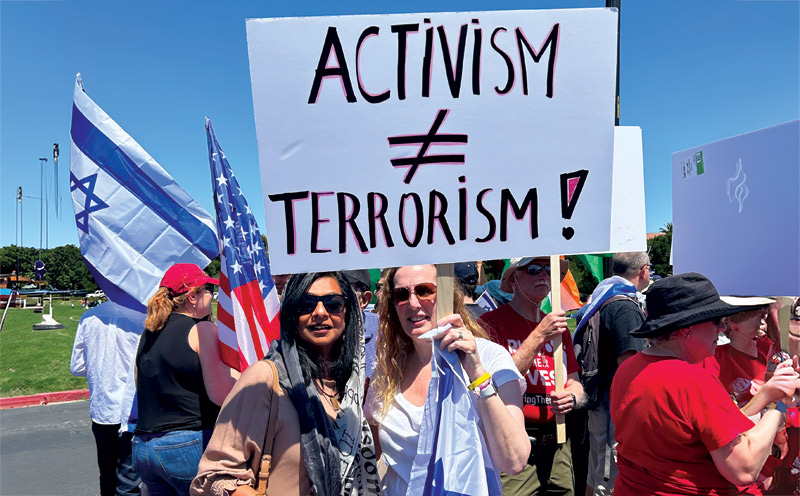
Deen and Novak organized a solidarity rally in the Valley following the attack on Israel; 500 people participated in the march. She had traveled to Washington, D.C. for speaking engagements, and five days after the Oct. 7 attack, they organized a multi-faith peace vigil outside the White House to show solidarity with the victims in Israel. They also traveled to Israel last December and visited Sderot and Ofakim, where 52 residents were killed. 

“We met with a woman who lost two sons in the attack, one who was shot in the attack and the other who died while he was a hostage of Hamas, and others who lost their loved ones,” Deen said. “I was amazed by the capacity to have peace and love in their mind after all that they had experienced. There was no hatred for the Palestinians.” Together with other women leaders of AMMWEC, Deen stood up for the Jewish victims of the Hamas attack in Washington and spoke at the International Religious Freedom Summit, a bipartisan gathering of thousands of coalition leaders, nonprofit and human rights advocates. They also visited the office of Rep. Rashida Tlaib (D-Mich.), a very vocal critic of Israel. They wanted to ask Tlaib and her colleagues to condemn Hamas for the “rape, murder, torture, assault and all mutilations” of the Israeli women on Oct. 7. They also asked her to speak out against hate speech on college campuses.

“She wasn’t in her office, [so] we were invited to come in by her staff. We told them why we were there. They said they would let her know. We tweeted about it, but didn’t have any response,” Deen said. Since becoming an activist, Deen has visited Israel many times and also participated in March of the Living in Poland. She also travels frequently to Washington.  Her activism, however, doesn’t sit well with her community. Some stopped speaking to her, some say “If Soraya is on this WhatsApp group, then we are out,” she said. “They think I’m employed by Mossad. They say, ‘You are not a good Muslim.’ They say I have no sympathy for the Palestinians and that I’m one-sided. Things like that.”

Knowing what kind of a reaction she is expected to receive in most mosques, Deen doesn’t bring her message to them or arrange for any speakers on behalf of Israel.  “My local mosque will say, ‘Soraya, it’s too raw, too early, it will make people angry, people don’t have the capacity to understand,’” she said. “’We are hoping that once the war is over there will be a better opportunity.’” 

Even her family and her children don’t see the situation in Israel the way she does and keep telling her to stop talking about the subject. “They tell me that there are Palestinian children who are getting killed.”

Her children, like many other students on U.S. campuses, hear false information about Israel that feeds negative views about Israel. To influence change, she said, we need to approach Christian students as well and try to get the point across to them. 

“We need to see more activity from synagogues. The 75% to 90% of them don’t have social networks, it’s time to reinvent a new way to doing things. They need to make videos, tell their story. We can’t wait for someone else to do the work.”

Deen admits that her opinion of Israel wasn’t positive prior to her becoming an activist. This was due to things she heard from her community, including her family and mosque. Even though those around her still hold onto their beliefs, she is steadfast in standing with Israel. 

With this anti-Israel atmosphere, there are not many Muslims who are willing to voice a different opinion. Those who share her viewpoint on Israel choose to write to her organization words of support but refrain from speaking up. “They are too scared,” she said. “But they say to us, ‘Keep doing the good work.’”

It takes a lot of courage to stand up for your beliefs when everyone in your community sees things completely differently. However, Deen believes that with time, more people will be open to listen and understand Israel’s stance better. 

Deen said that as a Muslim woman, she knows how much brainwashing Muslim people have gone through, but she is still hopeful about the future. “When you study, when you visit Israel, when you get to know Jewish people, you get a different perspective. The day after the war, we need to speak with women in Gaza. We need to give them hope and tell them how they were brainwashed and start changing things together.”

Interfaith Activist Soraya Deen: Bridging Divides and Advocating for Peace in Israel Read More »

An Open Letter to American Jewish Parents: The Kids Are (Going to Be) Alright

Dear American Jewish Parents, 

Let’s face it: Worrying about our kids is just part of our collective DNA. It is an integral part of who we are. But this anxiety has reached new levels since Oct. 7. 

For centuries, blacksmiths would forge metal to make things that were stronger and more durable. The process is deliberate, uncomfortable, and very effective. People too, were put through their own “forging” process – through wars, famines and pandemics. Our children today are being forged by rampant Jew-hatred. 

The question facing every Jewish parent in America today is not “Where do we go so we can protect our children?” The question is: “How do we ensure that our kids can withstand their own forging?” This is our sobering reality.

As much as we stress over current events, this is still the best time to be a Jew. Raise your hand if you’d rather be a Jew in 1920. 1800s? 1500? 11th century? Exactly. Not only do we have a Jewish state and a Jewish army, but Diaspora Jews have full rights. We are completely integrated in the societies where we reside and have freedoms even our grandparents could not have dreamed about. 

But I digress — let’s get back to our anxiety-inducing reality. 

Recently, a Jewish mother expressed disbelief when her daughter’s school refused to take action after her instructor wore a keffiyeh while teaching – a “symbol of resistance” for the pro-Hamas mobs after Oct. 7. 

Her daughter had the courage to bring the matter to the attention of the administration. Instead of taking action against the teacher, they gave the Jewish student suggestions on how to “manage her feelings.” Imagine if a school gave suggestions to an African-American student on how to “manage their feelings” after seeing a teacher with a KKK tattoo. 

Rutgers University freshman orientation got interrupted last week by pro-jihadists, criminals who were yelling and distributing flyers. And this is not just happening in higher education. Children all across the U.S. educational system – even as early as preschool – are facing anti-Jewish rhetoric. Just as disturbing, Jewish individuals are being targeted as well as Jewish institutions. The proverbial excrement is hitting a very real fan, and no one is left untouched. 

With school starting in just a few weeks, it’s understandable that we’re all feeling anxious. 

However, my experience as a Jewish mother of a 10-year-old and 27-year-old and as a Jewish professional working with teenagers over the past decade has taught me that there is another side to this coin. By teaching kids individual empowerment – allowing teens to speak up and have a voice – and communal leadership – the understanding that we are working on training the leaders of our Jewish community – students are more likely to feel secure in who they are, where they belong and how to handle themselves. 

We need to stop putting a ridiculous expectation on our teenagers to “speak out and stand up for Israel” without first inspiring them to speak out and stand up for themselves. We must teach them how to expect and demand respect from authority figures – as Jews!

We are not asking for anything more, and we won’t accept anything less. Only when our children see themselves as Jews, as makers of Jewish history, as future matriarchs and patriarchs of their own Jewish families, only then will they understand the honor, the privilege and the blessing of the current times. 

This is our mission and yours. Just as metal is forged through a process of stress, pressure and heat to become something even stronger, Jewish teens are being put to the test every day. I believe that the pressure our kids are under has the potential to transform them into grown adults with vision, courage and confidence. Into leaders, who will create a hopeful and resilient future for us all.  

As part of my ongoing passion for Zionism and Israel, I speak to Jewish high school and college students who spend time learning and gaining the necessary skills to confront this reality, and it is with confidence and out of this direct experience that I tell you: They are not afraid. Quite the opposite. Looking at these kids, it’s clear that we are the strongest we’ve been in 2,000 years. How? Because they are confident in who they are, proud of their Jewish identity, secure in their place in the Jewish story, and strengthened by their connection to one another. 

A teen who was looking forward to his freshman year at an Ivy League school shared with the group, “We don’t find ourselves in that fight. We fight because we found ourselves.” 

And indeed, when encountering this fight, our children are no longer deers-in-headlights. They stand up and take action:

A high school student in New York recently identified numerous inaccuracies and anti-Israel bias in Princeton Review’s AP World History Prep book. She penned a letter to the organization, detailing and disproving every false claim: “Princeton Review should hold itself to the highest standards of accuracy. It is deeply concerning that millions of students have been exposed to this skewed material. I look forward to your response in ensuring these inaccuracies are corrected for the next edition.” (She has not yet received a response.) 

Another group of teens recently addressed a school-wide faculty meeting with 200 people to discuss the antisemitism they and other Jewish students have experienced for years, and especially since Oct. 7. Though they were about to graduate high school, they wanted to speak up for those students who remain voiceless and lay the groundwork for change, explaining that “we’re here to make sure we leave [this school] a safer and better environment for other Jewish students.”

Jewish kids who received strong, unapologetic, and nuanced Israel education and advocacy training continue to empower and engage on college campuses, like the remarkable students at UNC-Chapel Hill who stood united in protecting the U.S. flag from being removed by pro-Hamas protesters. 

Where do these Jewish students gather the strength to take such actions? It is a combination of their education, an empowered sense of identity, and one of the most important factors – which means the world to me as a mother, as I am sure to you – THEY ARE NOT ALONE. NEVER ALONE. 

These teens have shown that adversity gives them strength and the opportunity to build an identity. It provides them with the unique perspective that they are living through Jewish history, standing on the shoulders of giants who came before them. 

My fellow Jewish parents, I understand these are unprecedented times. But take a breath. Look at our history. Then look at your kids. Have they been prepared? Do they know who they are and what people they belong to? If you are not sure, here is your call to get busy. 

Make Israel and being Jewish a part of your everyday lives. Don’t assume that your Hebrew school, Jewish high school or Jewish summer camp can do it. Of course, all of the institutions are trying their very best. But you cannot outsource identity building to someone else. That one is on you. And once you know you’ve raised a strong Jew, then you will know with certainty that they will rise to this challenge and prevail, just as our ancestors have done for thousands of years.

When we give them the tools they need and the inspiration they crave, when we have their backs no matter what, they can become the most glorious generation we’ll see in our lifetime.

Our kids will be alright. No. Better than alright. When we give them the tools they need and the inspiration they crave, when we have their backs no matter what, they can become the most glorious generation we’ll see in our lifetime.


Masha Merkulova is the Chief Zionist Officer of Club Z, an unapologetically proud Jewish Zionist space for teens to connect to each other, Jewish history, and Zionism. 

An Open Letter to American Jewish Parents: The Kids Are (Going to Be) Alright Read More »

Protests Are Only the Beginning of the Deep Problem of Campus Antisemitism

As colleges and universities reopen over the next few weeks, the tensions around the Israel-Hamas war will likely re-emerge almost immediately. The dangerous ideology driving the violence and protests that transpired last spring did not disappear over the summer break. In fact, it has only grown.

At Columbia University, only moments after former president Minouche Shafik announced her resignation and her successor was named, Columbia Students for Justice in Palestine threatened to remove or force out the new president from office if she did not pay heed to their demands. In lower Manhattan, NYU students’ anti-Israel People’s Solidarity Coalition professed its support for “armed struggle” and is prepared to use violence in their fight to “dismantle” NYU’s “involvement in settler-colonial occupation, genocide and imperial wars.”

There is little doubt that demonstrators will be back this fall, louder and more determined than before. This time, they will be on more campuses, better organized, well-funded, and will have legal counsel and media by their side. How will college presidents, administrators, trustees and the broader higher education community respond? 

Certainly, anti-Israel groups have had considerable time to organize, coordinate resources and strategize and will come to campus this fall ready to support them. At the same time, the national mood of disdain after the spring chaos was unequivocal: Most Americans opposed the vandalism and building occupations, and supported punishing students who participated in the pro-Palestinian encampments. 

Should encampments, violence and protests once again become the hallmark of campus life, the fact that the world has changed dramatically in the past six months means colleges and universities can no longer claim that they were caught off guard and unprepared. College presidents and administrators have seen Congress hold numerous hearings, they have watched numerous high profile presidents resign in disgrace, they know that Title VI complaints and private lawsuits are plentiful and moving forward, and they must now be aware of the powerful and forceful legal decisions that have been rendered against schools for their failure to protect Jewish students. 

A decision by a federal district court in California correctly ruled in favor of Jewish student plaintiffs who sued UCLA declaring that, “In the year 2024, in the United States of America, in the State of California, in the City of Los Angeles, Jewish students were excluded from portions of the UCLA campus because they refused to denounce their faith. This fact is so unimaginable and so abhorrent to our constitutional guarantee of religious freedom that it bears repeating, Jewish students were excluded from portions of the UCLA campus because they refused to denounce their faith.”

Large scale protests and organized calls for Israel’s destruction are easy to spot as they have become very public. We have seen that they can in fact be shut down and dismantled, and administrations that do not do so will draw national attention and thus force the hands of college presidents to act. But there is another challenge for the Jewish students and college communities. 

There are many more subtle but equally problematic cases of hatred toward Jews that are far less visible to the outside world but must be addressed urgently. These cases do not involve closing down large scale political disruptions or the regular antisemitic graffiti that has become commonplace on campuses nationwide. They involve tackling deep-seated, endemic hate that cannot be solved with law enforcement or court orders removing masks and checkpoints for entry as was the case in at UCLA or Columbia. This task will be daunting. It will involve working with faculty, alumni and countless administrators and student groups to address cultural and curricular problems found in the dorms and dining halls, classrooms, student and community centers, and in the offices of the many administrators who see Jews as oppressors and Israel as a colonial power. Many of these fiercely independent groups will assert academic freedom when asked to account for their antisemitic behavior and may be nearly impossible to reform.

There are many more subtle but equally problematic cases of hatred toward Jews that are far less visible to the outside world but must be addressed urgently.

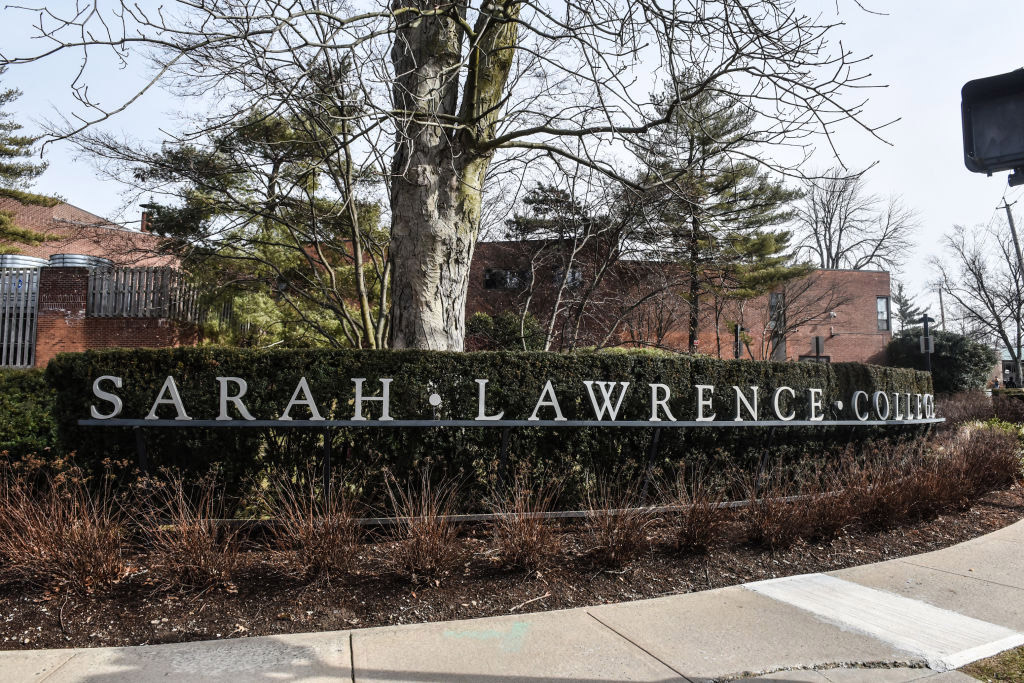
Sarah Lawrence College, where I teach, is one example of an institution where college presidents must lead to dismantle antisemitic groups and impulses well beyond protests. A number of my students recently sent me the updated “by-laws” of the Sarah Lawrence Socialist Coalition (SLSC). This group is open about their views for this “coalition” and posted them proudly on their social media pages where they were “liked” by members of the faculty. This group added to its manifesto “fourteen principles of unity” for this academic year that they “believe are crucially important to provide an ideological bedrock for the SLSC.” They maintain that, “These fourteen points will act as our framework for the coming year as we enter a time of both pressure and opportunity.” 

The principles are a laundry list of ideas typically expounded on by progressive activists. This is a student group that, on August 9th, during the “International Day of the World’s Indigenous Peoples,” declared that the College “is built on land stolen from the Monsiyok Lenape people who lived here for thousands of years before European colonization. The Lawrence family, for whom the College, is named were early European colonists, descending from English 17th-century colonists who stole the land of indigenous peoples in Massachusetts and Long Island.” But, as is typical among many progressive groups, they offer no position as to how to actually and pragmatically address such a “grievance.”

The document is full of similar leftist language and positions without any reasonable or useful guidance forward. The Socialist Coalition makes many predictable claims including, for instance, that capitalism is evil. The document asserts that “Capitalism is an inherently exploitative, alienating, and murderous system in which the bourgeoisie, being those who control capital, extract the value generated by the labor of the proletariat and return a tiny portion of it through wages.” The document continues to note that “Capitalism is violent, coercive, and a threat to human progress and the existence of the species. It must be dismantled.” Decades of research have demonstrated that such a claim is false but this is a position that is still open for debate and collegiate life is exactly where that can and should occur.  

The list of principles continues by invoking familiar tropes of Chairman Mao, imperialism and colonialism which, again, are all ideas that are worthy of both study and debate. The expansive by-laws then talk about socio-political matters that are not related to economic systems including the police and queer liberation. Unsurprisingly, the piece then declares that “Zionism is racism” and—like Hamas, whose very charter makes “clear the terrorist organization’s commitment to destroying Israel”—members of this group are “in favor of the complete abolition of the ‘Israeli’ state.” This position has nothing to do with socialism, a worldview with a lengthy history in Israel, and is purely political and blatantly antisemitic. How the College administration chooses to react to this document will be critical since the school currently faces a Title VI federal investigation for systematic discrimination against Jewish students on its campus. 

Notably, this student group readily admits that it is subject to the school’s governance mechanisms because it is a “Registered Student Organization at Sarah Lawrence College,” which means that it adheres “to the College’s Non-Discrimination Policy” and yet calls formally for the destruction of a sovereign state deeply connected to many if not most Jewish students and their families. This position is both dangerous and chilling and was a deliberate choice; the Sarah Lawrence Socialist Coalition did not advocate for a cease-fire, a change of leadership away from Netanyahu, or offer any other legitimate or debatable critique. Rather, it opted to promote the wholesale destruction of an entire nation. Followed to its logical end, such a position would result in a Holocaust-level event involving the eradication not only of a nation but also its people. The group’s social media pages make it unquestionably clear that they hold beliefs that are illiberal, antisemitic, and that call for overt illegal discrimination against individuals who are Jewish and see Israel as the homeland of the Jewish people.  

Followed to its logical end, such a position would result in a Holocaust-level event involving the eradication not only of a nation but also its people.

What happened on March 28th of 2024 offers a potent illustration of this antisemitism. The socialist group posted a video and text showing one of the co-chairs leading a protest against the “the presence of Zionist Jodi Rudoren on campus” in response to her “invitation to the Bozeman Lecture.” The text of the post declares “SAY IT LOUD AND SAY IT CLEAR: WE DON’T WANT NO ZIONISTS HERE!” This is an explicit call for discrimination on the basis of one’s faith and heritage. NYU recently explained that “for many Jewish people, Zionism is a part of their Jewish identity,” which thus makes such calls a violation of Title VI of the Civil Rights Act of 1964 and university policy on religious discrimination. NYU further noted that “excluding Zionists from an open event, calling for the death of Zionists, applying a ‘no Zionist’ litmus test for participation in any NYU activity, using or disseminating tropes, stereotypes, and conspiracies about Zionists (e.g., ‘Zionists control the media’), demanding a person who is or is perceived to be Jewish or Israeli to state a position on Israel or Zionism, minimizing or denying the Holocaust, or invoking Holocaust imagery or symbols to harass or discriminate” does fall into the Title VI category.

The correct logic at NYU fully applies to Sarah Lawrence but the College did not react or release any statement in reaction to such problematic public calls for exclusion by a group that is part of the College community. In fact, the “Sarah Lawrence Faculty & Staff for Justice in Palestine” even praised these claims by commenting with praise emojis and the words, “Fire. Thank you,” followed by a watermelon emoji. 

This new call for the destruction of Israel from an official school group leads to a host of questions and problems regarding how the College will respond to this group and such a statement. After intense pressure, the College’s president—who has shown almost no support for Jewish students—eventually declared that “there is not, nor can there be, any place for antisemitism or hate speech of any kind on our campus.” However, calling for the abolition of the Israeli state—particularly given no calls against any other state or nation are ever made by this group—is antisemitic and Jewish students are being targeted specifically by this call.

How does the College president intend to react to such a statement? How do the College and its president explain the purported commitment to diversity, which holds that “people from different backgrounds and with different views be prepared to treat one another with mutual respect and honest curiosity so that they can engage and learn from one another,” in the context of failing to act when this standard is blatantly challenged? Official offices of the College—the Office of Student Involvement and Leadership, for instance—along with faculty members follow this group online and cannot claim to be unaware of these principles that violate the school’s ethos, yet these deeply problematic ideas are neither challenged nor even addressed by the school’s leadership.   

In such environments, Jewish students are not free to engage intellectually with others when they know that members of an officially recognized campus group have publicly called for the destruction of what many of them regard as their ancestral homeland. Hateful declarations that Zionists are unwelcome make it impossible for Jewish students to engage fully in academic life. Students are also aware that faculty and administrators support such positions. Quite understandably, Jewish students at Sarah Lawrence are scared, intimidated and feel threatened; they saw the socialist group call for overt discrimination against a visitor on the basis of the guest’s faith and ethnicity and painfully watched the silence of their administration. They see hate filled professors and administrators supporting students who make anti-Jewish statements. They know that faculty will make absurd, hateful claims, as did one well known visiting antisemitic public policy professor at the College who referenced the “media controlled by Israeli and Zionist institutions.”  

Hateful declarations that Zionists are unwelcome make it impossible for Jewish students to engage fully in academic life.

They’ve also learned that no administrator will listen to their concerns or accept that there is a problem. Even more troubling is that this problem is not unique to my campus. Comparable political groups, faculty and administrators have crossed the antisemitic line not only at Sarah Lawrence, but also at many other schools including Haverford College, which received far less notoriety than UC or Ivy League schools.

In the case of Sarah Lawrence College, I suspect that the school president will do nothing to change the climate of Jewish hate on campus or demonstrate leadership by holding accountable a school group that is calling for the destruction of Israel this fall. The only “good” news for Sarah Lawrence is that the truths about this group and others as well as faculty and administrator behavior will finally surface in the impending federal investigation of the school’s “persistent and pervasive” antisemitic climate. 

The broader significance is that the case of Sarah Lawrence presents a window into the deep set of antisemitic problems that so many colleges and universities will have to address as they reopen this fall. Higher education is plagued with hatred toward Jews and schools can no longer claim to be unaware or suggest that this movement caught them off-guard. Not all schools will have to contend with violence or encampments; they may look more like Sarah Lawrence with deep hatred embedded into so many facets of the campus that an entirely new strategy is necessary.  

The broader significance is that the case of Sarah Lawrence presents a window into the deep set of antisemitic problems that so many colleges and universities will have to address as they reopen this fall.

Regardless of how hatred manifests, and it could be from student groups or faculty and administrators who are teaching or influencing students, the forces of antisemitism are going to be stronger than before and the consequences for failing to protect Jewish students and allowing hate to run rampant are now known to college presidents who must act. Some will have the fortitude to hold their ground. But, tragically, many will capitulate to the leftist mob, fold in front of faculty, and will face devastating results from legal and political challenges. The only question now is which path schools and their presidents will choose.

The path that should be taken by colleges and universities is one where schools are unequivocal in taking steps to end campus antisemitism and commit to staying politically neutral. Schools must finally enforce their various rules and values that celebrate diversity and promote equality of experience and opportunity. They must stop administering punishment only to rescind it later. And they must confront faculty and administrators and demand answers and action when discrimination and hate are disseminated in the classrooms and on campus.

The path that should be taken by colleges and universities is one where schools are unequivocal in taking steps to end campus antisemitism and commit to staying politically neutral.

Threats against and violence toward Jewish students must stop and the hate directed at them must be confronted and challenged. Jewish students cannot be omitted from the promise of free and open education; it is difficult to enjoy college life and have equal experiences and opportunities when Jewish students are subjected to dangerous environments of deep hate, calls for their harm, and the destruction of their homeland. This will be a huge task for it involves reexamining nearly all facets of collegiate life and focusing on the sources of this hate, which can be found in almost every corner of the university. The Jewish community must help ensure that all schools take steps to remedy their toxic environments and remember that, yes, UCLA, Columbia, Harvard and others have been awful for Jewish students, but the hate sadly runs much wider and deeper.


Samuel J. Abrams is a professor of politics at Sarah Lawrence College and a senior fellow at the American Enterprise Institute. 

Protests Are Only the Beginning of the Deep Problem of Campus Antisemitism Read More »

Canceled for Being a Zionist, a Rabbi Calls for Interfaith Dialogue

It’s back-to-campus time and the vibes aren’t good. Since the Oct. 7 murderous Hamas attack on Israel and Israel’s war in Gaza, there have been tens of thousands of lost lives, ongoing violence, famine and starvation of innocents, and the catastrophic threat of regional war with nuclear weapons.  Universities across North America have been the eye of the storm of hatred, intolerance and violence – and doing anything but fulfilling the mission of higher education: learning and fostering civil debate and intellectual growth. Even books, as I experienced last week in New York City, have been weaponized. My appearance with Joshua Leifer at a Brooklyn bookstore was canceled on the grounds that I am a Zionist.

Even books, as I experienced last week in New York City, have been weaponized. My appearance with Joshua Leifer at a Brooklyn bookstore was canceled on the grounds that I am a Zionist.  

Divisions have become so extreme that college classrooms – even where the course content has nothing to do with the Israel-Hamas war – are now staging areas for leveling the incessant drumbeat charge of racism, colonialism and genocide against Jews. With students, faculty and administrators returning to campus on the eve of the one-year anniversary of Oct. 7, there is an opportunity for brave leadership to counter these destructive and hateful trends.

Campus Hillels, interfaith centers and mosques — spiritual homes for university communities seeking meaningful connection and the sustaining waters of learning and faith — need to step into this breach.  Rabbis, priests, pastors and imams must dig deep new wells of inspiration by honoring the shared religious and historical connections between Judaism, Christianity and Islam. Despite the personal pain and anguish of war, they must model resilience, dialogue and the possibility for peace.

But if past is prologue, then it’s worth looking back in order to chart a new path forward for this generation of students who are understandably dismayed, distraught and disillusioned by the seeming intractability of a daunting range of challenges:  global warming, income disparity, the persistence of the hatred of difference and, since Oct. 7, the as yet unresolved hundred years’ war between Israelis and Palestinians to live peacefully in a land that each people claims as their national homeland.  

It would be a mistake to think, as some have suggested, that the attention span of the iPhone generation will soon move on from the Israel-Hamas war, just as other mass movements of the past decade have arisen and flamed out: from globalization riots in Seattle and climate change marches across the globe to Black Lives Matter and women’s marches in cities across America.  We are not prisoners to an attention deficit, but to a deficiency of dialogue; and my own experience as a college student at the University of Wisconsin-Madison comes to mind.

A generation ago, while my own campus was often the scene of protests over U.S. foreign policy, the Israel-Lebanon War, the First Intifada, the British war over the Falklands and much more, I found refuge not only in university classrooms, where learning was still valued and respected, but at my Hillel as well.

Each Sunday morning, without fail, the Hillel, run by then-director Dr. Irv Saposnik of blessed memory, was a center for students, faculty and community members to gather over bagels and The New York Times.  The open space, with morning light pouring in, was a sacred sanctuary for discussions led by professors and graduate students from across a vast expanse of disciplines. Here were impromptu seminars which held at the center the shared value for argument, respectful disagreement and learning.  “Canceling” someone was a completely foreign concept.  Even when tempers flared, Irv, who had a Ph.D. in English and was also a professor of Yiddish literature, was ready with a joke or a laugh, to lower the temperature. It’s what he modeled in his staff and students, training a generation of future leaders to do very much the same.  To this day, I remain proud to call myself his student.

Today’s campuses need a similar movement led by those willing to step into this toxic breach and model what an education should be. While university presidents and campus security apparatuses continue to necessarily and urgently address issues of safety and outside agitators on today’s campuses, we need interfaith leaders to create sanctuaries for dialogue and learning and asylums of enlightenment, so that students, faculty and administrators can gather in community settings founded on dialogue, listening, learning and peace.  

When the Roman Empire destroyed Jerusalem in 70 C.E., leading to the exile of the Jewish people from their homeland for two millennia until the rise of Zionism that created the modern state of Israel, the rabbis of the Talmud did not blame the Romans for their demise but rather themselves. They taught in the Talmud that the Second Temple was destroyed for wanton hatred.  Factionalization, demonization, othering, canceling – in whatever language it’s dressed – is hatred at the core.  And a society overcome by the saturation of a culture of hate is a culture that cannot withstand pressures from outside or within.

There is another story in the Talmud about the great sage Rabbi Yohanan ben Zakkai, who had to be smuggled out of Jerusalem by his students to escape Jewish assassins who wanted him dead for being willing to negotiate with the Roman authorities.  What did Yohanan want?  Houses of study away from the burning center; places of learning so that the eternal values of Judaism could survive the bloodshed of war; sanctuaries of argument and even disagreement – for the sake of heaven – so that word of God could be heard.

One path forward for our college campuses, in the midst of this dreadful war, is for an interfaith movement to transcend differences, building houses of study that value the aspirations of all those who seek truth, justice and peace. 

That word of God would give rise to both Christianity and Islam.  Therefore I say that one path forward for our college campuses, in the midst of this dreadful war, is for an interfaith movement to transcend differences, building houses of study that value the aspirations of all those who seek truth, justice and peace.


Rabbi Andy Bachman is founder of the Center for Midwest Jewish Communities and a Senior Consultant for the Jewish Community Legacy Project.

Canceled for Being a Zionist, a Rabbi Calls for Interfaith Dialogue Read More »