fbpx

August 22, 2024

Dispatches From Chicago: Protesters Are Baffled They Can’t Make It On DNC Stage After They Rally to #ShutItDown

To view previous dispatches, click here.

CHICAGO – On the third day of the Democratic National Committee’s convention, an academic from Berkley, Calif., Hatem Bazian, quietly walked alone, mostly unnoticed, a smile on his face, in jeans, Adidas sneakers, jacket and keffiyeh scarf, as he took photos on his cell phone of a sea of about 1,000 protestors leaving Union Park on the city’s West Side and stopping on W. Maypole Avenue in front of Park No. 578.

For Bazian, a Palestinian American born in the city of Nablus in today’s West Bank, the protests and riots of this past week against the DNC – and the campus encampments, hashtag campaigns and boycotts over the past nine months – are the manifestation of a decades-long campaign to destroy the state of Israel, since arriving in San Francisco as a graduate student.

He had just railed against the Democrats, President Joe Biden and Vice President Kamala Harris with a banner behind him, demanding the land of Israel “from the river to the sea” and warning ominously about keeping Americans from voting for the Democratic nominee: “Harris, in November, we’ll remember! 

But something has become clear on the streets of Chicago. This intersectional movement that coined the smears of #GenocideJoe may have won battles on college campuses, maybe helping to drive unpopularity against Biden, but, as they turn their rage on their new target – Harris – a darling of progressive politics whom they have coined #KillerKamala, they seem to have lost the war to win hearts and minds.

After railing against the DNC for months, carrying signs that say “Shut the DNC Down,” aligning with self-declared communists, burning the U.S. and Israeli flags and contaminating the breakfast of Democratic delegates at the Fairmont Hotel with maggots, the anti-Israel activists are now baffled they couldn’t secure a slot for a Palestinian speaker during the DNC convention. 

Their righteous indignation has turned into something psychologists call impotent rage.

“Impotent rage is a term used to describe anger that is intense but essentially powerless to bring about desired change,” explains psychologist Orli Peter, founder of the Israel Healing Initiative, a nonprofit started after the Oct. 7 attacks to bring healing from trauma to victims of terrorism, including Palestinian. 

When this rage is expressed through extreme demands, like the destruction of the state of Israel, as marchers declared, moving past elderly residents standing outside the McCrory Senior Apartments on W Washington Boulevard, it can alienate potential allies who might otherwise be sympathetic to their cause.

That’s not to say the anti-Israel activists will stop. In fact, it seems they are even more determined to persist, with more trouble expected on the streets of Chicago tonight as Harris accepts the Democratic nomination.

In front of Park No. 578, local attorney-activist Tarek Khalil, a board member of American Muslims for Palestine, looked out from behind his sunglasses at the signage of the United Center, peeking through the park’s trees and jungle gym, and shouted, literally and figuratively into the wind, to protest Biden for sending arms to Israel in its war against Hamas militants who murdered Israelis and others on Oct. 7th. 

“You are nothing but a hypocrite!” Khalil screamed, using one of the most damning terms in Islamic lexicon for a traitor. The word in Arabic is munafiq

In cue, the crowd responded: “Shame! Shame! Shame!” 

“From the river to the sea, Palestine will be free,” they continued.

With membership in groups from Code Pink to the Party for Socialism and Liberation, the protestors marched behind a banner for the main sponsor of the day’s protests: the Chicago Coalition for Justice in Palestine, which includes two groups – the controversial American Muslims for Palestine and Students for Justice in Palestine – that Bazian cofounded. 

Bazian is close with the leaders of the coalition’s other groups: the Chicago Islamic Center, the Islamic Community Center of Illinois, the Mosque Foundation, the Palestinian American Community Center, the Palestinian American Council and U.S. Palestinian Community Network.

To understand the network of anti-Israel groups that has coalesced behind the #MarchOnDNC2024 campaign, fomenting anti-Semitism and hate toward the United States and the West, I created a Malign Foreign Influence Index that tracks the ideologies of the groups and their allegiances to socialist governments in Russia, China, Iran, North Korea, Cuba and Venezuela, among others.

With the march that stopped in front of Park No. 578, the numbers have now increased. The index now totals 242 organizations, of which 34 are self-described socialists, 166 are socialist-adjacent or pro-socialist and 42 organizations are Muslim, Arab or Palestinian.

The demand for the destruction of the state of Israel is seen as extreme and unattainable by many, leading to a lack of credibility in broader international discussions. This could be characterized as a form of “impotent rage,” a term used to describe anger that is intense but ultimately powerless to bring about the desired change. When this rage is expressed through extreme demands, it can alienate potential allies who might otherwise be sympathetic to the Palestinian cause.

This impotent rage has led to the emergence of a real cottage industry of protest porn, a term that refers to the use of protest imagery and actions for shock value or emotional manipulation rather than to effect meaningful change. In one mass-produced image, the protestors carried signs with the images of Biden, Harris and Secretary of State Anthony Blinken with red laser beams for eyes and the un-nuanced, shaming message: “Democrats fund the genocide of Palestinians.”

Then, as the march resumed after stopping at Park No. 578, a young Palestinian American woman threw a plastic bottle of water at a police officer at the N. Damen Avenue “L” stop and hurled a slur at him, leading to police officers getting into a tussle with her, as marchers ran to the windows of the station and shouted: “Let her go! Let her go!” 

Enraged, one of them banged so hard on the window, as other protestors restrained him. 

Police didn’t have any intention of arresting her and, indeed, “let her go.”

As the march ended, returning to Union Park, a young man, Ali, 19, masked with a black-and-white keffiyeh scarf, skipped up the steps to the Ashland Avenue “L” transit stop and held a Palestinian flag over the bridge to the eyes of photographers below on Ashland Avenue. Police wrestled with him, the flag pole a danger presumably to the crowds below if it fell, and community members urged him to pull back. He did, and, returning to his friends, giving him high-fives, he told me why the moment was important to him: “It’s nice to see the Palestinian flag raised high.” A young girl, just hip-high, hugged his legs later, as he related the story to family and friends.

With even the best of intentions, throwing water bottles at police officers, waving flags on public infrastructure, burning flags and polluting food with maggots, end up being more performative than substantive. These acts may garner attention on social media, all of these actions this week winning viral moments. but they often lack the strategic focus needed to create lasting political impact.

Psychologists like Peter describe these actions as thrill-seeking, even narcissistic, behavior, where individuals engage in dramatic acts for the immediate emotional payoff rather than for long-term change. This can be harmful, especially when young people are drawn into these actions, contributing to a broader mental health crisis. The constant engagement in high-stress, performative activism can lead to burnout and exacerbate existing mental health issues, particularly in vulnerable groups. 

The narcissistic aspect of these actions can be seen in the way that some activists prioritize their own emotional expression over effective persuasion. Narcissism, in this context, is the focus on self-gratification and the need for validation, rather than on building a persuasive argument that could sway others to their cause.

In classical rhetoric, persuasion relies on three pillars: ethos (credibility), logos (logic) and pathos (emotional appeal). The tactics exhibited this past week fail on all three counts. 

Actions, like throwing water bottles, adding maggots to food and burning flags and creating shock-value hashtags like #KillerKamala, undermine the ethos, or credibility, of the movement, making it difficult for broader audiences to take their concerns seriously.

Demands like the destruction of a nation-state — Israel – and chants like “Genocide Joe” do not logically advance the Palestinian cause. Instead, they create a chaotic image that detracts from reasoned arguments. 

Finally, while these tactics might stir strong emotions, or pathos, among a small group of people, they alienate others who might otherwise be sympathetic to the cause. Insults and extreme rhetoric do not build bridges. They burn them.

The impotent rage is fierce. Today, again, cameras pointed at them, the protestors will be demanding attention from the DNC while simultaneously insulting the organization and threatening to withhold their votes. This contradiction — demanding a platform while refusing to engage constructively — undermines their position, and the logos of their argument.

Impotent rage manifests as a self-destructive cycle where anger is expressed in ways that sabotage the very goals the protesters claim to pursue. Instead of persuading the DNC to take their concerns seriously, they have increasingly become  dismissed this week as fringe or unreasonable, mocking even the delegates who covered their ears at their super-loud reading of the names of Palestinans who have died in the war in Gaza.

By failing to manifest the principles of ethos, logos and pathos, the activists this week have alienated potential allies and undermined their own goals. Instead of advancing their cause, they may be driving it further away from the mainstream acceptance they need to achieve meaningful change.

But they are achieving something that may also be in their end-goals: chaos and strife on the streets of America. And, as Harris heads to the United Center, protestors from #MarchOnDNC2024 return for another protest at Union Park, the chant to #ShutItDown sure to again echo in the wind.


Asra Q. Nomani is a former Wall Street Journal reporter and the author of a book, “Woke Army: The Red-Green Alliance That Is Undermining America’s Freedom.” She is a founder of the Pearl Project, a nonprofit journalism initiative that is building the Malign Foreign Influence Index, examining the groups fomenting anti-Semitism. She has an MA in international communications, with a speciality in the study of propaganda. She can be reached at asra@asranomani.com and @AsraNomani.

Dispatches From Chicago: Protesters Are Baffled They Can’t Make It On DNC Stage After They Rally to #ShutItDown Read More »

And you shall – a poem for Parsha Eikev

And you shall teach [these words] to your children to speak with them…
~
Deuteronomy 11:19

The list of what I have to teach my son keeps getting longer.
It started with brushing his teeth – not how to do it, but

remembering to do it. We moved on to trying new things
though green vegetables are still a struggle. I’d like to

describe the look on his face when I point to the kale
and say it’s not that bad, but there isn’t enough space.

Enough years have gone by that we’ve moved on to
the car is too far to the right, try to learn where

the middle of the lane is. We’re spending weeks on
which way to turn the wheel when backing up.

Money management is coming soon, but a friend of
mine in another poem spoke about going to the forest

and stuffing cash in the tree stumps for the animals.
I’ve always wanted to send all the deer to college

but I hope when it comes to my son’s bank account
I’ll have more sensible things to say.

And then there’s these words from this old text written by,
well, you prove to me who wrote these words.

These words which distinguish us, but don’t make us better.
Remember, son, these words, just tell us who we are.

Other people are other things and that’s okay.
It’s more than okay. I say these words to you diligently.

Because they were said to me, and they were said
to the people who said them to me, and so on all the way

back to when these words first came down the mountain.
I hope you’ll pass them on to whomever you make.

It’s your task, now, to listen and to teach and to do.
This is the chain, I will never break.


Rick Lupert, a poet, songleader and graphic designer, is the author of 28 books including “God Wrestler: A Poem for Every Torah Portion.” Find him online at www.JewishPoetry.net

And you shall – a poem for Parsha Eikev Read More »

Adult Only Cruises

The Art of Alone Time: A Guide to Adults-Only Travel.

Escape to Serenity – The Ultimate Adults-Only Vacation.

Are you ready to escape the chaos and indulge in a world designed just for grown-ups? “Welcome to our guide to the ultimate adults-only vacations where tranquility, luxury, and adventure await you.

Breathless Riviera Cancun Resort & Spa. Photo Credit: Breathless Resorts

Why Adults Only Resorts are Trending.

Picture yourself lounging by the pool without the inevitable threat of an impromptu cannonball splash or sipping a cocktail that doesn’t include a side of spilled Goldfish crackers! Just indulging in an oasis, where adulting is optional, tranquility is mandatory, and the only bedtime story involves a fascinating wine list. Imagine the sweet sound of silence, no demands for ice cream, no toddlers throwing tantrums, (yours or anyone else’s) no teenagers asking for Wi-Fi passwords (for the 12th time).

Welcome to the blissful world of adults-only resorts and cruises, where the only thing more plentiful than the margaritas is peace and quiet. Adults-only resorts are one of the fastest-growing trends in travel, because sometimes you just need a break from the tiny humans you absolutely love and adore.

Tailored activities like yoga retreats, wine tastings, art classes, and cooking workshops enrich the experience, and for those looking to indulge in self-care, many adults-only resorts feature world-class spas, wellness programs, and fitness facilities. Reconnect through shared adult experiences, fostering deeper bonds and quality time together without the distraction of child-centered activities.

Courtesy of Emerald Maldives Resort & Spa

Adults-Only, but not just for couples.

While adults-only resorts are often associated with romantic getaways, many properties cater to singles and families with older (18+) children as well. These resorts offer a peaceful and serene atmosphere, perfect for solo travelers looking to unwind and meet like-minded individuals, or groups of friends seeking adventure without the fuss of family logistics. Resorts, like the Hyatt Zilara and Breathless brands, offer vibrant social scenes and activities tailored to solo travelers, while others, such as the Excellence Resorts, welcome families with children over 18 and provide spacious suites and amenities such as private pools and outdoor tubs.

Navigating the world of all-inclusive resorts can be nerve wracking for a solo traveler, especially a woman, but some resorts offer accommodations such as solo-friendly rooms which could include upgraded linens and towels, personalized mini-bars, in-room wellness options like aromatherapy and a meditation pillow, or an assortment of books. Thoughtful welcome packages and spacious layouts designed specifically for solo occupancy, ensures a comfortable, convenient, and empowering stay. Guests have the option of connecting with others and join in group excursions from invigorating hiking trips to lively cocktail parties. To top it off, personalized service from resort staff will help guests make the most of their solo getaway. This freedom to curate your experience is what I love about solo travel!

Seabourn at sunset
Pool Deck at Sunrise –

Escape to Serenity: A Guide to Adults-Only Vacations

Types of Adults-Only Resorts

From luxurious all-inclusives to intimate boutique hotels, there’s an adults-only resort to suit every taste and budget.

  • Luxury Resorts
    • Excellence Resorts: Indulge in lavish suites, gourmet dining, and top-shelf cocktails in Cancun, Riviera Maya, or Jamaica
    • Beloved Resorts: Enjoy upscale amenities, private pools, and beachside villas in Mexico or the Caribbean.
    • UNICO 20°87° Hotel Riviera Maya: Experience luxurious rooms, multiple pools, and a spa in a stunning Riviera Maya setting and includes Wine & Art, Mixology Master Class & Custom Beer Garden.
  • Wellness Resorts
    • Miraval Resort: Focus on fitness, nutrition, and mindfulness in Arizona’s stunning desert landscape. Miraval’s beauty lies in its flexibility – you dictate your level of interaction as a solo traveler.
    • Cal-a-Vie Health Spa: Voted one of the “Top 10 Best Spas in the World” by the Condé Nast Traveler Readers’ Choice Awards, Cal-a-Vie Health Spa offers an intimate and gorgeous self-care hideaway designed for the mind, body, and spirit in California.
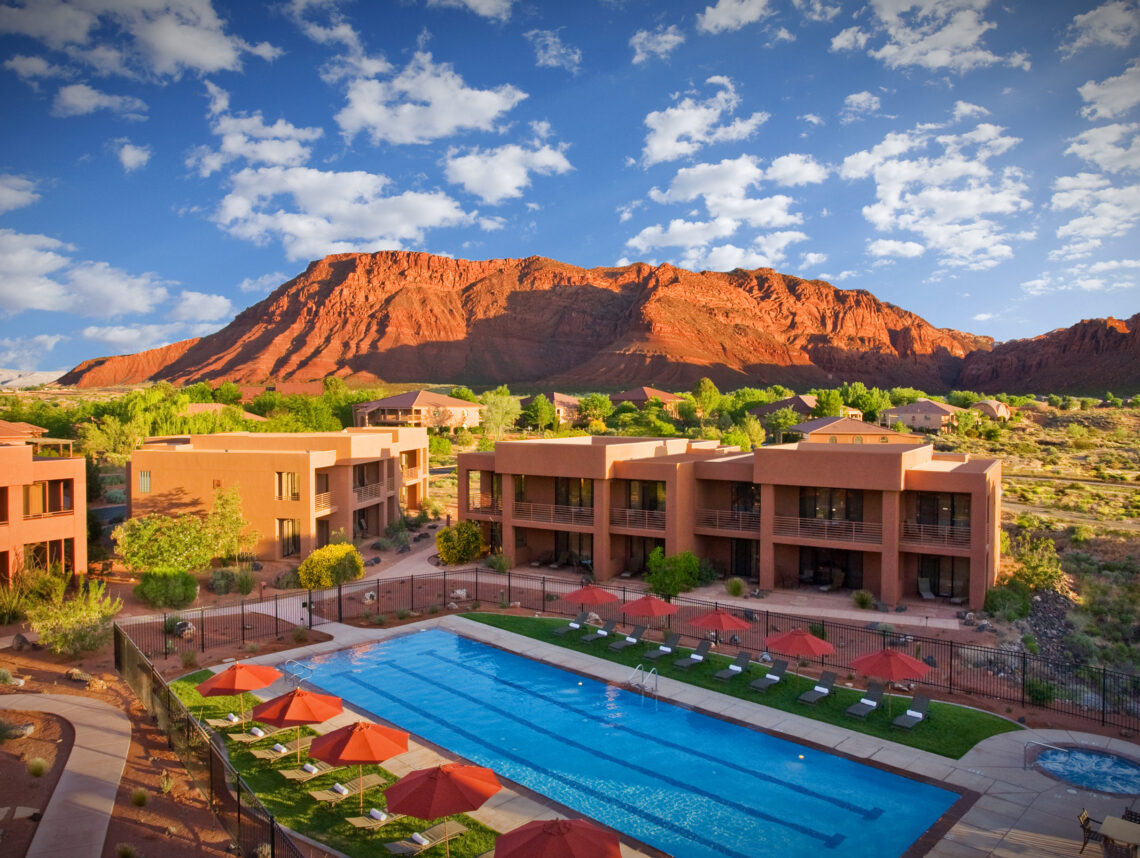
    • Red Mountain Resort: Enjoy hiking, biking, and wellness programs in Utah’s natural beauty. From relaxing spa experiences to adventurous outdoor escapes, this spa is designed to enhance your experience and create unforgettable memories.
  • Boutique Resorts
    • The Cove, Eleuthera: Relax in stylish villas with private pools, while enjoying Bahamian hospitality, including seasonal events and a variety of activities such as kayaks, paddleboards and more.
    • The BodyHoliday, Unwind with gourmet dining, spa treatments, and water sports in St. Lucia. A wellness resort in for your mind, body & spirit.
wellness spa
Red Mountain Spa in St. George Utah

Types of Adults-Only Cruises

Explore the world in style and sophistication with adults-only cruises that offer a stress-free vacation experience, providing unparalleled convenience and value. With meals, drinks, and activities all taken care of, you can relax and enjoy your journey without worrying about extra expenses. Options range from elegant all-inclusive cruises in the Caribbean, on the rivers of Europe and beyond, to adult-only cruises offering late nights, bustling bars and first-class entertainment just for grown-ups. Top-of-the-line all-inclusive cruise lines offer luxurious amenities and exceptional service, including fine dining, premium spirits, and exclusive shore excursions.

Luxury Cruises

    • Crystal Cruises: Reborn as Crystal. The adults-driven luxury line where you can enjoy luxurious amenities, fine dining, and enrichment programs.
    • Seabourn Cruises: Seabourn sails to all seven continents with two state-of-the-art expedition vessels, the Pursuit and the Venture, which takes luxury-focused exploration to the next level. Perfect for the adventurous couple, group or solo traveler and has the perfect combination of luxury and adventure.
    •  Virgin: An elevated adult-only experience defined by luxury and sophistication. Michelin-starred chefs offering award-winning cuisine. No buffets!  Think ATV’ing through the Mexican jungle, or sipping wine in the French countryside.
  • River Cruises
    • Viking River Cruises: Explore Europe’s waterways in comfort and style This allows for a more relaxed and sophisticated atmosphere on board, catering to mature travelers who appreciate history, culture, and fine amenities.
    • Uniworld. Each one of the ships is known as a floating boutique hotel, designed to fully immerse you in your destination. Uniworld takes all-inclusive luxury river cruising to an entirely new level, boasting impeccable services.
    • Scenic Luxury Cruises & Tours: Enjoy luxurious amenities and immersive experiences in Europe, including the Rhine, Danube, and Seine rivers. All-inclusive luxury with fine dining, unlimited drinks, butler service, e-bikes for excursions, and wellness centers.
expedition cruising
via aurora-expeditions.com

Activities and Amenities

Maximize your adults-only getaway with a diverse range of activities and amenities. Enjoy water sports like snorkeling and kayaking or explore land activities such as hiking and spa treatments. Evening entertainment options include live music and theater productions depending on the resort or cruise.

Conclusion

We’ve all heard about the endless buffet lines and poolside piña coladas at all-inclusive, adults only resorts and cruises, but there’s a treasure trove of hidden luxuries waiting to be discovered. These getaways aren’t just easy on the wallet; they are filled with exclusive perks and insider secrets that elevate your experience from ordinary to extraordinary. Instead of the typical highlights, think secret menus, behind-the-scenes tours, and private excursions. Follow for more! 

The Art of Alone Time: A Guide to Adults-Only Travel. Read More »

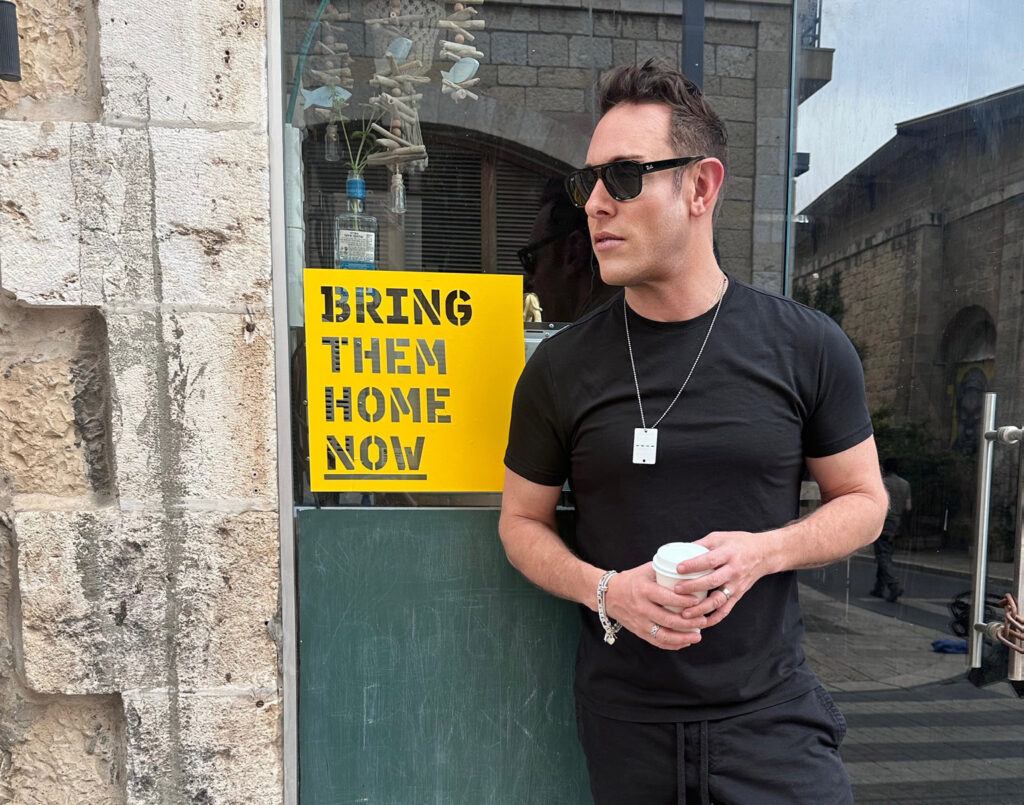
Shai DeLuca: The Gay Israeli-Canadian Fighting for Israel

Israeli Canadian social media influencer Shai DeLuca was confronted with a rather interesting claim when he spoke at the University of Rochester through CAMERA on Campus in December: A masked anti-Israel protester who claimed to be from Nablus said that there are houses in the West Bank city with LGBT flags flying from their rooftops.

DeLuca, who is gay, told The Journal that he responded by saying that he had been to Nablus and asked the protester to provide evidence of the claim. The protester claimed to have pictures on his phone. “Fantastic! Show me,” DeLuca recalled saying. But the protester said that he couldn’t show him the pictures because his phone died. DeLuca offered to provide him one of his phone chargers and that he had “all the cords” available that could fit whatever phone the protester had.

The protester’s response: “I don’t want a dirty Zionist touching my phone.”

This incident was an outlier for DeLuca when he speaks on college campuses, and he knew the protester was lying the whole time. “It’s just become so okay to lie, and so okay to be brazen about your bull,” he said.


View this post on Instagram


A post shared by CAMERA on Campus (@cameraoncampus)

DeLuca spoke to The Journal following the talk he gave at the CAMERA on Campus student conference at Boston University on July 31; he is the founder and president of Shai DeLuca Interior Design and has been in the television world for more than a decade. His work experience includes the recently canceled show “Cityline” and is currently a contributor for “The Morning Show.” His experience in television is what led to him to being “pushed into” becoming a social media influencer.

DeLuca began speaking out on matters related to Israel and antisemitism during Operation Protective Edge in 2014. “I have this platform of almost  100,000 people who follow me, I’m going to use this not only for what I talk about — which is fashion and design — but I’m going to use it as an opportunity to speak the truth,” he said. DeLuca said he has experienced antisemitism from some of his past work colleagues, but not at his current job with “The Morning Show.”

Following the Oct. 7 massacre, DeLuca has dedicated his social media entirely toward what’s happening in Israel and against antisemitism and anti-Zionism in the diaspora. “Before Oct. 7, I think that a lot less people were as brazen and as bold with their antisemitism as they are today,” he said, citing his experience at the University of Rochester as an example. While most of the response he gets on social media is positive, he does get various death threats in his direct messages inbox. “I really don’t pay attention to them,” he said.

DeLuca thinks that “‘Queers for Palestine’ makes no sense,” recalling a recent video that came out where people in the West Bank said on camera LGBT rights will never happen in Palestine. “The (Palestinian Authority’s) laws right now are that being gay is illegal. In Gaza, you are killed if you show signs belonging to the LGBT community. In Gaza you’re killed for it, in the West Bank you are at minimum imprisoned, if not killed,” he said. “From the LGBT community that knows what’s up, I’ve only gotten support. Israel has one of the, if not the biggest, Pride celebration on the Asian continent every year. And Israel is, with all of the problems that we still have, as I like to call it a gay Mecca. But there are always going to be those people who in their mind are ignorant and don’t want to see it.”

He attributes his success on social media as being the result of his straightforward, sarcastic style of speaking. “I never have a script. I am just speaking,” DeLuca said. “I am extremely sarcastic, and a lot of people like that because it puts a little bit of lightheartedness into an already difficult situation. And I’m also right to the point, and without the fluffiness that so many influencers like to use. I speak to the camera, I say what I have to say, that is it. And I think that’s really been my winning way to share information because a lot of people … they just want to hear it clearly, have it be understandable if they have no knowledge of that region.

I speak to the camera, I say what I have to say, that is it. And I think that’s really been my winning way to share information because a lot of people … they just want to hear it clearly, have it be understandable if they have no knowledge of that region.

DeLuca’s thoughts on the allegations that Israel and her defenders are “pinkwashing”? “Pinkwashing has got to be one of the stupidest things that I’ve ever heard … I grew up in Israel. In the ‘90s, I fought for gay rights. I marched in the first Pride parade,” he said. “When people tell me I’m just pinkwashing something — meaning that I’m talking about the successes of my community as a smokescreen as to not talk about what’s happening in Gaza or the West Bank — that is one of the most ridiculous homophobic and antisemitic things. What I did, the [fights] that I fought, were not so that I had to hide what was happening… in Gaza or the West Bank, I was doing it because that’s the right thing to do and I wanted to fight for my rights. So pinkwashing, in a word, is bulls—.

The pro-Israel influencer says that he welcomes anti-Israel protesters who come to his speaking events on campuses, “because those are the people that I want to hear, and I want to try to change their mind. Or at least plant a seed so that they think, ‘wait, I heard a different side of it. I might be wrong, let me research a little bit more.’”

DeLuca believes that antisemitism is “much worse” in Canada than it is in the United States. “Here I find, states have a little more power vs. the federal government. In Canada, it’s very much our federal government [that] is the problem,” he opined, citing “our immigration laws allowing the protests to be as antisemitic as they are … Because we have an election coming up next year … there are a lot of people pandering to a demographic of a community that would rather see me dead, and they’re doing nothing about it,” DeLuca said.

DeLuca also pointed out that unlike the United States, Canada has hate speech laws, but they haven’t been enforced against antisemitism since Oct. 7, as there are people walking around with swastikas and saying things like “Heil Hitler.” “Nothing is ever done about it,” DeLuca lamented.

DeLuca has visited the site of the Nova music festival as well as the southern communities that were attacked by Hamas on Oct. 7. Visiting the Nova site was particularly difficult for him because “growing up, that was me. I was one of those kids that was in those forest parties every weekend … everybody there [at the Nova festival] was so young. Everybody there was a kid. Everybody there was literally starting their lives out. They were literally in the army or just after the army, and had their entire life ahead of them. And knowing that these hang gliders came over and people saw them and thought it was part of the festival … to be gunned down like that, literally sitting ducks, that was probably the most difficult thing for me.”

Prior to Oct. 7, DeLuca was “scared for my country because it was so divided.” But after Oct. 7, the Jewish state flipped “into a country that was united. And that’s I think the secret of Israel … we are very different, we are multicultural, we are multifaceted, we have different ideas, we have returned from all parts of the world. But if you push us, we’re one unit.”

As for the communities that were attacked, DeLuca visited one three weeks after Oct. 7 and recalled a particularly pungent smell. A doctor there told him that it was “the calcification of bone fragments that had been blown into the wall. They couldn’t even get them out of the wall,” DeLuca said, adding “I’ve been to Europe. I’ve seen the camps. The camps are nothing compared to what I saw the three weeks after.”

People in Israel, he said, want the war to end so they can return to their homes in the north and in the south. “We need to a) get rid of Hamas… b) bring our hostages back… and finally hopefully we see in Gaza a government that is at least, even if they don’t love Israel, tolerates the fact that we’re there,” DeLuca said.

But “Israel is coming back to what it was” prior to Oct. 7. “If you are in Tel Aviv, you would never know that there is anything happening,” DeLuca said. For a while after Oct. 7, Tel Aviv was “like a ghost town,” but now “it’s back to itself,” he added.

DeLuca’s message to the students at the CAMERA on Campus conference and any other students gearing up to deal with anti-Israel protesters on their respective campuses in the fall: “As hard as you think you have it, think about your brothers and sisters back home who are literally losing their lives. To have to go to a protest or to speak to somebody or to yell over somebody or to explain facts to somebody, is such a small thing to do when you think about the grand scale of what the overall war is.”

Shai DeLuca: The Gay Israeli-Canadian Fighting for Israel Read More »

A Bisl Torah – New Beginnings

There is a palpable shift in the air. Summer is nearing her end and television commercials announcing “back to school” discounts frequent advertising space. I have met with multiple couples getting ready for September weddings and my calendar is nudging me to begin writing for the High Holy Days. As much as summer tries to tether us, new beginnings beckon.

Now is the time to make space for what is about to come.

Often, making space involves a regimen of clearing our closets and organizing the pantry. In my house, this is in full effect. But how does one make space for the moments, emotions, milestones, and connections that are about to transpire? Without losing who you are in the process and instead, creating a deeper level of understanding, attuned to what’s to come?

Judaism teaches us to mark the occasion. To name what gives us meaning and ritualize a blending of the past with the present, facing the future.

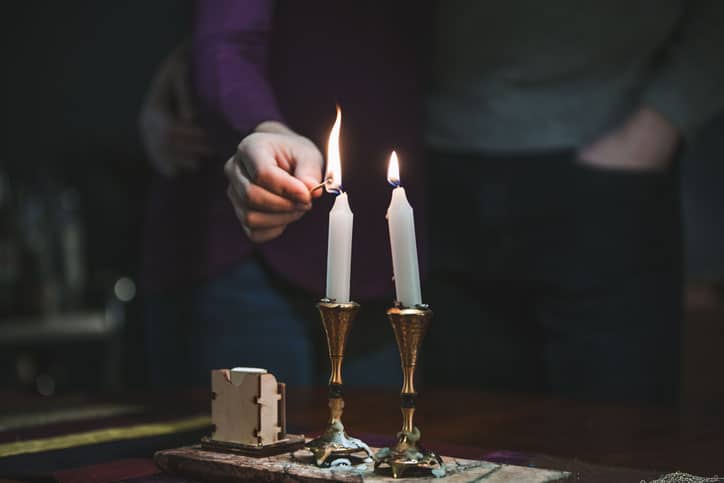
Before Shabbat begins, we light the Shabbat candles. Traditionally, the person lighting the candles motions three times, “waving” the light towards their heart over and over and over again. An opportunity to reflect during each circling of light: Tonight, I honor the past. Tonight, I embrace the present. Tonight, I make room for the future. Letting each circling of light recognize the facets of your soul—what has been created and what has yet to be formed.

A ritualized cleansing and expanding of our souls.

And as you encounter your new beginnings, I pray you honor the past, embrace the present and make room for the future.

Shabbat Shalom


Rabbi Nicole Guzik is senior rabbi at Sinai Temple. She can be reached at her Facebook page at Rabbi Nicole Guzik or on Instagram @rabbiguzik. For more writings, visit Rabbi Guzik’s blog section from Sinai Temple’s website.

A Bisl Torah – New Beginnings Read More »

Israel’s Manifest Destiny is Not the Destiny of Fate

Manifest destiny, woke-labeled catastrophe,
resembles regarding as racist the wrong quest
by Normans for England in their famous “Conquest,”
the quest for the west, trashed as base bad-ass trophy.

The manifest destiny of Jews may be
compared to that of Normans in 1066,
the loss it caused to Arabs a calamity
that, unlike Anglo-Saxons, they refuse to fix,

except by their denial to accept defeat
in contrast to all the Hastings Battle losers,
unwilling their loss as reality to treat,
of the addictive substance of illusion the abusers.

If indigenous Americans adopt the same approach
they might transform a destiny Americans had all believed
was manifest into a cockamamie Kafkaesqe cockroach
instead of the imperial identity by which they’d been deceived.

We Jews throughout the world have for millennia regarded
our destiny as the major manifestation of not just
our Fate but of a Covenant with God that will not ever be discarded:
the Covenant of Destiny made with a God in whom we trust.

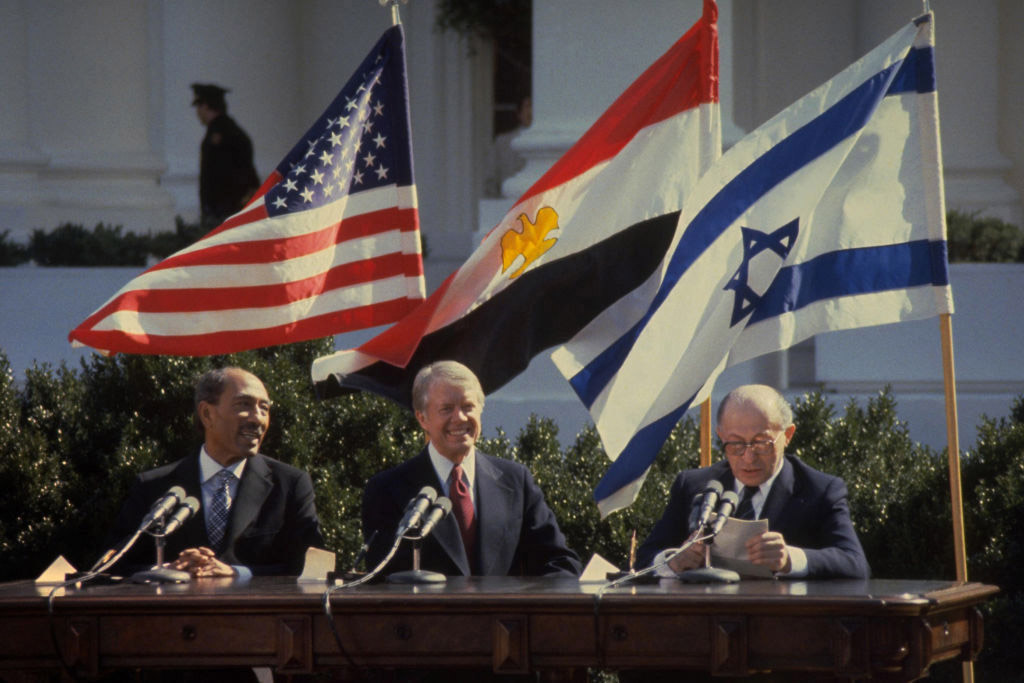
Menachem Begin, realizing this when meeting Jimmy Carter,
whose attitude towards him was manifestly hateful,
did not let Jimmy make the Jewish State become Maranathan martyr,
inspired more by the Covenant of Destiny than the fatal one that’s fateful.


President Jimmy Carter was a member of the Maranathan Church.

In “The First Tisha B’Av Since October 7: Jewish history saw the transition from the Covenant of Fate to the Covenant of Destiny, and back again,” Sapir, Summer 2024, August 8, 2024, Benny Lau writes:

After the Yom Kippur War, when Israel’s near-defeat had a sobering effect on the messianic fervor. In response, the country split into two distinct directions. One side pulled Israel east, toward traditionalist and religious nationalism. The other pulled Israel west, toward secular liberalism. These opposing winds kept blowing, eventually forming the storm of judicial reform, until October 6, 50 years to the day after the start of the Yom Kippur War — when the split began.

The eastern and western pulls weren’t merely figurative but literal. Those imbued with the eastern spirit excitedly gravitated toward the Temple Mount, the Cave of the Patriarchs, Joseph’s Tomb — places associated with the roots of the Jewish national story in the Bible, in the east. The Western intellectuals chose to turn a cold and alienated shoulder to exactly these places. To them, these sacred sites were symbols of the Jewish occupation and control of the Palestinian people.

But there was something these spirits had in common: an undeniable feeling that the exile had ended. In the language of Jewish thought, from the secularists of Labor Zionism to the religious writings of Joseph B. Soloveitchik, this paradigmatic change was defined as the transition from a “Covenant of Fate” to a “Covenant of Destiny.”

The Covenant of Fate expressed the existence of the Jewish people as a persecuted minority in the lands of the Diaspora, beholden to the choices and external powers around them. It was a mode of survival built on a common memory of powerlessness.

The Covenant of Destiny was configured around the opposite: power and agency, the will to express the Jewish experience through a national mission, unencumbered by external powers, seeking to realize its special role in history as a member in the family of nations, to be an am segula, a term often translated as a “treasured nation,” but more accurately, a “dignified one.”

In a podcast on/14/24, “How Torah Changed the World,” Rabbi Meir Soloveichik said:

Soon after his election in 1977, Begin came to America in the days before Tisha b’Av. Prior to visiting the White House, he took a trip to Brooklyn to meet with the Lubavitcher Rebbe. Asked by curious journalists why a political leader was stopping to speak with a hasidic leader, he said:

I have come tonight to our great master and teacher, the Rabbi, to ask from him his blessings before I go to Washington to meet President Carter for the important talks we are going to hold on the future of the Middle East. The people in Israel pray for the success of these very important meetings.

And then Begin added,

 I do not call them ‘fateful’ meetings, because the people of Israel, the Jewish People, are an eternal people, and their lot and future are not dependent on a political meeting with the leader of the free world. [emphasis added]

Soon after his election in 1977, Begin came to America in the days before Tisha b’Av. Prior to visiting the White House, he took a trip to Brooklyn to meet with the Lubavitcher Rebbe. Asked by curious journalists why a political leader was stopping to speak with a hasidic leader, he said: I have come tonight to our great master and teacher, the Rabbi, to ask from him his blessings before I go to Washington to meet President Carter for the important talks we are going to hold on the future of the Middle East. The people in Israel pray for the success of these very important meetings. And then Begin added, I do not call them ‘fateful’ meetings, because the people of Israel, the Jewish People, are an eternal people, and their lot and future are not dependent on a political meeting with the leader of the free world. [emphasis added]


Gershon Hepner is a poet who has written over 25,000 poems on subjects ranging from music to literature, politics to Torah. He grew up in England and moved to Los Angeles in 1976. Using his varied interests and experiences, he has authored dozens of papers in medical and academic journals, and authored “Legal Friction: Law, Narrative, and Identity Politics in Biblical Israel.” He can be reached at gershonhepner@gmail.com.

Israel’s Manifest Destiny is Not the Destiny of Fate Read More »

Fighting Campus Wars With… Nova Parties

Imagine that you’re a typical college student strolling through your campus on the way to class. You’re not Jewish. When it comes to Israel or the war in Gaza, you don’t have any strong opinions either way.

On your left, you come across a demonstration featuring the flag of Hamas and protesters yelling things like “Globalize the Intifada” and holding up signs with messages like “Zionism is Terrorism.”

The mood is hostile.

As you keep walking, you hear this cool Israeli techno music on your right and see a group of students dancing and milling around a little tent with a large Israeli flag. As you get closer, someone hands you an invitation to a Shabbat dinner.

The mood is festive.

Now ask yourself: Which group would you rather associate with — the angry haters or the cool partiers?

I’m not being flip. It’s clear that the problem of antisemitism on college campuses is deadly serious. The bullying of Jewish students we saw last year is both unlawful and unacceptable, and bullies must know there are consequences. The schools must do better, and we must keep fighting with all means at our disposal. Indeed, as you’ll read in this week’s cover story by Aaron Bandler, pro-Israel groups across the country are mobilizing to do just that.

But there’s more than one way to fight.

One way is direct: Identify the threat and fight it head on.

The other way is indirect but can be equally powerful: Fight from the side and catch the haters off guard. While they promote hate, you promote joy.

Of course it’s not either/or. We need both. We need the punches and the party. But since the idea of a party is anything but obvious in these times of anxiety, it needs a special pitch.

It’s important to remember that the anti-Israel protest movement is not simply about freedom of expression. It’s also about shutting down and intimidating Jews and Israel supporters to negate their freedom of expression. What better way to express oneself than through cool music. Not only will Jews not be shut down, they will party to boot.

For the silent majority of students whose minds haven’t yet been contaminated by hateful propaganda, these parties are especially attractive. The joy is meant for them. They are the ones who can be moved to see deeper truths.

I read recently that after the campus turmoil of last year, many Jewish students are simply hoping for a “normal year.” I get that. When you’re assaulted just for being Jewish or believing in Israel’s right to exist, it’s natural to aspire to a peaceful status quo.

That peaceful status quo, however, is not happening anytime soon. The haters are out in full force and they have the wind at their backs. College authorities seem better prepared this year to protect Jewish students, but the haters feed on such opposition. We shouldn’t expect campus anxiety to die down.

But if all we do is react based on our anxiety, we’ll just follow the usual playbook. This year we need some fresh, disruptive ideas.

Having Nova parties on campuses is a fresh, disruptive idea. It’s also strategic. It breaks the ice with neutral students so they’ll be more open to hearing the deeper truths of the conflict and the Zionist story.

The parties also show that Jews are not just focused on security and protection. We aim higher. We love life. We spread joy. This is a more accurate picture of who we are: We fight when we must, but we never forget the love of life that drives us. That’s the Jewish way.

The hundreds of Israeli partiers who perished at the hands of Hamas at the Nova festival on Oct. 7 were all about joy. What better way to honor their memories than to relive their festive spirit on college campuses?

What better way to empower Jewish students through joy when they need it most?

Fighting Campus Wars With… Nova Parties Read More »

A Moment in Time: “When You Feel Disconnected”

Dear All,

I spent my junior year of college in Salamanca, Spain. Early in the fall semester, I was feeling particularly lonely. It was hard being away from home, and I hadn’t yet bonded with many of my classmates.

So I did what any Jewish person in a Catholic country would do: I found a meditative space (outside a cathedral), and I prayed.

A few minutes later, I ran into a classmate, and he encouraged me to join a few others at a movie. I really wanted to say “no.” But I decided, “What the hell.” By the end of the night, my spirit was lifted, and the next chapter of my year began.

A prayer answered?

Or a coincidence?

Either way, at that moment in time, my feeling of loneliness dissipated.

We’ve all experienced disconnects in life.

Disconnects from family and friends.

Disconnects from our religion or from God.

Disconnects from our work environment.

Disconnects from our goals.

Just remember, even in times when those feelings overwhelm us, keep your hearts open for angels that encourage us to move forward, to refocus, and to forge a new opportunity.


With love and shalom,

Rabbi Zach Shapiro

A Moment in Time: “When You Feel Disconnected” Read More »

Print Issue: When Anti-Israel Becomes Anti-America | Aug 23 2024

CLICK HERE FOR FULLSCREEN VERSION

Print Issue: When Anti-Israel Becomes Anti-America | Aug 23 2024 Read More »

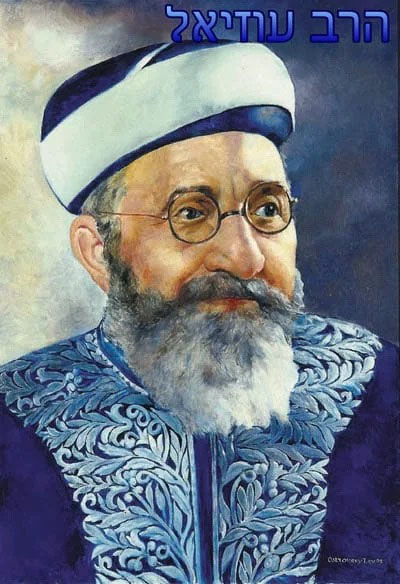
Sephardic Torah from the Holy Land | Strength Through Kindness: Rabbi Uziel’s Vision for Israeli Society

In this difficult “October 7th” year, when our singular focus is the ongoing existential reality of war and the trauma that accompanies it, it’s important to remind ourselves of the broader vision of our Jewish identity and that of the State of Israel. As challenging as that may seem at this time, the Torah and our tradition demand of us never to forget who we really are. We are soldiers by necessity, and it’s a great privilege to defend our land and our people; but we are much more than that.

In his powerful description of the greatness and strength of God, Moses reminds us of our greater purpose and mission as Jews:

“For your God is God supreme and Lord supreme, the great, the mighty and the awesome God…” (Deuteronomy 10:17).

If one were asked to fill in the blanks for the rest of the verse, and the verse that follows, they might think it should describe God’s wartime powers and ability to crush enemies. Yet here is the rest of the verse, and that which follows:

“…who shows no favor and takes no bribe. Who defends orphans and widows and loves the stranger by providing food and clothing for them.”

The true power of the “great, mighty and awesome God” is defined by God’s care and love for the underprivileged and vulnerable members of our society.

The Talmud teaches that we must “imitate God’s traits of charity and loving kindness.”

For Rabbi Uziel, our greatest opportunity to “imitate God’s ways” is to define Israeli society by the very terms in which Moses describes God:

“Our national character is not to be defined by power, weapons and war, rather by our ability to repair the world, improve the quality of life on earth, and promote the values of truth, justice, charity and ethics. The State of Israel is the Holy Land, and as such, it is the place where the light of holiness is illuminated by our building a society based on peace and love, charity and justice, loving kindness and mercy.”

During these dark days of war, it’s hard to see beyond the smoke screen of bombs and the threat of more attacks. Rabbi Uziel’s vision for Israeli society is our light beyond this darkness. He reminds us of why we live here, giving us the hope to rise above our enemies – not just as soldiers, but as warriors of light, charity and justice.

Shabbat Shalom


Rabbi Daniel Bouskila is the international director of the Sephardic Educational Center.

Sephardic Torah from the Holy Land | Strength Through Kindness: Rabbi Uziel’s Vision for Israeli Society Read More »