fbpx

July 31, 2024

Rosner’s Domain | War, Close the Door

It’s Monday morning and my brother calls. The family is supposed to vacate for a few days in Haifa. Should they go? It’s Monday afternoon. My daughter decides to cancel a trip to Hadera, south of Haifa but north of where we live, and quite close to the most strategic of targets: the electric company. My wife is also worried. In a few days she is slated to travel to the other side of the world for a vacation of a lifetime. Will she be able to fly? Some flights of international carriers are already canceled, but El-Al operates normally. For now.   

This is what a war looks like, most of the time. There are intervals in which one can plan ahead with a decent degree of certainty. There are times in which one sits in a shelter, under fire. But most of the time it is just wait time. Waiting for the siren to wail, waiting for the cabinet to decide, waiting for the enemy to retaliate, waiting for a ceasefire to start. 

As you read this column, you know what happened: Was Haifa spared, could my wife fly, does the electric company still stand? But I write when all possibilities are still a potentiality, a looming danger, a worrying question mark. Last Saturday, Hezbollah fired a rocket at Israel, one of many thousands. Something we got used to treat as a nagging routine. But not this time. The rocket landed where teenaged boys were playing soccer. It killed a dozen and forced us all to shift to the familiar waiting mode. Until Israel retaliates, until Hezbollah decides how to respond to Israel’s retaliation, until Israel decides how to respond to Hezbollah’s response to the retaliation. Of course, none of it is going to bring those kids back. 

How should Israel respond when provoked in such way? Back in 2006, PM Ehud Olmert decided to go crazy following an attack by Hezbollah in which fewer Israelis were killed. He started a war, that dragged on for a while and ended in a whimper. Most Israelis felt that the decision was rushed. The military wasn’t prepared, the goals weren’t clear, the outcome was a disappointment. Then – after some years – Israelis changed their minds. The north was quiet and Olmert’s rush to war suddenly seemed to make sense. Then Oct. 7 happened, and again, the Second Lebanon War seems like a failure. It ended with Hezbollah still on Israel’s border. It ended in a way that Israelis are no longer willing to tolerate – a murderous terror organization they can see from their backyards. 

How should Israel respond when provoked in such way? PM Netanyahu knows that public opinion is like shifting sands. Jewish Israelis might feel today that a war with Hezbollah must be fought, either now, or when the fighting in Gaza subsides. But that’s because the public believes that Israel has the potential to win the war. It is because they envision a war that is tough, bloody, costly – and decisive. Netanyahu knows that such war is a rarity and that these days most wars aren’t decisive. Israel did not yet defeat Hamas, an organization much weaker than Hezbollah. Israel is exhausted, polarized, overstretched, apprehensive. Olmert was bold, and learned the hard way that the IDF could not meet his desired goals. Netanyahu is the opposite of bold and might learn the hard way that he has no path to avoiding war other than humiliation and defeat.

Israel did not yet defeat Hamas, an organization much weaker than Hezbollah. Israel is exhausted, polarized, overstretched, apprehensive. 

It isn’t easy writing a column on a Tuesday, when everything could change in just minutes, or hours, or days. It isn’t easy being an Israeli on a Tuesday, when everything could change in just minutes, or hours, or days. The irony is that at certain moments, the siren is a relief, a moment of clarity. When the siren wails, the future is clear. Put on a shirt, carefully descend the stairs, make sure your daughter is awake, get into the shelter, look around to see the whole family is there – dog included. Close the door.

Something I Wrote in Hebrew

The right question about Netanyahu’s speech is not whether the speech was good, or strong, or exciting. The question — the morning after question — is “Is your situation better today than it was yesterday, before the speech?” And to make it clearer: Has Israel’s situation improved after Netanyahu’s visit to the U.S.? This is a question that is aimed at the purpose, not the style, that is aimed at the outcome and not the opinion. Winston Churchill, who was overtaken by Netanyahu last week in the infantile “who spoke more before Congress” contest, is remembered because his great speeches had an effect, a result. He galvanized the British nation during a war. He nudged the Americans into action. Had he made great speeches, followed by defeat, he would not have been Churchill. Netanyahu isn’t like Churchill. He is – perhaps – more like Barack Obama. Like Obama, Netanyahu has a tendency to assume that his charismatic presence would change reality. This made Obama a Nobel Peace Prize laurate – but it was not enough for him to bring peace.

A Week’s Numbers

Between March and July, the share of Israelis preferring a diplomatic settlement in the north was on the rise. But that’s before the attack that killed the boys in Magdal Shams.

A Reader’s Response:

Ahuva Cohen wrote: “How did Israelis summarize Bibi’s visit?” Answer: On Sunday, it was all but forgotten. Lebanon made it all feel like a vague thing of an irrelevant past. 


Shmuel Rosner is senior political editor. For more analysis of Israeli and international politics, visit Rosner’s Domain at jewishjournal.com/rosnersdomain.

Rosner’s Domain | War, Close the Door Read More »

Jamie Schler: Life’s a Feast, French Food and Crémet Nantais

Food has always been the main focus of Jamie Schler’s life. That bond has only strengthened over time. A Jewish American writer, specializing in food and culture, Schler has lived in France for decades.

“Once I had kids, I started to be fascinated by the cultural aspects of food,” Schler, a Jewish American food writer who has lived in France since the 1980s, told the Journal.  “[My husband and I] raised two sons who are American, French, Jewish and Catholic.”

They also have a little bit of North African, where her husband lived before they married, Eastern European from Schler’s family and some Italian heritage from the years they lived in Italy.

“They had all of these cultures that made up who they were,” she said. “it just made sense to use food … as a vehicle to teach them about all of the different parts of who they are.”

There are certain foods that are called different things in different cultures, which is one way to differentiate.

“There’s a really traditional French dish called pot-au-feu, which is basically boiled beef and vegetables,” she said.

With root vegetables and beef in broth, Schler said it’s similar to a Jewish dish she grew up with.

“That’s probably the food that [has] some variation of it found in every culture,” she said. “It symbolizes home because it’s a dish that you only make for your family, it’s sustenance [and] warmth.”

Although French food may appear to be fancy, Schler said it’s easier to make than you think.

“I realized very early on that what I had learned as an American living in the States about French cuisine wasn’t really what it was,” she said. “It was a lot more interesting and accessible.”

Schler worked in high-end culinary tourism and as an interpreter at a French cooking school, before becoming a writer. Even 20 years or so after moving to France, she realized that myths about French food were still being perpetuated in American cookbooks, food magazines and food columns.

“Most of the dishes that people assume are high-end are actually … cooked in a pot, which is a family dish,” she said. “[That[ means that it’s usually economical and simple.”

Once Schler started diving into the true French food culture – which is now her passion – she felt the need to share it. She started to write about French food, explaining the history and traditions behind French cuisine and individual dishes, which she does through her “Life’s a Feast” substack.

“You don’t need to know the traditions … or the stories behind the food, but it certainly makes the food a lot more fun to eat,” she said.

For instance, Schler explained, Americans have a vision that French onion soup uses a lot of fancy and expensive ingredients and it’s complicated to make. Schler’s husband makes it with onions, salt and pepper and water. That’s it.

“When you go back through time and you look through cookbooks from a century, two centuries, three centuries or longer, it’s exactly the same recipe,” she said.

Most French pastries, however, tend to be complicated.

“The French don’t really do that much pastry making at home,” Schler said. “The majority of the desserts that you find are high-end, because they’re what we call pastry shop pastries… they cost more money to make [and] take a lot of time to do.”

There are simpler dessert options that are refreshing and delicious.

Schler said there is a local specialty, called crémet nantais, that’s a mousse-like cream with sugar in it.

“You serve it with berries in the summer,” she said. “That’s just the kind of thing that I love.”

The recipe for Schler’s crémet nantais is below.

Subscribe to Life’s a Feast by Jamie Schler on Substack and follow @LifesaFeast on Instagram.

For the full conversation, listen to the podcast:

Watch the interview:

Crémet Nantais or d’Anjou

This is a very delicate, fragile dessert that should be manipulated as little as possible. As in anything made light from whipping, be very careful when unmolding, spooning from the sieve into the serving platter, bowl or individual bowls. Do not overfold the ingredients when preparing.

Ingredients

Approximately 300 g (10 ½ oz) fromage blanc faisselle (a chunky curdled milk product) or cottage cheese, ricotta or quark (this is a curdled white fresh cheese similar to a wet cottage cheese)

200 – 250 ml (generous ½ cup – 1 cup) fresh cold heavy or whipping cream

2 large egg whites

Pinch salt

85 g (3 oz) powdered/confectioners/icing sugar or to taste

Fresh berries or berry coulis to serve

Instructions

Spoon the fromage blanc into a sieve and place over a bowl in the refrigerator to drain the time of a meal or a few hours.

Once drained, beat the fromage blanc in a large bowl with all of the sugar, less 1 – 2 tablespoons, with a hand mixer on low speed to smooth.

In a separate bowl, beat the cold heavy cream to Chantilly – very thick whipped cream. Fold the whipped cream delicately into the fromage blanc.

In a separate, very clean bowl using very clean beaters, beat the egg whites with a pinch of salt on high speed until frothy; continue beating, gradually adding in the remaining tablespoon or two of icing sugar. Beat until the whites are stiff. Fold delicately into the cheese/cream mixture until the mixture is smooth and thick.

Place the Crémet in a fine mesh strainer or sieve (or wrapped in mousseline placed in the strainer or colander), place the sieve or colander over a bowl and place in the refrigerator to drain overnight. Alternatively, the Crémet can be divided into individual molds with holes in the bottom like a Coeur à la crème.

The following day, unmold the Crémet onto plates or place the drained Crémet in a serving bowl. Rinse the berries, pat dry. Spoon servings of the Crémet into individual dessert plates or bowls and serve topped with berries. Serves 4 to 6.


Debra Eckerling is a writer for the Jewish Journal and the host of “Taste Buds with Deb.Subscribe on YouTube or your favorite podcast platform. Email Debra: tastebuds@jewishjournal.com.

Jamie Schler: Life’s a Feast, French Food and Crémet Nantais Read More »
You’re Doing Great

Once again, it’s midnight, and I’m on my phone, mindlessly scrolling through social media. I see videos of beautiful moms making delicious homemade meals, wealthy fashionistas showing off their expensive clothing and families posting about their fabulous trips to luxurious destinations.

I think: Wow, what exciting, fun, happy lives they have. Part of me wishes I could have exactly what they do. I then feel a mixture of envy, sadness and loneliness.

But I stop myself. I put down my phone, turn off my bedroom light and lay in bed, thinking about all my blessings. When I say the Shema and talk to Hashem about everything I’m grateful for that day – even if it wasn’t a particularly fulfilling day – I realize, once again, just how good I have it.

I also realize how social media slowly chips away at this happiness, and this curated reality makes me constantly feel like I’m lacking.

In my stronger moments, I am aware that social media is not real, and there are stark reminders of this popping up all the time in the news. Sadly, a Jewish father and husband took his own life recently because he was in debt and likely felt trapped and couldn’t bear to face it. Meanwhile, he and his wife were showing off their seemingly magnificent lives on social media, where they looked like the perfect family. They had all the newest and fashionable items, owned several homes and socialized with society’s elites. And yet, festering beneath it all, there was this darkness, this hidden secret that no one could have predicted. The news reports suggested that his wife may not have known about it, either.

There are many horror stories surrounding social media. The common theme is that something was very wrong, and despite that, everything looked perfectly fine on the outside. Often, these influencers’ followers ate it up and were stunned when the truth came out.

I can relate. All my life, I’ve had a problem with comparing myself to others. When I was a teenager, sitting alone at home on a Saturday because my parents were working and my sisters were busy, I thought: What are my friends and classmates doing right now? I bet they’re having so much fun. I’m such a loser, sitting here all by myself.

But if I had seen into their homes, I would have likely gotten a much different story. Sure, some would have kept busy. But some could have also been sitting alone, wishing they had a friend like me to hang out with. Perhaps others were dealing with family issues or being dragged to activities they had no interest in.

I put everyone else on a pedestal and didn’t once think that I should be grateful. Instead of seeing the bright side of my situation – I was safe, I had a family and there were lots of things I could do at home – I fixated on the negative.

I’m so glad I didn’t grow up with social media, because as a vulnerable teen who already had depression and anxiety, I would have felt so much worse seeing my peers on Instagram and TikTok. I would not have had the wherewithal to distinguish between what’s fake and what’s real. I may have felt defeated ad collapsed under pressure, like so many people do these days.

If you find yourself envying others, or feeling bad after you scroll, here’s a tip: Limit your time on social media. Find a new hobby, even if it’s still on your phone. Download Duolingo or play Words with Friends. Watch YouTube videos to learn a skill. And if you have to go on social media, do it sparingly. Don’t mindlessly scroll. When Shabbat hits, don’t check your phone until nightfall on Saturday, when Shabbat is over. Give yourself a break.

Social media will try to convince you otherwise, but here’s the thing: You’re doing great. The fact that you are alive and reading this means you are so blessed already.

If you have a roof over your head, food in your fridge and people who love you, you have plenty to be thankful for – and that shouldn’t be taken for granted.

Social media be damned! Life is good.


Kylie Ora Lobell is an award-winning writer and community editor of the Jewish Journal. Follow her on X @kylieoralobell or Instagram @kylieorawriter.

You’re Doing Great Read More »
Summer of BRAVE-ish: Niver’s July News 2024

July News 2024 with Lisa Niver & We Said Go Travel:

I am GRATEFUL to YOU

Thank you for coming to my events, watching my videos, being excited for me winning awards and of course buying, reading and reviewing my memoir, BRAVE-ish! This summer I have had so much fun with friends at salsa dancing, bowling, and an escape room in Los Angeles and Broadways shows, family celebrations and virtual golf in New York City. Next time you are in NYC, go see my nephew, Zach Niver, perform at a comedy club!
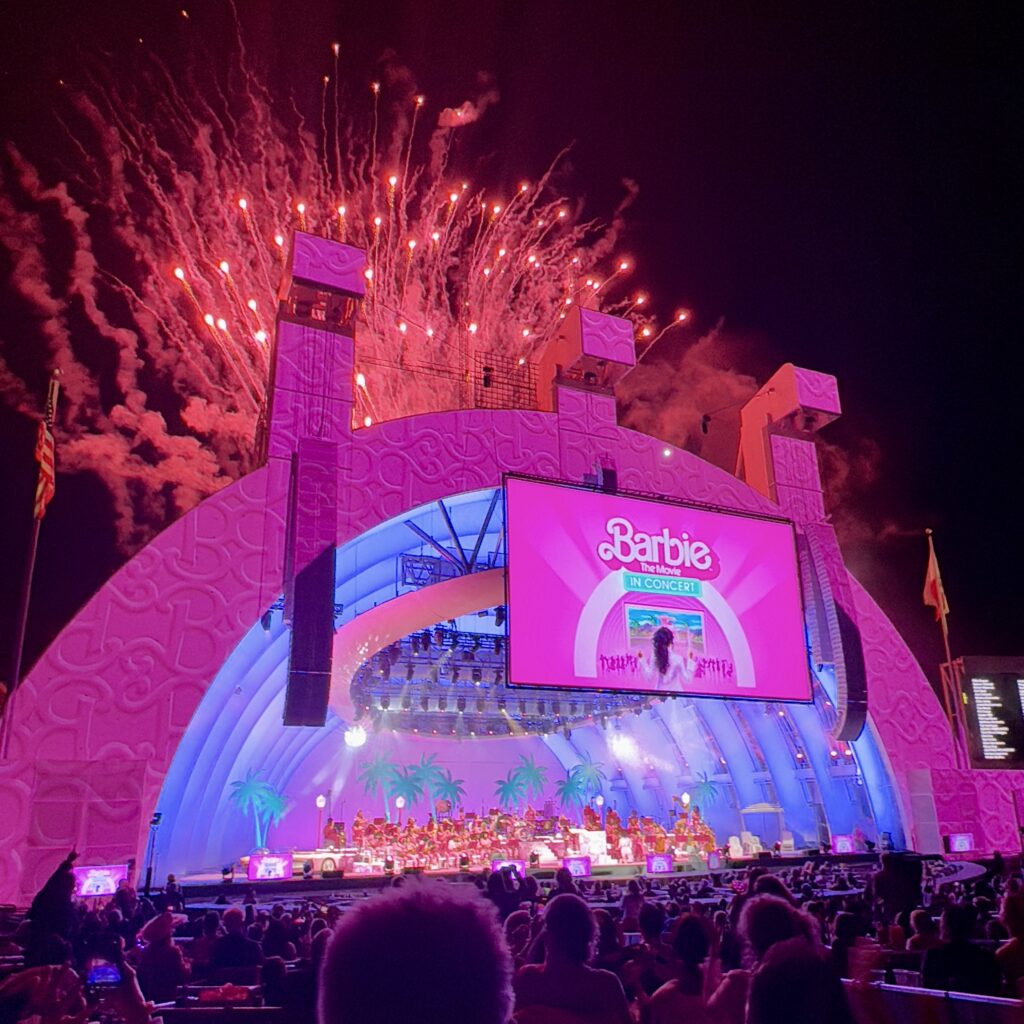
One of my favorite things to do in the summer is go to the Hollywood Bowl, we absolutely loved seeing Barbie The Movie: In Concert featuring the Barbie Land™ Sinfonietta, an all-women and mostly women of color orchestra dressed in pink jumpsuits!

Thank you to Journeywoman, Soul of Travel Podcast and Christine Winebrenner Irick for including Brave-ish in your Eight New Soulful Travel Books by Women!

Screenshot

Thank you to AARP and Beth Braverman for including me in 99 ways to save!

YAY for winning TWO awards at the Southern California Journalism Awards!

THANK YOU to Rachael at Barnes & Noble at The Grove, BJ Korros from The Hollywood Moment and every single person who joined us at the book reading and signing as well as all of our giveaway sponsors. I had SO MUCH fun!

Thank you to all of the TV shows, podcasts and people who have interviewed me. Did you know I have over 75 links on my press page about my BOOK!! Check them all out HERE!

Thank you to Debra Eckerling and the Jewish Journal for this print full page article about ME and MY MEMOIR!

Thank you Business Insider and Elle Hardy for this interview: 9 tips to fly cheaper and get through airport security faster

Thank you Christina Daves for interviewing me on your Living Ageless & BOLD PODCAST. “The podcast that celebrates us: healthy, active, fit, fabulous, fun women over 50.”

Thank you to Feedspot for naming my site, We Said Go Travel, #10 on the 100 Best Travel Lifestyle Blogs and websites for 2024. I am honored to be included among these amazing content creators.

Do you LOVE my book BRAVE-ish? PLEASE WRITE A REVIEW!! Click here to go directly to rate or review BRAVE-ish on Amazon–but you can do anywhere you bought your book! THANK YOU!! You can find my book on Amazon, Barnes & Noble, Simon & Schuster, Post Hill Press, Target, Walmart, BookShop, BAM! and wherever you get your audiobooks! People always ask me where is it best to buy my book. I recommend you go into or call your favorite local book store and ask them to order it for you and pick it up IN THE STORE! You never know what other treasures you will find. Any bookstore can order my book because my publisher is Post Hill Press and it is distributed by Simon and Schuster. My friend in New Zealand just ordered my book to her local store! Brave-ish is available all over the globe!

Learn more about my events: click here and my articles here

THANK YOU for watching my podcast! It has now been seen and heard in 48 countries on 6 continents!

USA 🇺🇸  India 🇮🇳 Canada 🇨🇦  Ireland 🇮🇪Puerto Rico 🇵🇷  UK 🇬🇧   Italy 🇮🇹  Australia 🇦🇺 Philippines 🇵🇭 Singapore 🇸🇬  New Zealand 🇳🇿 Portugal 🇵🇹 Saudi Arabia 🇸🇦 Switzerland 🇨🇭 Hong Kong 🇭🇰   Mexico 🇲🇽  Japan 🇯🇵  Fiji 🇫🇯 Seychelles 🇸🇨 France 🇫🇷 Latvia 🇱🇻  Netherlands 🇳🇱  Kenya 🇰🇪  UAE 🇦🇪 Cambodia 🇰🇭 Israel 🇮🇱Guatemala 🇬🇹 Germany 🇩🇪 Uruguay 🇺🇾 Bangladesh 🇧🇩 Spain 🇪🇸 Panama 🇵🇦 Thailand 🇹🇭 Uganda 🇺🇬   Greece 🇬🇷  South Africa 🇿🇦 Costa Rica 🇨🇷 Bosnia and Herzegovina 🇧🇦  Sri Lanka🇱🇰Romania 🇷🇴 Pakistan 🇵🇰 Ghana 🇬🇭 Slovenia 🇸🇮 Cayman Islands 🇰🇾 Russia 🇷🇺 Norway 🇳🇴 Denmark 🇩🇰 Poland 🇵🇱 WATCH my podcast, “MAKE YOUR OWN MAP: Are YOU ready to be BRAVE?” on Spotify, Apple Music, Amazon Music, YouTube PodcastGoogle Podcasts, Audacy, Audible, Anchor, PandoraiHeart Radio

WHERE CAN YOU FIND MY TRAVEL VIDEOS?

Here is the link to my video channel on YouTube where I have over TWO MILLION views on YouTube! (now at: 2,175,000). Thank you for your support! Are you one of my 4,335 subscribers? I hope you will join me and subscribe! For more We Said Go Travel articles, TV segments, videos and social media: CLICK HERE

Find me on social media with over 150,000 followers. Please follow  on TikTok: @LisaNiver, Twitter at @LisaNiver, Instagram @LisaNiver and on FacebookPinterestYouTube, and at LisaNiver.com.

My Podcast: “Make Your Own Map!”

Fortune Cookie SAID:

“Sunshine and smiles await—embrace the fun and make unforgettable summer memories!”

Do you love audiobooks? My memoir, Brave-ish, is available on all audio platforms! Did you know that authors have to audition to narrate their books? Are you connected to the GRAMMYs? Please nominate me for my audiobook narration for the Grammys!

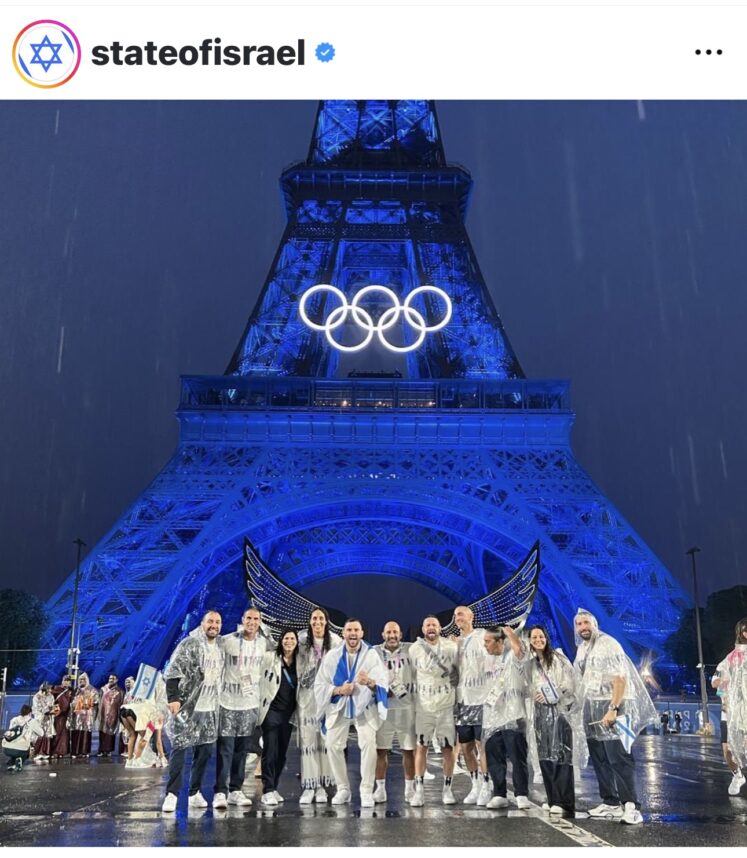
In the spirit of July 4th, I am praying for peace ☮️ love ❤️ and freedom for all. 💔🇮🇱💙I continue to hope for all the hostages to be returned to Israel. Wishing luck, safety and shalom to the Israeli athletes starting their journey in Paris! Did you know I was part of the 1984 Olympics in Los Angeles?
Screenshot
 

Summer of BRAVE-ish: Niver’s July News 2024 Read More »

SB_logo2

Early Hanukkah Gift ft. Michael Valdes (@hotjewishenergy) & Danielle Brody (@jewsindoodles)


The Schmuckgirls are back with their first duo episode! Before getting into it with their guests, the girls give updates on their lives from wedding planning and dating. This week they bring on Michael Valdes aka Hot Jewish Energy and Danielle Brody aka Jews in Doodles, host of Mitzvah or Shanda and together the two of them co-wrote “Hot Jewish Hanukkah.” In their updates, Danielle reveals a new serious relationship and their meet-cute and Michael explains the dynamic of paying on dates within the gay community. The duo explains how they connected through the internet and immediately hit it off in their comedy creator minds. They collaborated on “Hot Jewish Hanukkah” – a funny modern version of the Hanukkah story made for adults. Michael and Danielle both share about their Jewish journeys. Michael grew up in a more religious world, but never felt he fully fit being part Cuban and part Persian. Building his online presence though, he started to reconnect to his Jewish identity. And it’s been his goal for everyone to feel welcome in the Jewish community no matter who they are. Danielle grew up less religious but got more connected to her Judaism after going on birthright. They then take turns sharing some of their wildest Jewish geography stories. Danielle and Michael go on to share about some of the issues within the Jewish dating world. Connecting to the current state of the world, they then discuss how they balance their fun/comedic content with also addressing antisemitism. Michael then shares about his hope and dreams of peace and how he just wants to help shed light. They also share things they wish non-Jews understood about Jews. They end with a game of Hot or Not.

You can find Michael on Instagram @hotjewishenergy. Danielle Brody @jewsindoodles and Schmuckboys @schmuckboysofficial

Early Hanukkah Gift ft. Michael Valdes (@hotjewishenergy) & Danielle Brody (@jewsindoodles) Read More »

The Case for the Golan Heights

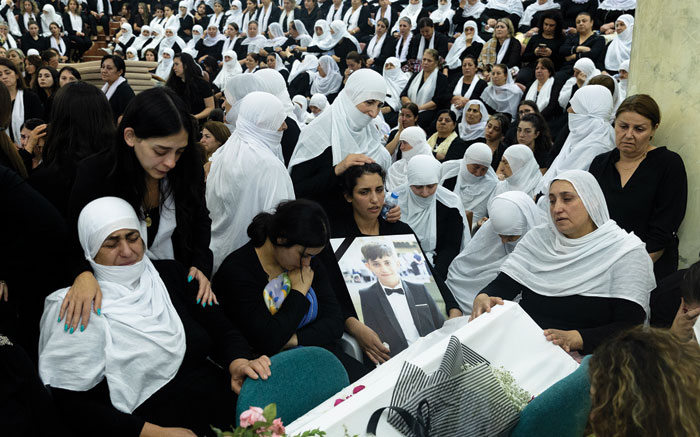
On Saturday, the Golan Heights came under global scrutiny when Hezbollah bombed a soccer field in the Druze village of Madjal Shams, killing 12 children.

This is an unspeakable tragedy. It is also a reminder of the terrible and worsening condition of Israel’s north, which has been under attack since Oct. 8. In January, a mother and son were crushed to death when Hezbollah fired an anti-tank missile into their home. In early July, a married couple were killed by a direct hit, leaving their three children parentless. And now this — 12 innocent lives stolen. 

There is an ongoing media campaign to obscure the nature of this conflict. The New York Times, reporting on the Majdal Shams strike, explained the context like this: “Since October, both sides have fired thousands of missiles across the Israel-Lebanon border, wrecking towns, killing hundreds, displacing hundreds of thousands and leading both to threaten to invade the other.”

This clumsy sentence is engineered to make it seem as though there is no clear aggressor here — just rockets flying in both directions — when in fact, everything that is happening in Israel’s north is a result of Hezbollah’s unprovoked attacks on Israel which started on Oct. 8 and continue through today.  

For anti-Zionist activists, this attack is extremely problematic. For one, it paints Israel not as Goliath, but as a small David being sniped at by three Iranian proxy armies as well as Iran itself. In addition to this, activists who have branded themselves as defenders of innocent children are now being put in the uncomfortable position of having to justify Hezbollah’s horrific attack on children. Complicating this further, the victims weren’t even Jewish, so they can’t be smeared as colonizers who deserve their fate.

The solution to this pickle has been to reframe the story — focusing on the Golan Heights as “occupied territory.” 

In 1967, when Israel was attacked by Egypt, Syria and Jordan for the second time in its short history, Israel managed to capture territory from all three. Israel traded the vast majority of this land in exchange for peace treaties, but Syria — adamant about not recognizing Israel — refused to negotiate any possible land-for-peace arrangement over the Golan Heights.

Eventually, Israel annexed the territory, a move that the international community condemned and continues to contest. 

According to the BBC, Hezbollah’s rocket landed not in Israel, but in the “Israeli-occupied Golan Heights.” CNN echoed this language while the New York Times softened it somewhat, calling the area “Israeli-controlled” rather than “Israeli-occupied.” 

The choice of American news outlets to describe the Golan in this way is somewhat baffling. America officially recognized Israeli sovereignty over the Golan Heights in 2019 — a Trump policy which President Biden has not reversed. 

That said, as far as most of the world is concerned, including all major international bodies, the Golan Heights are indeed occupied. To say otherwise would be to compromise the rules-based international order according to which land is not to be acquired through force.

A nice sentiment, but unfortunately, Israel’s neighbors — who have spent nearly a century attempting to wipe the Jewish state off the map — don’t hold by it. 

This prim insistence on respecting sovereign borders only works when you are surrounded by countries that respect your sovereign borders. Israel is not.

One of the more depressing revelations of the current war is the extent to which the international community has been hijacked by actors who have no intention of playing by its rules. Hamas, which violates every rule of war as a matter of principle, has played the international community like a fiddle. They steal humanitarian aid; endanger civilians by not wearing uniforms; hide rockets in mosques, schools, and U.N. installations; and park whole battalions of fighters in humanitarian areas—all the while racking up diplomatic wins from the U.N. and the EU. The Hamas takeover of UNRWA—the U.N. agency tasked with providing services to Palestinian refugees — provides a particularly literal case-in-point of this dynamic.

One of the more depressing revelations of the current war is the extent to which the international community has been hijacked by actors who have no intention of playing by its rules. 

It is time for a radical change of course. Were Israel to somehow be persuaded to give up the Golan, this would be a terrible outcome on three levels. One, it would be suicidal for Israelis, who would have given an avowed enemy a diplomatic win and a nice launching pad. Two, it would be bad for the Druze, who would suddenly find themselves subject to a murderous dictator. Three, it would be bad for the rules-based international order, as it would constitute a reward for the illiberal, terrorist axis of resistance. 

If the international community actually wants to defend the lofty ideas of “human rights” and “international law,” they should instead join America in recognizing the Golan, sending a message to those who continue to violate Israel’s borders that they will no longer get a free pass.


Matthew Schultz is a Jewish Journal columnist and rabbinical student at Hebrew College. He is the author of the essay collection “What Came Before” (Tupelo, 2020) and lives in Boston and Jerusalem.  

The Case for the Golan Heights Read More »

Focus Groups on Campus Antisemitism Show What a Difference Administrations Can Make

At the StandWithUs International Conference, an Israel-focused training conference for StandWithUs high school interns and college fellows, Jewish fellows had the option to sign up for focus groups to describe their experiences on campus before and after Oct. 7. Because focus groups are inherently small research interview groups, we cannot use these results to make broader statements about the experiences of other Jewish students on campus. However, multiple surveys have reported an alarming increase in hostilities on campus, and this was an opportunity to explore that trend further. 

The majority of students we interviewed went from having relatively quiet campus environments to dangerous ones with major incidents, such as vandalism and assault.

The majority of students we interviewed went from having relatively quiet campus environments to dangerous ones with major incidents, such as vandalism and assault. Increases in antisemitism seem to be exacerbated and built upon the previous level of antisemitism experienced on that campus prior to Oct. 7. In contrast, we heard from some students whose administrations have been very supportive, resulting in a safer environment even in the face of attacks perpetrated by other students. The focus groups consistently identified that the experiences of Jewish students on campus, be they positive or negative, are greatly influenced by their university administration.

Minor incidents escalating to major incidents on campus after Oct. 7:

At the University of Miami, Brenda (all names changed for privacy) felt safe and supported before Oct. 7. She openly expressed her Jewish identity without concern, stating “I’m a loud and proud Jew… and I never had to think twice about being loud and proud (and) feel safe and supported… before Oct. 7.” 

 After the Hamas massacre, things completely changed. Student groups who were “in support of terror, hosting teach-ins, and spreading disinformation,” gained a large following on social media. As a result, she feels fearful in class, because she “wonders who around me supports … genocide of the Jews.” In addition, Brenda was harassed via social media by a fellow student, who called her a “racist,” “in support of genocide” and other unspeakable names. She blocked and reported the student, at which point the school issued a no contact order. The student then looked up her email online and continued to harass her. The school held him accountable for his actions in accordance with its “no tolerance” policy, and did not allow him to register for classes until he sat down for a hearing. Brenda felt that she was taken seriously and supported on campus, which changed her experience of the incident. 

 Adrienne from Montclair State University in New Jersey noted a quiet campus before Oct. 7, with an inactive Students for Justice in Palestine (SJP). Jewish students encountered no significant issues. Since then, “the harassment and online bullying has (gotten) really bad for Jews.” It was the semester that Oct. 7 took place, and the president of SJP consistently came to class with a Palestinian flag and hateful rhetoric. Adrienne decided that “seeing him come in every day with his flag, I’m just gonna come in with mine. He already knows who I am, because I’m very much, loud and proudly the president of my Hillel … if I already am a target, I may as well lean in all the way, and not be a scared one.” She also shared that, “from the university, the complete lack of caring is more concerning to me than what the students are doing.”

At the University of Cincinnati: Jon reported minor antisemitic incidents (that were not perceived as malicious) before Oct. 7, such as the menorah outside of Chabad being ripped down by a drunk fraternity guy. Jon says that he had formed a great relationship with the SJP by asking them to coffee and creating dialogue and collaboration.

After Oct. 7, Jon put up an Israeli flag outside of his fraternity house and two days later the house was egged. A few weeks after that, someone entered through the side door and defecated on the floor, after which the police and administration got involved. In a conversation with the Director of Student Affairs, Jon states that she was “very comfortable telling me that the calling for the genocide of Jews depends on the context…and that just made me so sick to my stomach … being in that office and having her tell it very comfortably to my face …” Jon walks around with his “head on a swivel. I’m so scared … to wear something like this that says Israel on it … because people know who I am … I’m scared a lot, but I am not afraid. I’ll continue to wear my Israel clothing and stand up.”

Major incidents before Oct. 7 which only got worse:

Dahlia from UC Santa Cruz vividly describes that her campus “has always been a social justice warriors’ campus, everyone is extremely neoliberal … extremely socialist and borderline communist loving.” The students want everyone to be “treated equal … (and) represented.” They also seem to want to “take back colonialism.” Dahlia noted a lot of anti-Israel and antisemitic sentiment. Targeting and harassment of Jewish students both online and in person, as well as issues with the SJP and the MSA (Muslim Students Association), which eventually was disbanded due to antisemitism, contributed to the hostile environment. Dahlia adds other incidents of antisemitism including “a Hitler birthday party, on 04/20 … if you guys didn’t know, that’s Hitler’s birthday.” She also cited issues with professors and Teaching Assistants (TAs), including a TA who stated that “Jews were cooperative with the Holocaust.”

 After Oct. 7, SJP, and JAWS (Jews Against White Supremacy), an anti-Zionist group that opposes Israel’s existence created hostility on campus. “I feel scared,” said Dahlia. “During the fall quarter I became a recluse… I stayed home … I didn’t feel safe on campus … I got really paranoid … I was convinced that someone was going to hurt me … I was constantly looking over my shoulder… in lectures … convinced … what if someone behind me could want to kill me…everyone knows me … but I don’t let it stop me from showing my Judaism … I’ll talk in Hebrew… wear my Jewish star … I’m not ashamed … I will be loud and proud even though it’s hard sometimes.” Dahlia states that trying to engage the administration “was a lot of pulling teeth…” but because they have made some minimal efforts to engage after many attempts, she feels hopeful that things can change. 

No incidents before or after Oct. 7:

It is notable that the only student who reported no incidents before or after Oct. 7 came from Pepperdine University, a Christian college in Malibu, California. Connor reported that the campus was completely quiet before the attack and remained quiet afterwards. The official stance of the university is pro-Israel, and they released a pro-Israel statement. Connor wears a yarmulke in public and has gotten approval for a mezuzah on his dorm. He stated that he is “very proud and happy” to report this about his campus.

Conclusion

Even on campuses where student groups exhibit hostility and violence, university administration support can significantly improve the Jewish student experience, including feelings of safety and hopefulness. Conversely, at universities where student groups are antagonistic and the administration does not support Jewish students, there is a heightened sense of fear, concern, and lack of safety. This should serve as a reminder to administrators about how much influence they have, and their responsibility to do everything in their power to stand up for Jewish students.


Alexandra Fishman Ph.D. is Director of Data & Analytics at StandWithUs, an international, non-partisan education organization that supports Israel and fights antisemitism. 

Focus Groups on Campus Antisemitism Show What a Difference Administrations Can Make Read More »

The Causative Relationship Between IHRA and Anti-Palestinian Racism

For every action, there is an equal and opposite reaction. The latest iteration of this phenomenon can be found in a new framework that is being introduced in K-12 education called “anti-Palestinian Racism” (APR), a reaction to the IHRA working definition of antisemitism.  The relationship between IHRA and APR is one worth exploring, for it highlights how anti-Jewish activists learn from us — that if Jews can establish and operationalize a definition of antisemitism, architects of “Anti-Palestinian Racism” can do the same. 

It came as a tsunami, or so it seems. In the doldrums of the summer hours when school is out, radical activists in the garb of the Arab Canadian Lawyers Association drafted “Anti-Palestinian Racism: Naming, Framing, and Manifestations,” a report that details rhetoric and behavior deemed to be racist against Palestinians. It has already been adopted by the Toronto District School Board (TDSB) in a vote of 15-7. 

Scanning reactions from the organized Jewish community, a unified front mobilizes around the need to “urgently implore our school districts to adopt IHRA.” But what if IHRA, a working definition of antisemitism, is the action that created “anti-Palestinian Racism,” an equal and opposite reaction?  

One would assume that the creation of a definition emerges from a problem. The creation of this sub-type of racism, anti-Palestinian racism, presupposes a surge of racism directed at Palestinians. However, according to Axios, anti-Jewish hate crimes, which spiked in the fall of 2023 following the Oct. 7 massacre in Israel, have replaced Black Americans as the most targeted group in America’s ten largest cities. Claiming that “most people do not report these incidents [anti-Palestinian racist incidents] because of a fear of reprisal in their workplace or their profession,” drafters of the APR report no data on anti-Palestinian hate crimes directed at Palestinians in the West. Moreover, among Generation Z, support for Palestine and the Palestinian cause is rising. What then prompted the creation of this new — in their own words — “extension of Orientalism, anti-Arab racism and Islamophobia”?

The origin story of “anti-Palestinian racism” is located in California and the battle over the Liberated Ethnic Studies Curriculum in K-12 education in 2019. Tipped off about antisemitic tropes, demonization, and delegitimization of Israel within the curriculum, Jewish advocacy groups began to ring the alarm bells. Their warranted concerns compelled state officials to criticize the first draft of the ethnic studies curriculum sharply and ordered major revision by writers from the state Department of Education. 

Claiming the curriculum to be “anti-Jewish,” Jewish advocacy groups demanded school districts adopt the IHRA definition of antisemitism. Their thinking? If schools had a working definition of antisemitism, this would function as a guardrail, thus preventing antisemitic content from reaching classrooms. Unlike “anti-Palestinian racism,” the IHRA definition emerged from a real surge in anti-Jewish hate crimes, which have been on the rise long before Oct. 7. Between 2021 and 2022, the number of antisemitic hate crimes increased by 36%, the highest ever recorded by the FBI. 

However, in addition to possibly birthing the “anti-Palestinian racism” framework, several problems emerge from IHRA. For scholars of antisemitism, enshrining and codifying a complex phenomenon such as antisemitism limits our ability to keep up with a hatred capable of evolving and shifting. Additionally, while the definition was adopted in 2016 by the International Holocaust Remembrance Alliance (IHRA), an international organization based in Stockholm, it has been challenging to adopt as many continue to see IHRA as a tool to target free speech. But the most dangerous “equal and opposite reaction” to IHRA may have come in the form of Anti-Palestinian Racism.

For scholars of antisemitism, enshrining and codifying a complex phenomenon such as antisemitism limits our ability to keep up with a hatred capable of evolving and shifting. 

Let us then examine the language used in IHRA and compare it to APR. According to the IHRA definition, “antisemitism is a certain perception of Jews, which may be expressed as hatred toward Jews.” To help guide policymakers, IHRA offers examples to illustrate antisemitism. Among the several examples are dehumanizing, demonizing, or stereotyping Jews as a collective and denying the Jewish people their right to self-determination, e.g., by claiming that the existence of a State of Israel is a racist endeavor, thus implying Jews are indigenous to Israel. 

What is anti-Palestinian racism? According to the Arab Canadian Lawyers Association, “anti-Palestinian racism is a form of anti-Arab racism that silences, excludes, erases, stereotypes, defames or dehumanizes Palestinians or their narratives.” And just like IHRA, drafters of this new framework provide examples as a guide for what constitutes “anti-Palestinian racism.” Among the leading examples of forms of APR are “denying the Nakba, dehumanizing and defaming Palestinians, and failing to acknowledge Palestinians as indigenous people with a collective identity tied to a historic Palestine.”

Remarkably, several examples from the Anti-Palestinian Racism report function as foils to IHRA’s guiding examples. Take, for instance, that “failing to acknowledge Palestinians as indigenous people” and IHRA’S “denying the Jewish people’s right to self-determination in their ancestral homeland.” Or “defaming Palestinians as a terrorists threat” and IHRA’S “accusing Jews as a people of being responsible for real or imaging wrongdoing committed by a single Jewish person.” And finally, “denying the Nakba” and IHRA’S “accusing the Jewish people of inventing or exaggerating the Holocaust” (i.e., denying the Holocaust). 

The plethora of examples of anti-Palestinian racism inspired by antisemitic canards should not come as a surprise. The antisemite projects onto the Jews their anxiety and fear while simultaneously appropriating antisemitic tropes to their culture. To wit, the antisemite has learned how to use our language and shared experiences against us. Are we to blame? 

In 1944, Polish-Jewish jurist Raphael Lemkin coined the term “genocide” in his work, “Axis Rule in Occupied Europe.” Lemkin would later serve with a team of Americans working to prepare documents for the Nuremberg trials, where he was able to get the word “genocide” included in the indications against Nazi leadership. Seventy-eight years later, the word “genocide” is being used against the Jews vis-à-vis Israel. 

“For every action, there is an equal and opposite reaction” is a critical reminder that our actions may have unsolicited consequences. Does this mean we stop advocating for ourselves, retreat to silos? Of course not. What it does mean is rethinking strategy. What has the creation of the IHRA definition given us? What will mandatory antisemitism training sessions achieve?  

The biggest delusion is thinking we can end Jew hatred. No, it exists in order to rectify the world, for the appearance of antisemitism is one of the early symptoms of a diseased system. To heal the system — be it an institution such as higher education or the government — we must think beyond antisemitism. This means thinking beyond ourselves and what’s in our best interest—thinking about what’s in the best interest of everyone, not just the Jews.


Naya Lekht received her Ph.D. in Russian Literature and wrote her dissertation on Holocaust literature in the Soviet Union. Naya is currently the Education Editor for White Rose Magazine and a Research Fellow for the Institute for Institute for the Study of Global Antisemitism and Policy. 

The Causative Relationship Between IHRA and Anti-Palestinian Racism Read More »

The Beauty of Helen

When I was attending public school in Beverly Hills in the 1990s, I mostly interacted with two kinds of mothers: Western-born moms who seemed to have it all together; who scheduled extracurricular activities for their kids, packed Pinterest-worthy school lunches (if Pinterest had existed then) and generally navigated American life seamlessly. At the time, I thought these mothers were perfect. 

The second type of mothers were newly-arrived refugees from Iran — resilient, amazing women who, nevertheless, were struggling with the simple basics, such as learning English. Among those unassimilated moms, my mother often seemed like the undisputed queen, because she still clung to Iranian traditions with so much zeal.

That probably explains why my extracurriculars mostly consisted of descaling giant, dead trout on our dining room table, and cracking hundreds of walnuts with a meat cleaver. 

But among the mothers born in the West, there were one or two who, in my mind, vied for queen. Helen was at the top of that list. 

I first met her daughter, Natalie, in the second grade. This little girl was kind, hilarious, beautiful and frighteningly smart. I knew I had to meet her mother. 

I fell in love with Helen from the moment she opened the front door and invited me into her home. I couldn’t tell which sparkled brighter: Helen’s eyes or her vibrant accessories. She wasn’t pretentious, but there was no doubt about it: Helen was fabulous. 

I walked into the kitchen, where she and Natalie were preparing a pot of something called “mac and cheese.” I stared at the sight of a glamorous woman with sparkling eyes, her jet-black hair cut short in a way that was cooler than all of the other moms, and her colorful bracelets jangling back and forth as she stirred a pot of pasta with a wooden spoon. 

Helen was so put together, and it was one of the first times in my early life that I realized that a woman could be a mother and still practice self-care. As a child refugee, that was a precious realization for me. 

And like her mythical Trojan namesake, who was immortalized by Christopher Marlowe in “Dr. Faustus” (1604), Helen also possessed “the face that launched a thousand ships,” and, as far as I was concerned, the graceful hands that, over the years, stirred a thousand pots of mac and cheese. 

Helen also loved being Jewish. She loved Israel and Hebrew. Her Jewishness was a deeply meaningful part of her identity. And the fact that I loved her daughter for infusing my life with laughter, friendship and warmth also brought me closer to Helen. In fact, I’ve stayed close with Natalie for over 30 years.

Over the years, I remained in Southern California while Natalie studied and worked on the East Coast, and I continued to stay in touch with Helen. Until the pandemic began, she was even an honored guest at our Rosh Hashanah and Passover seders. 

But as I grew older, my perception of Helen evolved: Where I once idealized her, I eventually realized that her life wasn’t perfect. Even my preconceptions of her as the quintessential American mother were challenged in a deeper way when I learned that she was the daughter of Jews who had escaped Poland before the Holocaust, and she was the only one of her siblings to have been born in America (the others were all born in Mandatory Palestine).  

Helen stayed a part of my life, and once I became a mother, she showered my children with love. But after COVID-19 erupted, I didn’t see Helen for a year and a half. Then one day, Natalie called me with the devastating news that Helen was suffering from ALS, also known as Lou Gehrig’s disease, or amyotrophic lateral sclerosis, a progressive neurodegenerative disease. 

By the time I felt it was safe enough to visit Helen at The Jewish Home for the Aging (now called Los Angeles Jewish Health), she was confined to a wheelchair and having difficulty speaking, as she was losing control of the muscles in her mouth and throat. 

The first time I saw Helen and listened closely as she tried to utter a few words, I began to weep and turned my head so that she wouldn’t see me. That was the day before Rosh Hashanah in September 2021. 

I had come to wish Helen “Shana Tova u’Metuka.” Not surprisingly, her eyes still sparkled and there was still so much that she wanted to say. It’s not often that we’re reminded that the simple ability to speak is a profound and often-ignored blessing. Though I struggled to understand Helen’s words, I had known her for so long that I understood her sentiments through her eyes. That day, her eyes smiled.

Though I struggled to understand Helen’s words, I had known her for so long that I understood her sentiments through her eyes. That day, her eyes smiled. 

And there was something else: I looked at her hands and saw that her nails, painted bright red (her favorite color) at The Jewish Home’s salon, were utterly fabulous. Come to think of it, her crisp, white shirt perfectly matched her pants, and her pants were a perfect color combination with her big, red, beaded necklace. Helen was still prioritizing self-care. It was amazing. 

The last time I saw Helen was at Natalie’s baby shower. By then, she was completely unable to speak, but I could tell that her heart was overjoyed at the thought of her first grandchild. Using her eyes to scan a keypad, she expressed one sentiment that appeared on a small monitor by her wheelchair: “I am thrilled to be here.”

I’ll never forget those words; they are the essence of life and living. Imagine arriving anywhere, from a doctor’s office to a Zoom meeting to a meal with loved ones and thinking, “I am thrilled to be here,” simply because you are alive. Now, imagine how blessed you are to be able to utter those words aloud because you can still speak. 

The most painful aspect of sitting with Helen three summers ago was being in the presence of someone who badly yearned to speak, and who had so much to say. But her body simply would not allow her to open and close her mouth. It forced me to realize how often I squander the gift of speech by speaking negatively. It also reminded me that I missed the sound of Helen’s voice. 

Helen passed away on July 31, 2022, at the age of 66. With most of our childhood friends dispersed across the country, I stood by Natalie, her younger sister, Naomi, and their family at the burial in Los Angeles. 

Lifelong friends are precious: You’re there for one another during scraped knees, then later, teen angst, and even later, the wonders and challenges of young adulthood. And if you’re lucky enough to remain loving friends for decades, you are also there during times of untold pain, when friends matter most. 

For their part, Natalie and Naomi advocated for Helen’s wishes. And they reiterated that after years of pain, Helen was finally free. 

There’s something special about the mother of a close childhood friend. If you reflect on your own childhood, there might have been one or two kind mothers of friends for whom you’re still grateful. 

If it’s not too late, find them, whether through your friends or on social media, and send them a simple note: “Thank you for the kindness and love you showed me when I was a kid. It meant a lot to me.” And of course, check in with your own mother, if she is still alive (and try not to scroll your phone during the call; she’ll always know if you’re not fully present).

Today, I find myself holding on to precious advice that Helen offered me when I visited her the day before Rosh Hashanah several years ago. I’d told her that I was inspired by her resilience, and when I returned home from our visit, she had sent me a text message, confiding that her life wasn’t always easy. And then, reflecting on how she had managed to navigate one particularly painful hardship many years ago, she wrote, “Tabby, I don’t look backwards.”

But I can’t help looking backwards, to Natalie’s house, several decades ago. For me, everything about Helen was warm, memorable and palpable, whether it was her dazzling eyes or, if I was really lucky, a steaming bowl of mac and cheese. 

And every now and then, when I am reminded of the indescribable blessing of speech, I whisper a prayer in her beautiful name. 

To support the fight against ALS, or to access information and resources, please visit the I AM ALS website at http://www.iamals.org


Tabby Refael is an award-winning writer, speaker and weekly columnist for The Jewish Journal of Greater Los Angeles. Follow her on X and Instagram @TabbyRefael.

The Beauty of Helen Read More »

Just Following Orders

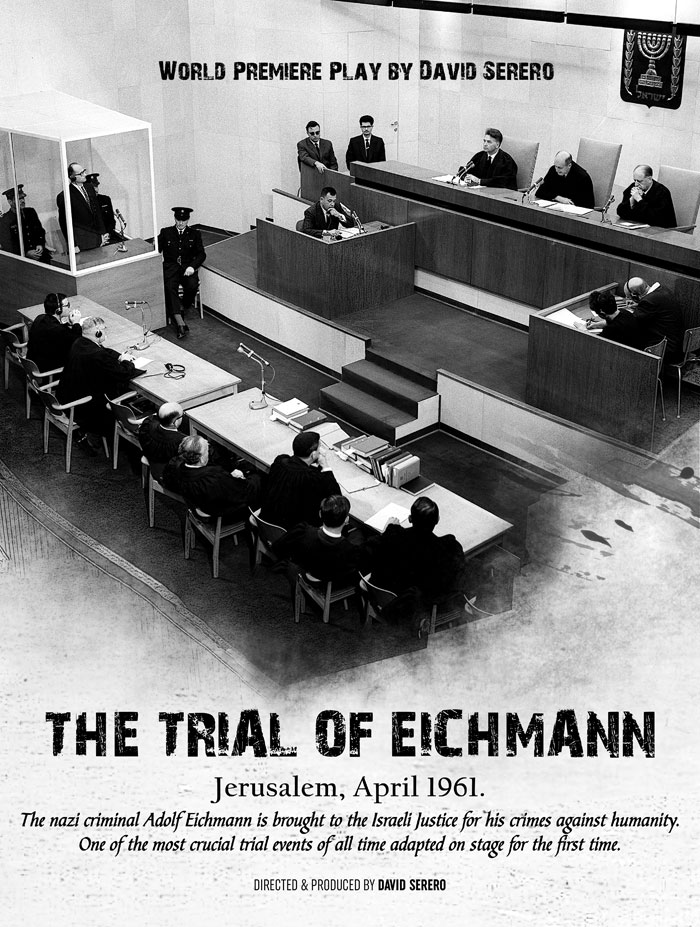
“All I did was follow the orders of my superior,” Adolf Eichmann famously said at his eight-month trial in Jerusalem, which began in April 1961. “There can be no guilt when there is no responsibility; orders and obedience are the basis of all organized states.

“Because the head of the state at the time issued an order to exterminate Jews, I had to obey,” said the man who orchestrated the systemic deportation and murder of six million Jews. “Orders are orders!”

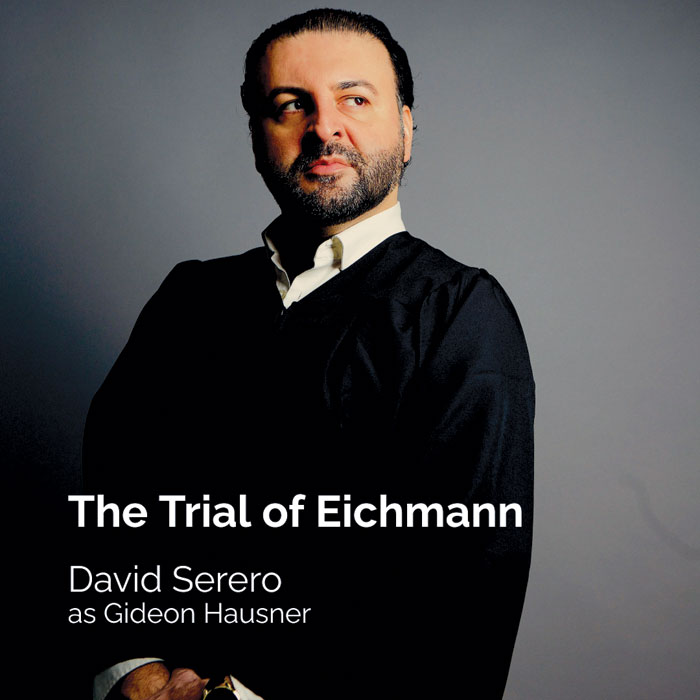
Thanks to the creative ingenuity of David Serero, “The Trial of Eichmann” has been brought to the stage for the first time, premiering at the Center for Jewish History in New York City. Born in Paris to a Moroccan Jewish family, Serero wrote, directed, produced, and stars in the play as Gideon Hausner, the Israeli prosecutor tasked with bringing Eichmann to justice. It took Serero about four years to go through all the testimonies and transcripts and to transcribe the sessions, which were thousands of pages long. 
The play is based on Israel’s capture and trial of Eichmann, known as the Holocaust’s architect. He was kidnapped by Mossad agents in Argentina and brought to the Jewish state in 1960. Prime Minister David Ben-Gurion engineered the trial to educate the nation about what took place during Nazi Germany’s genocide of six million Jews. Through victims’ testimonies, the trial enabled survivors to speak for the first time about what they saw and experienced. 

Of the more than 100 survivors called to the stand, about a dozen had personally witnessed Eichmann’s activities.

“How do you heal a broken nation?” asks Hausner in the play. “You give them a voice.” 

David Serero as Gideon Hausner

For Serero, the false moral distinction that Eichmann was trying to make helps us to examine the depths of human evil. “I thought this trial needed to be transmitted to the new generations to understand how evil was created.” Indeed, Hausner points out multiple examples showing that it was far more than “just following orders” for Eichmann. In a 1956 interview with a Dutch journalist, Eichmann said: “No matter what, you must kill all the Jewish children. What is the point of killing a generation and leaving their kids alive?” The death marches of 1944-45 were also apparently Eichmann’s idea.

The fact that the play premiered nine months after the worst atrocity since the Shoah was of course completely unexpected. Since we know that the trial itself helped Israelis process the Shoah, I asked Serero if he thought the play could help Jews process what’s happening right now. “It resonates, sadly, to see that history is repeating itself,” he told me. “It resonates with everyone, as we would think the world was done with the idea of murdering Jews.”

“It resonates, sadly, to see that history is repeating itself. It resonates with everyone, as we would think the world was done with the idea of murdering Jews.” – David Serero

“I can’t imagine all the people who worked so hard for this trial who could have foreseen what would happen on Oct. 7. I hope this trial will educate young audiences about the importance of previous generations’ sacrifices so that we can understand freedom and that Jews will always have a place to go.”

The play also shows what Israel, as a young state, was at the time. “They could have killed Eichmann back in Argentina, but instead, they chose to bring him to justice and allow the Holocaust survivors to speak for the first time to a worldwide audience,” said Serero.

And of course in watching the play, one can’t help but make comparisons. The first that came to mind for me: Hamas and their Islamist compatriots don’t argue that they’re “just following orders.” They murder, rape, and behead with glee, filming their conquests.

But as Prime Minister Benjamin Netanyahu pointed out before Congress, blind obedience is now the province of leftists — to the point of seeing good as evil, and evil as good. And the evil leftists applaud and indulge in gets deeper every day. Not surprisingly, Holocaust denial and minimization is now as much of a fixture on the far left as it is on the far right.

The production ends with Serero performing Israel’s national anthem, “Hatikva,” alongside footage of Israelis listening to the trial in 1961.

“The trial was justice for humanity,” said Serero. “It shows that no matter what kinds of crimes you commit, you will be held accountable for them. And no matter what, freedom will always triumph.”


Karen Lehrman Bloch Bloch is editor in chief of White Rose Magazine.

Just Following Orders Read More »