fbpx

April 25, 2024

Beth Lee: OMG Yummy, Exciting Flavors and Preserved Lemons

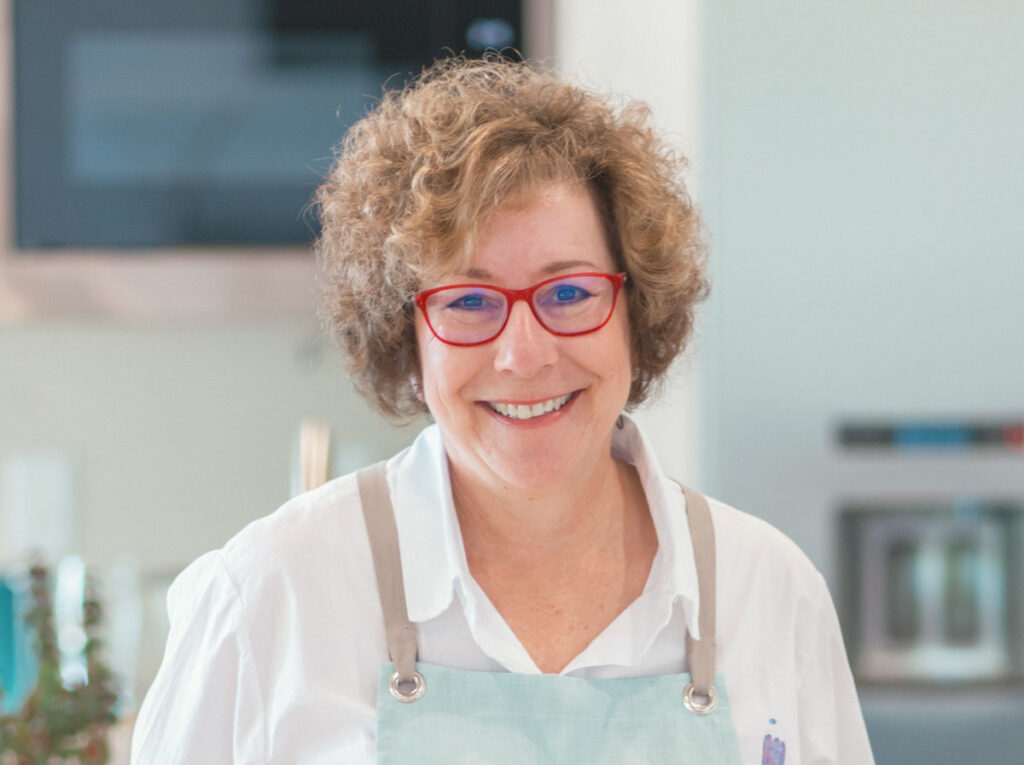
Nothing makes Beth Lee happier than food.

“I can talk about food 24 hours a day,” Lee, author of “The Essential Jewish Baking Cookbook,” cooking teacher and OG food blogger at OMGYummy.com, told the Journal.

In 2010 Lee, who worked in marketing and communications for high tech companies in Silicon Valley, discovered she liked “pita chips better than memory chips.”

“We had just come back from a trip with the kids,” said Lee, whose family plans trips around food. (Who doesn’t?) “I think it was my son who said, ‘Mom, if you love food, why don’t you start writing a blog?”

When they searched for names on the internet, they were surprised and delighted to discover that OMGYummy was available.

“I didn’t know what I was going to do with it, where I was going to go with it, but sometimes those are the best changes of direction in your life,” Lee said. She dug in, figured out blogging/ social media and never looked back.

Her cooking – and blog – and eclectic.

“If you go to my blog, you won’t find just Jewish food,” Lee said.

Her husband is a California native; his parents were from Hawaii and his grandparents were from Korea. Lee is an American-born Ashkenazi Jew with a Polish and Russian background.

“We have a very eclectic mix of cultures and foods that we love,” she said. “On top of that, I have a love for Middle Eastern cuisine and Middle Eastern ingredients, like preserved lemons, sumac and za’atar.”

Lee has “preserved lemon lover” in her bio. Her recipe for preserved lemons is below.

“They’re an amazing ingredient,” she said. “I encourage everybody to take a lemon, put a slit in it, put some salt in it, stick it in a jar and wait for it to become a preserved lemon.”

Not only will preserved lemons change your life, Lee predicts they will become your new favorite condiment.

“Any place you need some lemon, preserved lemon can come into play,” she said. “[Most people] think about it [for] savory first, but in fact, they’re really wonderful in a sweet way, too.”

For instance, Lee uses them in cheesecake, muffins, pasta, a marinade, dressing, the list keeps going. Anything you add preserved lemon to will upscale your meal tenfold.

“I’ll be honest, some nights I can barely cook,” Lee said. “I took out Trader Joe’s frozen fish filets [and] made a tartar sauce; instead of just putting a little lemon in the tartar sauce, I cut up a little preserved lemon and added it in.”

That little bit of lemon took it from “eh” to “wow.”

Small adjustments can make a huge difference in cooking. However, Lee said, just try one new thing at a time.

“[Instead of trying to learn a whole cuisine, focus on something simple,” Lee said. “Take a recipe you’re already comfortable with and add [a] new ingredient to it.”

This can be some new produce, a new flavor, anything.

For example, Lee recalled the first time she ate za’atar in a restaurant.

“They brought it to the table [and] put some olive oil with it,” she said. “This is no joke: I practically tackled the waiter. I’m like, ‘What is this flavor?’”

Taste is a great motivator to experiment in the kitchen.

“Think about what excites you, because then you’re going to want to create that … or find a way to get it into your kitchen, onto your table and into your mouth.”

To learn more about Beth Lee and get more recipes go to OMGYummy.com and follow @OMGYummy on Instagram.

For the full conversation, listen to the podcast:
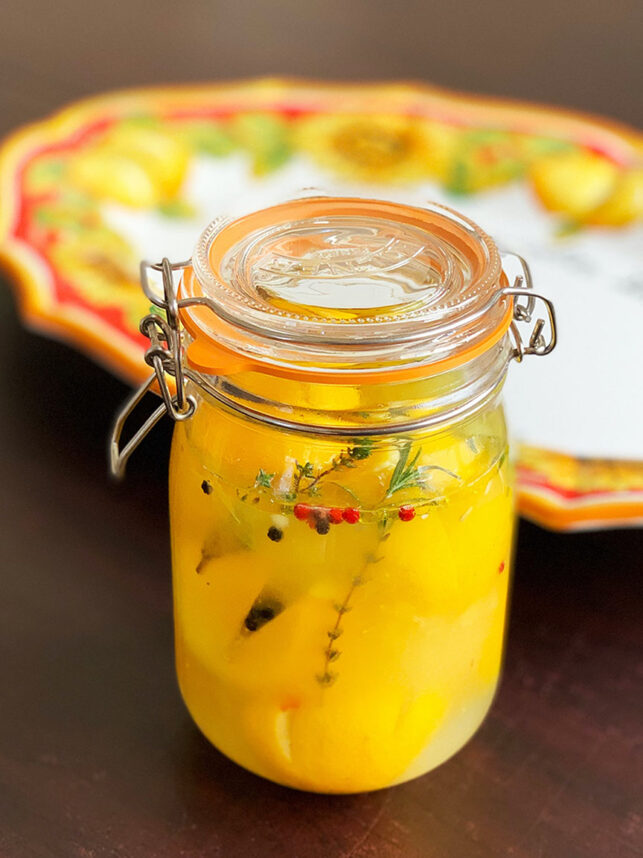
Photo by Beth Lee

Preserved Lemons, Ottolenghi-style

6 – 8 lemons Meyer, Eureka, Lisbon

6 – 8 tablespoons kosher salt

1 cup lemon juice approximately – enough to cover the lemons in the jar after one week

1 sprig rosemary (optional)

2 sprigs thyme (optional)

10 peppercorns (optional)

1 spicy red pepper (optional)

2 tablespoons olive oil

Sterilize your 1 qt glass jar canning jar; run it through the dishwasher, run under very hot water, use your instant pot – just make sure it is clean.

Cut 2 slits in each lemon to create a well to put the salt in, being careful not to slice all the way through. (If you do, no big deal, many people preserve quartered lemons. It will work too). Add about 1 tablespoon of kosher salt to each lemon.
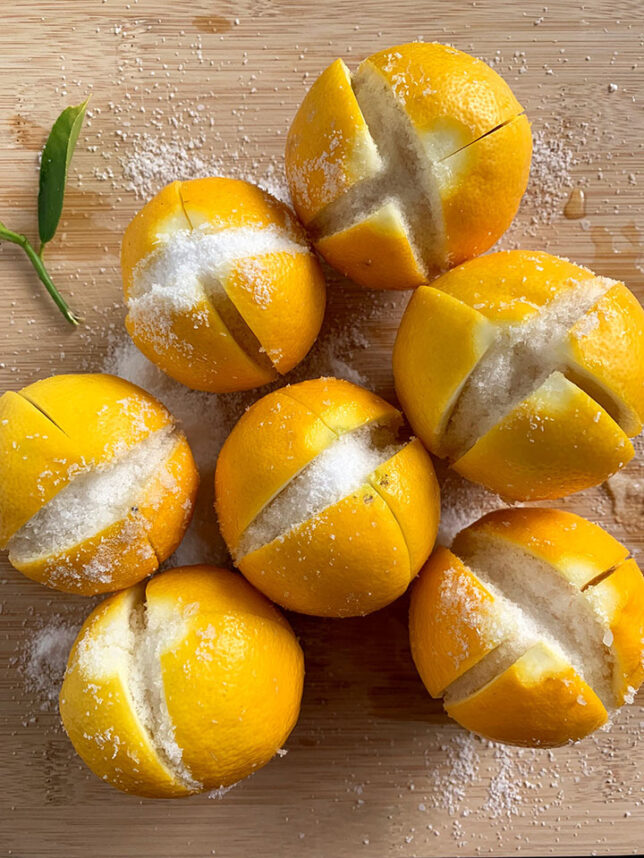
Photo by Beth Lee

Place the lemons in the glass jar fitting them in as tightly packed as you can.

Close the jar and let them sit in a cool dry place for about a week. You’ll notice juice beginning to accumulate in the jar.

After a week, open the jar, add your aromatics of choice – thyme, rosemary, peppercorns, coriander, cardamom, star anise, cinnamon, a whole pepper – your taste buds can be your guide. Then cover the lemons and aromatics with enough lemon juice to cover them all and close it up.

Let it sit out in that cool dry place for 3 or 4 more weeks. You can occasionally shake it about if you’d like. Right before you refrigerate, top with a seal of olive oil, then place in the refrigerator and start experimenting!

Notes:

Some recipes for preserved lemons add the juice to cover the lemons from the very beginning along with the aromatics, rather than waiting a week. This works too!

Use organic, unwaxed lemons if at all possible. If not, be sure to scrub the outer skins well to remove any coating.

Remember to store the jar in a cool place, preferably under 70 degrees, until you refrigerate them. Warm environments are not optimal for preservation.

There is some new discussion among sources/experts about whether white mold is indeed harmless or not. When in doubt, throw the lemons out! My previous opinion (and what I’ve always done) was: If white mold develops on any of your lemons, it is generally harmless – just remove/rinse it off. And for sure, any other colors of mold are not good and if you see them, toss the lemons. I have rarely had any issues except a touch of white mold a couple times. And I lived to tell this tale.


Debra Eckerling is a writer for the Jewish Journal and the host of “Taste Buds with Deb.Subscribe on YouTube or your favorite podcast platform. Email Debra: tastebuds@jewishjournal.com.

Beth Lee: OMG Yummy, Exciting Flavors and Preserved Lemons Read More »
Passover Breakfast

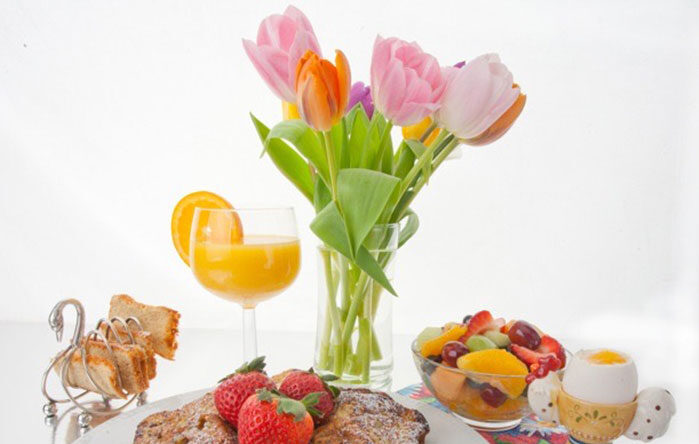
Breakfast is the most important meal of the day. During Passover, that meal can be a challenge – but not in Danny Corsun or Judy Elbaum’s homes!

“Growing up, Passover breakfasts consisted of matzah, butter, maybe some eggs and some pretty awful kosher for Passover cardboard flavor cereal,” Corsun, founder of Culinary Judaics Academy told the Journal. “Store bought Passover food has come a long way thankfully.”

In the extended family Pesach experience in the Corsun house, his grandfather’s main job was to make matzah brei.

“It wasn’t the run-of-the-mill matzah scramble that everyone is used to when they eat matzah brei,” Corsun said. “His version was serious business; it was far more like a pie than a loose combination of matzah, eggs and other sweet or savory ingredients.”

When Corsun’s grandfather got too old to make it (he passed at the amazing age of 99), his dad took over, added his personal flair and improved the recipe. After his dad’s passing, Corsun “upped the culinary ante” and made it his own.

“This Passover staple doesn’t only represent really good food, it brings with it generations of love and togetherness during this rich and impactful holiday.”
– Danny Corsun

“This Passover staple doesn’t only represent really good food, it brings with it generations of love and togetherness during this message rich and impactful holiday,” Corsun said. “I hope you enjoy it with your family and have a healthy and meaningful Pesach!”

CJA’s Not Your Average Matzah Brei

This phenomenal start to a Pesach morning is a kicked-up version of the classic. It can be served with the Date-Berry Syrup recipe provided below or any jam of your liking, plain maple syrup, cinnamon sugar or just as is. It requires more work than the conventional version, but it’s well worth it!

4 eggs, separated
2 cups of milk (can use water)
3 Tbsp brown sugar
1 Tbsp honey
1 tsp cinnamon
½ tsp salt
1 tsp vanilla extract
1 box of matzah
Jam of choice (strawberry is a particular favorite)
Real maple syrup
Cinnamon sugar

Crack and separate eggs into two bowls and set aside. Crush matzah into small pieces into a large bowl. Add milk (or water) to moisten. Depending on the consistency, you can add more liquid if necessary. You do not want it too dry! Add egg yolks and incorporate. Add brown sugar, honey, vanilla, cinnamon and salt and mix well.
Beat egg whites until they achieve stiff peaks. Then gently fold them into the matzah mixture, making sure not to mix the air out. Once fully incorporated, pour into a large well-oiled or buttered non-stick pan. Cook undisturbed for about 4-5 minutes on medium heat or until golden brown. Take a large frying pan lid or a plate, cover the pan and invert matzah brei onto it and then slide it back into the pan to cook the other side. Cover with lid and cook for an additional 3 minutes, again until golden brown. *Make sure you do not overcook it or else it will be too dry on the inside! Once both sides are done, slide onto a serving platter, slice into wedges and serve hot with the date-berry syrup below. Serves 8.

CJA’s Date Berry Syrup

1 cup blueberries
1 cup raspberries
1-2 cups chopped strawberries
5 medjool dates or 10 deglet noor dates
¼ cup lemon juice
¼ cup brown sugar
1 Ttbsp strawberry jam
1 tsp cinnamon

Steep the dates in a bowl of hot water for 15 minutes.
Rinse berries and cut stems off strawberries and quarter them. Combine all berries and lemon juice in a bowl.
Remove dates from water, chop finely and add to the fruit mixture.
Add cinnamon and brown sugar into the bowl. Mix thoroughly. Mash fruit with potato masher. Add strawberry jam and mix again.
Set on the stove in a pot and allow it to simmer on medium heat, constantly stirring constantly, until sauce gets thick and creamy.
After simmering for 8 min, pull off heat and let cool in a separate bowl. Can be put in the fridge if needed.

Photo: Judy Elbaum, Leave it to Bubbe

Passover Fluffy Oven Baked Pancake

LeaveItToBubbe.com founder Judy Elbaum has fun creating – and adapting – recipes for Passover. One such dish is a Passover pancake.
“I take my year-round recipe, make a few tweaks here and there and voila: a scrumptious breakfast/brunch dish for Passover,” Elbaum, who is also a food columnist and author of the “Seasonal Delights” cookbook, told the Journal.

3 large eggs
2/3 cup whole milk
2 Tbsp sugar
1/2 tsp kosher salt
½ tsp cinnamon
½ tsp nutmeg
2 tsp vanilla
1/2 cup matzah cake meal
1 Tbsp butter
Optional garnishes: powdered sugar, fresh berries,

Place a 10″ cast-iron skillet on the middle rack of the oven, and preheat to 450°F.
In a large bowl, whisk eggs together vigorously until light and frothy, about 2 minutes. Add milk, sugar, salt, cinnamon, nutmeg and vanilla, and whisk until combined. Sift in matzah cake meal, and whisk just until smooth. Let rest for 5-10 minutes.
Carefully remove the skillet from the oven, add the butter and let melt completely, swirling the pan to allow the butter to coat the entire bottom. Pour batter into hot pan, and place back in the oven, shutting door quickly so oven loses as little heat as possible.
Bake for 15 minutes, until the sides have puffed up a lot and the entire top of the pancake is golden brown. Remove from oven and use a spatula to loosen the edges of the pancake. Transfer to a serving platter, dust with powdered sugar and cut into large wedges. Serve immediately.

Passover French Toast

Elbaum takes her traditional French toast recipe and substitutes her favorite Passover sponge or chiffon cake for the bread. The cake can be homemade, store bought or from a mix.
“The results are sublime,” Elbaum said. “Even better than the year-round version!”

3 eggs
6 Tbsp milk
1 tsp vanilla
6 slices of your favorite Passover sponge, chiffon, or angel food cake (homemade, store-bought or made from a mix)
Butter for frying the French toast
Confectioners sugar (optional)
Maple syrup (optional)

In a mixing bowl, beat together the eggs, milk and vanilla.
Dip the cake slices on both sides in the egg mixture.
Heat about 2 tablespoons of butter in a skillet. When the butter is hot, place the dipped cake slices into the skillet and cook until golden brown on each side.
Serve with a sprinkling of confectioner’s sugar or pour on some maple syrup.

Enjoy!

Passover Breakfast Read More »

Dr. Nicole Saphier on Motherhood and Jewish Advocacy

Dr. Nicole Saphier was 17 years old when she discovered she was pregnant. Along with the mix of emotions that brought, she also faced naysayers who told her she’d have to give up her dream of being a doctor to take care of her baby. 

Fast forward 25 years later, and Saphier has proved them wrong. Not only is she a proud mother, but she is also a Fox News medical contributor who works as an associate professor in radiology at Memorial Sloan Kettering Cancer Center and Weill Cornell Medical College.

Just in time for Mother’s Day, Saphier has written a new book, “Love, Mom: Inspiring Stories Celebrating Motherhood,” which includes stories about motherhood from the doctor herself, along with co-host of “Fox & Friends Weekend” Rachel Campos-Duffy, who discusses raising nine children; bestselling author Janice Dean, who talks about the difficulty in navigating miscarriage; and Fox host Martha MacCallum, who highlights balancing work and motherhood and the importance of being kind to yourself.

The Journal caught up with Saphier, now a mother of three who is married to Dr. Paul Saphier, a brain surgeon. She talked about “Love, Mom,” overcoming life’s obstacles and advocating for the Jewish community. 

Answers have been edited for clarity and length. 

Jewish Journal: Why is your book important? 

Nicole Saphier: Motherhood is an incredible journey marked by love, sacrifice and resilience. The role of a mother extends far beyond biological ties, encompassing emotional support, nurturing and guidance. Sharing stories of motherhood, particularly ones that recount obstacles overcome, can offer invaluable support and solidarity to mothers everywhere. These narratives inspire hope, foster empathy and provide a sense of community, reminding mothers that they are not alone in their challenges and that their experiences are both valid and shared. 

JJ: What do you hope people get out of it? 

NS: As a teen mother, I faced numerous challenges and uncertainties, but through perseverance and determination, I’ve crafted a life filled with love, success and joy. Despite the initial obstacles, I’ve grown personally and professionally, proving that with resilience and support, even the most daunting circumstances can be overcome. My story is a testament to the strength of the human spirit and the boundless possibilities that await those who choose to embrace life’s challenges with courage and optimism.

JJ: How has your life changed since Oct. 7? 

NS: Since Oct. 7, like many, my life has been marked by change and emotional upheaval. One major shift was my nephew’s departure to rejoin the IDF, a decision that filled our family with both pride and concern. Additionally, the loss of friends who do not support Israel has been challenging, prompting me to reassess relationships and focus more attention on those who share my values and beliefs. These events have deepened my sense of connection to my family and reinforced the importance of standing firm in my convictions, even in the face of personal loss and adversity.

JJ: How do you advocate for the Jewish community? 

NS: As a Fox News contributor, I leverage my public platform to advocate for the Jewish community, utilizing my voice to raise awareness about issues affecting Jewish people worldwide. Through my professional services, I maintain a special relationship with the Orthodox community, providing tailored support and guidance that respects their traditions and values. Following the Oct. 7 atrocity, I put together a community event for Jews and non-Jews to gather while I hosted a fireside chat with Lizzy Savetsky, a public pro-Israel voice.

JJ: Is there anything else you’d like to add?

“Family is everything; they are the anchor in life’s storms, the source of unconditional love, and the constant support that sustains us through every triumph and challenge.” 

NS: Family is everything; they are the anchor in life’s storms, the source of unconditional love, and the constant support that sustains us through every triumph and challenge. Unfortunately, it seems much of the world is losing sight of the importance of family. I put together this collection of motherhood stories to remind people to cherish their family because in their embrace, we find solace and the true essence of what it means to be cherished and valued.

Dr. Nicole Saphier on Motherhood and Jewish Advocacy Read More »

Moving from Passover to Shavuot: A Spiritual Journey

One of the most unusually gratifying rituals in modern Jewish life is what we call the Counting of the Omer. Historically, from the second night Seder, we count each day journeying towards the next holiday, Shavuot, the holy time of receiving Torah at Mount Sinai. Originally an agricultural holiday, when we began to gather wheat in a measure called the Omer, a certain weight of grain, it became an offering, an expression of gratitude for the harvests that sustain our people physically. The rabbis shifted to a more spiritual idea which culminated in the mystical branch of Judaism, Kabbalah, turning it into a practice so that each day could become an offering of the spirit.  

The process was an expression of the teachings of Kabbalah that each one of us is a metaphoric Tree of Life, rooted in heaven connected to G-d, sprouting downward toward earth and emanating seven expressions of Divine qualities: Lovingkindness, discerning boundaries, creating harmony, movement through action, humility and restraint, foundation and relationships, and dwelling in groundedness.  Though at first glance this may seem complicated, there is a chart that shows the quality for each day as well as the one for the week, one for each of the seven weeks leading to the holiday. This is meant to help us come to a more enlightened and expanded awareness ready to receive the gift of Gd’s teachings through Torah.

The Tree has a total of 10 places reflected on the body which have names representing qualities and characteristic we all possess. Working to keep them in balance and beautiful harmony with each other is the goal, but as human beings, by our very nature, we lack perfection so we work constantly to increase our knowledge of who we are, how we behave, and how we can become better. This period between Passover and Shavuot is such a time for a deeper look at our inner psycho-spiritual workings, using skills and tools from meditation to therapy, in order to grow so we can fulfill our own destiny in greater accomplishment, deeper commitments, and satisfying relationships with loved ones, friends, and with G-d.

On the chart we have three places in the head, all related to consciousness, wisdom, knowing, and spiritual awareness. From the neck down we have seven places, all part of our physical and emotional being. Each of these seven represents one of the weeks from Passover to Shavuot and each day represents one of the seven and its connection to the quality for that week. Judaism through its temporal emphasis becomes an opportunity to learn and intensify all that nurtures goodness, something the world needs right now, to help fulfill our mandate to be a light to the nations and help justice grow.

Abraham Joshua Heschel teaches that when we pray the goal is to become subversive, to overthrow injustice and oppression in the world. In Judaism, prayer is a form of self-discovery, and the work of self-awareness is not ego driven but to help redeem the world through our actions of kindness, compassion, and support of the other. Our daily efforts to emanate Divine qualities is an expression of strength, courage, and Tzedek, righteousness. The more we align our Tree, rooted in heavenly desire for good with our earthly expression through action we connect the immanent Divine presence, called Shechinah with the Transcendent Divine presence, the Kadosh Baruch Hu, the Holy Divine Couple, creating a connection and sense of wholeness throughout the whole world.

Our fruitfulness is the potential for transformation of each one of us so that the seeds can then flow toward others, enriching their lives as well. 

The Hebrew word for counting is also telling. As we count from Day 1 to Day 49, 7 days within 7 weeks, we are telling our story, accounting for the arc of our lives, moving from liberation in Egypt to revelation at Sinai. We connect with our ancestors, whose salient offerings were the very work of their hands, the gathering of their produce. Centuries later, we reflect a more ephemeral work, one that reverberates throughout time and space, lifting us all up to a higher level of consciousness.  Our fruitfulness may not be in the produce of the soil, but it is the potential for transformation of each one of us so that the seeds can then flow toward others, enriching their lives as well.


Eva Robbins is a rabbi, cantor, artist and the author of “Spiritual Surgery: A Journey of Healing Mind, Body and Spirit.”

Moving from Passover to Shavuot: A Spiritual Journey Read More »

Friendship Warms the Heart of ‘The Bespoke Overcoat’

The friendship between two men in London’s Jewish East End forms the heart of “The Bespoke Overcoat,” now playing at the Pacific Resident Theater in Venice. The 1953 play was written by Wolf Mankowitz, a prolific British novelist and playwright of Russian-Jewish descent. It was also made into a film that won a 1957 Academy Award in the “Best Short Subject” category. Mankowitz’s most successful works included the novels ”A Kid for Two Farthings” and ”Make Me an Offer,” which also replicated the culture of the post-war, working-class East End where he was born in 1924.  

Mankowitz borrowed the theme of the play from Nikolai Gogol’s short story “The Overcoat,” here focusing on the friendship between the tailor Morry and his friend Fender, who has worked as a shipping clerk in a clothing manufacturing company for more than 40 years. Fender’s boss is cold-hearted, abusive and miserly, more caricature than character. Appropriately, his name is Ranting. 

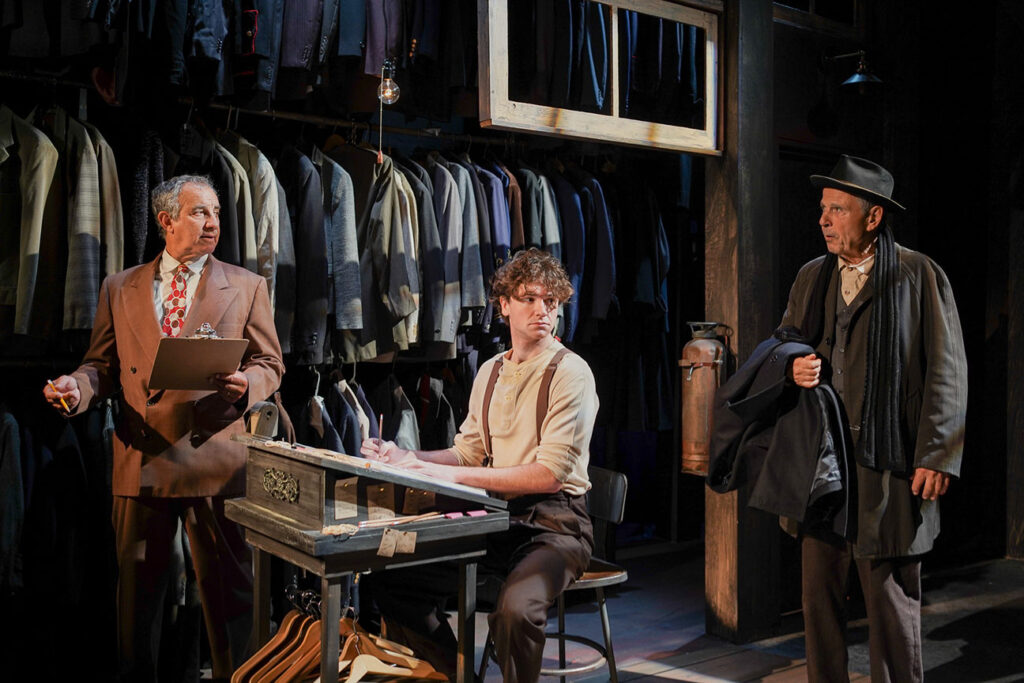
When the play begins, Fender enters Morry’s shop in an overcoat literally falling apart at the seams. He asks Morry, who had originally made him the coat 20 years earlier, how much it would cost to repair it. Morry regretfully tells his friend the coat is impossible to mend, but offers to make him a new, bespoke overcoat for the bargain price of ten pounds — a seeming fortune for shipping clerk.

The drama centers on Fender’s need for a coat for physical warmth, as well as his need for friendship and dignity. 

Without giving away spoilers, the drama centers on Fender’s need for a coat for physical warmth, as well as his need for friendship and dignity. Morry can offer friendship, but Fender’s employer’s abuse and poverty wages deny him dignity. When Fender is suddenly fired, he asks Ranting for a new coat from the overflowing inventory, as a token of appreciation for his decades of service. Ranting, a character out of Dickens, simply laughs at him.

While the outlines of the story are sad, the play is often humorous and even inspiring. “It’s the story of a man who loves his friend and shares his burdens and his joys,” said co-director Marilyn Fox. “It shows us the power of kindness and conscience in a poetic, comic, and touching form.”

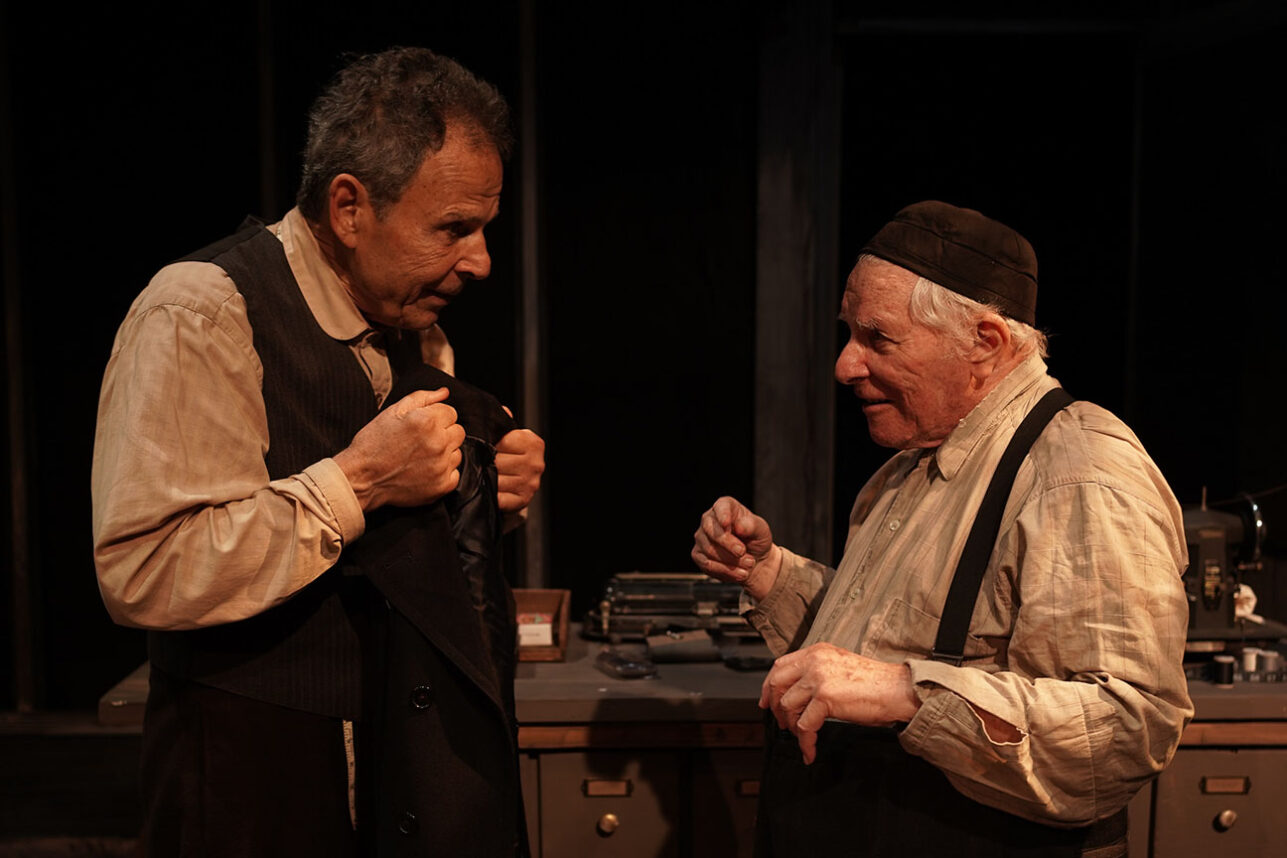
Robert Lesser, Harry Herman (Photo by James Morris)

Robert Lesser as Morry and Harry Herman as Fender are both outstanding, with a natural chemistry that suffuses their performances and makes their friendship come alive. Bruce Nozick is nearly over-the-top in heartlessness as Ranting, but Mankowitz hammers home the theme of individuals oppressed by a capitalist system he viewed as corrupt and petty. Tobias Echeverria plays the young clerk hired to replace Fender. While captive to the same verbal abuse as his predecessor, the young clerk already has a plan to build himself into the kind of man who will one day stand up for himself in a way that poor Fender could not. 

The set design in this intimate theater by Rich Rose makes you feel you are almost right inside Morry’s tailor shop. His attention to detail includes having the Hebrew word for tailor (“shreiber”) painted outside the shop. The racks of coats in the warehouse where Fender works reinforce the theme of warmth and plenty that are denied to this hardworking, lonely old man. 

Co-directors Marilyn Fox and Dana Jackson have been pleasantly surprised that on most nights, the audience stays to enjoy the klezmer music that plays after the lights come up, hanging about to chat with one another. Their hope is that “people will hold onto the message of compassion and forgiveness that is at the center of the friendship between Morry and Fender, and how something as simple as a coat can be the difference between life and death,” Jackson said. “We also hope that discovering Wolf Mankowitz’s writing and his unique blend of comedy and pathos will be a new and fulfilling adventure for our audiences.”

Running time for “The Bespoke Overcoat” is 80 minutes, and tickets are available through PacificResidentTheater.org. Located at 703 Venice Blvd in Venice, the theater is collecting clean, gently worn or new coats during the run, in cooperation with the non-profit One Warm Coat. Donations will be distributed locally and will be thanked by a complimentary cup of coffee and treat during the show. The play is expected to run through May.


Judy Gruen is the author of “Bylines and Blessings,” “The Skeptic and the Rabbi,” and several other books. She is also a book editor and writing coach.

Friendship Warms the Heart of ‘The Bespoke Overcoat’ Read More »

Michael Oren: FBI Must Investigate Money Trail Behind Campus Antisemitic Protests

Starting April 17, pro-Palestinian students at Columbia University established the Gaza Solidarity Encampment, launching a campaign demanding that the university divest from Israel. The New York-based Ivy League school joins universities across the United States, such as Emerson, Vanderbilt, Yale, and the University of California, Berkeley that have seen similar protests, along with a rise in reported antisemitic incidents.

The Media Line spoke to former Israeli Ambassador to the US and Columbia alumnus Michael Oren, who expressed deep concern over the situation. He described the current campus climate as “intolerable, unacceptable, and exceedingly dangerous,” impacting not only Jews but also the broader Western society. Oren traced the origins of these sentiments back to the 1960s youth revolutions.

After their initial failure, he said, these movements embedded themselves in academia, subtly promoting anti-establishment ideologies over decades. “They went back into the campus and spent 50 years instilling their ideas into students and professors to inspire government officials and corporate executives on this particular set of self-declared anti-establishment ideas as trojan horses for antisemitism.”

Anti-war protests of today are actually pro-war

Oren drew parallels between the 1968 anti-war riots and today’s campus movements, which he views as pro-war due to their exclusion of Israel.

This shift has notably affected disciplines like American Studies, which have become distinctly anti-American, Oren continued. He also pointed out that even some Jewish academics have joined the anti-Israel chorus, failing to recognize the potential negative consequences for themselves. “They fail to see that this path also ends badly for them.”

Reflecting on Passover, Oren cited the Haggadah’s story of the Wicked Son, which he believes mirrors the stance of those who don’t identify with their own people and criticize Israel’s defenders. “It’s the best image for these people who keep saying that if you defend Israel, you’re a bad Jew. Eventually, they’ll become one of the bad Jews themselves. This movement is a deep-seated cultural trend that has taken decades to evolve, and undoing it may also take decades,” said Oren.

Oren criticized university administrators for not taking a firmer stand earlier. “These demonstrations are orchestrated and funded from outside. These aren’t spontaneous demonstrations,” he said. He called for an FBI investigation into the protests’ origins, emphasizing the threat they pose to campus safety. “Jewish students, professors, and staff can’t go on campus.

Oren stressed the limits of free speech, particularly when it incites violence or supports terrorism, “which, by the way, is illegal in America,” he said.

“These people need to be prosecuted, but in the end, this isn’t a job for local police. This requires federal agencies to stop foreign agents from sewing chaos in America and its allies,” concluded the former ambassador.

Ariel Beery, a 2005 Columbia graduate, echoed Oren’s sentiments about the long-term origins of these antisemitic trends. Beery discussed the strategy of Israel’s enemies, who, unable to defeat Israel militarily, have turned to soft power and funding guerrilla groups to challenge Israel. “These protests represent the soft-power strategy of Israel’s enemies,” he stated.

“Anti-Western interests recognized that the leverage point was students and professors,” he said. “Many of these academics would shape many minds, so even if a small percentage of those students remain anti-Zionist years after flirting with the idea, the compounding effect becomes significant.”

Anti-Western values are prolific

Beery also highlighted the influence of certain academic and financial practices at Columbia during his time there. “As a student at Columbia from 2002 to 2005, I worked at the Middle East Institute as a research assistant. One of my regular duties was to type up and send thank you notes from the director to various donors, most of whom were oil companies or their proxy organizations and foundations. Nearly none of these were reported by the university at the time,” he said.

“Many donations,” he asserted, “are made just below the legal reporting requirement.”

“As a research assistant at the Middle East Institute, I observed how donations just below the legal reporting requirement influenced the curriculum,” he revealed. According to Beery, these contributions supported courses in local high schools that presented a curriculum biased against Israel, perpetuating negative perceptions among young students.

“One day, the new director, Rashid Khalidi, who sat on a newly donated Edward Said Chair, asked me to send a letter he wrote to Saudi Aramco,” shared Ariel.

“In the letter, he thanked them for their generous donation to enable professors from the institute to teach a course on Middle East studies in local high schools using a curriculum not friendly toward Israel. Courses such as that one have persisted for decades. This is one reason hundreds of high school students in New York find the motivation to protest Israel and target their teachers. Such programs were regularly sponsored, a visible example of how Israel’s enemies worked first to capture academic departments and then to propagate messages throughout the next generation of politicians, business, and community leaders,” Ariel concluded.

For more stories from The Media Line go to themedialine.org

Michael Oren: FBI Must Investigate Money Trail Behind Campus Antisemitic Protests Read More »

Print Issue: Mr. Hasbara | April 26, 2024

CLICK HERE FOR FULLSCREEN VERSION

Print Issue: Mr. Hasbara | April 26, 2024 Read More »

BRAVE-ish on ReachTV Where Next!

Thank you to WHERE NEXT? with Kelly Blanco on ReachTV for inviting me to talk about my favorite trips and my award-winning memoir, Brave-ish: One Breakup, Six Continents and Feeling Fearless After Fifty.

Kelly and Lisa discussed her 50 DARES BEFORE 50 after her divorce featured in her award-winning memoir.

CHALLENGES INCLUDE: Skiing with a skier who is blind at Park City Mountain with the National Ability Center. Learn more in my article for The Sierra Club and of course in my BOOK!

For my 50th challenge I went sky diving!

Lisa and Kelly talked about HULA HOOPING around the world including in Kenya

in Vanuatu

MOST SUPRISING LOCATION: MONGOLIA

FAVORITE DESTINATION: Underwater SCUBA DIVING!

Kelly Blanco said: “Lisa Niver–one of the most inspirational and popular travel influencers on the planet!” –watch the whole segment: CLICK HERE!

Lisa Niver has been featured on ReachTV, the largest in-airport TV network in the United States, to discuss travel and hula hooping on WHERE NEXT with Kelly Blanco. Niver was has also a judge for the 2023 Business Traveler Awards. Niver has also shared on Instagram that hula hoops are a travel hack for staying fit on the go.

ReachTV: “Who says hula hoops are just for kids? 🌀✈️ @lisaniver proves they’re the ultimate travel hack for staying fit on the go! 💪 Don’t miss out on her incredible travel tips and more on our show #WhereNext, exclusively on #reachtv in airports worldwide.”

Did you know I travel with a hula-hoop? Learn more from REACH TV:


Get your copy of BRAVE-ish: click here and learn more about the paperback, digital and audiobook.

2024 Literary Titan Non-fiction Gold Book Award 2023 Zibby Awards Runner-up: Best Book for The Strong Woman 2023 HEARTEN Book Awards Finalist for Inspiring & Uplifting Non-Fiction 2023 WINNER: Goody Business Book Awards: Memoir/Self-Help Featured in Conde Nast Traveler Women Who Travel Book Club: 10 New Books We Can’t Wait to Read this Fall As seen in Forbes Best New NonFiction

BRAVE-ish on ReachTV Where Next! Read More »

On Counting the Omer

It feels like we’ve been counting the Omer for around seven months now.

Though the formal Jewish ritual of rattling off seven weeks began the second night of Passover, ever since Oct. 7, the somber season bracketed between the evening after the Seder and the holiday of Shavuot has been felt viscerally, even if not officially tallied, for well over half a year.

For those in need of a refresher, the counting of the Omer is first mentioned in the biblical book of Leviticus’ 23rd chapter. God instructs the Israelites to begin counting 49 days “from the day after the Sabbath,” the day you bring the sheave, or Omer, offering in the Sanctuary. Traditional interpretation understood the reference to the “Sabbath” to refer to the first day of Passover — probably because that’s the day of rest from utilizing leaven, per Exodus 12:15’s commandment to take a break from bread over the festival.

The Omer sequence, beginning on the holiday in which rising dough — that symbol of our own inflated egos — is forbidden, ends on the eve of the holiday commemorating the day in which the Jewish people were worthy enough to receive God’s Word.  

The Omer sequence, beginning on the holiday in which rising dough — that symbol of our own inflated egos — is forbidden, ends on the eve of the holiday commemorating the day in which the Jewish people were worthy enough to receive God’s Word.  

No surprise, then, that the counting has long been understood as an impetus for introspection. Many who observe the tradition recite, along with the daily blessing with the evening’s number, attributes of God we are meant to imitate — compassion and kindness, harmony and humility.

And about as long as Jews have been calculating the Omer, we’ve been falling far short of its call for communal and covenantal betterment.

The Talmud relates that Rabbi Akiva, that renowned ancient sage, saw 24,000 of his students dying between Passover and Shavuot. Why? Because they were more enticed by the desire to dunk on their coreligionists and “own” the other side of whatever it was they were bickering about than stand side-by-side respectfully despite their valid and deeply felt disagreements. Arrogance and abrasiveness had left intellectual and spiritual leaders seeking individual victory in lieu of collective redemption. For centuries since, Jews have marked that memory by refraining from live music and unbridled expressions of joy, be it wedding celebrations or catching Mumford and Sons at Madison Square Garden.

Marked by marches against antisemitism, wearing tape marked with ever-increasing tallies, and countless Psalms recited in synagogues as missiles rained down on Israel, this year’s counting has blown past 200 days. Beginning on a Sabbath day in October that would become Israel’s lowest, it has continued with mounting mourning, fraying societal ties in both America and Israel, and only the vaguest recollection of what joy used to feel like. 

Yet the Omer reminds us, this year more than ever, how a simple call to count can continue to matter in our national calculus.

In fact, Rabbi Samson Raphael Hirsch, the 19th century German scholar, noted that the Omer isn’t the Jewish tradition’s only instance of totaling up towards 50. Its individual-focused effort on building character, abstaining from the unimportant, and focusing on faith exists alongside a parallel national effort, that of summing up seven sabbatical cycles into a Jubilee. That latter effort is a reminder that, in resting from farming every seven years and allowing others into our fields to enjoy the fruits of our labor, national renewal emerges. Through shared gratitude in what God has given all of us, regardless of our social station, economic bracket, or the political bumper stickers adorning our cars, the Jewish people earn that call of freedom echoing throughout the land at that Jubilee. Self-improvement only moves the national needle when it is aimed with the collective cohesion in mind.

Lamenting contemporary secular culture with its “relentless focus on the moment, its short attention spans, its fleeting fashions and flash mobs, its texts and tweets, its 15 minutes of fame, and its fixation with today’s headlines and ‘the power of now,’” the late Lord Jonathan Sacks noted the wisdom in Judaism’s dual counting of both Omer and Jubilee. The balance of being mindful of both — our own days and our country’s years — remind us that “as private persons we can think about tomorrow, but in our role as leaders we must think long-term, focusing our eyes on the far horizon.” 

Keep faith with the past but our eyes firmly fixed on the future, Rabbi Sacks reminded us. And with this year’s Omer — in the shadow of the events of Oct. 7 and with continued hope for a safer and more unified global Jewish community — that fixation is most fitting. If our marking the Omer is eventually to end, with revelation merited, Jewish unity restored, Israel at peace and hostages returned, it will be because our individual efforts at healing ourselves and our people have clung stubbornly to that ancient belief that how we spend our days continues to count.


Rabbi Dr. Stuart Halpern is Senior Adviser to the Provost of Yeshiva University and Deputy Director of Y.U.’s Straus Center for Torah and Western Thought. His books include “The Promise of Liberty: A Passover Haggada,” which examines the Exodus story’s impact on the United States, “Esther in America,” “Gleanings: Reflections on Ruth” and “Proclaim Liberty Throughout the Land: The Hebrew Bible in the United States.”

On Counting the Omer Read More »

A Memorable Mimouna

As the Sephardic Spice Girls, Sharon and I live our life on a calendar that is at least two weeks ahead of real time. We are always planning classes for the next holiday and cooking for articles that are way in the future.

Even as we write this article about Mimouna on Erev Pesach, Sharon and I have already celebrated a Mimouna. And when we posted pictures in our Instagram stories, one irate follower told us to check our dates and that we had it wrong.

She wasn’t wrong. Mimouna is the joyous North African party that marks the end of Passover and the beginning of the agricultural season. But Sharon and I had been invited to participate in a pre-Passover demonstration of a Mimouna celebration. Conceived as a way of sharing the beautiful traditions of her Moroccan heritage by talented film producer Lauren Avinoam of Mena Feast, the event we attended was capably organized by Toby Berkow of the Food Lab Project at Wilshire Boulevard Temple.

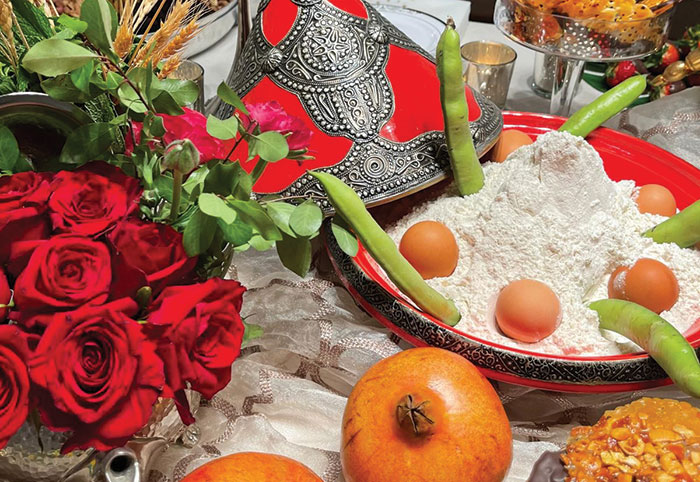
So on a bright, slightly windy Sunday, we set up a Mimouna table in the yard at the Brawerman Campus in West Los Angeles. We adorned our table with talismans of luck, fertility and prosperity. Five (plastic) gold coins in a bowl of flour. Five fava beans laid out on a pastry. Instead of a live goldfish in a glass bowl, I bought a very realistic-looking stuffed fish. There were roses and sheaves of wheat. Milk in a pitcher. Eggs in a bowl. Butter and honey to serve with Mufletas, thin pancakes that are the star of the Mimouna.

In North Africa, in the spirit of peaceful coexistence, the Muslim neighbors would bring the flour to Jewish homes after the sun had set, marking the end of Passover.

In North Africa, in the spirit of peaceful coexistence, the Muslim neighbors would bring the flour to Jewish homes after the sun had set, marking the end of Passover. Making Mufleta is a fine art — the dough is thin and soft and stretchy and you have to get the timing right to ensure a properly cooked pancake. Skillful chefs use their bare hands to flip each pancake, adding another pancake and flipping, until they land up with a huge stack. At this Mimouna, chef Zahava Atlit fed the crowd with fabulous mufleta, dripping with butter and honey and puffy, airy Sfinge (Moroccan doughnuts) that she whipped up on the spot. Sharon and I were in carb heaven as we inhaled her perfect, sweet creations.

Our good friend Penina Meghnagi Solomon (@JewishLibya) had a table overflowing with her homemade sweets, including the most incredible delectably sweet, light and crispy fijuelas, a deep-fried sweet pastry doused in a honey syrup, marzipan stuffed dates and almond cookies.

Lauren brewed Moroccan mint tea and a fabulous iced coffee drink. There were arts and crafts for the children and Israeli music pulsing in the background. It made me proud of my Moroccan heritage.

—Rachel 

I like to tell people stories. I like to tell people that for 2,600 years, my ancestors thrived in Babylon, where they spoke a Judeo-Arabic. That is the language that my great-grandmothers Emmy Lulu and Emmy Toba spoke to me when I was a baby. A language that still stirs my soul when I hear it, but that I cannot speak so fluently. A language that wasn’t transmitted to my children and the next generation of my family.

I want my children to know more about our family history than just the stories I heard growing up. I grew up at a time when people were eager to discard the past and embrace the modern. The stories are too few and the black and white photos are mere glimpses into a world gone by.

As a young person, I took for granted that my grandparents would always be there to tell their stories and celebrate Shabbat and Jewish holidays. Time has a nasty habit of moving too quickly. Now it’s my turn to tell the story of past generations and transmit traditions.

Mimouna is a wonderful example of how closely Jewish and Moslem cultures coexisted throughout North Africa and the Middle East. The doors of Jewish homes were thrown open for all to enter and the tables were covered with sweets made from recipes common to both religions. Everyone wore brightly colored caftans and they greeted each other with Judeo-Arabic blessings of “tir’bah u’tissad,” may you prosper and succeed.

In Israel, Mimouna has always been a very popular and widely celebrated event. This year, it feels that it will be difficult to celebrate. But this year, when the chasm between Hebrew speakers and Arabic speakers seems like an unbridgeable divide, perhaps Mimouna can remind us of a shared past.

May the spirit of coexistence flourish once again. May we know the sweetness of true redemption, the freedom of our hostages and a speedy recovery for all who need one.

We hope you do celebrate the sweetness of life with our recipe for meringues (whipped up by my darling daughter Alexandra Gomperts) and Rachel’s amazing recipe for mufletas.

—Sharon

Sephardic Spice Girls Moufleta

4 ½ cups all-purpose flour
2 cups lukewarm water
¼ tsp yeast (optional)1 tablespoon sugar
¼ tsp salt
2 Tbsp oil, plus 1/2 cup oil (avocado or vegetable)
Butter, honey or Nutella, for serving

Sift flour and salt into a large bowl and make a well in the center. Add the yeast and sugar and slowly add water.
Mix the dough by hand until it is sticky but not smooth.
Pour 2 tablespoons of oil over the dough, cover with a towel and let rest for 30 minutes.
Divide the dough into golf ball-sized balls and set on a baking sheet.
Pour 1/2 cup oil over the balls, then turn balls over to completely cover with oil and let the dough rest an additional 15 minutes.
Lightly oil the counter and stretch each dough ball as thinly as possible.
Heat a nonstick frying pan and oil the surface by using a paper towel dipped in oil.
Place dough in the hot pan. When the dough is golden and bubbles a little, flip and place another piece of dough on top.
Continue to flip every few minutes, adding an additional piece of dough each time.
Remove the moufleta from the pan when there are 4 or 6 pieces of dough in the stack. Then start a new stack.
Traditionally served with sweet butter and honey but kids love it with Nutella.

Makes about 3 dozen.

Meringues

6 egg whites
1 1/2 cups sugar
1/4 tsp salt
4 tsp corn starch or potato starch
2 tsp white or apple cider vinegar

Preheat oven to 400°F. Line two baking sheets with parchment paper.
In clean bowl of a stand mixer, use the whisk attachment to beat egg whites, starting on low speed. As the eggs become foamy, gradually increase to high speed.
Once egg whites form stiff peaks, gradually add the sugar until it has all been incorporated.
When the mixture is thick and glossy, add the salt, corn starch and vinegar. Beat for 1 minute.
Place meringue into a piping bag and pipe onto prepared baking sheet.
Lower oven to 200°F and bake for two hours.
Leave in the oven to dry out overnight.
Store in airtight container until ready to serve.


Sharon Gomperts and Rachel Emquies Sheff have been friends since high school. The Sephardic Spice Girls project has grown from their collaboration on events for the Sephardic Educational Center in Jerusalem. Follow them on Instagram @sephardicspicegirls and on Facebook at Sephardic Spice SEC Food. Website sephardicspicegirls.com/full-recipes.

A Memorable Mimouna Read More »