fbpx

March 7, 2024

Columbia Prof Shai Davidai: University President “Has to Go”

Shai Davidai, a Jewish Israeli assistant professor of management at the Columbia University Business School, told the Journal in an exclusive interview that it is time for Columbia President Minouche Shafik to leave her position over the university’s failure to adequately address antisemitism on campus.

Davidai spoke to the Journal on Saturday following the “Diversity, Equity, and Inclusion (DEI): Challenges and Opportunities” session he co-led during the StandWithUs Israel in Focus International Conference at the Hilton Los Angeles Airport hotel. The bespectacled, lanky professor went viral on social media in October after he excoriated Shafik for being a “coward” in failing to denounce “pro-terror student organizations” on campus. Davidai, who describes himself as a “left-leaning liberal,” has since become an outspoken figure in fighting against antisemitism and terror on campus.

“Up until a few weeks ago, I was very, very optimistic or naïve that the current administration will step up and do something,” Davidai told the Journal. “They haven’t done anything for five months. They haven’t commented on two lawsuits and a congressional investigation. It’s clear they don’t want to — I thought that they can’t, they just don’t want. So, I think the president has to go. The provost is now changing, so hopefully we’ll get a better one. The entire board of trustees needs to go. I say: step up or step away.”

Since that October video went viral, “life has been very difficult,” Davidai said. “When I go into the office, almost no one speaks with me. Even if they agree with what I’m doing, it’s like a hot potato, they don’t want to touch it … it’s been very isolating.” He also accused the university of “trying to silence me”; Davidai couldn’t comment on some of the specifics, but he did say that “informally I’ve had several people from the administration come and try to dissuade me from speaking up … They see the fact that donors are pulling out money, that students don’t want to register for school, as if it’s something that has to do with me rather than the problem,” he alleged. “I keep telling them, ‘I am pointing out the problem and you are cutting off the finger rather than dealing with the problem.’”

And online, “I get a lot of hate mail,” Davidai claimed. “I get a lot of hatred remarks, people have published my address … my reputation has been dragged through the mud. And at the same time, you know you’re doing something right if people are attacking your character rather than the arguments.”

Despite these challenges, it has also “been a very meaningful time” for Davidai. “I come to events like this, and see how many Jewish and Zionist students and faculty are really suffering and dealing with all these issues,” he said. “Just being able to add one more voice to the fight has been very helpful.”

Davidai thinks his argument “is very simple”: No antisemitism on campus, no support for terror on campus, and hold administrations accountable for not taking action on these fronts. “Those are basically the things that I’ve been saying, and they are irrefutable,” the Columbia professor said.

How well has Columbia addressed antisemitism since Davidai started speaking out? “Poorly,” Davidai told the Journal. “They have not done anything of substance.” The university did launch a task force to combat antisemitism, and while Davidai respects what the task force is doing, “they haven’t created any actionable plan yet.” On Monday, the task force released a report highlighting antisemitism at Columbia — particularly during protests — and a series of recommendations to better regulate protests; Shafik said in a statement she welcomed the task force’s report. But Davidai told The Times of Israel that the report deals “with the symptom and not the root cause” and that the university isn’t enforcing its current policies.

“The university has allowed more and more of these pro-Hamas protests to happen on campus, even when they are unauthorized, even when they go against the rules of the university,” Davidai told the Journal. The university has suspended the campus Students for Justice in Palestine (SJP) and Jewish Voice for Peace (JVP) chapters, but have reportedly continued to hold protests on campus.

“They have been holding on average a protest a week, sometimes two or three protests a week,” he continued. “In those protests they use chants that incite violence, which the university has said has gone against the code of the school and the university knows exactly who the organizers are. They know the people shouting at the bullhorns. They have faculty showing up to these unauthorized protests and the university has said nothing about this. It’s just horrific, and every day the bar gets lowered.”

He mentioned a recent article that reported there is a visiting professor at the university’s Middle Eastern Institute who “identifies with Hamas.” “He has called for not just an armed resistance in Israel but armed resistance in the U.S. to, in his words, to ‘liberate the armed turtle island,’” Davidai said, explaining that “turtle island” is a reference to the U.S. and Canada. “Those are the kinds of professors that are at the university. And again, we have free speech … but that doesn’t mean that the university can’t come out and condemn.”

Davidai urged the university to call out the antisemites and those breaking the rules by name and make it clear that such people do not reflect the views of the university. “As long as the university doesn’t do that, they’re basically saying, ‘these people are speaking for our university,’” he said.

When Students Supporting Israel held a rally on campus, it was peaceful, all the rules were followed and rallygoers waved American flags in addition to Israeli flags, Davidai said. “When you look at the pro-Hamas rally, there was just Palestinian flags and Houthi flags … you get a sense of the kind of people you’re dealing with.”

Asked how Jewish students are feeling about the climate campus, Davidai replied that some “feel extremely uncomfortable walking around with their yarmulke” since “we had a student attacked for wearing a yarmulke.” Others are uncomfortable in class because their classmates will accuse them of being “genocidal” as their professors stand idly by. And some students “feel like they are not getting the education they deserve,” Davidai said. “They can’t sit in the library and study when there are people chanting antisemitic chants right outside.”

At the heart of these hostile campus climates at Columbia and elsewhere is an “anti-American sentiment,” Davidai argued. “These are students that have been radicalized by extremist professors, ideologues — they are not academics, they are ideologues — that are pushing an indoctrination of anti-American sentiment. This is why they refer to the U.S. as an ‘occupied territory.’ This is why they support the Houthis who are shooting missiles at American ships. This is why they haven’t said a word about the U.S. civilians that were held hostage by Gaza. They don’t care about these values of life and liberty.”

He added that while he’s “totally fine with the idea that people are shouting to ‘Free Palestine’ in the sense that a Palestinian state will have its own self-determination — I am in support of a Palestinian state — but that shouldn’t come at the life and liberty of the Jewish people in the Israeli state. This is why it’s an issue of life and liberty. This is why you see American flags in the pro-Israel protests. This is why you see American flags in the ‘Release the Hostages’ rallies. This is why you never see even one American flag at the pro-Hamas protest and when you see them, they’re being burned down.”

Davidai also pointed out that Columbia has also been hit with two lawsuits accusing the university of failing to address antisemitism on campus and is being investigated by Congress on the matter and they refuse to comment on any of this. “It’s as if the president of the university thinks if she says nothing, this will go away,” said Davidai. “Kind of like if my child does something wrong and tries to hide it, and my son knows that just by hiding something doesn’t make it go away and we will find out.”

Overall, Davidai thinks that antisemitism has become “endemic” and “institutionalized” at Columbia.

“We need to treat this like any other prejudice,” he said. “I won’t accept anti-Black prejudice, I won’t accept sexism or any kind of racism or homophobia, I won’t accept anti-Arab sentiment and I won’t accept Islamophobia. I also won’t accept antisemitism. It’s not that big of an ask. Decent people would have already acted.” However, Davidai does “believe in second or third chances” and in his view, the university leadership still has a chance to redeem themselves with meaningful action.

He mentioned during his StandWithUs conference session that part of the solution involves universities adopting the International Holocaust Remembrance Alliance (IHRA) definition of antisemitism. Davidai added to the Journal that the solution also involves Shafik condemning Hamas, as she hasn’t mentioned the terror organization once in a public statement. He also called for “a permanent ban” of organizations that support Hamas. “Antisemitic organizations that support terror should not have a place on campus,” he said. “Very simple. And if they keep organizing, even they’re banned or suspended, the organizers should have consequences.”

Davidai has found that when he’s discussing the issue of the Israel-Hamas war and the campus climate to Americans who may not fully understand what is going on, framing it as a life and liberty issue has been “eye-opening” for them. “You’d expect this kind of ideas to come from the right, and I’m saying no, I am a complete leftist and you don’t have to agree with me on my political views, but our values are the same and our values are that we agree on the basic fundamentals on what this country stands for, what Israel stands for, what democracy stands for,” said Davidai, “and once we realize that, yes, we have our political differences, but the values are the same and that’s what we should all be fighting for.”

He added that his message for “middle America” is that “this is not Israel’s war, this is not the Jewish war, this is America’s war …  this is the war on terror, it just showed up on U.S. campuses now.”

A university spokesperson told the Journal, “As President Shafik and the administration have consistently made clear that antisemitism is antithetical to Columbia’s values. We are using every available tool to keep our community safe and that includes protecting our Jewish students from antisemitic discrimination or harassment. Maintaining a safe, civil, inclusive and respectful campus environment is always a core priority for the university administration and never more so than at present.”

This article has been updated.

Columbia Prof Shai Davidai: University President “Has to Go” Read More »

We Can’t Allow Fear to Quiet Us Down

When we talk about protecting Jews from the alarming rise in antisemitism, we usually focus on traditional threats like protection from bullying, harassment, discrimination, double standards, hate speech and so on.

But there is a deeper threat we should not overlook—the threat that we will become so weary of the harassment that we will censor ourselves or limit our freedom of expression. In other words, we can’t allow the proliferation of hysterical anti-Israel protests to cower us into limiting our voices.

A recent example, which occurred at UCLA, was moving a Tzipi Livni event from in-person to online in the face of anticipated protests. Evidently, chapters of the Students for Justice in Palestine (SJP) at UCLA announced demonstrations to “make sure war criminals are NOT welcome on our campus!” To “avoid disruptions,” the powers-that-be cancelled the in-person event and moved it online.

UCLA is hardly alone. The human volcano of Jew hatred spreading through college campuses and city streets is even going after Matisyahu concerts. The haters mean business. They’re bullying Jews wherever they go.

The mob that verbally assaulted Jerry Seinfeld last week as he was leaving a Bari Weiss event at the 92nd Street Y wasn’t there to fight for Palestinian rights. The screamers were there to put Jews on notice that they will not leave us alone; that they will heckle and intimidate us at every turn until we cower and hide.

“Our eyes are on every department and corner of campus,” SJP wrote triumphantly in a statement. “We will not rest until the UC cuts all ties with the Zionist state.”

As Seth Mandel wrote in Commentary, “This is why the pro-Hamas demonstrators and activists do what they do. Because they can’t say ‘don’t serve Jews.’ But they can and will make your life hell if you serve Jews.”

Making Jewish lives hell is the guiding light of this hate movement. We shouldn’t underestimate the threat, if only because it’s human nature to want to be cautious and avoid confrontation, especially if we think that confrontation may turn violent.

The problem is that cowering never works. It just makes the haters smell blood. The more we cave to their intimidation, the more they will harass us, the more Jews will censor themselves.

And once we limit our voices, what do we have left?

To her credit, Dr. Kira Stein of UCLA protested the decision to move the event online, noting that “Antisemitism, particularly in the form of anti-Zionism, is intimidating both faculty and students on campus. By backing down to anti-Jewish threats, antisemitism will be emboldened, and things will get worse.”

Instead of caving, just like Dr. Stein our community should push back at every turn. One, we should continue the fight to eliminate the harassment and intimidation of Jews using all legal means at our disposal; and two, stage more and more Jewish events while insisting on better and tougher security.

What shouldn’t be an option is to give in to the intimidators. Any time we do so is another victory for the haters. As a friend mentioned recently, Jew haters would love nothing better than to move Jewish and Zionist voices “underground,” perhaps because they know the power of our collective voice.

Indeed, if there is one freedom Jews have valued in our long journey in America it is the freedom to speak freely and without fear. That freedom is priceless not just for Jews but for anyone who understands the soul of our country.

How ironic that haters are now using their own freedom of expression to suffocate ours. It’s the cynicism of “freedom of speech for me, but not for thee.”

It’s bad enough that we’re forced to confront a troubling rise in antisemitic bullying. The least we can do is make sure we come out of this fight with a louder and more assertive voice, not a quieter one.

And that includes not moving our events to Zoom.

We Can’t Allow Fear to Quiet Us Down Read More »

OpenGov: a Changing Guard, a Continuing Mission

On Feb. 27, OpenGov announced its acquisition by Cox Enterprises for $1.8 billion.

This was not an easy thing to build. We made a lot of mistakes, but ultimately we created a valuable, enduring company primed for sustained growth and mission success. OpenGov serves thousands of governments, and has proved a magnet for inspiring talent who share our commitment to help cities, counties, states, special districts, and school districts work better and smarter.

I founded OpenGov with Zac Bookman, Dakin Sloss, and Nate Levine, and have chaired its Board of Directors since the beginning. As OpenGov begins a new chapter, I’d like to share a few reflections on the journey — and more than a few thank you’s.

Beginnings

OpenGov’s idealistic roots began with California Common Sense (CACS), a nonprofit I launched in 2010 alongside a remarkable cohort of Stanford students and alumni, including Dakin Sloss and Nathan Mintz. Our purpose was to bring transparency to state government by revealing waste, comparing performance, and spotlighting the most and least efficient areas. We created the first online portal for state government data, filed slews of FOIA requests, and attracted both outsized media attention and the wrath of special interest groups. 

We found that the California state budget was predictable in some areas, while others were prone to much more variance than our model suggested was sensible, versus other states. Coincidentally, these bloated areas housed powerful government unions that donate heavily to the legislature. They did not appreciate our data-driven reports.

While the early momentum of CACS was beyond anything we anticipated, it became clear that transparency was necessary, not sufficient. Increasingly, municipalities were coming to us for new data and help conducting analyses. In the process, we discovered that many were reliant on antiquated, green-screen software, often administered by corrupt IT companies who charged them $50,000 just to see their own data. 

Becoming OpenGov

As a founder of Palantir, I’d seen how the federal government had been grossly underserved by technology, but we’d stumbled on a different kind of gap here, compounded by much smaller budgets, minimal technical investment, and a fragmented market of tens of thousands of municipalities, which none of us really understood. It was a classic Smart Enterprise opportunity, before the name or the playbook (and Zac had a large hand in formalizing this thesis with me). There was so much that needed to be built, but CACS was not a technology company, and could not attract the talent or funding top engineering and sales teams require.

We became convinced that a new, for-profit, mission-focused entity was needed to get government onto the cloud and start fixing things. How to get there was another story!

We became convinced that a new, for-profit, mission-focused entity was needed to get government onto the cloud and start fixing things. How to get there was another story!

I knew Zac Bookman initially as one of my smartest friends’ smartest friends — he’d clerked with my Stanford classmate Alex Robbins. A litigator by training, Zac had focused on issues of transparency and corruption as a Fulbright fellow in Mexico and advisor to General H.R. McMaster in Afghanistan. As we started OpenGov, he was closely involved as a full founder, all while fighting corruption in Kabul. I’ll never forget Zac recruiting candidates on his cell phone from NATO HQ, complete with helicopter blades whirring overhead.  

Meanwhile, Dakin Sloss served as our first CEO right out of Stanford, and he and Nate Levine helped to hire a talented, hard-working team and establish a mission-driven culture. At the time, I had shifted my role at Palantir to founder and advisor, and was CEO of a nascent Addepar. OpenGov was not a simple undertaking, and we all had a lot to learn. I remember those early recruiting calls vividly. I also remember buying thick government accounting books to learn about government financial workflows. In retrospect, I was never very helpful in that area, but I am glad others studied them! We’d share notes late into the evening, and I hosted many weekend BBQs and events to help OpenGov’s young team bond outside of the office. 

Initially we focused on the transparency and reporting workflows we’d discovered at CACS, which required integrating with cities’ Enterprise resource planning (ERP) and enabling a variety of capability requests. We got some early traction in dozens of cities, and a lot of attention – apparently, this market wasn’t known for attracting top young technologists. The work was intense, there were immense challenges and long sales cycles, and as happens with many first-time CEOs, Dakin and his team decided he wasn’t the right long-term fit.

To grow up fast, we needed a CEO. We bet on Zac’s brilliance, zeal, and ability to learn on the job. We liked to tease Zac that it was good that he’d finally solved corruption in Afghanistan, allowing him to focus on OpenGov.

One of the misconceptions I had about this market was that you could create “cool” new workflows that seemed valuable in theory, and use them as a wedge, or convince governments to utilize them. Trying to get cities to compare their budget data and learn from one another did not catch on. Zac took the vision into his own hands, and had to inform me that as much as we liked the idea of comparative benchmarks, we couldn’t work on that feature anymore. He was 100% right, and we refocused on core software needs.

Through trial and error, we learned that most governments can pay for things that are already in their budget, for critical workflows they are already doing — such as permitting, licensing, budgeting, procurement, etc. Of course, there’s no rule that you can’t enable these functions in 10x better ways. This led us to identify existing processes we could translate to novel, cloud-based workflows. We found over 90 functional areas for which local governments buy software, and OpenGov covers nearly half of them today. 

Through constant iteration, and the input of our pioneering customers, we started getting a glimpse of the path from a collection of discrete tools to a true platform serving the core processes of state and local government – including budgeting & planning, permitting & licensing, procurement, asset management, financial management, open data and resident communication.

OpenGov Today

Over the last decade, OpenGov has developed into the category leader it is today. The company doesn’t disclose all of its metrics, but it blew through the $100 million annual revenue milestone, was significantly cashflow positive last quarter despite massive technical investments, and continues to expand our total available market (TAM) and accelerate product development, including the OpenGov ERP product — a hugely valuable addition. 

There were a few major financing rounds that required great people who cared about our work to affirm their belief in us. There were some scary times over the years as well – there’s no room for all the stories here, but I’m proud to say we didn’t let them down. Multiple investors and advisors, noted below, were critical to our success, far beyond financing. At every turn, Zac validated our optimism, growing into a hardened, inspirational leader of the highest caliber.

It turned out that many local governments prefer to buy lots of things at once from a few trusted vendors, and offering many capabilities to the same clients is a notable characteristic of this market. This fit well with our strategy, since the data and know-how that power one government workflow can often benefit numerous others. OpenGov’s culture of building meticulously for the long haul also proved to be the right approach for government software, where sales cycles are long, there are thousands of details to get right, and complex new functionality must be carefully and cohesively incorporated. At the same time, it often makes sense to acquire smaller companies that have done a great job iterating on a specific product. Or, as Zac likes to say, “find companies we admire, and combine forces.” 

I’ve been deeply impressed by many small govtech companies we’ve seen, some operating in only a few dozen cities for a decade or more, acing very particular workflows that fit in well with OpenGov’s broader work. Our head of corporate development, Marc Gottesman, has worked closely with Zac on many of these acquisitions over the years, including some tiny companies with a single point solution to be integrated, and in a couple of cases, larger, cloud-based solutions that are complementary to OpenGov’s capabilities and focus. Whereas some legacy players seem to have bought dozens of separate companies and mashed them together incoherently, OpenGov’s orientation has always been to carefully integrate software and workflows into the cloud platform, often rewriting them to create a single, elegant solution. Zac, Marc, and the executive team, including longtime CTO Ammiel Kamon, made this “inorganic growth” a key element of OpenGov’s success.  

Given this momentum, it’s worth exploring what Cox Enterprises now brings to the equation. Every successful company has to balance ownership and impact, and Cox, simply put, supercharges OpenGov’s ability to build faster, integrate more great technology, and better serve its customers. While we weren’t in a rush, at some point, venture-backed companies have to offer liquidity to their investors. Cox has the right long-term orientation to maximize OpenGov’s potential — along with the cashflow to integrate whatever makes sense, and the reputation, network, vision, values, and boldness to bring OpenGov where it’s most needed, over a horizon of decades.

It is imperative for this great nation to help our governments fulfill their charters in smarter and more efficient ways. As we’ve unfortunately seen, when core functions break, cynical radicals on both sides will convince people to vote against our essential values and enshrine crazy and destructive ideologies.

When we started OpenGov, I took less equity than normal for a senior founder, and never took a salary or even an expense budget – for years, we were focused on making sure it could survive and deliver on its commitments. It is imperative for this great nation to help our governments fulfill their charters in smarter and more efficient ways. As we’ve unfortunately seen, when core functions break, cynical radicals on both sides will convince people to vote against our essential values and enshrine crazy and destructive ideologies. Ultimately, we concluded that making the deal with Cox happen was a matter of duty, both fiduciary and to the mission. 

Acknowledgments

One of the “secrets” of our work is that the greatest mechanism of incentive is not just equity upside, but the ability to make a meaningful impact in the world. There is no way this small company could have attracted so many amazing people without an inspiring mission, and we were blessed with the support of many giants of the technology world.

Our board member John Chambers, who built Cisco into an industry-defining company, has been a consummate coach and motivator. John used to make bets with our sales executives in board meetings, one crisp $100 bill at a time, to see where their convictions were strongest, and helped to mentor some of our key leaders, in particular Zac. In a dramatic nod to John’s methods, OpenGov’s sales team recently beat their quarterly goals so resoundingly they got to shave Zac’s head — a loss for aesthetics but a win for effective and accountable government!  We learned so much from John, who is not only a renowned global leader, but also one of the nicest guys in business.  Special thanks to John for bringing in Pankaj Patel, his former CTO and CPO at Cisco, as an instrumental technical advisor at a critical time.

Our board member Katherine August-deWilde is one of the most knowledgeable and respected leaders I’ve had the privilege to know and work alongside. Drawing on four decades of service to First Republic, as CFO, COO, President, and Vice Chairman, she taught Zac (and me) more about management, compensation, and operations than can be described here. And Katherine and John did the essential, serious board work to get the deal done.

Our board member Marc Andreessen is one of the legends of Silicon Valley, and his name alone lent OpenGov considerable credibility and helped to attract seasoned executive talent. Fortunately, his involvement has gone much deeper, and his strategic insights, no-nonsense frameworks, and constant push to reach higher have been formative influences. I am also grateful to our friend Balaji Srinivasan, who originally led a16z’s investment in OpenGov. Special thanks to many of Marc’s partners for their help as well, including Ben Horowitz, Martin Casado, Marc Cranney, Lars Dalgaard, and others. And thanks to Marc for sticking with us through the difficult periods over the years, despite so many demands on his time.

Ambition and talent prosper from proper guidance and wisdom, and OpenGov has enjoyed the counsel of some exceptionally wise individuals. Friends like Karen White and Bhaskar “BG” Ghosh became trusted advisors to Zac and the company. My late mentor, Secretary George Schultz, was an advisor to OpenGov, and I fondly recall early discussions at Hoover with George, and a fireside chat between George and Zac at the OpenGov office. Secretary Condoleezza Rice also joined Zac for a company-wide fireside chat later.

Scott Cook was a great investor and has been a mentor to many of us, and Laurene Powell Jobs and her team at Emerson backed OpenGov at a critical time, bolstering our reputation considerably. I am sure there are some I am forgetting, and can only say “thank you” to so many across our community who contributed to OpenGov’s journey.

It feels far too late to be coming back to the real people who did the work. OpenGov succeeded thanks to numerous visionaries, first and foremost its employees. They could hardly have chosen a less glamorous or more difficult market, but it turns out that sometimes it is worthwhile to do hard things that matter! I am especially impressed by the current executive team, some of whom are newer, and longer-tenured leaders such as Ammiel, with whom I was lucky to work in past years.

And not least, we salute our customers, many of whom put their reputations on the line and spent countless hours on top of their official duties to make the software work in the wild. Thank you for betting on us, for caring enough about functional government to do what’s best, and for sticking with us! We sometimes give government a hard time in this country – okay, I sometimes give government a very hard time – but there are many amazingly dedicated individuals who choose to work in government and fight to make things better. Our customers have been a central part of our story, and OpenGov only works thanks to them.

I’m writing for the first time as OpenGov’s chairman emeritus. However bittersweet that might feel, I’m overwhelmingly excited for OpenGov’s future, and grateful to participate in the great, intertwined American traditions of entrepreneurship and public service.


Joe Lonsdale is an entrepreneur, investor, philanthropist and builder.

OpenGov: a Changing Guard, a Continuing Mission Read More »

For Israel, UN Sexual Violence Report Is Too Little, Too Late

(The Media Line) A new United Nations report released on March 4 concluded that there are “reasonable grounds” to believe Hamas committed sexual crimes as part of its October 7 attack against Israel, almost five months ago.

The report, released by Pramila Patten, the UN envoy that deals with sexual violence in conflict, detailed incidents of sexual violence and “sexualized torture.” In addition to the crimes committed during the attack itself, the report concludes that the Israeli hostages remaining in Hamas captivity are likely still subject to ongoing sexual violence. The Gaza-based terrorist organization has persistently denied the allegations of sexual abuse since they surfaced almost immediately after the attack.

“Hamas and its allies are trying to discredit the report, to escape from this horrific shame,” Israeli President Isaac Herzog posted on his X account on Tuesday. “They will not succeed as the testimonies are shocking indeed. Therefore, now the world must react strongly by condemning and punishing Hamas.”

Israeli Foreign Minister Israel Katz welcomed the report but called the country’s ambassador to the UN back for consultations, due to what he called attempts by the UN Secretary-General António Guterres to “dissolve” the report and “absolve Hamas of responsibility.”

For many in Israel, the report came far too late. Women’s rights organizations in the country sent representatives to UN headquarters in New York City to protest the silence that followed the attacks. Senior Israeli officials frequently expressed their disappointment with the mute and then delayed response.

“Usually in armed conflicts, it takes time, often after the fighting is over, for the picture of sexual violence to clear up,” said Dr. Alona Hagay-Frey, a research fellow at the Jewish People Policy Institute and author of the book “Sex and Gender Crimes in the New International Law: Past, Present, Future.” “But here, this was a highly documented attack, documented by the perpetrators themselves. The extensive visual documentation in real time was unprecedented. It was live, colorful, and didn’t require extensive research. This is the source of the disappointment.”

“Women’s organizations have always promised to stand by women, believe them, and not remain silent as once was customary,” Hagay-Frey added.

“The international community should be ashamed,” said Anne Herzberg, legal adviser to NGO Monitor, a Jerusalem-based watchdog organization that reports on alleged anti-Israel bias in certain nongovernmental organizations. “The report highlights failures by the UN and other international organizations. There was so much denialism going around about the sexual violence.”

Earlier this year, the Israeli Foreign Ministry said that it invited Patten, the UN special envoy on sexual violence, “against the backdrop of UN bodies such as the UN Women organization ignoring the reports of the appalling cases that have been uncovered.” The report was a result of Patten’s 17-day visit to the area, during which she gathered information.

“The fact that the Israeli government had to invite the UN to issue such a report, to combat such denialism, is egregious,” Herzberg told The Media Line. “It points to the lack of coverage of this issue by groups like Amnesty International Human Rights Watch and other women’s rights organizations. These groups should have been chanting this cause, which should not have been left solely to Jewish groups and celebrities.”

As Hamas terrorists stormed the border, they raided communities and army bases. They also entered the Nova music festival, which was held just a few kilometers from Israel’s border with Gaza. Throughout the attack, the terrorists filmed their actions, often broadcasting them live on various social media platforms. The festival was attended by thousands of teenagers and young adults. Over 300 partygoers were killed by Hamas and testimonials of incidents of rape, including gang rape, and genital mutilation surfaced days after the attack.

The UN report said that there was evidence of “multiple incidents whereby victims were subjected to rape and then killed” at the festival, including the rape of corpses. The report relied mainly on testimonies by survivors and witnesses of the attacks, released hostages, health providers, and first responders. Also, 50 hours of footage of the attack and 5,000 photos were reviewed in the process. Both Israeli officials and the UN report do not have an exact number of the victims of sexual violence. The report said Patten had made “concerted efforts to encourage them to come forward.”

“There are witness accounts of hostages that were released, there is forensic evidence and reports from pathologists and first responders, harsh testimonies from people who saw the sexual violence while they were hiding,” Hagay-Frey told The Media Line. “You don’t need the actual victim or survivor to say what’s happening to understand the full picture.”

One of the videos that quickly went viral on social media was the half-naked body of a dead young woman being dragged through the streets of Gaza as onlookers cheered. Another video showed a young woman being forcefully dragged from a car as blood stains were clearly visible on her backside.

According to Hagay-Frey, there are various reasons for the delayed response. One of them is the sharp rise in antisemitism that came soon after the war began. She also attributes it to Israel being identified as the stronger side of the conflict with the Palestinians.

“The international community had a hard time grasping that the weaker side of the conflict could be responsible for such crimes, as the tendency is to stand up for the weaker side,” she said. “It was clear that they are ignoring the crimes committed against Israelis in favor of the struggle for Palestinian rights.”

The UN report did not implicitly blame Hamas and also stated that some of the evidence was circumstantial. Also noted was the fact that many of the victims’ bodies were burnt, making it impossible to gather forensic evidence from them.

“Attribution would require a fully-fledged investigative process,” the report read.

“The evidence has been there from the beginning and there has been pretty much silence about it. Now there is an official UN document that cannot be ignored and will hopefully generate more attention to the issue.” – Anne Herzberg

“The evidence has been there from the beginning and there has been pretty much silence about it,” said Herzberg. “Now there is an official UN document that cannot be ignored and will hopefully generate more attention to the issue.”

For Israel, UN Sexual Violence Report Is Too Little, Too Late Read More »

The Israeli Club in the Valley

In January of this year, Revital Romano realized her vision with the opening of “The Club – ISJCC” (Israeli JCC), in Encino. It took three years of dedicated effort, with the support of numerous community volunteers, to transform her dream into reality. The center offers a range of after-school activities for children as well as programs tailored for adults. Romano, a mother of three, ages 10, 13 and 15, keenly felt the necessity for such a facility amidst the challenges posed by the COVID-19 pandemic.

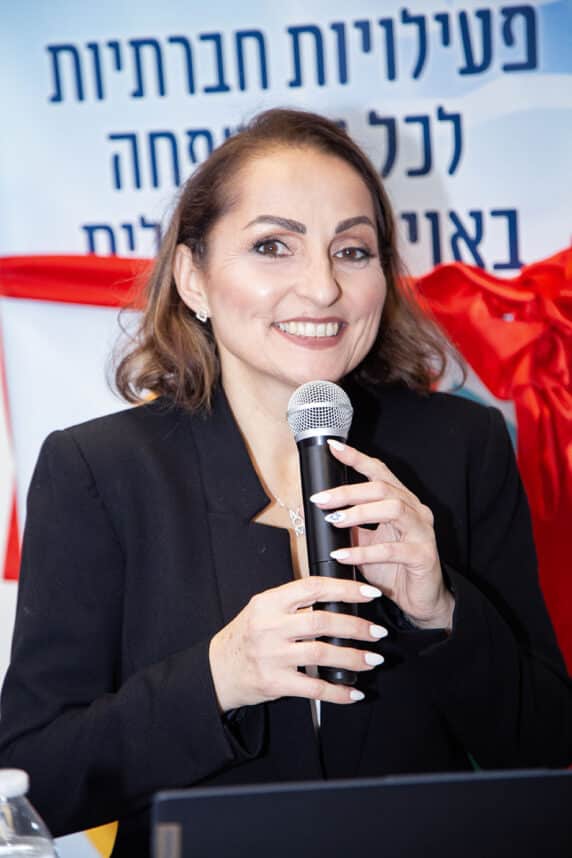
Revital Romano (Photo by Ilanit Ktorza )

One of her reasons for forming The Club was the impact of prolonged screen time on children’s lives during the pandemic. “Like many others, my children became almost like robots, glued to their screens for Zoom classes and then spending additional hours on their laptops or watching TV,” she said. 

The search for a solution led her to an advertisement for a home-schooling option in Sherman Oaks, specifically catering to parents seeking to restore a sense of normalcy for their children during these unprecedented times. Visiting the advertised location, Romano was pleasantly surprised by what she found. “When I arrived at the house, I was greeted by a sprawling, lush yard that immediately sparked an idea,” she said. 

The sight of the expansive outdoor space inspired her to incorporate outdoor activities into the program, offering children a much-needed respite from spending so much time indoors. Before long, a wave of enthusiastic parents eagerly enrolled their children in the afternoon classes. “We initially anticipated around 20 kids, but to our surprise, 45 children showed up, and by summer, our numbers had already grown to 90,” Romano said. Each week, the team devised fresh activities, and the children continued to flock to the center.

Romano, a business consultant, recognized the pressing need within the community for a hub where both children and adults could immerse themselves in Hebrew classes and more. Thus, she decided she would establish such a center. 

With the support of Izek and Aline Shomof, who generously donated several months’ rent, as well as Israeli contractors who donated their work and remodeled the house, Romano secured a property in Encino. The center’s rooms are now adorned with the names of iconic mountains in Israel, symbolizing resilience and strength.

“Just like Israel’s mountains, we Israelis are as unyielding.” – Revital Romano

“Just like Israel’s mountains, we Israelis are as unyielding,” Romano said.

The center offers a diverse array of classes spanning art, voice and singing, drama, acting, dance and chess, as well as specialized programs including a seniors’ club, women’s club, pilates, yoga and more. 

“Our counselors are all members of the Israeli community, and an incredible 90% of them volunteer their time,” Romano said. “Most of the classes are in Hebrew but we have teenage activities both in English and Hebrew.”

Consul General Israel Bachar and Revital Romano (Photo by Ilanit Ktorza )

Classes are conducted from Monday to Thursday, with additional activities such as children’s story time and an artificial intelligence program held in the conference room on Sundays. To keep the center running smoothly, Romano relies on both donations and enrollment fees, recognizing the inherent challenges in its operation. Despite the hurdles, she remains optimistic, expressing hope that enough families will enroll their children in the center to ensure its success.

She said, “We’re truly blessed with an amazing community.”

Find out more at: isjcc.com

The Israeli Club in the Valley Read More »

Debra Messing Joins StandWithUs; Hineni Society Dinner; Israel Fundraiser

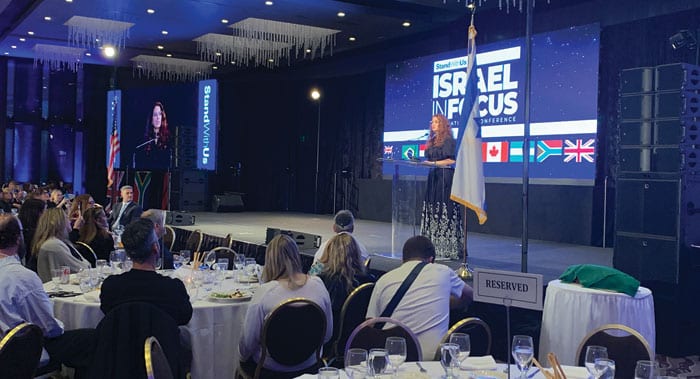
Actress Debra Messing was among those in attendance at a star-studded evening celebration during StandWithUs’ annual “Israel in Focus” conference, held March 1-3 at the Hilton hotel by LAX, where the iconic sitcom star emphasized her support for Israel while speaking out against Jew-hatred.

“Our collective call to action must be the dismantling of the ‘colonialist apartheid’ narrative,” Messing said, addressing a crowd of approximately 500 attendees, the majority of whom were high school and college students. “We must educate people about the history of Israel and the peace-loving, passionate, inclusive, resilient Israelis who’ve been living there for millennia.”

The actress, one of several Hollywood professionals who spoke out in support of Israel at a StandWithUs program on Saturday night, during the three-day conference. Other speakers included comedian Brett Gelman (“Stranger Things”) and his wife, Ari Dayan, an L.A.-based artist and performer; and John Ondrasik, frontman of the successful pop music group Five for Fighting. 

Earlier this month, Ondrasik, who isn’t Jewish, released a single and music video that demonstrated his allyship with the Jewish and pro-Israel community in the aftermath of Oct. 7.

“One doesn’t have to be Jewish to condemn the evil that is Hamas,” Ondrasik said.

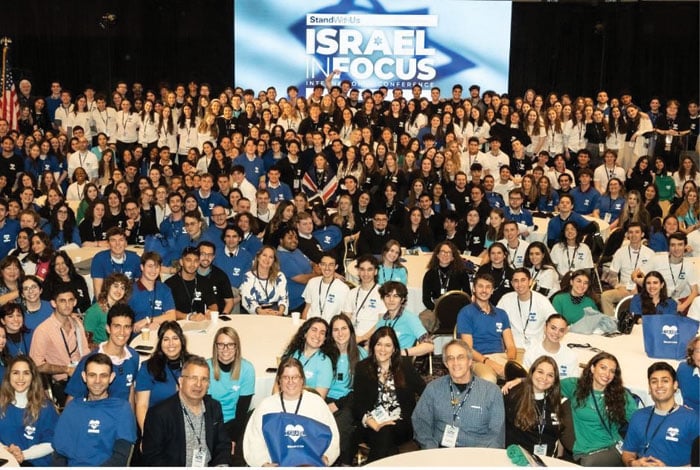
Approximately 500 students from all over the world turned out to the StandWithUs conference. Courtesy of StandWithUs

They were gathered before a crowd of high school and college students who are receiving tools from StandWithUs to combat antisemitism and stand up for Israel on their campuses through SWU’s selective Emerson Fellowship for college students and Kenneth Leventhal High School internship.

Additional speakers included Israel Consul General in Los Angeles Israel Bachar and StandWithUs Founder and CEO Roz Rothstein, who presented Messing with the “Guardian of Israel” award. 

The evening recognized several students with awards, including Ben Sissman and Emmett Kliger. Each was given the Star of David Award. 

Attendees included StandWithUs President Esther Renzer along with philanthropists Adam and Gila Milstein; Naty and Debbie Saidoff; and Rita and Steve Emerson. The three couples are longtime supporters of StandWithUs, a pro-Israel, nonpartisan education organization that supports Israel through extensive social media campaigns and provides help to college and high school students through its legal arm.


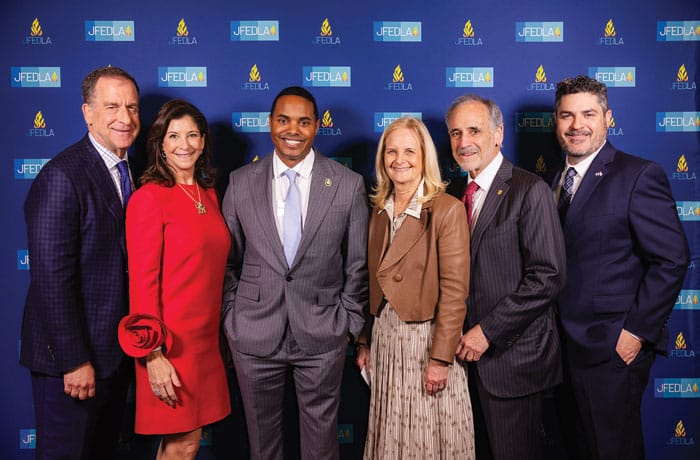
From left: Hineni Society Co-Chairs Jon and Heidi Monkarsh; Rep. Ritchie Torres; JFEDLA General Campaign Chair Lynn Bider; Les Bider; and JFEDLA CEO Rabbi Noah Farkas. Courtesy of Jewish Federation Los Angeles

Jewish Federation Los Angeles (JFEDLA) held its Hineni Society dinner, featuring U.S. Rep. Ritchie Torres, on Feb. 26.

Torres, a Democrat whose congressional district in New York includes most of the South Bronx, has long been an outspoken ally of Israel, particularly in the aftermath of the Oct. 7 attack against the Jewish State by Hamas. 

“As Rep. Torres and all our speakers noted, it’s essential that we unite as a community to reaffirm our commitment to a thriving Jewish future,” a JFEDLA statement said. “The dinner was a shining example of that unwavering commitment.”

Hineni Society members make a minimum family gift of $100,000 to JFEDLA’s annual campaign or to its Israel crisis fund. 


Creative Hearts for Israel committee. Courtesy of Creative Hearts for Israel

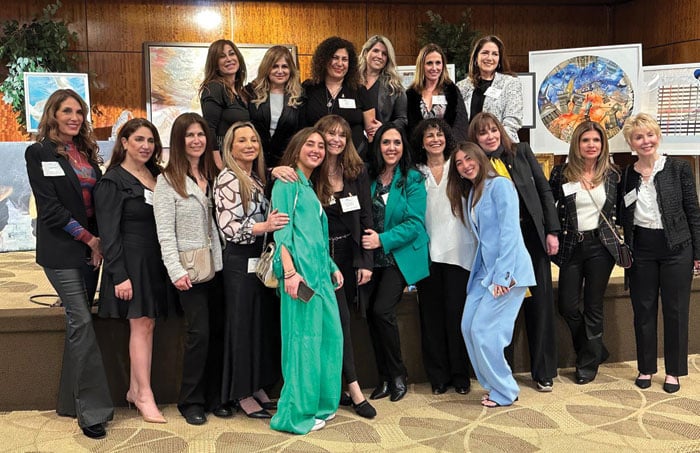
Creative Hearts for Israel committee chair Tamara Stavinsky, along with Reina Resnik and Shauna Jackson, are part of a group of Jewish women working to give back to Israel. 

On Feb. 22 at Sinai Temple, the three helped host a silent and live auction fundraiser, featuring art, jewelry and memorabilia, to support the mental health needs of Israelis suffering in the aftermath of Oct. 7. About 450 people attended, wanting to help Israel in its urgent time of need. Artist and activist Tomer Peretz was the guest speaker, and he discussed his experience with PTSD while emphasizing the need for mental health support. The auctioneers, Guy Bengal, Rami and Ronen Varsha, donated their time as well. 

Nearly $150,000 in funds were raised to benefit American Friends of Natal, which assists Israelis suffering from trauma and PTSD. More than 23 Jewish women were part of the Creative Hearts for Israel committee, working diligently for the past four months to organize the fundraiser. 

To support the efforts of American Friends of Natal, visit afnatal.networkforgood.com. 

Debra Messing Joins StandWithUs; Hineni Society Dinner; Israel Fundraiser Read More »

First Candles – A poem for Parsha Vayakhel

And he made the menorah of pure gold; of hammered work he made the menorah, its base and its stem, its goblets, its knobs, and its flowers were [all one piece] with it. ~Exodus 37:17

Candle one of the first Menorah that we
built at the foot of the mountain is for
everywhere our feet stepped before.
The memory of our history, rooted in our toes.

Candle two of the Menorah, not the Hanukkiah
which is a menorah, but not The Menorah
is for the people who made it, the ones whose
eyes remembered Egypt better than we could
even though we are told we were there.

Candle three of the Menorah is for the Mountain itself.
There are mountains all over the world, but this is the one
we capitalize, to never forget what we did there
even though the exact location is up for debate.

Candle four of the Menorah, skipping over the
center candle, I promise, we’ll get back to it,
is for our immediate next steps. Our feet may
remember the past, but forty years of wandering
will teach us things we’d never learn if we
walked across the river early.

Candle five of the Menorah, we can already see the end,
is for the place we went. Our promised home. Where we
started before the narrow place diversion We may be
setting up shop anew when our heels touch its sand
but we were there before and the land never forgets.

Candle six of the Menorah, we’re about to fall off the edge,
is for ourselves, or God, or trying to tell the difference
between the two. We were made in an Image we spend
so many years trying to live up to. We fail over and over
and still get the credit for looking the way we do.
We are who we are – Lights made by a Light.

The candle in the middle, I told you we’d get here,
is for our light – The light that beams out of our
foreheads and feet, that reflects off our toenails,
that shows the way to anyone who perceives light,
that reminds us the people we illuminate have their own light.
Sometimes it shines brighter than ours.
We’re okay with that.


Rick Lupert, a poet, songleader and graphic designer, is the author of 27 books including “God Wrestler: A Poem for Every Torah Portion.” Find him online at www.JewishPoetry.net

First Candles – A poem for Parsha Vayakhel Read More »

Both Hares and Tortoises Will Be Winners

Like secularly transgressive soldiers in the I.D.F.

who are not orthodox, Hareydim

join Jews who to all the Torah’s laws aren’t def-

erential and to God have never prayed, im-

itating all King David’s military winners,

turned into Torah true Tortoiseim not competing

with secular haverim, non-Haredim spinners,

both of them winners, Hamas foes defeating.


In “Gaza War Is Shifting Ties Between Secular and Ultra-Orthodox Israelis,” NYT, 3/4/24, Patrick Kingsley and Natan Odenheimer write:

In a neighborhood of Jerusalem, ultra-Orthodox Jewish residents cheered a soldier returning from military service. At a religious seminary, similarly devout students gathered to hear an officer talk about his military duties. And at a synagogue attended by some of the most observant Jews in the country, members devoted a Torah scroll in memory of a soldier slain in Gaza. 

Nearly 30 percent of the Haredi public now supports conscription, 20 points higher than before the war, according to a poll conducted in December by the Haredi Institute for Public Affairs, a Jerusalem-based research group. Nearly three-quarters of respondents said their sense of shared destiny with other Israelis had intensified since the Oct. 7 attacks.

“We see some change within the Haredi community,” said Avigdor Liberman, the leader of a nationalist party that has long campaigned to end Haredi privileges. “They understand it is impossible to continue without participating more in our society.”

Incorporating more Haredim, a conservative population, into a modern military includes its own set of challenges, like addressing sensitivities involving men serving alongside women. Yet, more than 2,000 Haredim sought to join the military in the first 10 weeks of the war, a tiny proportion of the serving army but two times the group’s annual average. More Arab Israelis join the army than do the ultra-Orthodox. 

Those few Haredim already in the military have reported feeling more feted in their communities, leading them to feel more confident walking through their neighborhoods in uniform.


Gershon Hepner is a poet who has written over 25,000 poems on subjects ranging from music to literature, politics to Torah. He grew up in England and moved to Los Angeles in 1976. Using his varied interests and experiences, he has authored dozens of papers in medical and academic journals, and authored “Legal Friction: Law, Narrative, and Identity Politics in Biblical Israel.” He can be reached at gershonhepner@gmail.com.

Both Hares and Tortoises Will Be Winners Read More »

A Bisl Torah – Our Wish Room

One of my greatest pleasures is studying Torah with congregants. As one congregant and I poured over some difficult verses, she remarked on the many books behind my head. “Rabbi Guzik, have you read all of them?” I laughed. Some yes. Some skimmed. Some patiently waiting to be opened.

She explained that in her home, they have a large room filled with books. Most would call it a library or study. She doesn’t. The room is named, “Our Wish Room.” She explained that each book is a source of inspiration. It sounded like within their lifetimes, she and her husband wish and aspire to open each book, glean its wisdom and as a result, grow their souls.

As she spoke, I was reminded that at the heart of Jewish faith is the unending wish to live a life of Torah. Torah as the five Books of Moses and Torah as the continuous commentaries and evolution of the Jewish story. To be a Jew is to be a learner.

The Talmud asks the question, which is greater? Study or action? Rabbi Akiva says, “Study.” Rabbi Tarfon differs and answers, “Action.” The rest of the rabbis are in agreement with Rabbi Akiva because they determine study leads to action.

May we be devoted to wishing. Being mindful, constant, curious learners. A learning that will lead to an expansiveness of the soul, and ultimately acts inspired by our faith.

Shabbat Shalom


Rabbi Nicole Guzik is a rabbi at Sinai Temple. She can be reached at her Facebook page at Rabbi Nicole Guzik or on Instagram @rabbiguzik. For more writings, visit Rabbi Guzik’s blog section from Sinai Temple’s website.

A Bisl Torah – Our Wish Room Read More »

A Moment in Time: “Three Questions for the Rabbi”

Dear all,

I had a scheduled appointment a couple of weeks ago with a delightful three-year-old who attends our ECC. His family set up the appointment because he had important questions that he wanted to pose to “the Rabbi.” I was really looking forward to our meeting.

This articulate and thoughtful young toddler launched into each question with heart and with spirit:

1) Why is God all around us and not in one place?

2) Why is God invisible?

3) Why do some people have and some people don’t have? (Resources, money, etc.)?

Friends, I can offer my responses. But in truth, my answers don’t warrant a moment in time. My take-away from our meeting was about the incredible depth, wonderment, and empathy of this remarkable little boy.

Judaism teaches us that wisdom is not about what we know. Rather, wisdom is about what we ask. Thus, our meeting put me in the presence of a wise soul. I may ask him for another meeting so I can deepen my wisdom some more!

With love and shalom,

Rabbi Zach Shapiro

A Moment in Time: “Three Questions for the Rabbi” Read More »