fbpx

March 7, 2024

The White House Endorses MAZON Initiative

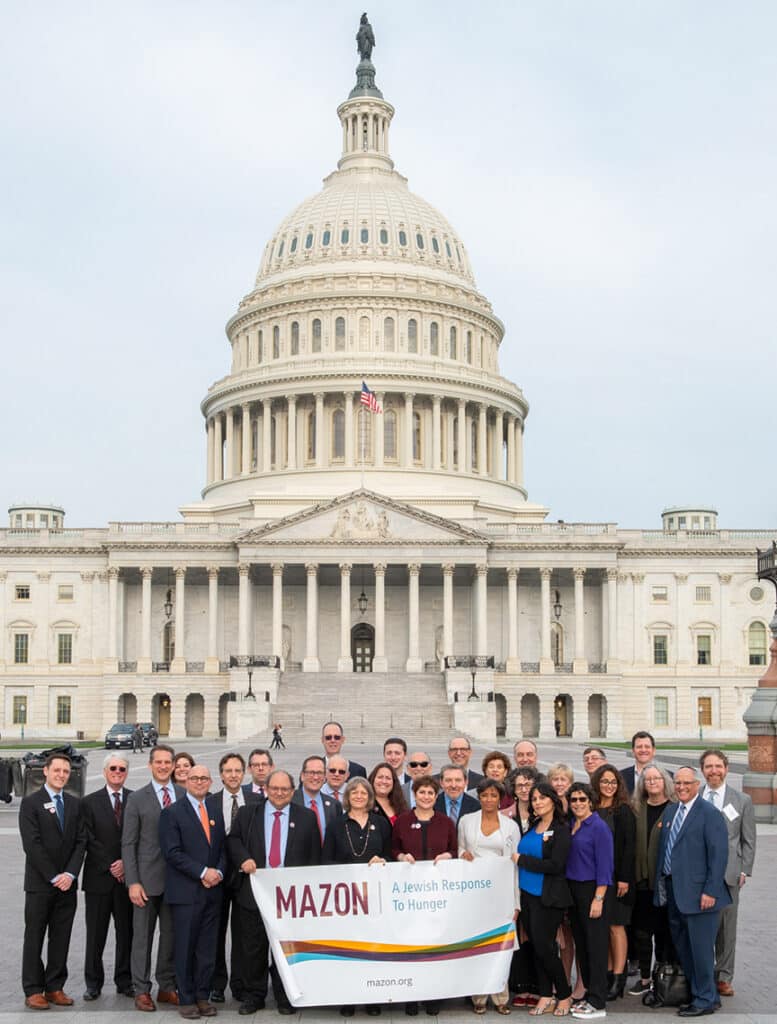
As part of the White House Challenge to End Hunger and Build Healthy Communities, the Biden-Harris administration announced a powerful round of commitments at an event on Feb. 27. This includes a new national initiative from MAZON: A Jewish Response to Hunger, which focus on two often-overlooked populations: college students and Indigenous communities. 

“The Biden-Harris administration’s support for MAZON’s anti-hunger initiatives is truly meaningful, particularly as we continue to face uphill battles and divisive politics that threaten our nation’s social safety net,” MAZON’s president & CEO Abby J. Leibman told the Journal. 

Inspired by Jewish values and ideals, MAZON is a national advocacy organization working to end hunger among people of all faiths and backgrounds in the United States and Israel.  “We are deeply proud to be part of the historic effort to address hunger in this country,” Leibman said. 

MAZON’s staff attended the announcement event at the White House, alongside second gentleman Doug Emhoff, Agriculture Secretary Tom Vilsack, U.S. Representative Jim McGovern (D-Mass.), Senator Debbie Stabenow (D-Mich.), chef José Andrés and others. “As anti-hunger champion Congressman Jim McGovern said at the [event], ‘Hunger is essentially a political condition: We have the tools and resources,’” Leibman said.

“We cannot stand by while millions of Americans face hunger and hardship.”- Abby Leibman

“We know that investing in federal assistance programs like SNAP, WIC, and the Child Tax Credit will help the millions of Americans struggling with hunger and poverty, and yet some policymakers would rather cut assistance than expand it,” she said. “We cannot stand by while millions of Americans face hunger and hardship.”

MAZON’s White House commitment includes educating, organizing and convening student leaders from its Challah for Hunger campus chapters across the country for a leadership conference in Washington, D.C. Challah for Hunger brings together campus and community groups, around the Jewish tradition of baking challah. Proceeds of the sales are donated to the fight to end hunger, both locally and nationally.

“At its core, Challah for Hunger is really a leadership program,” Leibman said. “Bringing campus leaders to our nation’s capital will enable us to deepen their understanding of the realities and complexities of hunger in America, both on college campuses and beyond.” She adds, “They will learn directly from policy experts, develop skills to advance change in their communities and bring their passion and stories to the halls of power as they meet with members of Congress. Their voices will be essential in actualizing long-term solutions to end hunger in this country.”

MAZON will also work toward improving food security and food sovereignty among Indigenous communities. This includes new investments to promote tribal-driven solutions to revitalize and advance traditional food systems and diversified economic development throughout Indian Country. Additionally, MAZON will work with Indigenous leaders to develop a new permanent exhibit in its all-virtual experience, The Hunger Museum.

“This country has a long and troubled history in Indian Country, with government food programs being used as a tool of colonization,” Mia Hubbard, MAZON’s vice president of programs, said via press release. “Developing new educational content for The Hunger Museum will enable and encourage diverse audiences to confront and understand the historical and contemporary effects of federal food policies in Indian Country, as well as how Indigenous communities today are asserting food sovereignty and holding the U.S. government accountable for the obligations owed to Tribes.” She adds, “We are eager to work alongside our partners in Indian Country to bring these critically important stories to light.”

MAZON was deeply engaged in advocating for the convening of, and voicing its goals for, the White House Conference on Hunger, Nutrition and Health, held on Sept. 28, 2022. Prior to gathering, the first and only event of its kind took place in 1969, and led to the creation and expansion of federal nutrition programs like SNAP, WIC, and the National School Breakfast and Lunch Program.

“When we were involved with the White House Conference in September 2022, I harbored no illusions that a one-day summit would help us end hunger overnight, but it allowed us to ask questions and understand the causes of hunger,” Leibman said. “Hunger is not a new phenomenon; it has always been a part of our nation’s history.

The White House Endorses MAZON Initiative Read More »

Let Kids Show Their Jewish Pide with DIY Mezuzahs

I’m back! For the first craft project after my hiatus, I was inspired by the subject of this week’s cover story, Disney animator Saul Blinkoff, and how he drew a mezuzah on Winnie the Pooh’s doorpost. So I’m revisiting a popular project from a few years ago that lets kids participate in the mitzvah of hanging a mezuzah. 

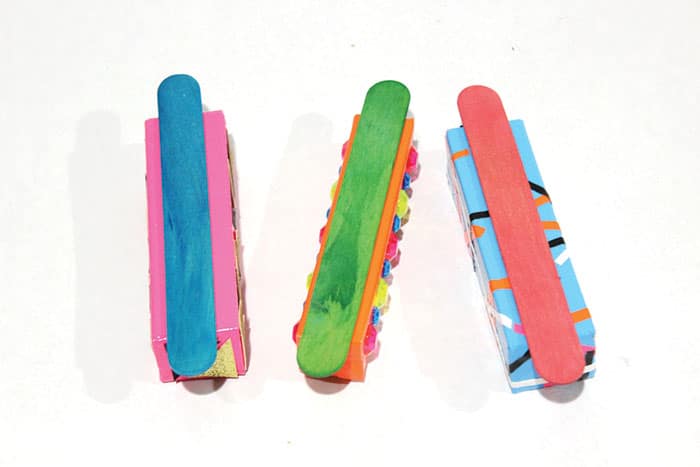
These DIY mezuzahs are made with materials you may already have in the house. Travel size toothpaste and cosmetic boxes are the perfect size to hold the klaf, and you can decorate them with art supplies like duct tape, colored paper and rhinestones. This craft activity is a great way to teach kids about the mezuzah, and they’ll have their own custom-made one to hang on the doorway of their bedroom. Actually, these mezuzah cases are so spiffy, you may want to make one for yourself.

What you’ll need:
Small rectangular box
Colored duct tape
Embellishments
Craft popsicle stick
Glue

1. Any small box that is long and skinny will work as a mezuzah case. Boxes that hold travel size toothpaste, cosmetics, aspirin or eye drops are all appropriately sized. It’s fun to look through your cabinets to see what you have available.

2. Pick some brightly colored duct tape and cover the boxes in them. You can also paint the box or wrap it in paper, but I find duct tape easier to use. Don’t tape the box shut, however. You’ll want the flap open to insert the scroll.

3. Embellish the cases however you want. Try cutting pieces of paper and gluing them on the box to make a mosaic pattern. Or cut strips of duct tape in contrasting colors and crisscross them on the box.

4. You can also glue three-dimensional bling on the boxes, like rhinestones, sequins or even buttons. 

5. Draw the Hebrew letter shin on the front of the case, or print it on the computer and cut it out, as I did in the examples.

6. Glue a craft popsicle stick to the back of the case. Craft sticks come in many sizes; select one that is longer than the box. You can paint the craft stick or leave it as is. I bought craft sticks that are pre-painted.


Jonathan Fong is the author of “Flowers That Wow” and “Parties That Wow,” and host of “Style With a Smile” on YouTube. You can see more of his do-it-yourself projects at jonathanfongstyle.com.

Let Kids Show Their Jewish Pide with DIY Mezuzahs Read More »

Print Issue: Finding the Holy in Hollywood | Mar 8, 2024

CLICK HERE FOR FULLSCREEN VERSION

Print Issue: Finding the Holy in Hollywood | Mar 8, 2024 Read More »

Campus Watch March 7, 2024

UC Berkeley Police Launch Criminal Investigation Into Disruption of Israel Lecture

UC Berkeley’s police launched a criminal investigation into the events of Feb. 26, in which pro-Palestinian protesters shut down a lecture of a former Israel Defense Force (IDF) soldier. 

Assistant Vice Chancellor Dan Mogulof told The Jewish News of Northern California (The J) on Feb. 28 that the investigation is underway, which includes two reported instances of battery. Three Jewish students reportedly were injured that evening, one of whom claims she was choked.  The J noted that the university’s records show “trespassing, riot, battery on a peace officer/emergency personnel, battery on a person, and obstructing or resisting an officer or emergency med tech” and “also cited two injuries and felony vandalism” from the Feb. 25 protest.

“We will seek consequences for any lawbreakers,” Mogulof told The J. “As per the chancellor’s instructions, we will now be turning our attention to doing what we must so that nothing like Monday night ever happens again.”

“Zionists Not Welcome”: UCSB Student President Targeted With Antisemitic Messages

UC Santa Barbara (UCSB) Student President Tessa Veksler, an Orthodox Jew, was targeted when signs with hateful messages such as “Zionist Not Allowed” were hung at the university’s Multicultural Center.

Veksler posted images of the signage in a Feb. 26 Instagram post; the messages included, “Tessa Veksler supports genocide,” “Get these Zionists out of office,” and “when people are occupied, resistance is justified.” Veksler called the signs “dehumanizing” and expressed concern for her safety on campus. “This incident is not an isolated incident but rather a culimination of neglecting to adequately address the implications of such speech and actions within our university,” she wrote on Instagram. “UC Santa Barbara must not remain complicit in the target, intimidation, and discrimination against its Jewish students. Silence endorses and perpetuates discrimination against Jewish students.”

The university said in a statement to The Algemeiner on Feb. 28, “The campus was distressed to learn of incidents over the weekend that included offensive social media message and signage on one of our buildings. The signage has been removed and campus is conducting a bias incident review based on potential discrimination related to protected categories that include religion, citizenship, and or ethnic origin.”

Columbia’s Middle East Institute “Extends a Warm Welcome” to Hamas-Supporting Professor

Columbia University’s Middle East Institute (MEI) announced a “warm welcome” in January to a visiting professor who has reportedly professed support for Hamas.

The Washington Free Beacon reported on Feb. 27 that the professor, Mohamed Abdou, is teaching a weekly “Decolonial-Queerness & Abolition” class. The Free Beacon found a purported Facebook post from Abdou on Oct. 11 stating that he’s “with the muqawamah (the resistance) be it Hamas and Hezbollah and Islamic Jihad.” The Free Beacon also noted that Abdou said in a Jan. 5 interview on the “Revolutionary Left Radio” podcast, “I might be with Hamas and support the resistance… Look what 1,500 did … they were organized and they worked in stealth mode.”

UVA Students Vote for BDS Referendum

University of Virginia (UVA) students voted in favor of a referendum on Feb. 28 calling for the university to undergo “an auditing process to determine the extent to which University endowment funds are invested in companies engaging in or profiting from the State of Israel’s apartheid regime and acute violence against Palestinians and to immediately divest all funds so identified.” 

The referendum passed with 68% in favor and 32% against. 

A university spokesperson told Jewish Insider, “As a general matter, the university does not take positions on student referenda. UVA has a tradition of student self-governance, which means students are responsible for running elections like this. The referendum was an expression of the opinion of the students who voted for it, it is not the university’s position and it is not binding on the university in any way.”

El Camino High Students Walkout to Protest Antisemitism

Students at El Camino Real Charter High School in Woodland Hills held a walkout on Feb. 27 to protest antisemitism on campus.

The Los Angeles Times reported that the protesters chanted, “Stop the Hate” and held Israeli flags. One student, Danielle Eshed, told KTLA that a classmate called her a “dirty Jew” and then “pushed me and started punching me.” Eshed’s father, Edan, spoke at the rally and said, “The school thinks that he has more rights than my daughter for protection. He has rights to be educated, but my daughter [doesn’t] have the rights for her safety.” El Camino Executive Director David Hussey told KABC that the student who attacked Eshed has been disciplined.

Campus Watch March 7, 2024 Read More »

Finding the Holy in Hollywood

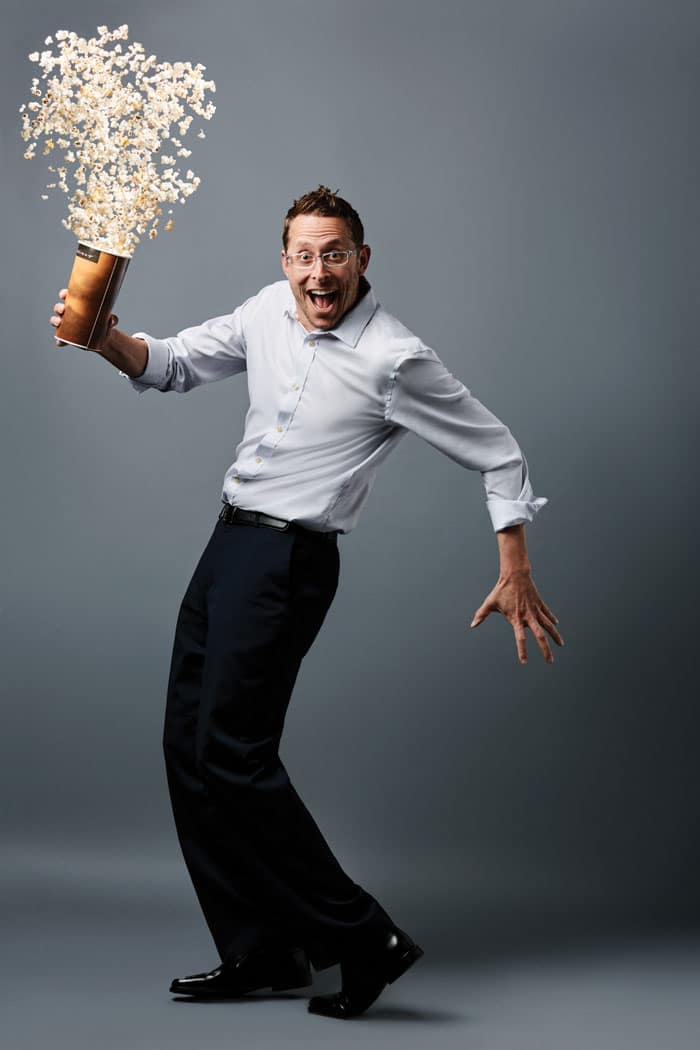
Saul Blinkoff, an animator, had been hired to work as a director on a new “Winnie the Pooh” film for Disney. As he was sitting at the drawing board, ready to put the final touches on some art and approve them for the movie, suddenly it occurred to him: Don’t Disney artists hide things in movies?

With that, he picked up his pencil and drew a mezuzah on Winnie the Pooh’s doorpost. “To me, he was no longer Winnie the Pooh, but Winnie the Jew,” Blinkoff said. 

The proudly Orthodox Jewish Disney animator also hid the Hebrew word for Hashem in the opening credits of the film. And when he was directing “Kronk’s New Groove,” he handed the movie’s artists his wedding album, and lo and behold, Kronk – a character from “The Emperor’s New Groove” – got married under a chuppah, with the glass smashing, shouts of “Mazel tov!” and all.

“I’m not just a filmmaker, I’m a Jewish filmmaker … We have to put these values into what we do … The stories that Hollywood tells affect the entire world.”     

“I’m not just a filmmaker, I’m a Jewish filmmaker,” said Blinkoff. “We have to put these values into what we do… The stories that Hollywood tells affect the entire world.”

The animator, who is also an in-demand motivational speaker in the Jewish community, is now branching out and sharing his experiences in the corporate world and beyond through his brand, Life of Awesome. And in a time of rising antisemitism, he’s become much more outspoken about his Judaism; he doesn’t hide it but spotlights it in all the work he does. “I proudly wear a kippah to work, whether I’m at Disney or Mattel,” he said. “I think it’s really important, especially now, for Jews in the professional workspace to not hide their Judaism, but instead, proudly display it.”  

Following His Dreams

Born in Philadelphia in 1972, Blinkoff’s family moved to Long Island, New York in 1980. From an early age, he drew constantly and dreamed of working in the arts. 

“I used to draw Snoopy and Garfield on the walls with my mother’s lipstick,” he said. “My mom would put my artwork on the fridge. That’s the best gallery. It’s better than the Met and the MOMA. I used to say, ‘I’m going to be an artist someday.’”

“As the credits [for ‘E.T: The Extraterrestrial]’ rolled, I tapped my mom and said, ‘Mom, this is what I want to do one day. I want to make movies’”

Blinkoff had what he calls the “classic middle child syndrome.” He was the creative, misunderstood one who just might have had ADD. “Doctors suggested to put me on Ritalin,” he said. “But my mom refused.” When he was 11, he went to the movies with his mom and saw “E.T.,” and it was then that he decided he wanted to work in Hollywood. “As the credits rolled, I tapped my mom and said, ‘Mom, this is what I want to do one day. I want to make movies,’” he said. “It spoke to me. It empowered a child to do something important. The adults in ‘E.T.’ were oblivious and the child was empowered to do something important.”
It was his mom, Lynn Lantz, who encouraged him to go after that dream and supported him every step of the way. She traveled with him around the country looking at eight animation schools where Disney would recruit animators. He got into the Columbus College of Art and Design in Ohio, majored in animation and had the opportunity to attend a presentation from a Disney rep.

He sat in an auditorium with 750 students and the rep asked, “Who wants to work for Disney?” Every hand shot up, and the rep added, “Maybe four of you will be chosen for an internship,” telling the eager students to focus on anatomy and figure drawing, advice which Blinkoff took to heart.  In his sophomore year, he sent in his portfolio to Disney, but was rejected. He spent every waking moment drawing and perfecting his craft and tried again – and was rejected a second time. 

Blinkoff wasn’t going to give up that easy; he called Disney and asked how close he was to being accepted. They told him he missed the cut-off by only three slots out of thousands. He was determined to keep going. 

When Bill Matthews, a veteran Disney animator, came to campus, Blinkoff asked him what could be done to improve his portfolio. Matthews told him to add more special effects to his work, which he did. He subsequently turned in his portfolio and anxiously waited to hear back. 

And then, one day, he received a call: He’d gotten in.      He called his mom, yelling, “We did it!” and the two celebrated together.

It was finally happening: He was going to intern at Disney Studios in Orlando and start to fully realize his dreams. And at the same time — though he didn’t know it yet — he was going to connect with his Jewish neshama and determine what he really wanted out of life. 

Connecting to His Judaism

Blinkoff excelled in his internship and was offered a full-time, salaried job at Disney. He was living the life, with a great job, a fancy sports car and a beautiful girlfriend. He was working on movies including “The Hunchback of Notre Dame,” “Pocahontas,” and “Mulan,” which took four years to complete. 

After giving it all to “Mulan,” Blinkoff had some downtime — so he did what any 20-something-year-old would. He had fun at the Disney parks in Orlando, shopped in high-end designer stores and checked out the different hotel swimming pools. It was in one of those pools that he had a life-changing moment.

He was thinking about the trip to Israel he’d taken with his family a year earlier. While he was sitting in a café with his parents in the Old City, in walked a 23-year-old man, who was the same age as Blinkoff. The two started talking about sports, and Blinkoff asked him, “What are you doing in Israel?” “’I’m on a learning program at a yeshiva,” the man      told him. Blinken didn’t understand what that was.

The animator had grown up in a Conservative and traditional household, where they celebrated Jewish holidays and lifecycle events. He went to Camp Ramah in the Poconos and his mom was the first female cantor in Philadelphia, but he had no exposure to Orthodox Judaism. 

The meeting with the yeshiva student stuck with him, though. And a year later, when he was pondering the meaning of life, he decided he had to figure it out. “I decided to get out of the pool,” he said. “I told all my friends who were not Jewish, ‘I am going on this [yeshiva] program. I want to find out how I fit into the Jewish people.’

Blinkoff had time off from animating before his next assignment, “Tarzan,” was to go into production, so he flew to Israel and went on a 10-day program called Isralight, under the guidance of Rabbis David Aaron and Binny Freedman, the latter of whom was a commander in the IDF. “He spoke about the meaning of the mezuzah in 10 minutes, and those 10 minutes changed the rest of my life,” Blinkoff said.

What the rabbi taught was the mezuzah is not just something you put up in a doorway. It’s an opportunity to transition from being in the world to being in your home. The mezuzah reminds us what kind of world we want to create and decide what we are living for. “What [my life] was missing was meaning,” Blinkoff said.

After returning from the eye-opening trip, he worked on “Tarzan,” and eventually his agent got him a job directing a new kids’ show for MTV. He moved to New York’s Upper West Side, a haven for young Orthodox Jews, and began taking his Judaism more seriously. 

He learned how to keep Shabbat, and he and Marion, his girlfriend from a Reform background, became more observant together. They soon got married and moved to Los Angeles, where they discovered the baal teshuva organization Aish Hatorah, and Blinkoff began learning with Rabbi Shalom Denbo and going to his family’s home for Shabbat dinner. Blinkoff and his wife had four children and raised them in their observant Jewish home.

As for Blinkoff’s career, it kept ballooning; he worked on “Tinkerbell,” “Fox and the Hound 2” and “Doc McStuffins,” earning animator, producer and director credits at Disney, Amazon, Dreamworks and Netflix. He also started giving talks inside and outside of the Jewish community about his work, inspiring others to follow their dreams and live a “Life of Awesome,” his personal and professional tagline.

“When I speak in the Jewish world, I have one message: Embrace your Jewish identity in every aspect of your life … It doesn’t mean you have to be religious or Orthodox. You need to wake up and realize you’ve won the lottery every day being Jewish.”

All the while, he continued to communicate how awesome Judaism is — even during the dark time following      Oct. 7. Instead of being scared and hiding, he’s urging Jews to be louder than ever when it comes to their Jewish pride. “When I speak in the Jewish world, I have one message: Embrace your Jewish identity in every aspect of your life,” he said. “It doesn’t mean you have to be religious or Orthodox. You need to wake up and realize you’ve won the lottery every day being Jewish. Someday, it’ll be too late to cash that ticket in. We’ve all won the lottery — some of us are just lucky enough to know it.”

Being Holy in Hollywood

Hollywood was founded by Jews, and yet, that important history has been forgotten. Take the opening of the Academy Museum of Motion Pictures — funded in part by Jewish producer and philanthropist Haim Saban — which left Jews out of an exhibit on the early days of Hollywood.

“Most of the world doesn’t realize that Hollywood was built by Jews like the Warner Brothers, MGM, Goldwyn and Mayer,” Blinkoff said. “Jews were trying to be filmmakers in New York. They couldn’t, so they opened up shop in California.” 

In movies and on TV shows, secular Jews are often portrayed in a negative light, as being nebbish or neurotic, while Orthodox Jews are shown as ideological, backwards people engaging in cult-like behavior. Content like this is what caused Blinkoff to become more outspoken. 

“I produced the TV show ‘Madagascar,’” he explained. “Because I had a Black character on the show, and I am a white male, I couldn’t make decisions about how the Black character looked or spoke. We engaged as an organization to make sure we were representing Black culture accurately and responsibly in the production, which was the right thing to do. The same must go for Judaism. How does the world view Judaism? It’s our job as Jewish storytellers to ensure we are being portrayed accurately.” 

Blinkoff spoke to the Jewish Writers’ Initiative, which is made up of 15 Jewish writers in Hollywood, about this very topic. “I [also] talked about what Jewish values are and how we can incorporate them into the stories we tell,” he said.

Along with fighting stereotypes, in the wake of Oct. 7, he’s been decrying Hollywood’s silence on Israel. “They always speak up if women aren’t paid as much as men, but they aren’t speaking up that women were savagely raped or murdered, or mutilated or raped as hostages. They pick and choose which causes to support.”

“I do think it’s disgraceful where Jews don’t speak up … We just had the Golden Globes and not one actor, writer, producer, presenter or any of them said anything about the hostages in Israel. Nothing … Some Jewish people were posting about the writers’ and actors’ strikes and picketing every day, but posting almost nothing about the hostages.”      

What makes it even worse is when Jews in Hollywood don’t say anything. “I do think it’s disgraceful where Jews don’t speak up,” he said. “We just had the Golden Globes and not one actor, writer, producer, presenter or any of them said anything about the hostages in Israel. Nothing …  Some Jewish people were posting about the writers’ and actors’ strikes and picketing every day, but posting almost nothing about the hostages,” he said. Now is not the time to shirk or run away from Judaism. It’s the time to become closer than ever to it and display it to the world – which is what he does. 

Whether Blinkoff is posting on his popular Instagram account, hosting his “Life of Awesome” podcast, giving a 45-minute corporate keynote presentation, speaking to Jews or working at Disney’s animation studio, he makes sure to incorporate inspiring Jewish teachings into his work. “No matter what I do, I’m embracing my Jewish identity through all those things. My Judaism helps me make decisions in every aspect of my life.”

He urges others to connect with their Judaism and do the same.

“We need to wake up every day and know what our purpose is,” he said. “All of us have unique abilities. There are no two people in the world who are the same. There are no two people in the world with the same purpose. [I wake up] and [clarify] what I am living for individually and figuring out how I can take my abilities and respond in the world. A life of awesome is embracing my Jewish identity to take responsibility for the world.”

Finding the Holy in Hollywood Read More »

On the Hatred of Jews

“An antisemite is someone who hated me before I was born,” Elie Wiesel, survivor of Auschwitz, said.

Antisemitism is a denial of humanity of the Jew. The reactions seen at Harvard in the wake of Oct. 7 reflected a view that Jews are oppressors and, in some way, unworthy of human consideration.

In the calculus of an antisemite, Jews are both subhuman and superhuman – vermin who control the world. Common antisemitic rhetoric places Jews at the center of conspiracies, secretly controlling anything and everything: America, the banks, the Middle East, a vast colonialist enterprise, immigration, the Federal Reserve, NATO and even Taylor Swift’s concert tour schedule.

People hate Jews because they are communists, capitalists, foreigners, residents, immigrants, elitists, have strange ways, are unassimilated, too assimilated, bankroll the left (like George Soros) or bankroll the right (like Sheldon Adelson). People hate Jews because they are weak and stateless, or because they are Zionists and defend Israel.

This hate is justified in a number of ways, and it is never just because someone is Jewish.

One belief system common at Harvard is the colonialist settler ideology. Colonialists are people who come from one place, take a land, and now have two.

But Jews are far from being colonialists. Jews come from Israel. In this ideology, the colonialists are almost always white, but the Jews in Israel are quite diverse. Colonialists do not share the land, but Israel gave the Sinai Peninsula back to Egypt and has made many separate offers to share their land with Palestinians — which the Palestinians rejected. Further, Jews were kicked out of Israel by one colonial power — Rome — and returned by overthrowing the rule of another — Britain.

Once you divide humanity by race or creed or nation into two camps — the good and the evil — you have adopted the mentality of the despot. This is bad for society, as well as for Jews.

Much of Harvard is captured by an ideology that centers oppression, but dividing all the world into oppressor and oppressed is dangerous. Once you divide humanity by race or creed or nation into two camps — the good and the evil — you have adopted the mentality of the despot. This is bad for society, as well as for Jews.

Although many do so in ignorance, when people chant “From the river to the sea” the most natural interpretation of their calls is advocacy for territory without Israel, without Jews.

Israel is the only country in the world that is routinely and widely targeted for eradication. So is anti-Zionism synonymous with antisemitism?

There are exceptions, but the overlap is striking. I have never heard of activists who are angry with China targeting Chinese restaurants in Paris, but when Hamas terrorists were recently arrested in Europe with plans to blow up Jewish institutions, they were not targeting Israel, but Jews. If someone is angry at Israel, they target Jewish synagogues, businesses and restaurants — anything associated with Jews, anywhere in the world — no matter their relationship to Israel.

This enmity has deep roots.

I have a position at the Harvard Divinity School, and I often wonder whether we teach students that both the New Testament, and to a lesser extent the Koran, contain messages hostile to Jews. Do the students learn that Martin Luther said Jews “are a serpent’s brood” and their synagogues should be burned, or how during periods like the Almohad persecution, Jews could accept Islam, flee, or die? Or how Christians persecuted and periodically murdered Jews for some 1,500 years?

Jews experienced more acceptance in Muslim lands, yet still were labeled impure, subjugated, and often persecuted. Many of my congregants in Los Angeles were forced to flee Iran when the Shah fell in 1979 — their property confiscated, the leader of the community executed, and the Khomeini regime making clear they were unwelcome in the new Islamic republic. Having lost everything and escaping with their lives, years later, they still have nightmares.

Why all this hatred against one small people? We remained different, distinct. We would not become Christian or Muslim. We were outsiders, others, champions of diversity.

Moreover, Jewish culture — portable, book-focused, and one that venerates scholarship and learning — primes us for economies where information and mental agility lead to success. When you don’t like someone, seeing them succeed magnifies the antipathy.

Finally, Jews introduced the idea of ethical monotheism — the moral demands that one God makes on human beings — to the Western tradition. As Jewish essayist Maurice Samuel said, “No one likes an alarm clock”; Jews represent conscience and conscience is a disruptive and painful partner in our lives.

The energy and outrage Jews generate — making up 0.2% of the world population — is oddly disproportionate. Antisemitism is a wild, irrational eruption.

Harvard has a long and ignoble history of antisemitism, as Harvard President Claudine Gay said in her remarks to Harvard Hillel in October. It is time to admit it, confront it and overcome it. One can criticize policies without calling for the end to the only homeland Jews have ever known. One can demand a Palestinian state without globalizing the intifada — the term for a protest that previously resulted in over 110 suicide bombings that targeted buses, cafes and malls.

If we cannot learn to argue civilly at Harvard, how can we have hope for the civility of other places in the world?

Jews gave the world a precious gift: the idea that each human being is an image of God. I pray that we all remember and honor that gift.

Editor’s note: Originally published in The Harvard Crimson and republished with the author’s permission.


Rabbi David J. Wolpe is a visiting scholar at the Harvard Divinity School. He served on Harvard’s antisemitism advisory group before stepping down in early December.

On the Hatred of Jews Read More »

‘Vishniac’ Documentary Turns the Camera on a Renowned Photographer

The documentary “Vishniac” brings to light the work and legacy of photographer Roman Vishniac (1897-1990). It will leave audiences wondering what photographic treasures may lie undiscovered in their grandparents’ homes. 

The documentary focuses on the value of the Russia-born photographer’s images of the daily lives of Jewish communities in Central and Eastern Europe before the outbreak of World War II. A great deal of the film showcases Vishniac’s photographs of seemingly innocuous moments of everyday life in areas soon to be ravaged by the Nazis. But as director Laura Bialis says in the film, “Those become the icons of the icons, they were really exhibited as a kind of obituary to a world that was on the edge of destruction. It was part of a deep confrontation with loss.” 

Directed by Bialis (“Refusenik”) and executive produced by Nancy Spielberg (“Above and Beyond”), “Vishniac” uses a mix of interviews, archival footage, on-location shoots and live-action reenactments of moments from the stills. Bialis doesn’t like referring to the recreated scenes as “reenactments” and she’s right to feel that way. Those scenes add a level of drama and immersiveness to the film’s story. In one of the first of such moments in the documentary, Vishniac’s grandson Ethan talks about how his grandfather as a youth had no interest in going into the family jewelry business in Moscow. It’s followed by a recreated scene of a young boy exploring a lush green forest with his box-style wood and leather camera. The scene then cuts to Vishniac’s original close-up photos of grasshoppers and vegetation.

“Vishniac” is more than just a peek into life in pre-Holocaust Europe. He’s described in the documentary as “a scientist at heart.”

“Vishniac” is more than just a peek into life in pre-Holocaust Europe. He’s described in the documentary as “a scientist at heart.” At his core, Vishniac was captivated by photographing life — be it his fellow humans or single-cell organisms. Viewers learn that he concocted new ways to see living things: photos of microscopic life in petri dishes. 

Bialis only learned about Vishniac through a chance encounter with his daughter, Mara Vishniac Kohn, then age 70. They met through a mutual friend in Santa Barbara in 1996, where they both were living at the time. Even as a photographer, Bialis wasn’t familiar with the elder Vishniac’s work. Bialis soon thereafter perused the 1983 book, “A Vanished World” featuring Vishniac’s photographs (and a forward by Elie Wiesel), as well as original photographs of Albert Einstein taken by Vishniac. Kohn was initially reluctant to share the stories about her father due to their complex relationship.  

For years, the idea to do a documentary about Vishniac sat dormant in Bialis’ mind. During that time, Vishniac’s work didn’t go unnoticed. The late Tom Tugend reviewed a 2007 exhibition of Vishniac’s work at UCLA for the Journal. 

“Scattered throughout are photos of Vishniac’s extended family, taken mostly at party reunions, which resemble, to the unschooled eye at least, the stiff-posed pictures spread across any family album,” Tugend wrote. “The master’s touch is more apparent in a series of remarkable portraits of Vishniac’s friends, among them the Russian pre-Bolshevik leader Alexander Kerensky and the great tenor Joseph Schmidt.”

It would still be almost another seven years before Kohn would agree to collaborate with Bialis on the documentary. 

“I remember a moment when I realized, ‘My G-d, I’m going to have to be responsible for the photographs,’” Kohn says in the early moments of the documentary. They were pictures of “people who had been murdered and who should not be forgotten.”

Speaking at a recent panel discussion about the film, producer Spielberg (director Steven’s younger sister)  said to Bialis, “It took a while for Mara [Kohn] to trust you, because you had mentioned before that every time you would ask her questions — because her father was a little bit of a controversial figure in that people weren’t sure if he was always telling the exact true story. And she had almost like a script in telling the story, and she was by rote repeating what she told everybody about her father. And at one point she stopped, and she looked at Laura and she said, ‘Oh hell! All the people I’m talking about are dead, anyways, I might as well tell you the truth.” 

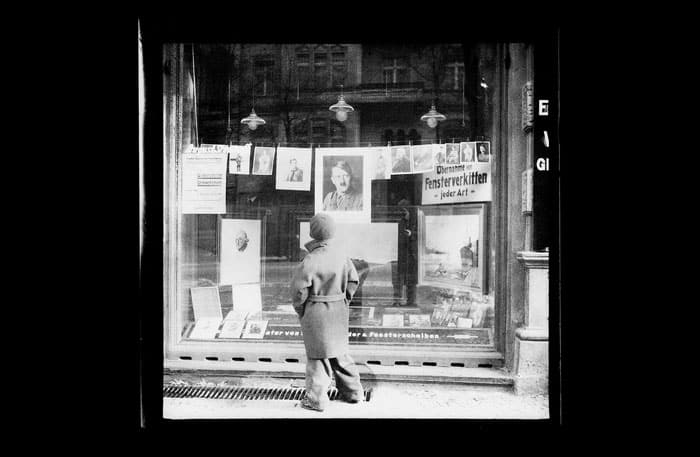
In the end, Kohn not only shared the story, but narrated much of the documentary. It includes stories of her childhood in Berlin and the family’s escape from Europe during the Holocaust. A particularly memorable moment is where Vishniac took a photo of his daughter in front of Nazi propaganda on the streets of Berlin, so he could slyly document it under the guise of just shooting a photo of his child.

There’s an eerily familiar moment featuring photographs of Jews engaging in agricultural work.  “As the world was closing in on them, Vishniac decided to capture the Jewish response to being excluded from German society. Soup kitchens, schools, hospitals that were specifically for the Jewish community, Zionist training camps preparing urban Jews for life in agriculture. Bankers and photographers and journalists getting into dirt and building things to prepare Jews to migration to Palestine.” 

It’s a moment that evokes similar scenes of modern-day Jews flocking to Israel to assist with agriculture in the post-Oct. 7 world. 

Composer Todd Boekelheide’s score beautifully bridges the early 1900s scenes with contemporary reflection. The cinematography is top notch, and certainly a challenge when mixing present-day interviews, old photographs, and dramatic reenactments. Bialis’ own daughter, Lily Vaknin, portrays the young Kohn in several scenes. 

The documentary will have viewers imagining the world going on about them as they go through long-lost photography from a dearly-departed family member.

Spielberg spoke about the importance of introducing the film to universities, saying that they may pare down the documentary to an even shorter version to capture the elusive attention of a younger but vital generation of viewers.

Kohn passed away in 2018, before “Vishniac” was completed. She worked closely with Bialis during the last two-and-a-half years of her life. “We knew she was sick, and she said that she was ready, she really felt like it was her time. But she also told me there’s only one reason that I’m really, really upset and it’s because I wish I could have been here when the movie’s done. I was in the hospital with her a few days before she passed away, and we just tried to make sure we had all the material that we could possibly think of that we were going to need.That was sad. 

“But the thing that made me really happy was that when the film was first screened in the first festival that we were in, Mara’s daughter was there with her two daughters … one of them also has a daughter. So it was many generations. And Naomi, who was not supposed to speak, took the microphone from someone and said, ‘I just have to tell you, this is the story that my mom wanted to tell, and she never got to tell it. And you did that for her.’ So it was like an amazing compliment and I was really happy that that’s how she felt.”


For information on upcoming screenings of “Vishniac,” visit: https://vishniacfilm.com/ 

‘Vishniac’ Documentary Turns the Camera on a Renowned Photographer Read More »

Art + Protests in NYC

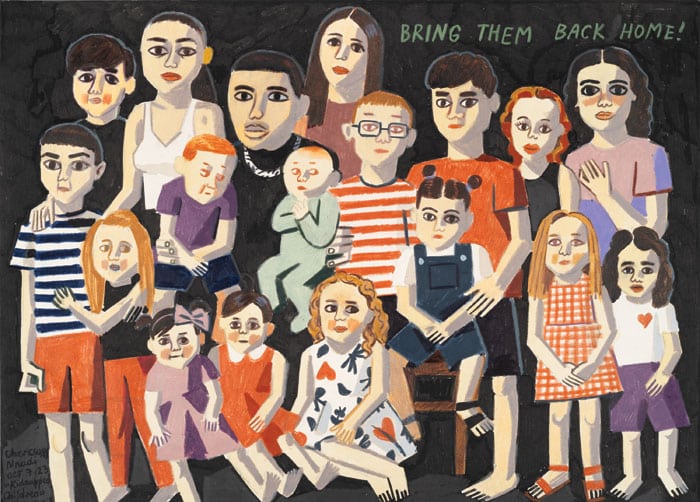
On Oct. 8, Israeli artist Zoya Cherkassky, not knowing what was coming next, took her 8-year-old daughter and fled to Berlin. Zoya, 47, who was born in Kyiv and emigrated to Israel in 1991, also took her art supplies. Creating art was how she processed tragedy. 

The early images of the atrocities at Kibbutz Be’eri made Cherkassky think of “Guernica,” Picasso’s 1937 painting of the Basque town after the Nazi Luftwaffe bombed it. Picasso vividly portrayed the horror of inhumanity. Cherkassky began to draw her emotions and quickly produced 12 works that just as vividly show the shock, fear, and brutality of Oct. 7. 

A family of ashen, burned bodies look at us in horror, hands pressed against gaping mouths, silently screaming. An elderly couple, hands bound behind their backs, embrace as blood and flames surround them. A mother holds her baby son close as she stares in disbelief at a mass of dead bodies.

“Museums exist to be custodians of world cultural heritage, and this kind of savagery and barbarism is the antithesis of that,” James Snyder, the new director of the Jewish Museum in New York City, said. “We need to speak out against them and do what we can to educate and engage.”

Snyder, who had worked with Cherkassky during his tenure at the Israel Museum, quickly installed her drawings in an all-black room, called “7 October 2023.” For most of us, this was entirely appropriate —in fact, I would love to see more work by Israeli artists. But for the art world, whose hostility toward Israel is renowned, this was considered a “colonial” move.

Metal detectors don’t scan for pro-Hamas “disrupters,” and at three points during the evening these disrupters screamed the usual epithets at Cherkassky. 

On the evening of Feb. 12, I went to the museum to hear Snyder interview Cherkassky. The event was packed. We had all gone through security, as every Jewish institution implemented after 9/11. But metal detectors don’t scan for pro-Hamas “disrupters,” and at three points throughout the evening these disrupters screamed the usual epithets at Cherkassky. I’m sure everyone there did the same mental calculation: Metal detectors so they can’t be armed. But of course none of us could be sure.

Which made Snyder’s response all the more interesting. “Thank you for the dialogue,” he calmly told them, as security escorted them out. “This all helps counter polarization.” Cherkassky chose a different tactic: She yelled “F— you!” at the protestors. After another set was forced to leave, Cherkassky said: “I am very happy that there are privileged young people from privileged countries that can know how everybody in the world should act.”

After the third set, a young GenZer behind me screamed out: “This isn’t dialogue; this is antisemitism.” Shockingly, many in the audience screamed at her to “Shut up!” 

The Jewish Museum is north of Temple Emanu-El, the site of the Kissinger memorial protests that led to white leftists throwing water in the faces of an elderly couple. There was no public condemnation of the protesters from the synagogue. 

All of which begs the question: How should Jewish institutions respond to Oct. 7 and the daily, violent riots that have followed? 

Last week I went down to the Museum of Jewish Heritage to hear a panel discuss film clips from Feb. 20, 1939, when 20,000 pro-Nazi Americans filled Madison Square Garden. The footage is terrifying, especially when a Jewish man bravely jumps on the stage and is thoroughly beaten.

The panel made direct parallels to today’s alt-right — Charles Lindbergh became the leading voice of the America First Committee, an isolationist group of 800,000 that was against America entering World War II — and discussed the limits of freedom of speech. But despite the fact that thousands of “Globalize the Intifada” rioters filled Times Square on Oct 8, before Israel began to respond, they purposefully avoided any references to what New Yorkers are now living with on a daily basis. 

How could a museum dedicated to the memory of the Holocaust hold an event that intentionally ignored the largest massacre of Jews since the Holocaust?

Toward the end, the moderator even expressed shock that people were “conflating Israel and Jews.”

It turned out to be a prophetic statement but not in the way he intended. At roughly the same time, a young Jewish dentist was murdered by a Muslim in San Diego. Just like in the ‘30s, Jews’ desire to conform — to distance themselves from their heritage — isn’t going to save them. Because as any historian of Jewish persecution well knows — or anyone who has listened to the current chants of “Kill the Jews” — the globalized Intifada has little to do with Israel. It’s about ridding the world of infidels, foremost Jews. 

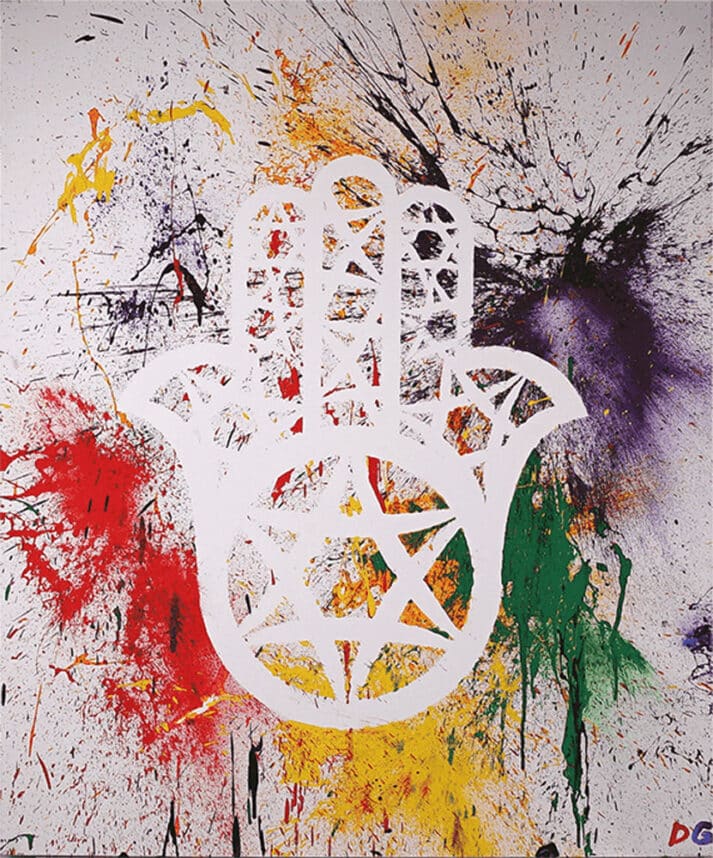
Meanwhile, on the floor below, an Israeli organization called Jerusalem Shield held a fundraiser. The group, started by Ukrainian-born David Roytman, is a rapid response unit of former IDF soldiers. Prior to starting Jerusalem Shield, Roytman had created David Roytman Luxury Judaica. Headquartered in NYC, the brand has 150 outlets all over the world.

Symbol of Peace, David Roytman

“For 2,000 years, Jews hid the attributes that gave away their origins. They wore the kippah at home, behind closed doors. The Star of David was a mark of persecution,” Roytman writes on his website. The brand was created “to show the world that any attribute of Judaica nowadays is a source of pride.”

I met Roytman in the lobby after both events; I thanked him for everything he does. “You don’t have to thank me,” Roytman said. “I’m just protecting our family.” 

Many American Jews have a lot to learn from Israelis about not just the necessity of fighting back but that our 3,000-year connection to our homeland is integral to who we are. We’re beginning to see it from GenZers who are being bullied on campuses. They’re testifying before Congress about the antisemitic violence on campuses and making videos inspiring other Jewish students to stand up for themselves. 

Perhaps some of this was meant to be a lesson to those who still haven’t fully processed what being Jewish — ethnically Judean — means. And how allowing your soul to fully grasp that feeling can bring a type of strength, bravery, and resilience that no one can touch. For more secular Jews, Israeli artists, who understand all of this intuitively, may be the best teachers.


Karen Lehrman Bloch is editor in chief of White Rose Magazine.

Art + Protests in NYC Read More »

Giving Thanks for the Overflow

I remember the first time one of my rabbinic school teachers, Rabbi Ben Hollander (z”l), invited me to his home for Shabbat lunch. He opened a bottle of Manischewitz and proceeded to pour wine into the cup until it overflowed. As he lifted the kiddush cup to say the prayer, more wine spilled over the sides onto his hands and onto the beautiful white tablecloth.

Later I asked him why, and he said that while it’s a mitzvah to say kiddush over a full cup of wine, it’s a minhag (a custom) to fill it so full that it literally overflows. We do this, he taught me, in order to symbolize our hope that our lives will overflow with blessings, with sweetness and with goodness. 

The Hebrew word for that sort of abundance is shefa, and I have been thinking about it this week because of something I read in the news that fits perfectly with where we are in our Torah cycle as we read the portions describing the design and construction of the portable tabernacle (Mishkan). In order to build the Mishkan, God instructs Moses to ask for donations from “every person whose heart is so moved.” No one is required to give, but all are invited to contribute. 

I thought of those verses when I read last week of a transformational $1 billion gift made to the Albert Einstein College of Medicine by former professor and current Board Chair, Dr. Ruth Gottesman. The gift will eliminate tuition for medical students, who are often graduating with more than $200,000 in debt. (By the way, Dr. Gottesman insisted that the school not be renamed in her honor or in honor of her recently deceased husband, David Gottesman, saying, “We’ve got a gosh darn name—we’ve got Albert Einstein!”)

The gift is obviously extraordinary, demonstrating that overflow, that abundance of generosity. 

But back to our Torah. What happens when Moses invites the Israelites to donate from their hearts? We read this week in parashat Vayakhel that our ancestors were so generous that those tasked with constructing the tabernacle ask Moses to tell the people to stop bringing gifts because the people “are bringing more than is needed for the tasks entailed in the work that the ETERNAL has commanded to be done” (Exodus 36:5).

It would be like someone phoning the Albert Einstein College of Medicine today and offering to make a donation for a scholarship fund for its students. The development director would say, “We’ve got that fully covered thanks to Dr. Ruth Gottesman! Instead, might you consider directing your donation toward another worthy need of our medical school?”

Too often we see the world as zero-sum, we dwell on what seems to be in short supply instead of considering the abundance all around. The Milky Way alone contains more than 100 billion stars including, of course, our own sun. That’s an overflow of light and energy and possibility.

Too often we see the world as zero-sum, we dwell on what seems to be in short supply instead of considering the abundance all around. Our universe contains an estimated one septillion stars (that’s a one followed by 24 zeros). The Milky Way alone contains more than 100 billion stars including, of course, our own sun. That’s an overflow of light and energy and possibility.

Even in these dark times, perhaps especially in these dark times, we need to recognize and give thanks for the shefa — the abundance — that exists. This week I am inspired by the overflowing generosity of Dr. Ruth Gottesman. May other philanthropists follow suit so that more and more institutions (including one day all the synagogues and day schools in Los Angeles) might be able to say: “Welcome! Tuition and membership are free here because of the overflowing generosity of our community!”


Rabbi Yoshi Zweiback is the Senior Rabbi of Stephen Wise Temple in Los Angeles, California.

Giving Thanks for the Overflow Read More »

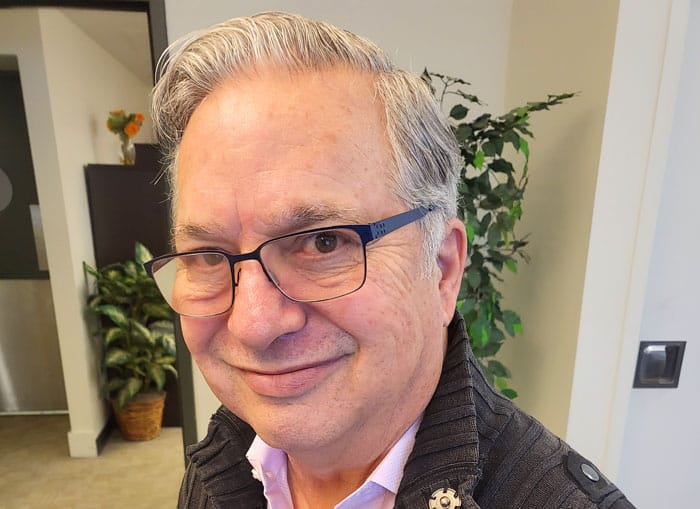
Rabbis of LA | Rabbi Bruce Raff Can’t Stop Himself

The Sun-splashed, high-ceilinged office of Rabbi Bruce Raff befits one of the longest-serving rabbis in Los Angeles.

For the past year, he has been the Rabbi in Residence at Temple Judea, Tarzana. With a laugh, he explained, “It means I live here.”  The Culver City native says the title suggests, “You have been here so long you know everybody. I am dealing with children and grandchildren of people I worked with, studied with and learned from the last nearly 40 years.”

Three generations of the Raff family have grown up at the Tarzana Reform temple, including Tamar, Rabbi Raff’s wife.

Rabbi Raff is as busy today as he was in the ‘80s and ‘90s. The main difference, he said is that many of his current classroom students are grandchildren of the first generation of students he taught. How do today’s Temple Judea students differ from those he taught in the ‘80s? “The challenge we face is a universal one,” he said. “It has plagued generations. Look at ‘Fiddler on the Roof.’ Such questions were ‘Will our children be Jewish?’ ‘How will they be Jewish?’ ‘What type of Jewish will they be?’” Raff noted that the rabbis who wrote the story of Hanukkah were dealing with the same issues: Will we be Hellenized? Will we be so insular in our Judaism that we can’t adapt to the outside world? Rabbi Raff said “One way we have dealt with that challenge is to try and find – to be able to live in modernity and at the same time to have Jewish meaning in our lives.” He commended Director of Education Rabbi Eric Rosenstein for designing creative programs that engage 21st-century students.

“You have been here so long you know everybody. I am dealing with children and grandchildren of people I worked with, studied with and learned from the last nearly 40 years.”

He said Rabbi Rosenstein has found a way to create programs that make Jewish learning fun. “He also has found a better alternative than religious school, which we call Sababa,” Raff said. “It’s a summer and winter camp program where kids come all day every day for several weeks, along with periodic programs throughout the year (for kindergarten through eighth grade), and then the kids become junior counselors.”

Raff said the program created an opportunity for kids to benefit from the best of both worlds: religious school’s  learning, and the camp and community and all of the benefits they could not get without a camp-type program. 

When two students sit next to each other and neither can chant Ashrei, it doesn’t make them friends, Raff said. Other activities do. “Swimming together, playing ball together, eating together, doing things all day together, makes kids friends,” he has found. Informality is a difference maker. Temple Judea brings in their families, with Shabbat dinners and learning opportunities for families. “It really changes the way the kids view temple, view Judaism, view themselves,” he said.

Temple Judea, Temple Ramat Zion, Valley Beth Shalom and L.A. Jewish Health (formerly the Jewish Home) received a grant from the Jewish Community Foundation to train and educate the grandparent generation. He’s currently teaching a four-session class where “we are helping older adults dealing with the challenges of changing family, changing status in life, and the legacy they leave.”  The class – 79 seniors – meets monthly.

Some of those seniors divulge long-hidden secrets. “When you sit with people, they share things they have kept inside,” Raff said. One elderly man recently confided to the rabbi that “I always have had friends, colleagues. We played golf, cards, socialized together, traveled together. Twenty-eight of us. Twenty-six have died and one man moved away. I am all alone. I don’t have anyone.”

A widow told Rabbi Raff she had been married for more than 50 years. “There is no way,” she said, “to describe the loneliness of getting into bed alone every night.” You don’t have to be a Judea member to attend Rabbi Raff’s meetings – “just be a Jew in the West Valley.”

Coming up is a class for parents, promising answers to questions your preschooler or you ask — how to do Shabbat with your nursery school child, with your religious school child, how to make it fun and meaningful. 

Rabbi Raff created a series of tips and programs for families, including for Passover.

Grandparents have this tremendous potential to influence their grandchildren, he believes. He wants to equip grandparents with the skills to create meaningful moments with their grandchildren — not just fun, but meaningful. Before coming to Temple Judea, Rabbi Raff taught public school, at Hollywood Temple Beth El, then at Ner Tamid in Palos Verdes for seven years before leaping into the Valley.

At Temple Judea’s previous facility, if you turned left you were at Rabbi Raff’s office, and if you turned right, you got to the former Senior Rabbi Akiva Annes’ office.  “I have dealt with everything that is going on in the lives of families” – and then the rabbi paused – “until it came to those moments that have the greatest potential for connection to holiness.

“When the goldfish died,” Raff said, “I got the child.  Or when we got rid of diapers, I got the child. But around those lifecycle moments that have the greatest possibility for connection to Judaism and holiness, they turn the other direction.”

But Rabbi Raff has no intention of retiring.  

“The joy of being able to share Judaism – whether they are two or 12 or 25 or 55! It makes me want to come back to work every day.”

Fast Takes with Rabbi Raff

Jewish Journal: What is your favorite moment of the week?

Rabbi Raff: Doing Shabbat blessings with my grandchildren, teaching them to love Judaism and take it seriously.

J.J.: Best place you have traveled outside of Israel?

Rabbi Raff:  Going to Shanghai, China, because my mother was born and grew up there. I have been to numerous beautiful places, but to be able to go home is incredibly meaningful.

J.J.  Outside of Jewish life, what is the best book you have read?

Rabbi Raff: My favorite book of all time is indicative of the challenges we face and the irony of life, “Catcher in the Rye.”

CORRECTION: An earlier version of this article said that Temple Judea received a grant from the Jewish Federation. In fact, the grant was from the Jewish Community Foundation and has been corrected in the text.

Rabbis of LA | Rabbi Bruce Raff Can’t Stop Himself Read More »