fbpx

February 9, 2023

Rabbis of LA | Rabbi Gavriel Hershoff: Serving At-Risk Teens and Young Adults

No two days are ever alike for Rabbi Gavriel Hershoff. For the past fourteen years, he has been director of Aish Tamid of Los Angeles (aishtamid.org), which helps at-risk teens and young adults find stability and a healthy life path. In addition to having rabbinic ordination, Rabbi Hershoff is also a Licensed Clinical Social Worker (LCSW), has a master’s in social work, and a certificate in alcohol and substance abuse studies and counseling. 

Rabbi Hershoff spends innumerable hours meeting with young adults in crisis, or with parents whose teen or young adult children are in crisis. “We’re here and available for young adults who may be isolating, and for parents or community members who need support.” Often, this means finding financial resources to help struggling individuals pay the rent or pay for dental care. He continually tries to help young adults find meaningful employment. Last week, he also matched a young man with severe anxiety related to trauma to an appropriate outpatient program.

Aish Tamid serves dinner every night, provided or sponsored by volunteers in the community. The young men also hang out after dinner, playing games, working out in the gym, jamming in the music studio, talking, and creating relationships with adult mentors. Aish Tamid also runs a girls’ center that provides similar programs and support. “Girls also have issues of disconnection, anxiety, substance abuse, as well as eating disorders,” Rabbi Hershoff said.

Rabbi Hershoff advises parents of the warning signs that their kids are at risk. “These include extreme apathy, and depression and anxiety. Many teens isolate or self-medicate through vaping, smoking pot, and living on their iphones.  Too many young people don’t feel connected to themselves or to other people. They learn how to engage with the world from their friends or social media, with all the at-risk behaviors and ideas that are being shared there. Try to find ways to engage with your teens, and if you cannot, look for another adult or counselor that you trust to engage with them.

“The hardest part of my job is waiting for the teens and young adults to realize that we are on their side.We don’t have an agenda. We accept everyone where they are and want to be part of their support system.”

“The hardest part of my job is waiting for the teens and young adults to realize that we are on their side,” he observed. “We don’t have an agenda. We accept everyone where they are and want to be part of their support system, helping them to become productive.” It’s tricky to find the balance between empowering young people to make it on their own, versus enabling their self-defeating behaviors and managing their mental health issues.  

Fortunately, there are success stories. A teen named “Ilan” had shut down after experiencing loss in his family. For several years, he came to Aish Tamid every night for dinner and to play drums. Still, his life unraveled: he was living in his car, using drugs, and going on the road with a rock group. 

“We had built a solid relationship and support system for when he was ready,” Rabbi Hershoff said. Ilan ended up going to Israel for a few weeks, unsure about coming home. Rabbi Hershoff proposed that if Ilan stayed longer and was productive, he would pay for his ticket to come home later on. Then COVID struck, and Ilan was stuck. Living with family in the Negev, Ilan detoxed himself, watched hundreds of Torah classes on YouTube, meditated, and tried to figure himself out.

“I spoke to him regularly as he transitioned through these stages and back into life. Someone saw him playing the drums and offered him a job as a dorm counselor at a yeshiva, and the rest is history. He is studying, working on a profession, and loves living in Israel.”

Rabbi Hershoff is grateful for the support of the board of directors of Aish Tamid, the Los Angeles Jewish community, the Jewish Federation and specifically, the Caring for Jews in Need program. “The community and the Federation programs are truly our partners in our work. We are all in this together.”

Fast Takes with Gavriel Hershoff

Jewish Journal: What’s your favorite Jewish food?

Gavriel Hershoff: Nothing like a good Israeli falafel with chips and Amba sauce. Or, good roast beef sandwich on rye with a half-sour pickle. 

JJ:  What is your favorite novel? 

GH: “Kane and Abel,” by Jeffrey Archer. It’s about hardships faced by people in war-torn areas, and also has romance, thrills, and action. I couldn’t put it down. 

JJ:  If you could have lunch with any historical figure, who would it be? 

GH: Moshe Rabeinu. I love his advocacy for the Jewish people. It was never about him; only about the Jewish people.

JJ: How do you relax? 

GH: Driving on Pacific Coast Highway listening to loud classic rock puts me in vacation mode.  

If you need help with your teen or young adult child, please call Rabbi Hershoff at 323-634-0505 or email info@aishtamid.org.

Rabbis of LA | Rabbi Gavriel Hershoff: Serving At-Risk Teens and Young Adults Read More »

Syrian Lah’majin— To Make a Father Happy

The week that was. 

On Shabbat, my nephew Mendel celebrated his bar mitzvah with a beautiful reading of Parshat Bo from the Torah. The service was held at Kahal Joseph, the Iraqi synagogue led by my baby brother Rabbi Natan Halevy. The kiddush luncheon following services was reflective of my nephew’s heritage — half Iraqi, half Ashkenazi and 100% amazing. Yvette Dabby, the President of Kahal, made three huge pots of t’bit (Iraqi chicken and rice prepared for Shabbat). Luckily for us, the kak, (bottom of the rice, similar to Persian tahdig) was perfectly browned and crispy. There were bethi mel Shabbath (brown Shabbat eggs), fried eggplant, Israeli salad, burekas, hummus and tehina. My nephew’s Ashkenazi bubbe, Perla, who capably oversaw the whole mission, made sure there was cholent, potato kugel, chicken schnitzel, meat charcuterie and sliders and lots of salads. But she is from Paraguay, so there were also chicken fajitas, spicy turkey balls and rice, fresh guacamole, salsa and corn chips. 

The only thing to cloud our family joy was the fact that my father was in the hospital. 

Monday night was my Hillel Book Club and I didn’t read the book “Everything Sad Is Untrue (A True Story),” a memoir of leaving Iran by Daniel Nayeri. But in honor of the book, Nicole was coking aush reshteh, a thick Persian soup made with herbs, beans and noodles and Rachel (a different Rachel) was preparing basmati rice with tahdig, so I chopped a Shirazi salad with tomatoes, cucumber, red peppers, purple onion, and Italian parsley (same recipe as my Israeli salad, to be honest) and headed over. We shared some insights about emigration and heroes and life. 

Tuesday night was my Shalhevet book club and I had only read the beginning of the book “The Seven Husbands of Evelyn Hugo” by Taylor Jenkins Reid. As I was preparing the spread, we heard a huge car crash on our corner (where there is a four-way stop).  Luckily no one was injured but the Beverly Hills police blocked all access to my street. So the twenty readers in our book club had to walk several blocks to reach my home. I sincerely hope the cheese and veggie board, the fried pierogi, homemade Spinach and Artichoke Dip and the scintillating conversation made it worthwhile. 

Wednesday night was a parlor meeting to discuss the rebuilding project for the Los Angeles Mikvah. There was a beautiful table filled with delicious nibbles and exquisitely wrapped Bendick’s chocolates. Rebbetzin Jordana Topp gave a wonderful Shiur about the Mikvah and the references to it in the Torah. 

Thursday night, Alan and I were in the hospital until late. After a week of sitting with my father in the hospital, the leftovers had run out and no one was in the mood for take-out. Alexandra called me and said that she would make the Tuscan White Bean soup that was featured in the Journal a few weeks ago.  

After a week of sitting with my father in the hospital, the leftovers had run out and no one was in the mood for take-out.

In between my days in the hospital and my social engagements, Rachel and I managed to prep the Syrian ground beef flatbread lah’majin. 

It was bittersweet because lah’majin is the kind of dish my father loves. Fried onion, some spices and sautéed ground beef flavored with tamarind and studded with pine nuts on a soft chewy flatbread. My father told me years ago that in Iraq they only ate lamb. But in Australia and America, ground beef is much more common and that’s what he ate. I vividly remember my mum being very annoyed with my Aba for bringing pita to the table to eat with her meatballs. She told him that there were already enough pachmimot on the table with the rice and potatoes. That was when I learned the Hebrew word for carbohydrates. 

Praying that my amazing father David ben Rosa can have his two favorite foods: bread and ground beef at home, very soon. 

—Sharon 

Sharon and I decided that we would make lah’majin for our next cooking class. These famous Levantine beef pizzas get their unique uniquely sweet, sour and tangy flavor from adding tamarind paste while sautéing the meat. Caramelized onions, minced garlic, tomato paste and a dash of cumin, cinnamon and allspice round out the dish. 

In the past, we have gone the easy route by using store-bought frozen mini-pizza dough rounds. But this time we decided to make our own dough. The dough comes together quickly and searing the dough in a hot skillet ensures that the dough is soft and puffy (not raw) when it comes out of the oven. This recipe is a perfect way to use up extra challah dough (in Syria, many families made ha’motzi on lah’majin).

Garnished with pine nuts, pomegranate and Italian parsley, our rustic pizzas had the most perfect delicious taste. 

—Rachel 

Pan Seared Laffa Recipe – For Lah’majin

1 teaspoon active dry yeast
1 teaspoon sugar
½ cup lukewarm water
2 cups all-purpose flour
1 teaspoon salt
¼ cup olive oil, plus more for greasing
¼ cup soda water

In the bowl of a stand mixer, fitted with a dough hook, combine the water and sugar. Sprinkle in the yeast, stir gently and let stand for 5 to 10 minutes, or until the yeast starts to foam.

Add the flour, salt and olive oil. Knead on low speed until all of the flour is incorporated and the dough pulls into a ball.
Cover the bowl with a clean tea towel or plastic wrap. Allow the dough to rise in a warm spot until doubled, about 1 to 1 1/2 hours.
Flour a work surface. With well-floured hands, divide the dough into 2 equal parts and shape the dough into balls. Roll the dough to 1/4 inch thickness.
Heat a grill pan or well-seasoned cast-iron skillet over medium-high heat.
Brush one side of dough with olive oil and place in the skillet, oil-side down.
Cook until the bottom begins to lightly brown in spots, about 3 minutes.
Lightly brush the top of the dough with oil. Flip the dough using tongs or a spatula. Cook for about 3 minutes more, or until the dough is cooked through and the surface is bubbled and charred in spots.
Transfer the laffa to a platter and cover with foil to keep warm and steam slightly.
Repeat with the rest of the dough, lightly oiling the pan as needed.

Meat topping
2 tablespoons extra virgin olive oil
1 pound ground beef
2 onions, finely chopped
3 ounces tomato paste
1/2 cup tamarind concentrate
1 teaspoon allspice
1 teaspoon cinnamon
1 teaspoon cumin
1 teaspoon kosher salt
1 teaspoon ground black pepper
1/2 pine nuts
Pomegranate arils and Italian parsley, for
garnish

Preheat oven to 350°F.
In a large pan, warm oil over medium heat oil, add the onion and sauté for five minutes. Add the garlic and sauté a few more minutes, until onion is golden.
Add the ground beef and sauté for 5 minutes, making sure to break up the meat with a wooden spoon.
Add tomato paste, tamarind paste and spices and continue to sauté over low flame for 3 more minutes.
Remove from heat and allow to cool. Divide the meat mixture and spread over each laffa, then add pine nuts
Bake in oven for 10 minutes.
Remove from the oven and top with pomegranate arils and fresh herbs. Serve hot.


Rachel Sheff and Sharon Gomperts have been friends since high school. They love cooking and sharing recipes. They have collaborated on Sephardic Educational Center projects and community cooking classes. Follow them on Instagram @sephardicspicegirls and on Facebook at Sephardic Spice SEC Food.

Syrian Lah’majin— To Make a Father Happy Read More »

Campus Watch Feb. 9, 2023

UC Davis SJP Writes ‘Zionism Ideology of Death’ in Chalk on Campus

UC Davis’ Students for Justice in Palestine (SJP) chapter wrote “Zionism Ideology of Death” in chalk on campus.

The Israel War Room Twitter account shared a screenshot on February 1 showing that the SJP chapter had shared an image of the chalk on their Instagram story. “Zionism is the belief that Jews have the right to self-determination,” Israel War Room tweeted. “If you believe that’s ‘ideology of death,’ you’re an antisemite.” In a follow-up tweet, Israel War Room shared a screenshot from SJP’s Instagram story of the words “Glory to our Martyrs” written in chalk. “By ‘glory to the martyrs,’ they mean glory to Palestinian terrorists who were killed for attacking Israelis — including the terrorist who murdered seven Jewish civilians outside a synagogue in Jerusalem this past Friday,” Israel War Room wrote.

Three Antisemitic Incidents in SB in Four Days

A total of three antisemitic incidents occurred in a span of four days in the Santa Barbara area.

The Daily Nexus reported that on January 30, graffiti stating “F— Israel” and “From the River to the Sea” was found in a UC Santa Barbara classroom where an Israeli politics class was being held. The next day, hundreds of antisemitic flyers were found scattered around the area nearby campus that, according to the Santa Barbara Independent, spread Holocaust denial and blamed Jews for “racism, homophobia, and pedophilia.” The UCSB Office of Diversity and Equity issued a statement via email condemning “the recent distribution of horrific antisemitic propaganda against our Jewish community in our campus classrooms and in Isla Vista.”

Additionally, graffiti of a swastika was found on a flag pole at the Dos Pueblos High School stadium in Santa Barbara, KEYT reported on February 1. “We stand with the Jewish community and condemn all forms of hate,” Superintendent Hilda Maldonado said in a statement. “What’s happened at Dos Pueblos and across Isla Vista/UCSB is troubling. We continue our commitment to identifying, responding, and providing remedies to racial incidents when they occur in our schools.”

UMich on Calls to Condemn ‘Intifada’ Chants: We Don’t Just Condemn … We Talk, Teach and Empower

The University of Michigan responded to the International Legal Forum’s (ILF) call to condemn recent chants of “intifada” on campus by saying that the university doesn’t “just condemn, yell and denounce” but also “talk, teach and empower.”

As the Journal previously reported, ILF CEO Arsen Ostrovsky wrote in a letter to the university that the intifada chants were “a direct and unadulterated call for violence.” A spokesperson for the university responded to Ostrovsky’s letter in a January 30 email obtained by the Journal, thanking Ostrovsky “and others for sharing those views” and that the university engages with “our community members in considering how language can cause harm and ways to exercise their own free speech rights in response to speech they find challenging or disturbing.” “At the University of Michigan, it is essential that we don’t just condemn, yell and denounce, but that we talk, teach and empower.”

Students Call On Princeton Department to Revoke Sponsorship of Mohammed El-Kurd Speaking Event

Students signed onto a letter calling on Princeton’s Department of English to rescind their sponsorship of a February 8 speaking event featuring Mohammed El-Kurd.

The letter noted that El-Kurd has called Zionist “sadistic neonazi pigs,” praised the Second Intifada and accused Israelis of harvesting “organs of the martyred [Palestinians].” The letter continued, “we could fill volumes with his false and hateful speech, but we won’t … All we will leave you with is a plea to carefully consider the evidence we have placed before you and ask yourself if the Department of English stands behind antisemitism and, more broadly, hatred and intolerance.

Professor Jeff Dolven, who heads the department, shared with the Journal his response to the letter, which said that a department sponsorship doesn’t mean they endorse a speaker’s views and as such the department doesn’t issue condemnations. He added that his colleagues invited El-Kurd “out of a sense that he has urgent experience and ideas to bring to the campus. The commitment of the English Department is to making sure that his voice can be heard, and that members of the University community are free to listen and respond within Princeton’s tradition of open and respectful dialogue.”

Campus Watch Feb. 9, 2023 Read More »

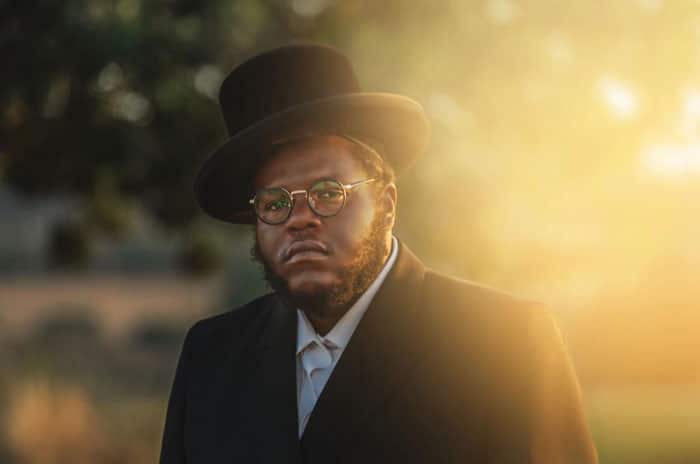
Nissim Black: The Gangsta Rapper Turned Hasidic Jew

Where Nissim Black comes from, life can seem pretty hopeless. 

Growing up in a rough neighborhood in Seattle, he was traumatized at a very young age. His parents were drug dealers and would sell drugs out of their house. When he was eight years old, law enforcement found out and the FBI raided his home. His grandfather, who lived with his family, went to prison.

“I didn’t grow up on the streets. The streets grew up in my house.”

“I didn’t grow up on the streets,” he said. “The streets grew up in my house.” 

Black was on the wrong track. By the time he was 12, he was smoking pot regularly and nobody noticed — or cared. He ended up in the wrong crowd and was expelled from school. 

Things weren’t looking like they’d get better. But then, Black got a lifeline. When he was 13 years old, a friend invited him to a hip hop program that took place after school. A Christian organization owned it and, for once, Black got to feel like a kid.  

“To go from dealing with that kind of dysfunction to this safe haven where you can just be a kid saved my life,” he said. “It was a powerful experience, and it kept me out of trouble for a long time.”
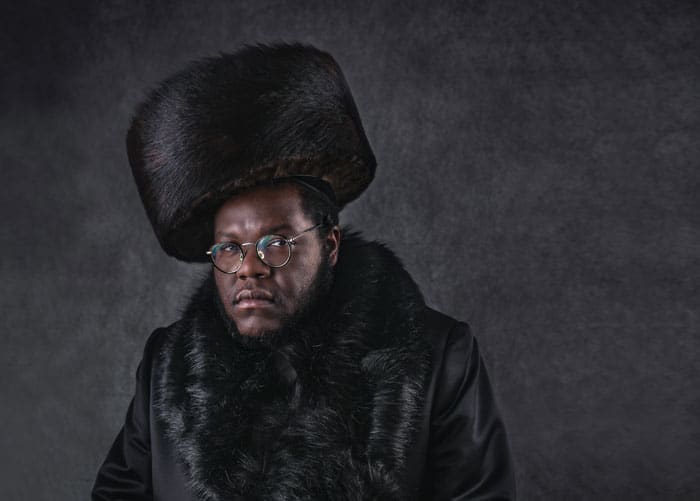
Black became interested in Christianity, which he didn’t have exposure to as a child. The first religion he learned about was Islam, and he would pray five times a day with his grandfather before he was sent back to prison. 

“I was always spiritual, but when I was 13, I was very much in this place of longing and seeking something more spiritual,” Black said.    

Christianity gave Black hope. There was a sense of camaraderie in his community, and knowing God was looking out for him was deeply comforting. 

When he entered high school with his new outlook on life, his plan was to be quiet and unassuming — which didn’t come naturally to him. Just four months into freshman year, he won a rap battle and instantly became popular. Shortly after, he was signed to a record label and he went back to his old way of life.

“At that time, 50 Cent was big, so they wanted gangster music,” he said. “It led me down a dark path of revisiting the old me. I got into a rap beef that almost cost me my life.”

Black decided that he didn’t want to live that way anymore. It was too risky, and it wasn’t worth it. 

“After we squashed the beef, I realized I wanted to go a different way completely and give myself over to God and to a greater me,” he said. 

Black decided to become more involved with Christianity — something he said helped him feel God’s love and grace — and become a junior missionary, along with other teens in his high school. 

“I became a Bible-thumping Christian,” he said. “I remembered every verse and enjoyed being at church more than I enjoyed being at home.”

The more Black studied the Bible, the more he realized that so much of it has roots in Judaism. He looked into it and came across a YouTube video made by the Messianic Jewish community. After watching it, he felt like it made sense. Eventually, he left Christianity and joined a Messianic congregation in Seattle.

“It was a blessing that I went there,” he said. “A great deal of Messianic temples are churches with a Jewish flavor. People were davening out of Artscroll siddurim. They had on kippahs and tallit.”

To ingratiate himself into this new world, Black, the always enthusiastic learner, started studying Judaism. Once he clicked on some articles on Chabad.org, he said, “It gave me such a craving for Orthodox Judaism. It pushed me more and more in that direction.”

To ingratiate himself into this new world, Black, the always enthusiastic learner, started studying Judaism. Once he clicked on some articles on Chabad.org, he said, “It gave me such a craving for Orthodox Judaism. It pushed me more and more in that direction.”

After two years in the Messianic congregation, Black left to learn about Orthodox Judaism. He found a local Sephardic rabbi, Rabbi Simon Benzaquen, and began learning authentic Torah Judaism with the rabbi. Black’s wife Adina, his high school sweetheart he’d been with since he was 16 years old, started studying as well. 

“The first book I got in halacha was a Sephardi book,” Black said. “It seemed culturally close to us and more comfortable. We had a beautiful experience in the Sephardic synagogue. The rabbi took us in, and the community loved us. We really grew there.”

Black and his wife converted to Judaism in 2013, and, along with their children, they moved to Israel in 2016. Today, the family of nine lives in Beit Shemesh and are part of the Hasidic community. 

Though Black learned Sephardic teachings, when he discovered Hasidic Judaism, he was hooked. 

“Becoming a Jew was very dramatic, with the amount of praying and fasting and personal growth I was going through,” he said. “It wasn’t until I came across Rabbi Nachman of Breslov and Rabbi Shalom Arush that gave me back the fire I originally had. I learned with Shmuel Brody, who had such a love and fire for Hashem. He made me realize I could be the same. There is such a soulfulness and spirituality to Hasidic Judaism.” 

In particular, Black connects to Nachman’s teachings because they perfectly describe his relationship with God.  

“His teachings are about personal prayer, building a very personal relationship with God and spending a lot of time with Him,” he said. “That was a no brainer for me. That was always what I was looking for.”

Even though Black and his family may look different from most people in the Orthodox community, it hasn’t held them back or been a deterrent. In fact, it’s been quite the opposite — the community has fully embraced them.

“I didn’t know what to do with all the kindness. I thought, ‘Why is everybody being so nice?’ It’s a love that I never knew where I came from. I didn’t expect it.“ 

“I didn’t know what to do with all the kindness,” Black said. “I thought, ‘Why is everybody being so nice?’ It’s a love that I never knew where I came from. I didn’t expect it. I felt accepted. My whole experience has definitely been one of unbelievable love.” 

On a day-to-day basis, Black spends his time studying in a Hasidic kollel (study hall), recording music, touring around the world and releasing songs and videos online. He has over 32,000 monthly listeners on Spotify, and his biggest hit, “Mothaland Bounce,” came out in 2020 and has five million views on YouTube. 

In the video, he’s dressed in Hasidic and African garb, acting like he’s Eddie Murphy in “Coming to America.” There are other Black men dressed like Hasidim and dancing to the song. 

“Mothaland Bounce” is a mini autobiography of the rapper’s life. In it, he raps: 

Black and Jewish I been wit it Sammy Davis cousin
Tried to dodge the industry but now my name is buzzing
They all sayin’ that I’m conscious, I say that it’s nonsense
So I say I’ve been on since on had an on switch
From Seattle, the rainy city, where my mom lives
In Jerusalem the golden city that was conquered

But still we movin’ onward, motherland conquest
Smell me like an armpit, yeah.

Many of the thousands of comments are from people who are also Black and Jewish. One person wrote, “I’m black & Jewish, and I feel this,” and another wrote, “I love this … I am Black and Jewish.” 

Black says that in his songs, he writes “my own prayers and experiences and work out all these yearnings to be a better person. A lot of that comes through in my music. The words that go into the heart enter the heart.” 

Black’s latest release is “Victory,” an emotional and upbeat song about the story of Hanukkah and the Jewish people’s survival. He sings:

“I fight for you, Jerusalem

You’re the city of the King

And please don’t forget Jerusalem

‘Cause we’re the bearers of your name.”

When Black makes music, what he tries to do is imagine himself as a consumer and how he would feel listening to his songs.

“People tell me my music gives them strength. They used to listen to hip hop that talked about vulgar things. My music isn’t like that. They can play it for their kids.” 

“People tell me my music gives them strength,” he said. “They used to listen to hip hop that talked about vulgar things. My music isn’t like that. They can play it for their kids. If I can make music that helps people feel closer to God, that’s all I really want.” 

Black is frequently on tour, performing for Jewish communities all around the world. This past December, he headlined the annual Hanukkah gathering and concert at The Grove in Los Angeles, rapping in full Hasidic garb after the Menorah lighting. According to Black, most of his audience is Orthodox. 

“I’m blessed that I live in such a world today where they can see everything I do on YouTube, Spotify or Apple Music,” he said. “You actually see that it takes a big dip on Saturday, because my listeners are Orthodox.”

In addition to putting out and performing music, Black is also taking on Hollywood. In April of last year, Deadline announced that HBO Max was developing “Motherland Bounce,” a comedy TV show based on Black’s life. 

In addition to putting out and performing music, /Black is also taking on Hollywood. In April of last year, Deadline announced that HBO Max was developing “Motherland Bounce,” a comedy TV show based on Black’s life. Currently, Black is working on it with comedian Moshe Kasher, who grew up in the Satmar Hasidic community.

“I go from excitement to fear all the time,” said Black. “I grew up watching movies and TV, and it’s amazing to be working with [executive producer and director] Salli Richardson-Whitfield. It’s an opportunity to put out some good content. It’s something you and your kids can watch.” 

Like his music, Black sees the show as a way to spread positive messages about Orthodox Jews.

“There are a lot of horrible things focused on not only the Jewish community, but also the Hasidic community,” he said. “Every community has its challenges and bad apples, but it seems like there’s this agenda to push it. Those are some people’s experiences, but I haven’t had them.”

“Motherland Bounce” is also a way to fight back against the rise in antisemitism, fueled recently by fellow rapper Kanye West. This particularly hurt Black, who had a personal attachment to West when he was growing up. However, he doesn’t see West as a threat. 

“We need to address it with more love and more light,” he said. “Let’s build more goodness and light, and have more positivity. Let’s give PR to people doing great things and shining a good light on the world. We have to fight everything with love.” 

Through his music, and his upcoming TV show, Black hopes he can spread the good word about God, who saved him and changed the trajectory of his life. 

“I want everybody to see that Hashem loves them,” he said. 

“God has gotten bad press in recent decades, and people are slowly leaving the idea of God being in the world. But people should know how much He loves them.”

He continued, “I want to be close to God. It’s what I want more than anything else.”

Nissim Black: The Gangsta Rapper Turned Hasidic Jew Read More »

What Lies Below Jerusalem’s Dome of the Rock

Upon a mountain in Jeru-

Salem, there stands a holy building

about whose origin I knew

no vital facts.  Though by its gilding

inspired and amazed, admirers

only rarely are aware it covers

a shrine whose holy level higher is,

I think, than holiness that hovers

above most godly goals, plus than

the wailed-for, much loved, Western Wall,

and chief church of  the Vatican,

St. Peter’s that’s in Rome, and all

the holy places Muslims built,

both in Jerusalem and Mecca.

By holiness filled to the  hilt,

it is a holy double-decker,

whose glorious gilded Muslim roof

should not forever supersede

the temple that’s destruction proof.


More than just a mere Haghia Sophia

inspiration, called Beit al-Maqdis,

stands on what once in Judea

was built by Solomon.  Jews miss

not only on the Ninth of Av

the Temple, but three times each day

prove very piously their love,

requesting every time they pray

for the return of their great beit

hamiqdash, temple. A fine Persian,

called Al-Tabari, would equate

it, by translating the domed version

of what we call Dome of the Rock,

Beit Al-Hamaqdis; labeled

thus in Arabic to lock

it to a temple that’s more fabled:

the beit hamidash that’s below

the golden dome.  Although destroyed,

a second time two thousand years ago,

by Babylon first made a void

it wasted, Jews wait for the time

when plowshares will be made of swords,

and future with the past will rhyme

as per Isaiah’s great accords,

and to this very day still dem-

onstrate their strong belief that this

will happen when Jerusalem

restores the miqdash,  Beit Al-Maqdis.


To Al-Tabari I’m beholden

for this proof to all damned deniers

that underneath a Dome that’s golden

a Jewish temple lies. They’re liars.


I’m taught these ancient data by

Rabbi Meir Soloveichik, who

wrote: ancient Muslims wouldn’t deny

that Jews’ claims were completely true.


An article  published by the Jerusalem Center for Public Policy,  “Ancient Muslim Texts Confirm the Jewish Temple  in Jerusalem,” states

https://jcpa.org/ancient-muslim-texts-confirm-the-jewish-temple-in-jerusalem/

Jerusalem Center researcher Nadav Shragai responds to modern-day Muslim and Palestinian fabrications about the Jewish Temple in Jerusalem with the testimonies of esteemed Islamic religious authorities from more than 1,000 years ago. He presents archeological evidence such as a Jewish ritual bath found under the al-Aqsa mosque and Islamic coins with a Jewish menorah imprinted on them, and documents how the Jews of Jerusalem introduced the Muslim conquerors of the city to the Temple Mount and accompanied them on their visit there. This is a chapter from his latest book in Hebrew, Al-Aqsa Terror: From Blood Libel to Bloodshed (Jerusalem Center for Public Affairs, 2020).

Nadav Shragai writes:

Despite the misrepresentations and the sweeping denial that many Muslims now adopt regarding the Jewish connection to the Temple Mount and to the Temple that stood there, they themselves were the ones who, up until the Six-Day War, identified the Mount – unequivocally – as the site of Solomon’s Temple and as the place where David said his Psalms. Furthermore, Solomon and David, as important prophets in Islam, are seen as the ones who laid the foundations on the Temple Mount for the building of the mosques there. Nevertheless, today, Muslim clerics and leaders remove the Jewish Temple from the Mount and “transfer” it to places like Mount Zion, Nablus, and even Yemen.

Moreover, many of the names and terms the Muslims have used over the years for the Temple Mount, particularly “Beit al-Maqdis,” which is a translation of the Hebrew name Beit haMikdash, derive from the Jewish designation for the site, where the two Muslim shrines were built around 1,350 years ago. Today, Muslims commonly use the name Beit al-Maqdis for Jerusalem, but in the ancient past, they used the name for the Temple Mount itself. The Jewish people and the State of Israel do not, of course, need the Muslim sources – which, for more than 1,350 years, have identified the Temple Mount as the site of the Temple – to prove their connection to the place. Given, however, the dispute on this issue and the resolutions hostile to Israel in the international arena, which espouse the new Muslim narrative, it is worth presenting the primary Muslim documentation and sources for the Jewish connection to Jerusalem, the Temple Mount, and the Temple. Today, many Muslims erase this reliable documentation from memory. From such forgetfulness, the path is short to denial, and this gives rise to a lie. On this lie now rests the libel from which the “Al-Aqsa is in danger” terror derives its inspiration and legitimacy to murder Jews….

Although today’s Muslims rely on their sages’ writings regarding many issues, when it comes to the history of the Temple Mount, they seem to have been erased.

Foremost among these figures is the Persian historian Abu Jafar Muhammad bin Jarir al-Tabari (838-923), who was one of the first, leading, and best-known commentators of the Koran and the Islamic tradition. One of his ancient manuscripts, which carries a seal of al-Azhar – the world’s most important educational institution for Sunni Islam – was photographed and smuggled out of Cairo a few years ago by Noa Hasid, who is Muslim by origin, and brought to the Beirut-born Middle East scholar Dr. Edy Cohen of Bar-Ilan University. Cohen published the work in 2016. The text in itself offered nothing new; it had already appeared as part of a commentary on the Koran by al-Tabari, which was published in several editions. Nevertheless, as an original manuscript that was photographed and smuggled out of al-Azhar, it sparked great interest. Al-Tabari writes there, among other things, that “Beit al-Maqdis [the Temple Mount] was built by Solomon, son of David, and was made of gold, pearls, rubies, and of the precious stone peridot, paved with silver and gold, and its columns were of gold.”

This documentation, from an Islamic figure of al-Tabari’s renown, undercuts the “revision” of the Temple Mount’s history by many Muslims in recent years. It stands against claims that invert the truth, according to which “the legend of the bogus Temple is the greatest crime of historical forgery,” and against entire books that have been written in that vein.

In his book History of the Prophets and Kings, al-Tabari refers several more times to the Temple Mount as the site of the Temple, and also identified Isaac, not Ishmael, as the hero of the “Binding of Isaac” story. The famous commentator described David’s and Solomon’s involvement in building a mosque on the Temple Mount in a way that corresponds exactly, in not a few details, to the Bible’s description of the process of building the Temple. This description is typical of other, similar descriptions in Islam that point to a strong, ongoing connection to Jewish traditions……

The Muslim geographer Muhammad al-Idrisi, who visited Jerusalem in the 12th century, likewise described “the Temple Mount that Solomon ben David built.” He added that “in the vicinity of the eastern gate of the gates to the Dome of the Rock is the shrine that was called the Holy of Holies, and it is impressive to look upon.” He further attested that the Temple Mount “served as a place of pilgrimage in the era of the Jews and afterward was taken from them, and they were removed from it until the era of the reign of Islam.”

Yakut ibn Abdullah al-Rumi al-Hamawi (1179-1229), a Muslim biographer and geographer, in his book Lexicon geographicum used the term “the Temple,” and in describing its location, he wrote: “Indeed it is Jerusalem [Beit al-Maqdis] and his words to the Israelites were: we have set a meeting with you at the right side of the Mount of Olives, that is – Jerusalem [Beit al-Maqdis].” Later, in an explicit reference to the Temple, he added: “Solomon placed in the Temple [Beit al-Maqdis] wondrous things including the vault from which the heavy chain depends…. And as for al-Aqsa, indeed, it is on the eastern side, in the direction of the qibla, and it was David, peace be upon him, who founded it.”


Gershon Hepner is a poet who has written over 25,000 poems on subjects ranging from music to literature, politics to Torah. He grew up in England and moved to Los Angeles in 1976. Using his varied interests and experiences, he has authored dozens of papers in medical and academic journals, and authored “Legal Friction: Law, Narrative, and Identity Politics in Biblical Israel.” He can be reached at gershonhepner@gmail.com.

What Lies Below Jerusalem’s Dome of the Rock Read More »

A Bisl Torah – Storytelling

This past Sunday, our Sinai Temple religious school hosted a brunch honoring Holocaust Survivors in the Los Angeles community. This brunch, organized by Religious School Director, Danielle Kassin, and her team of wonderful volunteers, is a true highlight. For years, the ballroom was filled with the sounds of storytelling: survivors sharing their journeys with our seventh-grade students and other community members. This year, stories were shared, but as I looked at the room, the difference was obvious. Survivors no longer filled the capacity of the room. Less people sat at the tables. Our children are reaching a time in which survivors will no longer walk this earth.

We will be the guardians of their stories.

In a bit of desperation, I encouraged my own children to take a picture with one of our Sinai Temple members, a survivor of the Holocaust. My kids were perplexed over my sense of urgency. Afterwards I explained to them, “This may not feel big to you now. But I want you to remember this moment. You will be the last generation to know these incredible people and hear their stories. And one day, you will share with your own children—I had the opportunity to meet a survivor of the Holocaust.” My older daughter seemed to understand the gravity of the situation. But even after two trips on March of the Living, I have never felt a greater weight of responsibility. This will be our story to tell. And to those that deny this story, this will be our battle and fight. My job is to ensure that my children, their generation, and the ones that follow are up for the challenge.

Holocaust survivor Elie Wiesel was known for saying, “God made humans because God loves stories.” Storytelling is how we establish our own identity and carry on the legacy of our people. And our charge is to pass on the stories of our people from generation to generation, promising the survivors of the Holocaust that we have listened.

Their words and their stories are forever seared on our hearts. Their story is our story.

Shabbat Shalom


Rabbi Nicole Guzik is a rabbi at Sinai Temple. She can be reached at her Facebook page at Rabbi Nicole Guzik or on Instagram @rabbiguzik. For more writings, visit Rabbi Guzik’s blog section from Sinai Temple’s website.

A Bisl Torah – Storytelling Read More »

Turkey: Where I Met God Face to Face

“Are you an Angel?”

Those are the words that came out of the elderly woman’s mouth as she lay in her bed at the Jewish Hospital in Istanbul back in 1993.

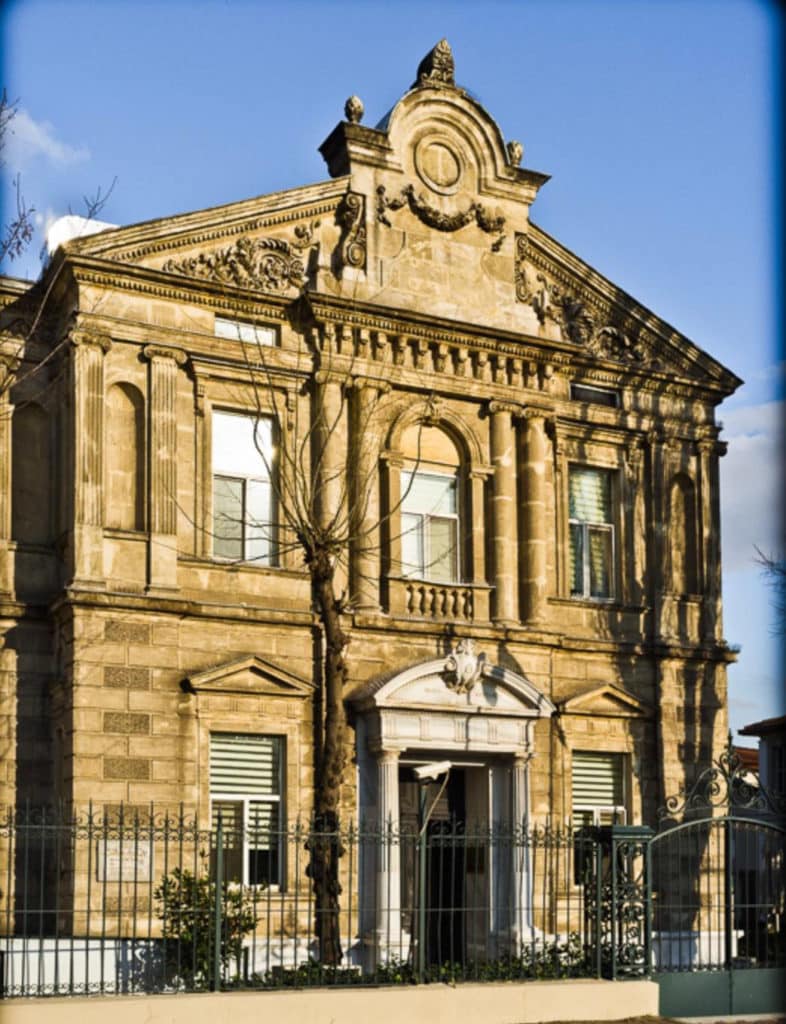
You see …. I was visiting Turkey with a group of friends during my first year of Rabbinical School at HUC-JIR in Israel. The Jewish Hospital was mostly a home for older adults. When this one particular women learned that we had just come from Israel, she touched my face and began to cry.

”I’m hardly an angel” I responded. I then realized that connecting with her allowed me to see God face to face.

It was a fleeting moment in time. And it was an encounter I had mostly forgotten. But this week, with the devastation in Turkey and Syria following the massive earthquake, I can feel her hand on my face all over again.

Over 12,000 people have died to date. Each of them had a divine spark. Each of them created memories. Each of them touched the soul of others.

What a massive, horrible loss.

We can’t bring their lives back. But we can help. Jewish Federations of North America have launched an earthquake relief fund. Our donations will go to provide humanitarian help in Turkey and Syria. Every dollar will made a difference, Every dollar will bring hope.

This is our chance to not only be the face of God – but to be the hands of God as well.

Go out and create love and Shalom,

Rabbi Zach Shapiro

Turkey: Where I Met God Face to Face Read More »

Game Day Kosher Food to Celebrate the Super Bowl

On February 12, the Kansas City Chiefs will face off against the Philadelphia Eagles for Super Bowl LVII.

Some fans might celebrate with traditional foods from their teams’ towns: Kansas City is known for their barbecued ribs and Philly is known for their cheesesteak. Since neither of these are kosher, we’re here to give you some other options.

The pinnacle of the NFL season, this year’s Super Bowl is also “The Kelce Bowl,” the battle between the Kelce brothers, Jason of the Eagles and Travis of the Chiefs.

“Judaism actually has plenty to say on this subject, as there are many biblical examples of competing brothers,” Danny Corsun, founder of Culinary Judaics Academy (CJA), told the Journal.

In honor of the brothers, CJA shared two great Super Bowl Sunday recipes to try while rooting your team on.

Roasted Zesty Chickpeas

2 cans (15 ounces each) chickpeas or garbanzo beans, rinsed, drained and
patted dry
2 tablespoons extra virgin olive oil
1 tablespoon chili powder and/or chili-
lime seasoning like Tajin
1 teaspoon garlic powder
1 teaspoon grated lime zest
1 tablespoon lime juice
¾ teaspoon sea salt

Preheat the oven to 400°F.
Put rinsed and dried chickpeas in a bowl. Add olive oil, lime juice, chili powder, garlic powder and then combine.
Spread fully coated chickpeas onto a parchment paper covered pan. Bake until very crunchy, 20-30 minutes, stirring every 15 minutes.
Remove chickpeas from the oven; let cool for 5 minutes. Top with lime zest and serve.

Mediterranean Chips and Dip

1 package (8 ounces) cream cheese
2 cups (8 ounces) crumbled feta cheese
¼ cup plain Greek yogurt
½ teaspoon finely minced garlic (or you
can use garlic powder)
1 teaspoon of Za’atar
1/4 teaspoon pepper
1-1/2 cups chopped cucumber
1 cup chopped seeded tomatoes
1/4 cup chopped green onions
½ cup sliced ripe olives
Pita chips
Carrots and celery

In a large bowl, combine the cream cheese, feta, yogurt, garlic, Za’atar and pepper. Add in the chopped cucumber, tomatoes, onions and olives and combine. Refrigerate for 20-30 minutes. Serve with pita bread, pita chips and/or carrots and celery for dipping.


Greek Fries Courtesy of The Little Ferraro Kitchen

Samantha Ferraro’s flavorful Greek-inspired fries are full of savory and bright flavors, lively enough to compete with the excitement of the game.

“The potatoes are seasoned with herbs and spices and roasted to a perfect golden brown,” Ferraro, of The Little Ferraro Kitchen, told the Journal. “Drizzle the roasted fries with a bright herb and lemon vinaigrette and dip into creamy tzatziki for the perfect bite.”

If you are going fleishig for your Super Bowl snacks, there are many high-quality dairy-free yogurts and feta cheeses available. Another option is to drizzle the fries with creamy tahini sauce.

Greek Fries with Tzatziki

Potatoes:
2 pounds russet potatoes cut into 1/2-inch-thick wedges
1 teaspoon dried oregano
1 teaspoon paprika
3 tablespoons olive oil

Lemon Vinaigrette:
1/2 cup olive oil
1 teaspoon lemon zest from 1/2 a lemon
2 tablespoons lemon juice
2 garlic cloves, finely chopped or grated
1/4 cup parsley leaves, finely chopped

Toppings:
1/4 cup crumbled feta cheese
2 tablespoons parsley, chopped
2 tablespoons mint, chopped
1/2 cup tzatziki sauce
1 lemon, cut into wedges

Cut russet potatoes into thick wedges and place the potatoes in a bowl filled with cold water for 30 minutes.
Preheat the oven to 425°F.
When ready, drain the potatoes and pat them dry. Transfer the potatoes to a foil lined baking sheet and drizzle with olive oil, salt and pepper, dried oregano, paprika and toss to combine so the potatoes are coated evenly with the spice mixture.
Roast the potatoes for 30-35 minutes until golden brown and crispy on the outside.
While the potatoes bake, make the lemon vinaigrette. In a bowl, whisk the olive oil, lemon zest and lemon juice, chopped garlic and chopped parsley.
Once the potatoes are done, transfer them into a platter and drizzle the potatoes with the lemon vinaigrette and garnish with crumbled feta cheese, chopped parsley and mint. Serve with tzatziki sauce and lemon wedges.


Jeff Frymer’s appetizer
Courtesy of Jeff Frymer

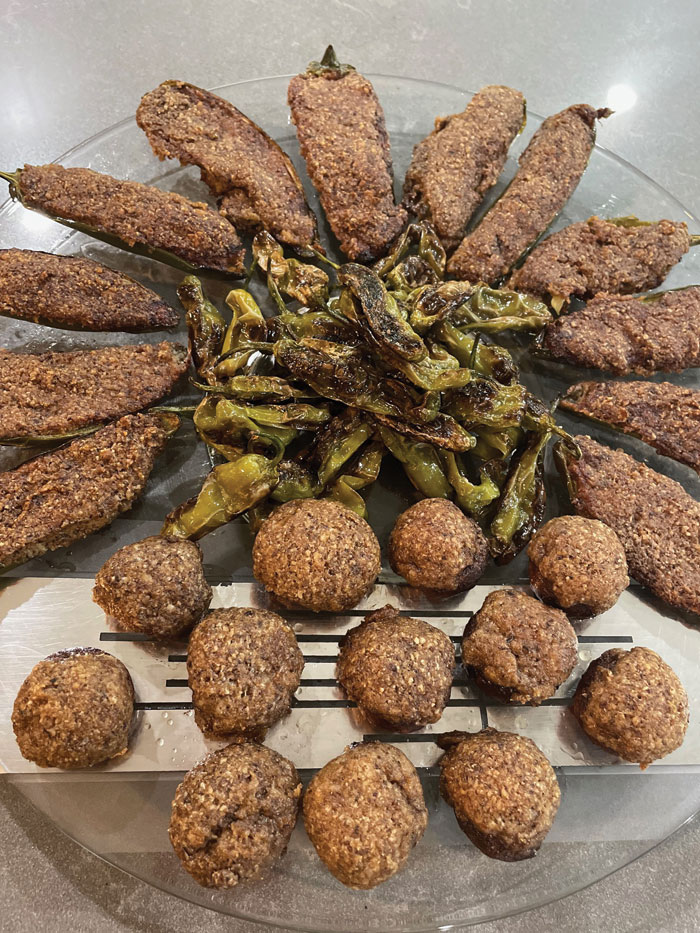
Chef Jeff Frymer believes that nothing says “Super Bowl appetizer” quite like jalapenos, mushrooms, garlic, Parmesan cheese and anchovies.

“Work in a few more ingredients to fine-tune the taste bud experience,” Frymer said. “Then just bake, plate and serve.”

Baked Mushrooms and Jalapenos

Topping:
2 oz tin flat anchovies in oil
6 cloves garlic
6-oz can pitted black olives, drained
1 ½ cup Parmesan cheese
A few twists of fresh cracked black pepper
6 Jalapeno peppers

Add all ingredients except jalapenos into a food processor and blend to a coarse paste. Add a couple tablespoons of olive oil, as necessary, to blend.
Cut the jalapenos in half, length-wise (if you can get half a stem on each side you win) and remove seeds. I use a tiny melon-baller, but a paring knife works too.
Preheat the oven to 375°F. Place jalapeno halves face down in a cast-iron pan or Pyrex baking dish and drizzle with olive oil. One by one, spoon the topping into halves then return to the pan, topping side up. Yes, your fingers will get a little oily in the process. Place into the preheated oven to bake for about 35 minutes.
Destem one dozen medium-sized white or brown mushrooms. Use the same process as above with the jalapenos. Place mushrooms face down and drizzle with a couple of tablespoons of olive oil. One by one, spoon a small mound of topping into mushrooms then return to the pan, topping side up. Bake in a preheated oven for about 25 minutes. If you time it right, both pans will come out at around the same time.
Please be patient as mushrooms and peppers really retain the heat, so allow to cool before plating and serving.
You can also try Frymer’s shishito peppers.

Shishito Peppers
Prepare three dozen or so shishito peppers. Rinse, then dry with a dishtowel.
Add a couple of tablespoons of olive oil to a wok/pan over medium heat . Add peppers and toss/mix frequently until peppers are well blistered and blackened (about 15-20 minutes). Grind in some sea-salt to taste, toss and serve. Most shishitos will be mild in heat, but every once in a while there will be a spicy outlier.


Chef Uzi’s Hot Wings / Courtesy of Chef Uzi Wizman

For the main event, here are different chicken wing options from two local favorites: The Kosher Burger Joint and Jeff’s Gourmet Sausage Factory.

Wings are Chef Uzi Wizman’s favorite finger food.

“The strong flavors of this special sauce will make sure you stay on your feet,” – Chef Uzi Wizman

“The strong flavors of this special sauce will make sure you stay on your feet,” Wizman, owner of PSY Street Kitchen, The Kosher Burger Joint and Sheba Catering & Events, told the Journal.

Uzi’s Hot Wings

20 half chicken wings
1 tablespoon dried parsley
1/4 teaspoon black pepper
1/4 teaspoon salt
1/2 teaspoon sumac
1 garlic clove chopped very thin
1/2 teaspoon schug
1 tablespoon pickled lemon
2 tablespoon olive oil
1/2 teaspoon amba
2 tablespoon green Tabasco
Juice from half a lemon
1/4 cup toasted sesame seeds (optional)

Note: They use schug and pickled lemon from PSY Street Kitchen, but any one would work.
1. Boil the wings in a pot of water for 7 minutes.
2. Strain the wings and then remove all excess feathers from the wings with a tweezer.
3. Place the wings on a hot grill and flip them every few minutes with a pair of tongs until they are charred to your liking.
4. In a medium sized bowl mix all of the dry ingredients. Then add in all of the wet ingredients. Mix well.
5. Remove the wings from the grill and place them in the bowl.
6. Toss the wings in the sauce and then place wings on a plate and sprinkle with toasted sesame seeds.

“Wings happen to be one of the most popular items on our menu,” Elan Adivi, general manager of Jeff’s Gourmet Sausage Factory, told the Journal. “Our hot wing recipe is unique because of our housemade Buffalo hot sauce, which is the perfect balance of tangy, sweet, sour and just enough hot to still have you coming back for more. It pairs beautifully with Jeff”s house ranch sauce, a cool [and creamy] dip that tempers the heat.”

Jeff’s Hot Wing Recipe

3 lb chicken wings, cleaned
1/2 cup margarine melted
2 cups hot sauce of choice
1/2 cup ketchup
1/4 cup brown sugar
1 tsp cayenne pepper
2 teaspoons chili flakes
1/2 cup water
1/4 cup flour

The Wings:
Preheat the oven to 375 degrees. Line a sheet pan and season wings with salt and pepper. Bake for 25-30 minutes until brown and cooked inside. Place into a bowl and toss with your buffalo sauce.
To fry, fill a sauce pot or dutch oven 3 inches with frying oil. Heat oil to 350 degrees. Fry for 10-12 minutes until golden brown. Remove with a slotted spoon or spider and place in bowl to toss with your Buffalo sauce.

The Sauce:
1. Mix water and flour until combined.
2, Add the rest of the ingredients to a sauce pan and cook on medium heat until simmering.
3. Mix in flour water mixture and whisk until combined.
4. Remove from heat and toss with wings
5. Enjoy with a 12 oz bottle of Jeff’s House Ranch

Want to skip the cooking? Order from Jeff’s Super Bowl specials (hot wings, barbecue wings, crispy chicken tenders and assorted sides at Jeffsgourmet.com).

Game Day Kosher Food to Celebrate the Super Bowl Read More »

Table for Five: Yitro

One verse, five voices. Edited by Salvador Litvak, the Accidental Talmudist

Moses went out to meet his father-in-law; he bowed low and kissed him; each asked after the other’s welfare, and they went into the tent. – Exodus 18:7


Dini Coopersmith
Director, Women’s Reconnection Trips, www.reconnectiontrips.com

The Torah goes out of its way to describe the social niceties in which Moses and his father-in-law engaged, as the latter arrived in the desert with his daughter and grandchildren. Rashi brings a wonderful midrash portraying the immense honor shown to Yitro, as Moses leaves the busyness of his life and “walks out” to greet his family- “since Moses went out, so did Aaron and his sons and the elders go out, and who would see all these go out and not join?” Yitro, Tziporah and her sons are getting the royal treatment, as the entire nation walks out to greet them. Rav Noach Weinberg ztz”l says (in Exodus) that Moses took the time to ask Yitro’s permission, even after God Himself commanded him to go to Egypt and redeem the Jewish people. His tremendous gratitude for his father-in-law, who took him in when he was homeless and stateless, gave him a home and allowed him to marry his daughter, precluded his committing to God’s request without Yitro’s consent. 

Louise Hay, a non-Jewish “positive-affirmations-self-help-guru”, says: “the universe seems to love gratitude. If you show gratitude for your circumstances, your resources, the things in your life, the universe will shower you with abundance and blessing.” 

It seems to me, that when Moses shows respect and appreciation toward Yitro, he is giving over a crucial message to the Jewish People: the Torah (which of course, IS the Universe) loves gratitude. And appreciation. And respect. And being a mensch. Now, let’s go to Mount Sinai and receive the Torah.


Rabbi Elchanan Shoff
Rabbi, Beis Knesses of Los Angeles

How did Moses know that his father-in-law was coming? The Torah actually tells us this detail. Yitro, coming to greet Moses, sent word ahead “I, your father-in-law Yitro am coming to you, along with your wife and her two children.” 

Rashi cites the Midrashic interpretation – Yitro was telling Moses “come out; greet me! If my arrival isn’t sufficient, I’m bringing your wife! If that’s not enough, your two sons are coming.” Yitro was asking for Moses to come and offer him respect. Moses obliged. 

Our tradition teaches that Yitro was a great spiritual seeker, a man of character and faith, a noble person. Why is a role model like Yitro asking for honor? This could almost be taken as arrogance! Maharal explains that Rashi was using Yitro’s actions to teach us a very important lesson. Knowing one’s emotional needs and asking for them is all right! We all need a certain amount of respect – dignity is a basic human need. If a father-in-law feels that coming to greet him is important to him, he should express it. If someone were accidentally bumping into you – causing you discomfort – one should have no problem kindly mentioning that “I’m sure it was unintentional, but you are accidentally bumping my chair when you pass by.” We ought to be just as comfortable saying that about emotional things. “Please don’t hurt my feelings” is not a display of weakness. It’s an act of kindness to be able to know and communicate one’s emotional needs.


Rabbi Nolan Lebovitz
Valley Beth Shalom

In the previous verse, Yitro sent a message that he will arrive with Moses’s wife and children. Then, in our verse, Moses only greets his father-in-law. Why didn’t Moses greet his wife and children? 

The 11th Century Torah commentator Ibn Ezra explained, “It is not customary for a respected person to go out to meet his wife or children.” How could Moses not greet his family out of love? Most people go out of their way to behave with courtesy and manners with others in public. Then, with people with whom we are most familiar in private, such as family and friends, we often don’t prioritize showing a pleasant demeanor. 

Reflected in popular culture, the 1970 film “Love Story” features the famous line “Love means never having to say you’re sorry.” For Rav Kook, this is not the case for Judaism. While Rav Kook sees God’s presence in everything, the proof of true Godliness is the outcome of love. 

Imagine a world in which we all offer care and compassion, greeting and warm embrace for everyone we meet. Parents and children, bosses and employees, all partners might stand and present a kind smile for one another. In that world, the Torah need not mention that Moses lovingly greeted his family. It would be assumed. Let’s endeavor to become such a worthy people.


Ben Elterman
Screenwriter, Essayist, Speech Writer at MitzvahSpeeches.com 

What does “into the tent” refer to? According to the Midrash, Moses brought Yitro into the Beis HaMidrash where he detailed all the miracles Hashem had done: splitting the sea, the victory against Amalek, the manna, the well of Miriam, etc. He even told his father-in-law about the prophecies of Moshiach, Techiyas Hameisim, and Olam Habah. 

Yitro responded with his intent to convert to Judaism saying, “I have studied every religion in the world and rejected them all as being false, and I reached the understanding that Hashem is the true G-d.” 

What did Yitro find in his studies that convinced him? “His greatness is evident from the fact that He boiled the Egyptians in the very pot they used to boil others. Since they attempted to destroy Jewish babies by drowning them, He drowned the Egyptians in turn.” 

Notice it wasn’t Moses’ list of miracles that convinced Yitro, but Hashem’s exact justice. What other religions might call karma, Judaism has the concept of middah-k’neged-middah, measure for measure. What we put out into the world comes back to us. This was Yitro’s proof that not only is Hashem supremely powerful, but intimately involved in our lives, letting us go along whatever path we choose. But we must always be aware that our choices have consequences. Those consequences are often designed to help us see where we have strayed. 

We can hear miraculous stories all day long, but what really changes us is seeing Hashem’s perfectly tailored hand in our lives. 


Miriam Mill
President, Tzaddik Foundation

On a very basic human level, Moses coming out to greet his father-in-law was a show of respect and love. Very nice but not worth mentioning. According to Rashi, not just Moses went but Aaron and his sons went and so all of Am Yisrael followed and went with them. Now that is a totally different level of show of respect.

It’s not a coincidence that the Ten Commandments were given in the same parsha named after Yitro. It’s been said that if Yitro did not accept Hashem as the one and only God, the Torah could not have been given. 

What is so special about this Yitro that his appearance in the desert was the precursor to getting the Torah? Yitro was already famous. He was well known for having practiced every single idolatry and had denounced each one. He was the “priest” of all the nations, their representative. Before this event, Amalek had attacked the yidden and had cooled off the world view that the Jews were indestructible. Yitro came to “Stand with Israel,” to let the world know that the Jew’s G-d is the one and only god. Not only did his arrival and show of comfort take courage, it solidified the world’s perception of what the Jews represented. Now the Torah could be given. Because even though the Torah would be given to the Jews, it was to perfect the entire world. Now we know why all the yidden came out to honour Yitro. 

Table for Five: Yitro Read More »