Sitting behind a crocheted curtain, I desperately tried to peer through the tiny holes to get a glimpse of the action on the men’s side.
Finally, I gave up, and pushed the curtain aside, and saw our chazan auctioning off portions of the services.
"$101 — going once. $101 — going twice. $101 — going three times. Sold to the man in the black suit!"
And so the High Holiday services began, with our beloved cantor speaking "Heb-lish" in a very thick Middle Eastern accent.
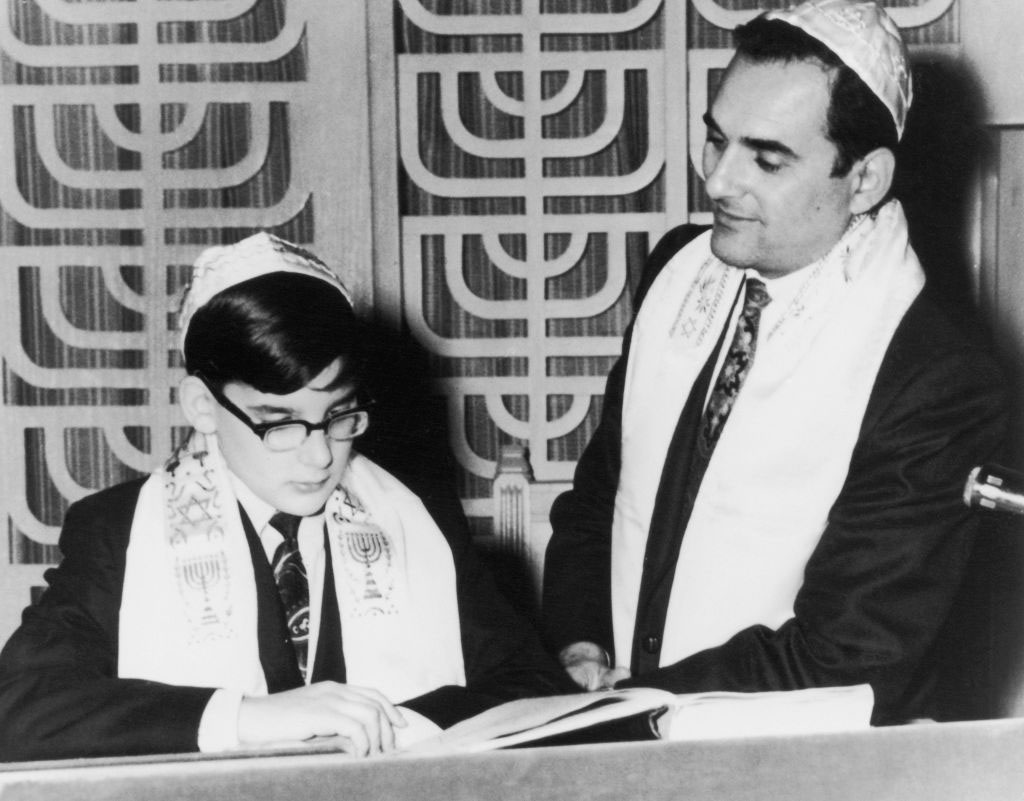
Every year since I can remember, my father formed a minyan with friends — and anybody else who wasn’t satisfied with the High Holiday services in their regular synagogue. The minyan was held in a little room with a makeshift mechitzah (partition) that we had to hold up from time to time because it had this tendency to fall over.
We faced the ark with the men on one side and women on the other — traditional Orthodox style. There was no president, no treasurer, no politics; just a gathering of Sephardic Jews from different parts of the eastern world getting together to pray to God at the holiest time of the year.
The synagogues in the Hancock Park area lent us their Torahs and places of worship. Like other synagogues, we held an auction, but all of the money we raised was sent to needy families in Israel instead of to the shul.
Our minyan hosted a gathering of Egyptians, Iraqis, Afghans, Israelis, Bucharians, Turks and Yemenites, each offering their families’ traditions and tunes, making them feel that much closer to home. It was a place of older men and women, most of them from the old country who remember how their fathers recited the prayers from their corner of the world. Here in America with their American children, they would sing their age-old tunes with joy, instilling their children with their culture and heritage.
When I was a child, when I didn’t have the patience to sit through the services, I would hang around with the other kids and make trouble in the background. But as I grew older, the songs beckoned me, and I wanted to participate in the prayers.
If I close my eyes, I can still recall the sound of my father’s voice as he sang the "Anenu": The whole room became silent to the lilt of the Sephardic tune as he held it for long beats, his words touching the souls of the people who came from all over the world to our little minyan. This is how we shared our holidays — not from a pew in the back, straining to hear the chazan’s voice; not as bystanders humming the tune under our breaths, but loudly, each of us participating.
Every year I looked forward to hearing our chazan lead us in prayers. But two years ago, he moved to New York. He was the glue that kept us together, and when he left, I think he took the heart of our minyan with him.
As we approach the High Holidays, my family and I are nostalgic about the minyan — we know that our annual tradition will never be the same without our chazan.
But we are eager to forge new bonds and make new holiday memories. We have since relocated and many new people have joined with us.
And perhaps, as we pray for redemption, our collective spirit will return to us as it once was. And maybe, as we say in the last prayer, next year we shall all rejoice in Jerusalem.