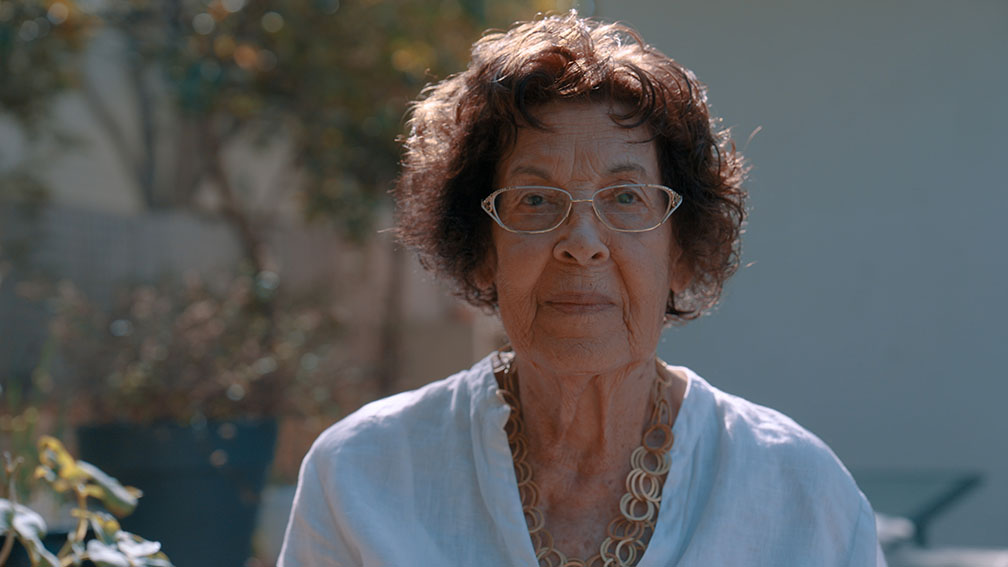
The Chosal Farm seemed like a safe place to Boris Zeltzman — it was located in Vichy, France, and owned by a Christian family. In 1941, he took two ammunition boxes, and, in secret, buried more than 3,000 manuscripts penned by Russian cantor and composer David Nowakowsky.
Zeltzman’s wife, Sophia, was Nowakowsky’s granddaughter. A concert pianist in Berlin, she found herself and her grandfather’s music targets on a 1940 Nazi hit list calling for the destruction of so-called “degenerate music.” The family was forced to smuggle the manuscripts into hiding.
With the war’s end in 1945, Zeltzman returned to the farm and found the manuscripts safely stashed under a trash heap. But years of concealment took their toll on Nowakowsky’s legacy. A key figure in the thriving Jewish community of early 20th century Odessa, the composer served as musical director at the historic Brody Synagogue, where he was celebrated for his innovations to Jewish liturgical music. But for decades after his death in 1921, his work was largely forgotten.
In 1988, the composer’s descendants established The David Nowakowsky Foundation in an effort to revive his name in the public’s consciousness. Cousins Donald and Robert Novack now continue the work their fathers started by promoting the publishing and performance of their great-grandfather’s music.
“Our goal, as a foundation, is to get as much of his music [as possible] edited, arranged and published, and into the hands of the general public,” Donald Novack said, noting that the foundation has so far published about 20 pieces for use by choirs and cantors. “Our goal is to keep putting that music out there and get people aware of it. He is considered a ‘forgotten master,’ but we don’t want him to be forgotten.”
Brought to New York City in 1952 by Sophia Zeltzman’s son, Alexandre, Nowakowsky’s manuscripts remained relatively unknown for years. Only a couple of cantors, including David Lefkowitz of Park Avenue Synagogue, eventually learned of the music and incorporated it into their services.
But the composer’s talent did not sink into complete obscurity — one of Nowakowsky’s manuscripts was a runner-up for the Israeli national anthem, Donald Novack said.
His music includes choral arrangements, piano pieces, music for quartets and arrangements for cantors. Donald Novack believes he was the first Jewish composer to write music for the pipe organ.
At a time when Jewish music was rarely created for use outside of its religious setting, he added, Nowakowsky intended his pieces for a wider audience.
“Liturgical music speaks not just for the time or the generation where it was produced, but if it’s good and it stands the test of time, then it speaks forever,” Robert Novack said. “It would be a mistake if Nowakowsky’s music didn’t find its place among his peers, colleagues and everything that has been done since then.”
The manuscripts should not just be preserved and archived, he believes — the music would lose its meaning if shuttered away from a new generation’s ears.
“We have the music — the music has been rescued and saved — but it’s not like an artifact. The music is there to affect people and give people a common experience of something that was created a long time ago. It has a lot to offer into the future.”
Robert Novack remembers traveling to New York with his parents when he was 15 and visiting Park Avenue Synagogue for a Saturday morning Shabbat service. He had never felt comfortable in synagogue before, but he wanted to hear his great-grandfather’s music.
“I asked my father, ‘When is it going to happen? How long into the service is it going to be, and how am I going to know?’ He said, ‘You’ll know,’” Robert Novack recalled. “When they performed the piece, I didn’t have to ask. It was one of the most beautiful pieces of music I’d ever heard.”
Each year, The David Nowakowsky Foundation funds a scholarship at USC’s Thornton School of Music to promote the study of Nowakowsky’s work. The foundation constantly seeks donations and grants to publish the rest of the composer’s music, and welcomes interest from musicians who want to perform it.
Not all of the pieces cross the barrier between religious and secular, Donald Novack said, but there is something in Nowakowsky’s catalogue that speaks to everyone.
“If you listen to the music, you feel something — especially once you know the story,” Robert Novack said. “This music has been hidden for over 100 years. When you understand that, against all odds, this music has survived, it means something.”